
Key takeaways
- Mopheads and lacecaps flower on last year's stems, so only trim off old flower heads in spring
- Paniculata and Annabelle flower on new stems, so cut them back hard in late February or March
- Prune climbing hydrangea lightly straight after flowering, in July or August
- Never cut mopheads or lacecaps to the ground, or you'll lose a year of flowers
- Leave old flower heads on over winter to shelter the buds from frost
- Sharp bypass secateurs and loppers are all you need
Pruning a hydrangea at the right time is the difference between a shrub smothered in flowers and one with nothing but leaves. It all depends on which type you have, because some flower on last year’s stems and some on this year’s. Not sure which you’ve got? Our guide to types of hydrangeas will help.
Why does pruning timing matter for hydrangeas?
Hydrangeas fall into two groups, depending on where their flower buds form. Get it wrong and you can lose a whole year of flowers.
Old-wood types (mophead, lacecap, climbing, oakleaf) make their flower buds on stems that grew last year. Cut those stems off in winter and there’ll be no flowers next summer. They only need a light, careful prune.
New-wood types (paniculata and Annabelle) flower on stems that grow this year. You can cut them back hard in late winter and they’ll grow fresh stems and flower that same summer. A hard prune actually helps them, giving bigger flowers on stronger stems.
Late frosts in April and May can nip exposed buds on old-wood types, so leaving their old growth on over winter really helps. The RHS hydrangea pruning guide uses the same groups.
How to prune mophead and lacecap hydrangeas
Mopheads and lacecaps (both Hydrangea macrophylla) are the most popular hydrangeas in the UK. They flower on last year’s stems, and this is where most pruning goes wrong.
When to prune mopheads and lacecaps
Prune in late March to mid-April. Wait until you can see fat green buds swelling on the stems. They show you which wood is alive and where to cut. Too early and the buds can get frosted.
Step-by-step mophead pruning
1. Take off the old flower heads. Cut each one back to just above the first strong pair of fat buds below it, usually 15-20cm down. Use sharp bypass secateurs for a clean cut.
2. Cut out dead and damaged wood. Follow any brown, dead stems down to live wood (green under the bark) or right to the ground. After a hard winter there may be a few.
3. Take out a third of the oldest stems. Find the thickest, woodiest stems at the base and cut them to 5-10cm above the ground. This opens up the middle and brings fresh new stems that will flower the year after. Our guide to pruning shrubs in the UK explains this one-third approach.
4. Thin crossing branches. Where two stems rub, remove the weaker one.
5. Shape it lightly. Step back and look. Remove anything spoiling the shape, but resist cutting hard. With mopheads, less is more.
Cut each old flower head to just above the first strong pair of green buds, which are easy to spot by late March.
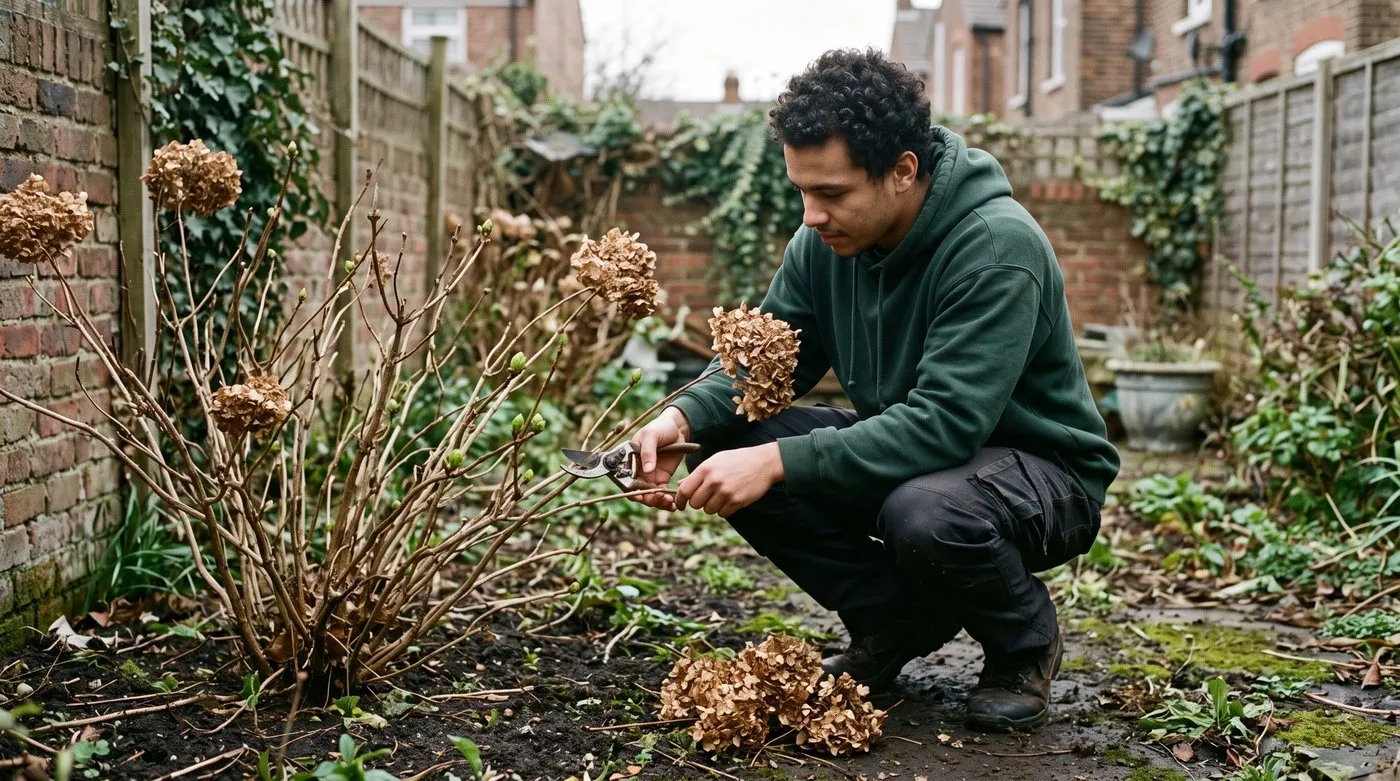
Wait until the fat green buds are swelling in late March or April. They show you exactly where to cut on each stem.
How to prune paniculata hydrangeas
Paniculata hydrangeas are the easiest to prune because they flower on new growth. Popular ones include Limelight, Vanilla Fraise and Little Lime. They have big cone-shaped flowers from July to September.
When to prune paniculata types
Prune in late February to early March, before new growth starts. Cutting back last year’s growth makes strong new stems with bigger flowers.
Step-by-step paniculata pruning
1. Cut all stems back hard. Take every stem down to 30-45cm above the ground, or to two or three buds above the main framework. It feels drastic, but they grow back with gusto.
2. Remove dead and weak stems. Thin, spindly stems won’t hold big flowers, so cut them out at the base. Keep five to eight strong stems on a mature plant.
A paniculata after hard pruning in March. A framework of short, strong stems gives big flowers by July.
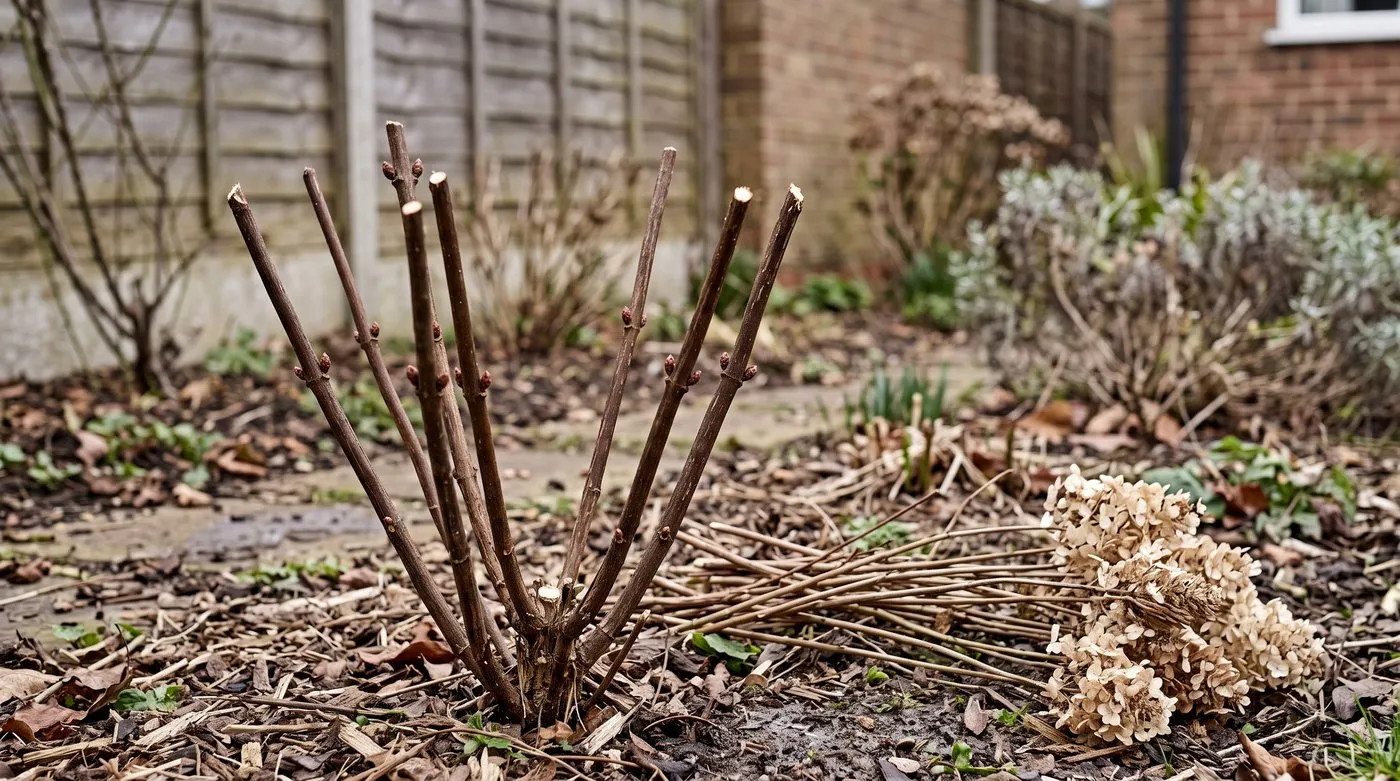
Paniculata flowers on new growth, so a hard prune to 30-45cm is good for it. Keep five to eight strong stems on a mature plant.
How to prune climbing hydrangea
Climbing hydrangea (Hydrangea petiolaris) clings to walls on its own and has flat white flowers in June and July. It’s one of the best plants for shaded walls and north-facing fences. It flowers on old stems, so timing matters.
When to prune climbing hydrangea
Prune straight after flowering, in July or August. That gives it the rest of the summer to grow next year’s flowering shoots. Don’t prune it in winter or spring, or you’ll cut off the coming flowers.
How to prune climbing hydrangea
It needs hardly any pruning for its first few years. It’s famously slow to get going and can take several years to flower, so be patient. Once it’s flowering:
1. Cut back flowered shoots. When the flowers fade, shorten each flowered shoot to a pair of healthy buds. This keeps it snug against the wall.
2. Remove stems sticking out. It throws out long stems that grow straight out from the wall. Cut these back to the main framework.
3. Keep it in its space. If it’s getting too big, cut side shoots back to the main framework. Do big cutbacks gradually over two or three years.
4. Leave the clinging roots alone. The little roots that hold it to the wall are harmless on sound brickwork.
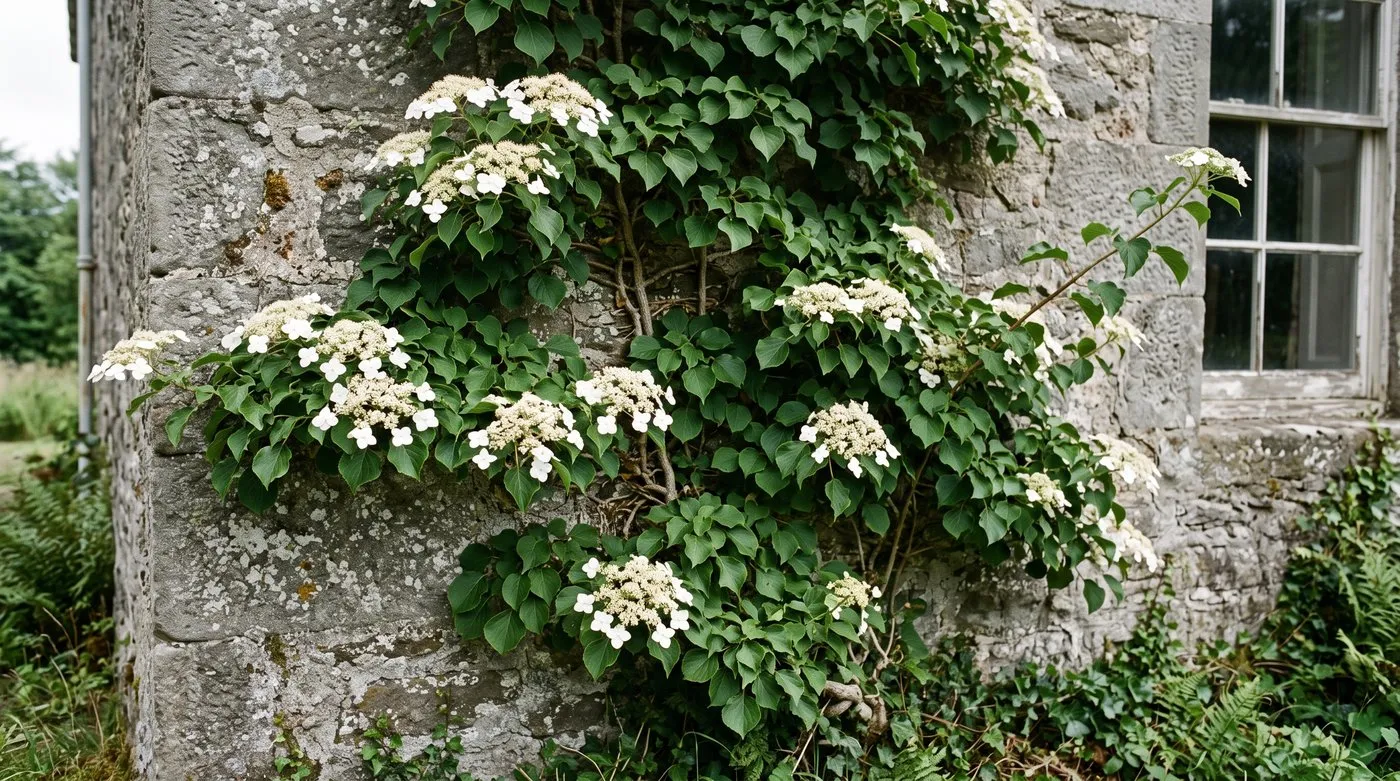
Prune climbing hydrangea just after it flowers. Cutting back stems that stick out from the wall keeps it snug and tidy.
How to prune oakleaf hydrangea
Oakleaf hydrangea (Hydrangea quercifolia) has big, oak-shaped leaves that turn deep red in autumn, and white cone-shaped flowers in summer. It flowers on old stems and needs very little pruning.
When and how to prune oakleaf types
Prune lightly after flowering in August, or in early spring to tidy winter damage.
1. Remove dead or damaged stems at any time.
2. Cut out crossing branches that rub or crowd the middle.
3. Shorten very long stems to keep the shape, cutting to a healthy outward-facing bud.
4. Don’t prune hard. Oakleaf hydrangeas grow slowly and don’t like heavy cutting. If yours is too big for its spot, think about moving it rather than hacking it back every year.
How to prune smooth hydrangea (Annabelle)
Smooth hydrangea (Hydrangea arborescens), usually the variety Annabelle, has huge white snowball flowers up to 30cm across. It flowers on new growth, so pruning is easy.
When and how to prune Annabelle
Prune in late February to early March, the same as paniculata.
1. Cut all stems to 15-30cm above the ground. A hard prune gives fewer but bigger flower heads. Left unpruned, it makes lots of smaller flowers on weaker stems.
2. Remove weak and dead stems at the base. Keep four to six of the strongest on a mature plant.
3. Give it support. Those big heads are heavy and can flop after rain, especially in windy spots. Put a grow-through support in place in March, before the leaves cover it. Or prune a little higher, to about 45cm, for slightly smaller flowers on sturdier stems.
Annabelle after a hard prune in March. Each strong new stem carries a big white flower head by July.
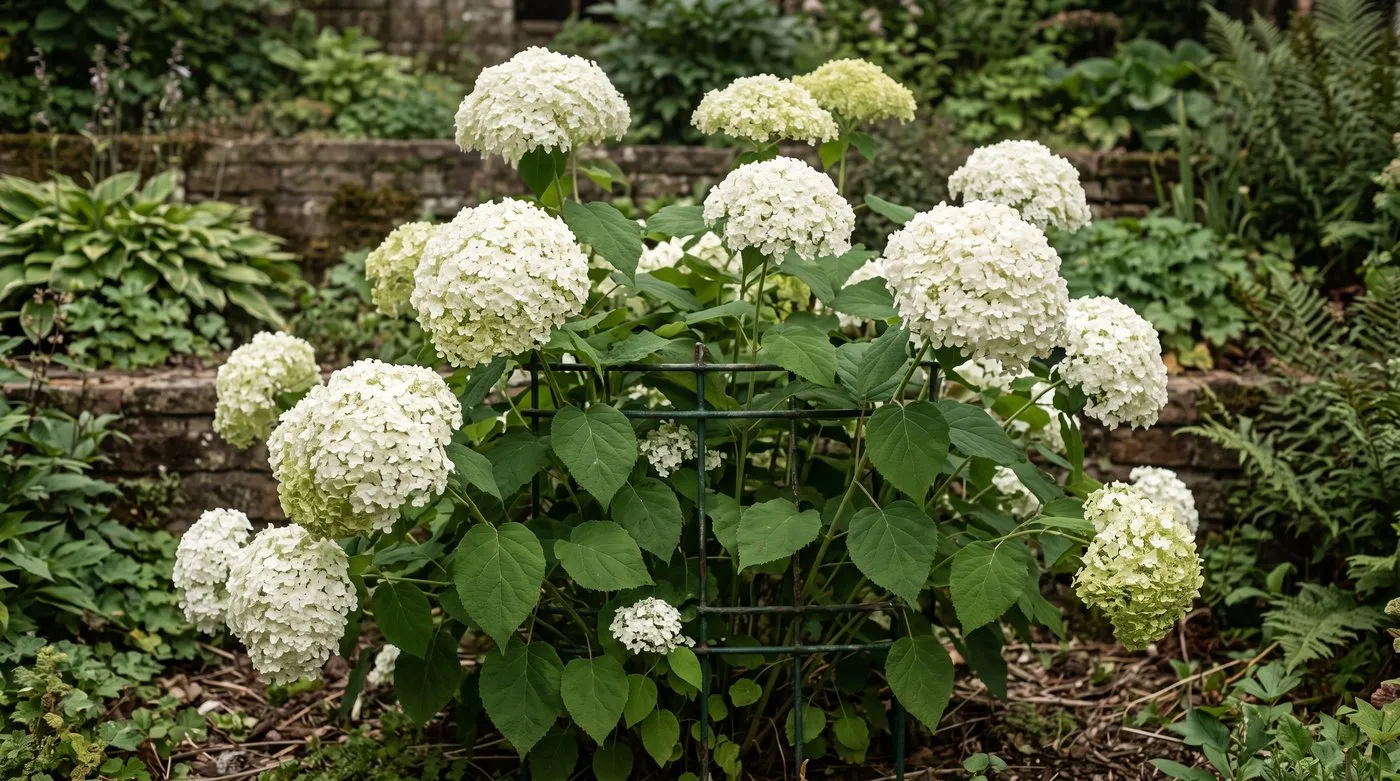
A hard prune gives Annabelle fewer but bigger flowers. Put a support in by March, before the leaves hide it.
Hydrangea pruning comparison table
Here’s every type at a glance. Save it to your phone for when you’re out in the garden.
| Type | Flowers on | When to prune | How hard | What to remove |
|---|---|---|---|---|
| Mophead (H. macrophylla) | Old stems | Late March to mid-April | Light | Old flower heads, dead wood, a third of oldest stems |
| Lacecap (H. macrophylla) | Old stems | Late March to mid-April | Light | Old flower heads, dead wood, a third of oldest stems |
| Paniculata (H. paniculata) | New stems | Late February to early March | Hard, to 30-45cm | Shorten all stems, remove weak ones |
| Climbing (H. petiolaris) | Old stems | July to August, after flowering | Light | Flowered shoots, stems sticking out |
| Oakleaf (H. quercifolia) | Old stems | August or early spring | Very light | Dead wood, crossing branches |
| Annabelle (H. arborescens) | New stems | Late February to early March | Very hard, to 15-30cm | Shorten all stems, remove weak ones |
UK month-by-month hydrangea pruning calendar
January: No pruning. Leave the old flower heads on mopheads and lacecaps. Tidy any branches broken in storms.
February (late): Cut back paniculata (to 30-45cm) and Annabelle (to 15-30cm). Remove dead and weak wood. A good time to sharpen your secateurs and loppers too.
March (late): Prune mopheads and lacecaps once the buds swell. Take off old flower heads, dead wood and a third of the oldest stems. Late March is also when you prune roses, so you can do both on the same weekend.
April: Finish any mophead and lacecap pruning by mid-month. After that, new growth is too far along.
May to June: No pruning. Everything is growing and the flower buds are forming.
July to August: Prune climbing hydrangea after flowering. Give oakleaf a light trim if needed. Many of the best flowering shrubs for UK gardens are pruned straight after flowering like this.
September to December: No pruning. Leave the old flower heads in place over winter. A potash-rich feed in September helps toughen up growth before winter.
What tools do I need to prune hydrangeas?
Not many. Hydrangea stems are fairly soft.
Bypass secateurs cut stems up to about 15mm thick, which covers most jobs. Choose bypass (scissor-action) rather than anvil secateurs, which squash soft stems.
Loppers are handy for stems 15-35mm thick. The oldest stems on an unthinned mophead can get quite chunky.
A small pruning saw helps with very old, thick stems in the middle of a crowded plant.
Clean your tools between plants with a wipe of methylated spirit, especially after cutting out anything diseased.
Common hydrangea pruning mistakes
Pruning mopheads in autumn or winter
The most common slip. It’s easy to cut mopheads back during an autumn tidy, but that removes every flower bud. Leave the old heads on. They protect the buds and look lovely in the frost.
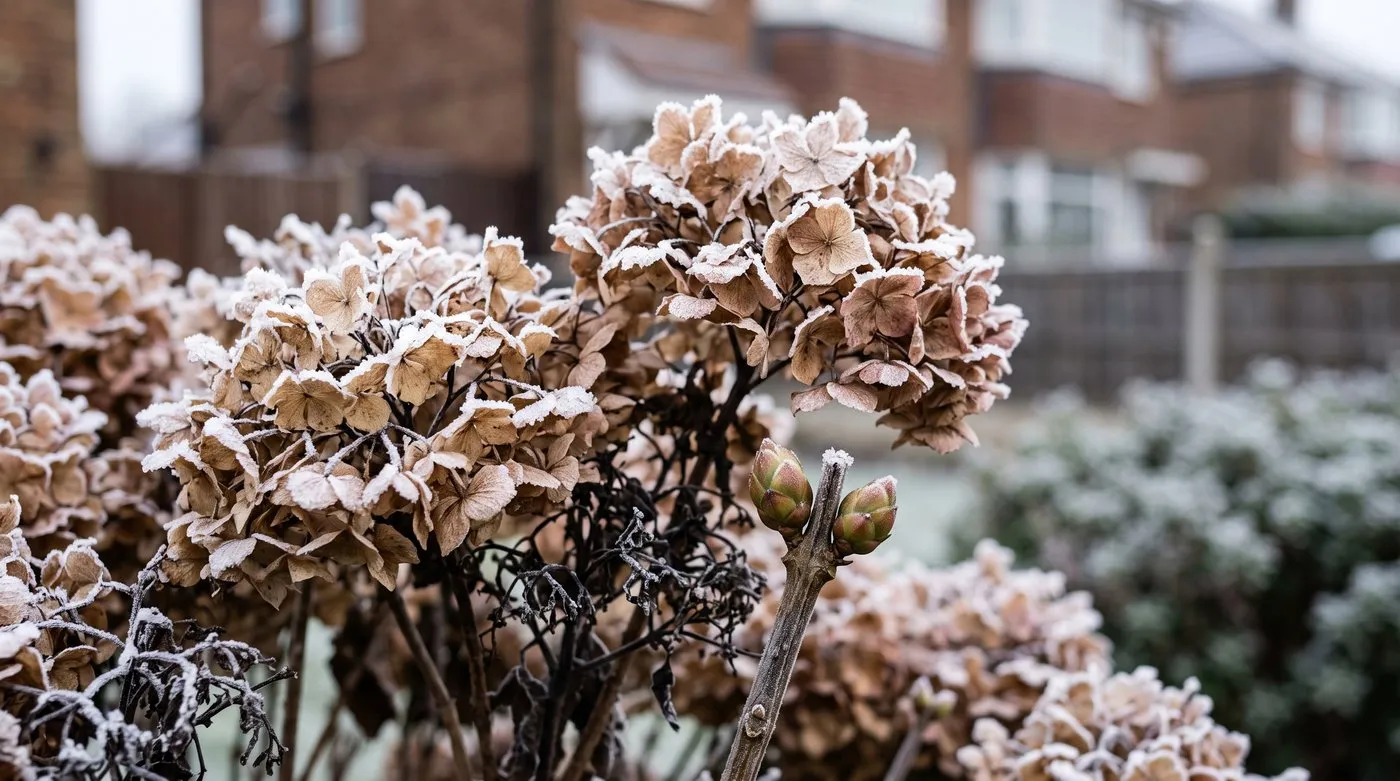
Leave the old heads on mopheads over winter. They protect next year’s flower buds and look lovely in the frost.
Cutting all stems to the ground
Only paniculata and Annabelle like this. Do it to a mophead and you’ll wait at least a year, maybe two, for flowers, while it grows new stems and makes new buds.
Not pruning paniculata types hard enough
The opposite slip. Being too gentle with a paniculata gives a crowded plant with lots of small flowers on weak stems. Cut it to 30-45cm and you’ll get fewer, bigger flowers on stems that hold them up.
Removing too many stems at once on old-wood types
If a mophead or lacecap is overgrown, don’t cut it all back at once. Take no more than a third of the stems each year, over three years. It keeps flowering the whole time.
Using blunt or dirty tools
Blunt secateurs squash stems instead of cutting them, and squashed stems die back further. Keep blades sharp and clean.
Hydrangeas are happy in heavy clay soil, as they love moisture. Just make sure water doesn’t sit round the roots over winter.
How to renovate a neglected, overgrown hydrangea
An overgrown hydrangea isn’t a lost cause. Unlike lavender, which cannot regrow from bare wood, most hydrangeas send up new shoots from old stems and from the base.
Renovation plan for mophead and lacecap types
Year 1 (March): Cut a third of the oldest, thickest stems right down at the base. Take out all dead wood. Leave the rest so it still flowers.
Year 2 (March): Remove half of the old stems that are left. You’ll have a mix of old flowering stems and strong new ones.
Year 3 (March): Take out the last of the original old stems. The whole plant is now young and lively. Go back to normal yearly pruning.
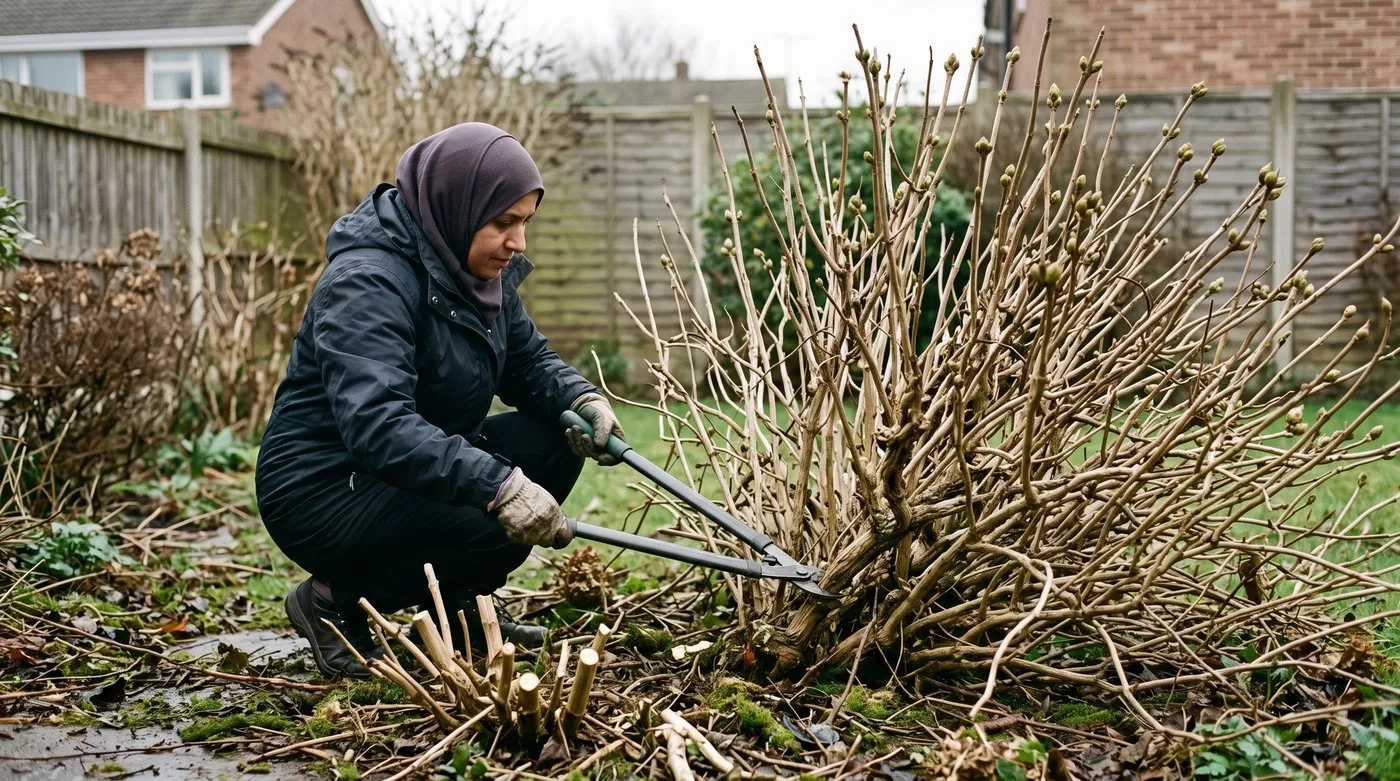
Take out about a third of the oldest stems each year. The rest still flower while young stems grow up to replace them.
Renovation for paniculata and Annabelle types
Even easier. In late February, cut the whole plant to 15-30cm above the ground. It’ll regrow in one season.
Feed after renovation
Give any hard-pruned hydrangea a feed. Sprinkle a general fertiliser like Growmore round the base in April, at about 70g per square metre. Mulch with garden compost about 8cm deep, keeping it off the stems. Water well through the first summer.
Year one of a renovation. A third of the oldest stems have gone, and the rest will still flower while new growth fills the gaps.
Frequently asked questions
When should I prune mophead hydrangeas in the UK?
Late March to mid-April is best. Cut each old flower head back to just above the first strong pair of buds below it. At the same time, take out a third of the oldest stems at the base. Never prune mopheads in autumn or winter, as the old flower heads protect the buds from frost.
Can I cut my hydrangea right back to the ground?
Only if it’s a paniculata or Annabelle type. These flower on new growth and bounce back after a hard prune. Mopheads and lacecaps flower on last year’s stems. Cut them to the ground and you’ll get leaves but no flowers next summer.
Why did my hydrangea not flower this year?
Usually it was pruned at the wrong time. Prune a mophead or lacecap in autumn or winter and you remove the flower buds. A late spring frost can also kill buds, especially if the old flower heads came off too early. Leave them on until late March.
How do I know if my hydrangea flowers on old or new wood?
It depends on the type. Mophead, lacecap, climbing and oakleaf hydrangeas flower on last year’s stems. Paniculata and Annabelle flower on this year’s growth. Not sure what you’ve got? Leave it unpruned for a year and see where the flowers appear.
Should I remove dead hydrangea flower heads in autumn?
No, leave them on over winter. They help shield the new buds underneath from frost. Take them off in late March to mid-April, once hard frosts are over. There’s no benefit to removing them in autumn.
When should I prune a climbing hydrangea?
Straight after it flowers, in July or August. Cut flowered shoots back to a pair of healthy buds. Remove any stems growing away from the wall or fence. It flowers on old stems, so pruning before it flowers removes that year’s flowers.
How do I prune an overgrown hydrangea that is too big?
Spread the job over two or three years. Each year, cut a third of the oldest, thickest stems right down at the base. It slowly shrinks while still flowering every year. Don’t cut a mophead or lacecap back all at once.
Our team produces practical UK gardening guidance from source research, contributor records and established horticultural practice. Editorial standards are overseen by Matt W.


