Key takeaways
- Sharpen bypass secateurs on the bevelled blade only, at 20-25 degrees
- A diamond file is the handiest sharpener for most garden tools
- Hedge shears take a wider 30-35 degree edge
- File hoes on the top side only, so the bottom glides along the soil
- Clean, dry and oil tools after use to stop rust
- Replace secateurs when the pivot stays loose or the blades are badly chipped
Blunt secateurs squash stems instead of cutting them. The squashed bits turn brown and heal slowly, which gives disease a way in. It’s the same with every tool in the shed. Sharp edges cut cleaner, take less effort and do less harm to your plants.
Most of us know our tools should be sharp, but few of us actually get round to it. It’s easier than you think. Ten minutes with a diamond file makes pruning, hoeing and hedge trimming noticeably easier. Here’s how to sharpen every common garden tool, plus a simple routine to keep them in good shape.
Once your tools are sharp, put them to work with our guide on how to prune roses. The RHS guide to garden tools is handy if you’re buying new ones.
Why sharp tools matter
Blunt tools squash plants instead of cutting them, they make you work harder, and they leave a messy finish on hedges and shrubs.
A sharp spade slices through turf in one push. A sharp hoe glides just under the soil, cutting weeds off as it goes. Sharp secateurs close in one smooth squeeze. You’ll notice the difference straight away. Sharpening your tools is one of the most useful spring gardening jobs you can do.
 Sharpening bypass secateurs with a diamond file. Work only on the bevelled blade.
Tip: Try your secateurs on a sheet of paper. Sharp ones slice it cleanly. If the paper folds or tears instead, it’s time to sharpen.
How to sharpen secateurs
Secateurs get more use than any other cutting tool, so they blunt the fastest.
Bypass secateurs
Bypass secateurs have one sharp curved blade that slides past a flat blade, like scissors. Sharpen only the curved cutting blade. The flat blade stays flat.
- Clean the blade. Wipe off dried sap with a rag and some methylated spirit or white vinegar. Sticky sap makes cuts drag.
- Open them fully, or undo the bolt and take the blades apart. That’s safer and easier to get at.
- Find the angle. Lay the diamond file flat on the existing bevel, the slanted edge. On most bypass secateurs it’s about 20-25 degrees.
- File one way. Push the file away from you along the bevel, from the base to the tip, in smooth, even strokes. Press on the push and lift off on the way back.
- Check as you go. Ten to fifteen strokes is usually enough. Look at the edge in good light. A sharp edge shows no shine. A blunt one shows a thin bright line.
- Remove the burr. A thin lip of metal, called a burr, forms on the flat side. Lay the file flat on that side and make two or three light passes to take it off.
- Put back together and oil. Reassemble, put a drop of camellia oil or light machine oil on the pivot, and open and close them a few times.
Anvil secateurs
Anvil secateurs have one blade that closes down onto a flat pad. The blade is sharpened on both sides, at about 25 degrees each side, using the same filing method. Check the pad too. If it’s deeply scored, replace it, as the blade won’t cut cleanly against a damaged pad.
How often: bypass secateurs every two or three weeks of regular use, anvil secateurs weekly.
How to sharpen loppers
Loppers are long-handled secateurs for thicker branches. Most work like bypass secateurs.
Sharpen the single bevelled blade at 20-25 degrees, just as you would secateurs. The blades are bigger, so they need a few more strokes. Clamp the blade in a vice or rest it firmly on a bench. A blade that wobbles while you file is risky and frustrating.
 A lopper blade held in a vice. Use the same angle as for secateurs.
Use a flat mill file or a large diamond file rather than a small pocket one. Make long, steady strokes from the pivot to the tip. Remove the burr from the flat side, oil the pivot and test on a pencil-thick twig.
If the blades have gone wobbly, tighten or replace the bolt. Loose blades trap stems instead of cutting them.
How to sharpen hedge shears
Hedge shears work hard. Every snip cuts lots of stems at once, and leaf sap is tough on the blades.
 Sharpening hedge shears with a mill file. A wider angle than secateurs keeps the edge tough.
Manual hedge shears
- Clean both blades. Scrub off sap and bits of leaf with wire wool and methylated spirit.
- Hold them steady. Clamp them open in a vice, or lay them flat on a bench with one blade over the edge.
- File the bevel. Shears have a wider bevel than secateurs, usually 30-35 degrees. Use a flat mill file and push along the blade in one direction, following the existing angle.
- Do the full length. Work from the pivot end to the tip with each stroke, about 15-20 strokes per blade.
- Look for nicks. Nicks catch stems instead of cutting them. File out small ones by working a little more on that spot.
- Take off the burr from the flat side of each blade.
- Adjust the pivot. The blades should just touch when closed, with no wobble. Too tight and they’re hard to open.
How often: every three or four hedge cuts, or after every session on dense hedges like privet or beech.
Powered hedge trimmers
The blades on electric and battery hedge trimmers are tricky to sharpen at home. Clean them after each use, spray with a lubricant made for cutting blades, and have them sharpened by a garden machinery shop once a year.
How to sharpen hoes
A sharp hoe is one of the best weeding tools you can own. It should slice weeds just under the surface without digging in.
Dutch hoe (push hoe): File the top surface only, at about 30 degrees. Keep the underside flat so it glides along the soil. Ten strokes with a flat file gets it working again.
Draw hoe (swan-neck): Sharpen the inside edge at about 30 degrees.
Stirrup hoe (oscillating hoe): This cuts both ways, so sharpen both edges at about 30 degrees, working from the inside of the stirrup outwards.
Wipe the blade with an oily rag afterwards. Soil blunts hoes quickly, so touch them up before each big weeding session.
Tip: A sharp hoe makes weeding so much quicker. When autumn gardening jobs start piling up, a freshly sharpened hoe makes clearing beds far less of a chore.
How to sharpen spades and edging tools
Spades and half-moon edgers like a sharpened edge too, though they don’t need to be as keen as secateurs.
File along the existing bevel at a shallow angle of about 25 degrees with a flat mill file, working from one corner to the other. You want an edge that bites into turf and soil, not a knife edge. A very thin edge chips and dents on stones.
Half-moon edgers sharpen the same way. Follow the curve with each stroke to keep the edge even. A sharp edger cuts a crisp lawn edge in one push.
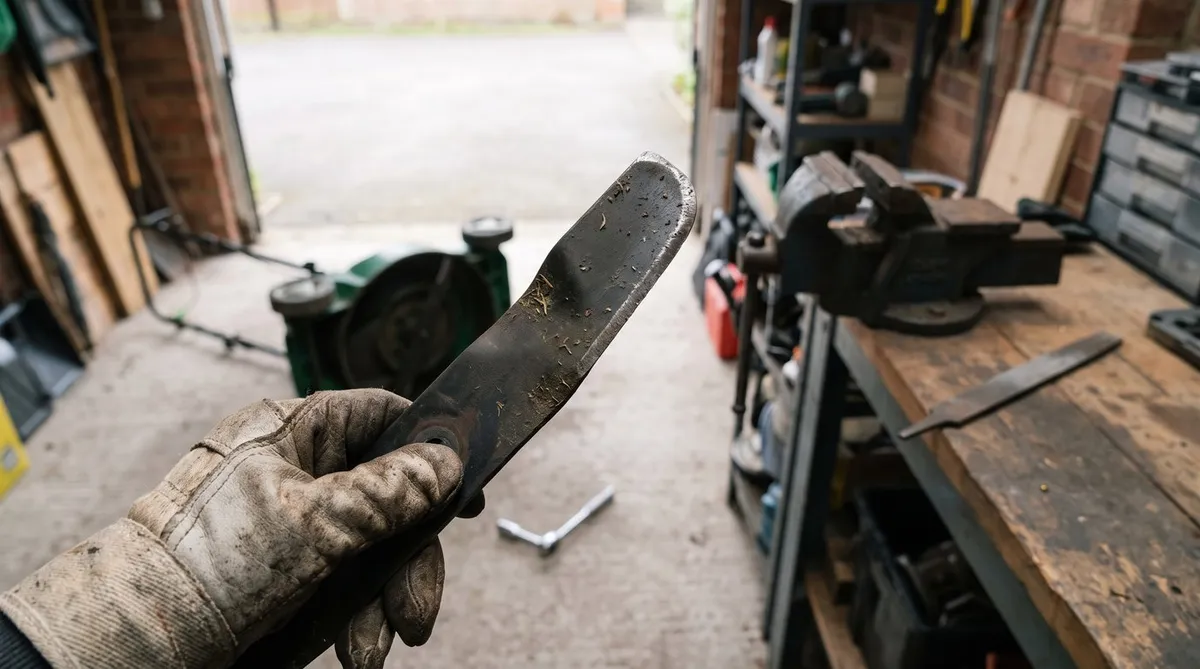
How to sharpen lawn mower blades
Mower blades spin fast and hit stones, sticks and soil, so they blunt and nick quickly. A blunt blade tears the grass rather than cutting it, leaving ragged tips that turn brown.
Rotary mower blades
- Cut the power first. Pull off the spark plug lead (petrol), take out the battery (cordless) or unplug it (corded). Always.
- Take the blade off. Tip the mower on its side, with the air filter facing up on a petrol mower. Undo the blade bolt with a socket wrench. Mark the bottom of the blade so it goes back the right way up.
- Clamp it in a vice and file along the existing bevel with a flat mill file, working from the inner edge outwards.
- Do both ends equally. A lopsided blade shakes, wears the mower and cuts unevenly. To check, hang the blade on a nail through the centre hole. If one end dips, file a little more off that end.
- Refit the blade. Tighten the bolt firmly, as the manual tells you. Hand-tight isn’t enough.
For lawn jobs that follow, see our guide on how to scarify and aerate your lawn.
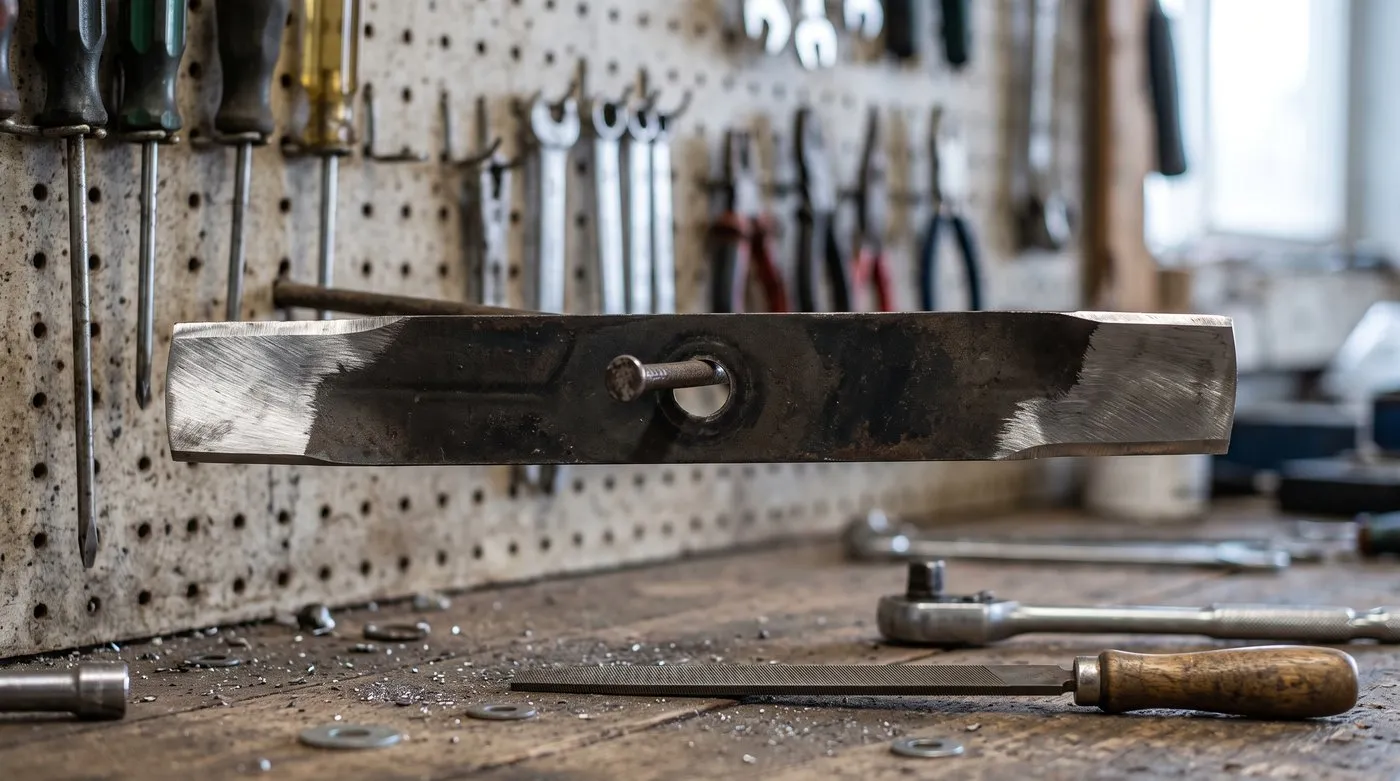
Hang the blade on a nail to check its balance. If one end dips, file a little more off that end so the mower doesn’t shake.
Cylinder mower blades
Cylinder mowers have a spinning reel of blades that cuts against a fixed bottom blade. Getting the gap right matters more than sharpening. Adjust it until a sheet of newspaper cuts cleanly all the way across. When the edge eventually goes, a garden machinery dealer can regrind it for you.
Sharpening tools compared
Here’s how the main sharpeners stack up.
| Sharpener | Best for | How easy | Good to know |
|---|---|---|---|
| Diamond file | Secateurs, shears, hoes, loppers | Easy | The all-rounder. Works wet or dry and lasts well. |
| Whetstone | Secateurs, knives | Medium | Finer edge, but needs soaking first. |
| Flat mill file | Mower blades, spades, big shears | Easy | Takes metal off quickly. |
| Pull-through sharpener | Quick touch-ups | Very easy | Handy, but not precise. |
| Bench grinder | Badly nicked blades | Hard | Fast, but easy to overheat and spoil the blade. |
A diamond file covers most garden jobs. A fine one with a comfy handle is a good buy. If you’d like a polished finish on secateurs and knives, a combination whetstone is a nice second purchase.
Pull-through sharpeners grind both sides of the blade at a fixed angle. That’s wrong for bypass secateurs, which should only be sharpened on one side. Keep them for quick touch-ups.
Looking after your tools
Sharpening is only half the story. A sharp blade on a rusty, sticky tool still won’t work well.
 Clean, oil and dry your tools after use, and they’ll last for years.
Cleaning after every use
Wipe blades with a dry rag after each use. Knock soil off spades and hoes before it dries hard. Clean sap off secateurs and shears with methylated spirit or white vinegar, as sap left on the blade eats into the metal.
Oiling
Wipe a thin coat of camellia oil (a traditional Japanese tool oil) or light machine oil over all the metal after cleaning. Camellia oil doesn’t go sticky or rancid. WD-40 is fine for a short while but doesn’t last.
Oil the pivots on secateurs, loppers and shears every time you sharpen them, for a smoother cut and less wear.
Getting rid of rust
Light rust comes off with white vinegar and wire wool. Soak the blade for 30-60 minutes, scrub, rinse and dry it straight away. For heavier rust, use a shop-bought rust remover. Oil the blade as soon as it’s clean.
Better still, stop rust before it starts. Storing tools in a dry shed, wiping them after use and giving them a light coat of oil does the trick.
Handle care
Wooden handles crack and splinter when they dry out. Sand rough patches smooth, then rub in raw linseed oil and let it soak in overnight. Do this in spring and autumn.
Replace any handle with a crack running along the grain. It could snap mid-job and hurt you. Replacement handles for spades, forks and hoes are easy to fit.
Tip: Keep a bucket of sharp sand with a little clean oil mixed in. After cleaning a spade or fork, plunge it into the sand a few times. It scrubs off the last of the soil and leaves a light coat of oil.
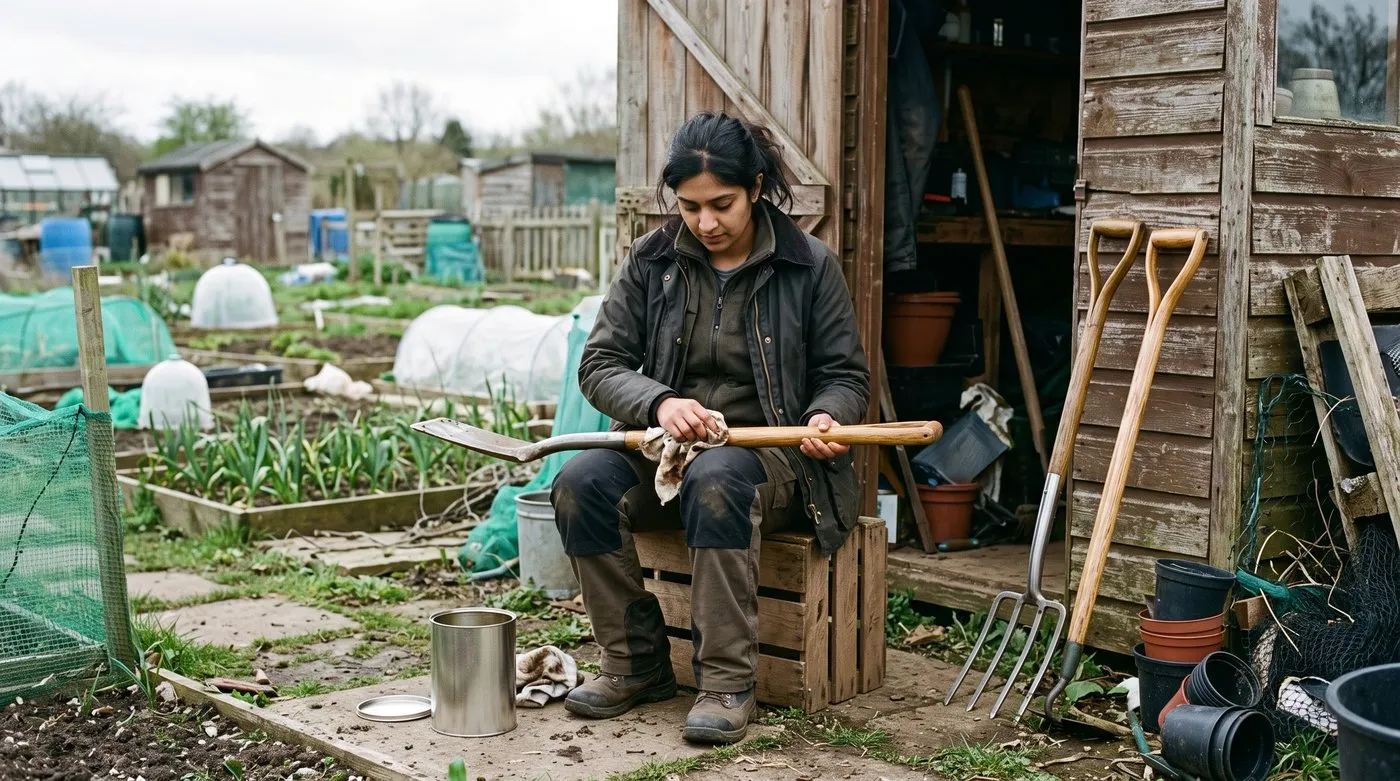
Sand rough patches smooth, then rub in raw linseed oil and leave it overnight. Do it in spring and autumn to stop handles cracking.
When to sharpen and when to replace
Some damage is more than a file can fix.
Sharpen when
- The blade is blunt but the edge isn’t chipped
- The tool keeps its shape and the handle is sound
- The pivot on secateurs and shears is tight and smooth
- A few minutes of filing brings the edge back
Replace when
- The blade has deep chips that would mean grinding away lots of metal
- The pivot on secateurs or shears stays loose even with the bolt fully tightened
- The spring has broken and you can’t get a spare for that model
- A wooden handle has cracks running along it
- A spade or hoe blade has worn thin
- A mower blade is bent, cracked or won’t balance
Good secateurs from makers like Felco, Bahco and Niwaki are built to last, with spare blades, springs and bolts available. Over the years, one good pair you look after often works out cheaper than buying cheap ones again and again.
Tool care calendar
| Month | What to do |
|---|---|
| March | Big sharpening session. Clean and oil everything. Replace worn handles. |
| April to May | Touch up secateurs and hoes every couple of weeks. Clean mower blades weekly. |
| June | Sharpen hedge shears before the main hedge-cutting season. Touch up secateurs. |
| July to August | Sharpen shears again after heavy hedge work. Touch up hoes. |
| September | Sharpen spades for autumn digging and secateurs for pruning. |
| October | Clean, sharpen and oil everything before winter. |
| November to February | Tools in storage. Check monthly for damp and rust, and oil any rusty spots. |
Our autumn gardening jobs guide has more on getting ready for winter.
Five common sharpening mistakes
1. Sharpening the wrong blade on bypass secateurs
File the flat blade and you’ll open a gap between the blades, so they trap stems instead of cutting. Only sharpen the curved, bevelled blade.
2. Making the edge too thin
A razor-thin edge feels great at first but chips on the first woody stem. Match the angle that’s already there, about 20-25 degrees for secateurs and 30-35 for shears. A slightly blunter angle is better than one that’s too fine.
3. Overheating on a bench grinder
Grinders get the metal hot. If the edge turns blue or straw-coloured, the steel has gone soft and won’t hold an edge. Dip the blade in water every few seconds, or stick to a file.
4. Forgetting the burr
Filing leaves a thin lip of metal on the other side. It feels sharp but folds over on the first cut. Always flip the blade and give the flat side a few light strokes.
5. Not cleaning first
Sap, rust and soil stop the file biting, so you end up polishing dirt. Clean the blade before you start.
Staying safe while sharpening
- Wear thick gloves. A freshly sharpened edge cuts skin instantly.
- Clamp tools in a vice whenever you can, rather than holding the blade in one hand.
- File away from your body, with push strokes only.
- Cut the power on mowers before touching the blade.
- Work in good light, so you can see the edge clearly.
- Keep files clean. A clogged file skids instead of cutting. A file card, a little wire brush, clears the teeth.
- Store sharp tools safely, hung on hooks with blade guards, never loose in a bag or on the floor.
Sharp tools help the compost heap too, as clean-cut prunings rot down faster than squashed ones. For the rest of the season’s to-do list, see our spring gardening jobs guide.
Frequently asked questions
How often should I sharpen my secateurs?
Every two to three weeks in the growing season. If you’re pruning woody stems every day, make it weekly. If a blade crushes rather than slices, sharpen it straight away. Anvil secateurs blunt faster, because the blade hits a flat surface with every cut.
What angle should I sharpen garden shears?
About 35 degrees, on the bevelled edge only. The easiest way is to match the angle that’s already there. Hold the file flat on the bevel and push it away from you. A handful of strokes per blade is usually enough.
Can I sharpen garden tools with sandpaper?
For a quick touch-up, yes. Wrap 400-grit wet-and-dry paper round a flat block and run it along the secateur bevel. For proper sharpening, a diamond file or whetstone gives a better, more even edge.
Is a whetstone better than a diamond file?
For most gardeners, a diamond file is better. It works fast, wet or dry, with no soaking. A whetstone gives a finer finish but needs soaking first and takes practice. Some people shape the edge with a file, then finish on a whetstone.
How do I remove rust from garden tools?
Soak the blade in white vinegar for 30-60 minutes. Scrub with wire wool or a brass brush, then rinse and dry it straight away. For heavy rust, use a rust remover. Finish with a thin coat of camellia oil or WD-40 to keep rust from coming back.
Should I sharpen both blades on bypass secateurs?
No, only sharpen the bevelled cutting blade. The other blade, the flat hook, must stay flat. File it and you’ll open a gap between the blades, so they stop cutting cleanly. Just run the file flat over that side to remove any burr.
When should I replace garden tools instead of sharpening them?
When the damage is beyond a file. Replace secateurs if the pivot stays loose, the blades have deep chips or the spring has broken with no spare available. Replace spades and hoes once the blade has worn thin. Wooden handles with cracks running along them aren’t safe, so replace those too.
How do I sharpen a lawn mower blade safely?
Cut the power first. Pull off the spark plug lead on a petrol mower, or remove the battery on a cordless one. Clamp the blade in a vice and file along the existing bevel. Take the same amount off each end so it stays balanced, as a lopsided blade shakes and damages the mower.
Our team produces practical UK gardening guidance from source research, contributor records and established horticultural practice. Editorial standards are overseen by Matt W.