Key takeaways
- Decide if you want shade, privacy, climbers or rain cover before picking a design
- Mark out the posts and put your furniture in place before you order anything
- Check planning rules, covenants and listed-building limits before you build
- Match strong climbers like wisteria to a sturdy frame
- Keep timber posts out of wet soil and send roof water away from the house
The best pergolas do one job really well. That might be shading a dining table, hiding you from an upstairs window or holding up a rose. Some designs keep the rain off too.
Start with what you want to do underneath it, not the frame itself. Put the table, chairs or bench where you’d like them. Then mark where the posts would go and walk around. This quick test stops a big frame from swamping your garden.
Which pergola design suits your garden?
Open timber pergolas add height without a solid roof. They’re perfect for roses, clematis, honeysuckle and grape vines. Sun and rain still come through until the plants fill in.
Louvred aluminium pergolas have roof slats you can tilt. Open them for sky, angle them for shade or close them against rain. They look sleek and modern, and need a clear route for the rainwater they collect.
Wall-mounted pergolas use the house or another solid wall as one side. They’re handy for a patio by the back door. The fixings need to suit the wall and keep clear of the damp course, pipes and drains.
Freestanding pergolas create a destination further down the garden. Put one where there’s already a nice view or useful afternoon shade, not just in the middle of the lawn.
Walkway pergolas frame a path and lead the eye along it. They’re great for linking two parts of the garden. Make them wide enough that the path still feels roomy once climbers fill the sides.
| Design | Great for | Why you’d pick it | Think about |
|---|---|---|---|
| Open timber | Seating covered in plants | Soft, natural look | Looking after wood and plants |
| Louvred roof | Eating outdoors in mixed weather | Shade and rain cover you can adjust | Drainage, wind and fitting |
| Wall-mounted | Patio by the house | Takes up less space | The wall and where rainwater goes |
| Freestanding | Seating further out | Makes a separate garden room | Size, foundations and views |
| Walkway | Linking parts of the garden | Rhythm and space for climbers | Headroom and width |
Still deciding on the type of structure? Read our pergola, gazebo and canopy comparison.
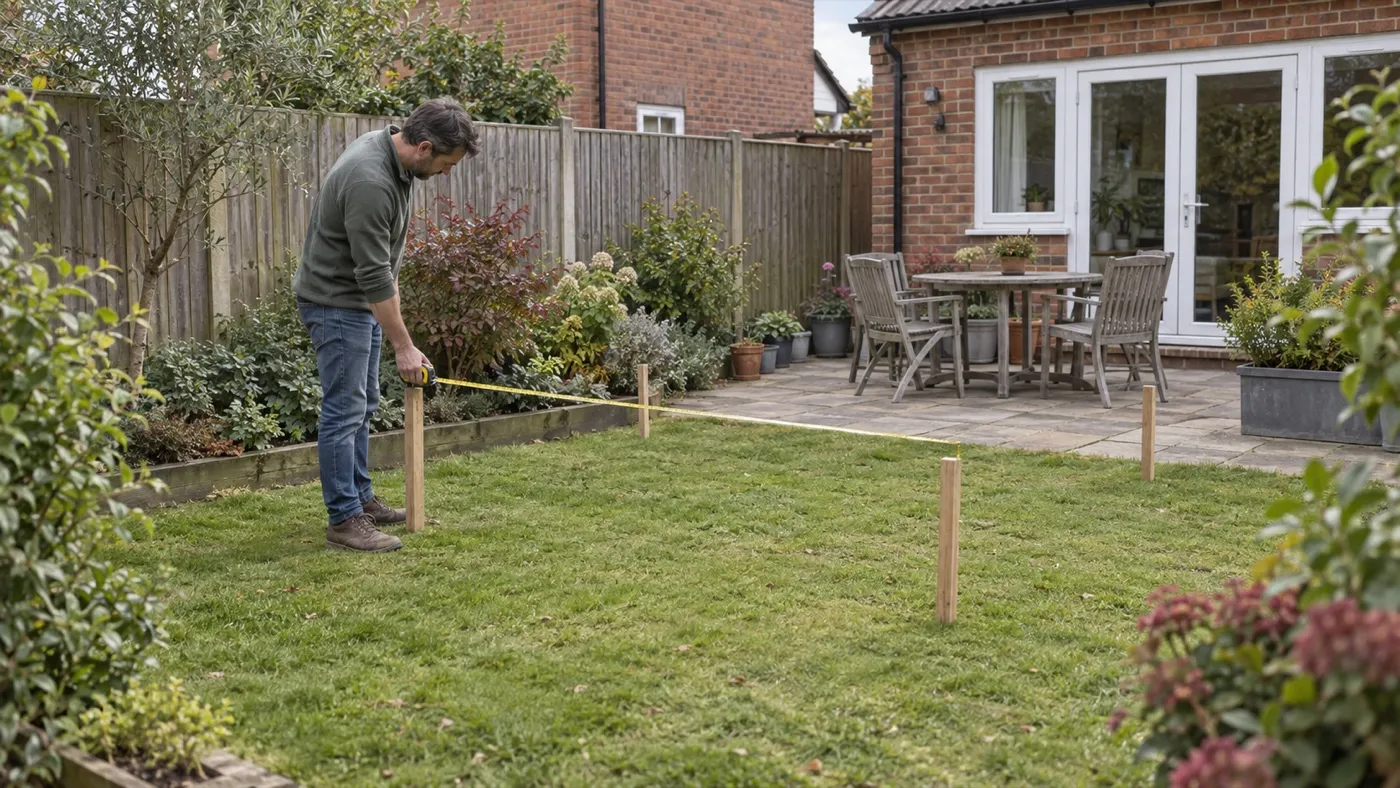
Mark where the posts will go and try out your furniture before you order.
How should you position a pergola?
Think about sun, views, getting in and out, and the neighbours. Watch the spot through a normal day before you decide.
A west-facing patio gets strong afternoon and evening sun, and a planted roof softens it nicely. A north-facing corner may need more light, not more shade.
Look from inside the house too. Posts can frame a view, but a heavy roof can make a room darker. Push in some tall stakes and look at them from the kitchen, the bedroom and next door’s path.
Check for doors, drain covers, drains and outside taps. Leave space to get at fences and gutters. If it has a roof, plan where the rainwater will go.
In windy gardens, follow the maker’s wind advice and fitting instructions. Don’t rely on heavy furniture or a few surface screws to hold it down. A good installer will match the foundations to your soil and paving.
Handy tip: Mark the posts with stakes and live with them for a weekend.
Pergola ideas for small UK gardens
In a small garden, keep the frame light and the views open. A slim open roof feels much less bulky than a solid one.
Size the pergola around one piece of furniture rather than filling every spare bit of space. A small table or corner bench leaves room for plants and moving about. Built-in benches cut down on loose chairs around the posts.
Pale or painted timber softens a narrow plot. Dark aluminium gives a crisp outline that suits a modern extension. Picking up a material already used on the house or fence ties everything together.
A wall-mounted frame saves floor space, but it needs careful fixing. A freestanding frame set just away from the wall can be simpler and still lets you get at the wall.
For privacy, only screen where you need it. One slatted side can block a nosy view without boxing you in. Our patio privacy ideas have more planting and screening options.
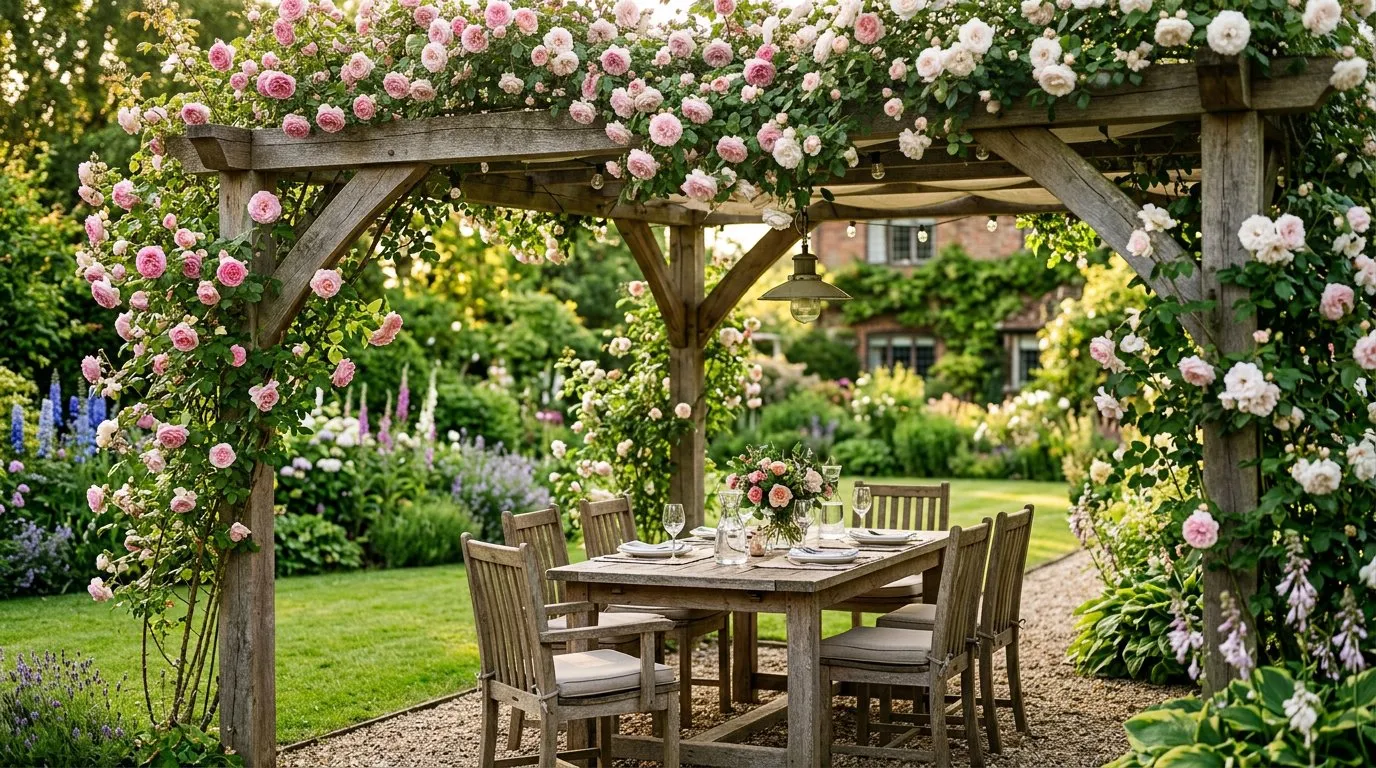
An open timber frame lets roses soften the structure while the roof still feels light.
Do pergolas need planning permission?
Sometimes. It depends on the design, where it goes, where you live and your type of home.
In England, structures within 2m of a boundary usually have a 2.5m height limit, and there are other rules about position and how much of the garden is covered. The Planning Portal guidance on outbuildings explains them. Attached and freestanding pergolas can be treated differently.
Take extra care with listed buildings, conservation areas, flats and leasehold homes. Scotland, Wales and Northern Ireland have their own rules, and house deeds or estate rules can apply even when planning permission doesn’t. If in doubt, ask your local planning authority and keep their reply with your plans.
Timber, aluminium or steel?
Choose by looks, how much upkeep you fancy and how strong it needs to be. The roof and plants often matter more than the frame material.
Pressure-treated timber suits traditional, planted gardens. It’s easy to cut and repair with normal tools. Check the care instructions before you stain or paint it.
Cedar or hardwood gives a richer grain and colour. Products vary, so ask what wood it is and how it’s been treated.
Powder-coated aluminium is the usual choice for louvred roofs. It’s light, strong and doesn’t need treating. The moving slats, seals and gutters still need an occasional check.
Steel allows slim, made-to-measure shapes. It needs a good protective coating, and any chips should be touched up.
Ask every supplier for the frame details, foundations, wind limits and guarantee, and compare those along with the price.
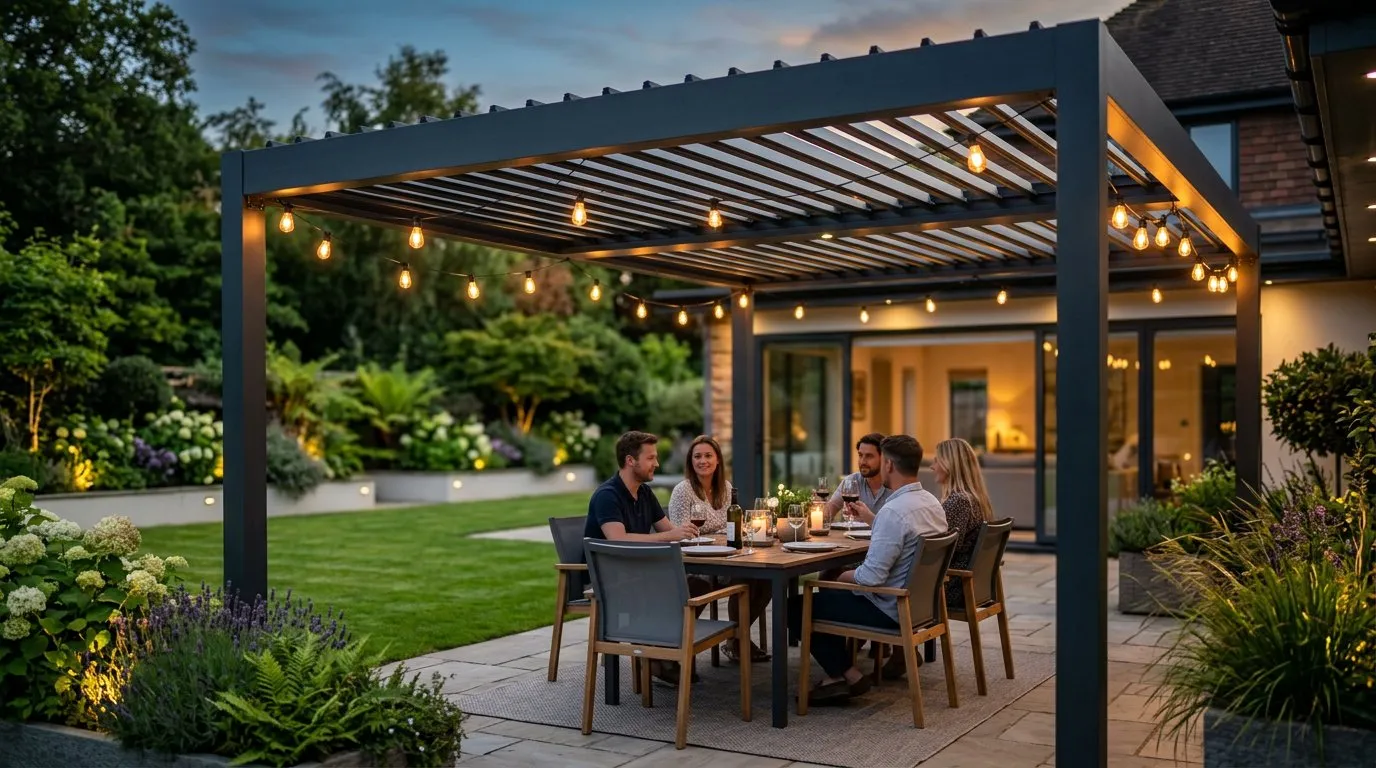
A louvred roof gives you more control over the weather, but plan where the rainwater goes.
Which plants grow well over a pergola?
Strong climbers and rambling roses are ideal for bigger pergolas. Very vigorous plants may need keeping in check as they grow, as the RHS pergola guide explains.
| Plant | Lovely for | Main job |
|---|---|---|
| Rambling rose | Long bendy stems and summer flowers | Tie in new stems and prune to keep the path clear |
| Climbing rose | Flowers again and again (on many varieties) | Water well near walls |
| Clematis | Colour in different seasons | Prune to suit its type |
| Honeysuckle | Scent and a relaxed look | Keep roots from drying out |
| Grape vine | Summer shade and autumn colour | Prune to stop it getting too dense |
| Wisteria | Hanging flowers on a strong framework | Needs a sturdy frame and pruning twice a year |
Plant a little away from each post, where the soil is less dry. Improve the soil and guide young stems up with wires or soft ties. Check ties every year so they don’t cut in.
Don’t put several strong climbers on a light kit frame. Woody stems, wet leaves and wind add a lot of weight over time. On louvred roofs, keep the moving parts and gutters clear of growth.
Our guides to climbing plants and pruning wisteria will help with your planting plan.
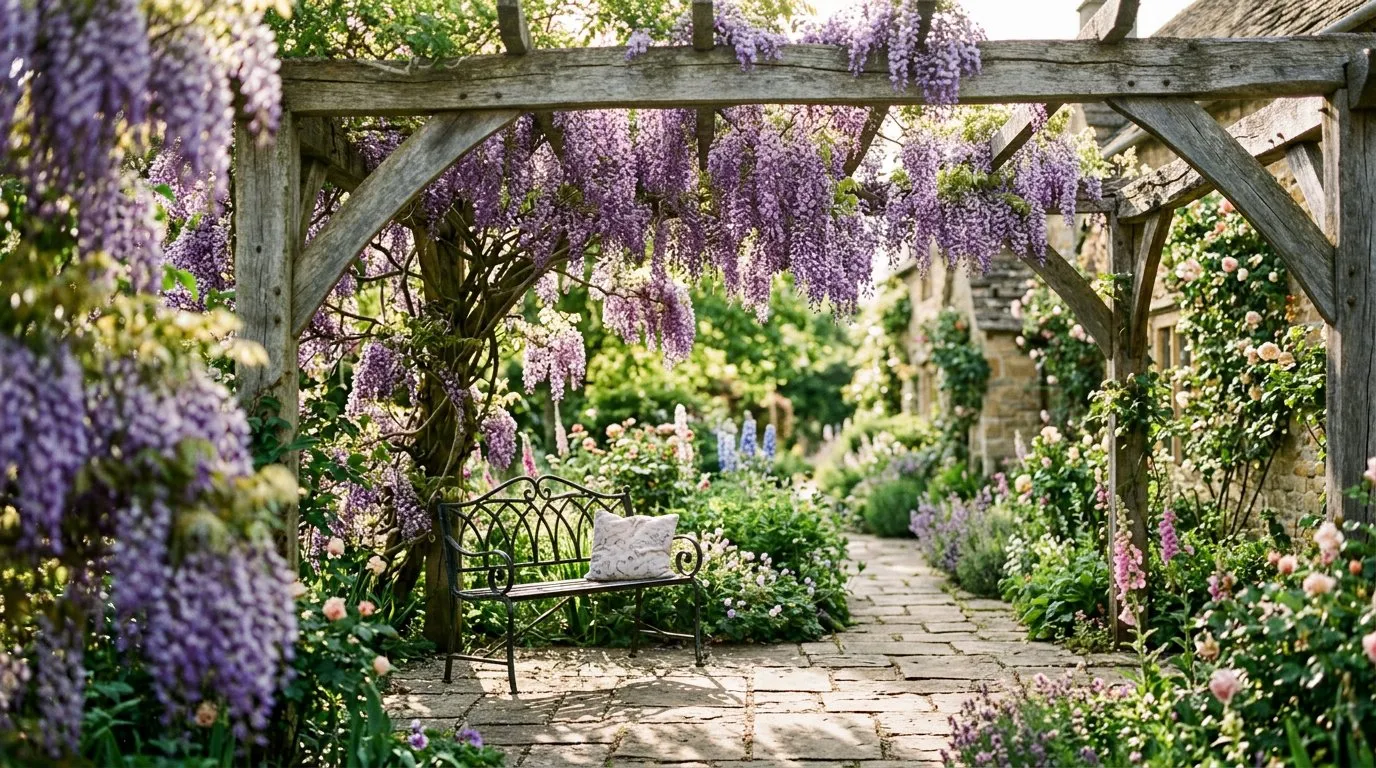
Wisteria needs a strong frame and regular pruning as it grows.
Common pergola mistakes
Choosing the frame before its purpose
A pretty pergola can still be useless. Decide what you’ll do under it and whether you want rain cover.
Ignoring the mature plant load
Young climbers look tiny. Grown-up woody stems and wet leaves are surprisingly heavy, so pick a frame that can cope.
Blocking the main route
Posts can squeeze a path or a chair. Test with your real furniture before digging any holes.
Sending roof water towards the house
Solid and louvred roofs collect a lot of water. Know where it will drain before you fit it, and keep that route clear.
Hiding timber in wet soil
Wood sitting in wet soil rots faster. Use the post fixings and foundations the maker recommends.
Browse more garden design guides, or plan the space around your pergola with our outdoor kitchen design guide.
Frequently asked questions
Do I need planning permission for a pergola in the UK?
It depends on the design, where it goes and local rules. Ask your local planning authority if you’re unsure. England’s rules are different from those in Scotland, Wales and Northern Ireland.
What is the best pergola for a small garden?
A simple open-roofed frame feels lightest. Size it to fit your table or bench, and keep your main path through the garden clear.
Is timber or aluminium better for a pergola?
Timber suits planted, traditional gardens. Aluminium needs less looking after and suits louvred roofs. Think about the look you want, the roof type and how much weight from climbers it needs to carry.
Which climbing plants work well on a pergola?
Roses, clematis, honeysuckle, grape vines and wisteria all work. Pick by how big the plant gets, how much sun it needs and how strong your frame is.
Can a pergola provide reliable rain cover?
Only with a solid or louvred roof. An open frame covered in plants gives lovely dappled shade, but you’ll still get wet when it rains.
Our team produces practical UK gardening guidance from source research, contributor records and established horticultural practice. Editorial standards are overseen by Matt W.