
Key takeaways
- Prune wisteria twice a year: in summer (July to August) and winter (January to February)
- In summer, cut the whippy green shoots back to five or six leaves
- In winter, shorten those same shoots to two or three buds
- Skipping or muddling the pruning is the usual reason wisteria won't flower
- Sharp bypass secateurs do most of the job, with loppers for thicker stems
- An overgrown wisteria can be brought back over two to three winters
Good pruning is the difference between a wall dripping with flowers and a tangle of leaves. The good news is it’s simple once you know the two-cut routine. If you grow wisteria on a wall, pergola or fence, this is the twice-a-year job that makes it shine.
A mature wisteria in full bloom in May is a real showstopper. Without pruning, though, all that energy goes into long green shoots that make leaves and nothing else. Here’s each cut step by step, with timings for UK gardens. For planting and general care, see our guide on how to grow wisteria in the UK.
Why does wisteria need pruning twice a year?
Wisteria is a very vigorous climber. Every summer it throws out long whippy shoots that can reach a couple of metres. Those shoots make leaves, not flowers. Pruning twice turns them into short stubby spurs, and spurs are where the flowers come from.
Here’s the simple version. Flower buds form near the base of each new shoot. Cut the shoot short in summer and the plant puts its effort into those buds instead of the leafy tip. The winter cut shortens the spur again, leaving just a few fat flower buds. The RHS wisteria pruning guide has diagrams if you’d like to see it drawn out.
Prune twice a year and your wisteria will reward you with masses of flowers every May.
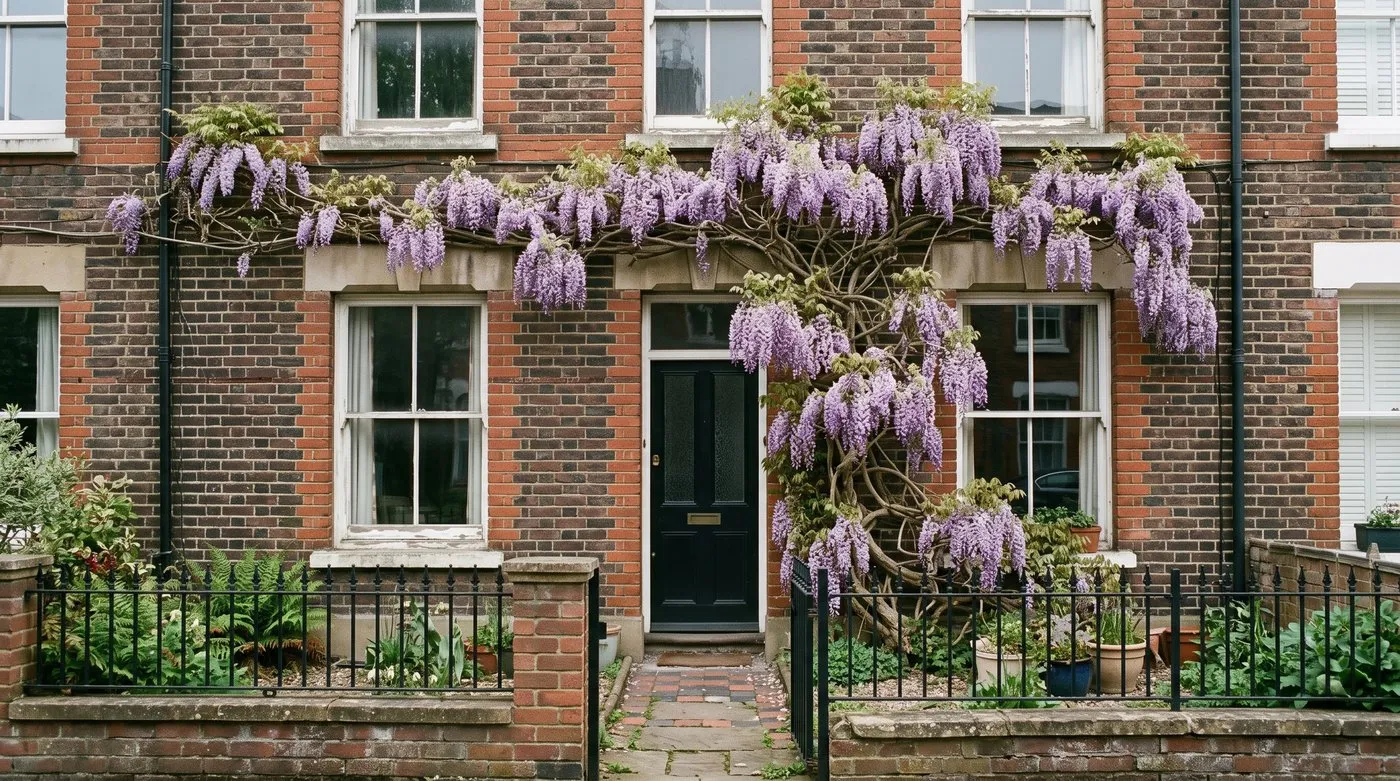
Twice-yearly pruning turns long leafy shoots into short spurs, and the spurs are where the flowers come from.
When to prune wisteria: the two-cut calendar
Timing matters. Prune too early in summer and the plant just grows more long shoots before autumn. Prune too late in winter and you may knock off swelling flower buds.
Summer prune: July to August
The summer cut is the more important of the two. Do it once flowering is over and the long green side shoots have finished stretching out. In most of the UK that means mid-July to late August.
Wait until the shoots are at least 30cm long. If they’re still short and growing fast in early July, give them another couple of weeks. They should feel a little firm at the base, not soft and green all the way along.
Winter prune: January to February
The winter cut tidies up and shortens the spurs. Do it while the plant is bare and dormant. January suits most of the UK, and early February is fine in Scotland and the north. In the south, finish by mid-February, as buds start to swell in mild areas by late February.
How to summer prune wisteria step by step
This is where it all starts. The summer cut does more for flowering than anything else, and it’s the one many people skip.
What you are cutting
Look at your wisteria in late July. The main branches (the thick, woody stems tied to wires or wound round a pergola) will have sprouted dozens of long, thin green shoots. These are this year’s side shoots, and some will be well over a metre long. Each has a row of leaves along it.
Where to make the cut
Count five or six leaves from where the shoot joins the main branch. Cut just above the fifth or sixth leaf with sharp bypass secateurs. That leaves a stub of about 15-20cm. Don’t fret about the exact count. The idea is simply to shorten every long shoot to a short stub. For general pruning know-how, see our guide to pruning shrubs.
What to leave alone
Leave any shoots you want to grow into new main branches. If your wisteria hasn’t filled its wall or pergola yet, pick one or two well-placed shoots and tie them along the wires. Let them grow on unpruned until they’re long enough. Everything else gets cut to five or six leaves.
Summer prune: count five or six leaves from the main branch and cut just above.
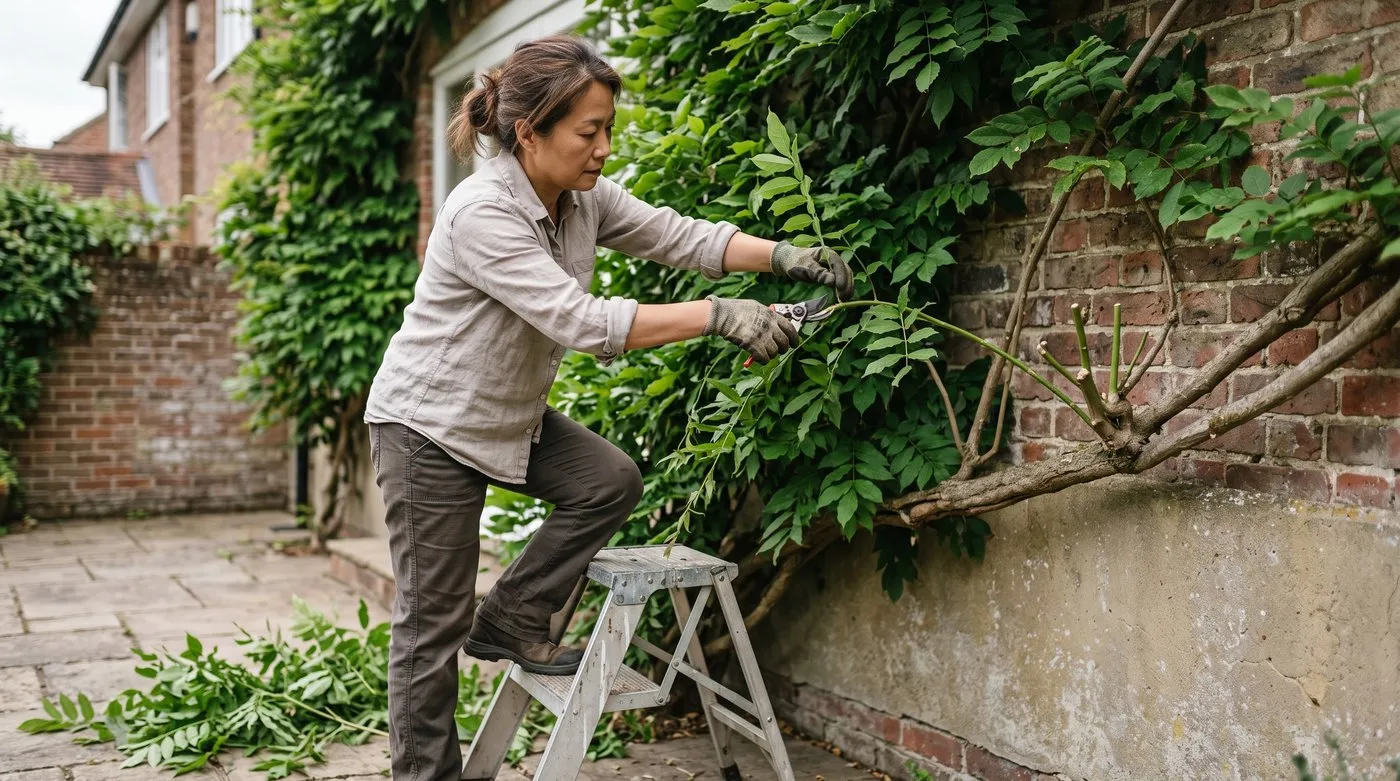
Count five or six leaves out from the main branch and cut just above. Leave any shoot you want to train in as a new branch.
How to winter prune wisteria step by step
The winter cut is quicker. You’re simply going back to the same shoots and making them shorter.
What you are cutting
In January or February the plant is bare, so you can see everything. You’ll spot the stubs you cut in summer, now with a few buds along them. Flower buds are fat and round. Leaf buds are slimmer and pointed. It’s worth learning the difference.
Where to make the cut
Cut each summer stub back to two or three buds from the main branch. That leaves a spur about 5-8cm long. The fat buds at the base are the ones that open into flowers in May. Cutting off the thinner leaf buds further along lets the plant put its effort into flowering.
Common winter pruning mistakes
The big one is cutting too hard. Cut flush to the main branch and you remove the flower buds, so there’s nothing in spring. Always leave two or three buds. The other mistake is leaving it too late. If buds are already swelling and showing colour in late February, prune straight away or wait until after flowering.
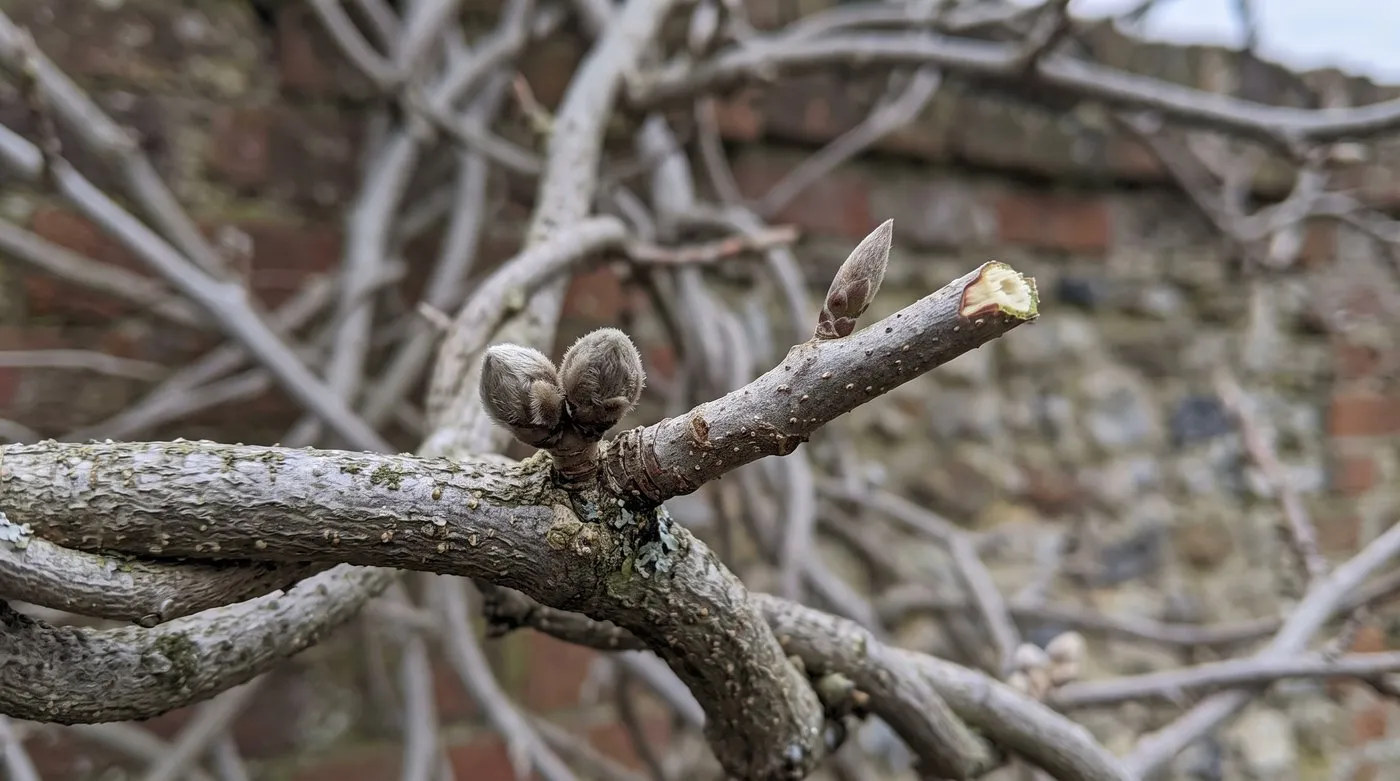
Fat, round buds are flower buds and slim, pointed ones are leaf buds. Always leave two or three buds on each spur.
Tools you need for pruning wisteria
You don’t need much, but it should be sharp. Blunt tools crush stems and leave ragged wounds.
| Tool | What it’s for | Stem size |
|---|---|---|
| Bypass secateurs | Summer and winter cuts on side shoots | Up to 15mm |
| Loppers | Thicker stems when renovating | 15-35mm |
| Pruning saw | Big cuts on old wood | Over 35mm |
| Stepladder | Reaching the top of a wall or pergola | |
| Thick gloves | Protecting your hands from rough bark |
Training a new wisteria on a wall or pergola
For the first few years after planting, you’re building a permanent set of main branches. You’ll start the summer and winter cuts along the way. Wisteria is a wonderful choice for covering a pergola or a sunny wall.
Year one
After planting, pick one strong main stem and tie it upright to the wires. Remove the other shoots at the base. If the stem is long enough, train it along the lowest wire and let the tip keep growing up.
Year two
As the main stem reaches each horizontal wire (spaced about 45cm apart), train a side branch along the wire in each direction. Tie it in firmly but not tightly, leaving room for the stem to thicken. Start summer pruning the side shoots on these branches to five or six leaves.
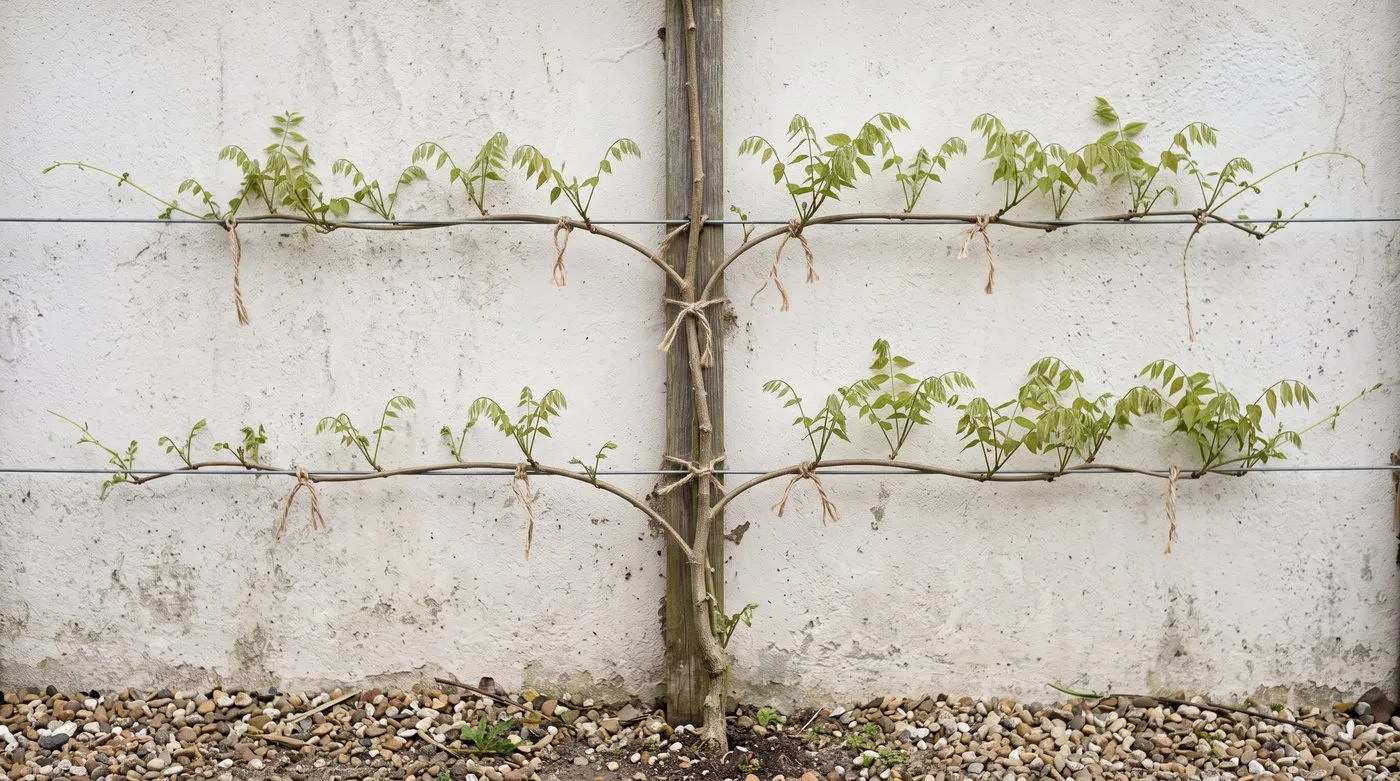
Tie new branches along the wires firmly but not tightly. They thicken fast, and a tight tie can bite into the stem.
Year three onwards
Keep training branches along the wires until the space is covered. Start the full twice-a-year routine on all side shoots. The framework is usually finished by year four or five. After that it’s just upkeep: five or six leaves in summer, two or three buds in winter.
Pergola training
On a pergola, train the main stem up one post and along the top beams. Let side shoots hang down through the open top for that classic curtain of flowers. Prune them the same way: five or six leaves in summer, two or three buds in winter.
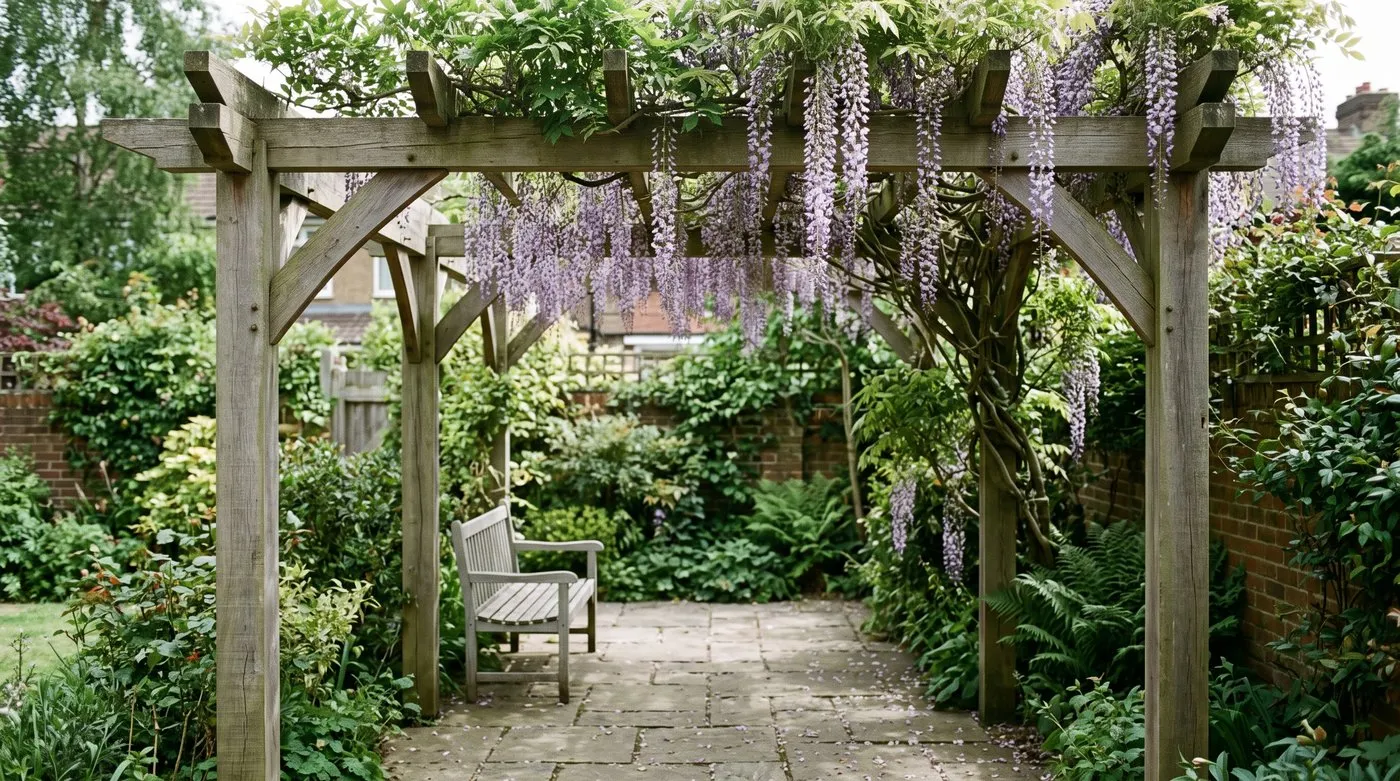
On a pergola, let side shoots hang through the beams and prune them just like a wall plant. Make sure the structure is solid.
How to deal with an overgrown wisteria
Inherited a monster? It’s a very common problem. Years of missed pruning leave a tangle of thick woody stems, hardly any flowers and shoots poking into gutters, windows and roof tiles.
Renovation pruning: the three-year plan
Spread the work over two or three years so you don’t shock the plant.
Year one (winter): Remove all dead wood. Cut out a third of the oldest, thickest main branches at the base. Tie the best of the rest onto the wires. In summer, cut all side shoots to five or six leaves.
Year two (winter): Take out another third of the old branches if needed. Strong new shoots will have grown from the cuts. Pick the best as new main branches and tie them in. Keep up the twice-a-year routine on everything else.
Year three: The framework should now be mostly new. Keep up the summer and winter cuts and the flowers should come back well from here.
Emergency hard prune
If the plant is doing real damage (blocking gutters, lifting tiles), you can cut it right back to the main trunk in winter. Wisteria is tough and will regrow. Expect no flowers for two or three years while it rebuilds. Keep this as a last resort.
An overgrown wisteria can be brought back over two or three winters by taking out a third of the oldest stems each time.
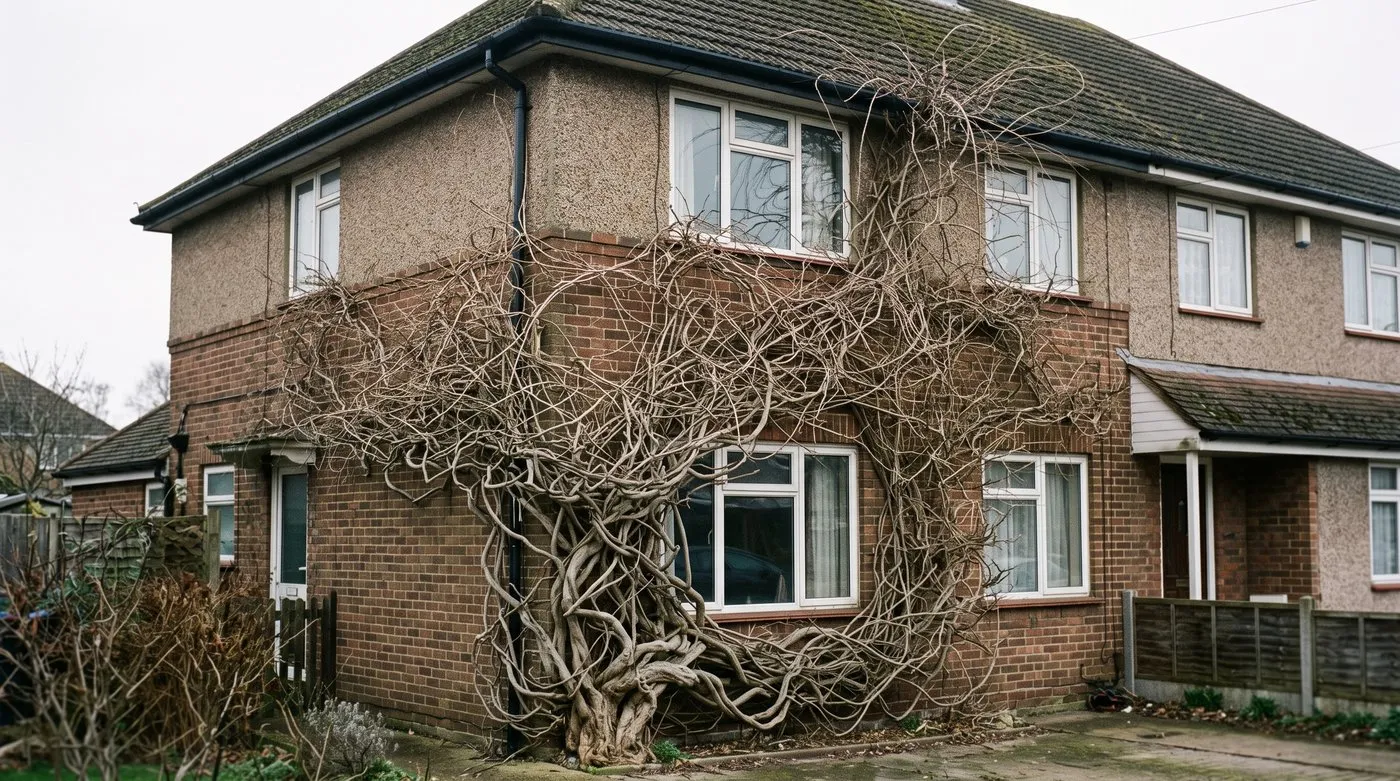
An overgrown wisteria is best brought back over two or three winters. Only cut it right back if it’s damaging gutters or tiles.
Wisteria not flowering? Here’s why
This is the question everyone asks, and pruning is usually the answer. Here are the five main causes, most common first.
1. Wrong pruning, or none at all
Without the twice-a-year cut, the plant pours its energy into long leafy shoots, and the buds at their base never turn into flower buds. Start the routine now and you can expect flowers within one or two seasons.
2. Seed-grown plants
Wisteria grown from seed is a gamble. Some take many years to flower and some never do. Always buy a named, grafted plant from a good nursery. You’ll see the graft as a bulge near the base. If yours was a gift or a car boot sale bargain, it may have been grown from seed.
3. Too much nitrogen
Rich, leafy feeds and lawn fertiliser washing into the bed encourage leaves rather than flowers. Switch to a high-potash feed such as sulphate of potash or tomato feed in early spring.
4. Not enough sunlight
Wisteria needs full sun to flower well. A north-facing wall or heavy tree shade will stop it. Try cutting back overhanging branches, or as a last resort, move the plant in autumn.
5. Late frost damage
Opening flower buds in April can be killed by a late frost. This hits northern and exposed gardens more than sheltered southern ones. Throw horticultural fleece over the plant on frosty nights while the buds are swelling.
Japanese vs Chinese wisteria: pruning differences
You prune both the same way. Only the timing shifts a little, because they flower at slightly different times. Both are among the finest climbing plants for UK gardens.
| Chinese (W. sinensis) | Japanese (W. floribunda) | |
|---|---|---|
| Twines | Anticlockwise | Clockwise |
| Flowers | May | Late May to June |
| Flower trails | Long | Very long |
| Summer prune | Mid-July to mid-August | Late July to late August |
| Winter prune | January to mid-February | January to mid-February |
| Best for | Large walls, house fronts | Pergolas and arches |
Chinese wisteria finishes flowering first, so you can start its summer cut from mid-July. Japanese wisteria flowers a week or two later, so late July to August suits it better. The winter cut is the same for both.
Month-by-month wisteria calendar
Here’s the year for an established wisteria in the UK.
| Month | What to do |
|---|---|
| January | Winter prune. Cut side shoots to two or three buds (5-8cm) |
| February | Finish winter pruning by mid-month in the south. Northern gardens can carry on into early February |
| March | Feed with sulphate of potash or tomato feed around the base. Check ties and wires |
| April | Watch for late frost and cover swelling buds with fleece on cold nights. Don’t prune |
| May | Enjoy the flowers. Don’t prune |
| June | Tie in shoots chosen as new main branches. Remove suckers from below the graft |
| July | Summer prune from mid-July (Chinese) or late July (Japanese). Cut long shoots to five or six leaves |
| August | Finish summer pruning by late August. Check ties aren’t too tight |
| September | Plant new wisteria. Look for stems creeping under tiles or into gutters |
| October | Carry on planting if needed. Clear fallen leaves from the base |
| November | Check the supports. Repair wires, replace broken vine eyes, fix loose ties |
| December | Order new plants for spring. Plan where new branches will go |
Summer vs winter prune at a glance
| Summer prune (July to August) | Winter prune (January to February) | |
|---|---|---|
| What you cut | Long, whippy green side shoots | The same shoots, now short stubs |
| Where to cut | Five or six leaves out (15-20cm) | Two or three buds out (5-8cm) |
| Why | Moves energy from leaves to buds | Leaves just the fat flower buds |
| What to leave | Main branches and shoots for new branches | Main branches |
| Tools | Bypass secateurs | Bypass secateurs, loppers for thick stubs |
| If you skip it | Far fewer flowers | Long spurs that make leaves, not flowers |
Common pruning mistakes to avoid
Pruning only once a year. The winter cut alone doesn’t make short enough spurs. The summer cut actually matters more.
Cutting too hard in winter. Cut flush to the main branch and there’s nothing left to flower. Always leave two or three buds.
Pruning while it flowers. Never prune in May or June while it’s in bloom. Wait until the flowers fade and the new shoots reach at least 30cm.
Cutting main branches by mistake. The thick woody stems are the plant’s skeleton. Leave them alone unless you’re renovating. Only prune the thin side shoots.
Using blunt tools. Ragged cuts heal slowly. Keep your secateurs sharp, and clean them between plants if you’re pruning more than one.
Ignoring suckers. Grafted wisteria sometimes sends up shoots from below the graft. These come from the rootstock and won’t give you the same flowers. Pull them off at the base as soon as you see them, rather than cutting them.
Pruning wisteria on different supports
Wall-trained wisteria
The classic way. Fix horizontal wires to the wall with vine eyes about 45cm apart and train the main branches along them. Prune all side growth twice a year. A warm wall helps protect early buds from frost, and south or south-west facing walls give the best results.
Pergola wisteria
Train the main stem up one post and along the top beams. Side shoots hang down through the gaps, making curtains of flowers. Prune them just like a wall plant. Make sure the pergola is solid timber or metal. A flimsy arch will buckle under a grown-up wisteria.
Standard (tree-shaped) wisteria
This is a single trunk tied to a stout stake, with a rounded head of branches on top. Prune the side growth in the head twice a year, and rub off any shoots that appear on the trunk. It’s a great shape for pots, patios and smaller gardens.
Wisteria is one of the most spectacular flowering shrubs and climbers you can grow. Get into the twice-a-year habit and you’ll have a wall or pergola dripping with scented flowers every May. If your wisteria shares a sunny wall with roses, our rose pruning guide covers those too.
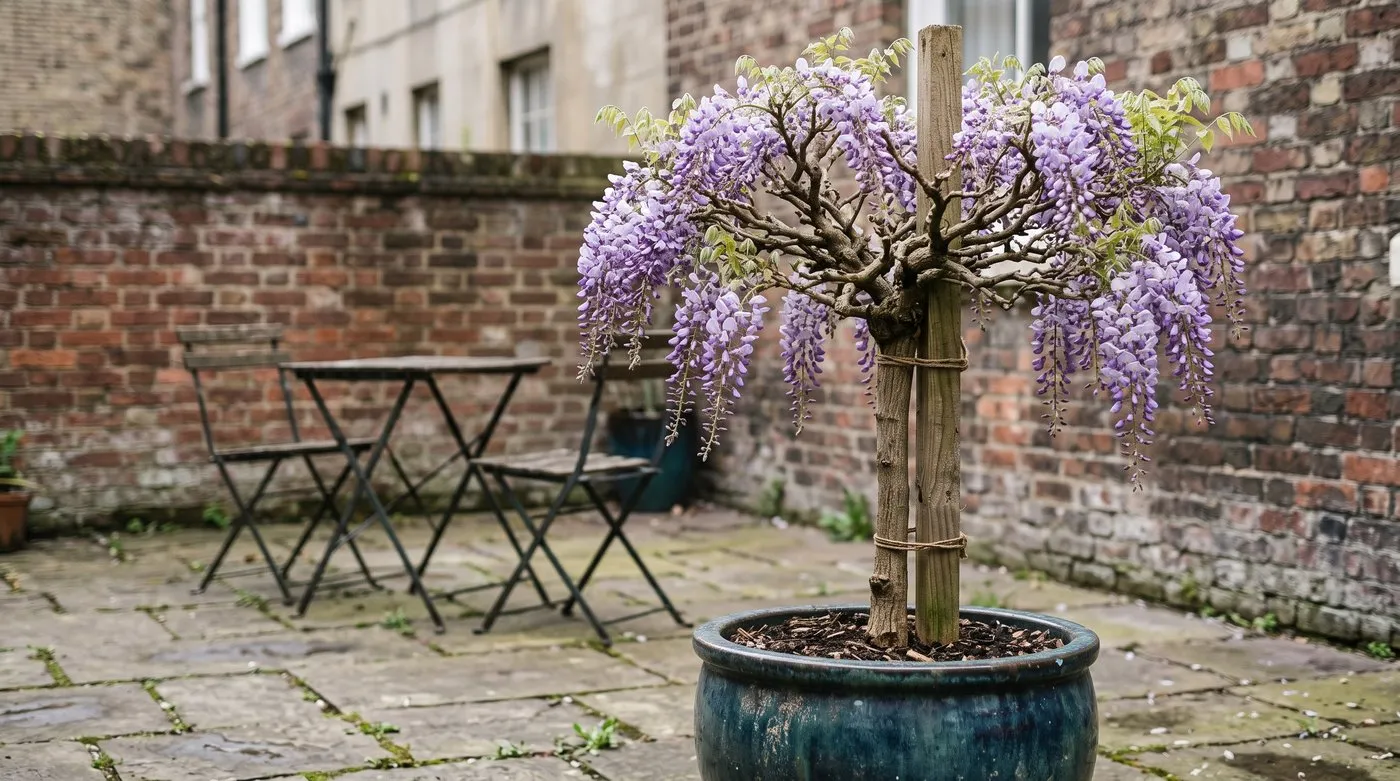
A standard wisteria suits pots and small patios. Prune the head twice a year and rub off any shoots on the trunk.
Frequently asked questions
For variety ideas and planting advice, the RHS wisteria growing guide is a handy read.
When should I prune wisteria in the UK?
Twice a year, in summer and in winter. In July or August, cut the long whippy shoots back to five or six leaves. In January or February, when the plant is bare, shorten the same shoots to two or three buds. You need both cuts for a good show of flowers.
Why is my wisteria not flowering?
Usually it’s down to pruning. Skip the summer cut and the plant puts its effort into leaves, not flower buds. Other causes are plants grown from seed, which can take many years to flower, too much nitrogen feed, too much shade and late frosts in April. Buy a grafted plant, prune twice a year and feed with high-potash fertiliser.
Can I prune wisteria in autumn?
It isn’t the best time. Aim for July to August and January to February instead. If you missed the summer prune, a light trim in early autumn is better than nothing. Leave the main shortening until winter, and don’t prune in spring while it’s in bud or flower.
How do I fix an overgrown wisteria?
Take it back gently over two or three winters. Each winter, remove some of the oldest, thickest stems. Keep the younger main branches and tie them in. Shorten side shoots to two or three buds. Wisteria recovers well, though you’ll get fewer flowers for a year or two.
What is the difference between pruning Chinese and Japanese wisteria?
None really, they’re pruned the same way. Cut whippy shoots to five or six leaves in summer and two or three buds in winter. Japanese wisteria has longer flower trails and can flower a little later than Chinese wisteria. Just do the summer prune once the flowers are over.
Do I need to prune wisteria every year?
Yes, ideally twice a year. Without it, long whippy shoots take over and make leaves instead of flowers. Before long the plant is a tangle with few blooms. Regular summer and winter pruning keeps it tidy and full of flower buds.
What tools do I need to prune wisteria?
Sharp bypass secateurs do most of the work. Use loppers for thicker stems and a pruning saw for old wood when renovating. Bypass blades cut more cleanly than anvil secateurs, which can crush stems. Keep your tools sharp and clean, and use a steady ladder for high growth.
Our team produces practical UK gardening guidance from source research, contributor records and established horticultural practice. Editorial standards are overseen by Matt W.


