Key takeaways
- Buy a named, grafted plant. Seed-grown wisteria may take years to flower
- Plant in full sun, ideally on a south or south-west facing wall
- Prune twice a year, in July or August and again in January or February
- Wisteria gets very heavy, so give it strong wires or a sturdy pergola
- Chinese wisteria twines anticlockwise, Japanese wisteria clockwise
- Feed with a high-potash feed, not a nitrogen-rich one
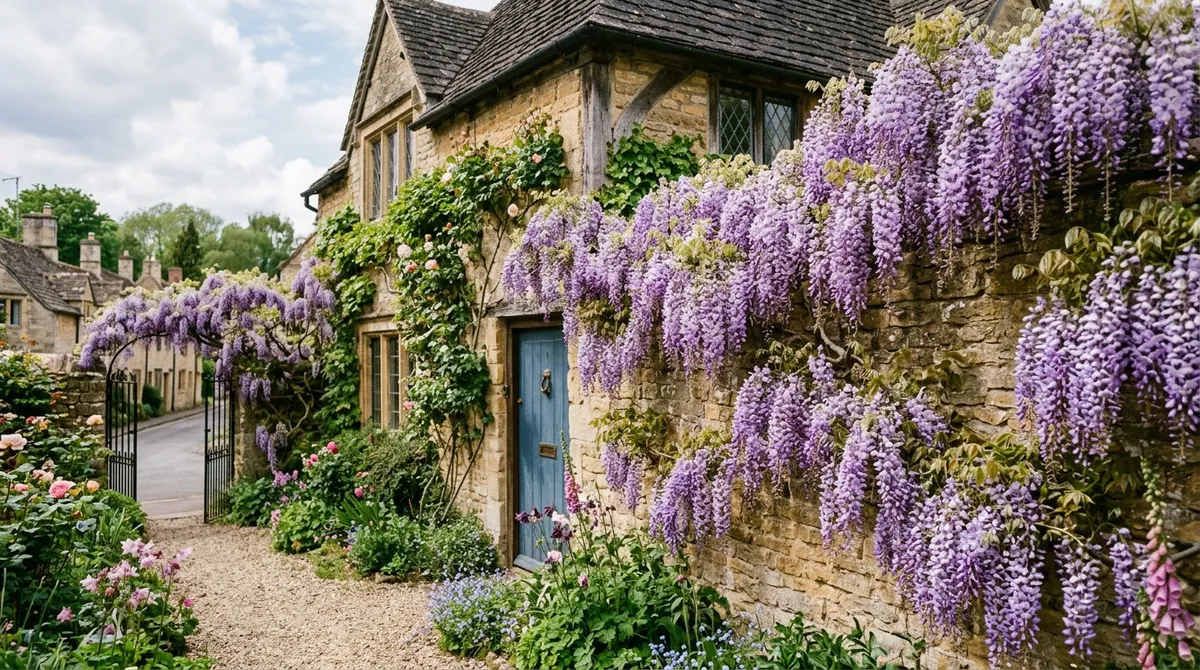
Wisteria in full flower is one of the great sights of a British spring. Long trails of lilac, pink or white flowers dripping from a wall or pergola are hard to beat. A mature wisteria in late May makes people stop at your gate and stare.
Growing it well comes down to three things: buying the right plant, giving it strong support and learning a simple twice-a-year prune. Get those right and it’ll flower for generations. It’s one of our favourite climbing plants for UK gardens.
Which type of wisteria should I grow?
There are two main kinds, Chinese and Japanese, each with lovely varieties.
Chinese wisteria (Wisteria sinensis)
The most popular wisteria in Britain. It twines anticlockwise and has violet-blue flower trails about 20 to 30cm long in May, before the leaves are fully open. The flowers hang against bare stems, which looks stunning. The scent is sweet and carries well. ‘Prolific’ is a favourite, as it often flowers young. ‘Alba’ has white flowers.
Japanese wisteria (Wisteria floribunda)
Known for its extra-long flower trails. It twines clockwise and flowers a little later, as the leaves open. Trails are often 30 to 60cm long, and up to 90cm on ‘Multijuga’ (also sold as ‘Macrobotrys’). The flowers open gradually from the top down, so the show lasts longer. ‘Rosea’ is pink and ‘Alba’ is white.
How to tell them apart
Look at which way the stems twist. Chinese wisteria twines anticlockwise and Japanese twines clockwise. Chinese also tends to flower before its leaves, and Japanese with them.
How do I plant wisteria?
Start with a named, grafted plant from a good nursery. You’ll see the graft as a bulge near the base of the stem. Grafted plants usually flower within a few years, sometimes in the first or second. Seed-grown plants are a gamble: some take many years, and some never flower.
Planting step by step
- Dig a hole 60cm wide and 40cm deep, at least 45cm out from the wall.
- Mix the soil you dug out with a bucketful of well-rotted compost.
- Plant at the same depth it was in the pot. Don’t bury the graft.
- Lean the main stem towards its support and tie it in every 30cm or so.
- Water well and add a mulch, keeping it away from the stem.
Choosing the right spot
Full sun is a must for good flowers. A south or south-west facing wall is ideal. The warm wall also helps protect early buds from late frost. Wisteria grows in most garden soils but does best in fertile, well-drained ground. Avoid very chalky or very wet soil.
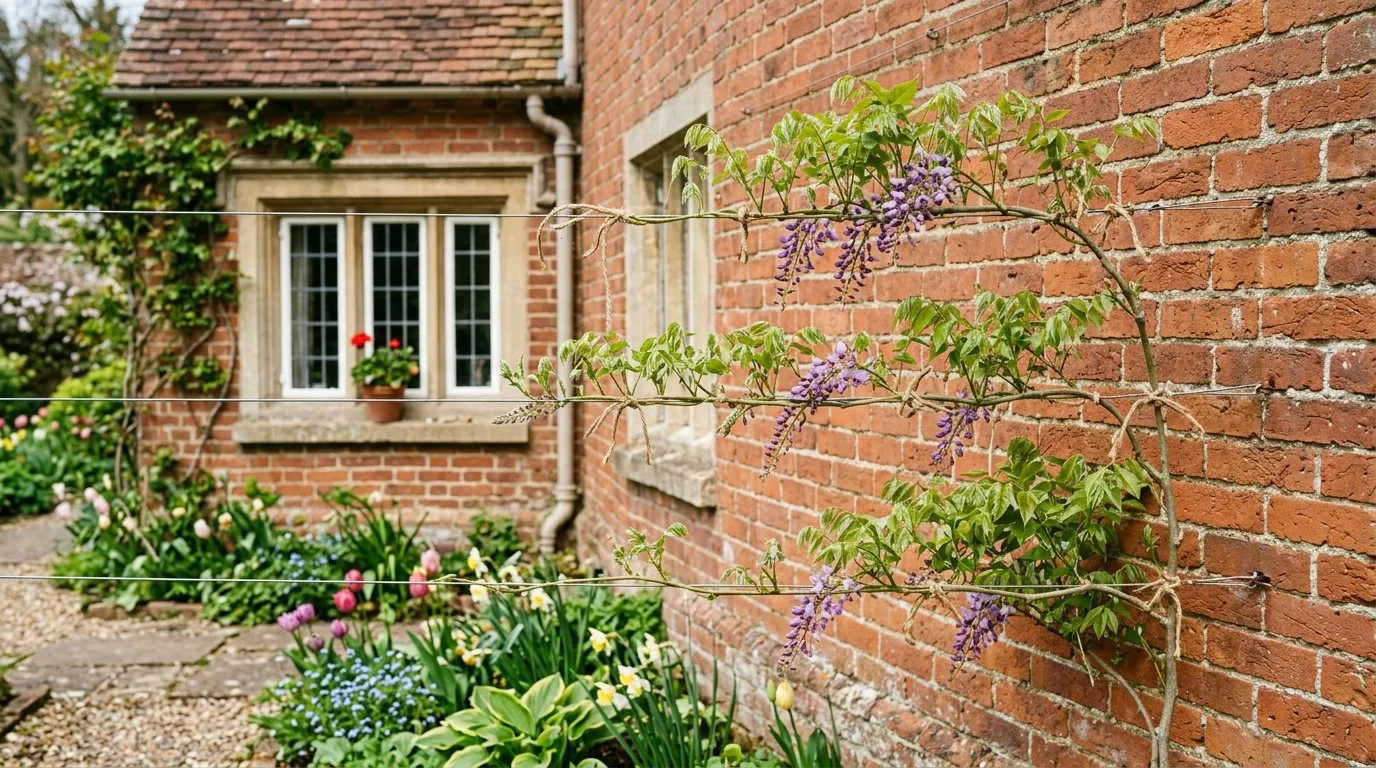
Train wisteria along horizontal wires about 45cm apart. The framework takes a few years to build.
How do I support wisteria?
Make the support stronger than you think you need. An old wisteria gets very heavy, with thick woody stems that catch the wind.
Wires on a wall
Fix strong galvanised wire to the wall with vine eyes in the mortar joints, not the bricks. Space the wires about 45cm apart, starting 30cm off the ground. Pull them tight. Tie the main stems along the wires and train them sideways, like a trained fruit tree.
Pergola or arch
Use chunky timber or metal. Flimsy garden arches buckle under an older wisteria. Set posts at least 60cm deep in concrete. Train the main stem up and over, and let the side branches hang through the top.
As a small tree
You can also grow wisteria as a free-standing standard, tied to a stout stake. It’s great for smaller gardens and patios. Keep the main stem tied in, and prune the side shoots to build a rounded head. It takes a few years to form, but looks fantastic.
How do I prune wisteria?
Prune twice a year: in summer and in winter. It sounds fussy but takes well under an hour each time once you get the hang of it.
Summer pruning (July to August)
After flowering, wisteria sends out lots of long, whippy shoots. In July or August, cut each one back to five or six leaves from the main branch. This encourages flower buds instead of more leafy growth.
Winter pruning (January to February)
When the plant is bare, cut those same shoots back again to two or three buds. These short stubs carry the flower buds that open in May. Skip this step and you’ll get more leaves and fewer flowers.
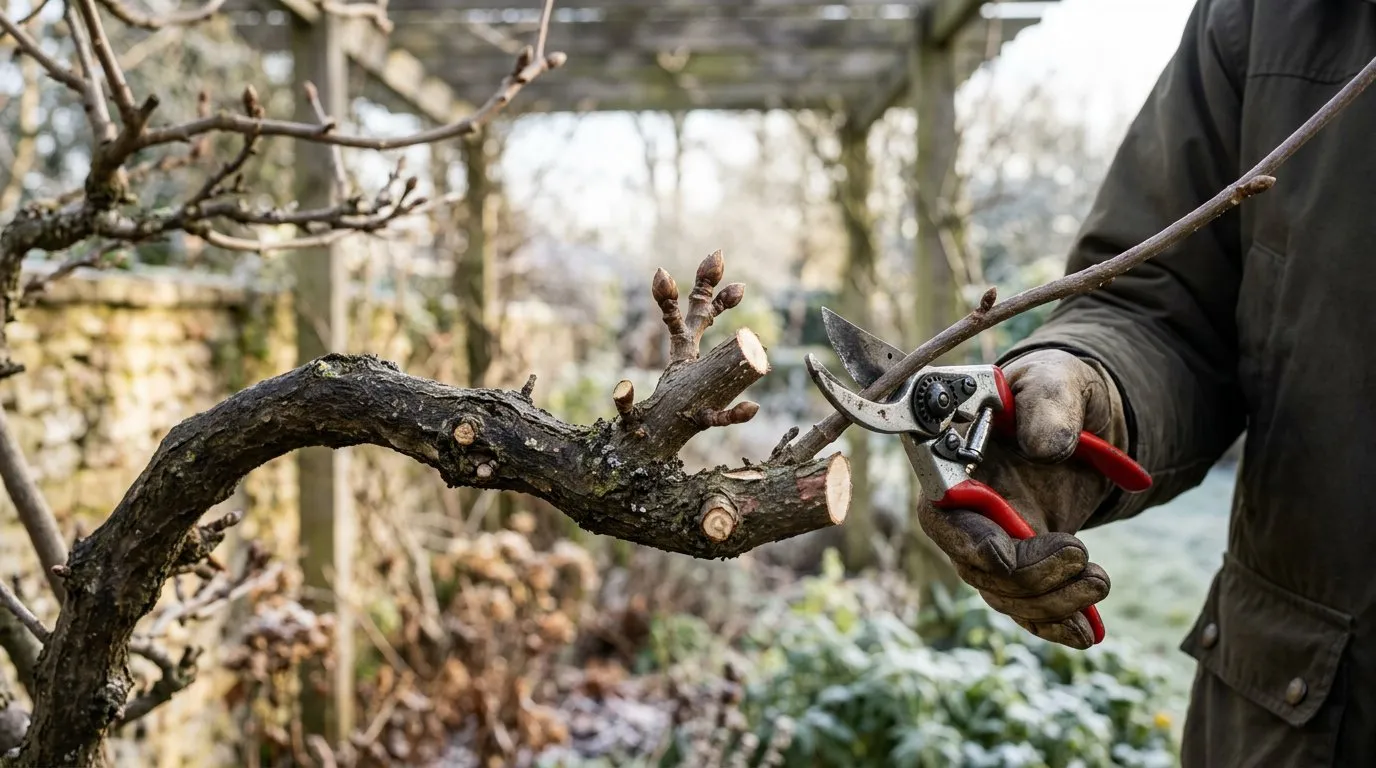
In winter, cut the summer-pruned shoots back to two or three buds.
Building the framework
For the first few years, pick strong shoots to make the main framework. Tie them along the wires about 45cm apart. Once they reach the length you want, treat them as permanent branches and prune their side shoots as above.
Common wisteria problems
Not flowering
The most common problem by far. It’s usually because the plant was grown from seed, pruned wrongly, planted in shade or fed too much nitrogen. Buy grafted plants, prune twice a year, grow in full sun and use a high-potash feed in spring.
Frost damage to buds
A late frost in April can spoil the opening buds, especially in cold or exposed gardens. A south-facing wall helps. If a hard frost is forecast as buds swell, drape fleece over the plant overnight.
Lots of leaves, no flowers
Too much nitrogen-rich feed or manure gives leaves instead of flowers. Switch to a high-potash feed like sulphate of potash or tomato feed in March. As a last resort, some gardeners slice a spade into the soil around the plant, a little way out from the trunk, to trim the roots and nudge it into flowering.
Damage to the house
Wisteria stems are strong and can lift roof tiles, block gutters and squeeze behind drainpipes. Regular pruning keeps it in check. Never let stems creep under tiles or behind pipes.
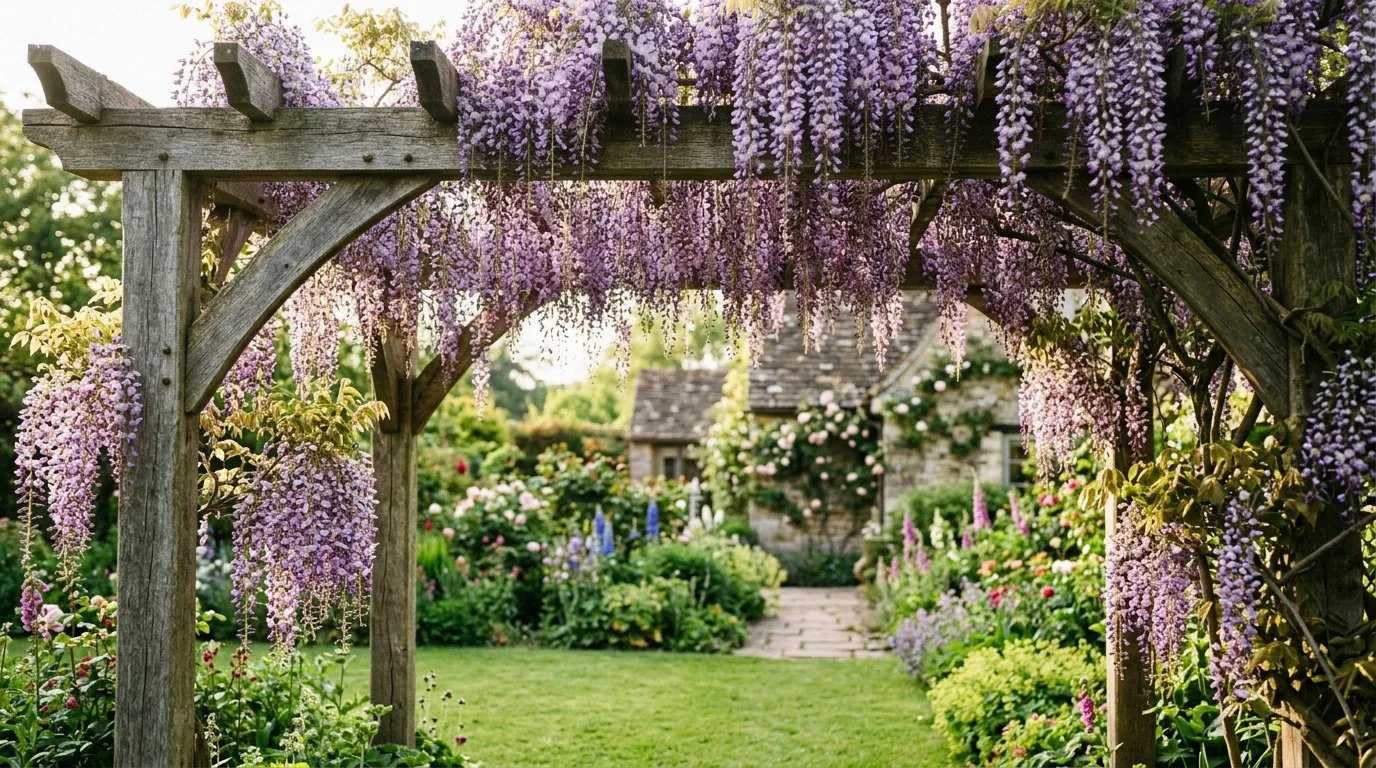
A well-kept wisteria on a sturdy pergola will flower for decades.
Wisteria jobs month by month
| Month | Jobs |
|---|---|
| January to February | Winter prune shoots to two or three buds |
| March | Give a high-potash feed |
| April to May | Enjoy the flowers. Fleece buds if a hard frost is forecast |
| June | Tie in new framework shoots |
| July to August | Summer prune long shoots to five or six leaves |
| September to October | A good time to plant new wisteria |
| November to December | Check ties, wires and supports before winter storms |
Wisteria makes any front garden or sunny wall special. For summer scent on a warm wall nearby, jasmine flowers from June to September. Our guide to pruning roses is handy if you’re growing climbing roses alongside. The RHS wisteria guide has more varieties and training ideas.
For more ideas on what to grow with it, see our best climbing plants for UK gardens.
Frequently asked questions
Why is my wisteria not flowering?
Usually because it was grown from seed. Seed-raised plants can take many years to flower, and some never do. Buy named, grafted plants. Wrong pruning, too much nitrogen feed, frosted buds and too much shade can also stop flowering. Pruning twice a year helps most plants flower.
When should I prune wisteria?
Twice a year, in summer and in winter. In July or August, cut the long, whippy side shoots back to five or six leaves. In January or February, shorten those same shoots to two or three buds. This encourages flower buds rather than leaves.
How long does wisteria take to flower?
A grafted plant usually flowers within a few years. Some flower in their first or second year. Seed-grown plants can take many years, and some never flower. Buy a named grafted variety, plant it in full sun and prune it twice a year.
Can I grow wisteria in a pot?
Yes, in a large pot at least 60cm across. Use John Innes No. 3 compost. A snug pot can even help it flower. Water often, as pots dry out fast, and give a high-potash feed in spring. Prune twice a year. A wisteria trained as a little standard tree suits a pot well.
Will wisteria damage my house?
It can damage gutters, drainpipes, roof tiles and weak mortar if left to roam. Pruning twice a year keeps it under control. Train it on strong horizontal wires fixed with vine eyes, and keep stems away from gutters, windows and tiles.
What is the difference between Chinese and Japanese wisteria?
They twine in opposite directions. Chinese wisteria (Wisteria sinensis) twines anticlockwise and usually flowers before its leaves open. Japanese wisteria (Wisteria floribunda) twines clockwise and flowers as the leaves appear. Japanese types usually have longer flower trails, especially ‘Multijuga’. Both are hardy in the UK.
Can I grow wisteria from cuttings?
Yes, but it’s often hit and miss. Take softwood cuttings in early summer from this year’s growth. Cut just below a leaf joint, dip in rooting powder and push into gritty compost. Keep warm and moist. Plants from cuttings may take longer to flower than named grafted plants.
Our team produces practical UK gardening guidance from source research, contributor records and established horticultural practice. Editorial standards are overseen by Matt W.