Key takeaways
- A pergola gives dappled shade but no real rain cover until climbers fill it
- A gazebo is the one to choose if you want to sit out in the rain
- Shade sails are the cheapest shade but should come down for winter
- A louvred aluminium pergola can open for sun or close against rain
- Fix every post into a concrete pad, never onto paving slabs
- In England, structures within 2m of a boundary must stay under 2.5m tall
A pergola gives dappled shade, a gazebo keeps the rain off, and a canopy is the cheapest quick shade. The best one for you depends on whether you want to sit out in a shower, how windy your garden is and how much you want to spend.
This guide compares the three side by side so you can choose. If you’ve already settled on a pergola and want style and planting ideas, head to our pergola ideas for UK gardens.
What’s the difference between a pergola, a gazebo and a canopy?
The roof is the difference. Open slats, a solid roof or fabric each do a different job.
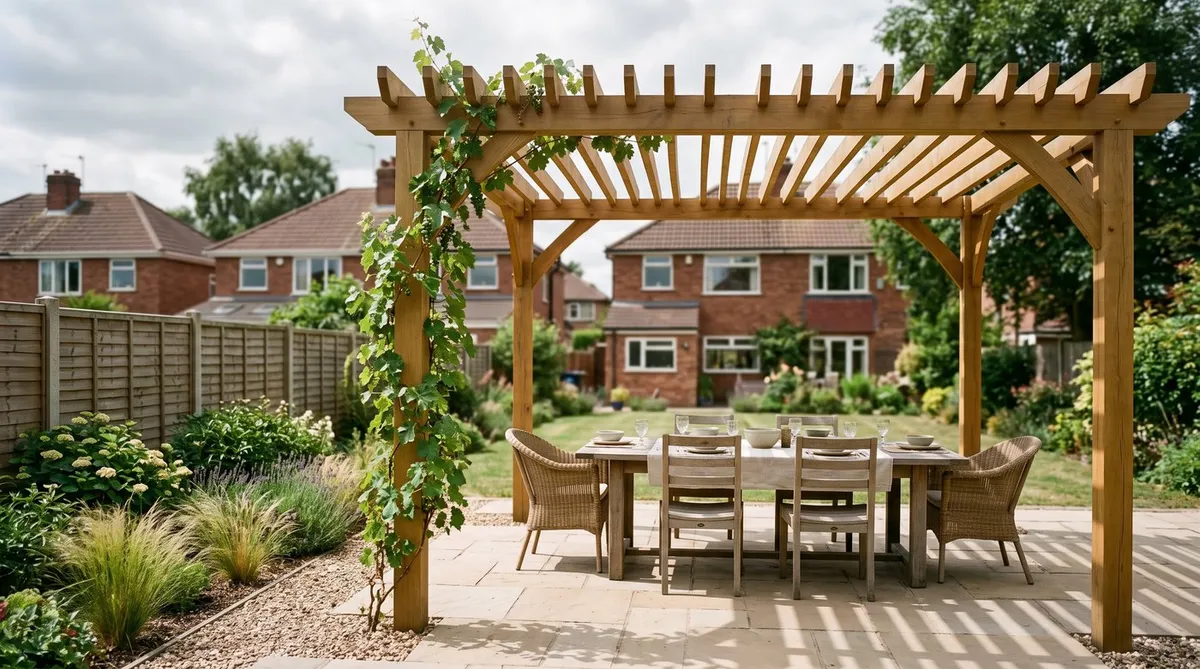
A pergola is a frame of posts and beams with an open, slatted roof. Sun is filtered rather than blocked, and rain passes straight through. Climbers grown over it provide most of the shade.
A gazebo is a freestanding structure with a solid roof, often with a floor and part-height sides. It’s the only one of the three that acts like a small building.
A canopy is fabric. That covers tensioned shade sails, retractable awnings fixed to the house wall and pop-up party gazebos.
Some products blur the lines. A louvred aluminium pergola has blades that close into a rain-proof roof. A gazebo with a fabric roof is really a canopy on legs.
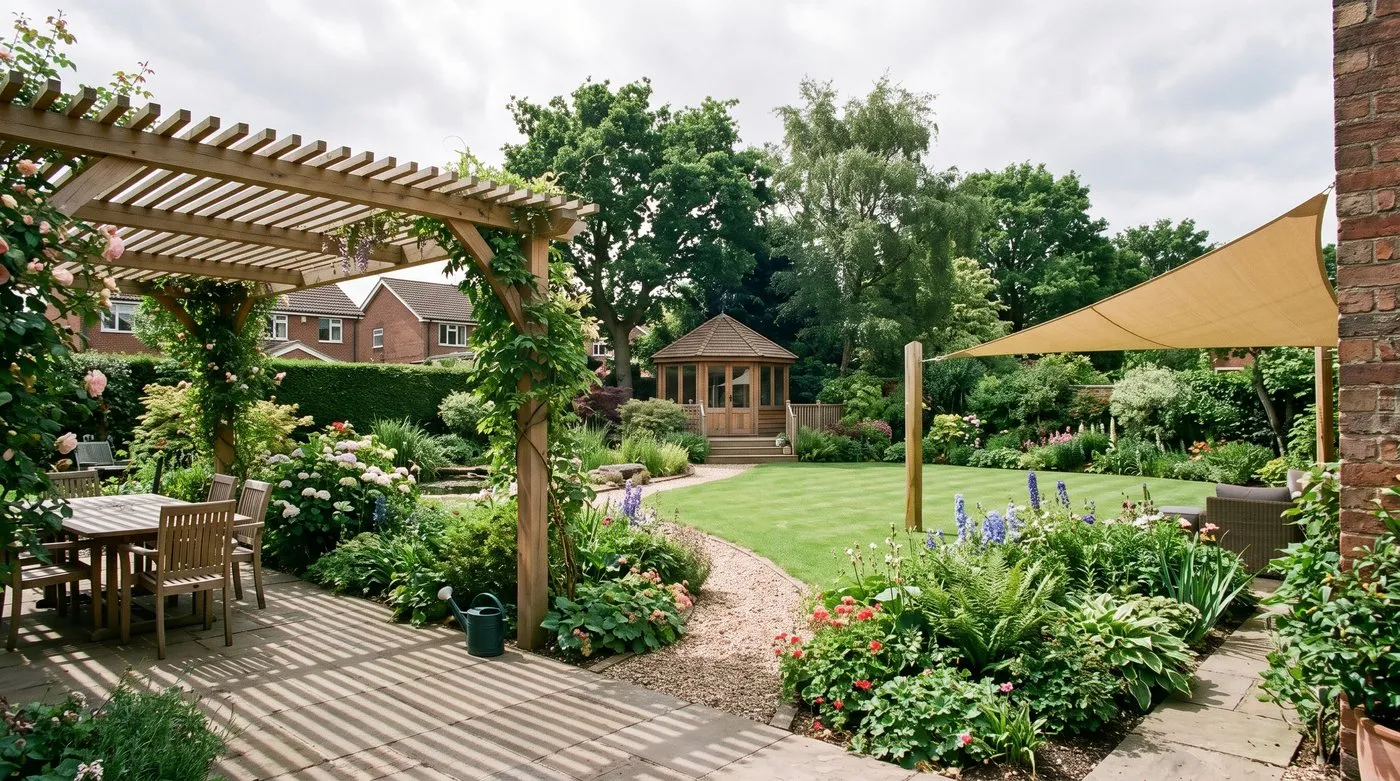
All three in one garden: open slats on the left, a solid gazebo roof in the middle and a fabric sail on the right.
Pergola vs gazebo vs canopy compared
For rain choose a gazebo or louvred pergola, for wind a timber pergola, and for a small budget a shade sail.
| Structure | Shade | Rain cover | Wind | Upkeep | Cost | Best for |
|---|---|---|---|---|---|---|
| Timber pergola | Dappled, more once climbers grow | Almost none | Good, wind passes through | Re-treat every few years | Medium | Best value, planting, exposed gardens |
| Louvred aluminium pergola | Adjustable | Good with blades closed | Good when well fixed | Very little | High | Using the patio in any weather |
| Timber gazebo | Full | Good | Fair on solid pads | Roof and timber care | Medium to high | A sheltered outdoor room |
| Retractable awning | Full when out | Light showers only | Poor, roll it in when windy | Little | Medium | Patios with no room for posts |
| Shade sail | Good | Very little | Poor, take down in winter | Store it each autumn | Low | Cheap summer shade |
The louvred pergola is the most flexible, as it can shade, open or shut. It is also the most expensive, so it only makes sense if you’ll sit out in grey or showery weather.
Which one keeps the rain off?
Only a gazebo, a louvred pergola with the blades shut or an awning keeps a table dry. An open pergola won’t, and planting doesn’t change that much.
A gazebo gives the most reliable cover. Shingle, felt and polycarbonate roofs all keep out steady rain, though open sides let in sideways showers.
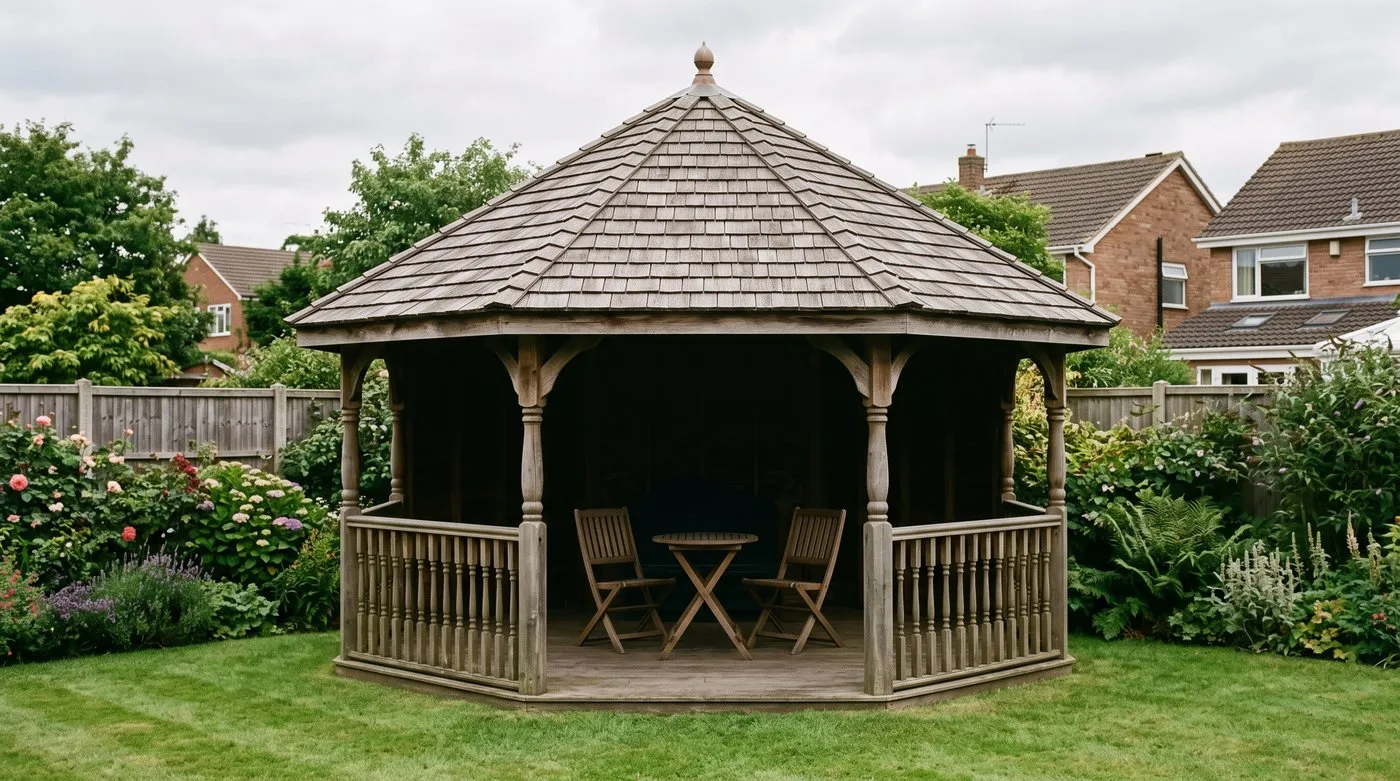
A timber gazebo gives proper rain cover, but the solid roof also blocks low spring and autumn sun.
A retractable awning is fine in light showers, but roll it in for heavy rain, wind or snow. Water pooling on the fabric can bend the arms.
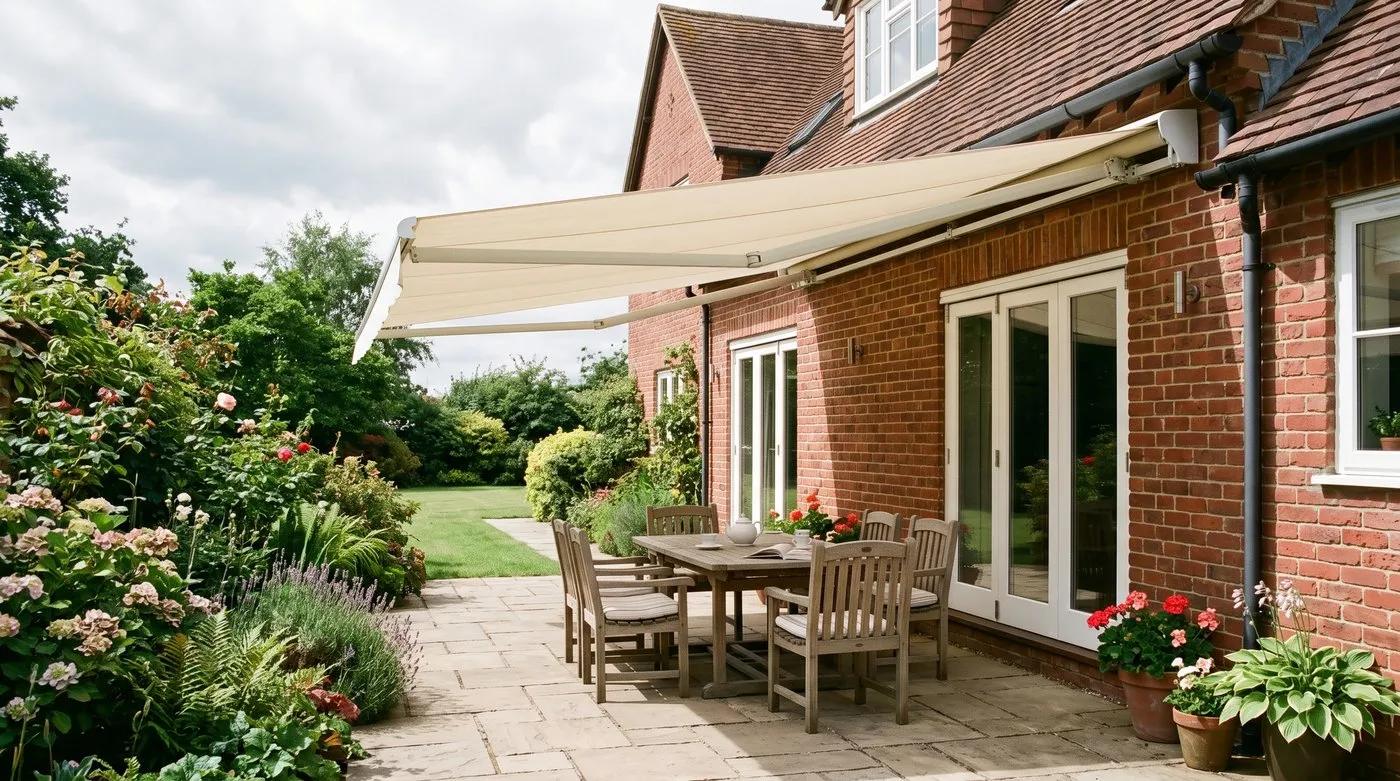
An awning takes up no floor space at all, which helps on a shallow patio.
A louvred pergola closes into a sealed roof, with rain carried away down the posts. Most need a solid concrete base. Motorised versions also need an outdoor power supply put in by a qualified electrician.
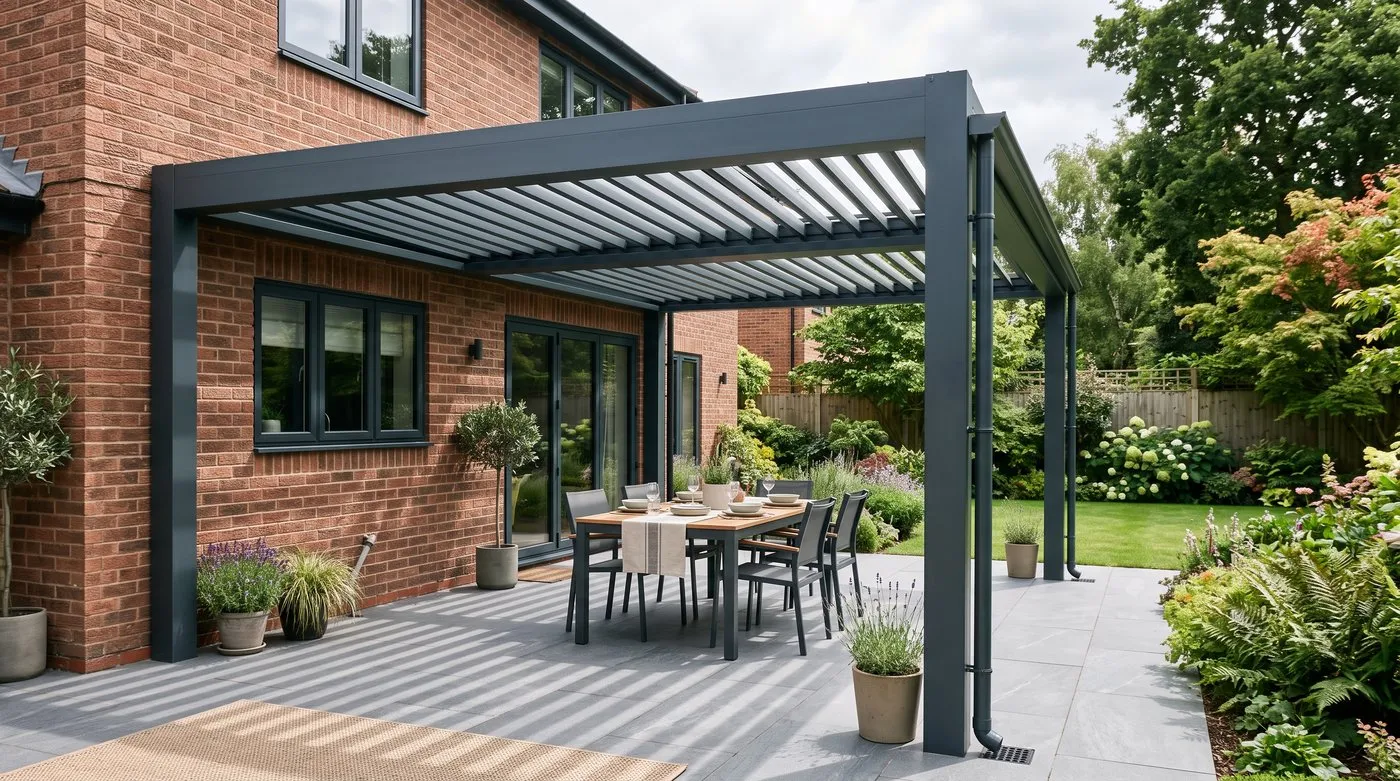
Louvred blades tilt for sun or shade and close flat when the rain comes in.
Do you need planning permission for a pergola or gazebo?
Usually not, if you stay within the height limits. In England, most garden structures count as outbuildings under permitted development.
The main rules are:
- Within 2m of a boundary, the structure must be no more than 2.5m tall at its highest point.
- Further from boundaries, you can go up to 4m with a pitched roof, or 3m with any other roof.
- Eaves must be no higher than 2.5m.
- It can’t be in front of the main face of the house, which rules out most front gardens.
- Outbuildings and extensions together can’t cover more than half the garden around the original house.
Listed buildings need consent, and conservation areas, National Parks and other protected areas have tighter rules. A pergola fixed to the house may be judged as an extension instead. Check the Planning Portal outbuildings guidance before you order. Wales, Scotland and Northern Ireland have their own rules.
Some newer estates also have covenants in the deeds that limit what you can build. Planning rules don’t override those, so check your title documents.
Which structure copes best with wind?
An open timber pergola copes best, as wind blows through the slats. A solid roof or a tight sail catches the wind, and gusts try to lift it.
That lifting force is what pulls structures out of the ground. So the fixings matter more than the frame.
- Never fix posts onto paving slabs. A slab on sand simply lifts with the structure.
- Set each post into its own concrete pad, or use a post anchor bolted into a solid concrete base.
- Lift slabs where the posts go, dig out, pour concrete pads, then re-lay the cut slabs around them.
Many kits come with base plates meant for a solid concrete slab. On an ordinary patio, those screws work loose over a few winters. Sorting the pads before the kit arrives is far easier than fixing a leaning frame later.
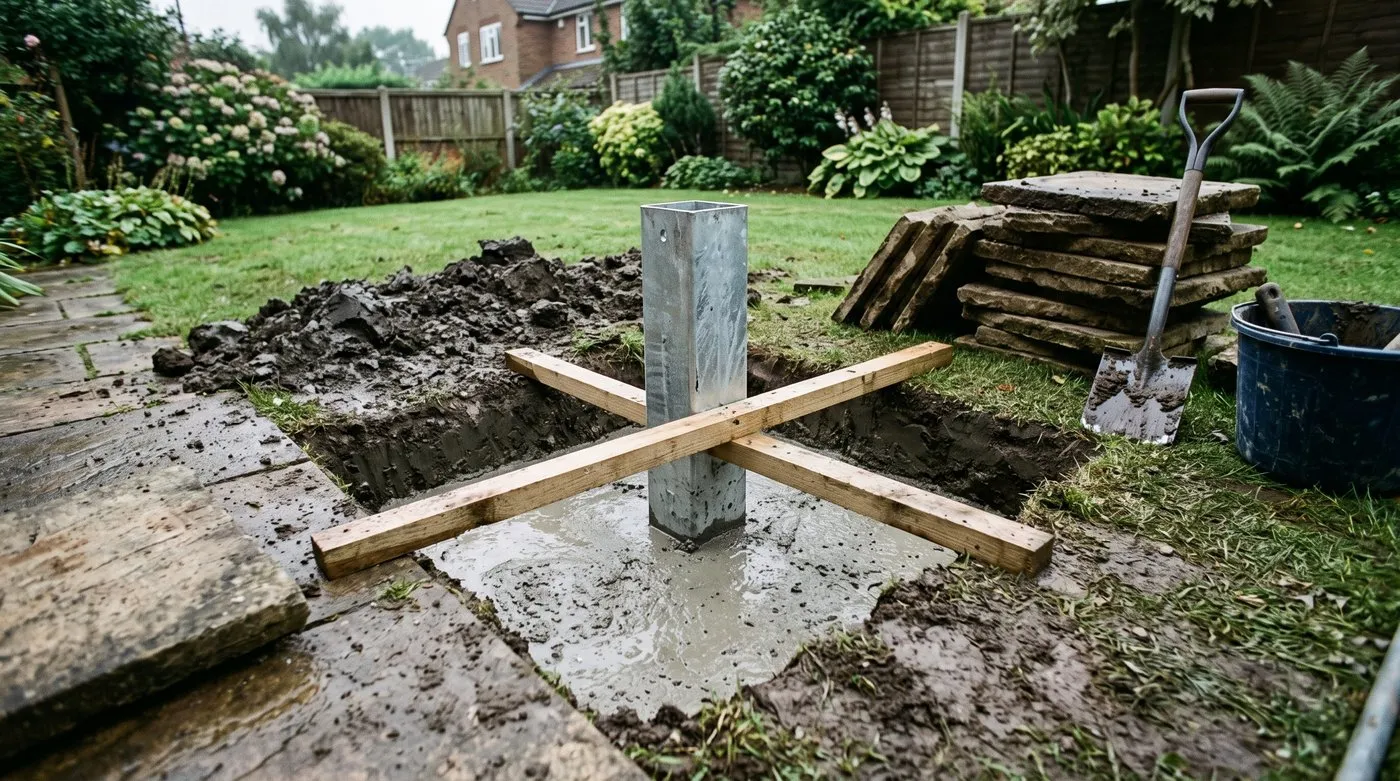
A post anchor set into a concrete pad. This is what keeps a pergola standing through winter gales.
In very exposed or coastal gardens, choose a sturdy timber pergola and skip sails and awnings, or use them only on calm summer days.
Living with a timber pergola
A bare pergola gives striped shade; climbers turn it into real shade. That takes a few years, so plan for it.
Wisteria, grape vines and climbing roses are classic pergola plants, but they take several seasons to cover the top. Our wisteria growing guide explains the pruning that helps. While you wait, annual climbers such as runner beans or sweet peas fill gaps in a single summer. For more ideas, see scented climbers for walls, arches and pergolas.
Deciduous climbers are a bonus. They shade the patio in summer and let winter sun through once the leaves drop, which a solid roof can’t do.
Treat softwood every few years with a wood preservative. Keep posts out of direct contact with the soil, using concrete pads or metal anchors, so they don’t rot at ground level.
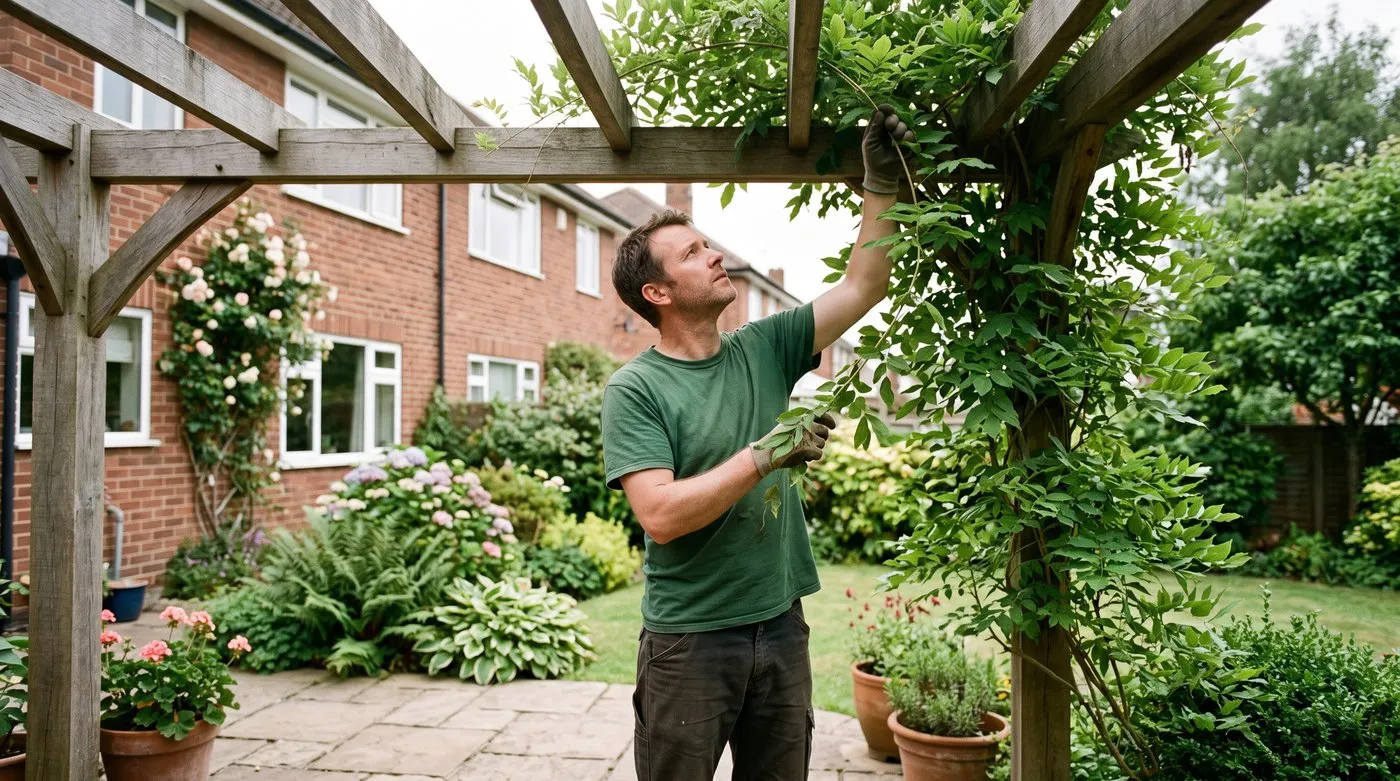
Tying in new growth across the beams helps a climber cover the pergola faster.
Getting a shade sail right
A shade sail is the cheapest way to shade a patio, but it has to be put up tightly and taken down for winter.
- Fabric. Breathable knitted HDPE shade cloth suits most UK gardens. It lets hot air out and blocks most of the sun. Waterproof sails hold heat and catch more wind.
- Tension. Pull it tight with turnbuckles at the corners. A slack sail flaps, and flapping wears out the stitching fast.
- Slope. Set one or two corners lower so rain runs off. A flat sail collects water, which stretches the fabric.
- Fixings. Use strong eye bolts into sound masonry, or sturdy posts set in concrete. Never fix a corner to a fence post.
Take the sail down in October and store it dry. Winter gales are what usually tear sails or rip out their fixings.
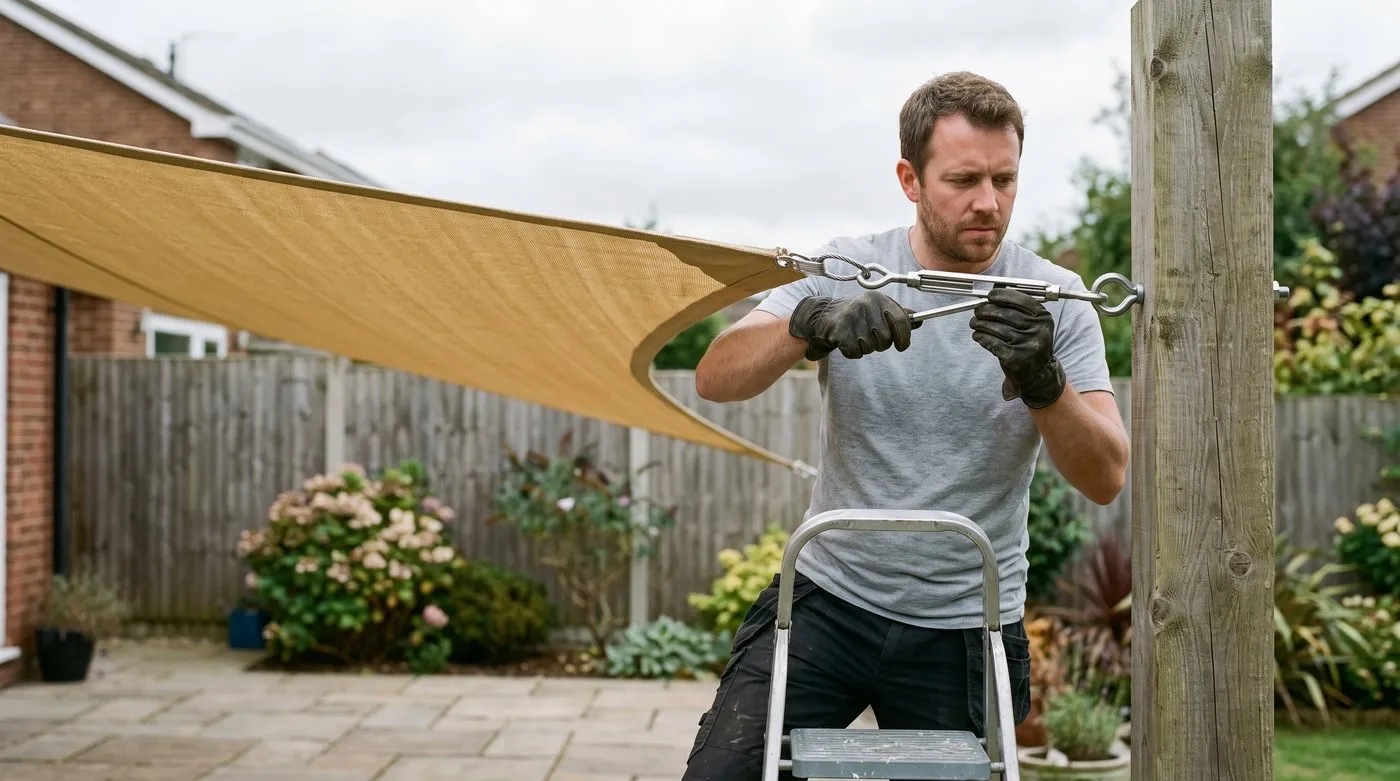
Tightening the turnbuckle on each corner stops the sail flapping itself apart.
Which should you choose? A quick decision guide
Work down the list and stop at the first “yes”.
| Question | If yes | If no |
|---|---|---|
| Do you want to sit out in the rain? | Gazebo or louvred pergola | Keep going |
| Is your budget small? | Shade sail, taken down each winter | Keep going |
| Is there no room for posts? | Retractable awning on the house wall | Keep going |
| Is the garden exposed or by the coast? | Timber pergola on concrete pads | Keep going |
| Do you want winter sun on the patio? | Timber pergola with a deciduous climber | Louvred aluminium pergola |
If you just want a little shade for a small patio, a parasol tree is another lovely option. And for something you can use all year, see our garden room ideas.
Seasonal care for pergolas, gazebos and canopies
| Month | Task |
|---|---|
| February | Check post fixings after winter gales for wobble or rust |
| March to April | Pour concrete pads for new structures once the ground isn’t frozen |
| April | Put shade sails back up and tighten the turnbuckles |
| May | Re-treat softwood timbers in dry weather before climbers leaf up |
| June to July | Tie climbers into the beams as they grow |
| August | Brush awning fabric clean with water; don’t pressure wash it |
| September | Clean and check louvre blades and their drainage |
| October | Take down shade sails and store them dry |
| November | Clear leaves from gazebo roofs and gutters |
| December | Keep awnings rolled in and locked |
Common mistakes with pergolas, gazebos and canopies
- Fixing to paving slabs. Wind lifts the slab and the structure together. Use concrete pads.
- Expecting a pergola to keep the rain off. It won’t. Choose a gazebo, louvred roof or awning if you want to stay dry.
- Leaving a shade sail up all winter. Gales and wet weather wear it out and can pull out its fixings.
- Forgetting the 2.5m rule. A tall gazebo close to the fence may need planning permission. Measure to the very top.
- No power for a motorised pergola. Arrange the outdoor supply with an electrician before you order.
For more ideas on shaping your outdoor space, visit our garden design hub.
Frequently asked questions
What is the difference between a pergola and a gazebo?
A pergola has an open slatted roof; a gazebo has a solid one. That one difference decides the rest. A pergola filters sun and lets rain through, while a gazebo keeps off both.
Do I need planning permission for a pergola in the UK?
Usually not, if it is under 2.5m tall within 2m of a boundary. Further from boundaries you can go higher. Listed buildings and some protected areas have tighter rules, so check the Planning Portal first.
Does a pergola keep the rain off?
No, an open slatted pergola gives almost no rain cover. Water falls straight through the gaps. A louvred pergola with closing blades, a gazebo or an awning will keep a table dry.
Is a louvred pergola worth the money?
Yes, if you’ll really use the patio in changeable weather. The blades tilt for sun or shade and close against rain. It costs much more than timber and often needs a thicker base and a power supply.
Which garden structure is best in a windy garden?
An open timber pergola on concrete pads copes best. Wind passes through the slats instead of catching a solid roof. Gazebos and fabric canopies catch more wind, so they need stronger fixings.
How long do garden shade structures last?
Aluminium lasts longest, then timber, then fabric. Powder-coated aluminium needs very little care. Softwood needs re-treating every few years. Shade sail fabric wears out fastest, especially if left up all year.
Is a shade sail worth it in the UK?
Yes, for cheap summer shade, as long as you take it down in autumn. It gives little shelter from rain. Left up through winter gales, a sail can tear or pull out its fixings.
Now you know which structure suits you, our patio garden ideas for small spaces will help you dress the space underneath it.
Our team produces practical UK gardening guidance from source research, contributor records and established horticultural practice. Editorial standards are overseen by Matt W.