Key takeaways
- A parasol or roof-form tree has a flat, trained canopy on a bare trunk, giving shade with headroom underneath
- Multi-stem trees branch from near the ground and suit a natural, sculptural look rather than shading a table
- Choose the clear stem height before you buy, as it can't be raised later
- Roof forms need cutting back to their frame once a year or they lose the flat shape
- Keep trees well away from the house, especially thirsty ones like plane on shrinkable clay
- Water new trees through every dry spell for their first two summers
A parasol tree gives you a leafy roof over a table or bench, without taking over a small garden. Its branches are trained flat on top of a bare trunk, like a green umbrella. Multi-stem trees are the other popular choice: softer, more natural, and lovely for their bark and blossom.
This guide explains the difference, which trees to choose, where to plant them and how to keep a parasol tree flat. If you want privacy from upstairs windows too, the guide to privacy design for an overlooked garden shows how a canopy fits into the bigger picture.
What is a parasol or roof-form tree?
A tree trained with a flat canopy on a bare trunk. Nurseries also sell them as roof-form, roof-trained or flat-top trees.
The nursery grows a straight trunk to a set height, then ties the side branches out along a flat frame of bamboo or metal. Over several years the branches thicken and hold their position. The result is a thin, flat sheet of leaves above head height, with clear space underneath.
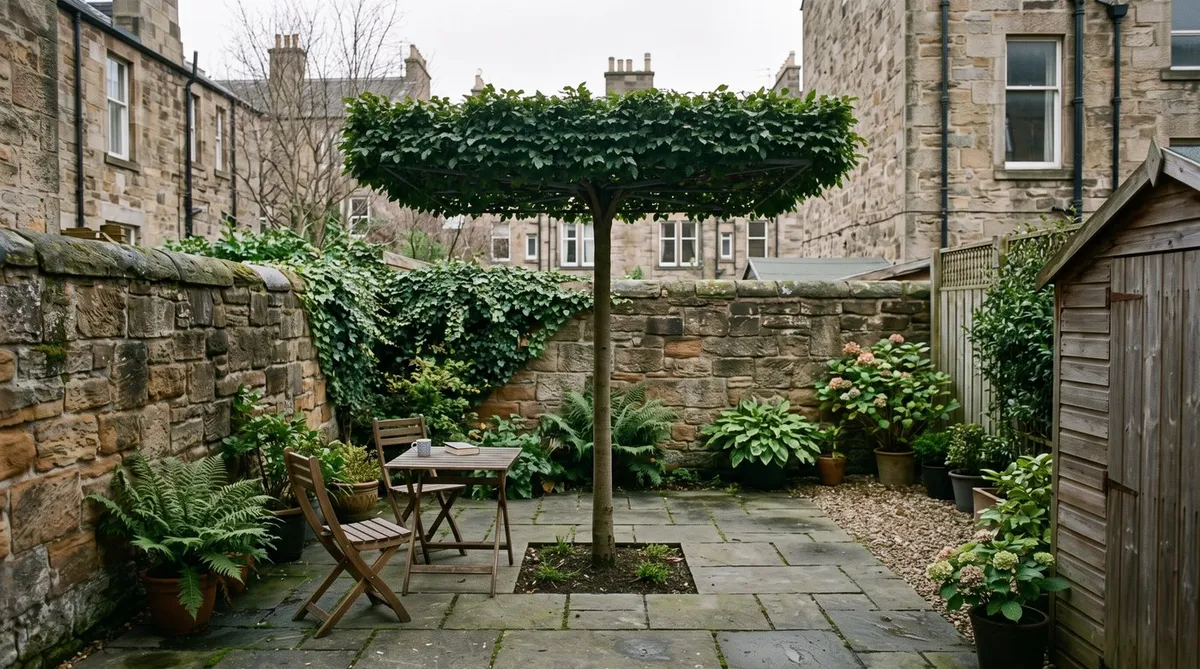
That’s what makes them so useful in small gardens. A normal tree that shades the same area would be much taller and bulkier. A roof form gives shade where you sit, with headroom underneath and very little ground taken up. The trunk can even sit in a small planting pocket in paving.
Don’t confuse them with pleached trees, which are trained flat in an upright panel, like a hedge on stilts. Nurseries sometimes list both together, so check the photo before you buy. The guide to planting and supporting pleached trees covers those.
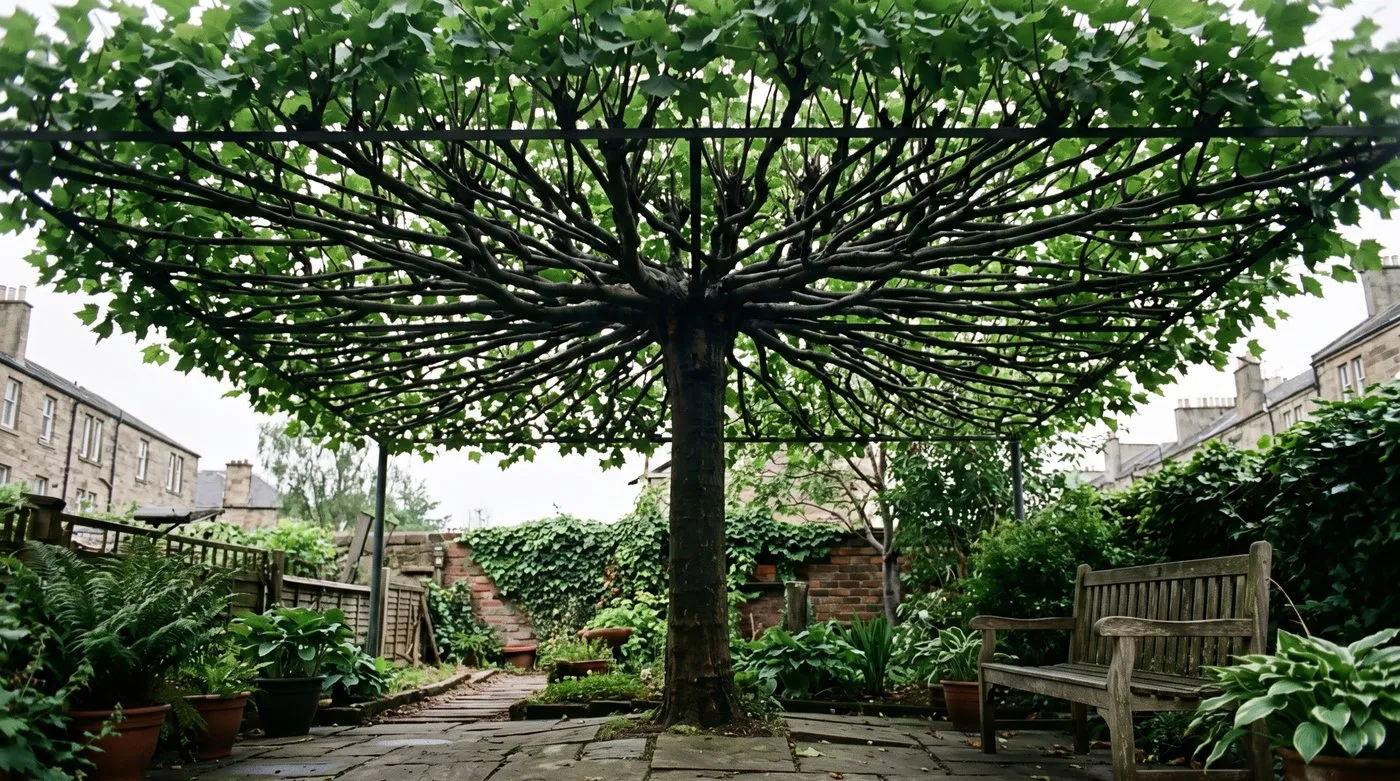
Looking up into a roof-form tree. The branches fan out flat along the frame, making a green ceiling over the seating.
Multi-stem or parasol: which suits your garden?
Choose a parasol tree to shade a particular seat or table. Choose a multi-stem for a natural, sculptural look.
A multi-stem tree has several trunks rising from near the ground. It looks relaxed and natural, with bark at eye level. But the branches start low, so it’s not something you can sit under for some years.
A roof form puts the canopy above head height from the start. It’s ideal over a patio, dining table or bench. It always looks quite formal and architectural, so it suits modern and courtyard gardens best.
| Tree form | Ground needed | Shade | Headroom | Pruning |
|---|---|---|---|---|
| Roof form (parasol) | Very little, can sit in paving | Flat, defined patch | Yes, from the start | Once a year, essential |
| Multi-stem | A bed a metre or two across | Light and irregular | Not for some years | Light, every few years |
| Upright (fastigiate) tree | Very little | Hardly any | Some | Very little |
| Standard with a natural crown | A small bed | Wide and leafy | Rises as it grows | Every few years |

That’s the whole point of a parasol tree: a cool, shady spot exactly where you want to sit.
Why clear stem height matters
Clear stem is the height of bare trunk below the first branches. It’s fixed when you buy the tree, so choose it first.
For a dining table or anywhere people stand and walk, choose a clear stem that keeps the canopy comfortably above head height. Branches sag a little in leaf, so allow some extra. A lower stem works where the tree sits beside a path rather than over it, or where you mainly want to screen a view.
Measure the spot before you shop. Note how high the canopy needs to be for people to walk and sit under it comfortably.
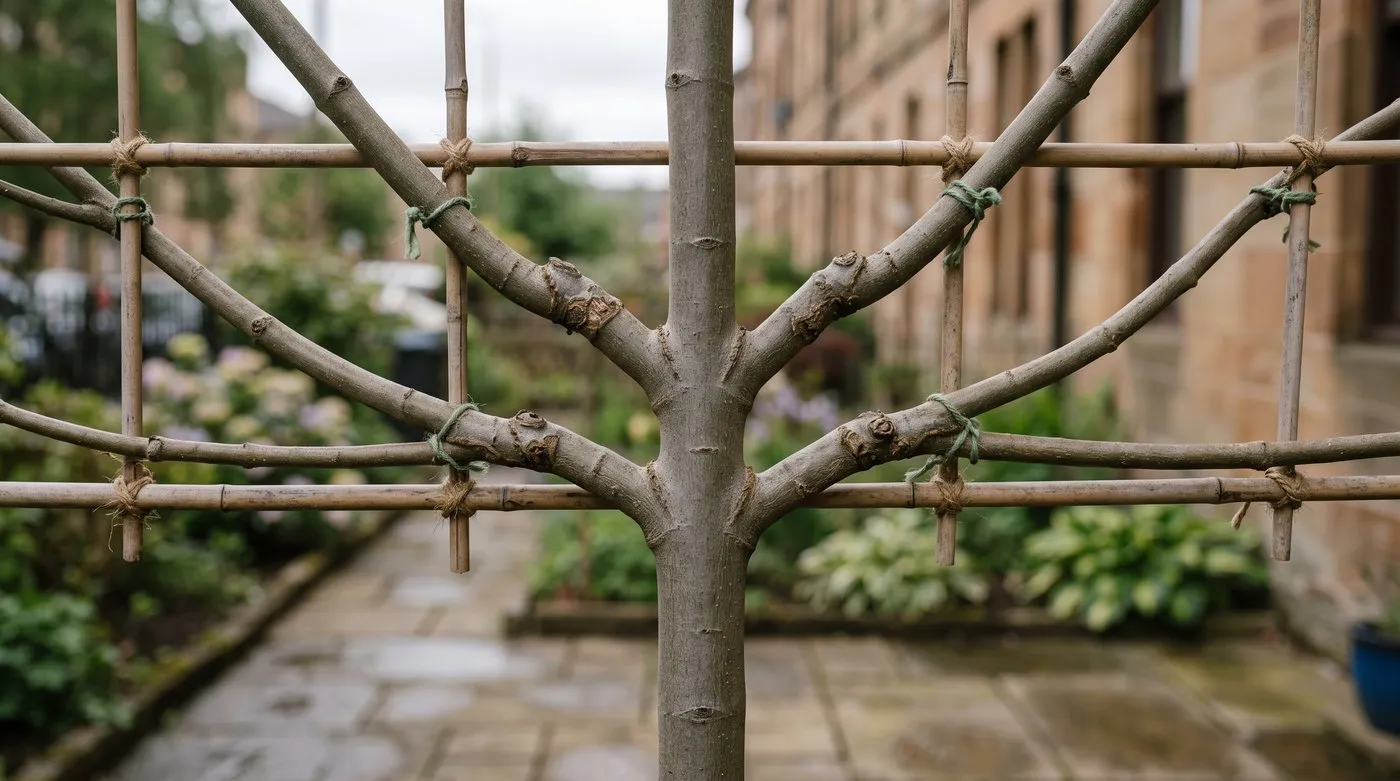
Young branches are tied to a frame while the wood thickens and sets in position. The bare trunk below is the clear stem.
Best trees for parasol and multi-stem shade
Pick a tree that suits your soil, your space and how far it will be from the house.
| Tree | Best form | Good to know |
|---|---|---|
| London plane (Platanus x hispanica) | Roof form | The classic. Takes hard pruning well but is very vigorous, so keep it well away from buildings |
| Mulberry (Morus alba, fruitless forms) | Roof form | Big leaves give dense shade |
| Hornbeam (Carpinus betulus) | Roof form or pleached | Tough, copes with clay |
| Amelanchier lamarckii | Multi-stem | Spring blossom, berries for birds, autumn colour. Light shade |
| Cornus kousa | Multi-stem | Creamy early summer bracts. Prefers neutral to acid soil |
| Acer griseum | Multi-stem | Peeling cinnamon bark. Slow-growing |
| Himalayan birch (Betula utilis var. jacquemontii) | Multi-stem | White bark. Grows tall and is thirsty on clay |
| Cercis siliquastrum | Multi-stem | Pink spring flowers. Dislikes being moved |
Amelanchier is a good first choice for a small garden, with white blossom in April, berries for birds and fiery autumn colour. London plane is the classic flat parasol you see in continental squares. It’s only for a garden where you’ll prune it every year and can keep it well away from the house. Left unpruned it becomes a very large tree.
For more choices, see the guides to the best trees for small gardens and small native trees.
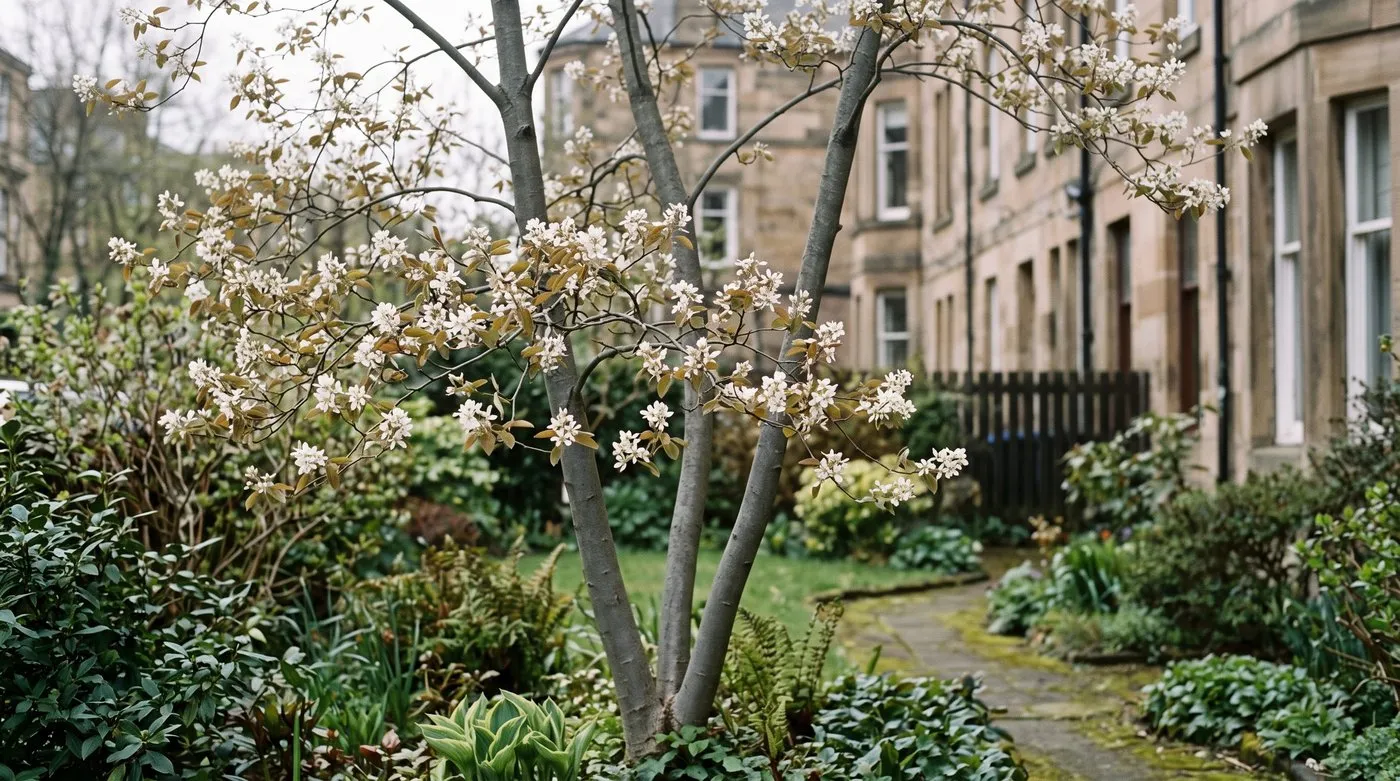
A multi-stem Amelanchier in April. White blossom and bronze young leaves, with autumn colour to come.
How far from the house should you plant a tree?
Further than you might think, especially on clay. Distance is the one decision you can’t easily undo.
Clay soil is the main concern. On shrinkable clay, a thirsty tree can dry the soil in summer and cause the ground under foundations to move. Plane, willow and poplar are among the thirstiest and need a lot of space from buildings. Amelanchier, Cornus kousa and Acer griseum are gentler choices near houses.
Drains and paths matter too. Roots find their way into leaking old drain joints, and vigorous trees can lift paving. Keep trees away from known drain runs.
If you’re on clay or close to a building, check the tree’s mature size and ask a tree surgeon or your insurer before planting. It’s far cheaper than a problem later.

A light, airy canopy gives soft dappled shade. The cat has found the coolest spot on the patio.
Where will the shade actually fall?
Not directly under the tree for most of the day. In the UK the sun is to the south, so the shadow falls to the north of the canopy, and moves round from west to east through the day.
Before you plant, check where the shadow will land at the times you want to sit. Hold a cane or umbrella at roughly canopy height and watch the shade on a sunny day. You may need to plant the tree a little south of your seat to shade it.
How to prune a parasol tree
Cut every upright shoot back to the flat branches once a year. That keeps the canopy thin and flat.
When: late winter, before the buds break, suits most trees, including plane, mulberry and hornbeam. Cherries (Prunus) are pruned in summer to reduce the risk of silver leaf disease. Birch and maples bleed sap if cut in late winter and spring, so prune them in summer instead. Before any summer cutting, check carefully for nesting birds.
How: use clean, sharp secateurs or loppers. Cut each upright shoot just above a bud or close to where it joins the main branch, without leaving long stubs. Step back often and judge the flat top by eye.
Don’t skip years. If uprights are left for two or three seasons, they thicken into proper branches and the tree turns into a normal rounded crown. The guide to pruning trees for privacy and light covers wider tree work.
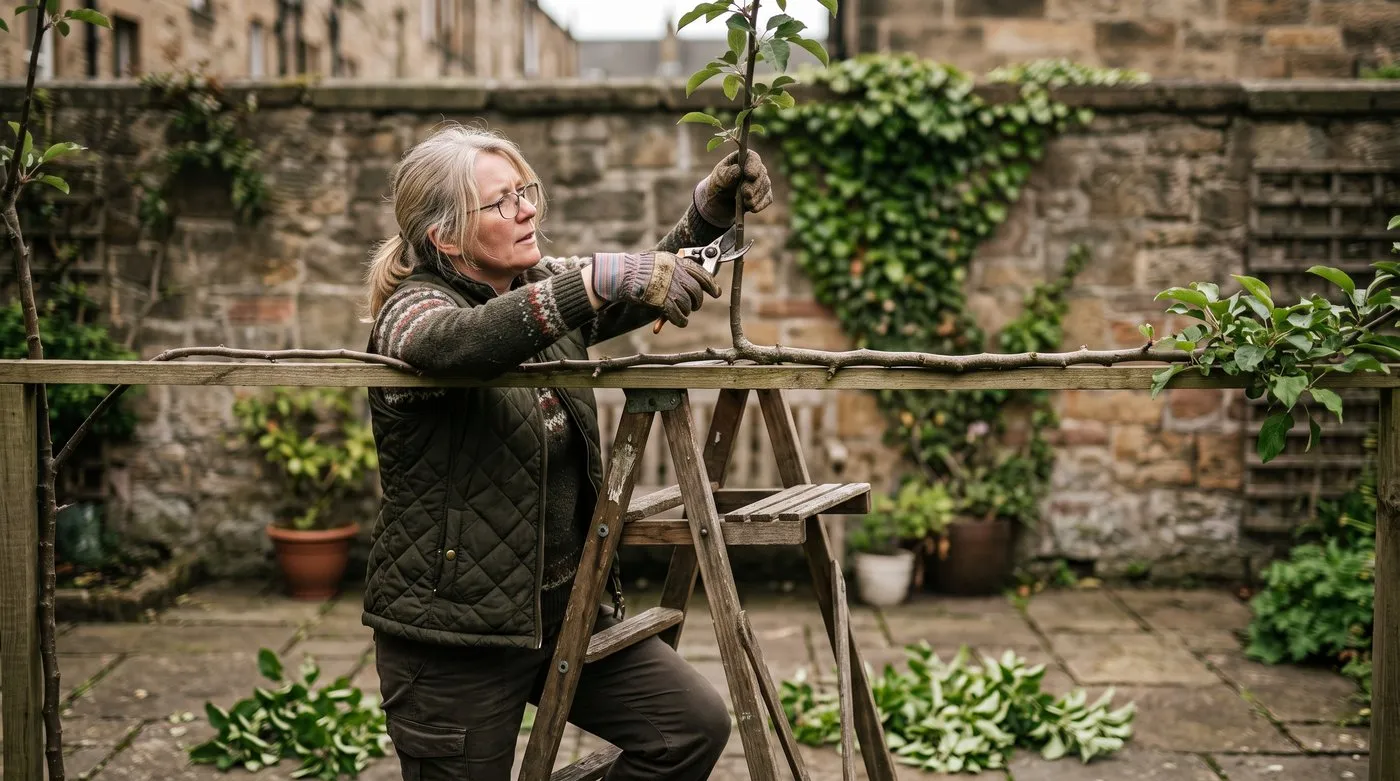
Snipping upright shoots back to the trained branches. Once a year is enough to keep the canopy flat.
Growing a parasol tree in a pot
It works, but it needs more care than a tree in the ground. It’s a good option on a roof terrace or paved courtyard.
Use the biggest, deepest container you can manage, filled with John Innes No. 3, a loam-based compost that holds its structure for years. Water through every dry spell, as pots dry out fast. A drip line on a timer makes life much easier. Feed with a slow-release fertiliser each spring.
Every few years, lift the tree, trim the outside of the root ball and repot with fresh compost. Slower trees such as Acer griseum and Cornus kousa cope best with pot life. Plane is too vigorous and thirsty.
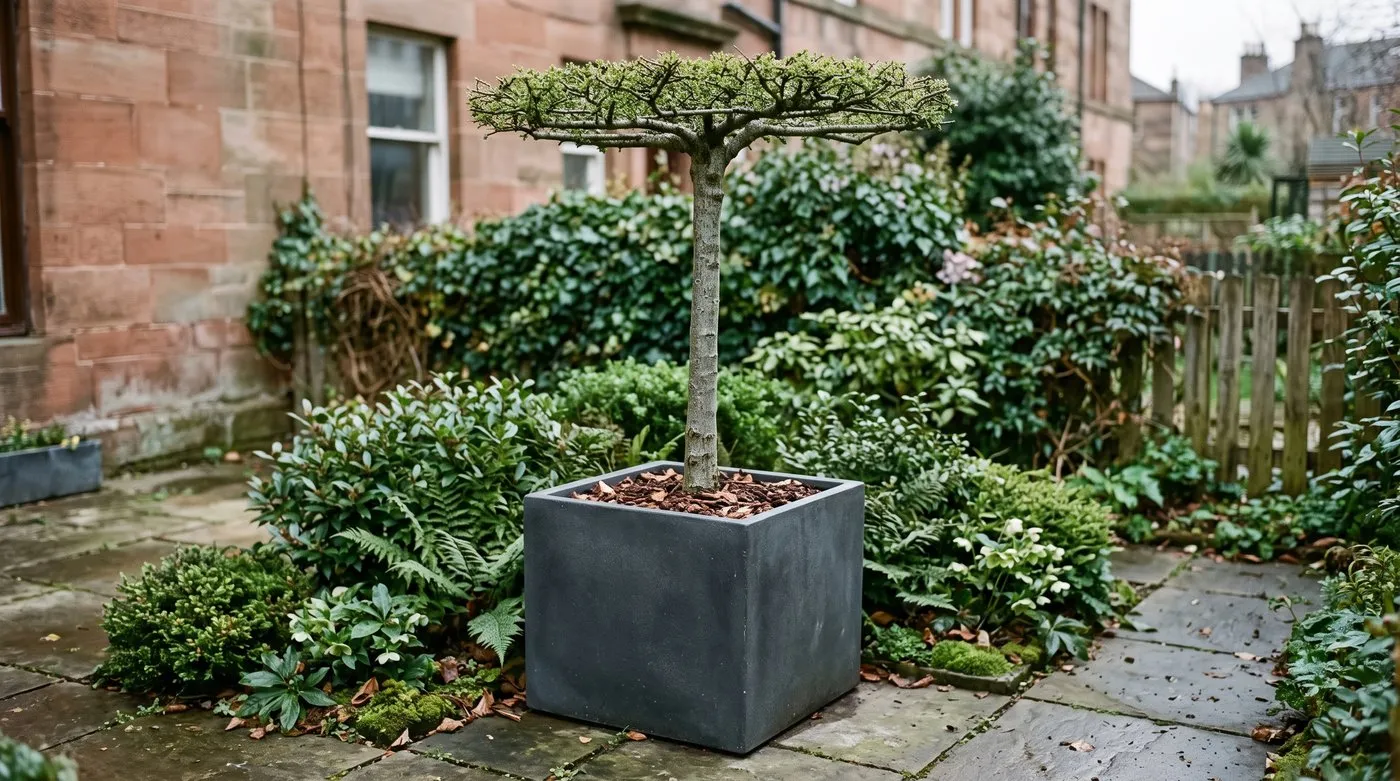
A roof-form tree in a big container. Use loam-based compost and keep on top of watering.
Parasol tree care through the year
| Month | Job |
|---|---|
| January | Check ties on the frame aren’t cutting into branches |
| February | Prune plane, mulberry and hornbeam roof forms back to the frame |
| March | Finish planting before buds break. Feed trees in pots |
| April | Mulch round the base, keeping it clear of the trunk. Amelanchier flowers |
| May to June | Water new trees in dry spells. Check stakes and ties |
| July to August | Prune cherries, birch and maples, after checking for nests. Water pots often |
| September | Order trees for autumn planting |
| October to December | Plant bare-root and rootballed trees. Stake low and mulch |
Gardener’s tip: Stake new trees low, so the trunk can flex in the wind and grow stronger. Take the stake away once the roots have settled, usually after a couple of growing seasons. The guide to planting a bare-root tree shows how.
Common mistakes with parasol and multi-stem trees
- Planting right where you want the shade. The shadow falls north of the tree. Check where it lands first.
- Skipping the yearly prune. The flat top grows into a normal crown within a few years.
- Choosing too low a clear stem. Tall guests will catch their heads. Allow room for the canopy to sag in leaf.
- Planting thirsty trees near the house on clay. Plane, willow and poplar need a lot of room.
- Forgetting to water. New trees, especially big ones, need regular watering for their first two summers.
Frequently asked questions
What is a parasol tree?
A tree trained with a flat canopy on a bare trunk, like a green umbrella. Nurseries also call them roof-form or roof-trained trees. The branches are tied to a flat frame, so they spread sideways rather than upwards. It gives shade over a seat without growing tall.
What is the difference between a multi-stem and a parasol tree?
A multi-stem branches low down, a parasol branches on top of a bare trunk. Multi-stems have a loose, vase-like shape with pretty bark at eye level. Parasol trees give headroom underneath, so you can put a table and chairs below them.
Which trees are best for shade in a small UK garden?
For a flat parasol, plane, mulberry and hornbeam are popular roof forms. For a softer, natural shape, a multi-stem Amelanchier gives light shade, spring blossom and autumn colour. Cornus kousa is lovely on neutral to acid soil. Choose by your soil, space and distance from the house.
How far from a house should I plant a small tree?
Keep trees several metres from the house, and further for vigorous ones. Thirsty trees like plane, willow and poplar need a lot more distance, especially on shrinkable clay soil. If you’re unsure, check the tree’s mature size and ask your insurer or a tree surgeon before planting near a building.
Do parasol trees need pruning every year?
Yes, once a year to keep the canopy flat. Cut upright shoots back to the horizontal branches, usually in late winter. Prune cherries, birch and maples in summer instead. Skip it for a couple of years and the flat top grows into a normal rounded crown.
Can you grow a parasol tree in a container?
Yes, in a large, deep container with loam-based compost. Use John Innes No. 3, water through every dry spell and feed each spring. Repot or root-prune every few years. Smaller, slower trees cope with pot life better than vigorous ones like plane.
Once your tree is planted, read the guide to outdoor seating ideas to make the most of your new shady spot, or browse the garden design hub.
Our team produces practical UK gardening guidance from source research, contributor records and established horticultural practice. Editorial standards are overseen by Matt W.