Key takeaways
- A seat height of about 450mm suits most adults and is easy to get up from
- Make seats 400-450mm deep for upright sitting, deeper for lounging
- Allow about 600mm of bench length per person, so 1.8m seats three
- Built-in benches save space, while movable furniture lets you follow the sun
- Store cushions near the seats, or people stop using them
- Check seat height in the shop with a tape measure before you buy
The best outdoor seating is the seating people actually sit on. That comes down to three things: the right height and depth, a spot people want to be in, and cushions that are easy to grab. Get those right and even a simple bench becomes the favourite place in the garden.
This guide covers choosing between built-in and movable seating, the measurements that make a seat comfy, and ideas for small and awkward spaces. For patio layouts more broadly, see the patio garden ideas for small spaces guide.
Built-in or movable seating: which suits your garden?
Built-in saves space and stays put. Movable gives you flexibility. Most gardens do best with a bit of both.
Built-in seating is fixed in place: benches built into walls, sleeper benches, seat-height raised bed edges and benches built into decking. It needs no room behind it for pulling chairs out, so it’s ideal on small patios. There’s nothing to blow over or store in winter.
Movable seating is furniture you can pick up: dining sets, bistro sets, loungers and hanging chairs. You can follow the sun through the day, pull chairs round a table for guests, and put it all away in autumn.
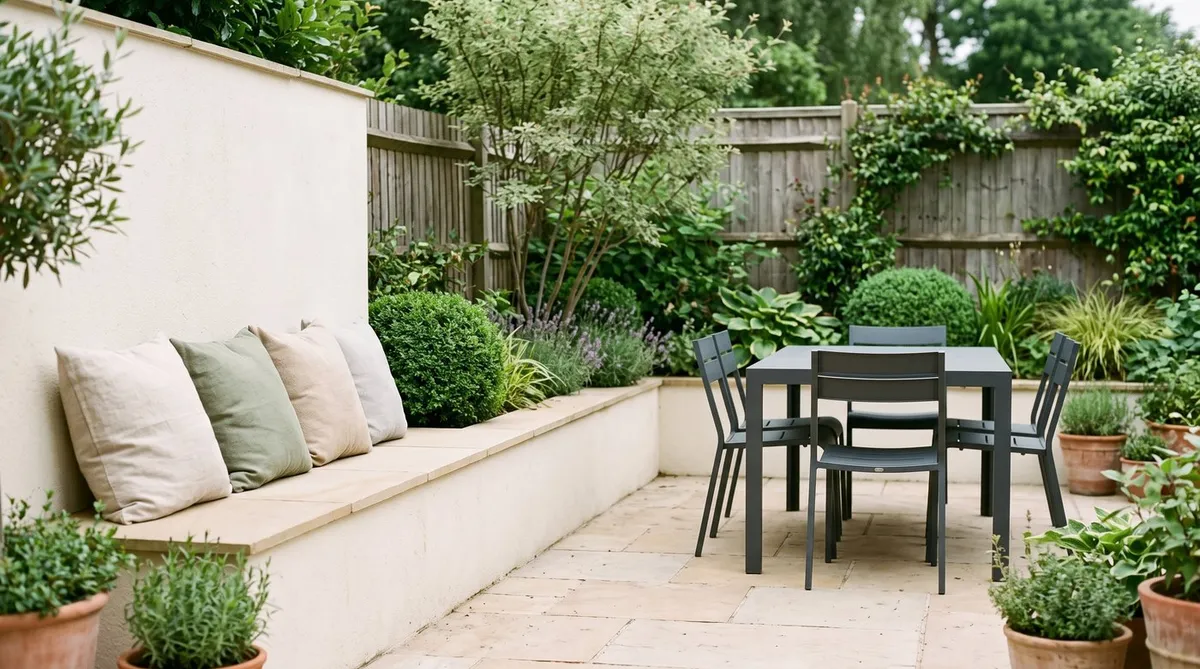
A popular combination is a built-in bench along one side of the patio, with a movable table and chairs on the open paving. It seats more people without cluttering the space.
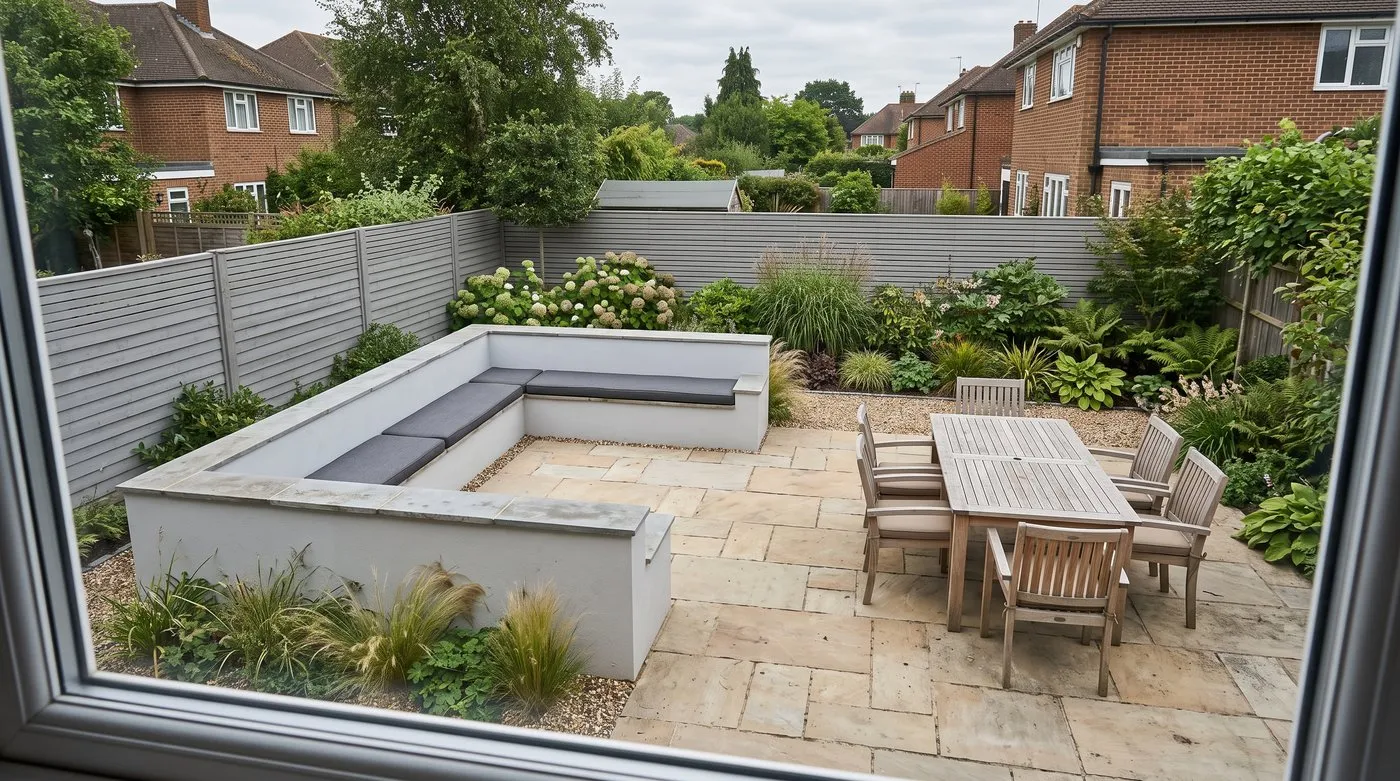
A built-in corner bench holds one side of the patio, while the table and chairs stay free to move. It seats a crowd without feeling crowded.
How high and deep should a garden seat be?
About 450mm high and 400-450mm deep for upright sitting. Those two numbers make the biggest difference to comfort.
Seat height: about 450mm. Measure from the ground to the top of the seat, with any cushion squashed down. Lower seats look relaxed in photos but are hard to get out of, especially for older visitors.
Seat depth: 400-450mm. That’s from the front edge to the backrest. Shallower and you perch. Much deeper and you can’t lean back without a pile of cushions. Lounge seating can be deeper, around 600mm, with big back cushions.
Length: about 600mm per person. So 1.2m seats two, 1.8m seats three and 2.4m seats four. On a corner bench, the corner itself is awkward, so add a little extra.
A slight backward slope makes a bench with a backrest more comfortable to lean into. Dining seats are the exception. You lean forward to eat, so keep them level and a touch lower to suit a standard 750mm table.
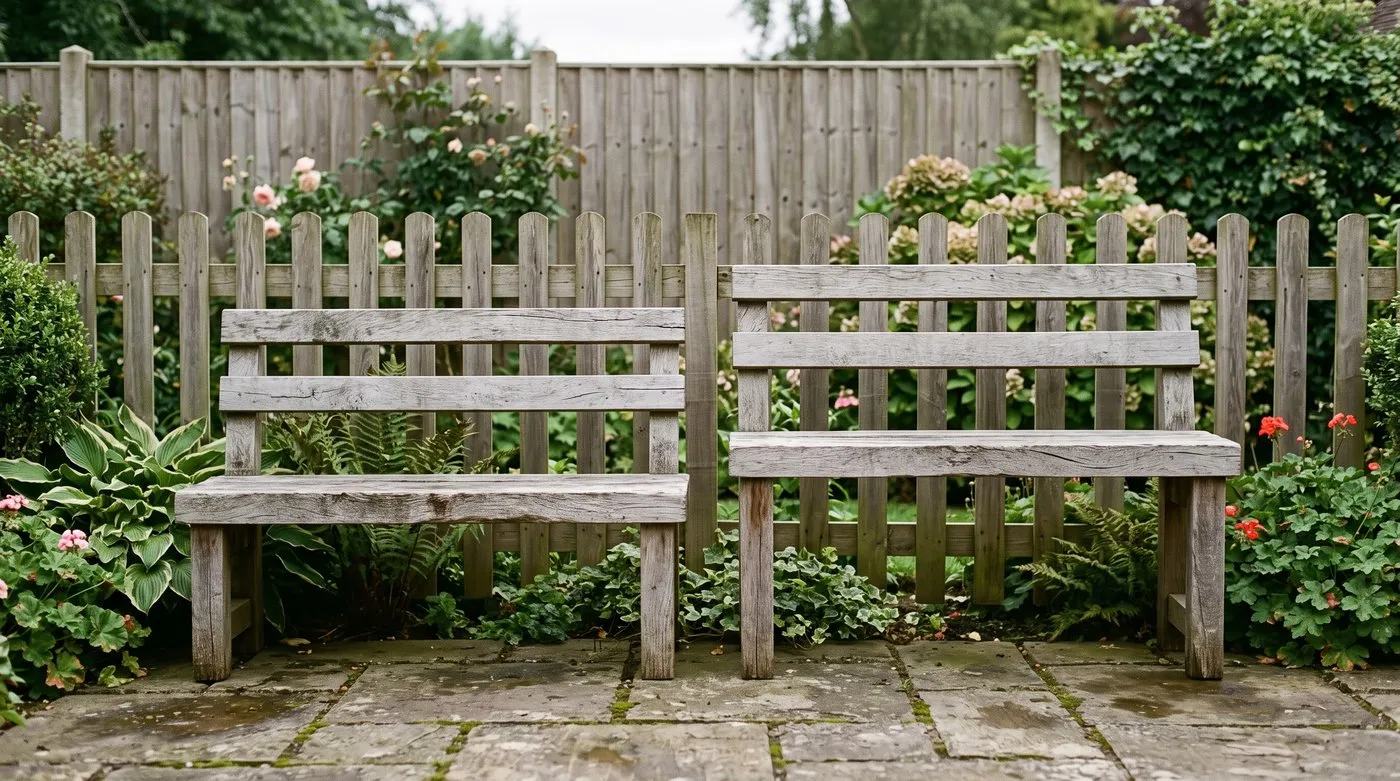
A few centimetres of seat height makes a real difference. The lower bench looks relaxed but is harder to get up from.
Gardener’s tip: Before you build, stack bricks or blocks to your planned height, lay a plank on top and sit on it for a few minutes. It’s a cheap way to check the height suits the people who’ll use it.
Built-in bench ideas for UK gardens
There are a few main types of built-in bench. Choose by your skills, budget and garden style.
| Bench type | Skill needed | Best for |
|---|---|---|
| Rendered blockwork bench | Bricklaying, or a builder | Modern gardens, benches with storage inside |
| Seat-height retaining wall | Bricklaying, or a builder | Gardens with a change of level |
| Bench built into decking | Carpentry | Raised decks |
| Timber sleeper bench | Basic DIY | Quick, rustic builds |
| Gabion bench with timber top | Basic DIY | Sloping ground and contemporary looks |
Sleeper benches are the easiest DIY option. Stack sleepers on a firm, level base of compacted hardcore or a concrete pad, fix them together and add a smooth timber top. Use new timber sleepers rather than old railway sleepers, which can ooze tar. Sleepers are very heavy, so get help to lift them.
Blockwork benches need a proper concrete footing and good bricklaying. Unless you’re confident, this is a job for a builder. A retaining wall that holds back soil needs drainage behind it, and any retaining wall over knee height is worth getting professional advice on.
Gabion benches are wire cages filled with stone, topped with timber. The gabion building guide covers how to make one.
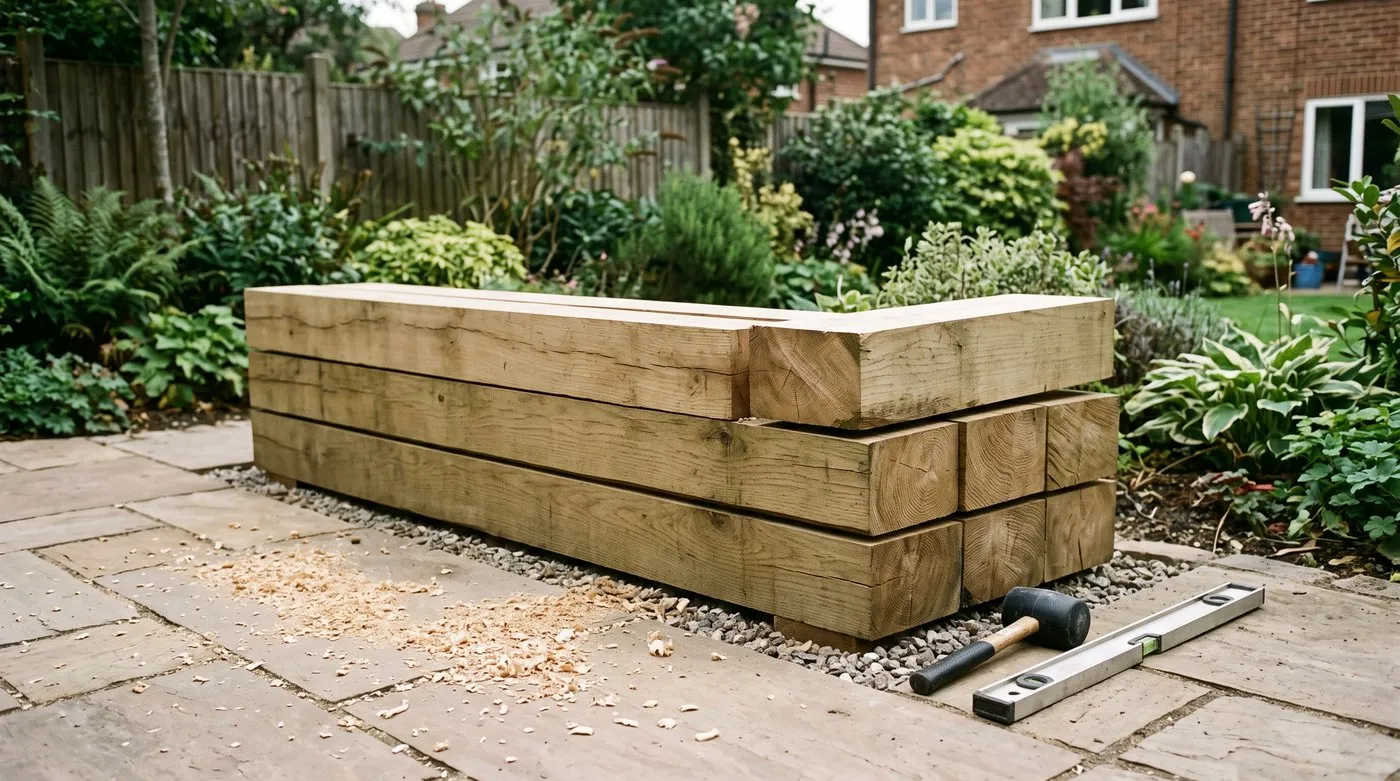
A sleeper bench takes shape on a level gravel base. Stack and fix the sleepers, then add a smooth top to sit on.
If you have a raised deck, a bench built into the edge saves space. The decking ideas guide has more on decks.
Which garden furniture material lasts best in UK weather?
Teak, recycled plastic and powder-coated aluminium cope best with our wet winters. Natural rattan is the one to avoid outdoors.
| Material | How it copes | Care |
|---|---|---|
| Teak | Very durable, weathers to silver-grey | Oil it if you want to keep the honey colour |
| Recycled plastic | Very durable, holds its colour | Wash now and then |
| Powder-coated aluminium | Light, doesn’t rust | Wash. Cover in winter if you like |
| All-weather (PE) rattan | Comfy, decent life | Cover in winter, wash the weave |
| Eucalyptus and softwood | Cheaper, shorter-lived | Oil or treat every year |
| Powder-coated steel | Heavy, good in wind | Touch up chips before they rust |
| Natural rattan or cane | Spoils in the rain | Covered areas only |
Natural rattan looks just like the all-weather plastic version but soaks up water and falls apart outdoors. Check the description says polyethylene or PE before buying. The range of garden furniture at gardenornaments.com is a handy place to compare all-weather pieces side by side. Teak goes silver-grey over time. That’s a look, not a fault. If you’d rather keep it golden, oil it. The guide to cleaning and protecting garden furniture covers the care.
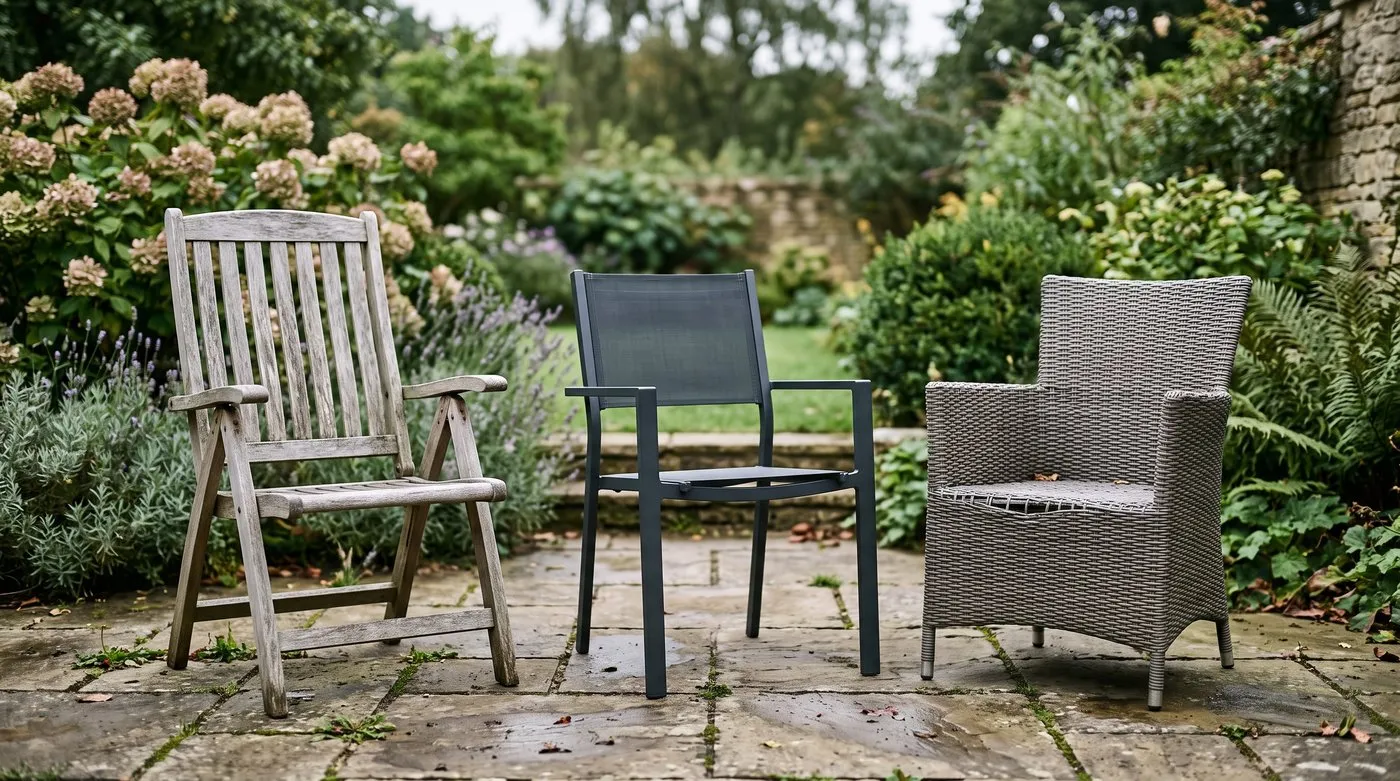
Teak, aluminium and all-weather rattan side by side. The teak has gone silver, which is natural and easy to live with.
Where to put seating in the garden
Put seats where you’ll want to be, not just where there’s space. Watch the garden for a day and note where the sun falls at teatime.
- Evening sun is where most people want to sit after work. In a north-facing garden, that’s often the far end.
- Dappled shade under a tree is lovely in summer, when full sun gets too hot by midday.
- Shelter from wind makes a big difference. A wall, hedge or screen behind a bench makes it cosier.
- A view helps. Face the seat towards the best planting, not the bins.
If you need shade over a sunny patio, a pergola with climbers is a good option. The pergola ideas guide has plenty.
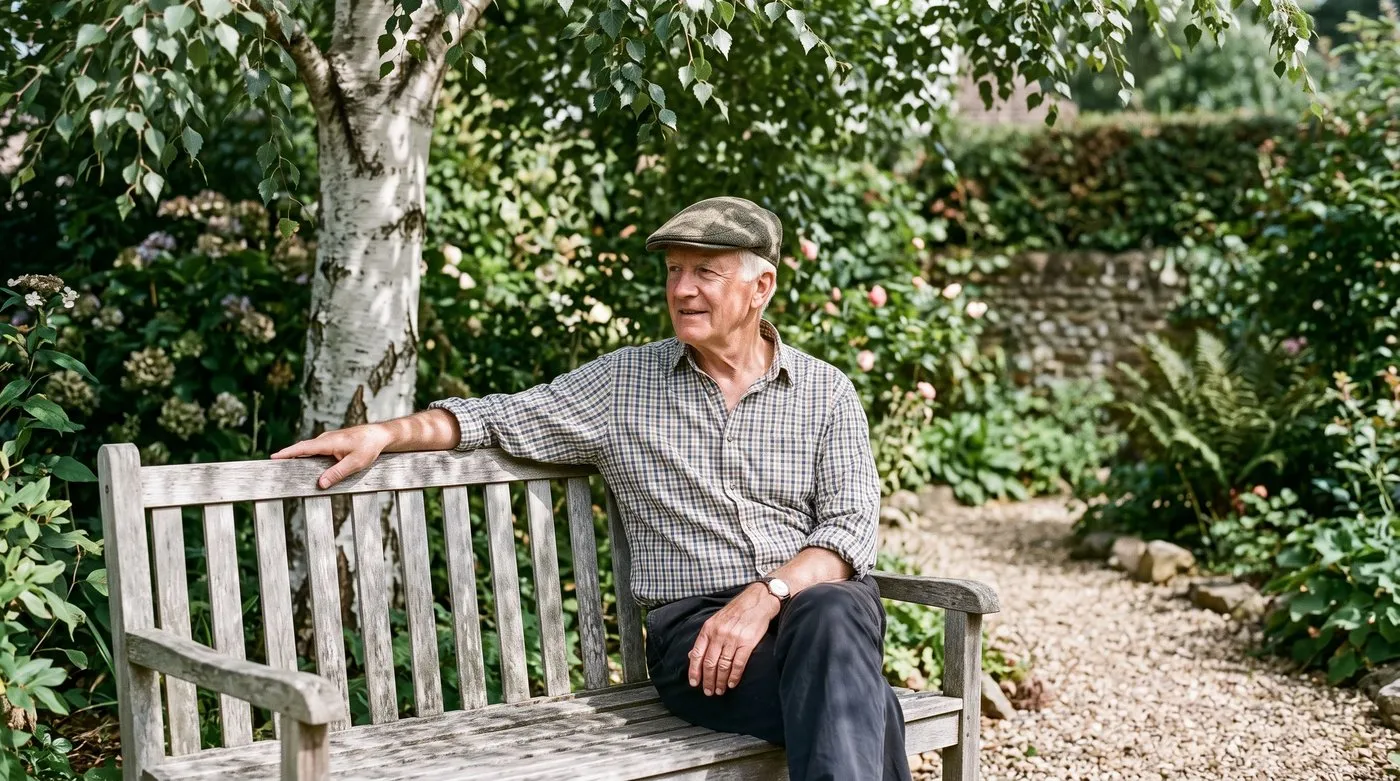
A bench in dappled shade gets used right through summer, when one in full sun sits empty by midday.
Seating ideas for small and awkward spaces
In a small garden, every centimetre counts. These ideas squeeze in seating without cluttering the space.
Corner benches turn a dead corner into the cosiest spot in the garden. An L-shaped bench seats more people in less floor space than chairs.
Bench and table combinations fit where a full dining set won’t. Run a bench along a wall with a table in front and two chairs on the open side.
Fold-down benches suit narrow passages and side returns. Wall-mounted seats fold flat when not in use. The side return garden ideas guide has more for narrow spaces.
Storage benches solve the cushion problem. A bench with a lift-up lid keeps cushions dry and close at hand. If cushions live at the back of the shed, people stop bothering.
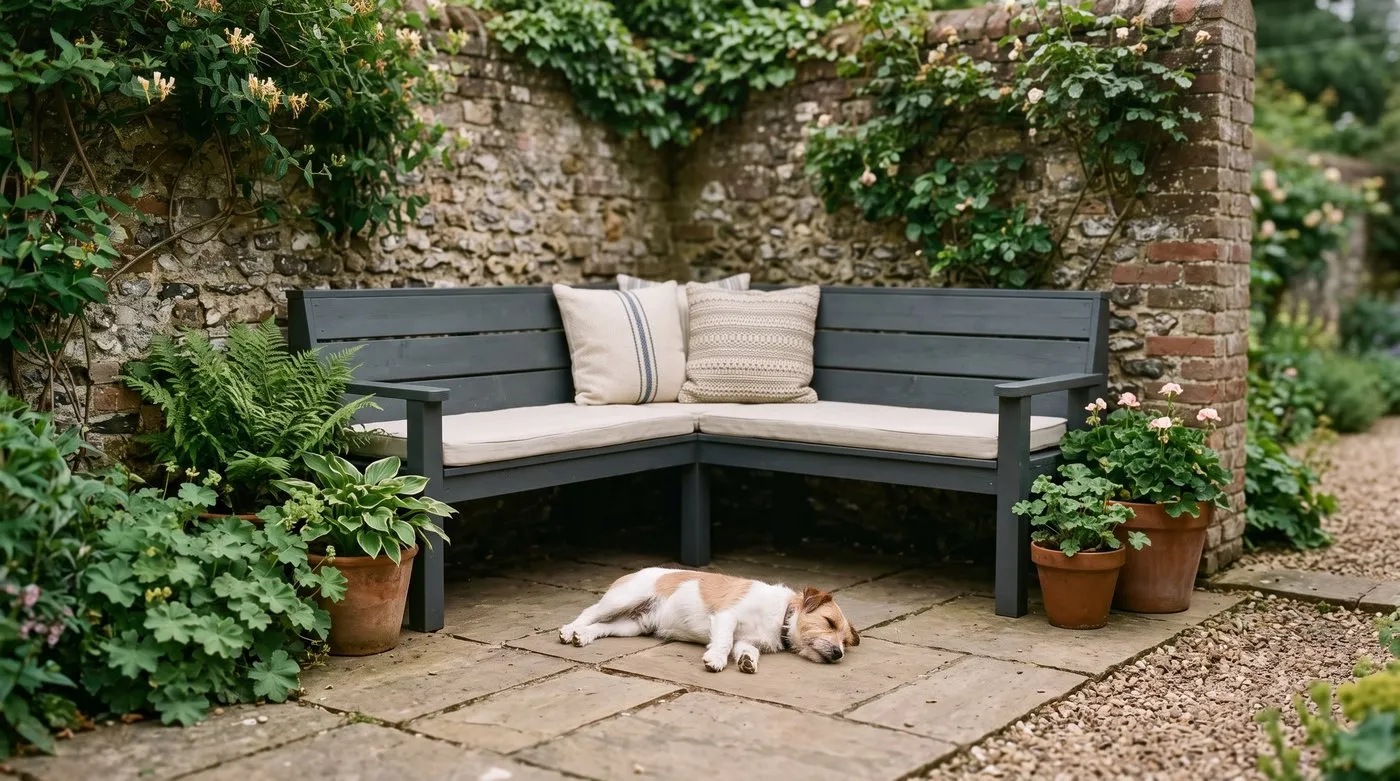
A corner bench makes the most of an awkward spot. The dog clearly approves.
Why some garden seats never get used
Usually the seat is too low, too deep, in the wrong spot, or the cushions are too far away. Style and material are rarely the problem.
Low lounge sofas look generous in photos, but they can be hard to get up from. A level bench with no backrest gets tiring quickly. A beautiful seat in full midday sun stays empty. And if cushions need fetching from the shed every time, people head indoors instead.
The fix is simple. Measure before you buy or build, put the seat where people naturally want to sit, and keep cushions within easy reach.
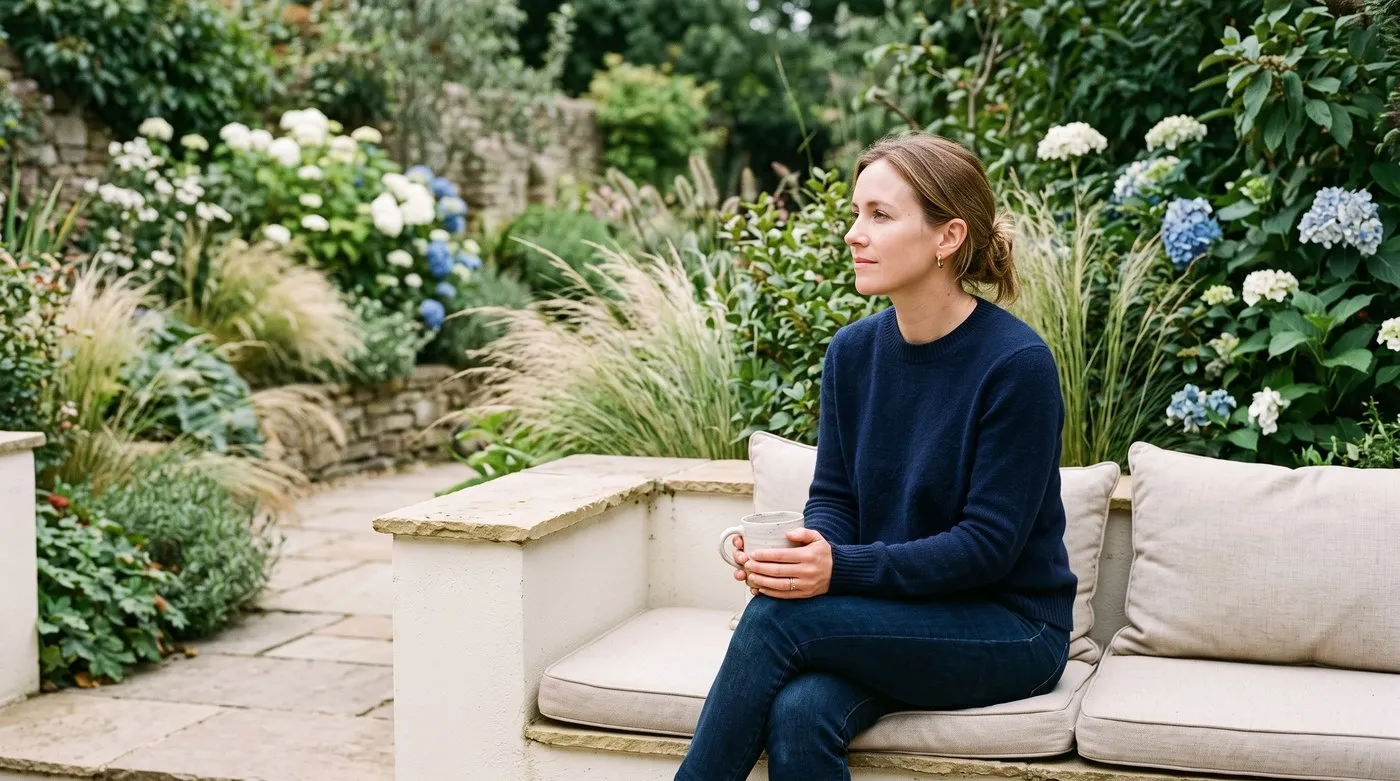
A built-in bench at a comfy height, with cushions to hand, becomes the spot for that first cup of tea.
Garden seating jobs through the year
| Month | Job |
|---|---|
| January to February | Plan new seating. Note where the sun falls as days lengthen |
| March | Build new benches once the weather settles |
| April | Uncover and wash furniture. Check fixings and the rattan weave |
| May | Oil teak if you want to keep its colour, on a dry day |
| June to August | Use it! Move pieces to follow the sun or shade |
| September | Give teak a second oiling if needed |
| October | Wash and dry cushions completely before storing them |
| November | Cover or store movable furniture. Keep steel somewhere dry |
| December | Check built-in benches for loose cappings or cracks |
Common mistakes with outdoor seating
- Buying seats that are too low. Take a tape measure to the shop and check the height with the cushion squashed.
- Putting seats in the wrong spot. Find the evening sun or dappled shade first, then place the seat.
- Storing cushions far away. Use a storage bench or a box near the seats.
- Leaving natural rattan out in the rain. It isn’t weatherproof. Choose PE rattan for outdoors.
- Skimping on the base. Benches on soft ground sink and tilt. Build on a firm, level base.
Frequently asked questions
What is the right height for a garden bench?
About 450mm from the ground to the top of the seat suits most adults. Dining benches can be slightly lower so legs fit under a standard 750mm table. Very low seats, under about 400mm, look relaxed but are hard to get up from, especially for older visitors.
How deep should a built-in garden bench be?
About 400-450mm deep for upright sitting. Shallower than that and you perch on the edge. Much deeper and you can’t reach the back without lots of cushions. Lounging seats can be deeper, around 600mm, if you’ll add big back cushions.
What is the best material for garden furniture in the UK?
Teak, recycled plastic and powder-coated aluminium all cope well with UK weather. Teak weathers to silver-grey unless you oil it. Recycled plastic needs only a wash. Natural rattan and cane are for covered spaces only, as they spoil when left out in the rain.
How long should a bench be to seat three people?
About 1.8 metres, allowing roughly 600mm per adult. Two people need about 1.2m and four need about 2.4m. On an L-shaped corner bench, the corner itself is awkward to sit in, so add a little extra length.
Is built-in seating better than movable garden furniture?
Built-in saves space, movable gives flexibility. A fixed bench needs no room to pull chairs out, so it suits small patios. Movable furniture lets you follow the sun and put it away in winter. Many gardens use a built-in bench plus a movable table and chairs.
Do I need planning permission for a garden bench?
A freestanding or low built-in bench doesn’t normally need planning permission. Check with your council if it’s part of a raised deck or platform over 30cm high, or if your home is listed or in a conservation area. Planning rules for walls also apply if it doubles as a boundary wall.
Ready to build a seating area? Read the guide on how to lay a patio to give your new seats a solid base, or browse more ideas in the garden design hub.
Our team produces practical UK gardening guidance from source research, contributor records and established horticultural practice. Editorial standards are overseen by Matt W.


