Key takeaways
- Watch where the sun lands in summer and put your seat there, often at the far end of the garden
- Pale paving, light fences and a garden mirror make a shady garden feel brighter
- Lawns struggle in shade, so consider paving, gravel or ground cover instead
- Climbing hydrangea, ivy and Parthenocissus henryana are good for north-facing walls
- White and pale flowers glow in shade, while dark reds and purples disappear
- Avoid sun-lovers like lavender and most herbs, which sulk and flop on a north aspect
A north-facing garden is not a dark garden for ever. The house shades the area nearest the back door, but the far end and the sides often get proper sun from spring to late summer. Design around that light, pick plants that love shade, and a north-facing plot can be cool, green and lovely.
This guide is about layout and design: where to sit, how to brighten things up, and what to do with the lawn and walls. For long plant lists, see the guides to the best plants for shade and the best shrubs for shade.
Where does the sun fall in a north-facing garden?
At the far end and along the sides, mostly in summer. The sun travels across the southern sky, so the house blocks it from the area nearest the back wall.
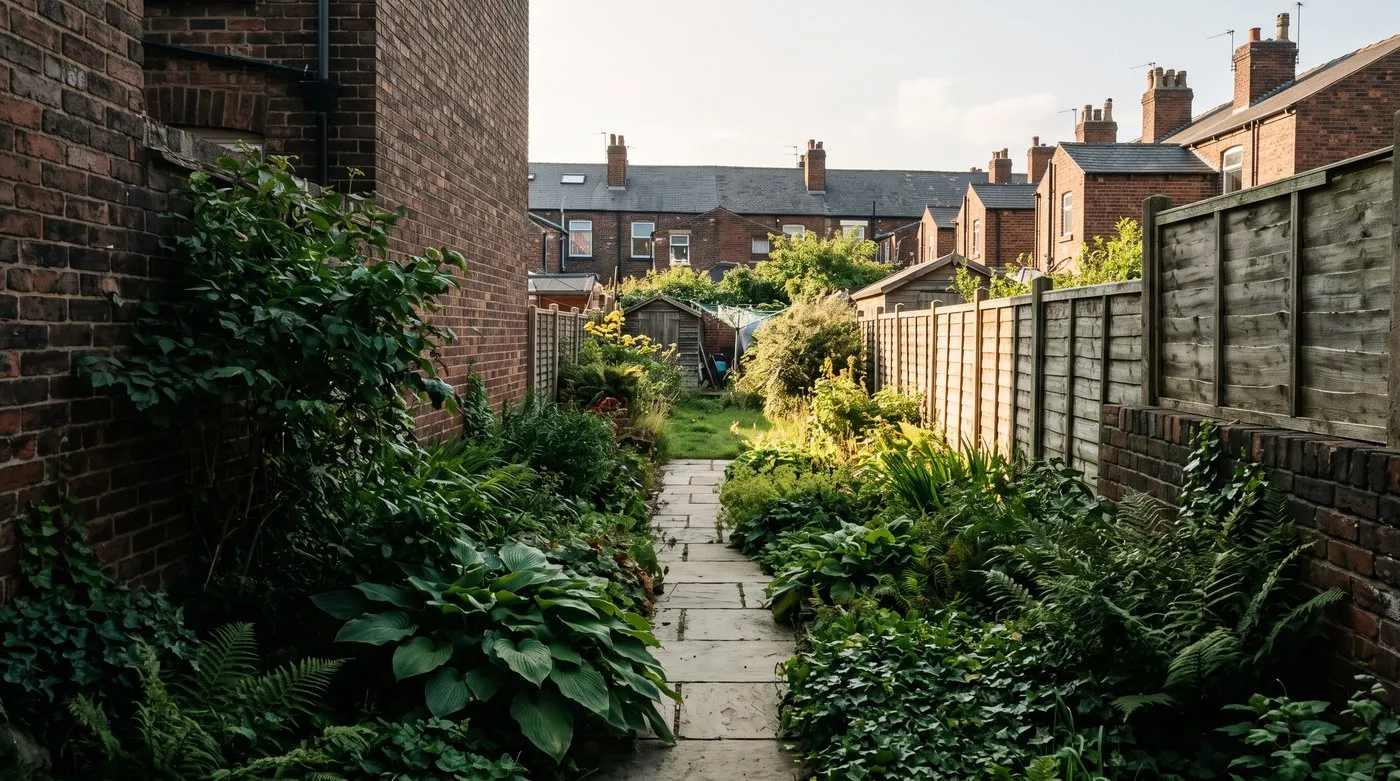
The house shades the end nearest the back door, but the far end often gets proper summer sun.
In summer the sun rises in the north-east and sets in the north-west. That puts morning sun on one side border and evening sun on the other. The longer the garden, the more of the far end gets midday sun over the house roof. In winter the sun is low, so a north-facing garden may get little or no direct sun from November to February.
Spend a sunny day noting where the light falls at breakfast, lunch and teatime. Do it again in spring and autumn if you can. The guide to reading your garden’s aspect explains how to work out which way your garden faces.
Where to put seating in a north-facing garden
Put your main seat where the sun lands in the evening, which is often the far end. Many north-facing gardens have their best spot furthest from the house.
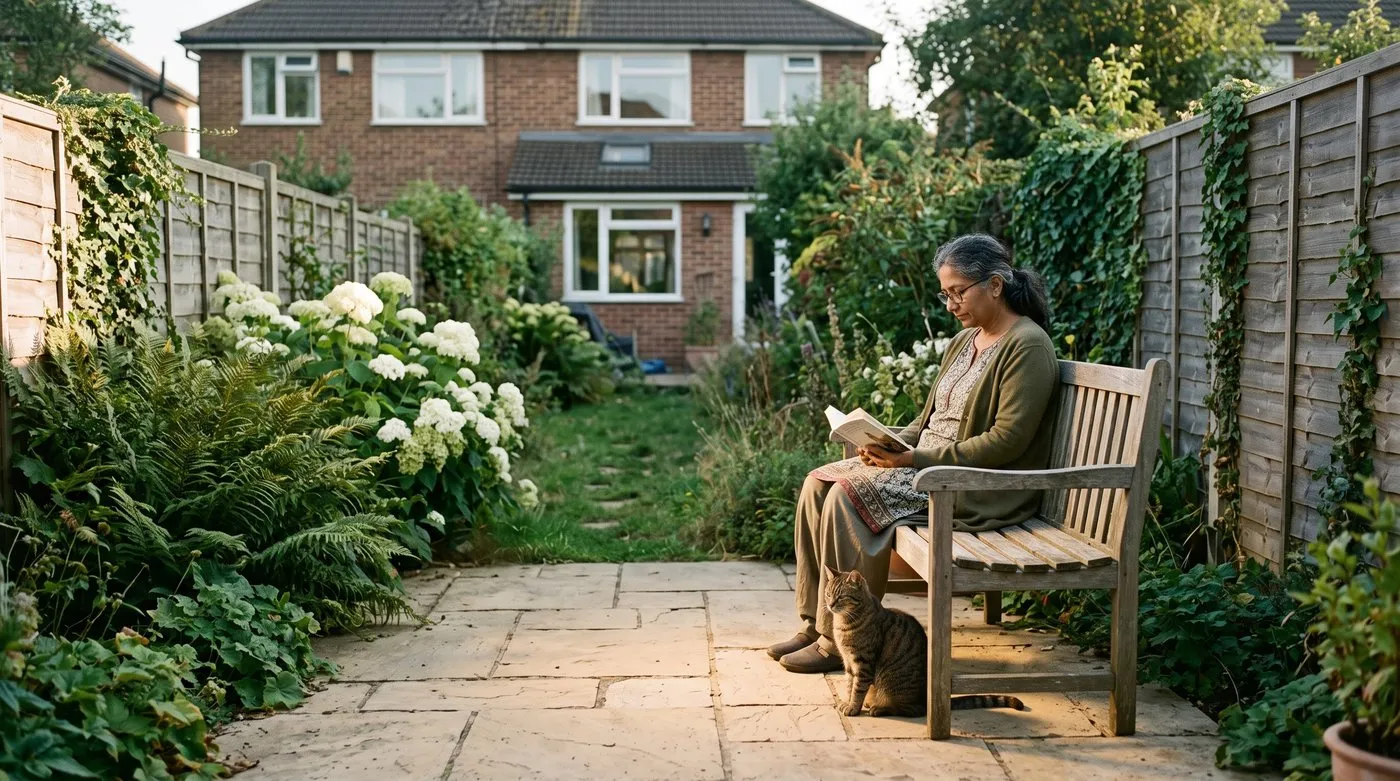
Put the seat where the evening sun lands. In a north-facing garden that is often the far end.
- A seat or small patio at the far end catches sun the back door never sees. Link it to the house with a path so it feels part of the garden.
- A bench against a side fence can catch morning or evening light, depending on which side.
- The shady patio by the house is still useful. On hot summer days it’s the coolest place to eat outside.
Use pale paving for any seating area. It feels brighter and dries a little faster after rain.
How to make a north-facing garden feel brighter
Pale surfaces, a mirror and white flowers do most of the work. You can’t add sunshine, but you can make the most of the daylight you have.
Pale paving. Buff sandstone, pale limestone or light grey porcelain feel much brighter than dark slate. Smooth surfaces stay cleaner. Shady paving can go green and slippery, so give it a scrub each spring.
Light fences and walls. Paint fences pale grey, cream or soft green to bounce light back into the garden. Dark fences can look smart and make boundaries recede, but they do make a shady garden feel darker.
A garden mirror. A weatherproof mirror on a fence in a dark corner reflects light and makes a small garden look bigger. Angle it slightly so birds see the planting rather than a clear flight path.
Lighting. Low-voltage or mains garden lights let you enjoy the garden after dark. Solar lights may struggle to charge in deep shade, so put their panels in the sunniest spot. The guide to garden lighting ideas has more.

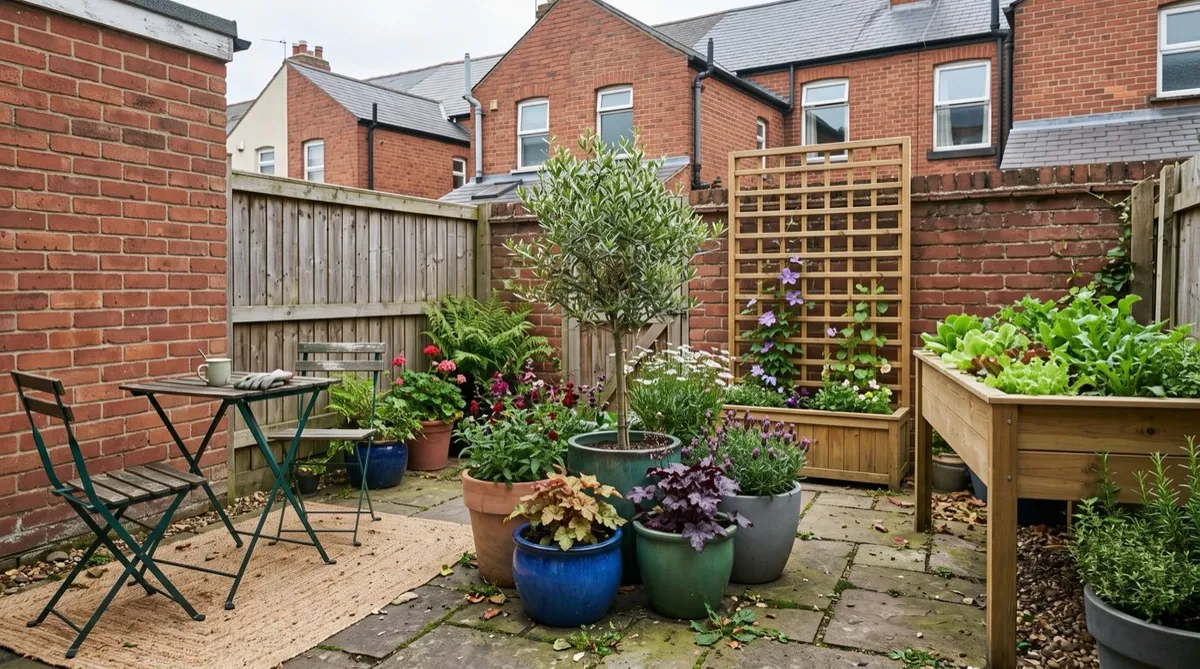
Pale paving, white raised beds and an arched mirror bounce the light around, even with dark fences.
Planting ideas for a north-facing garden
Choose plants that grow naturally in woodland and shade. Then layer them, with evergreens at the back, flowers in the middle and leafy ground cover at the front.
- Back layer, evergreens: Fatsia japonica, Aucuba japonica and Mahonia keep the garden green in winter.
- Middle layer, flowers: hydrangeas, astilbe and Japanese anemones flower from summer into autumn.
- Front layer, ground cover: ferns, hostas, heucheras and brunnera cover the soil and smother weeds.
White and pale flowers glow in shade, while dark reds and purples vanish. Try Hydrangea arborescens ‘Annabelle’, white foxgloves and the lime-green froth of Alchemilla mollis. Spring bulbs fill the winter gap: snowdrops, Cyclamen coum and native bluebells all cope with shade. Buy English bluebells (Hyacinthoides non-scripta) from a reputable source, never dug from the wild. Avoid Spanish bluebells and their hybrids, which cross with the native ones.
Check the soil too. Shade under trees is often dry, while shade by a house wall can be damp. Hostas and astilbe love moisture, while ferns like Dryopteris filix-mas cope with drier spots.
Pet note: Hydrangeas, foxgloves, hellebores, cyclamen and bluebells are all toxic to dogs and cats if eaten. Most pets leave them alone, but keep that in mind if yours likes to chew.

Ferns, hostas and white Japanese anemones are made for shade. The pale flowers stand out against all that green.
What to do with the lawn in a north-facing garden
Lawns often go thin and mossy in shade. You can help the grass, or swap it for something that likes the conditions.
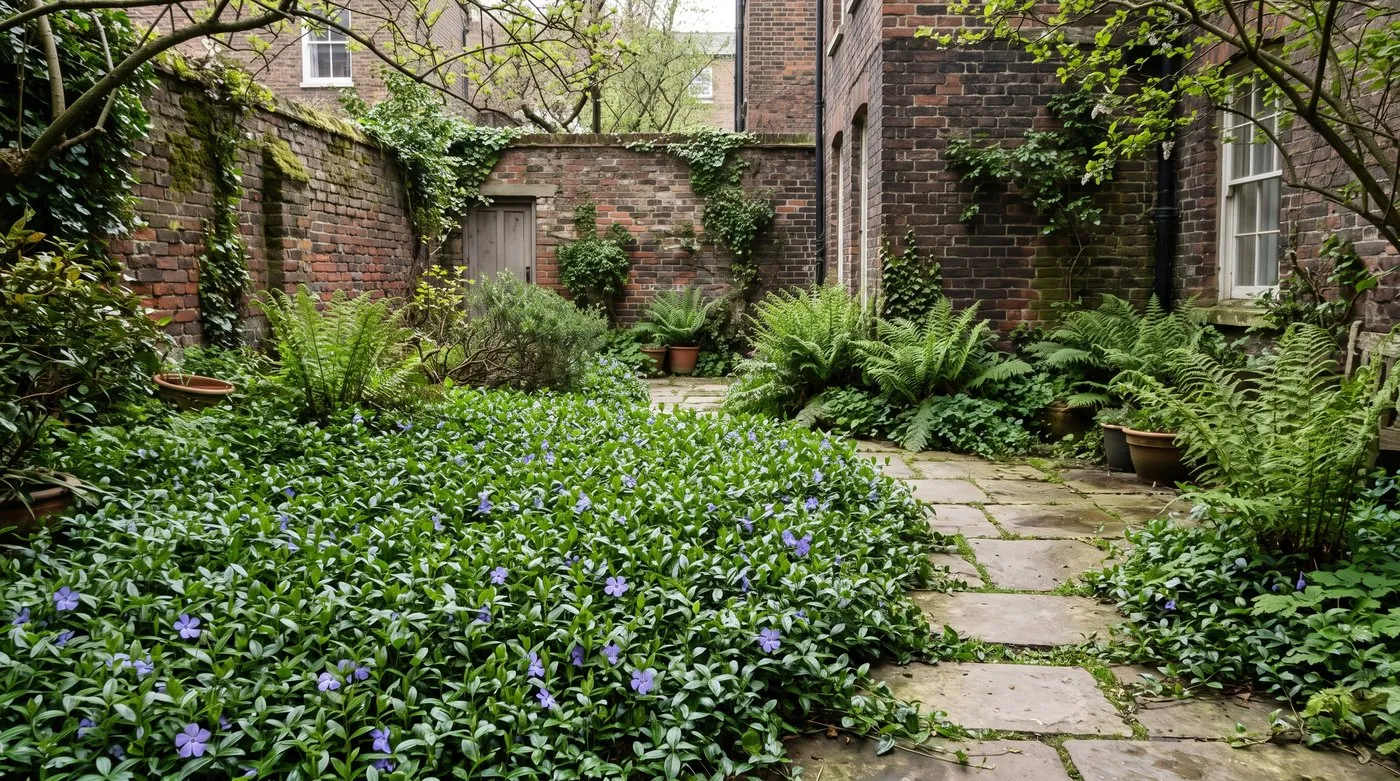
Where grass keeps failing in shade, ground cover like Vinca minor and a few stepping stones need far less fuss.
To keep grass, sow a shade-tolerant seed mix, mow higher than usual and rake fallen leaves off quickly in autumn. The guide to growing grass in shade covers what works and what won’t.
Where the lawn keeps failing, try:
- Pale paving or gravel for the shadiest area by the house
- Ground cover such as Vinca minor, Pachysandra terminalis or Waldsteinia ternata, planted about 30cm apart
- A fern and moss garden that turns the shade into a feature
Best climbers for a north-facing wall
Climbing hydrangea is the classic choice. Walls and fences are big surfaces, so covering them makes a small garden feel much greener.
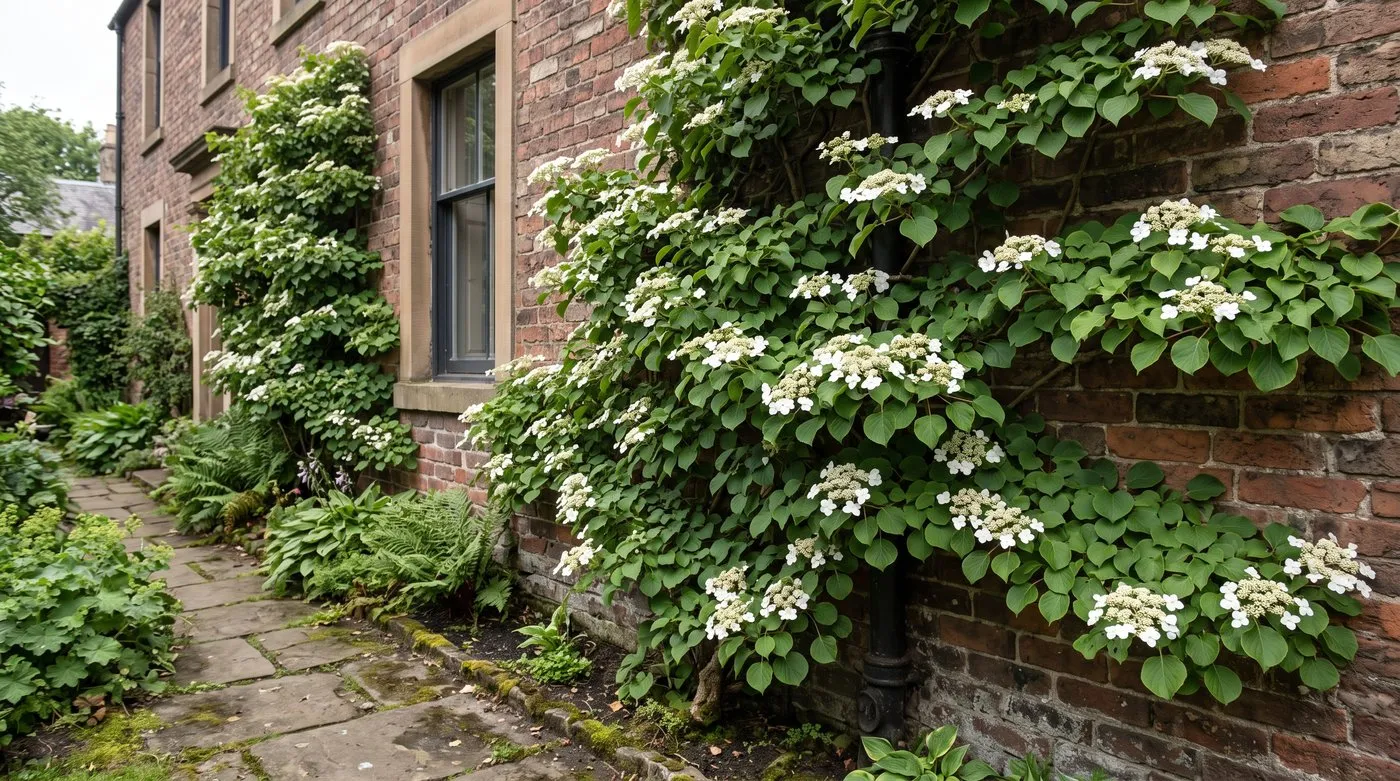
Climbing hydrangea clings on by itself and flowers happily on a shady north wall.
| Climber | How it climbs | Why grow it |
|---|---|---|
| Climbing hydrangea (Hydrangea petiolaris) | Self-clinging | White lacecap flowers in early summer, autumn colour |
| Ivy (Hedera helix) | Self-clinging | Evergreen, autumn flowers and winter berries for wildlife |
| Parthenocissus henryana | Self-clinging | Silver-veined leaves, best colour in shade, red in autumn |
| Schizophragma hydrangeoides | Self-clinging | Creamy flowers, a tidier relative of climbing hydrangea |
| Winter jasmine (Jasminum nudiflorum) | Needs tying in | Yellow flowers on bare stems in winter |
| Clematis montana and alpina types | Needs wires | Spring flowers, cope well on north walls |
Climbing hydrangea is slow for its first couple of years, then speeds up. Self-clinging climbers can damage loose mortar, so check the wall is sound first. Avoid wisteria and most climbing roses on a north wall, as they need far more sun to flower well. For more ideas, see the guide to evergreen climbers for year-round cover.
Growing food in a north-facing garden
Leafy crops and many herbs cope with part shade, especially in the brightest corner. Fruiting crops are much harder.
Good choices: lettuce, rocket, chard, spinach, parsley, chervil, mint and wild garlic. Lettuce is often slower to bolt in cool shade. Struggle: tomatoes, courgettes, peppers and beans need a sunny spot. Grow them in pots you can move into summer sun, or skip them. Keep mint in a pot, as it spreads fast. Wild garlic is toxic to dogs, so grow it where yours can’t graze. The guide to vegetables that grow in shade has more.
North-facing garden through the year
| Month | Jobs |
|---|---|
| January | Cut old hellebore leaves back so the flowers show. Enjoy Sarcococca scent |
| February | Mulch borders with leaf mould or compost while the soil is damp |
| March | Plant container-grown shrubs. Divide hostas and ferns as they wake up |
| April | Plant ferns and ground cover. Tie in climbers |
| May | Protect hostas from slugs. Note where the summer sun lands |
| June to August | Water new plants in dry spells. Enjoy the seating at the far end |
| September | Plant spring bulbs. Sow a shade lawn mix on thin patches |
| October | Rake leaves off lawns and paths. Plant shrubs and trees |
| November | Collect leaves for leaf mould. Plant bare-root shrubs |
| December | Plan next year’s planting. Leave hydrangea flower heads on for frost protection |

Hellebores, snowdrops and evergreens keep a shady garden alive in winter, when it gets little or no sun.
Common mistakes in north-facing gardens
- Planting sun-lovers. Lavender, rosemary, pelargoniums and most bedding plants grow leggy and flower poorly. If the label says full sun, believe it.
- Putting the seat by the back door. It’s often the shadiest spot. Find the sun first.
- Fighting a failing lawn. Grass in deep shade stays thin. Swap the worst patch for paving or ground cover.
- Ignoring wet soil. Shady clay stays damp for longer. Add organic matter and choose plants that like moisture.
- Leaving walls bare. A north-facing fence is ideal for climbing hydrangea or ivy.
Frequently asked questions
What grows well in a north-facing garden?
Ferns, hostas, hellebores, hydrangeas and Japanese anemones all do well. Add evergreens such as Fatsia, Aucuba and Sarcococca for winter structure. Climbing hydrangea is the classic plant for a north-facing wall. Match plants to how damp or dry the shade is.
Does a north-facing garden get any sun?
Yes, usually at the far end and the sides in summer. In summer the sun rises in the north-east and sets in the north-west, so side borders catch morning or evening light. A long garden often gets sun at the far end. In winter it may get almost none.
Can you grow vegetables in a north-facing garden?
Yes, leafy crops cope well in part shade. Lettuce, chard, spinach, rocket and many herbs crop in a few hours of sun. Tomatoes, courgettes and other fruiting crops need a sunny spot. Use the brightest corner, or pots you can move into summer sun.
How do you brighten a north-facing garden?
Use pale surfaces, a mirror and white flowers. Light paving and pale-painted fences bounce daylight around. A weatherproof garden mirror in a dark corner adds light and depth. White hydrangeas, foxgloves and Japanese anemones glow in shade, especially in the evening.
What climbers grow on a north-facing wall?
Climbing hydrangea is the classic choice. Ivy, Parthenocissus henryana, Schizophragma and winter jasmine also cope well. Many clematis, including montana and alpina types, grow on north walls too. Wisteria and most roses need much more sun to flower well.
Will a lawn grow in a north-facing garden?
It can, but expect thin, mossy grass in heavy shade. Sow a shade-tolerant seed mix, mow higher and keep leaves off it. Where the grass keeps failing, paving, gravel or shade-loving ground cover like Vinca minor is less work.
What is a good tree for a north-facing garden?
Amelanchier and Japanese maples suit partial shade. Amelanchier gives spring blossom, summer berries for birds and autumn colour. Japanese maples like a sheltered spot in moist, free-draining soil. Plant either where it gets some sun rather than in the deepest shade.
Now you know where your light falls, use the guide to sun mapping your garden to zone it properly, or browse more ideas in the garden design hub.
Our team produces practical UK gardening guidance from source research, contributor records and established horticultural practice. Editorial standards are overseen by Matt W.