Key takeaways
- Leafy crops like lettuce, chard, kale and spinach manage with about 3-4 hours of direct sun a day
- Shade keeps summer salads cooler, so lettuce, spinach and rocket are slower to bolt
- Parsley, mint, sorrel and chervil are herbs that cope well in part shade
- Alpine strawberries, rhubarb, redcurrants and gooseberries are fruit that tolerate some shade
- Tomatoes, peppers, courgettes, squash and sweetcorn need a sunny spot to crop
- Shady beds stay damp, so check before watering and keep on top of slugs
Leafy crops are the best vegetables to grow in shade. Lettuce, chard, kale, spinach and rocket all crop happily with about three to four hours of direct sun a day. Save the sun-lovers, like tomatoes and courgettes, for your brightest spot.
A shady bed even has perks. Summer salads stay cooler and slower to bolt, so you can often keep picking for longer.
How much sun do vegetables need?
Most leafy vegetables need about three to four hours of direct sun a day. Fruiting crops, such as tomatoes and courgettes, want six hours or more. It helps to know which kind of shade you have:
- Light shade: four to six hours of direct sun. Most vegetables will grow, apart from the hungriest sun-lovers.
- Part shade: two to four hours of direct sun. Ideal for leafy crops and many herbs.
- Dappled shade: bright light filtered through trees. Salad leaves and shade-loving herbs can cope, but growth is slower.
- Deep shade: little or no direct sun. Too dark for nearly all vegetables.
Check your garden at a few times of day in late spring to see where the sun falls. The guide to sun mapping your garden shows a simple way to do this. North-facing gardens often get more summer sun than you’d expect, as the sun rises and sets further north in midsummer.

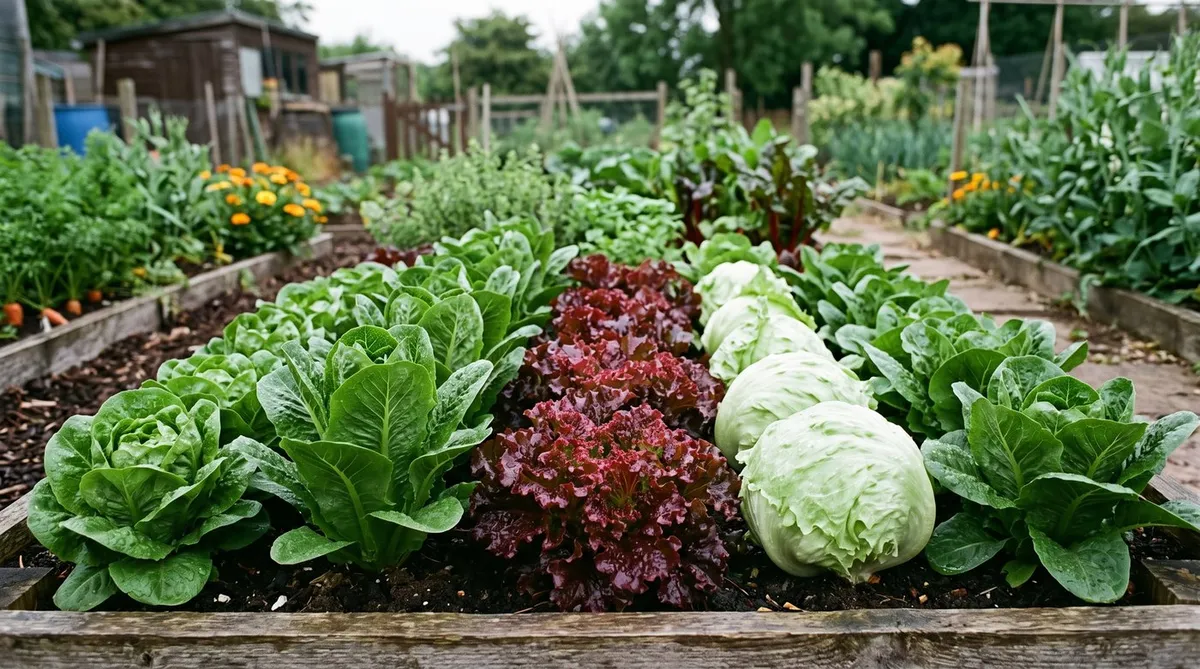
Chard, spinach and salad leaves are happy in a bed that only gets sun for part of the day.
Best vegetables to grow in shade
| Crop | Copes with | Why it works |
|---|---|---|
| Lettuce | Part shade | Slower to bolt in summer |
| Chard | Part shade | Crops for months from one sowing |
| Perpetual spinach | Part shade | Steadier than true spinach |
| Kale | Part shade | Picks from autumn to spring |
| Rocket and oriental leaves | Part shade | Milder leaves, slower to bolt |
| Beetroot, radishes, peas | Light shade | Smaller crops, but worthwhile |
Lettuce and salad leaves
Lettuce is the star of a shady bed. In summer, the cooler conditions slow bolting and keep the leaves sweet. Little Gem and loose-leaf types like Salad Bowl are easy choices. Growth is slower, so sow small batches every few weeks. The guide to the best lettuce varieties helps you choose.
Chard and perpetual spinach
Chard is a real workhorse. One sowing in spring can keep giving leaves into winter. Colourful types like Bright Lights brighten a dull corner too. Perpetual spinach is a leaf beet, related to chard, that crops steadily and is much slower to bolt than true spinach.

Rainbow chard looks good and crops for months, which makes it perfect for a shady corner you see every day.
Kale
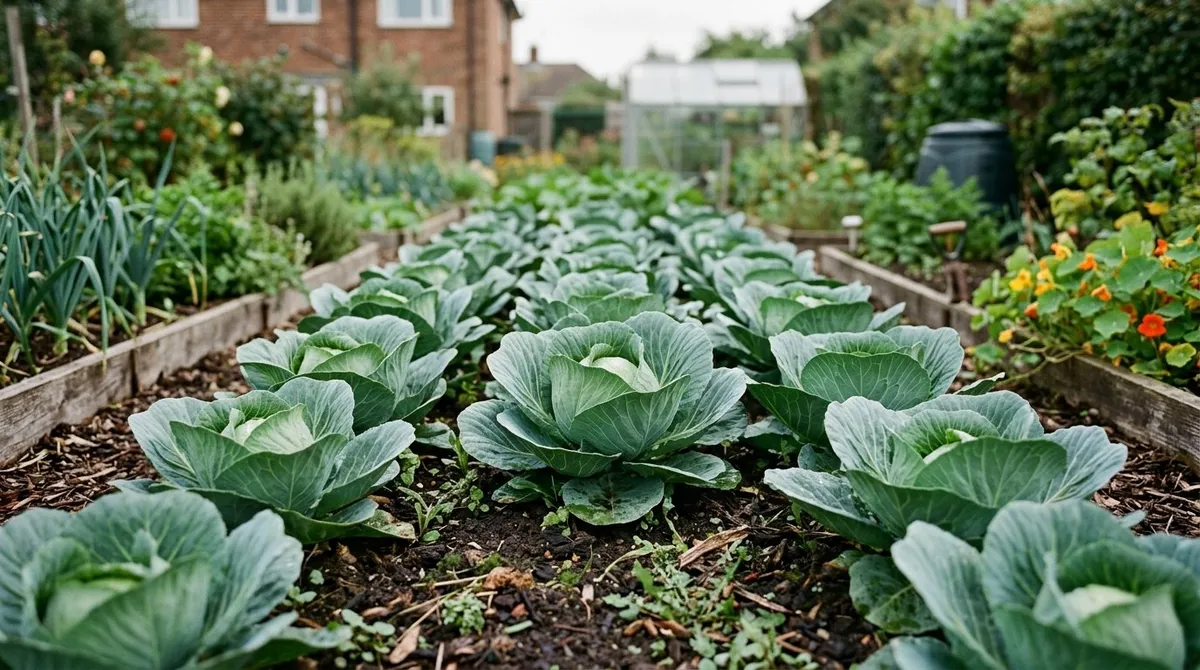
Kale copes well in part shade and is picked from autumn to spring. Cavolo Nero and curly kales both do well. Pick the lower leaves a few at a time and the plant keeps growing.
Rocket, mustard and oriental leaves
Rocket, mustard greens, mizuna and other oriental leaves grow well in part shade. They’re slower to bolt than in full sun and the leaves stay milder. Sow little and often, and pick young.
Borderline crops for light shade
Beetroot, radishes, peas and spring onions will crop in light shade with four or more hours of sun. Expect smaller roots and pods than in a sunny bed, but they’re still worth growing.
Herbs and fruit that cope with shade
Several herbs actually prefer a bit of shade. Parsley and chervil are slower to run to seed in a cool spot. Mint grows almost anywhere, but plant it in a pot as it spreads fast. Sorrel gives lemony leaves for years from one planting, as the guide to growing sorrel explains. The guides to growing chervil and growing wild garlic cover two lovely herbs for shady corners.
For fruit, alpine strawberries crop in dappled shade, with small, sweet berries over a long season. Rhubarb copes with part shade. Redcurrants and gooseberries can even be trained against a north-facing wall.

Alpine strawberries are happy in dappled shade. The berries are small but sweet, and they keep coming over a long season.
Vegetables to avoid in shade
These crops need a sunny spot, ideally with six hours or more of direct sun. In shade they make leaves but little to eat:
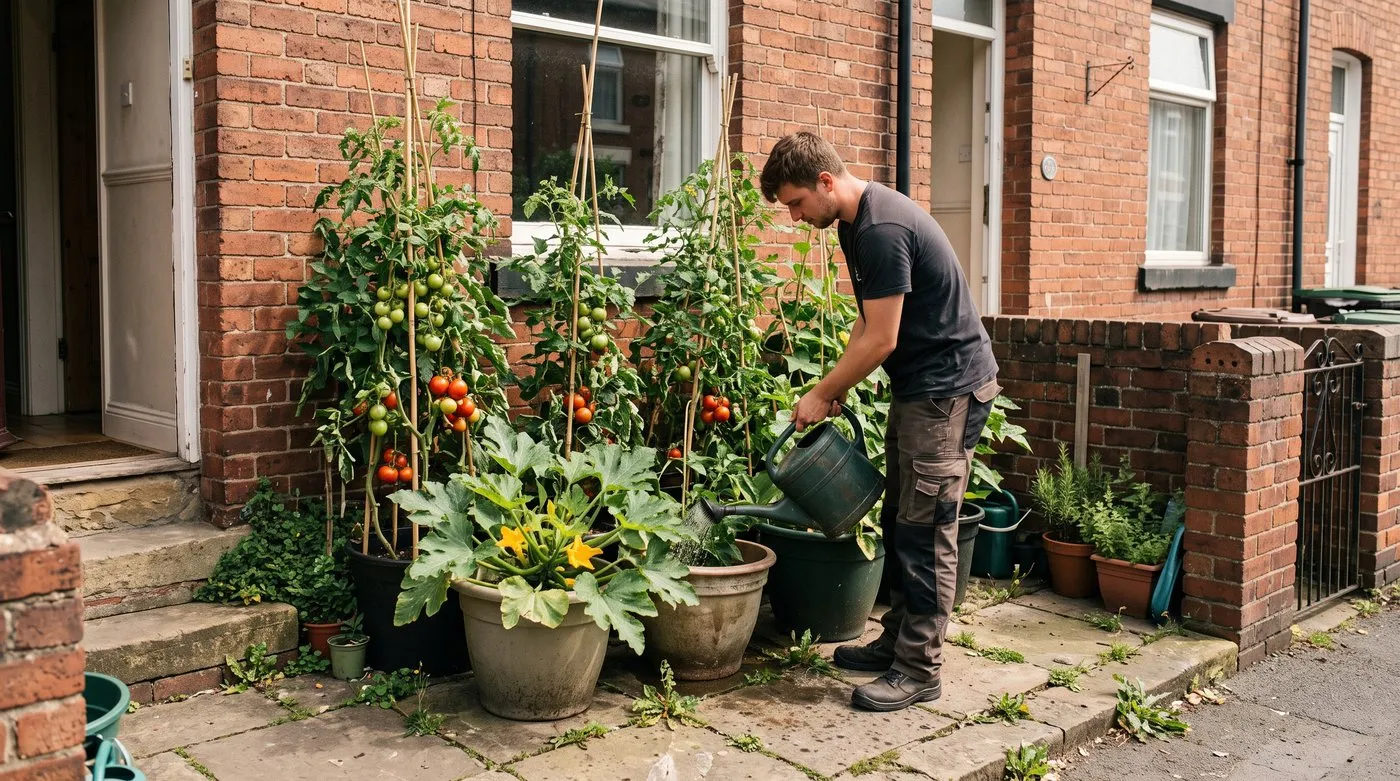
Sun-lovers like tomatoes and courgettes are happier in pots on a sunny patio or front yard, leaving the shady beds for leafy crops.
- Tomatoes, peppers and chillies. They need sun and warmth to ripen fruit. Grow them on a sunny patio or in a greenhouse.
- Aubergines. Even more sun-hungry. Best under glass in most of the UK.
- Courgettes, squash and pumpkins. Shade means few flowers and fewer fruits.
- Sweetcorn. Needs full sun and warmth.
- French beans. Crop poorly without plenty of sun.
If your front garden is sunny and the back is shady, consider swapping roles. Grow your tomatoes and courgettes in pots at the front, and leafy crops at the back.
How to get the most from a shady veg bed
- Raise the bed. Shady ground is often cool and damp. A raised bed drains better and warms up a little faster in spring.
- Sow a bit later. Shady soil warms slowly. Wait a week or two longer than in a sunny bed, or start seeds in modules.
- Sow little and often. Small sowings of salad every few weeks give a steady supply.
- Check before watering. Shady soil dries out more slowly. Water when it feels dry a few centimetres down. Beds under trees can be very dry, though.
- Watch for slugs. Cool, damp beds are slug heaven. The guide to getting rid of slugs has the safest ways to protect seedlings.
- Give plants room. Space plants a little wider to let light and air reach the leaves.

Kale and chard keep cropping into late autumn, even in a bed that only gets a few hours of sun.
Common mistakes growing vegetables in shade
- Trying tomatoes anyway. They’ll grow, but you’ll get few ripe fruit. Stick to leafy crops.
- Overwatering. Shady beds stay wet for longer. Always check the soil first.
- Sowing too early. Seeds sit and rot in cold, damp soil. Wait for the soil to warm up.
- Forgetting the slugs. Protect seedlings from day one.
- Writing off a north-facing garden. It often gets more sun in summer than you think. Map it before you decide.
Now you know what grows in shade, read the north-facing garden ideas for ways to make the rest of the garden shine, or browse more crops on the growing veg hub.
Frequently asked questions
What vegetables can I grow in a shaded UK garden?
Leafy crops are the best vegetables for a shady garden. Lettuce, spinach, chard, kale, rocket and oriental leaves all cope with about three to four hours of sun a day. Parsley, mint and sorrel are good herbs for shade too.
How much sun do shade vegetables need?
Most leafy vegetables need at least three to four hours of direct sun. Bright, dappled light through the rest of the day helps. Spots with no direct sun at all, under dense trees, are too dark for most crops.
Can I grow lettuce in a north-facing garden?
Yes, lettuce grows well in a north-facing garden. The cooler, shadier spot slows bolting in summer, so plants often crop for longer. Growth is slower, so sow a few seeds little and often.
Will tomatoes grow in shade in the UK?
Not well. Tomatoes need about six to eight hours of direct sun to ripen fruit. In shade they make leaves but few ripe tomatoes. Grow them on a sunny patio, windowsill or in a greenhouse instead.
Which fruit grows in shade?
Alpine strawberries, rhubarb, redcurrants and gooseberries cope with part shade. Redcurrants and gooseberries can even be trained against a north-facing wall. Crops are a little smaller than in full sun, but still worth having.
Do shady vegetable beds need less watering?
Usually yes, because shady soil dries out more slowly. Push a finger into the soil and only water when it feels dry a few centimetres down. Beds under trees are the exception, as tree roots take a lot of water.
Our team produces practical UK gardening guidance from source research, contributor records and established horticultural practice. Editorial standards are overseen by Matt W.