Key takeaways
- Sorrel is a hardy perennial that comes back every year with sharp, lemony leaves
- Common sorrel is best for cooking; French sorrel is milder and better raw
- Sow from March to May, direct or in pots, and thin to 20-30cm apart
- It copes with partial shade, so it suits spots where other salads struggle
- Pinch out flower stems as soon as they appear to keep the leaves tender
- Like spinach and rhubarb, sorrel contains oxalic acid, so enjoy it in sensible amounts
Sorrel is an easy, generous perennial with sharp, lemony leaves. Plant it once and you can pick from early spring to autumn for years. It needs no staking, little feeding and copes with a bit of shade.
There are two main kinds to grow. Common sorrel (Rumex acetosa) is a British native with big leaves that are best cooked. French sorrel (Rumex scutatus), also called buckler-leaf sorrel, is smaller and milder, perfect for salads. This guide covers both, from sowing to the kitchen.
Common sorrel or French sorrel?
The two kinds look and taste different, so pick by how you like to eat.
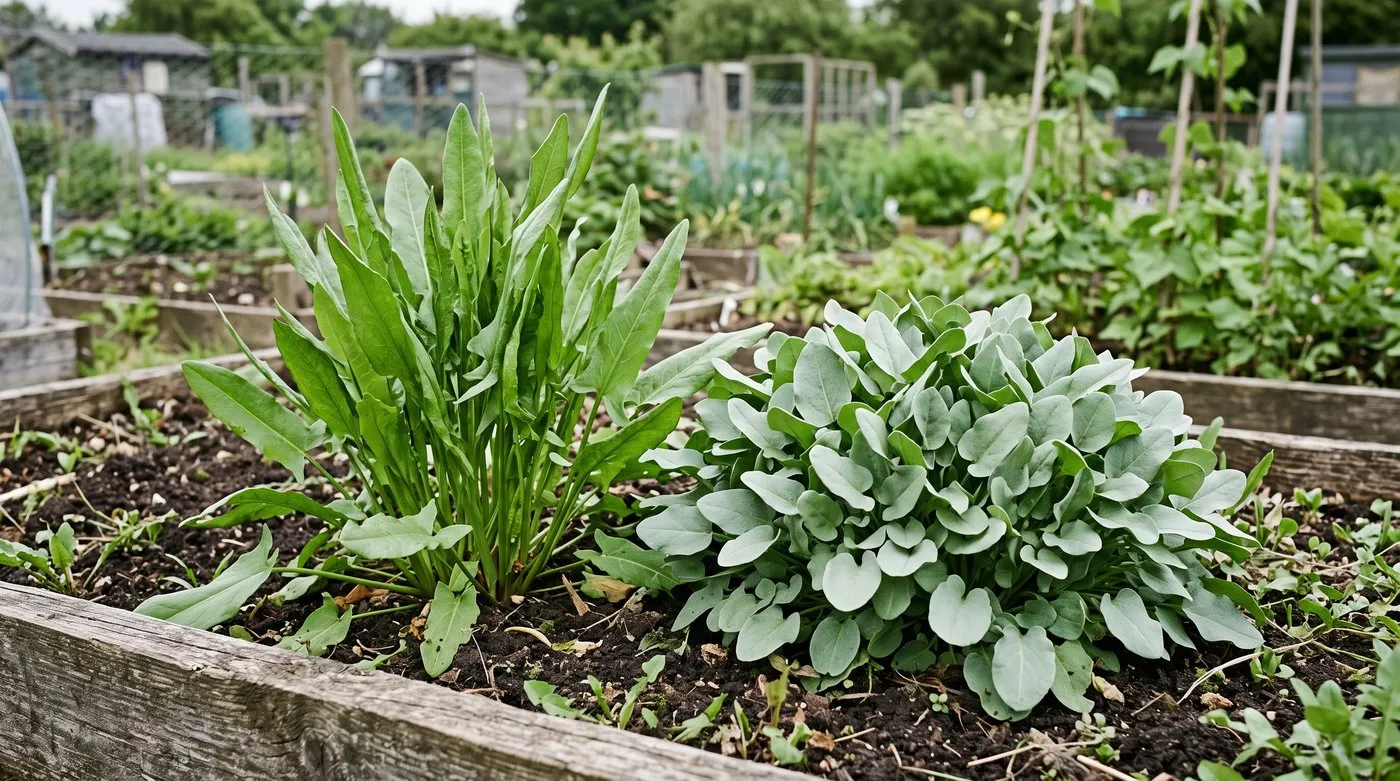
Big arrow-shaped leaves on the left, small shield-shaped ones on the right. Cook the first, eat the second raw.
Common sorrel has large, arrow-shaped leaves on upright clumps. The taste is sharp and strongly lemony. Young leaves are fine in salads, but it really shines in soups and sauces.
French sorrel stays low and compact, with small, shield-shaped leaves. The flavour is gentler and fresher. It is the better choice for salads, sandwiches and garnishes, and it copes with drier soil.
| Feature | Common sorrel | French sorrel |
|---|---|---|
| Leaves | Large, arrow-shaped | Small, shield-shaped |
| Flavour | Strong and sharp | Milder and fresh |
| Best use | Soups, sauces, wilted | Raw in salads |
| Soil | Moist, copes with clay | Lighter, well-drained |
| Spacing | About 30cm | About 20cm |
| Bolting | Runs to flower readily | Less inclined to flower |
If you have room, grow one of each. Common sorrel for the pot, French sorrel for the salad bowl. If you already grow lettuce and salad leaves, French sorrel adds a lemony kick nothing else does.
How to sow and plant sorrel
Sorrel is easy from seed and quick to get going. You can usually start picking a few leaves in the first summer.

Starting sorrel in pots gives you sturdy plants that shrug off slugs once they go outside.
Sowing outdoors
Sow from March to May, once the soil has warmed a little. Make shallow drills about 1cm deep and 30cm apart. Sow thinly, cover lightly and keep the soil moist until seedlings appear. Thin common sorrel to about 30cm apart and French sorrel to about 20cm.
Starting in pots
On heavy clay, or where slugs are a problem, start sorrel in pots. Sow three or four seeds per small pot of peat-free compost on a windowsill or in a greenhouse. Thin to the strongest seedling. Harden off, then plant out from late April. Pot-raised plants are bigger and tougher when they go out, so slugs do less damage.
Buying plants
Garden centres sometimes sell sorrel plants, usually French sorrel, in the herb section. One or two plants of each kind is plenty for most households. The guide to creating a herb garden shows how to fit sorrel in among other perennial herbs.
Where to plant sorrel
Sorrel is happy in sun or partial shade. Full sun gives the biggest leaves. Partial shade suits it well too, and shaded plants are often slower to bolt in summer. That makes sorrel handy for the spots other crops refuse, such as a north-facing bed or under fruit trees. For more crops that cope with less light, see the guide to vegetables to grow in shade.
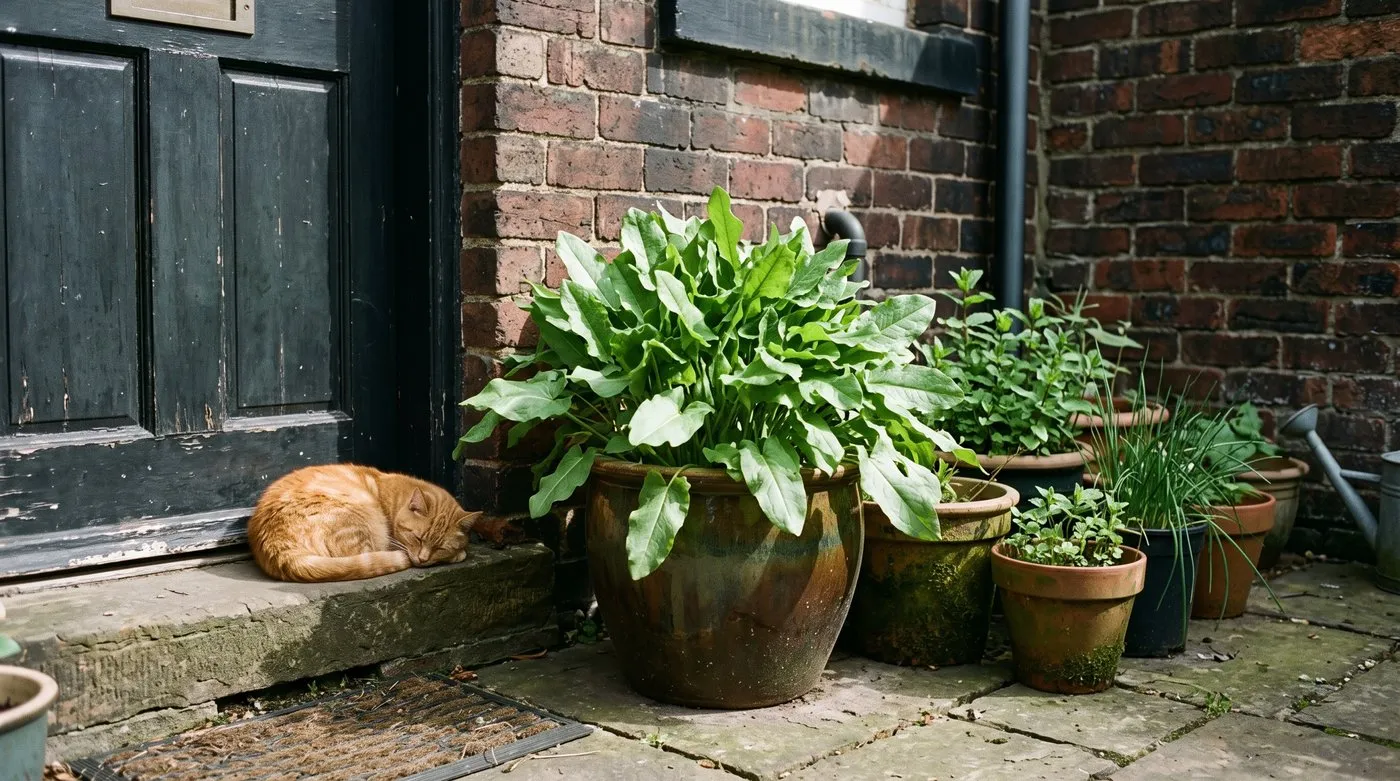
Sorrel is happy in a big pot in partial shade, right where you need it for cooking.
Soil: Common sorrel likes moist soil and copes with clay. French sorrel prefers lighter, well-drained ground. Neither needs rich soil. A little garden compost at planting is enough. Avoid ground that sits waterlogged. On poorly drained soil, use a raised bed.
Gardener’s tip: Sorrel is happy in a large pot by the back door. Keep it watered and you’ll have lemony leaves within arm’s reach of the kitchen.
How to care for sorrel through the year
Sorrel needs little looking after. The main jobs are watering in dry spells, removing flower stems and splitting old clumps every few years.
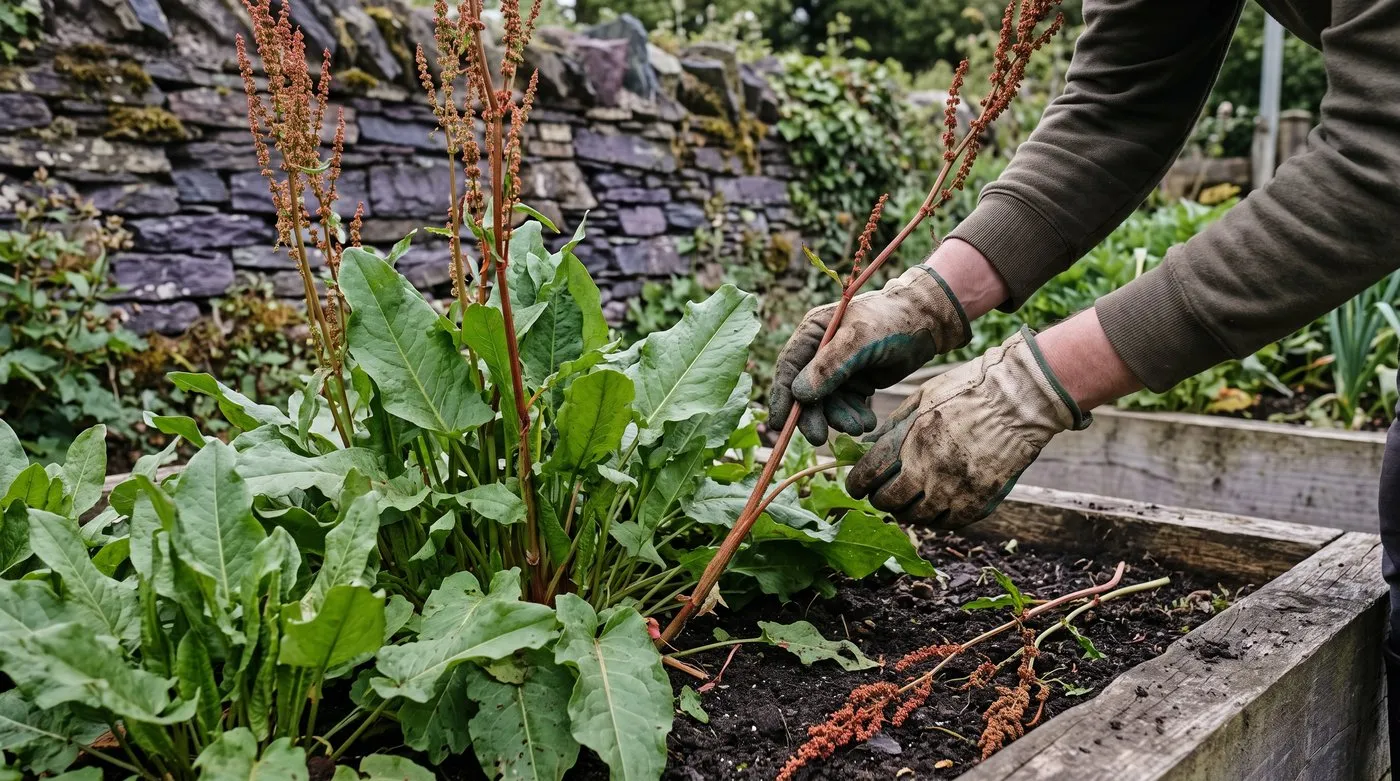
Snap off flower stems as soon as they appear and the plant keeps making tender leaves.
Watering: Keep the soil moist from spring to late summer. Sorrel wilts in drought, and stressed plants run to flower sooner. A good weekly soak in dry weather is usually enough. A mulch of compost helps hold moisture in.
Feeding: No regular feeding is needed on reasonable soil. A top dressing of compost in autumn or spring is plenty.
Removing flower stems: This is the most important job. From late spring, sorrel sends up tall flower stems. Once it flowers, the leaves get tougher and fewer. Snap or cut the stems off at the base as soon as you see them. Check every few days in early summer.
Winter: Sorrel slows down and often dies back in winter. Clear away dead leaves and mulch over the crowns. New leaves appear early in spring, often before most salads are ready.
When and how to harvest sorrel
Pick sorrel from spring to autumn. Young leaves are the most tender and the least sharp, so pick little and often.

Pick the outer leaves and leave the heart of the plant, and it will keep cropping all season.
Take the outer leaves first, snapping or cutting each stem at the base. Leave the centre and plenty of leaves so the plant keeps growing. Never strip a plant bare.
You can also cut a whole plant back to a few centimetres above the crown with scissors. It will regrow in a few weeks. This works especially well with French sorrel.
Cooking with sorrel
Sorrel’s sharp, lemony taste brightens all sorts of dishes. It turns from bright green to a dull khaki when cooked, which is normal.
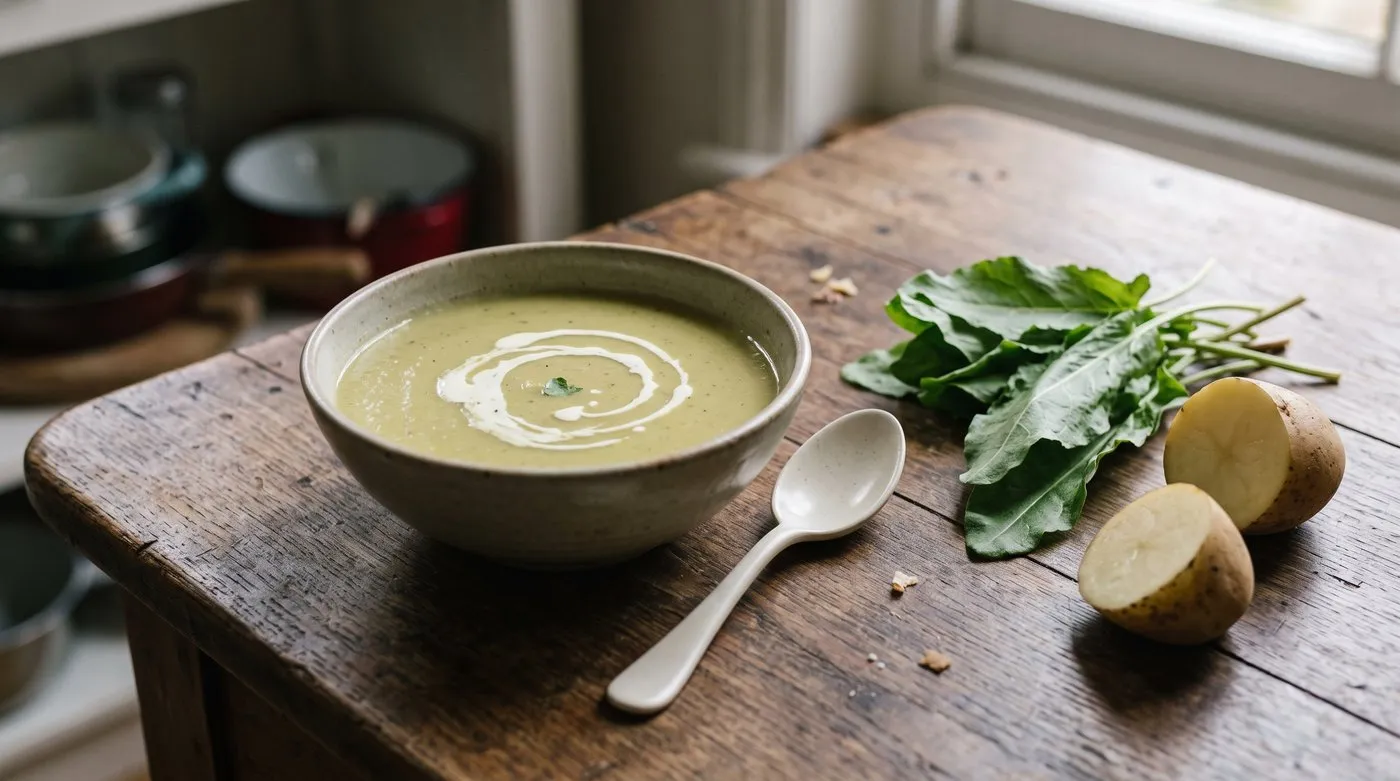
Sorrel turns khaki when cooked, but the lemony flavour makes a lovely, simple soup.
Sorrel soup: Soften an onion and a potato in butter, add stock and simmer until tender. Stir in a big handful of common sorrel leaves for the last few minutes, then blend. Finish with a little cream.
Sorrel sauce for fish: Melt butter, add shredded sorrel and stir until it collapses. Add a splash of cream and warm through. It is lovely with salmon, trout, mackerel or eggs.
Raw in salads: Tear young French sorrel leaves into mixed salads with lettuce and rocket. They add sharpness without needing lemon in the dressing. Use common sorrel more sparingly raw.
Other ideas: Fold wilted sorrel into omelettes, stir it through risotto or blend it into a green mayonnaise.
Is sorrel safe to eat?
Yes, in sensible amounts. Like spinach, rhubarb stalks and beetroot leaves, sorrel contains oxalic acid, which gives it the sharp taste. Eating a lot at once can upset the stomach.
Enjoy it as a flavouring or a side, not as a daily bowlful. If you have been told to limit oxalate-rich foods, for example because of kidney stones, check with your doctor before eating much sorrel. Dogs and other pets that graze plants can be upset by it too, so don’t let them chew the clump.
How to propagate and renew sorrel
After a few years, clumps get crowded and woody in the middle. Splitting them renews the plants for free.
Division: Lift a clump in early spring or early autumn. Pull or cut off healthy outer pieces with roots, and throw away the tired centre. Replant straight away at the same depth and water well.
Self-seeding: If you let sorrel flower, it will sow itself around, especially on lighter soil. Pull up unwanted seedlings while they are small.
Saving seed: Let one flower stem ripen until the seeds turn brown in late summer. Cut it and shake the seeds into a paper bag. Store somewhere cool and dry.
Common sorrel problems
Sorrel is pleasingly trouble-free. Most problems come down to bolting.
- Bolting: Heat, drought and long days push sorrel to flower. Remove flower stems, water in dry spells and give a little shade.
- Slugs: They can flatten young seedlings, especially on heavy soil. Start plants in pots, check by torchlight and see the guide to getting rid of slugs.
- Green dock beetle: This shiny green beetle and its larvae chew small holes in the leaves. Damage is usually cosmetic. Pick them off by hand if numbers build up.
- Rust: Orange-brown spots under the leaves. Remove affected leaves and space plants so air can move around them.
Sorrel growing calendar
| Month | What to do |
|---|---|
| March | Sow under cover or outdoors. First leaves on established plants |
| April | Sow outdoors. Plant out pot-raised seedlings late in the month |
| May | Last sowings. Thin seedlings. Pick young leaves |
| June to July | Remove flower stems every few days. Water in dry spells |
| August to September | Keep picking. Save seed if you want it. Divide old clumps in early autumn |
| October | Last good pickings. Mulch over crowns |
| November to February | Plants rest. A cloche may keep a few leaves coming in mild areas |
Frequently asked questions
Is sorrel easy to grow in the UK?
Yes, it is one of the easiest perennial crops. It copes with clay, partial shade and cold winters. Sow it once in spring, keep the seedlings watered and you can pick leaves for years.
What is the difference between common sorrel and French sorrel?
Common sorrel has bigger leaves and a stronger, sharper taste. Its large, arrow-shaped leaves are best cooked. French sorrel is smaller, with shield-shaped leaves and a milder flavour that suits salads. Both are hardy perennials.
Can I grow sorrel in shade?
Yes, sorrel copes well with partial shade. North-facing beds and spots under fruit trees suit it. Leaves may be a little smaller in shade, but plants are often slower to bolt in hot summers.
When should I sow sorrel seeds?
Sow sorrel from March to May. Sow thinly in shallow drills outdoors, or a few seeds per pot under cover. Thin common sorrel to about 30cm apart and French sorrel to about 20cm.
Is sorrel safe to eat in large quantities?
Eat it in sensible amounts, as you would spinach or rhubarb. Sorrel contains oxalic acid, which can upset the stomach in large amounts. If you have been told to limit oxalate-rich foods, check with your doctor before eating much.
How do I stop sorrel from going to seed?
Remove flower stems as soon as they appear. Snap or cut them off at the base from late spring onwards. This keeps the plant making fresh leaves instead of seed. Watering in dry spells and a little shade also help.
Can I harvest sorrel in winter?
Usually only a little, and only in mild areas. Sorrel slows down and often dies back in winter. A cloche can keep a few leaves coming. Fresh growth returns early in spring, before most salads are ready.
Sorrel is just one of many crops you plant once and pick for years. Read the guide to perennial vegetables for more, or browse the veg growing hub.
Our team produces practical UK gardening guidance from source research, contributor records and established horticultural practice. Editorial standards are overseen by Matt W.