
Key takeaways
- Salad rocket is ready to pick in about 3-4 weeks
- Sow a short row every 2-3 weeks from March to September
- Wild rocket comes back each year, is slower to flower and tastes stronger
- Give summer sowings some afternoon shade so they don't run to flower
- Cover with fine mesh from sowing day to keep flea beetles off
- Cut the leaves and they grow back, giving several pickings from one sowing
Rocket is the fastest salad leaf you can grow. You can go from seed to plate in under four weeks, and it’s happy in the smallest space. An allotment, a raised bed or a kitchen windowsill all work.
Here’s how to choose, sow and pick it, and how to stop it bolting. If you already grow lettuce and salad leaves, rocket fits in perfectly alongside.
Which rocket varieties grow best in the UK?
There are three types of rocket to try. Growing two of them gives you a nice mix of flavours and a longer season.
Salad rocket (Eruca vesicaria)
Salad rocket is the quickest, ready in about 3-4 weeks. It has broad, rounded leaves with a gentle peppery taste that gets hotter as the plant grows. Apollo, Runway and Esmee are good named ones, but any packet of salad rocket will do. The downside is that it runs to flower quickly in hot weather. That’s why succession sowing is so handy.
Wild rocket (Diplotaxis tenuifolia)
Wild rocket has narrow, jagged leaves and a stronger, nuttier flavour. It’s slower to get going, but much slower to flower. It keeps cropping from the same plants for two or three years, and comes back each spring in milder areas. Grazia and Voyager are good varieties. The leaves are a bit tougher, so they hold up well on pizza and pasta.
Wasabi rocket (Diplotaxis erucoides)
Wasabi rocket has a sharp, horseradish-like kick. You may see it sold as white rocket or wall rocket. The leaves are small and jagged, and it grows fast but flowers quickly. Treat it as a quick crop and use it sparingly. A short row is fun for adding a bit of fire to salads.
Rocket variety comparison
Pick by how fast you want leaves and how much heat you like.
| Salad rocket | Wild rocket | Wasabi rocket | |
|---|---|---|---|
| Leaves | Broad, rounded | Narrow, jagged | Small, jagged |
| Flavour | Mild and peppery | Strong and nutty | Hot, like wasabi |
| Speed | Fast | Slower | Fast |
| Slow to flower? | No | Yes | No |
| Lasts | One season | A few years | One season |
| Good for | Quick salads, beginners | A long season | A flavour kick |
Tip: Grow salad rocket for speed and wild rocket for staying power. A short row of salad rocket every few weeks, plus a patch of wild rocket, keeps you going all season.

Salad rocket on the left is quick and mild, while wild rocket on the right is nuttier and much slower to flower. Growing both gives you the longest season.
When and how to sow rocket seeds
Rocket is about as easy to sow as it gets. The seeds come up fast in almost any soil.
 Young rocket seedlings in a raised bed. Rows 15cm apart make thinning and picking easy.
Sowing outdoors
Sow straight into the ground from March to September. Make a shallow drill 1cm deep and water it before you sow, so the seeds don’t wash away. Sow thinly and cover lightly with soil. Seedlings pop up within a week. Thin to 10-15cm apart, with rows 15-20cm apart.
Rocket isn’t fussy about soil. Clay, sand and chalk are all fine. The RHS guide to growing rocket is a good extra read. If your soil is poor, dig in some garden compost first.
Sowing indoors
For the earliest leaves, sow on a bright windowsill or in a cold greenhouse from February. Use modules filled with peat-free seed compost. Rocket doesn’t love being moved, so sow 3-4 seeds per module and keep the strongest. Get them used to outdoor life for a week, then plant out from mid-March.
Succession sowing: the key to continuous rocket
Sow a short row every 2-3 weeks from March to September. This is the secret to never running out. One sowing of salad rocket gives a few weeks of picking before it flowers. Without the next sowing ready, you go from plenty to nothing.
For two people, a row 30-60cm long is plenty. It takes five minutes, so set a reminder on your phone.

A short row every two or three weeks means there’s always rocket coming on. Water the drill first so the seed doesn’t wash away.
Month-by-month sowing and harvesting calendar
| Month | Sow | Pick | Notes |
|---|---|---|---|
| February | Indoors on a windowsill | - | Make an early start |
| March | Outdoors under fleece | Indoor sowings | First outdoor rows |
| April | Outdoors | Early sowings | Main season begins |
| May | Outdoors every 2-3 weeks | Salad and wild rocket | Great growing weather |
| June | Outdoors in part shade | All types | Move to a shadier spot |
| July | Outdoors in shade only | All types, pick often | Highest bolting risk |
| August | Outdoors, back in sun | All types | Days shortening |
| September | Last outdoor sowing | Salad and wild rocket | Cover late sowings with fleece |
| October | - | Wild rocket, late sowings | Protect with cloches |
| November | - | Wild rocket under cover | Wild rocket still going |
| December | Indoors on a windowsill | Windowsill leaves | A winter windowsill crop |
How to prevent rocket from bolting
Bolting is when rocket sends up a flower stalk and the leaves turn bitter. It’s the most common frustration, but you can hold it off.
Heat is the main trigger. Rocket is a cool-weather plant, and hot spells make salad rocket flower quickly. Wild rocket copes with heat much better.
Dry soil makes it worse. A thirsty plant rushes to flower. Water every couple of days in dry weather and mulch to keep moisture in.
Long days play a part. Midsummer brings long days and heat together, so summer sowings bolt fastest.
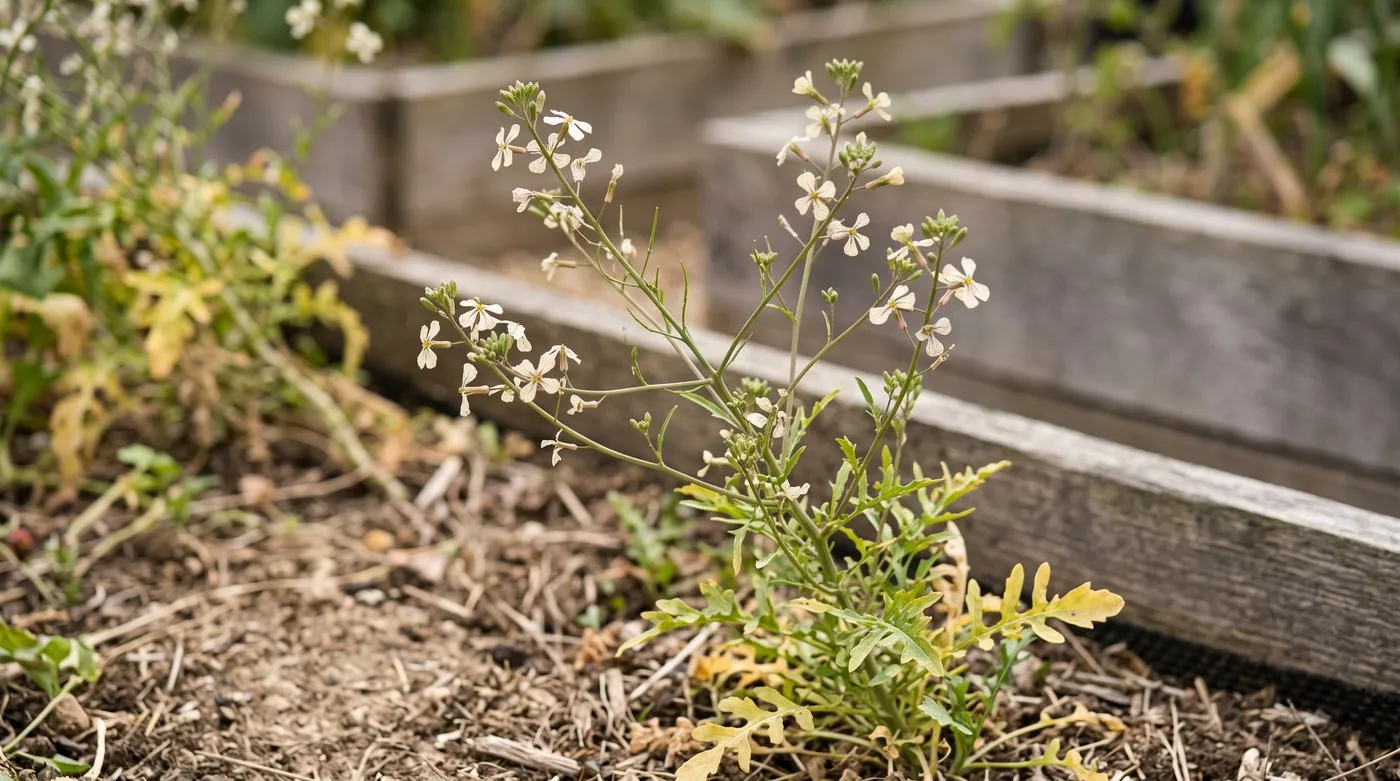
Heat and dry soil send salad rocket to flower and the leaves turn bitter. Afternoon shade and steady watering in summer hold it off for longer.
Five practical bolt prevention strategies
- Grow in part shade from June to August. Morning sun and afternoon shade is ideal, such as beside a row of beans or a fence.
- Pick often. Regular cutting holds off flowering. Don’t let leaves get much past 15cm.
- Water steadily. Keep the soil evenly moist. A mulch of compost means less watering.
- Switch to wild rocket for summer. It’s much slower to flower.
- Keep sowing. Even with the best care, salad rocket flowers in the end. Fresh rows mean you’re never without.
Cut-and-come-again harvesting
This is the best way to pick rocket. Instead of pulling up the plant, you cut the leaves and leave the stump to regrow. New leaves are ready again in a couple of weeks.
 Cut leaves when they’re 8-10cm tall, leaving the middle of the plant to regrow.
Salad rocket gives a few cuts before it starts to flower. Each cut is a little more peppery. When it bolts, pull it out and move on to your next row.
Wild rocket keeps going much longer. It crops all season and comes back next spring. Cut it back in late autumn and mulch with compost.
How to cut correctly
Use sharp scissors or a knife. Cut across the row about 3-4cm above the soil, so there’s enough left to regrow. Don’t pull the leaves, as that disturbs the roots. Pick in the morning when the leaves are cool and crisp.
If you enjoy growing spinach, the same cut-and-come-again trick works for perpetual spinach and chard.
Growing rocket in containers and on windowsills
Rocket is one of the best salads for container growing. It has shallow roots, grows fast and doesn’t need much compost. A window box or pot is perfect.
 A window box of rocket on a kitchen windowsill. Sow again every few weeks for a steady supply.
Container growing
Use any container at least 10cm deep with drainage holes, filled with peat-free multipurpose compost. Scatter the seeds thinly, cover with 1cm of compost and water gently. Thin to about 5cm apart if they come up thick.
Keep pots in full sun in spring, then move them into part shade from June to August. Water daily in warm weather. After the first cut, give a weak liquid feed every couple of weeks.
Windowsill growing
Rocket really does do well on a kitchen windowsill. In winter, a south or west-facing window gives enough light. East-facing windows are fine in spring and summer.
Sow in a trough at least 10cm deep and keep the compost moist but not soggy. Turn it every few days so it doesn’t lean towards the light. Pick baby leaves at 8-10cm tall, and sow a new batch every few weeks.
How to deal with flea beetle on rocket
Flea beetles are the main rocket pest. These tiny, shiny black beetles chew lots of small round holes in the leaves. A bad attack can wipe out a sowing, especially in warm, dry spells in spring and early summer.
Prevention is everything
Cover rocket with fine insect mesh from the day you sow. Drape it over hoops or lay it on the crop, and tuck or weigh down the edges. It’s by far the best defence.
Flea beetles love it hot and dry, so keep the soil watered. They jump when disturbed, so a yellow sticky card held just above the plants can catch a few.
What not to do
Don’t grow rocket right next to cabbages, kale or broccoli. Flea beetles love the whole family. Radishes attract them too, so keep them apart from your rocket.
There’s no need for sprays on a quick salad crop you eat raw. Mesh and good watering do the job.
Other pests and problems
Slugs and snails munch seedlings in damp weather. An evening torch patrol, beer traps or slug nematodes all help. Aphids sometimes gather under the leaves, so wash them off with a jet of water. In wet autumns you may see downy mildew, with yellow patches on top of leaves and grey fuzz underneath. Thin the plants and water the soil, not the leaves.
Harvesting and storing rocket
Start picking at 8-10cm tall for baby leaves. These are the mildest. Bigger leaves are hotter and more peppery, and both are good.
Pick in the morning and cut just what you need. Rocket wilts quickly. Keep unwashed leaves in a sealed box or bag in the fridge for a few days, and wash just before eating.
Using rocket flowers
If your rocket does flower, the flowers are edible. They’re peppery and look pretty on salads, pasta and pizza. Pinching them off also keeps leaves coming a little longer. Let a few go to seed and salad rocket may pop up again by itself next spring.
Kitchen uses for home-grown rocket
Home-grown rocket tastes far more peppery and lively than bagged supermarket leaves.
Ideas to try: mixed salads, pizza (add it after baking), pasta with olive oil and parmesan, mozzarella and tomato sandwiches, or rocket pesto with pine nuts, parmesan, olive oil and garlic.
Matching types to dishes: use mild salad rocket in mixed salads. Use wild rocket on pizza and pasta, where its stronger flavour holds its own. Add wasabi rocket sparingly to fish or steak.
Grow rocket alongside winter salad leaves and you can pick fresh salad almost all year.
Month-by-month rocket growing guide
March-April: spring sowing
Sow the first rows under fleece from mid-March, and without cover from April. Both salad and wild rocket can go in now. Cool, damp weather suits it, and flea beetles are only just waking up.
May-June: peak growing
The main sowing season. Sow every 2-3 weeks and start using shadier spots from June. Flea beetles are busiest now, so keep the mesh on.
July-August: managing heat
The trickiest time. Only sow in shade, water often and pick small. Wild rocket is the better choice now. If it’s very hot, pause salad rocket and start again in late August.
September-October: autumn flush
One of the best times for rocket. Cooler weather, shorter days and autumn rain suit it perfectly. Sow the last outdoor row in early September and cover with fleece from October to keep picking into November.
November-February: winter windowsill
Move indoors and sow on a bright windowsill. Wild rocket in the garden may still give a few leaves in mild spells.
Frequently asked questions
When should I sow rocket seeds in the UK?
Sow outdoors from March to September. For the earliest leaves, start some on a windowsill from February. Rocket likes cool, mild weather. In the hottest weeks of summer, only sow where it gets some shade. Late sowings under fleece keep you picking into autumn.
How long does rocket take to grow from seed?
Salad rocket is ready in about three to four weeks. Wild rocket takes several weeks longer. Seeds usually come up within a week. Young leaves are mild, while bigger ones are more peppery. Cut and it grows back, so each sowing keeps going for weeks.
Why does my rocket keep bolting?
Heat and dry soil are the usual culprits. Bolting means the plant runs to flower and the leaves turn bitter. Grow summer rocket in part shade, water in dry spells and pick often. Wild rocket is slower to bolt, so it suits summer better.
Can I grow rocket in pots and containers?
Yes, any pot at least 10cm deep with drainage holes works. Window boxes, troughs and grow bags are all fine. Use peat-free multipurpose compost, sow thinly and water gently. Move pots into part shade in summer.
What is the difference between salad rocket and wild rocket?
Salad rocket is quicker, wild rocket is longer-lived and stronger. Salad rocket has broad, mild leaves but runs to flower fast in warm weather. Wild rocket has narrow, jagged leaves with more bite, and comes back for a few years.
How do I stop flea beetles eating my rocket?
Cover rocket with fine insect mesh from the day you sow. Tuck or weigh down the edges so the beetles can’t crawl under. Keep the soil moist, as they love dry weather. Don’t grow rocket right next to cabbages and their relatives.
Can I grow rocket on a windowsill?
Yes, it’s one of the best windowsill salads. Use a trough or pot at least 10cm deep on your brightest sill. Turn it every few days so it doesn’t lean. Pick the leaves young, and sow a fresh batch every few weeks.
Further reading
- How to Grow Lettuce and Salad Leaves in the UK, more salad crops to grow alongside
- Succession Planting Guide for the UK, plan your sowings for picking all season
- Container Vegetable Gardening in the UK, growing food in pots, window boxes and grow bags
- How to Grow Radishes in the UK, another speedy crop to try
- Growing Vegetables on a Windowsill, fresh salad indoors all year
Our team produces practical UK gardening guidance from source research, contributor records and established horticultural practice. Editorial standards are overseen by Matt W.


