
Key takeaways
- A south or east-facing windowsill with four to six hours of light suits most salad and herbs
- Herbs, lettuce, spring onions, radishes, microgreens and chillies are the easiest windowsill crops
- From November to February, a small LED grow light makes up for the dull days
- Pots 10 to 15cm deep suit most crops, but chillies like about 20cm
- Microgreens are the quickest crop, often ready in one to three weeks
A windowsill can be a surprisingly good little veg patch. A sunny kitchen sill will grow herbs, salad leaves, spring onions and chillies with very little fuss. All you need is a few pots, some compost and a packet of seeds.
Which vegetables grow on a windowsill UK?
The trick is to match the crop to the light you’ve got. Even a south-facing windowsill gets less light than a garden in summer. Crops that are happy in part shade or cool spring weather do best indoors. Dwarf vegetable varieties are a great fit too, as they’re made for small pots and tight spaces.
How much light does a windowsill need for vegetables?
Light is the thing that matters most indoors. Which way your window faces makes a big difference.
South-facing: The best. Sun from late morning through the afternoon. Great from spring to autumn, and still useful in winter with a grow light. You can grow almost anything on this list here.
East-facing: Gentle morning sun. Lovely for herbs and salad that like it cooler. Chillies may struggle without extra light.
West-facing: Afternoon and evening sun. Much like east-facing for most crops, though the afternoon heat dries pots out faster in summer.
North-facing: Little or no direct sun. Only cress, mint, parsley and some salad leaves and microgreens manage. Anything else needs a grow light.
Light fades fast as you move away from the glass, so keep pots right up by the window. The RHS guide to growing under cover has more tips.
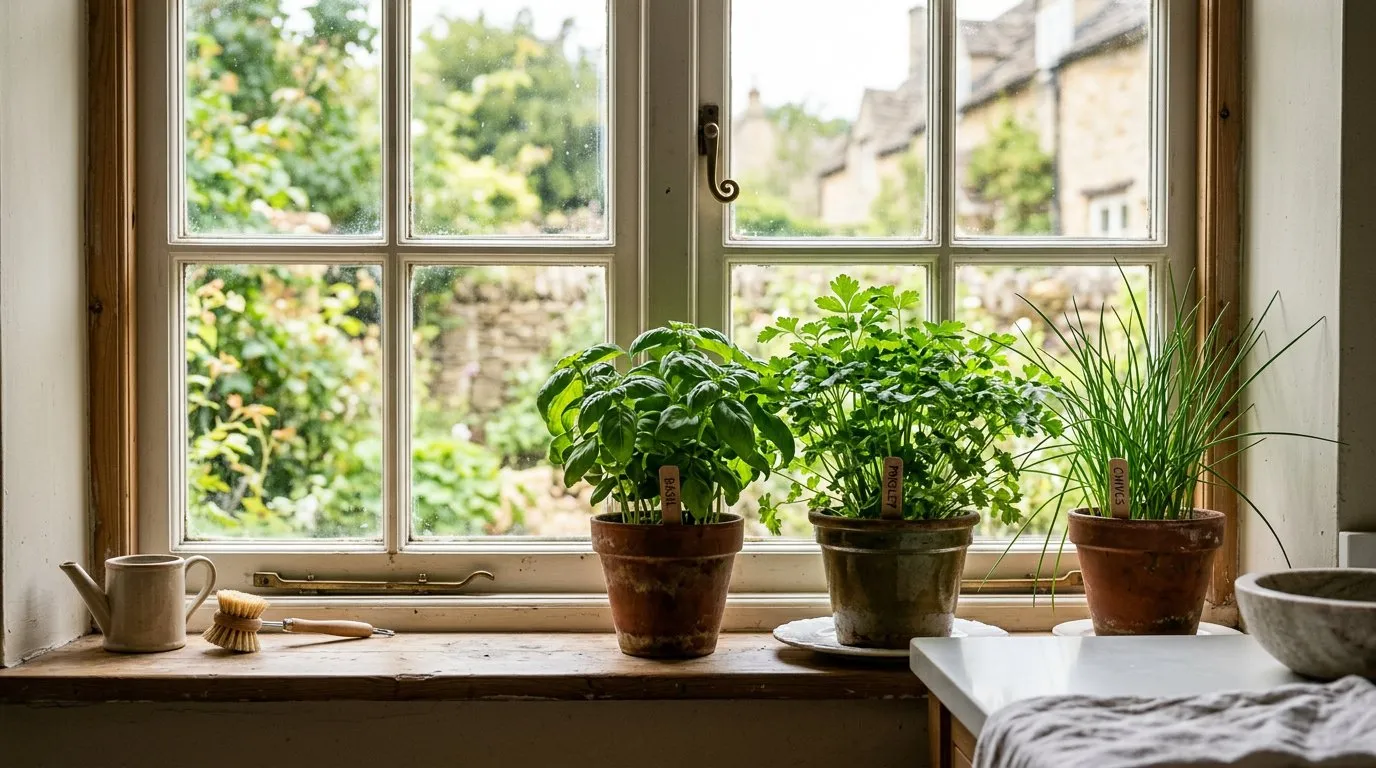
Basil, parsley and chives on a bright kitchen windowsill, close to the glass where the light is best.
Best windowsill vegetables for UK beginners
Microgreens, fastest return
Microgreens are the perfect place to start. Pea shoots, radish and sunflower shoots are often ready in one to two weeks and need no special kit. A seed tray, some compost and a packet of seeds is all it takes.
Because they’re so quick, you see results almost straight away, which is very encouraging. For something even faster with no compost at all, try sprouting seeds in a jar, such as alfalfa and lentils, ready in a few days.
Herbs, highest everyday value
Herbs are probably the most useful windowsill crop. A pot of basil, mint or chives saves buying little packets every week. Growing herbs on a windowsill is easy: buy small plants or sow seed in spring.
Basil needs the most light of the common herbs, so give it your sunniest sill. Mint copes best with shade and will grow on an east or even north-facing sill, especially with a grow light.
Supermarket basil pots are crammed with seedlings. Split the clump into a few smaller pots and it lasts much longer.
Lettuce, cut-and-come-again
Loose-leaf lettuce is perfect for a windowsill. Pick the outer leaves and the plant keeps making more for weeks. ‘Salad Bowl’, ‘Lollo Rosso’ and ‘Tom Thumb’ all do well indoors.
Our how to grow lettuce UK guide has the details. In short: sow from February to September, thin to about 10cm apart, and start picking after about four weeks. A 30cm trough holds six to eight plants.
Chillies, the patient windowsill crop
Chilli peppers take a while but are very rewarding. Sow from February to April somewhere warm, around 20 to 25C (a heated propagator helps). Move them to a sunny sill once they come up.
They spend a couple of months growing before they flower, then the chillies follow from mid to late summer. Compact varieties such as ‘Prairie Fire’ and ‘Cayennetta’ suit a windowsill well.
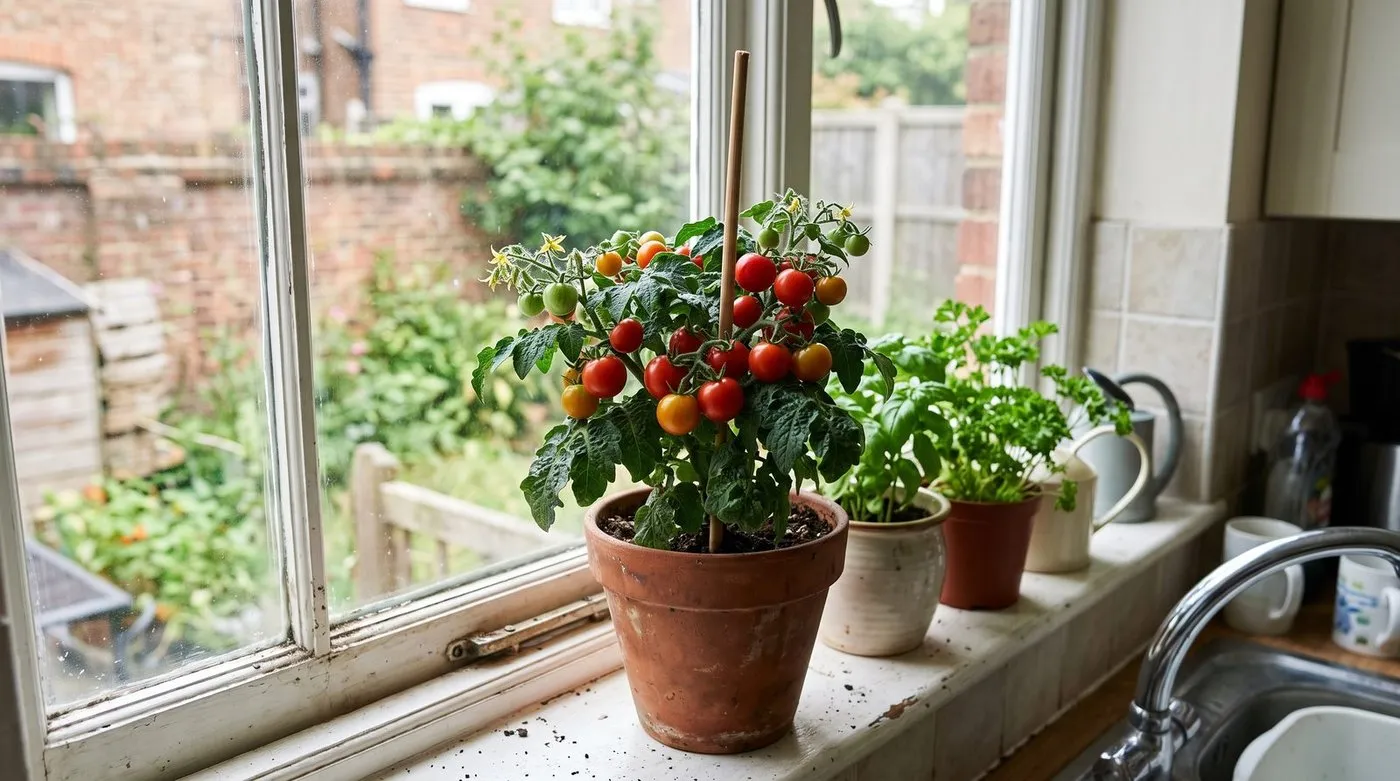
Cherry tomatoes need lots of sun. Compact types like ‘Tumbling Tom’ can work on a really sunny south-facing sill in summer.
Spring onions and radishes, fast salad crops
Spring onions take around two months from sowing to picking. Sow them thickly in a 10cm-deep pot. They cope with less light than most, so they’re good on an east-facing sill.
Radishes are ready in about four weeks, the quickest root crop of all. Give them at least 12cm of compost. ‘French Breakfast’ and ‘Cherry Belle’ are handy compact varieties. Sow a few every couple of weeks from March to October for a steady supply.
Year-round windowsill growing calendar
Indoor growing has its seasons too. From November to January there isn’t enough light for most crops without a grow light. Mushrooms don’t need much light, so growing mushrooms at home is a fun winter project.
| Month | Natural light | What to grow | Grow light? |
|---|---|---|---|
| January | Very low | Microgreens, cress | Yes |
| February | Low, improving | Chilli seeds, herbs, microgreens | Helpful |
| March | Good | Everything: chillies, lettuce, herbs | No |
| April | Good | Lettuce, herbs, spring onions, chillies | No |
| May to August | Best | Everything | No |
| September | Good | Autumn lettuce, herbs, pick chillies | No |
| October | Fading | Herbs, salad leaves | Helpful |
| November to December | Very low | Microgreens, cress, crops under a grow light | Yes |
From November to February, a small LED grow light on a timer keeps herbs and salad growing right through winter.

Pea shoots and radish microgreens on a kitchen windowsill. In winter, a small LED light helps them along.
Containers for windowsill vegetables
The pot you choose affects how often you water and how well things grow. Most windowsills are fairly narrow, so measure yours before you buy.
Material: Plastic holds water longer than terracotta, so you water less often. Terracotta is better for herbs like thyme and rosemary that like to dry out between drinks.
Drainage: Every pot needs drainage holes, or the roots sit in water and rot. Use saucers, but tip out any water left after half an hour.
Self-watering pots: Great for busy people. A reservoir at the bottom keeps the compost evenly moist. Ideal for lettuce and herbs.
Window boxes: A 60cm window box holds four to six lettuces, a row of spring onions or a mix of herbs. Fixed securely to an outside ledge, they give you more room without cluttering the inside sill.
For more on pots of all kinds, see our container vegetable gardening UK guide.
Growing vegetables without a greenhouse: windowsill vs cold frame vs greenhouse
For lots of people, a windowsill is the only growing space they have. Here’s how it compares with other options.
| Method | Cost | All year? | Best crops | Outdoor space? |
|---|---|---|---|---|
| Windowsill | Low | Spring to autumn | Herbs, salad, spring onions | No |
| Windowsill and LED light | Low | Yes | The same, plus chillies and microgreens | No |
| Cold frame | Medium | Most of the year | Hardy salads, young plants | Yes |
| Unheated greenhouse | High | Spring to autumn | Tomatoes, cucumbers, peppers | Yes |
| Heated greenhouse | Highest | Yes | Everything | Yes |
A windowsill with a grow light is the only option that needs no outdoor space at all and keeps cropping all year. If you do have a garden, the windowsill is a great partner for a greenhouse or cold frame. For more winter ideas, see our guide to vegetables to grow indoors over winter.
Gardener’s tip: Switch on your grow light from about October to March. That’s when daylight on a UK windowsill is too weak for steady leafy growth.
Frequently asked questions
What vegetables can I grow on a windowsill UK?
Herbs, salad leaves, spring onions, radishes and chillies all grow well. Cress and microgreens are easy too. They all cope with indoor light and fairly shallow pots. Fruiting crops like tomatoes need much more light, so give them a sunny south-facing sill in summer or a grow light.
How much light does a windowsill garden need?
Most need four to six hours of good light a day. A south, east or west-facing windowsill usually gives that from spring to early autumn. In winter, days are short and dull, so most crops slow right down unless you add an LED grow light.
What size pots do I need for windowsill vegetables?
Pots about 10 to 15cm deep suit most crops. That covers herbs, salad leaves, spring onions, cress and microgreens. Chillies and basil like pots about 20cm deep. Measure your sill first, as many only fit fairly narrow pots. Every pot needs drainage holes and a saucer.
Can I grow vegetables on a north-facing windowsill?
Only a few, as north-facing sills get little direct sun. Mint, parsley, cress and some salad leaves and microgreens cope. For anything else, add a grow light for several hours a day. Without it, plants grow thin and leggy.
When should I start growing vegetables on a windowsill?
Any time of year, but spring is easiest. From March to August there’s plenty of natural light. From autumn to late winter, growth slows down. An LED grow light keeps herbs and salad going through the darker months.
Do chillies grow well on a windowsill?
Yes, chillies love a sunny windowsill. Give them warmth and plenty of light, ideally a south-facing sill. Sow from February to April somewhere warm, around 20 to 25C. Pot them on as they grow and give tomato feed once flowers appear. Expect chillies from mid to late summer.
How do I stop windowsill plants drying out?
Check the compost every day in warm weather. Water when the top centimetre feels dry. Small pots in a sunny window may need water every day or two. Use saucers, but tip out any water left after half an hour. Bigger or self-watering pots need watering less often.
Related reading
- How to grow microgreens UK: the quickest windowsill crop
- How to grow chilli peppers UK: a fun longer-term project
- Container vegetable gardening UK: growing on patios and balconies
- How to grow herbs UK: all the common kitchen herbs
- How to grow cress and watercress UK: the easiest windowsill crop of all
Our team produces practical UK gardening guidance from source research, contributor records and established horticultural practice. Editorial standards are overseen by Matt W.


