
Key takeaways
- Sow a short row every three or four weeks from March to August
- Most are ready in 8-12 weeks, when the stems are about pencil thick
- White Lisbon is quick, reliable and a great first choice
- Sow winter-hardy varieties in August or September for a spring crop
- Sow little clusters every 10cm and you'll barely need to thin
- They grow well in pots, window boxes and between slower crops
Spring onions are one of the quickest, easiest crops you can grow. They’re ready 8-12 weeks after sowing, take up almost no room, need very little looking after and have fewer pest problems than their bigger cousins.
Unlike bulb onions, spring onions are pulled young, before a proper bulb forms, and you eat the whole thing, green tops and all. No drying, no storing, no waiting until autumn. If you’re new to growing veg, they’re a brilliant first crop. They fit into any garden, allotment, raised bed or pot.
What makes spring onions different from bulb onions?
Spring onions (also called salad onions or scallions) are young onions pulled before they make a big bulb. They have a small white base about as thick as a pencil and long, hollow green leaves. The white part tastes mildly of onion, and the green tops are fresher and gentler.
The big difference is timing. Bulb onions take most of the season to make a bulb you can store. Spring onions are pulled while young and slim. Some, especially Japanese bunching onions, never make a bulb at all, just thicker, taller stems.
Most spring onions, like White Lisbon, are the same plant as bulb onions. Japanese types like Ishikura are a close relative, the Welsh onion. They all like the same soil, sun and watering. Because you eat them so quickly, they’re perfect for sowing little and often: sow a short row, pull it a couple of months later, and sow the next batch in the gap.
The best spring onions for UK gardens
These five cover just about every need.
White Lisbon
White Lisbon is the UK favourite and the one most people start with. It’s quick, mild and comes up reliably in cool spring soil. Sow from March to August for pickings from May to October. Every seed supplier and garden centre sells it. If you only grow one, make it this.
White Lisbon Winter Hardy
White Lisbon Winter Hardy is made for sowing in late summer and pulling in spring. Sow in August or September and harvest from March to May. In most of England and Wales it usually gets through winter without cover. In Scotland and on exposed sites, a layer of fleece in the coldest months is good insurance.
Ishikura
Ishikura is a Japanese bunching onion with long, straight white stems. It doesn’t make a bulb, even if you leave it in for months. It’s mild and sweet, and takes a little longer than White Lisbon. Grow it for thick, leek-like stems for stir-fries and noodle dishes.
North Holland Blood Red
North Holland Blood Red has lovely crimson stems with a stronger, more peppery taste. The colour fades a little when cooked but looks great in salads and pickles. Grow it next to a white variety for a pretty mix.
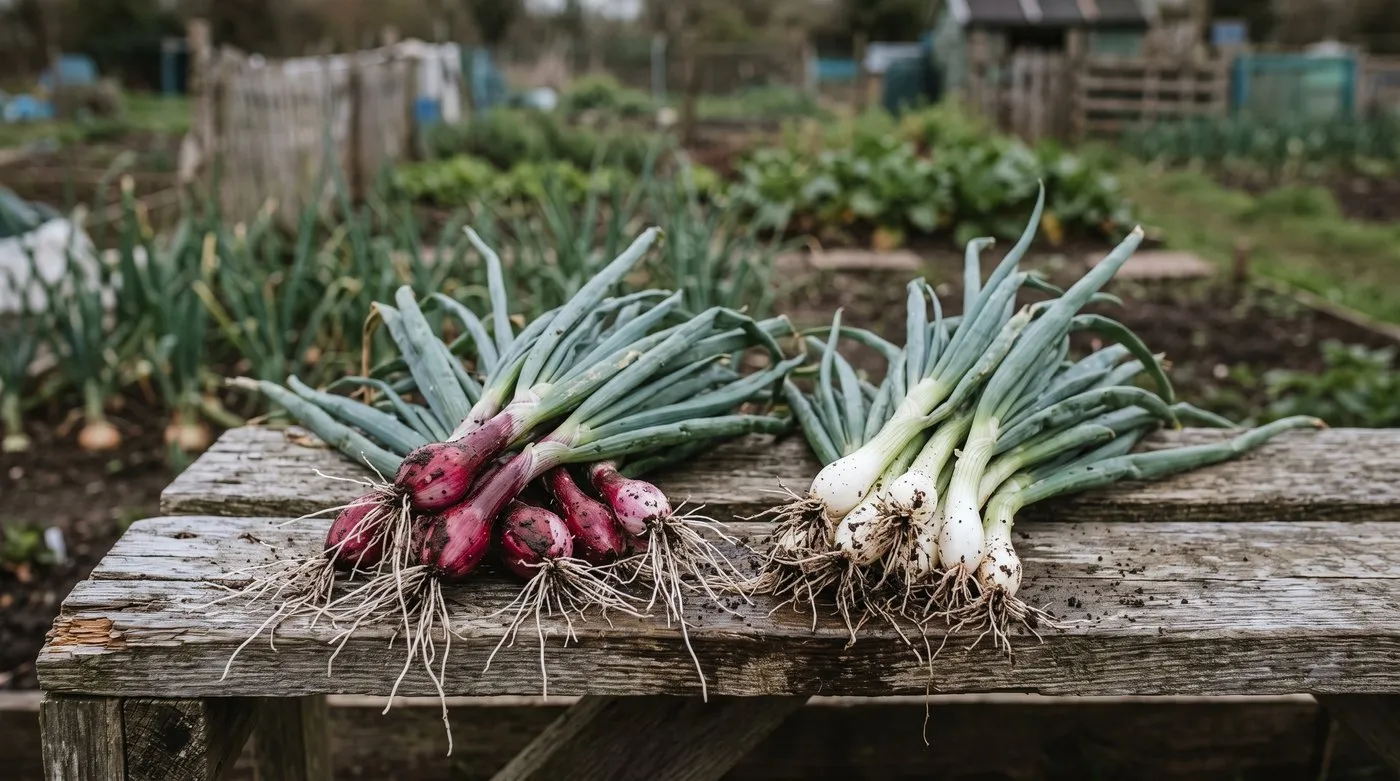
Red and white spring onions side by side make a pretty bunch. The red ones have a stronger, peppery bite that suits salads and pickles.
Performer
Performer is a hardy variety that’s slow to bolt. Sow in August or September for spring pulling, or in spring for a summer crop. It’s a good pick for frost pockets and exposed northern plots.
Spring onions at a glance
| Variety | When to sow | Overwinters? | Makes a bulb? | Flavour | Best for |
|---|---|---|---|---|---|
| White Lisbon | March-August | No | A little | Mild | Quick crops, beginners |
| White Lisbon Winter Hardy | August-September | Yes | A little | Mild | Spring pickings |
| Ishikura | March-July | No | No | Sweet, mild | Long stems, stir-fries |
| North Holland Blood Red | March-July | No | A little | Peppery | Salads, colour, pickles |
| Performer | August-September | Yes | A little | Mild | Cold sites, overwintering |
Handy tip: Grow White Lisbon for speed and Ishikura for size. Add White Lisbon Winter Hardy or Performer for an early crop before your spring sowings are ready.
Do spring onions come back every year?
Most don’t. White Lisbon and similar types are grown as a quick one-season crop. Leave them in and they swell into small bulbs, flower the next year, then die.
Japanese bunching onions and Welsh onions are different. They form clumps that keep going for years. Pull a few stems at a time and leave the rest to bulk up. Lift and split crowded clumps every few years in spring. A small clump in a corner gives you green onions most months without sowing again.
Can spring onions grow in part shade?
Yes, just more slowly. A sunny, open spot gives the quickest crop and the sturdiest stems. With only a few hours of sun, expect them a few weeks later and a bit thinner. Light shade can even help in a hot summer, as full sun dries their shallow roots quickly. Avoid deep shade under trees or by north-facing walls, where they go thin and floppy.
How to sow spring onions
Spring onions are grown from seed, not sets. Sowing is easy and perfect for beginners. If you’ve not sown seeds before, our guide on how to sow seeds indoors covers the basics.
Getting the soil ready
Spring onions like a sunny, open spot in soil that drains well. They’re fine in most soils but do best in loose, fertile ground. Dig in a bucket of well-rotted compost per square metre a few weeks before sowing, then rake it fine and crumbly. Pick out big stones and break up lumps. They have shallow roots, so there’s no need to dig deep.
Skip freshly manured ground. Too much nitrogen gives soft, floppy tops and thin stems. If last year’s crop was a hungry one like courgettes, there’s usually enough goodness left.
Sowing outside
Sow from March to August, once the soil has warmed a little. Make shallow drills 1cm deep and 10-15cm apart. Sow thinly along the row, or drop clusters of six to eight seeds every 10cm. Cover lightly and water gently.
Cluster sowing is the easiest way. Drop a pinch of seed every 10cm instead of a continuous line. The plants grow upright together, you pull the whole cluster at once, and there’s no thinning. It saves time and seed.
In cold March soil, seedlings can take about three weeks to show. From May, they come up much faster.
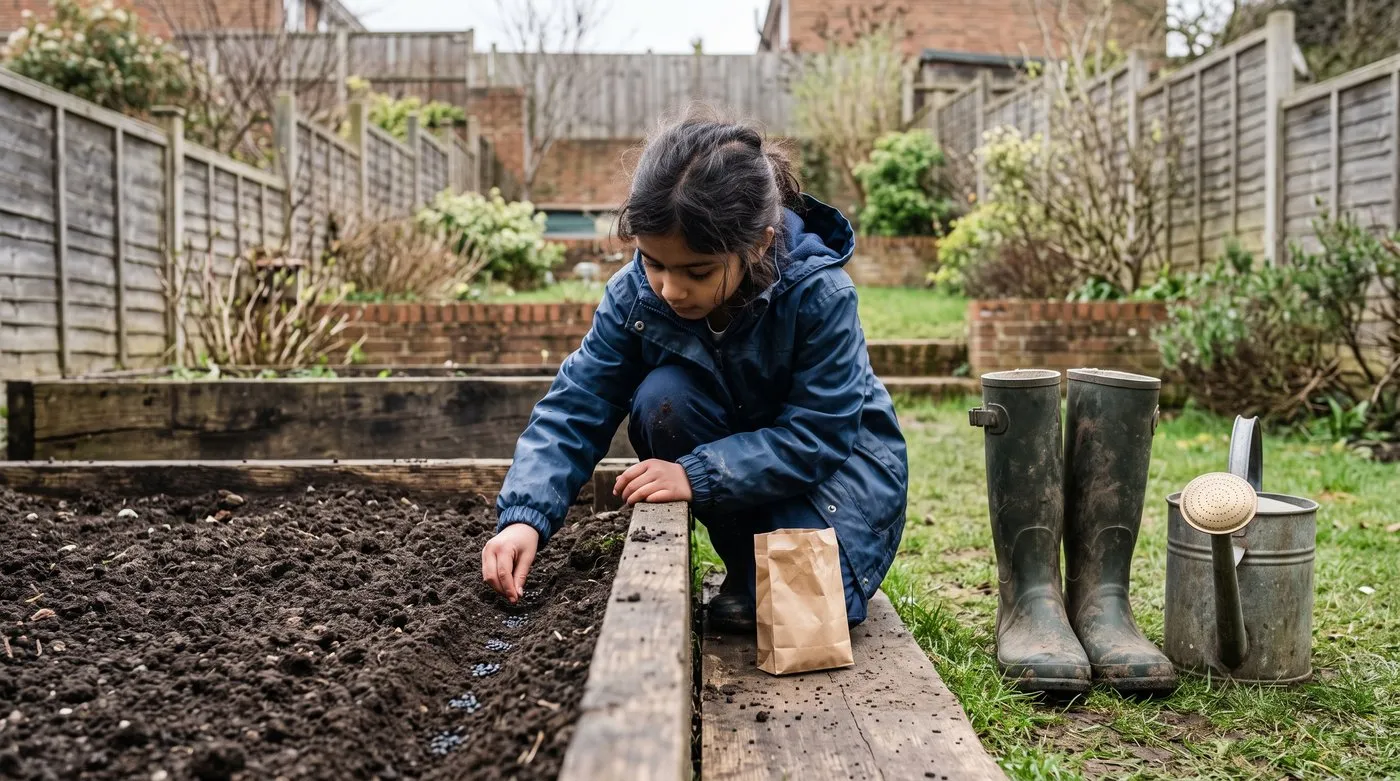
Dropping a pinch of seed every 10cm means no thinning later. It’s an easy job to hand to children.
Sowing indoors for an early start
For the earliest crop, sow indoors in February. Fill module trays with seed compost and sow six to eight seeds per cell. Keep them on a bright windowsill or in an unheated greenhouse. Harden them off for a week in late March, then plant out each cluster whole.
This gets you spring onions a couple of weeks earlier. It’s especially handy in northern England and Scotland, where March soil is often too cold.
Sow little and often for a steady supply
Succession sowing just means sowing a new batch every three or four weeks, so there’s always a row nearly ready. Sow it all at once and you’ll have a glut in June and nothing after.
Here’s a simple plan for the UK:
| Sow | Roughly ready |
|---|---|
| Early March (indoors) | Late May |
| Late March (outdoors) | Mid-June |
| Mid-April | Early July |
| Early May | Late July |
| Late May | Mid-August |
| Mid-June | Early September |
| Early July | Late September |
| Late July | Mid-October |
| Mid-August (winter-hardy variety) | March-April |
| Early September (winter-hardy variety) | April-May |
That gives you fresh spring onions from late May right through to the next May. A 1m row each time is plenty, and one packet of seed lasts all year.
For all your other veg, see the UK vegetable planting calendar.
Overwintering spring onions for an early crop
Some varieties sit happily in the ground through a British winter. That gives you something to pull in March and April, when little else is ready.
Which ones to sow
White Lisbon Winter Hardy and Performer are the two to look for. Both are bred to stand through a normal UK winter.
When and how to sow
Sow between late July and mid-September. August is ideal for most of England. In the far north and Scotland, sow in late July so seedlings have longer to get going. Sow just as you would in spring: shallow drills, clusters, 10cm apart.
Winter care
Seedlings make small, grassy plants before winter, then grow very slowly from November to February. There’s little to do. In long, hard cold spells, cover the rows with fleece or straw and take it off when the worst has passed. Don’t water in winter unless the soil is unusually dry.
They pick up fast in late February and March. Pull the first ones in March or early April. Overwintered spring onions can bolt in April or May, so pull them before a flower stalk appears. Once the middle thickens and hardens, they get strong and tough.
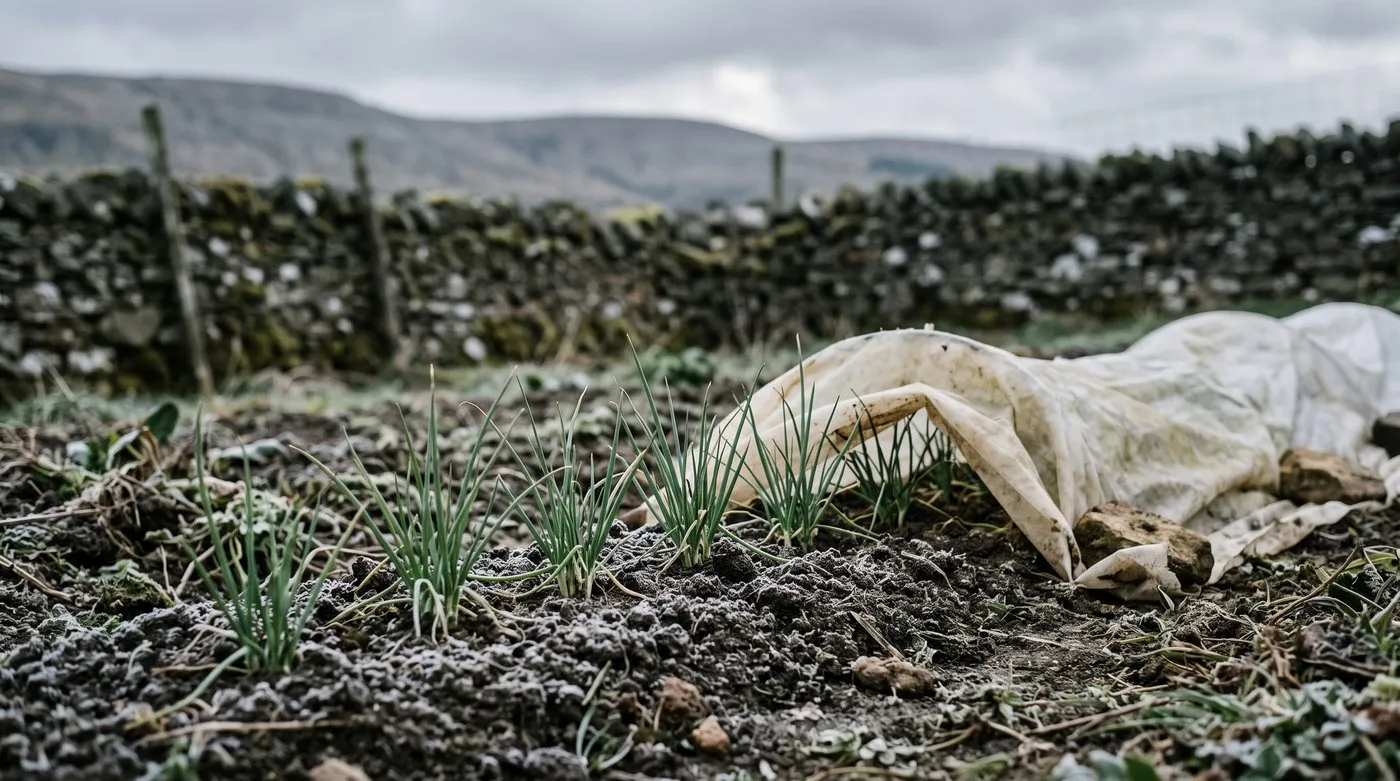
Winter seedlings look small and grassy until late February. Pop fleece over them in a long hard frost, then take it off again.
Growing spring onions in pots and on windowsills
Spring onions are one of the best veg for pots. Their shallow roots and neat shape suit pots, troughs, window boxes and even old food tubs.
What you need
Use any container at least 15cm deep with drainage holes. Width matters more than depth. A 30cm pot holds three or four clusters, and a 60cm window box holds five or six, enough for regular picking.
Fill with multipurpose compost. A handful of perlite helps if the compost feels heavy.
On the windowsill
Spring onions grow well on a bright kitchen windowsill all year. Sow clusters in a pot at least 15cm deep and keep the compost moist. They’re slower indoors, so allow a few extra weeks. Turn the pot every few days so they grow straight.
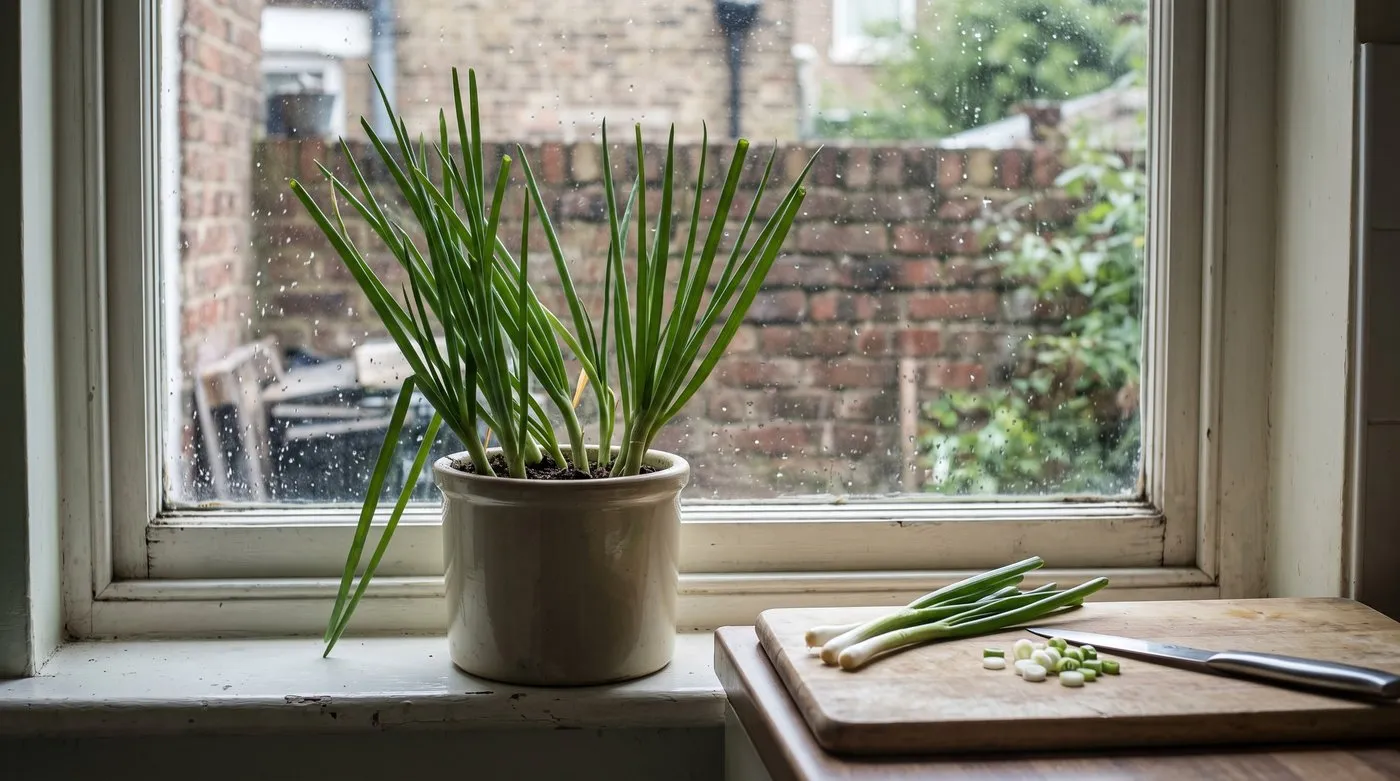
Indoors they grow a bit slower, so allow a few extra weeks. Give the pot a turn every few days to keep them straight.
Regrowing shop-bought ones
You can regrow spring onions from the roots of shop-bought ones. Cut the onion 3-4cm above the roots and stand the root end in a little water on a windowsill. Change the water every couple of days. New shoots appear within a week. Once the roots are a few centimetres long, plant it in compost. It weakens after a cut or two, so seed gives stronger plants for a steady supply.
Squeezing spring onions in between slower crops
Intercropping means growing a quick crop in the gaps between slower ones. Spring onions are perfect for it. They grow fast, take up almost no space and don’t shade their neighbours.
Good spots to try:
- Next to carrots: onions are often sown with carrots in the hope their smell confuses carrot fly. It doesn’t really work, so fine mesh is still the best carrot fly barrier. Sow spring onions 10cm either side of a carrot row and pull them before the carrots need the room. Our carrot growing guide has more on keeping carrots happy.
- Between young brassicas: cabbages, broccoli and sprouts are planted wide apart. Sow spring onion clusters in between and pull them before the brassicas fill out.
- Round the edges of raised beds: a row along the inside edge of a raised bed uses space that would otherwise grow nothing.
- Between rows of lettuce or salad leaves: both are quick and can be picked together.
It’s a common trick on allotments, where space is tight, as you get two crops from the same patch. If you’re planning a new veg patch, our guide to starting a vegetable garden covers planning your space.
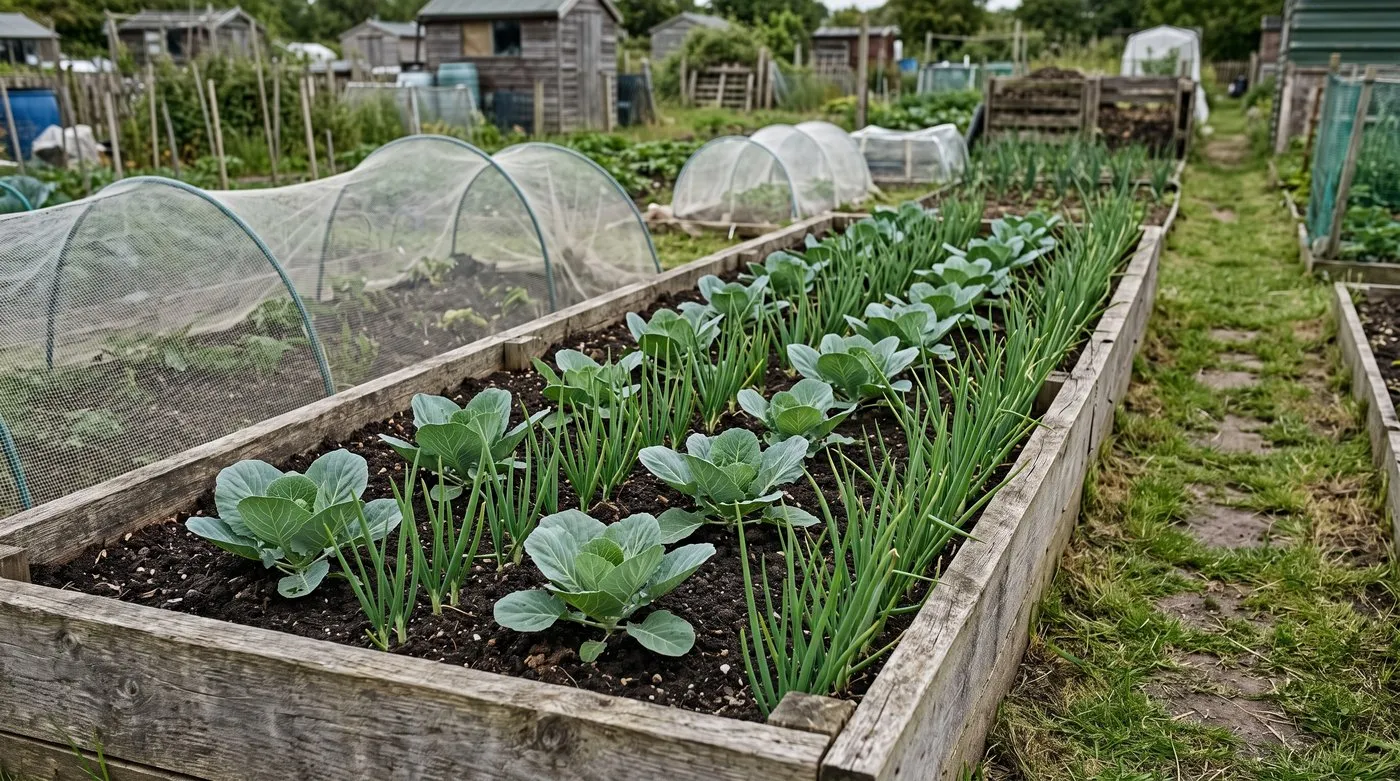
Spring onions slot into the gaps between young cabbages. Pull them before the brassicas fill out and you get two crops from one bed.
Looking after spring onions
Spring onions need very little care.
Watering
Keep the soil evenly moist but not soggy. Their roots are shallow, so they dry out faster than deep-rooted crops. In dry weather, water every two or three days. Pots may need water every day in summer. Uneven watering makes tough, stringy stems.
Feeding
They rarely need feeding. The compost you added before sowing is enough for their short life. On very poor soil, one balanced liquid feed after about a month gives a boost. Don’t overdo it, or you’ll get floppy tops and weak stems.
Weeding
Keep weeds down, especially in the first few weeks while seedlings are small. Their thin leaves can’t compete. Weed by hand and carefully, so you don’t disturb the shallow roots. A thin layer of fine compost helps keep weeds down and moisture in.
Pests and diseases
Spring onions have far fewer problems than bulb onions. They’re pulled so quickly that most pests don’t get much of a chance. That makes them a great crop for beginners and organic growers.
Onion fly
Onion fly lays eggs at the base of onion plants from May to July, and the grubs tunnel into the stems so they wilt. Spring onions are less affected than bulb onions because they’re up and out faster. Cover rows with fine mesh or fleece from May to be safe, and move your onions to a new bed each year.
Slugs and snails
Young seedlings are at risk, especially in wet springs. Use ferric phosphate slug pellets as the label says, beer traps, or slug nematodes once the soil is warm enough. A torchlit slug hunt in the evening works wonders too.
How do you protect spring onions from allium leaf miner?
Cover them with fine insect mesh while the flies are laying eggs. Allium leaf miner is now found across much of England and parts of Wales. The adults are about in March and April, and again from September to November. Their grubs tunnel down into the stem base and the plants twist and rot.
Spring sowings that are pulled in summer often miss it. Overwintered sowings are most at risk, as they’re in the ground during the autumn egg-laying. Put mesh over hoops straight after sowing, tuck the edges in and leave it on until spring. Move onions to a new bed each year, as flies can hatch under the mesh from last year’s onion bed.
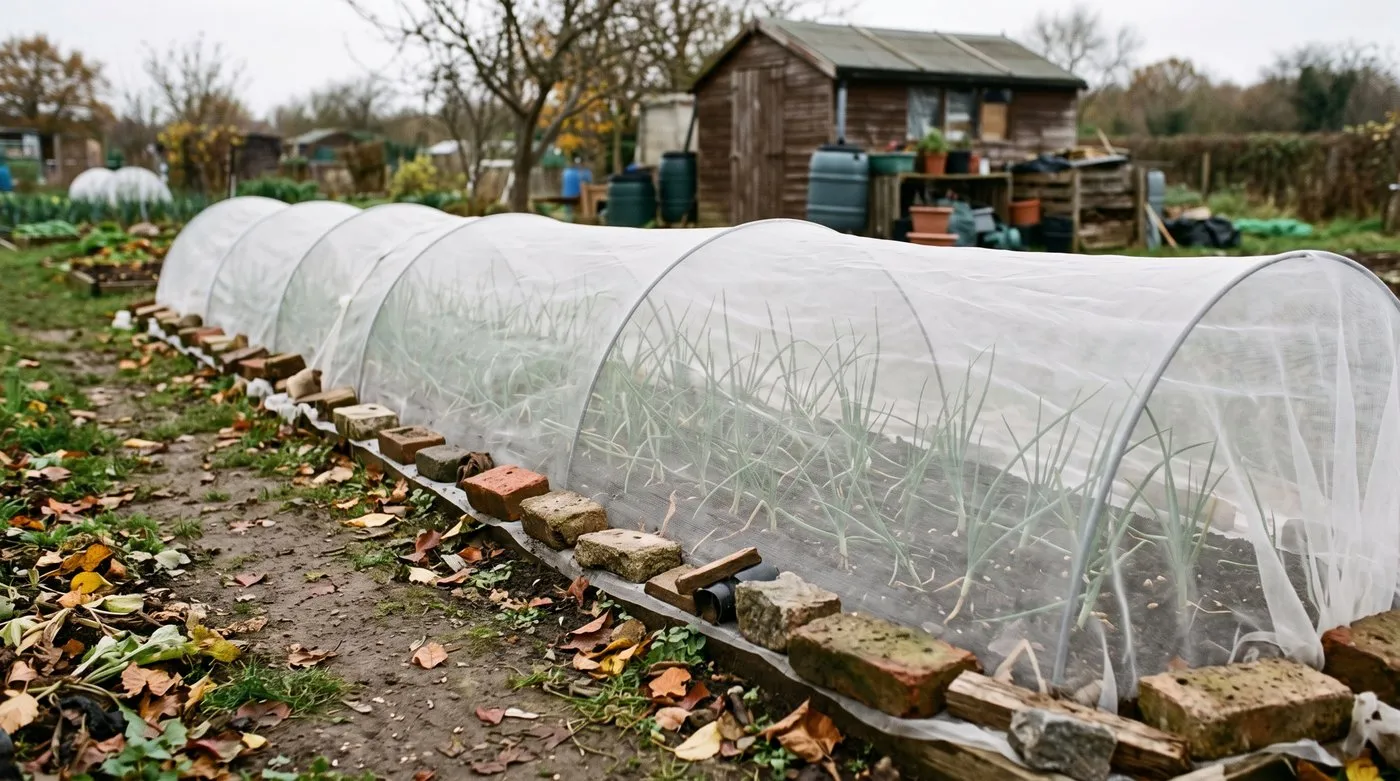
Cover overwintered sowings straight away and tuck the edges in well. The mesh can stay on right through until spring.
Downy mildew
Grey-purple patches on the leaves in humid, wet weather. Keep clusters at least 10cm apart so air can move and remove badly affected leaves. It’s rarely serious, as spring onions grow so fast.
Bolting
Running to flower is mainly a problem with overwintered crops in April and May. Pull them before the middle stem thickens. Once a flower stalk forms, they get woody and harsh. Spring and summer sowings rarely bolt, as you pull them first.
Spring onions month by month
| Month | What to do |
|---|---|
| January | Order seed and plan your sowing dates. Check old seed is still in date |
| February | Sow indoors on a bright windowsill in module trays, six to eight seeds per cell |
| March | First outdoor sowings once the soil warms a little. Use cloches in colder areas. See the UK vegetable planting calendar for other crops |
| April | Keep sowing every three or four weeks. Plant out indoor seedlings after hardening off |
| May | Pull the first crop from early indoor sowings. Keep sowing outside |
| June | Main picking begins. Pull at pencil thickness. Keep sowing |
| July | Last outdoor sowing for an autumn crop. Pull regularly |
| August | Sow winter-hardy varieties. Pull summer sowings |
| September | Last winter sowing by mid-month. Pull late summer sowings |
| October | Winter seedlings settle in before the cold. Nothing to do |
| November | Growth slows. Fleece winter rows in harsh weather |
| December | Nothing to do. Plants wait for spring |
When and how to harvest spring onions
Pull spring onions when the stems are about as thick as a pencil. That’s usually 8-12 weeks after sowing, depending on the variety and the weather.
How to pull them
Hold the base firmly and pull straight up. In loose, moist soil they come out easily. In hard, dry soil, loosen it with a hand fork first. If you sowed in clusters, pull the whole bunch and you’ve cleared space for the next sowing.
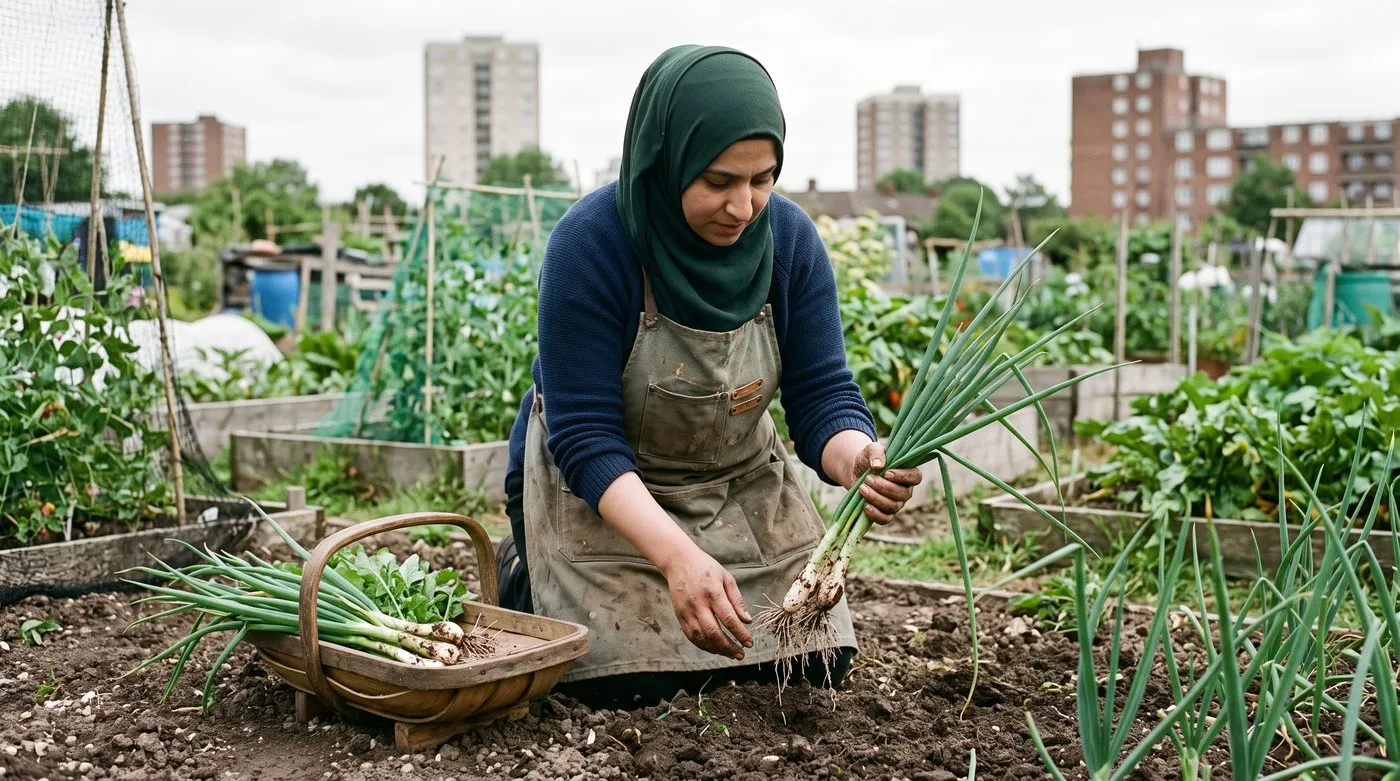
Pull them when the stems are about as thick as a pencil. Hold the base firmly and lift straight up, loosening dry soil with a fork first.
Don’t leave them too long
Left too long, the outer layers toughen, the flavour gets strong and the base starts to swell into a small bulb. Check your rows every few days in the main picking season and pull any that are getting thick.
Keeping them fresh
They’re best eaten the day you pick them. To keep them, wrap the bases in damp kitchen paper and pop them in a bag in the fridge. They’ll last about a week. Frozen whole, they go limp, but chopped tops freeze well for cooking.
Five common spring onion mistakes
Dodge these and you’ll have no trouble at all.
1. Sowing the whole packet at once
You’ll end up with a hundred spring onions ready on the same day and none after. Sow a short row every three or four weeks.
2. Sowing too deep
The seed is small, so cover it with no more than 1cm of soil. Too deep and it’s slow to come up. On heavy clay, cover the seed with fine compost instead of garden soil.
3. Letting the soil dry out
Their shallow roots can’t reach water deep down. Dry soil gives tough, stringy stems with a harsh taste. Water regularly, especially pots and in dry spells in May and June.
4. Forgetting the winter sowing
Lots of people sow in spring but forget the August and September sowing that gives the earliest crop next year. Without it, there’s a long gap with no spring onions.
5. Picking too late
Left past pencil thickness, the outer layers toughen and the taste gets sharp. Check twice a week at picking time. It’s better to pull a little early and enjoy them tender and mild.
Cooking with spring onions
Spring onions are wonderfully handy in the kitchen. The white base and green tops taste a little different, and many recipes use them separately.
Raw: slice thinly into salads, scatter over soups, stir into dips and dressings, or add to sandwiches. The green tops are mild enough to use like a fresh herb.
Cooked: toss into stir-fries at the last minute, or brush whole ones with oil and grill until charred. Fold them into omelettes, frittatas and savoury pancakes. The white part goes sweet and golden when grilled or roasted.
Pickled: thinly sliced spring onions with salt, vinegar and a pinch of sugar make a quick fridge pickle that keeps for about a week. They’re a key part of kimchi and Korean pancakes too.
Growing your own means they’re always there when you need them. Pull a handful, rinse, chop and use them minutes later. The RHS guide to growing spring onions has more variety ideas if you want them.
Next, read our guide on how to grow onions in the UK for the bigger bulb crop that stores through winter.
Frequently asked questions
When should I sow spring onions in the UK?
Sow outdoors from March to August. In mild areas you can start from February under cloches or on a windowsill. For a crop early next year, sow a winter-hardy variety like White Lisbon Winter Hardy in August or September. Sow every three or four weeks and you’ll be picking from early summer right through to the next spring.
How long do spring onions take to grow?
Most are ready in 8-12 weeks. White Lisbon is one of the quickest. Japanese types like Ishikura take a little longer but give longer, thicker stems. Overwintered sowings grow slowly through winter and are ready from March or April.
Do spring onions need thinning?
Not if you sow thinly or in little clusters. Clusters of six to eight seeds every 10cm grow upright and can be pulled as a bunch. If a row comes up crowded, thin to about 2.5cm apart. Eat the thinnings in salads.
Can I grow spring onions in pots?
Yes, they’re perfect for pots. Any pot, trough or window box at least 15cm deep will do. Fill with multipurpose compost and sow clusters every 10cm. Water often, as pots dry out faster than the ground. One window box gives you plenty for salads.
Can you regrow spring onions from shop-bought ones?
Yes, stand the root ends in a glass of water on a windowsill. Change the water every couple of days. New green shoots appear within a week. Once the roots are a few centimetres long, plant them in compost. They weaken after a cut or two, so seed is better for a steady supply.
What pests affect spring onions?
Far fewer than bulb onions. Onion fly and allium leaf miner are the main ones to watch for. Covering rows with fine insect mesh keeps both out. Slugs may nibble young seedlings, especially in wet weather.
Can I overwinter spring onions for an early harvest?
Yes, sow a winter-hardy variety in August or September. White Lisbon Winter Hardy and Performer are bred to sit through a normal UK winter. They grow slowly through the cold months, then pick up in early spring. Fleece them in long cold snaps. You’ll be pulling them from March to May.
More guides to help
- How to grow onions in the UK: growing and storing bulb onions
- Starting a vegetable garden: planning your first veg patch
- How to sow seeds indoors: getting an early start on all your veg
- UK vegetable planting calendar: what to sow and plant each month
- Raised bed gardening for beginners: building and filling raised beds for veg
Our team produces practical UK gardening guidance from source research, contributor records and established horticultural practice. Editorial standards are overseen by Matt W.


