Key takeaways
- Sprouts grow in a jar with water only and are ready in about 3 to 6 days
- Microgreens grow in a tray of compost and are ready in about 7 to 14 days
- Sprouts are eaten whole, root and all; microgreens are snipped above the compost
- Pea shoots, radish and sunflower are the easiest microgreens to start with
- Both grow all year on a windowsill, just more slowly in winter
- Use seed sold for sprouting or eating, never treated garden seed
Sprouts and microgreens are both quick, fresh crops you can grow on a windowsill all year. The big difference is how you grow them. Sprouts grow in a jar of water and are ready in days. Microgreens grow in a tray of compost and take a week or two. Both are brilliant if you’ve no garden at all.
This page helps you choose between them, then get started with either. If you’ve already decided, you’ll find links to full step-by-step guides along the way.
What is the difference between sprouts and microgreens?
Sprouts are seeds germinated in water and eaten whole, root and all. Microgreens are tiny seedlings grown in compost and snipped off above the surface.
| Sprouts | Microgreens | |
|---|---|---|
| Grown in | A jar, with water only | A shallow tray of compost |
| Ready in | About 3-6 days | About 7-14 days |
| What you eat | Seed, root and shoot | Stem and leaves |
| Light | None until the last day | A bright windowsill |
| Daily job | Rinse and drain twice | Mist or water once |
| Flavour | Mild and crunchy | Stronger, depending on the seed |
| Best for | Stir-fries, sandwiches, salads | Salads, garnishes, sandwiches |
Sprouts or microgreens: which should you grow?
Both are easy, so pick the one that suits how you live and what you like to eat.
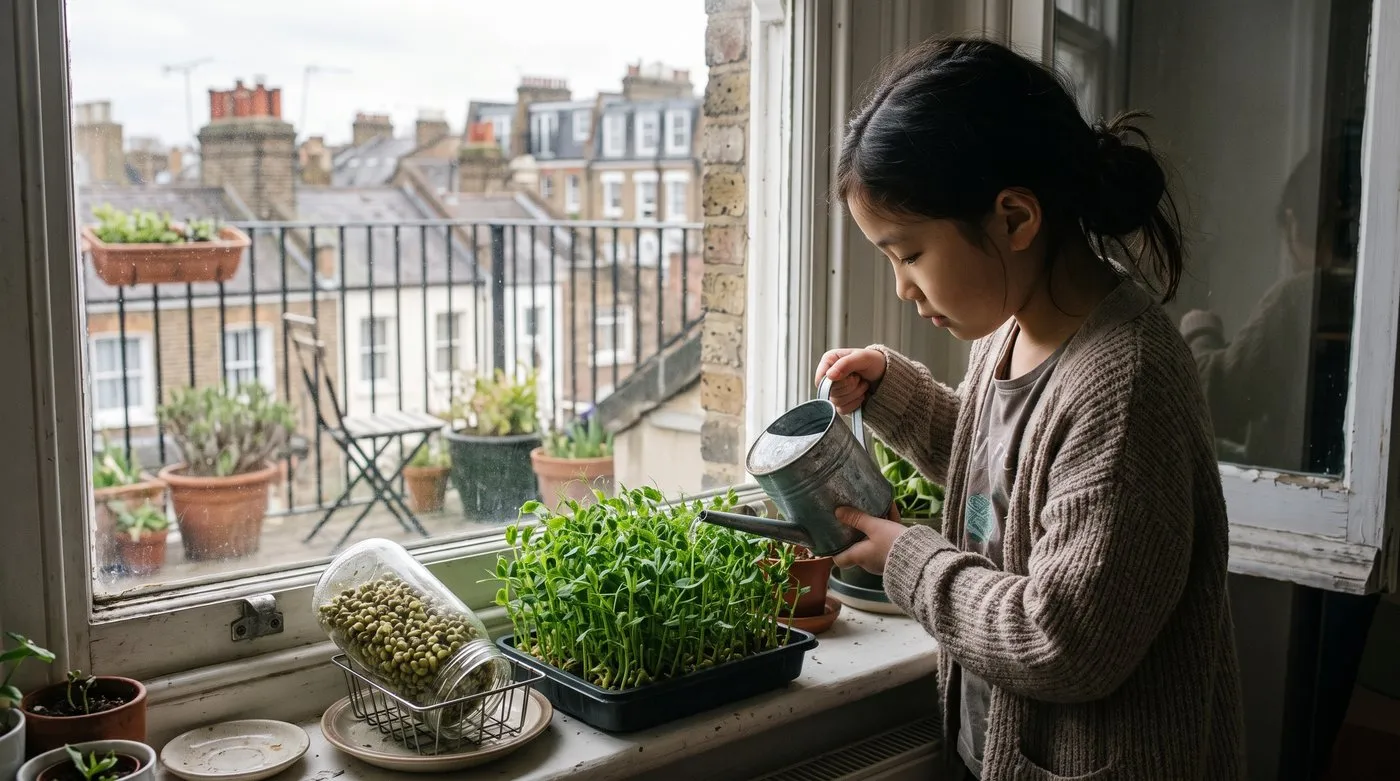
A tray of microgreens and a jar of sprouts fit happily on one windowsill. Many people grow both.
Choose sprouts if you want the fastest crop, have no spare windowsill, or love beansprouts in a stir-fry. A jar can sit anywhere out of direct sun. You will need to rinse twice a day without fail.
Choose microgreens if you have a bright windowsill and like leafy, punchy flavours. Microgreens only need a gentle water once a day, and they look lovely growing.
Many people do both: a jar of mung beans on the go for stir-fries, and a tray of pea shoots for salads.
Easiest microgreens to start with
Pea shoots, radish and sunflower are the easiest microgreens for beginners. All three come up reliably at room temperature and cope with a typical kitchen windowsill.
- Pea shoots: sweet and fresh. Use dried peas sold for cooking, soaked overnight. Ready in about two weeks, and they often give a second cut.
- Radish: peppery, with pretty pink stems. Ready in about a week.
- Sunflower: nutty and crunchy. Soak the seed first and give it your brightest windowsill.
- Broccoli, mustard and red cabbage: mild to hot flavours, ready in one to two weeks.
Buy seed sold for microgreens or sprouting. It hasn’t been treated, so it’s safe to eat.

Scatter microgreen seed thickly and evenly over damp compost. Seeds should sit close together but not in piles.
How to grow microgreens on a windowsill
Microgreens take about five minutes a day. Here’s the basic method.
- Fill a shallow tray with about 2cm of damp peat-free compost and press it flat.
- Scatter the seed thickly and evenly over the surface. Soak big seeds like peas and sunflower overnight first.
- Mist well and cover with another tray or a piece of card for two or three days.
- Uncover once shoots are a few centimetres tall, and move the tray to a bright windowsill.
- Water gently once a day so the compost stays damp but not soggy.
- Snip with scissors just above the compost once the first leaves have opened.
The microgreens guide linked at the end covers each step in more detail, and how to keep a steady supply going.

Snip microgreens just above the compost when the first leaves open, and eat them fresh.
How to grow sprouts in a jar
Sprouts need a jar, a lid that lets water through and cold water. Mung beans, whole lentils and alfalfa are the easiest seeds.
- Soak a tablespoon or two of seed in water overnight.
- Drain through a mesh lid or muslin, and rinse.
- Tilt the jar mouth down so it drains fully.
- Rinse and drain twice a day, or three times in warm weather.
- Eat when ready, usually in 3 to 6 days, and keep any extra in the fridge.
Use seed sold for sprouting or eating, and never eat sprouted kidney beans raw. Our guide to jar-grown sprouts has a day-by-day routine. For pea and sunflower shoots too, see how to grow sprouts and shoots.
Warning: Raw sprouts have been linked to food poisoning. Pregnant women, young children, older people and anyone with a weakened immune system should cook sprouts until steaming hot.

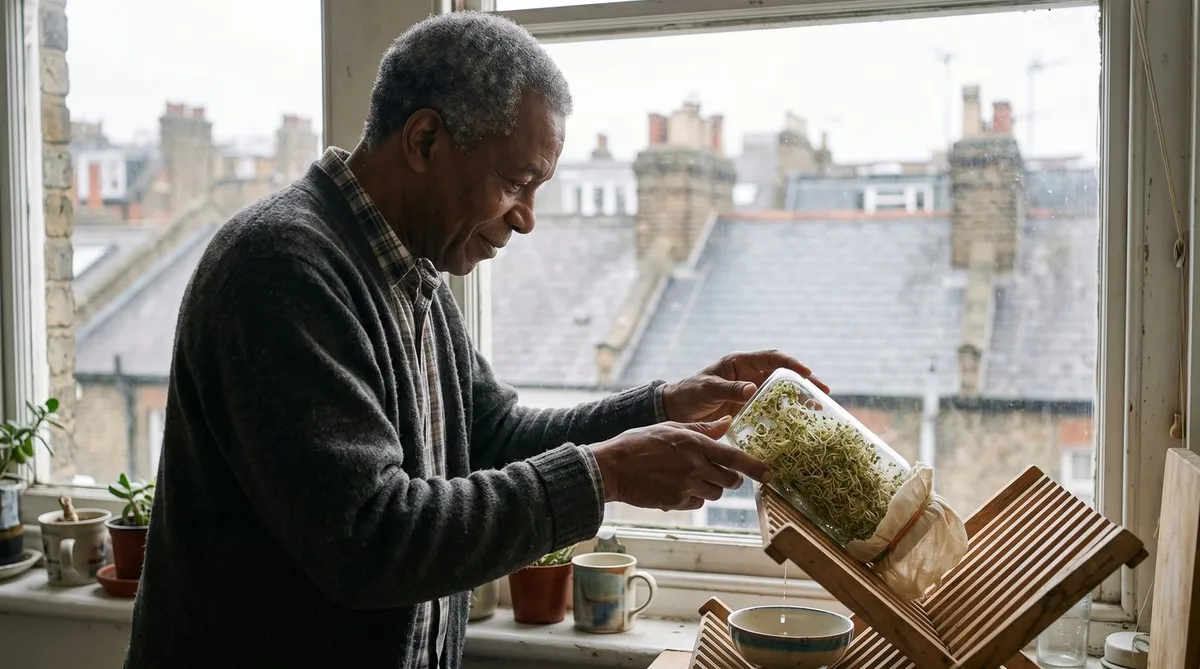
A jar is all you need for sprouts. Rinse twice a day and rest it mouth down so it drains.
Can you grow sprouts and microgreens all year?
Yes. Both grow on a windowsill in every month, with no heating or grow lights needed.
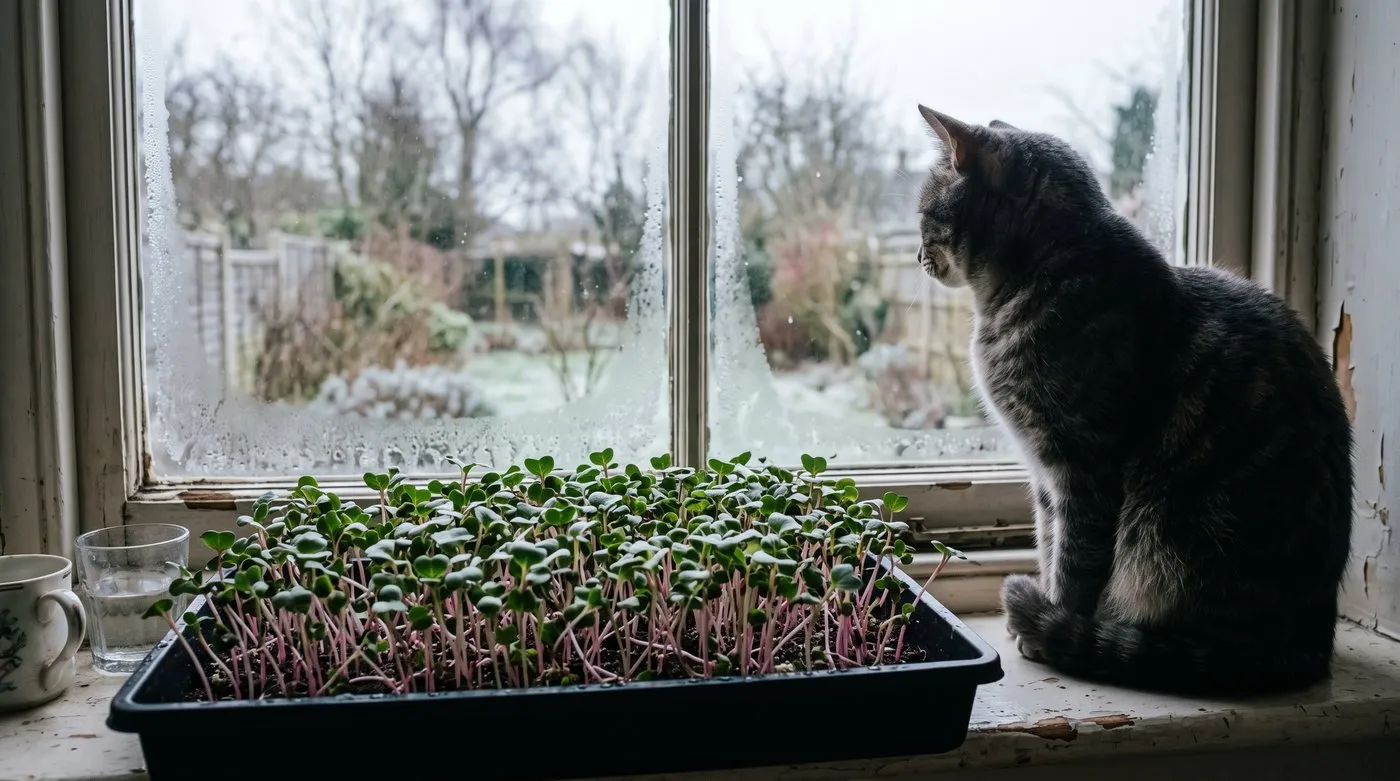
Microgreens keep growing through winter on a bright windowsill. Quick radish and mustard are good picks for the darker months.
In winter, microgreens grow more slowly because there’s less light. They may stretch and look paler, but they’re still good to eat. Radish and mustard are quick choices for dark months. Don’t overwater to make up for slow growth.
In summer, a hot south-facing windowsill can cook trays and spoil jars. Move them somewhere cooler, out of direct sun. For more indoor crops through the darker months, see our guide to winter vegetables to grow indoors.
Common windowsill growing mistakes
These are the slips that spoil a jar or tray.
- Overwatering microgreens. Soggy compost and still air lead to mould. Water gently and keep air moving.
- Sowing too thinly or too thickly. Too thin wastes space. Piled-up seed rots.
- Leaving the cover on too long. Uncover microgreens once shoots appear, or they’ll go pale and leggy.
- Skipping sprout rinses. Twice a day is the minimum, or the jar turns sour.
- Using garden seed. It may be treated. Buy seed sold for sprouting or eating.
Fine white fuzz around sprout or microgreen roots is usually root hairs, not mould. Root hairs are even and white and vanish when misted or rinsed. Mould is patchy, grey or green, and smells musty.
For more quick indoor crops, try cress and watercress, or see our guide to growing vegetables on a windowsill. Find more ideas in our growing hub.
Frequently asked questions
What is the difference between sprouts and microgreens?
Sprouts grow in water and are eaten whole, root and all. Microgreens grow in compost and are snipped above the surface once their first leaves open, usually after one to two weeks.
Which is easier to grow, sprouts or microgreens?
Sprouts are slightly easier, as you only need a jar and water. Microgreens need a tray and compost but less rinsing, and they’re less fussy about food safety.
Can you grow microgreens on a north-facing windowsill?
Yes, though they grow more slowly and may stretch a little. Pea shoots and radish cope best with lower light.
How often do you water microgreens?
Mist or water gently once a day, or less in winter. Keep the compost damp but never soggy, as wet compost leads to mould.
Can you regrow microgreens after cutting?
Most microgreens don’t regrow after cutting. Pea shoots are the exception. Cut them a couple of centimetres above the compost and they’ll often give a second, smaller crop.
Are raw sprouts safe to eat?
Yes, for most people, with clean seed and twice-daily rinsing. Pregnant women, young children, older people and anyone with weak immunity should cook sprouts until steaming hot.
Ready to start? Read our guide to growing microgreens for a step-by-step method and a steady supply.
Our team produces practical UK gardening guidance from source research, contributor records and established horticultural practice. Editorial standards are overseen by Matt W.