
Key takeaways
- Grow fast leaf crops indoors in winter, not fruiting crops
- Microgreens and pea shoots are ready in one to three weeks on a bright sill
- Sprouts grow in a jar with no soil and need no light
- Mizuna, mustard, land cress and lamb's lettuce give several cuts over winter
- A small LED grow light stops salad leaves going pale and leggy
- Move trays off cold sills on frosty nights
The best vegetables to grow indoors in a UK winter are fast leaf crops. Microgreens, pea shoots, sprouts, cress and cut-and-come-again salad leaves all crop on a windowsill from November to February. Tomatoes, peppers and other fruiting crops don’t, because winter days are too short and dull.
This guide is about the darkest months. For indoor crops through the rest of the year, see the guide to growing vegetables on a windowsill.
Why is growing indoors harder in winter?
Two things hold winter crops back: short days and cold sills. In late December even southern England gets less than eight hours of daylight, and much of it is dull.
Plants grow slowly in weak light, and seedlings stretch towards the window. Window glass also gets very cold on frosty nights. The answer is simple: grow crops you eat young, keep them warm and give them your brightest spot.

A simple thermometer on the sill shows how cold the glass gets at night. Move trays back into the room when it drops.
The best vegetables to grow indoors from November to February
Microgreens
Microgreens are seedlings cut when they’re a few centimetres tall. Because you eat them so young, they cope well with winter light. Radish, mustard, broccoli and cress are quick and easy. Give them a bright windowsill so they green up properly. The guide to growing microgreens covers the full method.
Pea shoots
Pea shoots are one of the best value winter crops. Soak dried peas overnight, then sow them thickly in a tray of compost. Snip the shoots when they’re about 10cm tall, just above the lowest leaves, and they often regrow for a second cut. They taste of fresh peas and are lovely in salads and stir-fries.

Pea shoots grow happily on a bright winter sill. Snip above the lowest leaves and they often come back for a second cut.
Sprouts and cress
Sprouts need no soil and no light. Rinse sprouting seeds in a jar twice a day and they’re ready in a few days. Mung beans, alfalfa, lentils and radish all sprout well. Cress grows on damp kitchen paper on any windowsill.
Use seeds sold for sprouting, rinse well and keep finished sprouts in the fridge. Sprouts can carry food bugs, so cook them until steaming hot if they’re for someone pregnant, very young, elderly or unwell. The guide to growing sprouts and shoots explains the jar method.

Tilt the jar so it drains after every rinse. Sprouts need no soil and no window at all.
Winter salad leaves
Cut-and-come-again salad gives you the closest thing to a real harvest. Choose cold-tolerant leaves: mizuna, mustard ‘Red Frills’, land cress, lamb’s lettuce (corn salad) and a loose-leaf winter lettuce such as ‘Winter Density’.
Sow them in a trough at least 15cm deep. Snip the leaves when they’re 8-10cm tall, leaving the centre to regrow. Expect a slower first cut than in summer, often five or six weeks. You’ll usually get several cuts before the plants tire. The guide to winter salad harvesting has more on varieties.

Mizuna, mustard and land cress in one trough. Snip the outer leaves and the plants keep growing for more.
Herbs
Chives, parsley and mint keep going indoors with enough light. You can lift a clump of chives from the garden in autumn, pot it up and bring it in for fresh leaves. A shop-bought pot works too: the guide to keeping supermarket herbs alive shows how to split it.

Chives, parsley and mint on a bright winter sill. A pebble tray under the pots catches drips and adds a little moisture to the air.
Spring onions and garlic greens
Stand the root ends of shop-bought spring onions in a glass of water and they grow new green tops in a week or two. A sprouting garlic clove in a pot gives tasty green shoots you can snip like chives. Neither makes a bulb indoors, but both are a free extra. The guide to regrowing kitchen scraps has more ideas.
How much light do winter crops need?
Light is the biggest factor in winter success indoors. Crops fall into three groups.
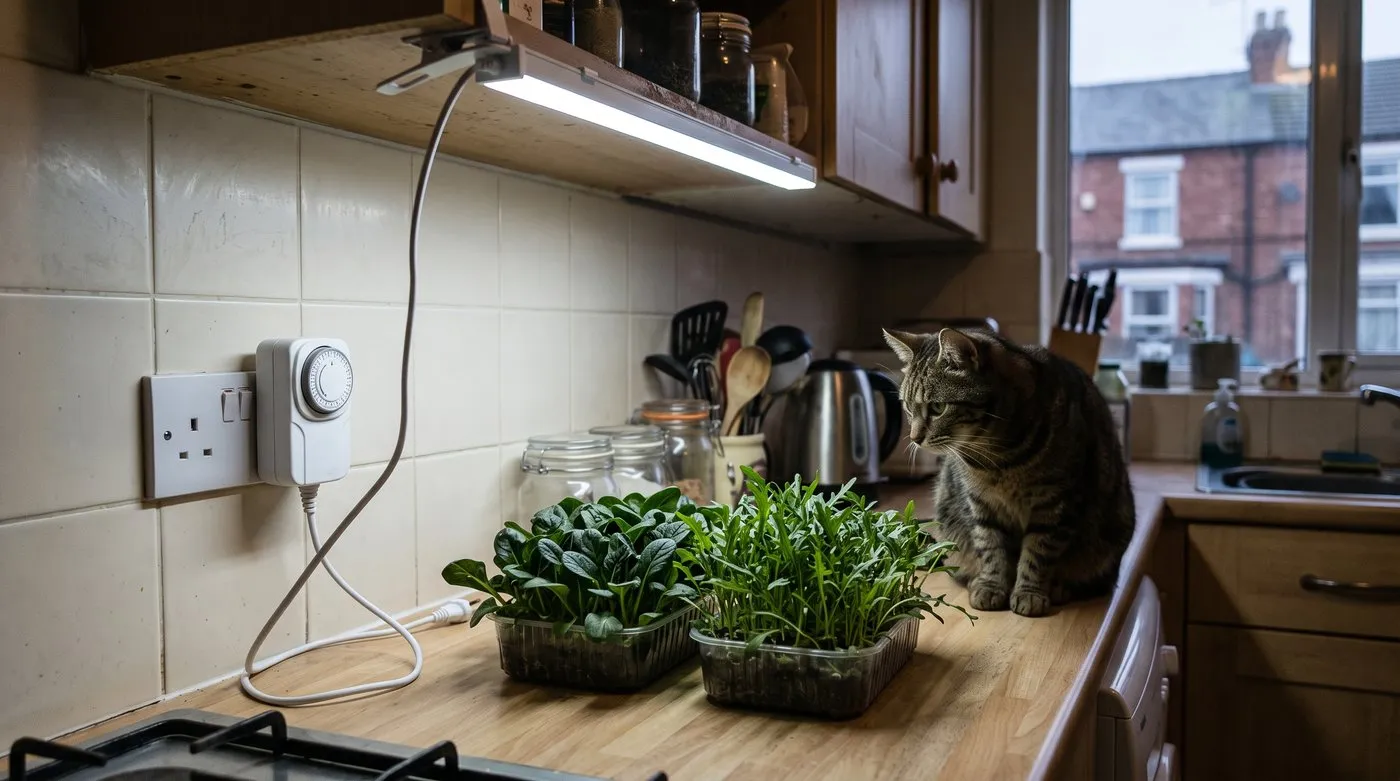
A small LED on a timer keeps winter salad compact and green. Without it, leaves on a dull sill tend to stretch and go pale.
- No light needed: sprouts in a jar.
- A bright windowsill is enough: microgreens, pea shoots, cress, mizuna, mustard, land cress, lamb’s lettuce, chives and mint.
- A grow light helps a lot: lettuce, spinach, rocket, parsley and coriander. On a winter sill these tend to stretch and go pale.
A small LED grow light over one or two trays makes a big difference. Hang it a short way above the leaves and run it on a plug-in timer for about 12-14 hours a day. You don’t need a grow tent for a windowsill. The LED grow lights guide covers what to buy and where to hang it.
Keeping indoor winter crops warm
Aim for a steady 15-18°C for quick growth, and don’t let trays sit near freezing.
- Cold glass: window sills can get very cold on frosty nights. Move trays into the room at dusk, especially if curtains close behind them.
- Radiators: a radiator under the sill dries out compost and leaves fast. Check trays daily.
- Draughts: keep trays away from outside doors.
- Humidity: a clear lid or loose bag over a newly sown tray keeps it moist. Take it off once seedlings appear, to stop them rotting.
What doesn’t grow well indoors in winter?
Some crops simply need more light and warmth than a winter windowsill gives. Save these for spring.
- Tomatoes, peppers and cucumbers need long, bright days to flower and fruit. Sow them from late winter or spring instead.
- Hearting lettuce such as ‘Little Gem’ won’t form a firm heart. Grow loose-leaf types.
- Carrots, beetroot and parsnips make thin tops and no proper roots.
- Cabbages and other big brassicas need months outdoors. Grow their seedlings as microgreens instead.
Chilli plants can be kept indoors over winter, but they won’t crop until summer. Cut them back and keep them cool and bright with little water.
How to grow a tray of microgreens
Microgreens are the best first winter crop. This works on any bright sill.
- Fill a shallow tray with drainage holes with 2-3cm of peat-free compost. Firm it level.
- Sow thickly, so the seed almost covers the surface. Radish, mustard, broccoli and peas are good starters.
- Cover big seeds lightly with a thin layer of compost. Leave tiny seeds like cress uncovered.
- Water from below by standing the tray in shallow water for a few minutes, then let it drain.
- Cover until the seed sprouts, then remove the lid straight away.
- Move to your brightest sill so the seedlings stay sturdy.
- Harvest in one to three weeks, cutting at compost level with scissors.
How to grow a cut-and-come-again salad trough
- Use a trough at least 15cm deep with drainage holes.
- Fill with peat-free compost to just below the rim.
- Sow a mix of mizuna, mustard ‘Red Frills’, land cress, lamb’s lettuce and a loose-leaf lettuce, about 1cm deep.
- Keep it at about 10-15°C on your brightest sill or under an LED.
- Cut at 8-10cm, taking the outer leaves and leaving the centre.
- Let it regrow. Water lightly and give a weak liquid feed every couple of weeks.

Salad leaves and microgreens cut from the windowsill in January. Fast leaf crops give a proper harvest when little else will.
Winter indoor crops compared
| Crop | Light | Time to first harvest | How easy? |
|---|---|---|---|
| Sprouts in a jar | None | A few days | Very easy |
| Cress | Bright sill | About a week | Very easy |
| Microgreens | Bright sill | 1-3 weeks | Very easy |
| Pea shoots | Bright sill | 2-3 weeks | Easy |
| Mizuna, mustard, land cress | Bright sill or LED | 4-6 weeks | Easy |
| Lamb’s lettuce | Bright sill | 6 weeks or more | Easy, but slow |
| Loose-leaf lettuce | LED helps | 5-7 weeks | Moderate |
| Spinach and rocket | LED helps | 5-7 weeks | Moderate |
Month-by-month indoor winter calendar
| Month | Sow indoors | Harvest indoors |
|---|---|---|
| November | Microgreens, pea shoots, mizuna, mustard, land cress, lamb’s lettuce | Herbs, sprouts, autumn-sown salad |
| December | Microgreens, pea shoots, sprouts, cress | Microgreens, pea shoots, sprouts, spring onion tops |
| January | Microgreens, pea shoots, sprouts. Start salad under an LED | Microgreens, pea shoots, sprouts, chives |
| February | Microgreens, salad leaves, spinach, rocket | First salad cuts, microgreens, herbs |
By late February the days are noticeably longer. That’s the time to widen the range and start sowing for the outdoor season.
Common mistakes growing vegetables indoors in winter
- Overwatering. Plants drink far less in cool, dull weather. Soggy compost makes seedlings rot at the base. Water when the surface feels dry.
- Too little light. Seedlings stretch, flop and go pale. Use your brightest sill or add an LED.
- Sowing fruiting crops. Tomatoes and peppers can’t fruit on a winter sill. Wait until spring.
- Leaving trays on cold glass. Chilled roots stall. Move trays into the room on frosty nights.
- Sowing slow crops in midwinter. Lettuce and spinach crawl in December. Stick to microgreens and pea shoots until light improves.
Frequently asked questions
What vegetables can you grow indoors in winter in the UK?
Fast leaf crops grow best: microgreens, pea shoots, sprouts, cress and salad leaves. Herbs such as chives, parsley and mint keep going too. Fruiting crops like tomatoes need far more light than a winter windowsill gives.
Can you grow vegetables indoors without a grow light in winter?
Yes, sprouts, cress, microgreens and pea shoots manage without one. Sprouts grow in a jar with no light at all. Microgreens and pea shoots just need a bright windowsill. Salad leaves and herbs grow without a light but tend to go pale and leggy.
Why do my indoor winter plants grow tall and floppy?
They’re not getting enough light. Seedlings stretch towards the window and grow thin, pale stems. Move them to your brightest sill, add a small LED grow light, or switch to crops you eat young, like microgreens.
What temperature do indoor winter vegetables need?
Most leaf crops grow well at about 10-18°C. Warmer, around 15-18°C, speeds up microgreens and pea shoots. Lamb’s lettuce and land cress cope with cooler rooms. Keep trays off cold glass on frosty nights.
How long do microgreens take to grow in winter?
Usually one to three weeks, depending on the crop and warmth. Cress, radish and mustard are quickest. Pea shoots take a little longer. A warm kitchen sill gets them ready faster than a chilly porch.
Can you grow lettuce indoors over winter in the UK?
Yes, as loose leaves, but not as firm hearts. Sow a loose-leaf or cut-and-come-again lettuce and pick the outer leaves young. The plant regrows for a few more pickings, especially under a grow light.
Got the windowsill sorted? Try growing corn salad outdoors for winter leaves too, or browse more growing veg guides.
Our team produces practical UK gardening guidance from source research, contributor records and established horticultural practice. Editorial standards are overseen by Matt W.


