Key takeaways
- Each supermarket pot holds dozens of seedlings fighting for one small rootball
- Split it into three or four clumps soon after buying
- Pot each clump into its own pot about 12cm across with peat-free compost
- Water from below when the top of the compost feels dry
- Basil wants your warmest, brightest sill; parsley, mint and chives cope with less
- Coriander rarely lasts, so use it fresh and sow your own
Supermarket herbs flop because each pot is crammed with dozens of seedlings in a tiny bit of compost. Treat the pot as a bunch of baby plants rather than a finished one, and you can keep it going for months. Split it up, give each clump its own pot, water from below and find it a bright spot.
This guide covers rescuing a shop-bought pot. If you’d rather start from scratch, the indoor herbs from seed plan walks you through sowing your own.
Why do supermarket herbs die so quickly?
Supermarket herbs die quickly because the pot is overcrowded. Look closely at a pot of basil and you’ll see dozens of thin stems, each one a separate seedling.
Three things then go wrong at home:
- Too many roots, too little compost. The seedlings fight for water and food, so the compost runs dry and hungry fast.
- Wet stems. Pouring water over the top soaks the tightly packed stems. In a warm kitchen they soon rot at the base.
- Less light. The plants were raised in bright growing houses. A dim kitchen worktop is a big step down.
None of this means the plants are poor quality. They just need more room.
How to split and repot supermarket herbs
Split the pot into three or four clumps and give each its own pot. Do it within a day or two of buying, before the plants start to sulk.
- Water the pot an hour before, so the rootball holds together.
- Tip the whole rootball out onto a board.
- Pull or cut it into three or four chunks, each with a handful of stems and its own roots. Don’t worry about tearing a few roots.
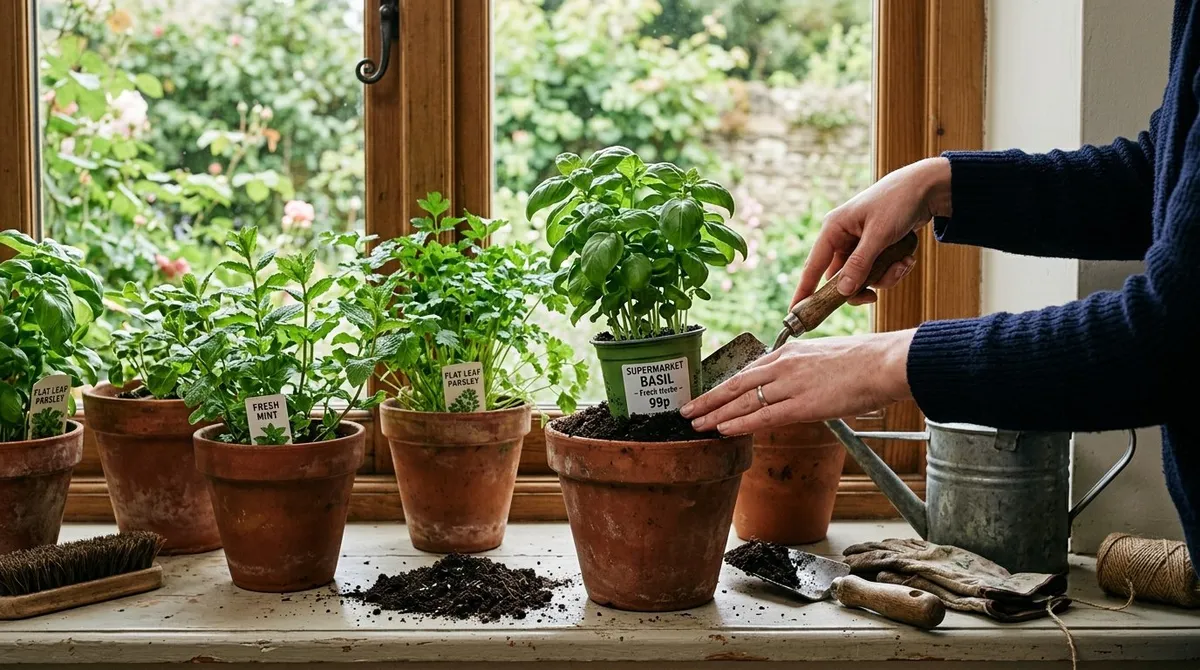
- Pot each chunk into a pot about 12cm across, with drainage holes, using fresh peat-free multipurpose compost.
- Firm gently, water once from below and stand each pot on a saucer.
This works well for basil, parsley, mint and chives. Smaller pots dry out very fast on a warm sill, so 12cm is a good minimum.
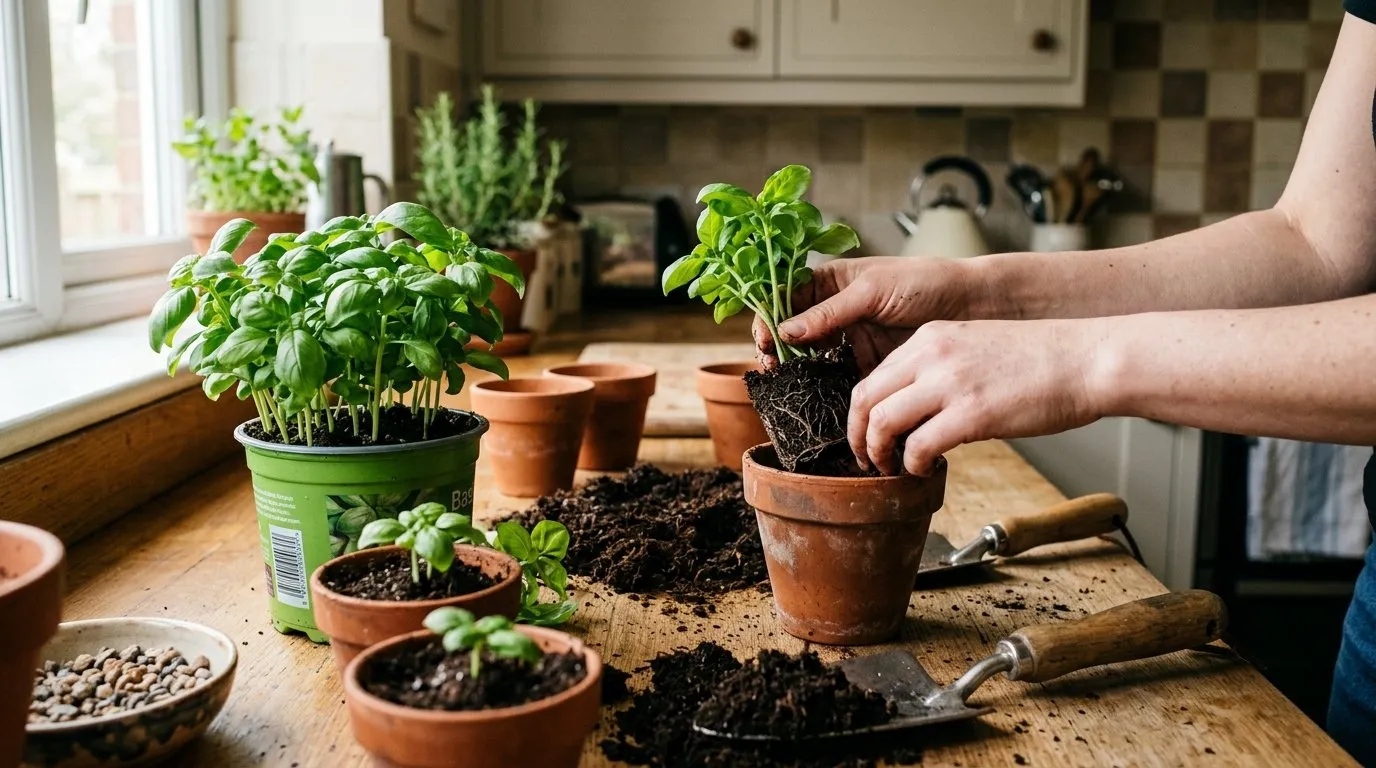
Each chunk of roots becomes its own plant. Three or four pots from one supermarket basil gives every stem room to grow.
Watering indoor herbs from below
Water from below when the top few centimetres of compost feel dry. This keeps the stems dry and the roots evenly moist.
Pour a couple of centimetres of water into the saucer. Leave the pot to drink for 20-30 minutes, then tip away what’s left. Never leave pots standing in water.
In summer that might mean every few days. In winter it might be once a week or less. Always do the finger test rather than watering by the calendar. Soggy compost is the main reason indoor herbs die.
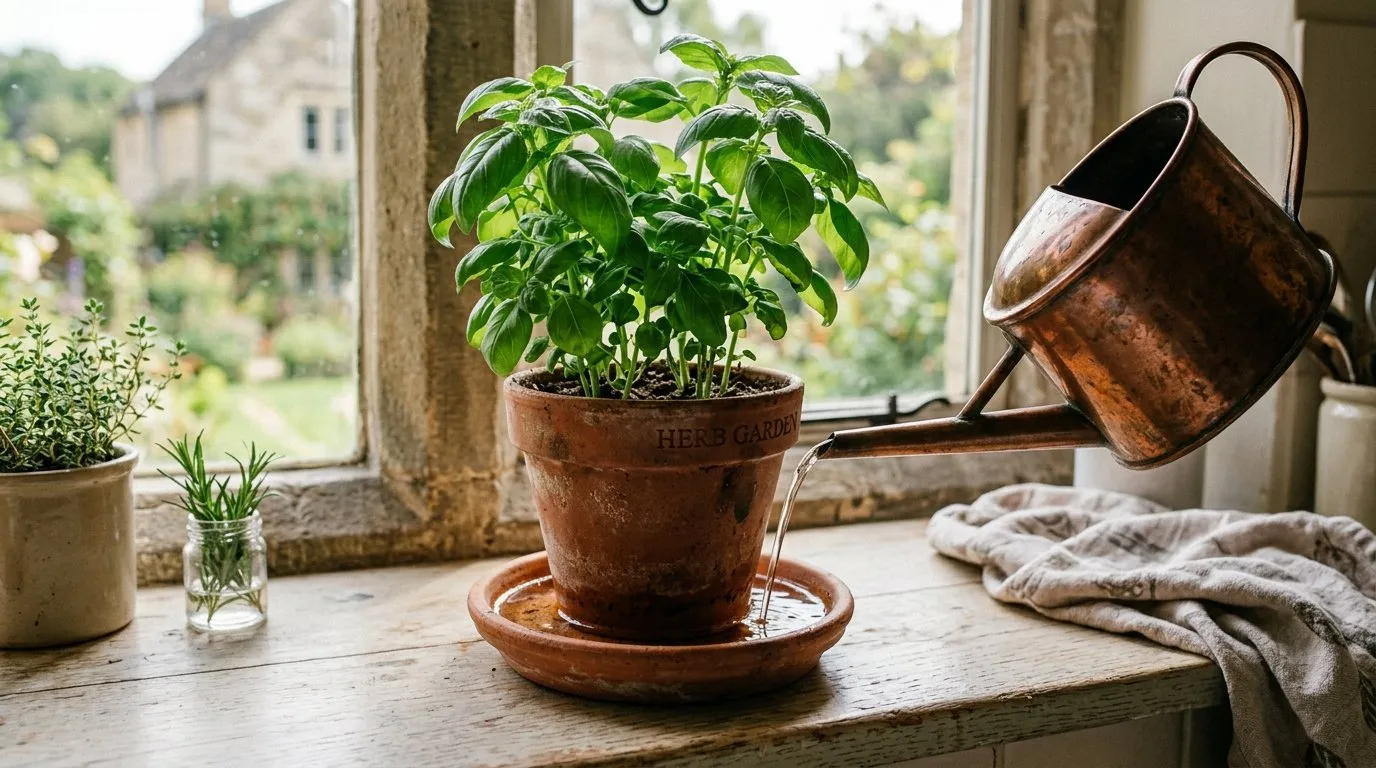
Pour the water into the saucer, not over the plant. The compost soaks it up and the stems stay dry.
Where to put indoor herbs for the best light
Put herbs on your brightest windowsill, ideally south or south-east facing. Light is what keeps them bushy instead of tall and floppy.
- Basil needs warmth and sun. Keep it away from cold glass at night and out of draughts.
- Parsley, mint and chives cope with an east or west-facing sill.
- North-facing sills are too dim for most herbs. A small LED grow light on a timer helps if that’s all you have.
Turn the pots every few days so they grow evenly rather than leaning towards the glass.
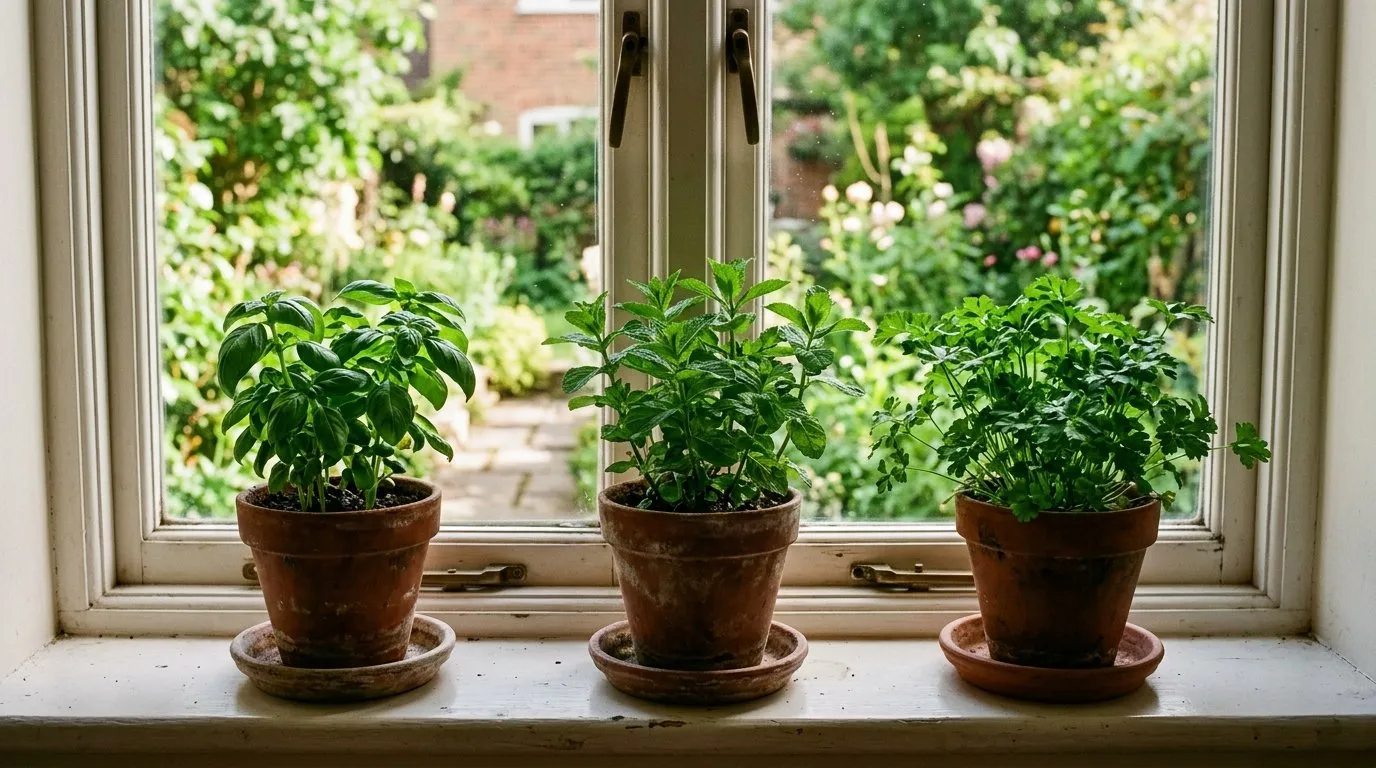
Basil, mint and parsley all happy on a bright sill. Turning the pots now and then keeps them growing straight.
Feeding and picking for more leaves
Fresh compost feeds the plants for the first few weeks. After about a month, give a liquid feed at half strength every couple of weeks while they’re growing.
A seaweed feed or a general liquid plant food works well. Too much feed indoors gives soft, floppy growth, so go easy. Ease off in winter when growth slows.
Pick often, from the top. With basil, pinch out the tip just above a pair of leaves. Two new shoots grow from that point, and the plant gets bushier. Never strip a plant bare.
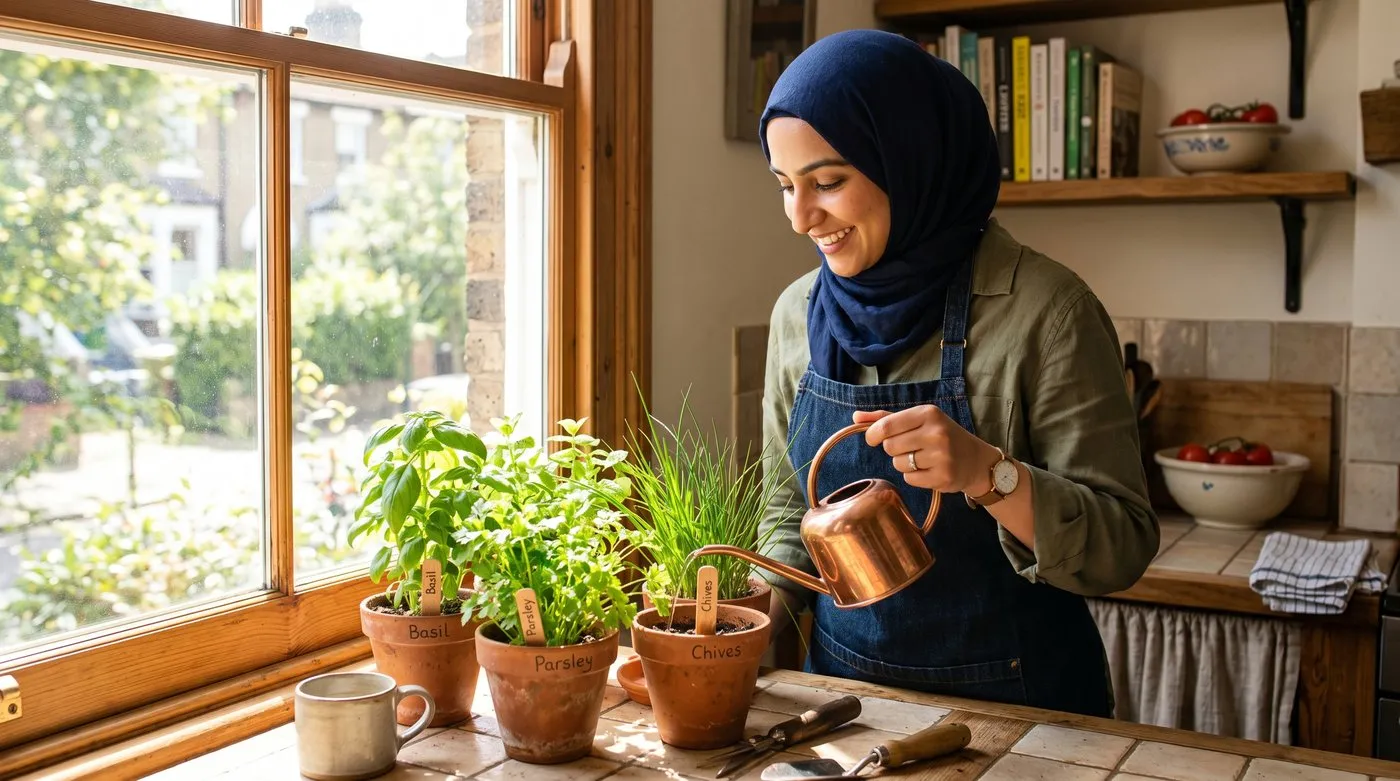
A light liquid feed every couple of weeks keeps repotted herbs leafy. Little and often is the rule indoors.
Herb by herb: which supermarket herbs last?
Some shop-bought herbs keep going for months, others are best used up fast.
| Herb | How it does indoors after repotting |
|---|---|
| Basil | Good through spring and summer on a warm, sunny sill. Struggles in winter |
| Parsley | Lasts well, and copes with less light |
| Mint | Very easy. Can go outside in a pot in spring |
| Chives | Easy. Can also go outside in spring |
| Coriander | Runs to seed quickly. Use it fresh and sow your own |
| Rosemary and thyme | Prefer life outdoors in a sunny pot |
Have more leaves than you can use? The guide to freezing fresh herbs shows how to save them for winter cooking.
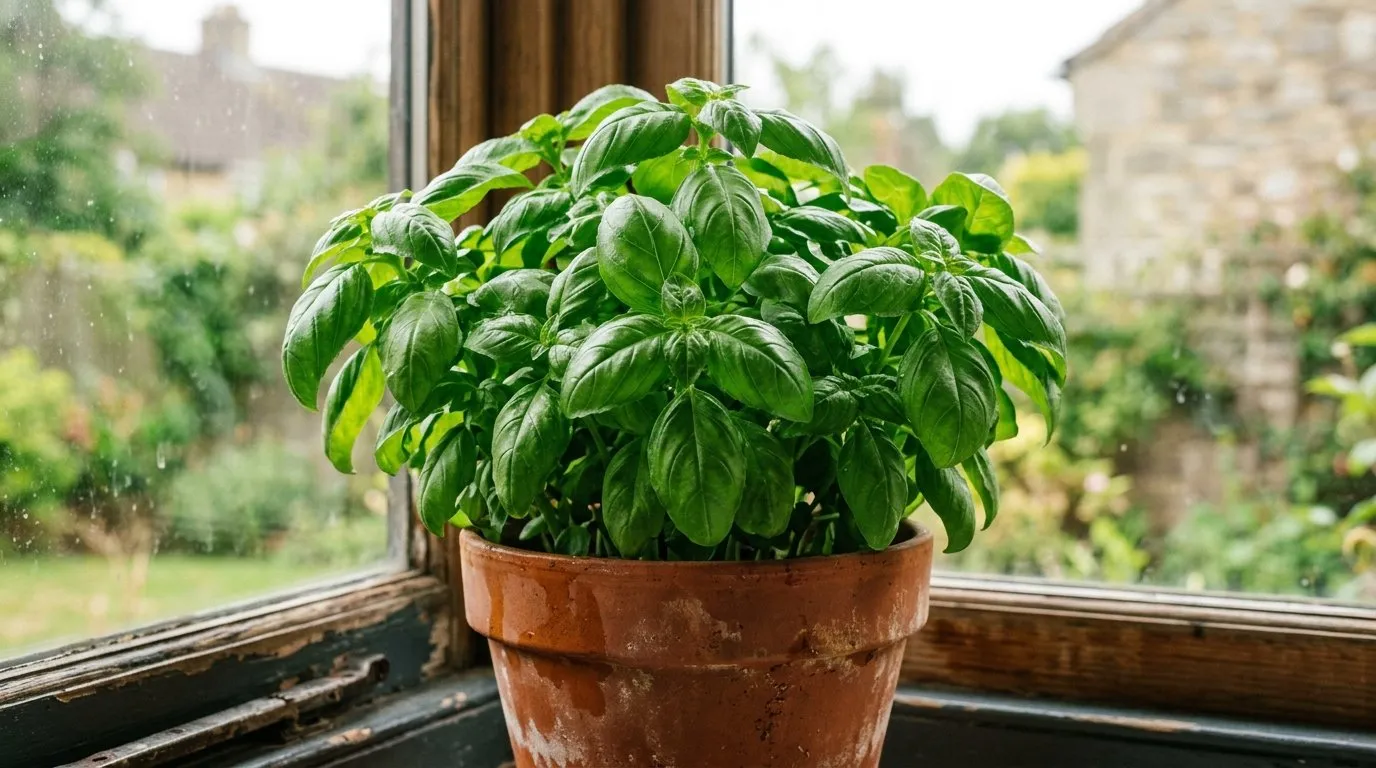
One clump of supermarket basil, given its own pot and a sunny sill. Keep pinching the tips and it stays this bushy all summer.
Common pests on kitchen herbs
Check under the leaves each time you water. Most problems are easy to sort if you catch them early.
- Fungus gnats: tiny flies around wet compost. Let the top dry out between waterings.
- Aphids: small green or black insects on shoot tips. Rinse them off under the tap or wipe with your fingers.
- Whitefly: tiny white flies that rise when disturbed. Yellow sticky traps help.
- Spider mite: fine webbing and speckled leaves in dry, warm air. Rinse the leaves and move the plant somewhere less hot.
Common mistakes with supermarket herbs
- Leaving the pot as it is. It’s too crowded to last. Split it.
- Watering over the top. The packed stems rot. Water from below.
- A dim worktop. Herbs need a windowsill, not the back of the kitchen.
- Never picking. Regular picking keeps plants bushy and leafy.
- Expecting coriander to last. It won’t. Sow your own instead.
Frequently asked questions
Why do supermarket herbs die so quickly?
Too many seedlings are crammed into one small pot of compost. They’re grown to look lush on the shelf, not to last. At home, the crowded seedlings fight for water and light, and soggy compost or a dim spot finishes them off. Splitting and repotting helps them last much longer.
How do I keep supermarket basil alive longer?
Split it into three or four clumps and repot each one. Use fresh peat-free compost and stand the pots on a warm, bright windowsill. Water from below when the top feels dry, and pinch out the tips often so the plants bush out.
What is the best windowsill for indoor herbs?
A bright south or south-east facing sill suits most herbs. Basil, thyme and oregano want the most sun. Parsley, mint and chives cope with an east or west-facing sill. A north-facing sill is too dim for most herbs unless you add a grow light.
How often should I water indoor herbs?
Water when the top few centimetres of compost feel dry. Push a finger in to check rather than watering on a fixed day. Stand the pot in a saucer of water for 20-30 minutes, then tip away what’s left. Soggy compost kills more indoor herbs than dryness does.
Can I keep supermarket coriander alive long-term?
Not usually, as it runs to seed quickly indoors. Use the leaves within a week or two and freeze any extra. For a steady supply, sow a small pot of coriander seed every few weeks.
Ready to grow your own from scratch? Start with the basil growing guide, then try coriander without bolting, parsley from seed and mint in pots. There’s plenty more in the growing guides.
Our team produces practical UK gardening guidance from source research, contributor records and established horticultural practice. Editorial standards are overseen by Matt W.