Key takeaways
- Basil, parsley, chives, coriander and dill are the easiest herbs to sow indoors
- Sow from March to September; in winter you'll usually need a grow light
- A bright south or west-facing windowsill gives the best plants
- Use seed compost and 9cm pots, and water from below into a saucer
- Thin seedlings to a small clump per pot so each has room to grow
- Sow a fresh pot every few weeks for a steady supply of leaves
To grow herbs from seed indoors, sow them in small pots of seed compost, keep them warm until they come up, then give them the brightest windowsill you have. Water from below and sow a fresh pot every few weeks, and you’ll have leaves to pick for months.
Basil, parsley, chives, coriander and dill are the easiest herbs to start. A packet of seed fills many pots, and you can grow varieties you’ll never find on a supermarket shelf. If you’d rather start from a shop-bought pot, the guide to keeping supermarket herbs alive indoors covers that route.
Which herbs grow easiest indoors from seed?
These five are the best place to start:
- Basil: quick to come up in warmth and ready to pick within a few weeks. Try Genovese for classic Italian flavour, or Greek basil for a compact bush. The guide on how to grow basil has more on varieties.
- Parsley: slow to germinate, often two or three weeks, but crops for months once going. Flat-leaf and curly both do well. The guide on growing parsley from seed has tips for speeding it up.
- Chives: slow to start, but very forgiving. They cope with less light than most.
- Coriander: quick to germinate but quick to bolt (run to seed). Sow little and often, and try a slow-bolting variety such as Calypso.
- Dill: grows a long taproot and hates being moved, so sow it straight into its final pot.
Rosemary, sage, thyme and mint are slow or fiddly from seed. Buy them as small plants or grow them from cuttings instead.
| Herb | Germination | Light needs | Tip |
|---|---|---|---|
| Basil | Fast in warmth | High | Needs warmth to germinate |
| Parsley | Slow, up to three weeks | Medium | Soak seed overnight first |
| Chives | Slow | Medium to low | Snip like grass |
| Coriander | Fast | Medium | Sow little and often |
| Dill | Medium | High | Sow in its final pot |

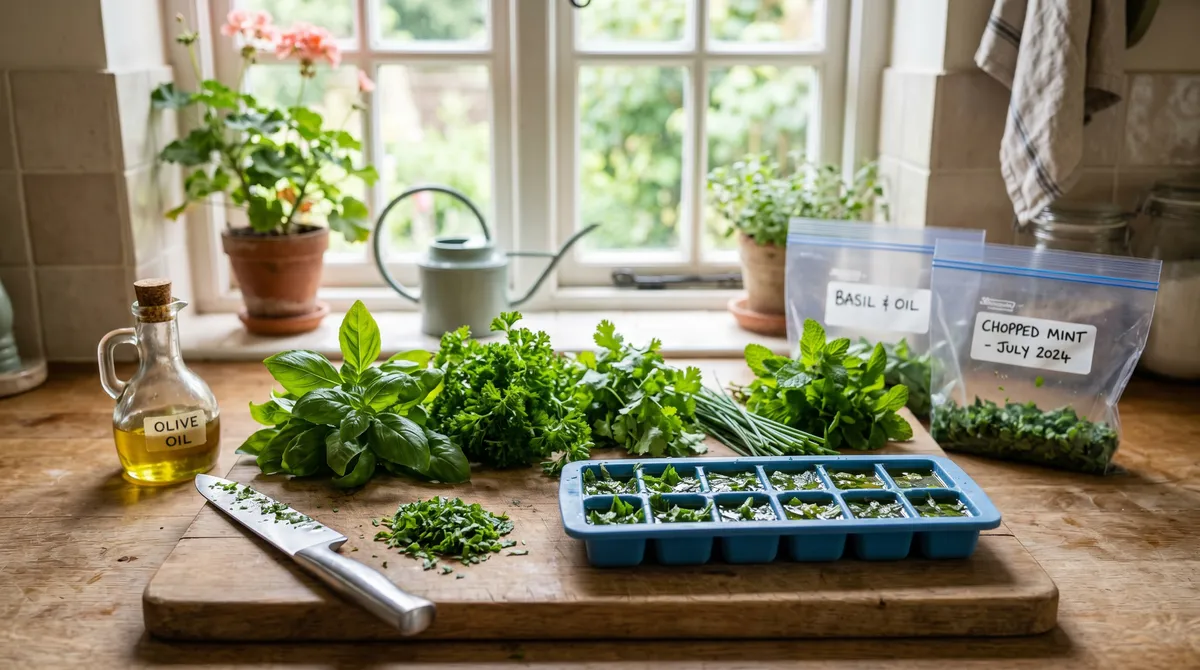
A row of pots at different stages means there’s always something ready to pick.
What you need to get started
You don’t need much.
- Pots: 9cm pots with drainage holes. Plastic or terracotta both work. Terracotta dries out faster, so check it more often.
- Saucers: one under each pot, so you can water from below.
- Compost: peat-free seed compost for sowing. It’s fine and low in nutrients, which suits tiny seedlings.
- Seed: start with one or two herbs you use most.
- Clear cover: a small propagator lid or a clear freezer bag keeps the moisture in while seeds germinate.
- Optional grow light: handy for north-facing windows and winter sowings.
The best time to sow on a windowsill is March to September, when days are long enough. From October to February, growth is slow without extra light.
How to sow herbs indoors, step by step
- Fill the pots with seed compost to just below the rim and firm gently.
- Stand them in saucers of water until the surface darkens, then drain.
- Scatter 8-10 seeds thinly over each pot.
- Cover with a light sprinkle of compost, a few millimetres deep. Bigger seeds such as coriander can go a little deeper.
- Label each pot with the herb and the date.
- Cover with a propagator lid or clear bag and put somewhere warm, around 18-22°C.
- Take the cover off as soon as most seedlings appear, and move them to your brightest windowsill.
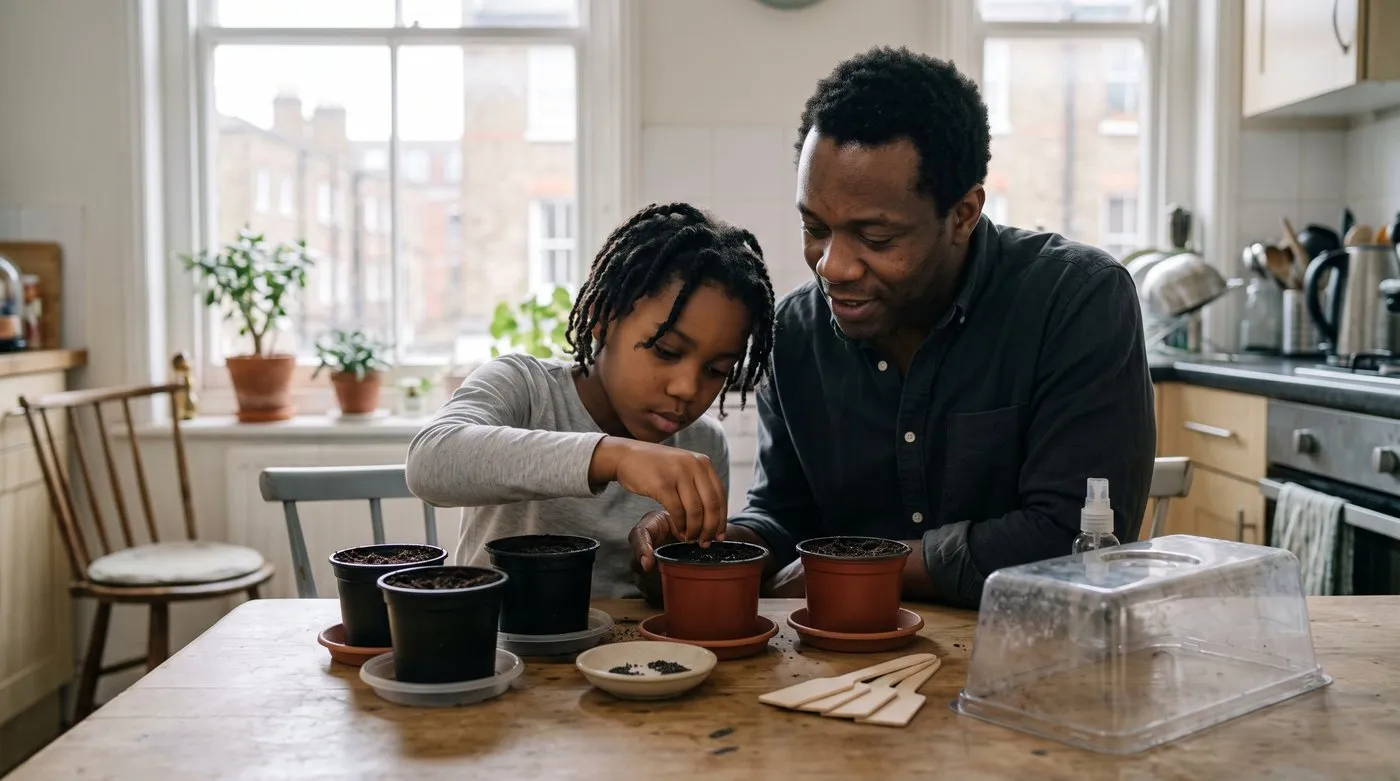
Scatter the seed thinly over damp compost, then cover with just a light sprinkle.
Parsley germinates faster if you soak the seed in warm water overnight first. Basil really does need warmth, so a sunny kitchen or a heated propagator helps early in the year.
Thinning and the first picking
Once the seedlings have a pair of true leaves (the ones that look like proper herb leaves), thin them. Snip out the weakest at soil level with scissors, leaving a small clump of three or four strong ones per pot. Pulling them can disturb the roots of the rest. The thinnings are lovely in salads.
Start picking once plants have several sets of leaves. On basil, pinch out the top pair of leaves just above a pair of side shoots. That makes the plant bush out. On parsley and chives, cut the outer stems first and let the middle keep growing.
Never take more than about a third of the plant at once. Leave it enough leaves to keep growing.

Snip out the weakest seedlings with scissors. The ones that are left grow stronger with more room.
How much light do indoor herbs need?
As much as you can give them. Light is the thing indoor herbs most often lack.
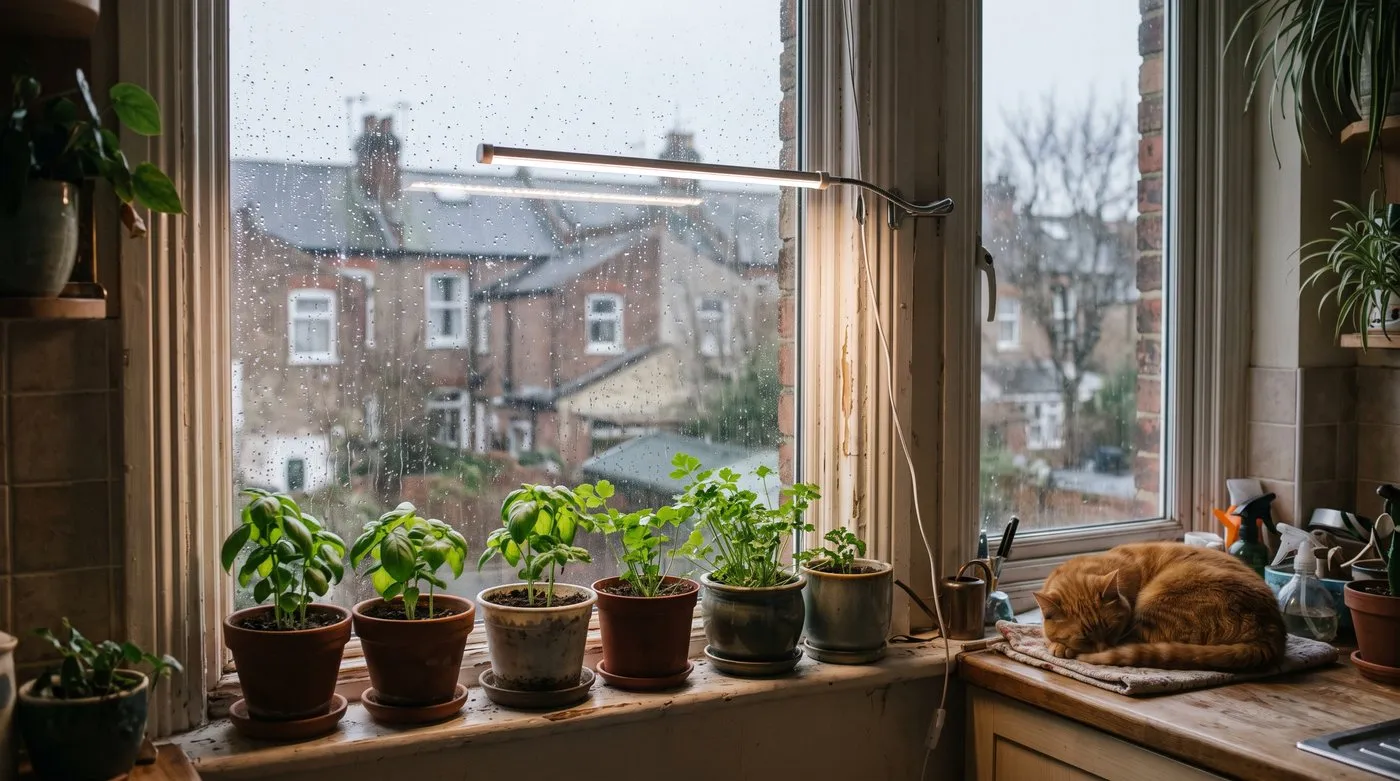
On a dull north-facing sill or in winter, a small grow light keeps herbs sturdy instead of stretched.
- South and west-facing windows are best, with plenty of sun.
- East-facing windows suit parsley, chives and coriander, which cope with a bit less light.
- North-facing windows rarely give enough light on their own. Seedlings stretch and flop.
Turn the pots a little every day so the plants grow straight rather than leaning towards the glass. If they still look long and floppy, they need more light. A small LED grow light placed just above the plants and run for 12-14 hours a day makes a big difference in winter. The guide to grow lights for seed starting explains what to buy. For more on stretched seedlings, see why seedlings go leggy.
Watering herbs from the bottom
Bottom watering means pouring water into the saucer and letting the compost soak it up. It’s the easiest way to keep seedlings happy.
Pour water into the saucer and leave it for about half an hour. Then tip away whatever is left. The compost takes up what it needs, the surface stays drier, and soggy seedlings are less likely to collapse.
Water when the pot feels light or the surface looks dry. In a warm, sunny kitchen in summer, that may be every day or two. In winter, it may be once a week. Never leave pots standing in water for long, as the roots rot.

Pour water into the saucer, not over the leaves. The compost soaks up what it needs from below.
Feeding and potting on
Seed compost holds enough food for the first few weeks. Once plants are growing well, feed every week or two with a liquid seaweed feed or a balanced liquid feed at half strength.
When roots start poking out of the bottom of the pot, move the plants into a 12-15cm pot of peat-free multipurpose compost. Bigger pots dry out less quickly and keep plants cropping longer.
Basil usually tires after a few weeks of picking. Parsley and chives can carry on for many months, especially if potted on. When a plant stops producing, replace it with a newer one.

When roots fill the small pot, move the plants on into a bigger pot of multipurpose compost.
Sowing little and often for a steady supply
Sow a new pot every three or four weeks to keep fresh leaves coming. When the first pot starts to tire, the next is ready to take over.
This matters most for basil and coriander, which run out of steam fastest. Sow a little extra in summer, when you’re cooking with them more. In winter, growth slows right down, so sow less often unless you have a grow light.
Common mistakes with indoor herbs
- Sowing too thickly. Crowded seedlings grow weak. Thin them to a small clump.
- Overwatering. Soggy compost is the main reason seedlings collapse. Water from below and tip away the extra.
- Too little light. A dim window gives long, floppy plants. Pick the brightest spot or add a grow light.
- Cutting too hard. Taking all the leaves at once can finish a young plant off. Pick a little at a time.
- Sowing everything at once. You get a glut, then nothing. Sow a pot every few weeks instead.
Frequently asked questions
Which herbs grow easiest indoors from seed?
Basil, parsley, chives, coriander and dill are the easiest. Basil and coriander are quickest to germinate, while parsley and chives are slower. Rosemary, sage and mint are far easier to buy as small plants.
What is the best compost for sowing herbs indoors?
Peat-free seed compost is the best choice for sowing. It’s fine and low in nutrients, which suits tiny seedlings. Move plants into multipurpose compost when you pot them on.
How much light do indoor herbs need?
As much as you can give them, ideally a few hours of sun a day. A south or west-facing windowsill is best. On a north-facing window or in winter, a small LED grow light helps.
Why are my indoor herb seedlings dying?
Usually too much water, too little light or overcrowding. Soggy compost causes seedlings to collapse at the base. Water from below, move pots to brighter light and thin crowded seedlings.
How do I keep indoor herbs producing year-round?
Sow a new pot every three or four weeks. Older plants tire after several cuts, and fresh ones take over. In winter, growth slows, so a grow light keeps things going.
Why are my herb seedlings long and floppy?
They’re stretching for light. Move them to a brighter window, turn the pots every day or add a grow light. Keeping them a little cooler at night also helps them stay sturdy.
Now your windowsill herbs are on their way, read the guide on how to grow coriander without bolting to keep that trickiest herb going, or browse more growing guides.
Our team produces practical UK gardening guidance from source research, contributor records and established horticultural practice. Editorial standards are overseen by Matt W.