Key takeaways
- Set the stone broad end down and pointed end up, or it won't sprout
- Roots usually appear in 2-8 weeks, fastest somewhere warm at 20-25°C
- Water and compost methods both work; compost avoids disturbing the roots later
- Pinch out the tip at about 30cm to get a bushy plant, not one bare stem
- Keep it above 10°C in winter and water much less from October to March
- Grow it for the leaves: stone-grown avocados very rarely fruit in a UK home
You can grow avocado from stone with a leftover pit, a glass of water and a warm windowsill. It costs nothing and it’s fun to watch, especially with children. In a UK home you’ll get a handsome leafy plant rather than fruit, but that’s half the charm.
This guide covers the whole journey: sprouting the stone, potting it on, pinching it into a bushy shape and getting it through winter. For other things to sprout from the fruit bowl, see our guide to regrowing food from kitchen scraps.
How do you grow an avocado from a stone?
Clean the stone, set it broad end down, and keep it warm and moist until it roots. Avocado (Persea americana) is a subtropical tree, so warmth matters more than anything else.
Use the stone from a ripe avocado. Wash off every bit of green flesh, as leftover fruit goes mouldy. You can leave the thin brown skin on. Peel it only if it comes away easily.
Now find the two ends. The broad, flatter end is the base, where the roots come out. The pointed end is the top, where the shoot appears. Getting this the wrong way up is the most common beginner mistake.
Start two or three stones at once if you can. Some simply never sprout, and spares make good presents.
Cocktail sticks in water or straight into compost?
Both work. Pick water if you want to watch the roots grow, and compost if you want a tidy pot and a stronger young plant.
For the water method, push three or four cocktail sticks into the sides of the stone, about a third of the way up. Rest the sticks on the rim of a glass so the base sits 1-2cm deep in water. Use a clear glass so you can see what’s happening. Change the water every few days so it doesn’t go stale.
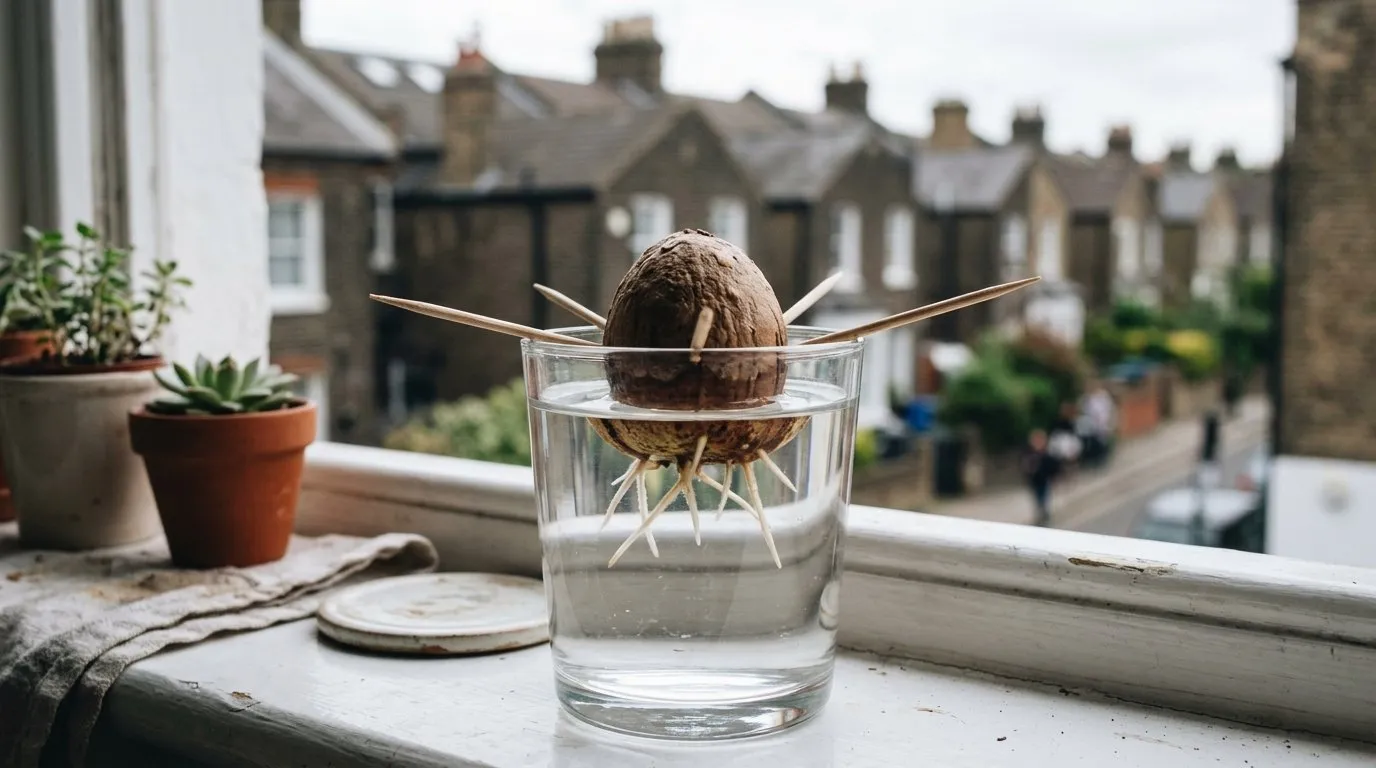
Sticks rest on the rim and hold the base in the water. A clear glass lets you watch for the first root.
For the compost method, push the stone into a 9-10cm pot of moist peat-free compost. Leave the top third poking out. Keep the compost just moist, never soggy, somewhere warm and bright. You can’t see the roots, but they never have to make the move from water to soil.
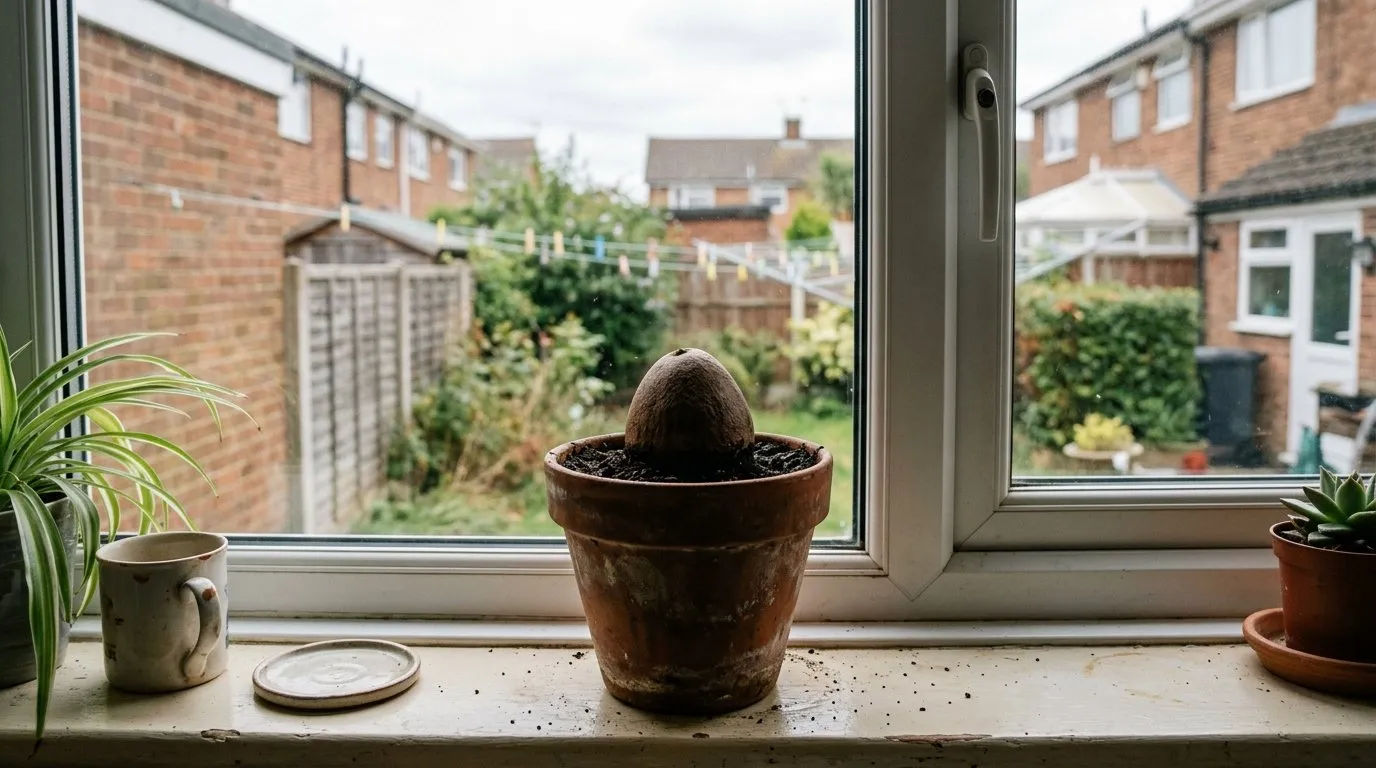
The compost method: the pointed top third stays above the surface while the roots grow out of sight.
| Cocktail sticks in water | Straight into compost | |
|---|---|---|
| See the roots grow | Yes | No |
| Root disturbance later | Some, when you pot it up | None |
| Fuss | Sticks, glass and water changes | One pot |
| Best for | Children and the curious | A sturdier long-term plant |
How long does an avocado stone take to root?
Usually 2-8 weeks, and often within a month somewhere warm. Some stones are slower, and a few never take.
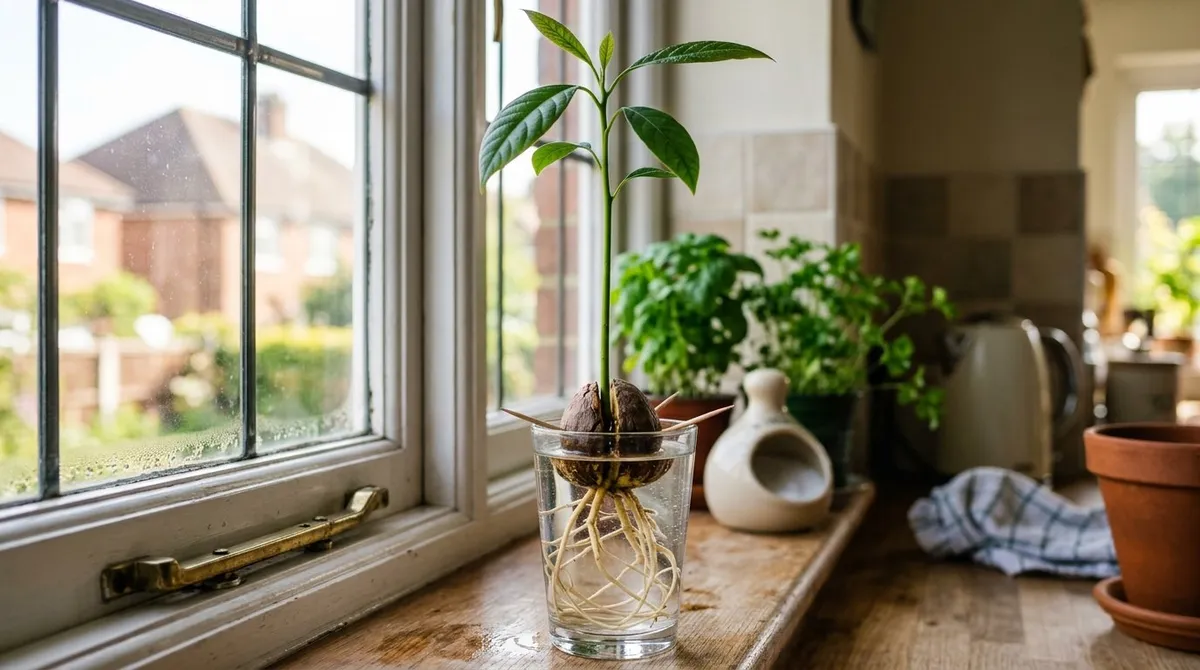
It always happens in the same order. First the stone splits down the middle. Then a thick pale root pushes down from the base. The shoot appears from the top later, sometimes weeks after the root. Don’t give up if you see roots but no shoot yet.
Warmth speeds everything up. At a steady 20-25°C, near (not on) a radiator or in a propagator, stones crack fastest. In a cool room they can take twice as long or rot first. Once the shoot appears, the plant needs good light.
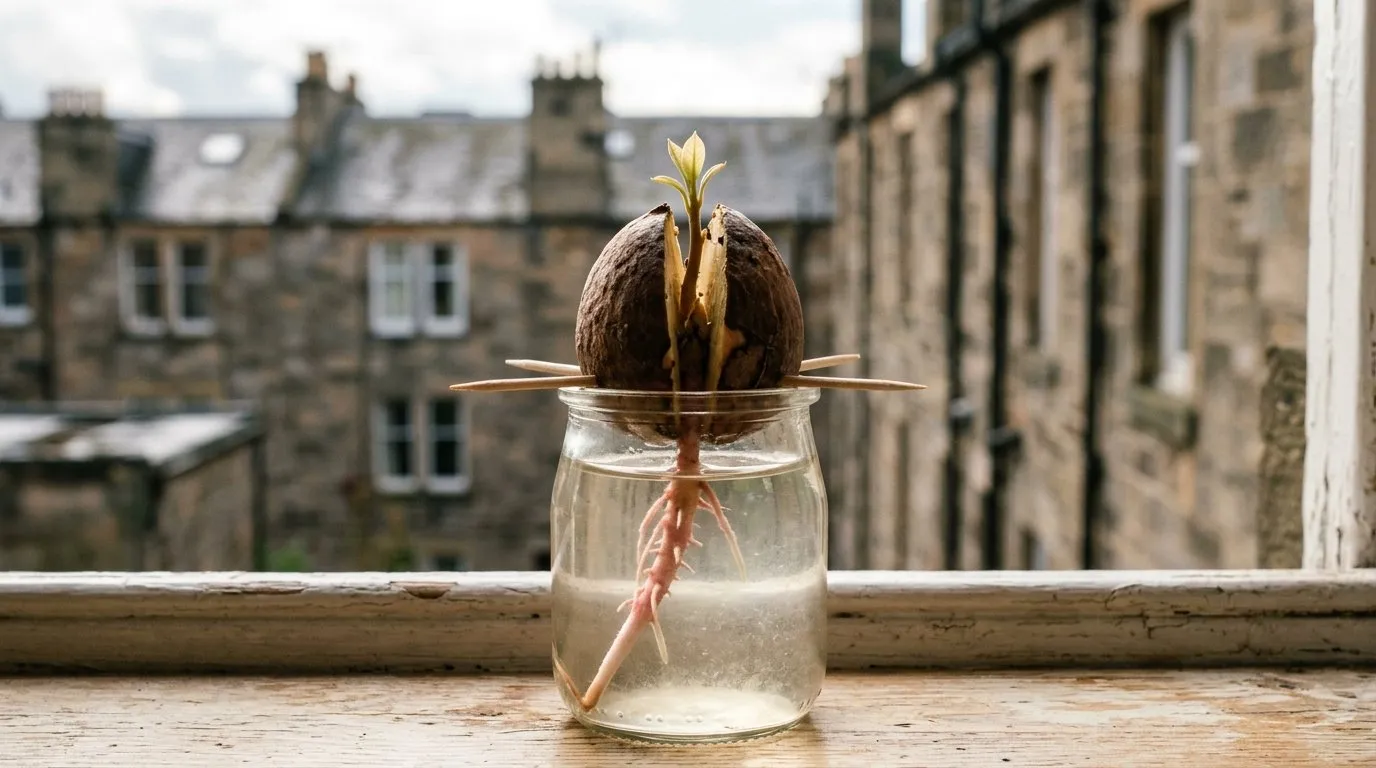
The stone splits, the root goes down, and the shoot follows. Roots always come first.
Potting on and pinching for a bushy plant
Pot the young plant on once the shoot is about 15cm tall and there’s a good root. Then pinch out the tip to make it branch.
Move it into a 13-15cm pot of peat-free multipurpose compost with a handful of grit for drainage. Keep the top half of the stone above the compost, as it sat before. Water it in, then let the surface dry a little between waterings. Avocados hate sitting wet. Our guide to repotting houseplants covers the basics.
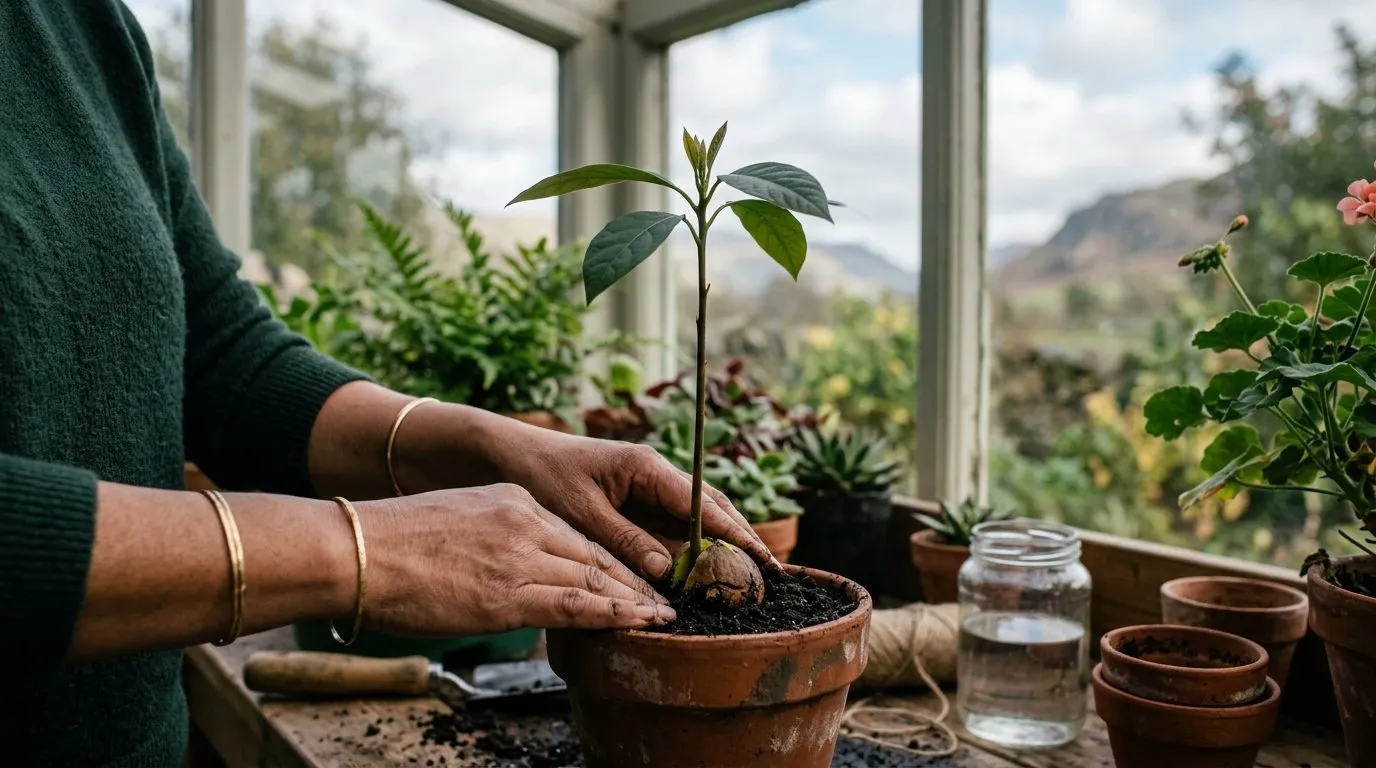
Potting on into a slightly bigger pot. The top of the stone stays above the compost, just as it grew in the glass.
Give it your brightest windowsill, ideally south or west facing. Turn the pot a quarter every few days so it doesn’t lean towards the glass.
Left alone, an avocado grows as one tall, bare stem. When it reaches about 30cm, pinch or snip off the top pair of leaves and the bud between them. It feels brutal, but side shoots soon appear lower down. Pinch the new shoots too once they’ve made 15-20cm of growth.
Feed every two to three weeks from spring to late summer with a balanced liquid houseplant feed. Stop in autumn and winter. Move it into a pot one size bigger each spring.
Will an avocado from a stone ever fruit in the UK?
Very rarely. A stone-grown avocado in a British home is a foliage plant, not a fruit tree.
Seed-grown trees take many years to reach flowering size, and some never flower at all. Fruit also sets best with cross-pollination from a second tree. Above all, they need long, warm, bright summers that a UK home can’t give.
If you want something you can actually pick, citrus is a better bet. Our guide to growing citrus trees explains how to get lemons in a pot. Otherwise, enjoy your avocado for its big glossy leaves and treat any flower as a lovely surprise.
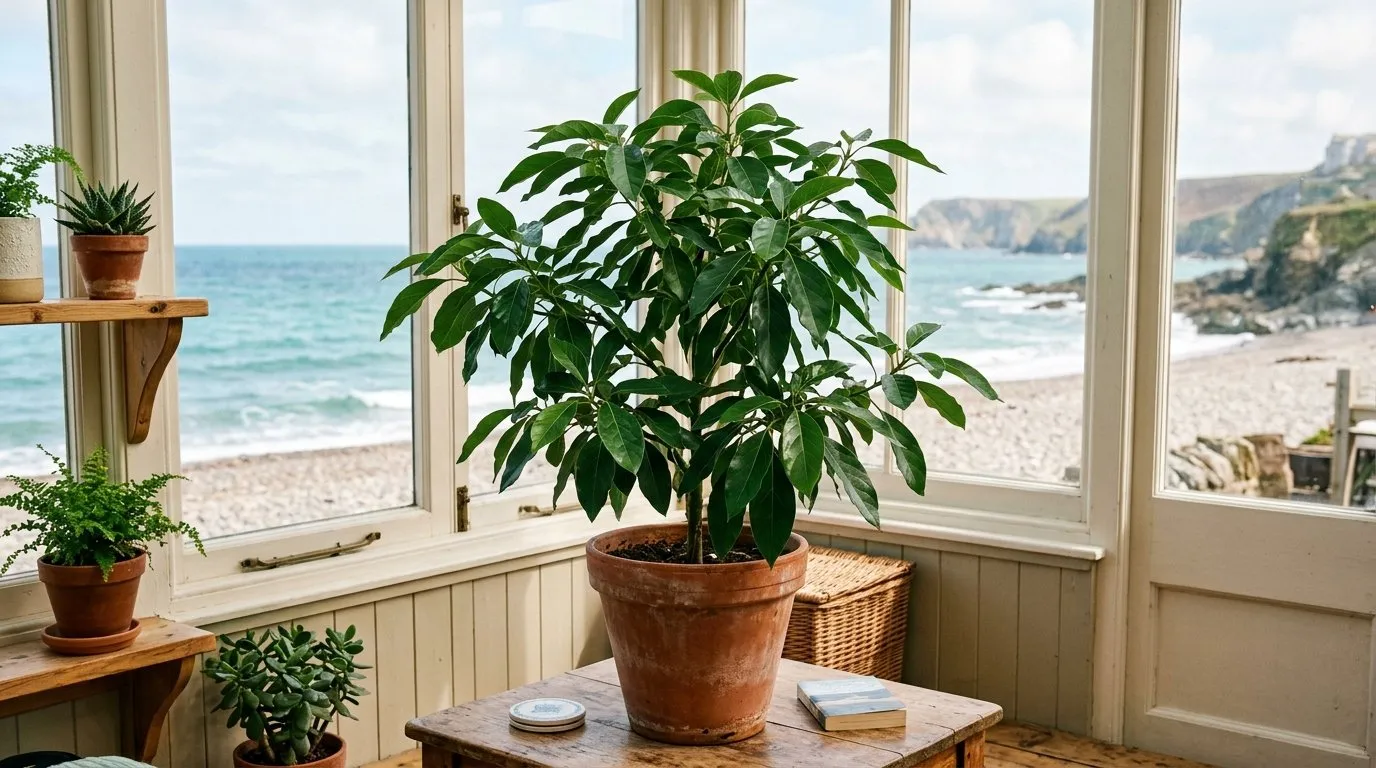
A well-pinched avocado after a few years: bushy and glossy, but don’t expect fruit indoors.
Is an avocado plant safe for cats and dogs?
Not completely, so keep it out of reach of pets. Avocado leaves, stones and skin contain persin. It’s mildly toxic to cats and dogs, and much more dangerous to pet birds, rabbits, guinea pigs and horses. A dog that swallows a whole stone can also get a blockage. If you have a dog, our guide to plants toxic to dogs lists others to keep out of reach.
How to overwinter an avocado plant in the UK
Keep it above 10°C and water much less. Cold, wet compost is what kills most windowsill avocados in winter.
Move it to the warmest bright room before nights turn cold, usually by late September. A steady 13-15°C suits it well. Keep it off cold windowsills at night and out of unheated porches. A conservatory works only if it stays frost-free. Our conservatory houseplants guide covers other tender plants that like the same treatment.
From October to March, let the top few centimetres of compost dry out before watering again. Don’t feed until growth starts in spring.
Watch out for draughts and radiators. A cold draught makes leaves drop, and dry heat browns the tips. A tray of damp gravel under the pot helps a little in a centrally heated room.
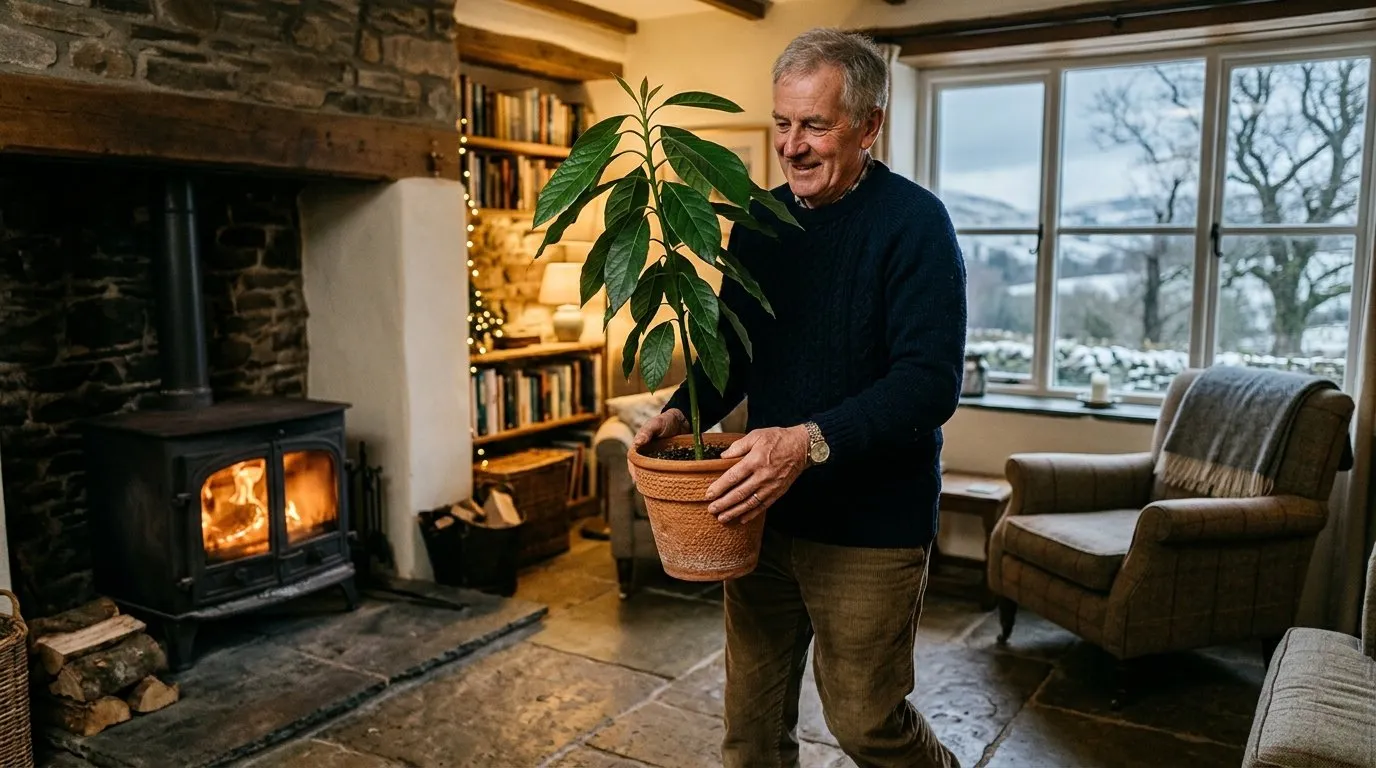
Bring it into a warm, bright room for winter, but keep it a good distance from the stove or radiator.
Common avocado problems and how to fix them
Most problems come down to too little light, too much water or a build-up of salts. Once you know the signs, it’s a tough plant.
Leggy stem with leaves only at the top
A tall, bare stem means too little light and no pinching. Move it to your brightest window and pinch the tip. If it’s already a bare pole, cut it back hard in spring and it should shoot from lower down.
Brown, crispy leaf tips
Avocados are sensitive to salts from hard tap water and too much feed. Use rainwater where you can and go easy on feeding. Every month or two, water the pot through until it runs out of the bottom to rinse out salts. Keep it away from radiators.
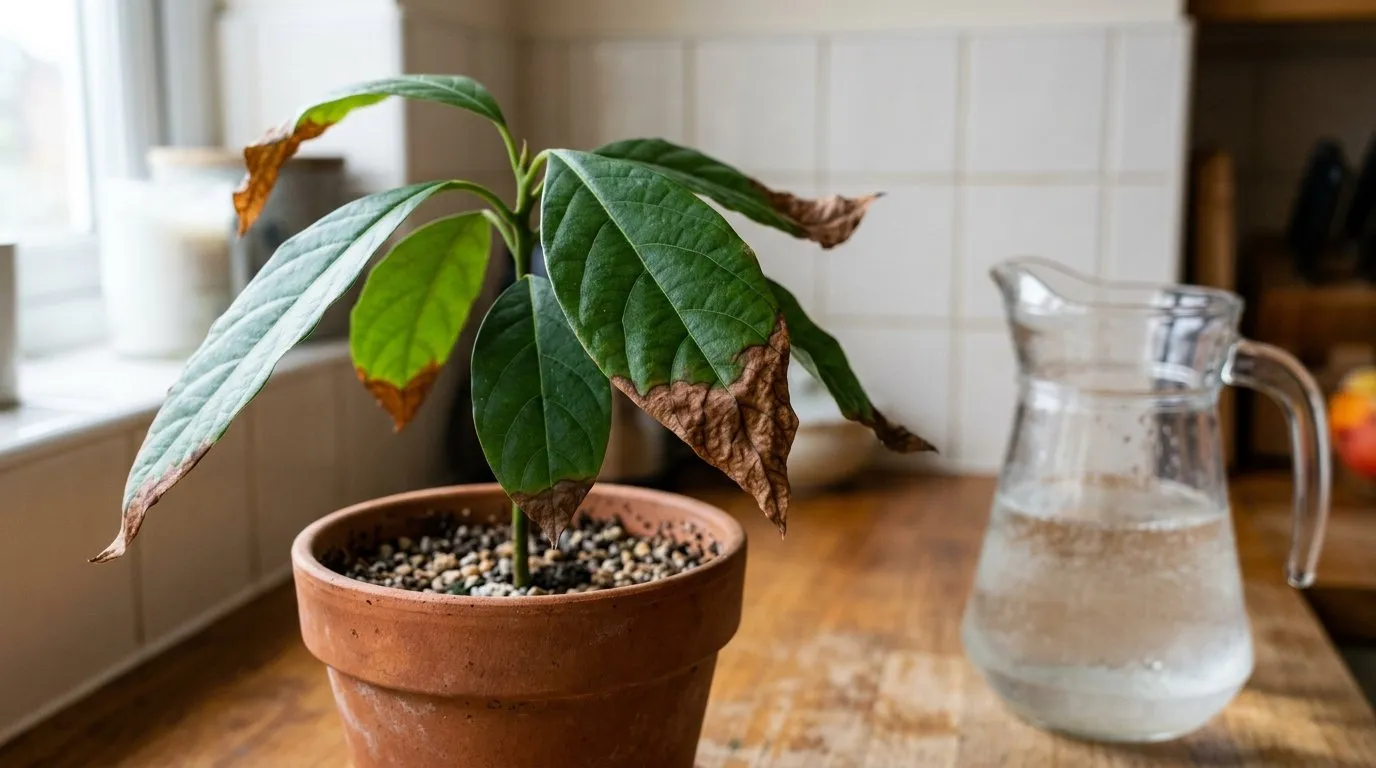
Brown, crispy edges are the most common avocado complaint. Rainwater and a regular flush through usually help.
Yellow leaves that drop
Yellowing lower leaves usually mean too much water and cold roots. Let the compost dry more between waterings and move the plant somewhere warmer. Make sure it never stands in a full saucer.
The stone rots before it sprouts
A stone that goes black and soft has rotted and won’t recover. Stale water, a cold room or leftover flesh are the usual causes. Wash the stone well, change the water often and keep it warm.
If roots are circling the bottom of the pot, see our guide to fixing root-bound houseplants. Got the kitchen windowsill bug? Try growing a pineapple from a shop-bought top next, or browse more ideas in our houseplants section.
Common mistakes when growing avocado from stone
- Upside-down stones. The pointed end goes up. The broad end goes in the water or compost.
- Leaving flesh on the stone. It goes mouldy and can rot the stone.
- Stale water. Change it every few days, or the stone may rot.
- Never pinching. Without it you get a single, floppy stem.
- Overwatering in winter. Let the compost dry on top between waterings from October to March.
Frequently asked questions
How long does an avocado stone take to sprout?
Usually 2-8 weeks for roots, with the shoot following later. Warmth makes the biggest difference. Somewhere at 20-25°C, many stones root within a month. In a cool room it can take much longer, or the stone may rot.
Which way up does an avocado stone go?
Broad flat end down, pointed end up. Roots come out of the wide base, so that end sits in the water or the compost. The shoot comes from the pointed tip, which stays above the surface.
Do you have to use cocktail sticks to grow an avocado?
No, they’re optional. The sticks just hold the stone so its base sits in water. You can plant it straight into moist compost with the top third showing instead. It’s tidier, and the roots never need moving from water to soil.
Will an avocado grown from a stone produce fruit in the UK?
Very rarely, so grow it as a houseplant. Seed-grown avocados take many years to flower, if they ever do, and need more warmth and light than a UK home gives. Enjoy it for its big glossy leaves.
Why has my avocado plant got brown leaf tips?
Usually salts from tap water or feed, dry air or a draught. Water with rainwater where you can, flush the pot through with plenty of water now and then, and keep the plant away from radiators and cold doors.
How tall does an indoor avocado plant grow?
Left alone, it shoots up as one tall, bare stem. Pinching the tip at about 30cm, and again as new shoots grow, keeps it bushy and a manageable size. Cut it back in spring if it gets too tall.
Can you plant a supermarket avocado stone?
Yes, supermarket stones sprout well. Wash off all the flesh and start it in water or compost. It won’t come true to the fruit you ate, but that doesn’t matter for a houseplant.
Is an avocado plant safe for pets?
Not entirely, so keep it out of reach. Avocado leaves, stones and skin contain persin. It’s mildly toxic to cats and dogs and dangerous for pet birds, rabbits and horses. A swallowed stone can also cause a blockage in dogs.
Once your avocado is growing well, browse the best indoor plants for UK homes for easy companions to grow alongside it.
Our team produces practical UK gardening guidance from source research, contributor records and established horticultural practice. Editorial standards are overseen by Matt W.