Key takeaways
- Twist the crown off a ripe pineapple and strip the bottom 2-3cm of leaves
- Let the base dry for 2-3 days before rooting, so it's less likely to rot
- Root it somewhere warm, ideally 20-25°C, never on a cold winter windowsill
- Use a small pot of free-draining, gritty compost and keep it on the dry side
- Fruit, if it comes, takes two to three years and needs steady warmth and bright light
- A ripe apple sealed in a bag with a mature plant can nudge it into flower
You can grow a pineapple from the leafy top of a supermarket fruit. It’s cheap, easy and fun, especially with children. The top roots readily and becomes a striking, spiky houseplant within a few months.
The honest bit is the fruit. Rooting is quick, but a pineapple needs two to three years of warmth and bright light before it might flower. In a UK home that’s never guaranteed. This guide covers preparing and rooting the top, the compost and warmth it needs, and the ripe apple trick that can tip a mature plant into flower.
What is a pineapple plant?
The pineapple, Ananas comosus, is a bromeliad. It’s a relative of the urn-shaped bromeliads and air plants sold as houseplants, not a palm or a cactus.
It grows as a rosette of stiff, arching, grey-green leaves. On many plants the leaf edges carry small spines, so handle older plants with care. Like other bromeliads, it copes with dry spells but hates cold, wet compost.
The leafy top you twist off a pineapple is a living growing point. Give it warmth and light and it simply carries on growing.
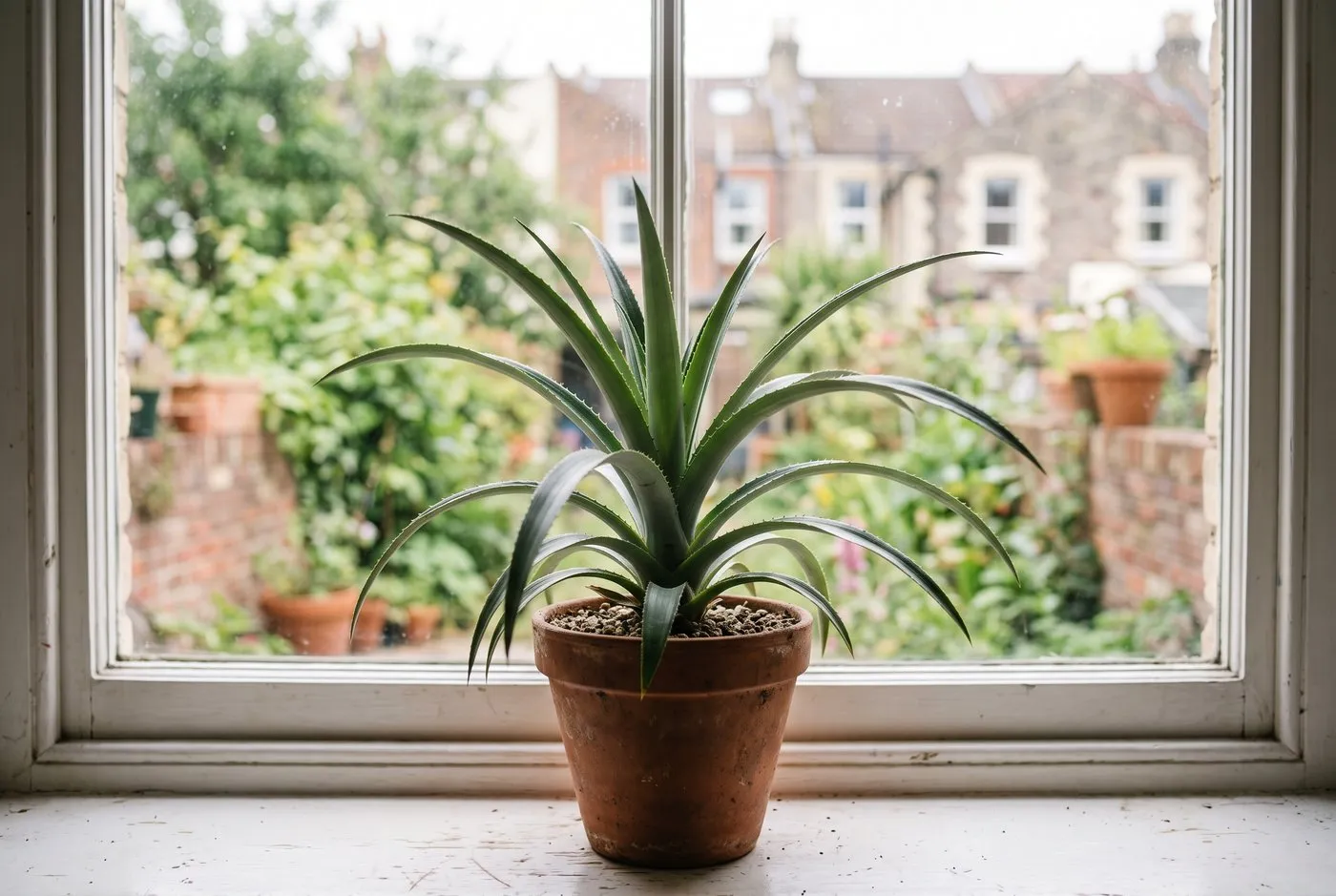
A few months after rooting, a pineapple top makes a bold, spiky houseplant, fruit or no fruit.
How to twist off and prepare the crown
Pick a ripe pineapple with fresh green leaves. Avoid any with brown, dried-out or soft leaves in the centre, as the growing point may be dead.
- Twist, don’t cut. Hold the leaves in one hand and the fruit in the other, then twist firmly. The top comes away with a short plug of core.
- Strip the lower leaves. Peel off the bottom 2-3cm of small leaves to show bare stem. The little brown bumps on it are where roots will grow.
- Clean off any fruit. Leftover flesh goes mushy and rots the base.
- Let it dry. Stand the top somewhere dry and airy, out of direct sun, for 2-3 days so the base seals over.
Drying the base is the step most people skip, and it makes rotting much less likely.
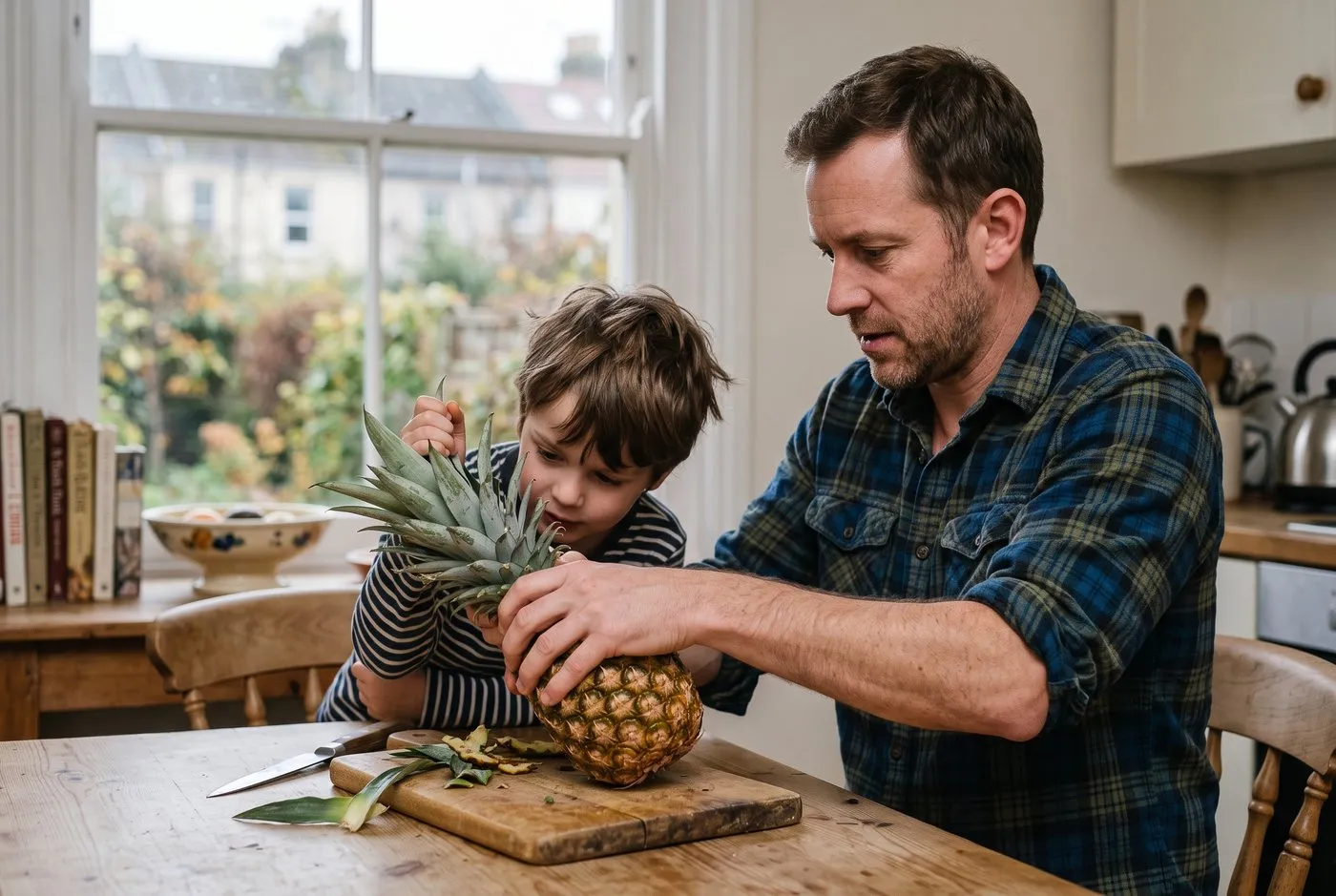
Twisting off the top is a good job for children. Hold the leaves, hold the fruit, and twist.
Rooting a pineapple top in water or compost
Both methods work. Warmth matters far more than which one you choose.
In water: rest the top on a jar, using a few cocktail sticks if needed, so the bare stem sits in 2-3cm of water and the leaves stay dry. Change the water every few days. White roots usually appear within a few weeks to two months.
In compost: push the dried top into a small pot of gritty compost, water once, then keep it barely moist. You can’t see the roots, but they’re tougher than water roots and don’t need moving later. A gentle tug that meets resistance means it has rooted.
| Method | Good for | Watch out for |
|---|---|---|
| Water, somewhere warm | Watching roots grow, children | Change the water every few days |
| Gritty compost, somewhere warm | The sturdiest young plants | Keep it barely moist, not wet |
| Either, on a cold windowsill | Not recommended | Tops often rot before they root |
The best spot is warm and steady, around 20-25°C. A heated propagator is ideal. A warm shelf works too, as long as it doesn’t get cold at night.
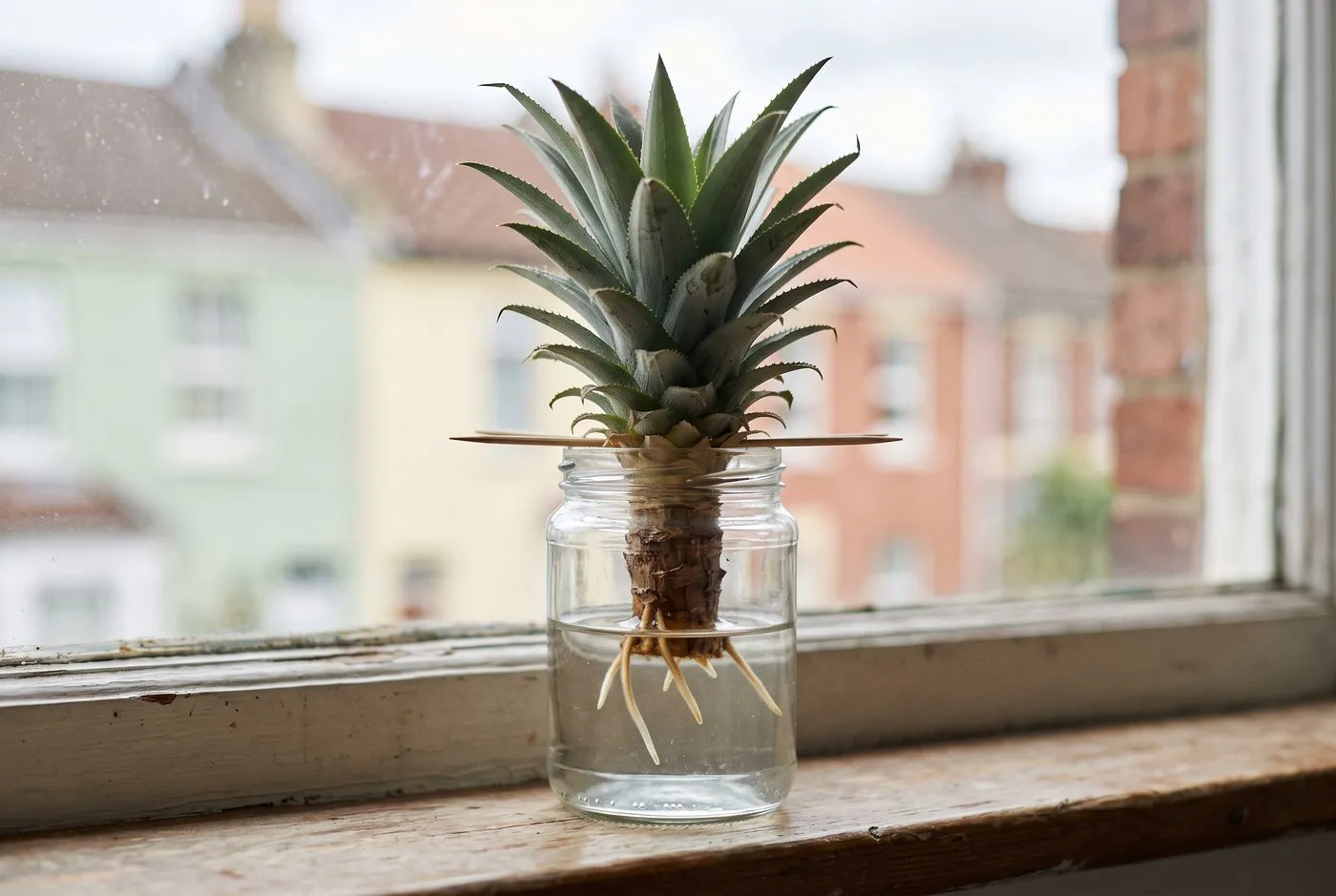
In water, the bare stem sits just below the surface and the leaves stay dry. Roots appear at the stripped base.
Potting on into the right compost
When water roots are about 4-5cm long, pot the top up. Don’t leave it in water much longer, as soft water roots struggle in soil.
Use a small pot, around 1 litre, of two parts peat-free multipurpose compost to one part grit or perlite. Set the top so the base of the leaves sits at compost level, not buried. Water it in, then let the surface dry before watering again.
As a bromeliad, it can also take water in through the centre of the leaves, so an occasional splash there is fine. Move it into a pot one size bigger when roots fill the old one. Our guide to repotting houseplants covers the basics.
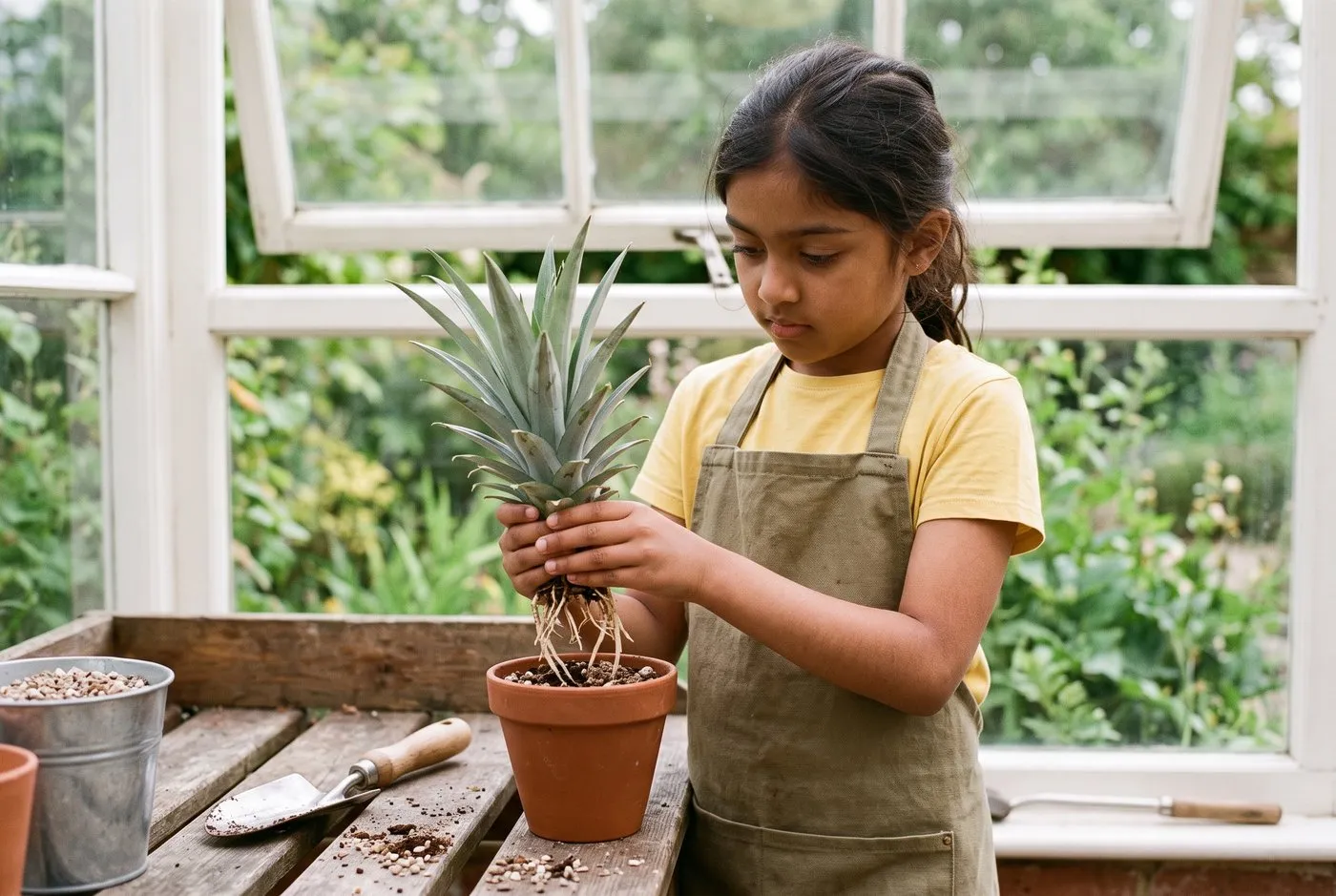
Pot it into a small pot of gritty compost. A big pot of wet compost is the quickest way to rot it.
What warmth and light does a pineapple need?
Pineapples want warmth all year, ideally 18°C or more, and as much bright light as you can give. Growth stalls in the cold, and a chilly, wet plant rots.
A south or west-facing windowsill is the minimum. A heated conservatory or a warm greenhouse is better, because it gives light and warmth together. Bring plants in from any summer spot outside well before cold nights in autumn.
Winter is the hard part in most homes. A windowsill can feel warm by day but get very cold at night behind a closed curtain. Move the plant into the room on cold nights. Our guide to overwintering tender plants has more on keeping them cosy, and conservatory houseplants covers plants that like the same bright, warm spot.
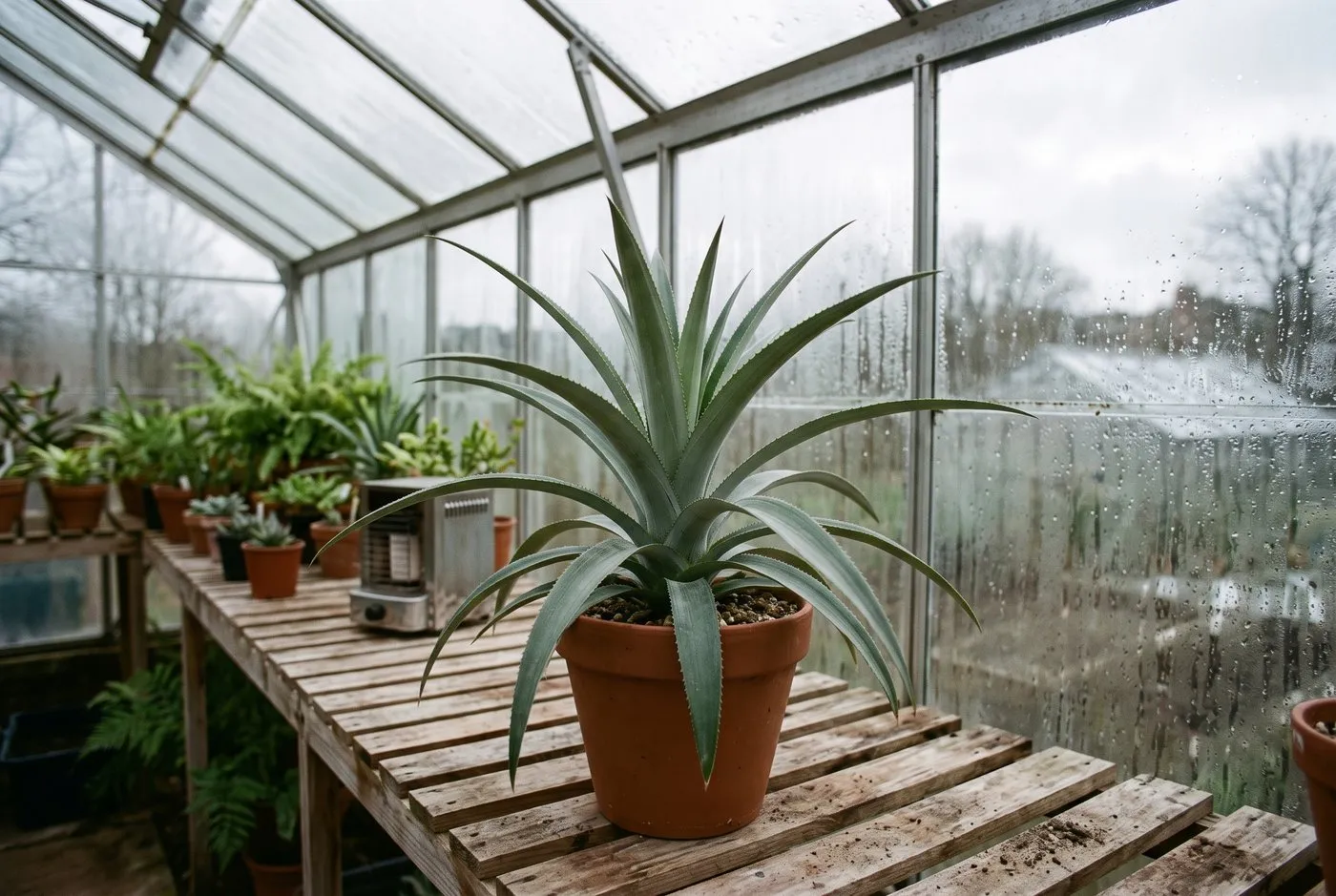
A heated greenhouse or conservatory gives the warmth and light a pineapple needs to grow big enough to flower.
From crown to fruit: what to expect
A pineapple grows in four stages, and the wait is mostly about size.
- Rooting. The dried top grows roots somewhere warm. This is where most attempts fail, usually from cold and wet.
- Building leaves. New leaves grow from the centre through the first year. Bright light and a monthly summer feed help it bulk up.
- Reaching full size. Over the next year or two the rosette gets big and full. Only a large plant can flower.
- Flowering and fruit. A mature plant sends up a flower head from the centre. Small purple-blue flowers fuse into a fruit, which then takes several months to ripen.
Most people give up too soon. A young plant can’t flower however warm you keep it. Expect a smaller fruit than a shop pineapple, but it’s the real thing.
The ripe apple trick for flowering
A ripe apple gives off ethylene, a natural gas that helps fruit ripen. Sealed in with a mature pineapple, it can trigger flowering.
Only try this with a big, healthy plant, usually at least two years old. Put the plant and one or two ripe apples in a large clear bag for about a week. Keep it out of direct sun so it doesn’t overheat, and open the bag briefly each day to let air in. Then take the bag off.
If it works, a flower head appears in the centre of the rosette within a couple of months. It doesn’t always work, so you can try again later.
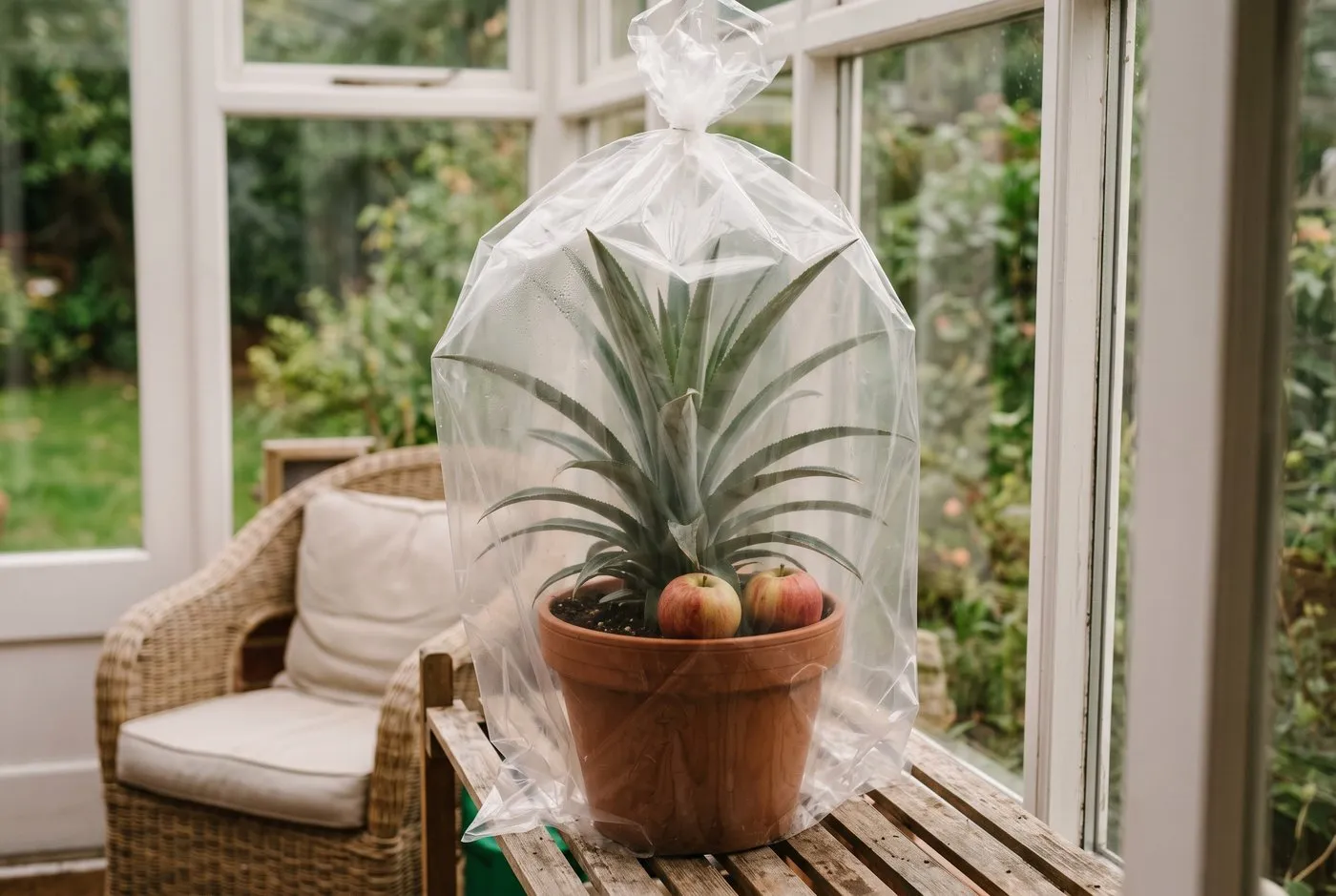
A mature plant and a couple of ripe apples sealed in a bag for a week. The gas from the apples can trigger flowering.
Gardener’s tip: A fruiting plant often grows small side shoots at its base. Twist them off when they’re a decent size and root them like a top. They’re often quicker to reach flowering size than a crown.
Pineapple care through the year
Growth is slow in winter and fastest from late spring. These timings suit a plant in a warm UK home or conservatory.
| Month | Task |
|---|---|
| January to February | Keep it warm and bright. Water only when the compost is dry on top. No feed |
| March | Growth picks up. Water a little more. A good time to root a new top somewhere warm |
| April to May | Start a monthly feed with a balanced liquid feed at half strength. Pot on if roots fill the pot |
| June to August | Main growing season. Water when the surface dries and feed monthly. Try the apple trick on mature plants |
| September | Ease off feeding as the light drops |
| October | Bring plants in from outside before cold nights. Water less |
| November to December | Keep warm, bright and on the dry side. No feed. Keep it off cold glass at night |
Why do pineapple tops rot?
Nearly always cold plus wet. A cold top can’t take up water or fight off rot, and a wet base gives the rot its chance. The base turns brown and mushy and the top collapses.
UK windowsills are the classic trap. The room may feel warm, but the sill behind a curtain gets cold on winter nights. Dry the base first, use fresh water or free-draining compost, and root the top somewhere steadily warm.
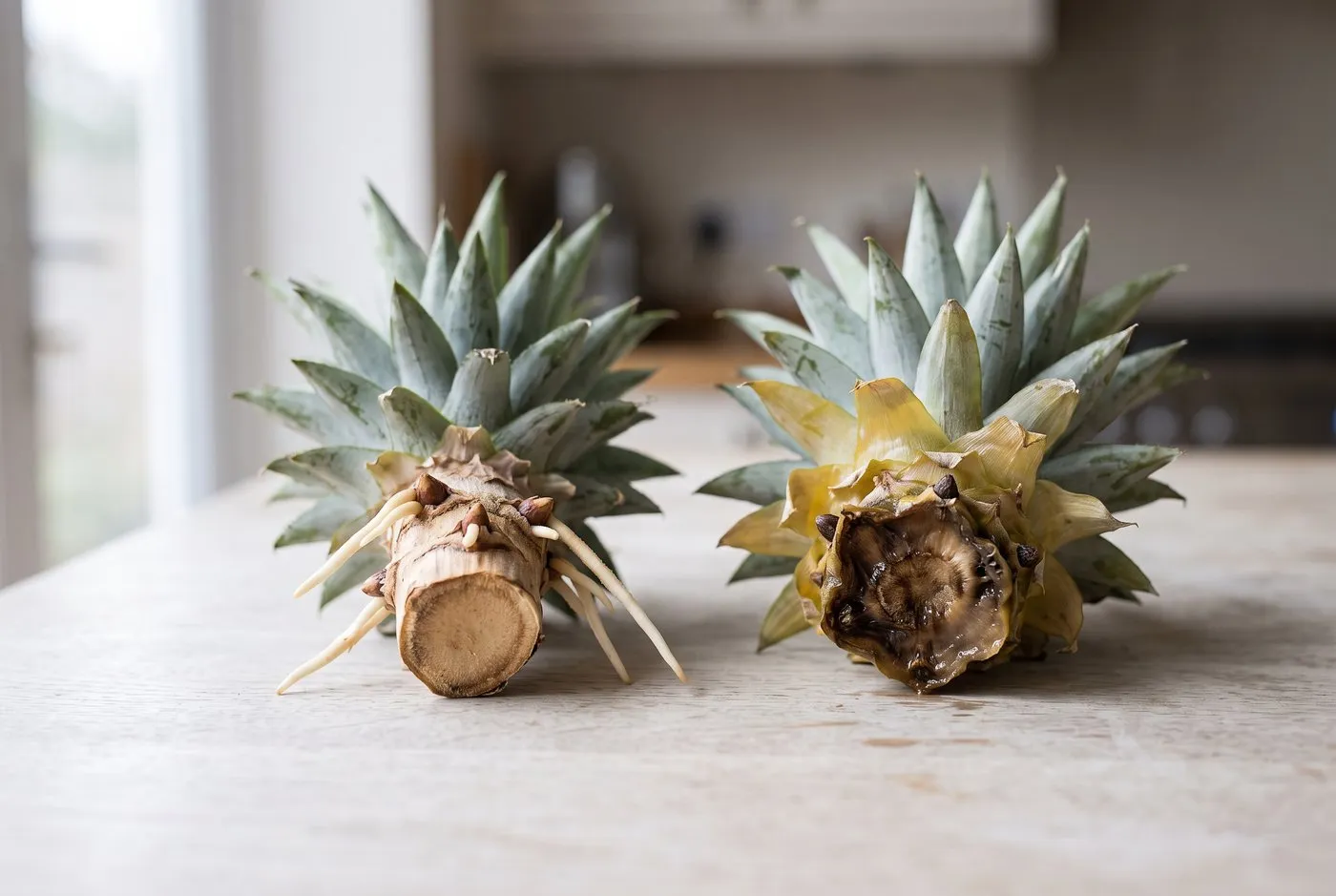
Left, a healthy base with clean white roots. Right, a top that rotted in cold, wet conditions.
Common mistakes when growing a pineapple from a top
- Not drying the base. A fresh, wet cut rots fast. Give it 2-3 days first.
- Rooting on a cold windowsill. Most tops rot rather than root in the cold. Find a warm, steady spot.
- Leaving fruit on the base. Scrape off every bit of flesh before drying.
- Using a huge pot. A small root system in a big pot of wet compost stays soggy. Start small and move up a size at a time.
- Expecting fruit in year one. It needs to be big before it can flower. Be patient.
A fun project, not a fruit farm
Grow a pineapple top for the plant itself, and treat fruit as a bonus. If your top roots and grows, you’ve already succeeded.
It’s a great way to get children into growing, alongside other ideas in our list of kitchen scraps you can regrow. For another warm-windowsill crop from a supermarket start, try growing ginger at home. You’ll find more ideas in our houseplants section.
Frequently asked questions
Can you grow a pineapple from the top in the UK?
Yes, rooting the top is easy on a warm windowsill. Getting fruit is the hard part. It takes two to three years of steady warmth and bright light, which most UK homes struggle to give.
How long does it take to grow a pineapple from a top?
Roots usually form within a couple of months, but fruit takes two to three years. After rooting, the plant slowly builds up its rosette of leaves. Only a big, mature plant can flower, and the fruit then takes several months to ripen.
Do you root a pineapple top in water or soil?
Both work, and gritty compost is a little more reliable. Water lets you watch the roots appear, which children love. Compost avoids moving soft water roots into soil later.
Why is my pineapple top rotting instead of rooting?
It’s usually too cold, too wet, or both. Let the cut base dry for 2-3 days first. Keep it somewhere warm, change the water every few days, and keep it off cold glass at night.
How do you get a pineapple plant to fruit?
Grow it big first, then try the ripe apple trick. Seal a mature plant in a clear bag with a ripe apple or two for about a week. The apple gives off ethylene gas, which can trigger flowering.
How big does a pineapple plant grow indoors?
A mature plant can be about a metre across. The long, stiff leaves arch out from the centre, so it needs plenty of room. That’s one reason a conservatory or greenhouse suits it better than a windowsill.
What compost do pineapple plants need?
A free-draining, gritty mix that never stays wet. Two parts peat-free multipurpose compost to one part grit or perlite works well. Pineapples are bromeliads and hate soggy roots.
Now your pineapple is on the go, try growing an avocado from a stone for another fun kitchen windowsill project.
Our team produces practical UK gardening guidance from source research, contributor records and established horticultural practice. Editorial standards are overseen by Matt W.