Key takeaways
- Feed from about March to September, when plants are actively growing
- Use the dose on the label, every two to four weeks; more is not better
- Leafy plants suit a balanced or nitrogen-rich feed; flowering plants a high-potash one
- Cacti, succulents and orchids need their own weaker feeds
- Stop or cut right back in winter, unless a plant is flowering or growing strongly
- A white crust on the compost or brown leaf tips can mean too much feed
Feed most houseplants with a liquid houseplant feed every two to four weeks from spring to late summer, at the dose on the label. Stop, or cut right back, in winter. That simple rhythm keeps the vast majority of indoor plants happy.
The bigger risk indoors is usually too much feed, not too little. This guide covers when to start and stop, which feed suits which plant, how much to use and how to tell if you’ve overdone it. For garden borders, veg and pots outside, see the guide to feeding garden plants instead.
When to feed houseplants
Feed while plants are actively growing, roughly March to September. Days are longer and brighter, and you’ll see new leaves unfurling.
- Spring: start with a weak feed as new growth appears, then build up to the label dose.
- Summer: feed every two to four weeks.
- Autumn: slow down through September, then stop.
- Winter: most plants barely grow, so they can’t use the food. Leave them be.
Your home matters more than the date. A plant in a bright, warm room may keep growing into autumn. One in a cool, shady room may stop much sooner. Watch the plant: new growth means it’s ready for food.
Which feed for which houseplant?
Most liquid feeds show three numbers on the bottle, such as 4-4-4. These are NPK: nitrogen for leaves, phosphorus for roots, and potassium (potash) for flowers and fruit. The guide to NPK and fertiliser numbers explains them in more detail.
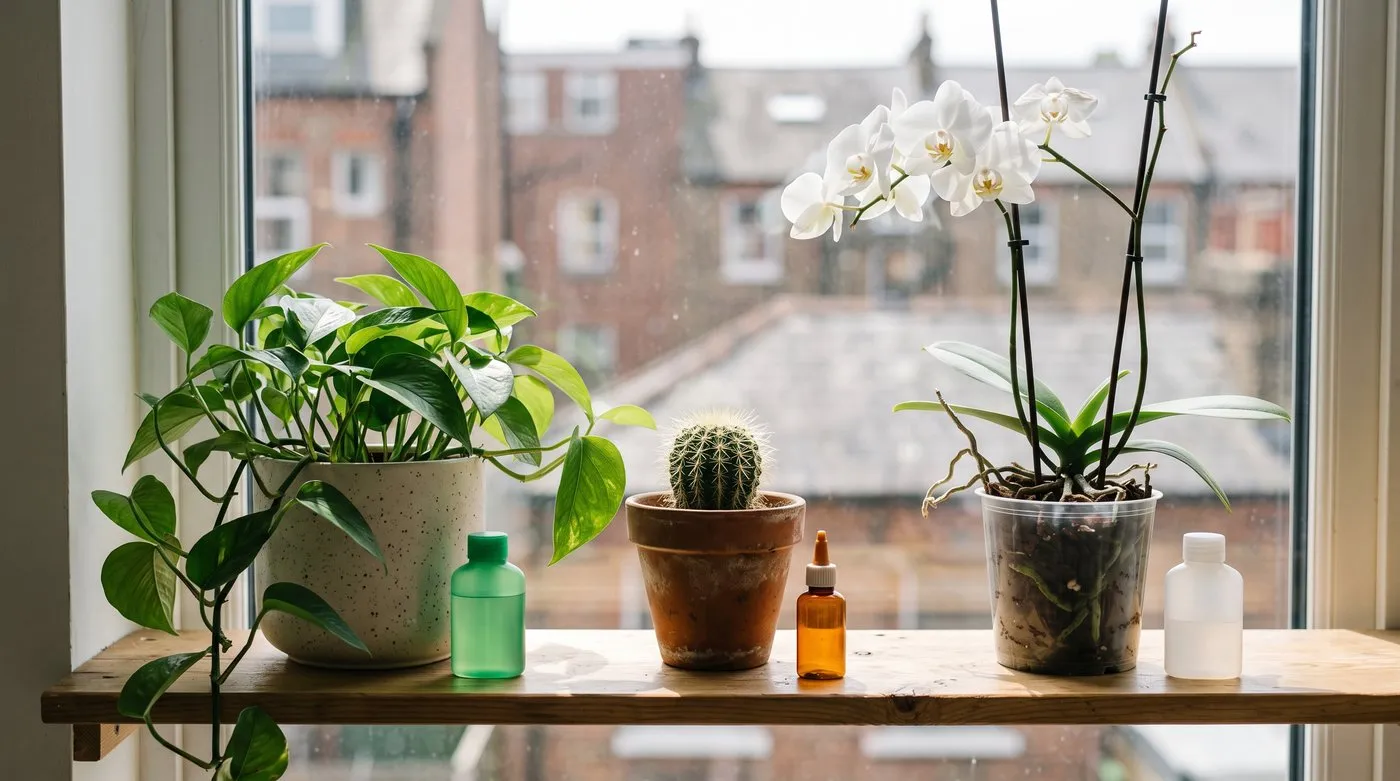
Leafy plants, cacti and orchids all want different feeds, so match the bottle to the plant.
| Plant type | Examples | Feed to use | How often in spring and summer |
|---|---|---|---|
| Leafy plants | Monstera, pothos, spider plant, ferns | Balanced or high-nitrogen houseplant feed | Every 2-4 weeks |
| Flowering plants | Peace lily, anthurium, African violet | High-potash feed once buds appear | Every 2-4 weeks |
| Cacti and succulents | Jade plant, aloe, echeveria | Cactus feed, or weak balanced feed | Monthly or less |
| Orchids | Moth orchid (Phalaenopsis) | Orchid feed | As the label says, often every few waterings |
| Slow, tough plants | Snake plant, ZZ plant | Balanced feed at half strength | A few times a year |
A general houseplant feed is fine for a mixed collection. Swap to a high-potash feed, such as tomato feed diluted as directed, when flowering plants start to bud.
The orchid care guide and succulent care guide cover those groups in more depth.
How much feed to use
Use the dose on the label. Measure it with the cap or a measuring spoon rather than glugging it in. Doubling the dose doesn’t double the growth. It just scorches the roots.
Water first. Feeding bone-dry compost can burn the roots. If the compost is very dry, water with plain water, then feed next time.
Go gentler on small and sensitive plants. Use half strength for small pots, young plants and fussy growers such as calatheas, ferns and African violets.
Plants with slow-release granules or fresh compost need little or no liquid feed for a while.

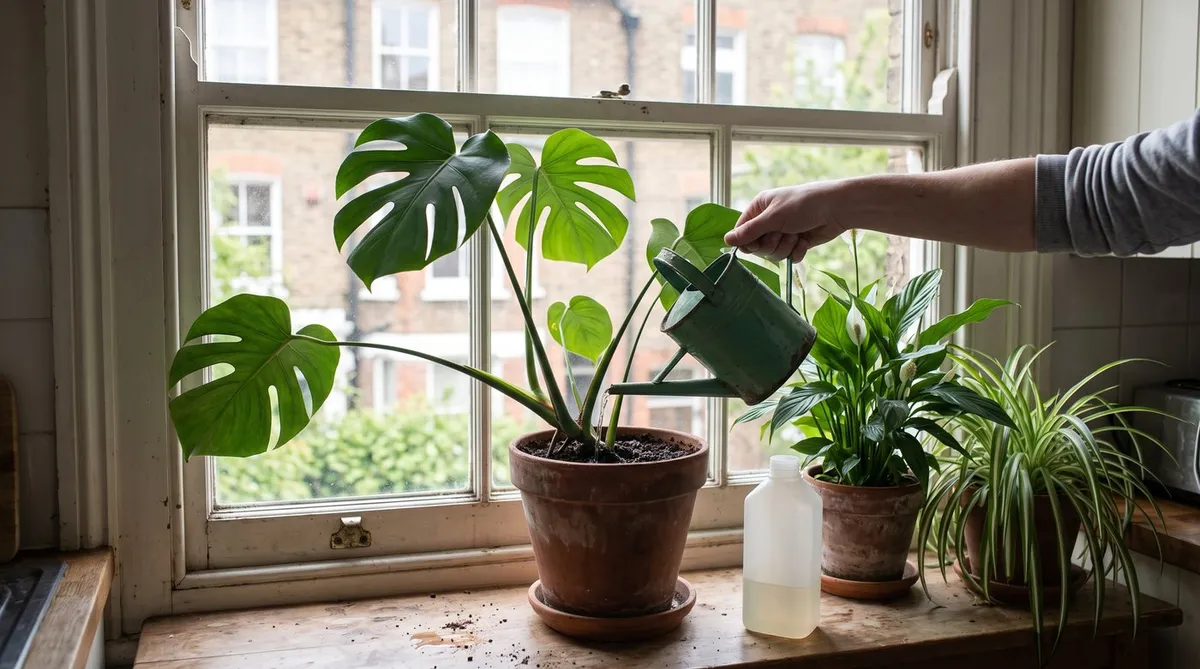
A feed every few weeks through spring and summer keeps big leafy plants such as monstera growing strongly.
How to tell if a houseplant needs feeding
Signs a plant is hungry:
- Pale or yellowish new leaves
- Slow growth in spring and summer, despite good light
- New leaves smaller than the old ones
- Older leaves yellowing first
- Flowering plants that won’t flower
Before you reach for the feed, rule out the usual suspects. Too little light, overwatering and a pot packed with roots all cause similar symptoms. If a plant is root-bound, a bigger pot helps more than food. The guide to fixing root-bound houseplants shows what to look for.
Signs of over-feeding and how to fix it
Signs of too much feed:
- Brown, crispy leaf tips and edges
- A white or yellowish crust on the compost or pot rim
- Wilting even though the compost is damp
- Sudden leaf drop soon after feeding

A white crust on the compost is a tell-tale sign of salt build-up from too much feed.
To fix it:
- Scrape off the top centimetre of crusty compost.
- Stand the pot in a sink and run plenty of plain water through it, letting it drain away fully.
- Skip the next couple of feeds.
- Trim off brown tips with clean scissors if you like. They won’t turn green again.
In hard-water areas, a plain-water flush every few months helps whether or not you feed much. Calatheas and ferns prefer rainwater or filtered water.

A brown, crispy tip like the one on the left can mean too much feed. The healthy leaf on the right shows what you’re aiming for.
Feeding flowering houseplants
Many flowering houseplants spend most of the year as leafy plants. Feed them like leafy plants until the first buds appear. Then switch to a high-potash feed until flowering is over.
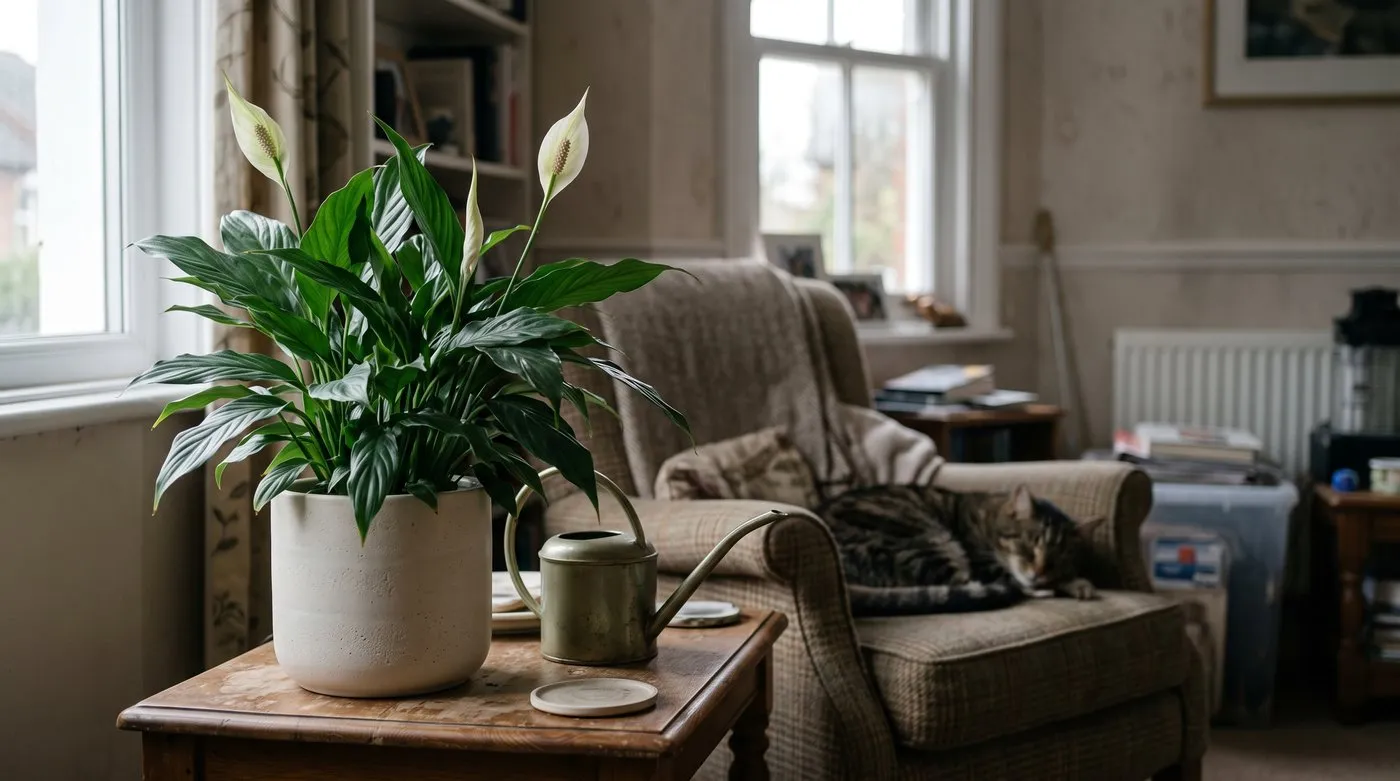
Once the first flowers appear, switch a peace lily to a high-potash feed.
Winter-flowering plants such as Christmas cactus can have an occasional weak high-potash feed while they’re in bud and flower. The Christmas cactus care guide covers the rest of their year. A peace lily that won’t flower is more often short of light than food. The peace lily guide explains why.
Common houseplant feeding mistakes
Feeding all winter. Most plants can’t use it, so salts build up. Stop in autumn and start again in spring.
Doubling the dose. It scorches roots. Stick to the label.
Feeding a struggling plant. A plant that’s sick, overwatered or just repotted can’t use extra food. Fix the cause first.
Feeding straight after repotting. Fresh compost has enough food for the first month or two.
Using garden granules indoors. Many garden feeds are too strong or smelly for pots indoors. Use a feed made for houseplants.
Houseplant feeding calendar
| Month | Leafy plants | Flowering plants | Cacti and succulents |
|---|---|---|---|
| December to February | No feed | Weak potash feed if in flower | No feed |
| March | First weak feed as growth starts | First weak feed | No feed |
| April to August | Every 2-4 weeks | High-potash feed once in bud | Cactus feed monthly or less |
| September | Slow down, last feed | Slow down | Last feed |
| October to November | No feed | Feed only if in bud or flower | No feed |
Frequently asked questions
How often should I feed houseplants?
Every two to four weeks in spring and summer. Follow the dose on the label. Fast growers in bright spots can have it more often; slow growers and plants in shade less.
What is the best feed for houseplants?
A liquid houseplant feed suits most plants. Choose a balanced or nitrogen-rich one for leafy plants and a high-potash feed for flowering plants. Cacti, succulents and orchids have their own specialist feeds.
Why are the tips of my houseplant leaves turning brown?
Often too much feed, or dry air. A white crust on the compost points to salt build-up from feeding. Flush the pot with plenty of plain water and skip the next couple of feeds.
Can I feed houseplants in winter?
Usually not. Most houseplants barely grow in winter, so they can’t use the feed. Plants in flower, such as Christmas cactus, can have an occasional weak feed.
Should I feed a houseplant I just repotted?
Not straight away. Fresh compost contains enough food for the first month or two. Start feeding again once you see new growth.
How do I know if my houseplant needs feeding?
Pale new leaves and slow growth in spring and summer are the usual signs. It’s most likely in a plant that hasn’t been repotted or fed for a year. Rule out too little light and overwatering first.
Now you know when and how much to feed, read the guide to repotting houseplants to give hungry plants fresh compost, or browse more houseplant guides.
Our team produces practical UK gardening guidance from source research, contributor records and established horticultural practice. Editorial standards are overseen by Matt W.