Key takeaways
- NPK stands for nitrogen, phosphorus and potassium, always in that order
- Read the numbers as leaves, roots, fruit
- A 7-7-7 feed is balanced and suits most veg beds and borders at planting
- Switch tomatoes and other fruiting crops to a high-potassium feed when they flower
- Follow the rate on the pack, as too much feed causes more problems than too little
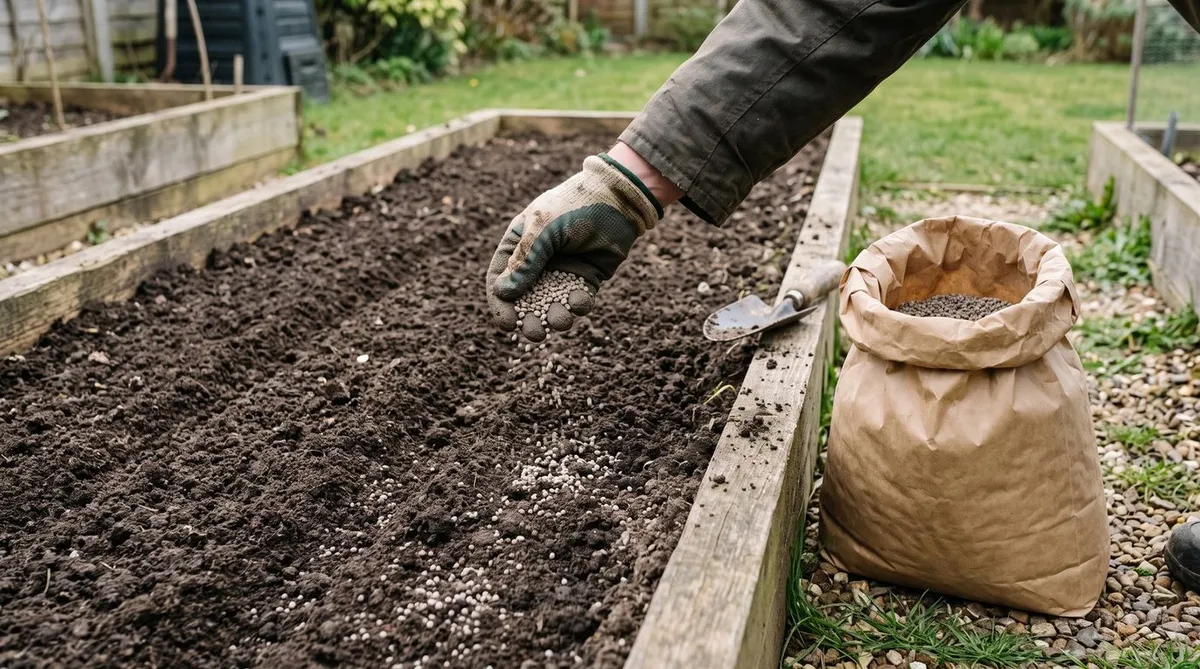
NPK is the three-number code on every fertiliser bag in the UK. It tells you what the feed will do for your plants. The numbers stand for nitrogen, phosphorus and potassium, the three nutrients plants need most.
Here’s what each number means, what each nutrient does, and how to pick the right feed for your veg, lawn or borders.
The simple rule is: nitrogen for leaves, phosphorus for roots and flowers, potassium for fruit and ripening. Everything else is detail.
What the three numbers mean
A bag marked 7-7-7 has equal parts of:
- Nitrogen (N)
- Phosphorus (P), listed on the pack as phosphate
- Potassium (K), listed on the pack as potash
Each number is a percentage, so 7-7-7 is 7% of each. The rest of the bag is filler that helps you spread it evenly.
A high-nitrogen lawn feed might read 24-0-0: lots of nitrogen and nothing else. A tomato feed might read around 4-3-8: a little nitrogen and phosphorus, and plenty of potassium.
The numbers are always in the same order, N then P then K. Read them as “leaves, roots, fruit” from left to right and any bag makes sense.
Our soil testing and pH adjustment guide shows how to find out what your soil already has.
What each nutrient does in the plant
Nitrogen (N) - the leaf builder
Nitrogen makes plants green and leafy. Plants with enough nitrogen are dark green, grow fast and have big leaves.
Signs of too little nitrogen:
- Older, lower leaves turn pale yellow first
- The whole plant looks small and stunted
- Growth slows right down in spring
 A tomato leaf short of nitrogen (left) next to a healthy one. Pale yellow on older leaves first is the giveaway.
Signs of too much nitrogen:
- Lush, soft growth that flops or snaps easily
- Fewer flowers and fruit, as the plant puts its energy into leaves
- More aphids and slugs, which love soft growth
Crops that like plenty of nitrogen: lettuce, spinach, kale, chard, cabbages, lawns in spring and leafy herbs like parsley and coriander.
Where to get nitrogen:
- Sulphate of ammonia, which is quick-acting and makes soil a little more acid
- Chicken manure pellets, which are organic and slow
- Grass clippings, used as a thin mulch
- Comfrey or nettle leaves brewed into a liquid feed
Phosphorus (P) - the root and flower builder
Phosphorus helps roots grow and plants flower and set seed. Plants with enough phosphorus have strong roots and flower well.
Signs of too little phosphorus:
- Leaves turn purplish, especially underneath
- Stunted growth even with enough water
- Poor flowers and fruit
- Weak, shallow roots
Too much phosphorus can stop plants taking up other nutrients, so don’t add it unless you need to.
Crops that like extra phosphorus: root crops like carrots, parsnips and beetroot, bulbs at planting, new fruit trees and flowering annuals.
Where to get phosphorus:
- Bone meal, which is organic, slow and great at planting
- Superphosphate, which is quick-acting
- Rock phosphate, which is very slow and organic
Potassium (K) - the fruit and ripening driver
Potassium helps plants flower, fruit and ripen, and keeps them tough. It helps make sweet fruit and helps plants cope with disease and cold.
Signs of too little potassium:
- Leaf edges turn yellow then brown and crispy, often on older leaves
- Weak stems that flop in the wind
- Fewer, smaller fruit
- More disease, especially fungal problems
Too much potassium can stop plants taking up magnesium, which shows as yellowing between the leaf veins.
Crops that like plenty of potassium: tomatoes, peppers, courgettes, cucumbers, all fruit, dahlias, chrysanthemums and lawns in autumn.
Where to get potassium:
- Sulphate of potash, which is quick-acting
- Wood ash from untreated wood, used sparingly
- Comfrey liquid feed, free if you grow comfrey
- Tomato feed, a handy liquid for fruiting crops
Our best fertilisers UK gardens guide compares the main products.
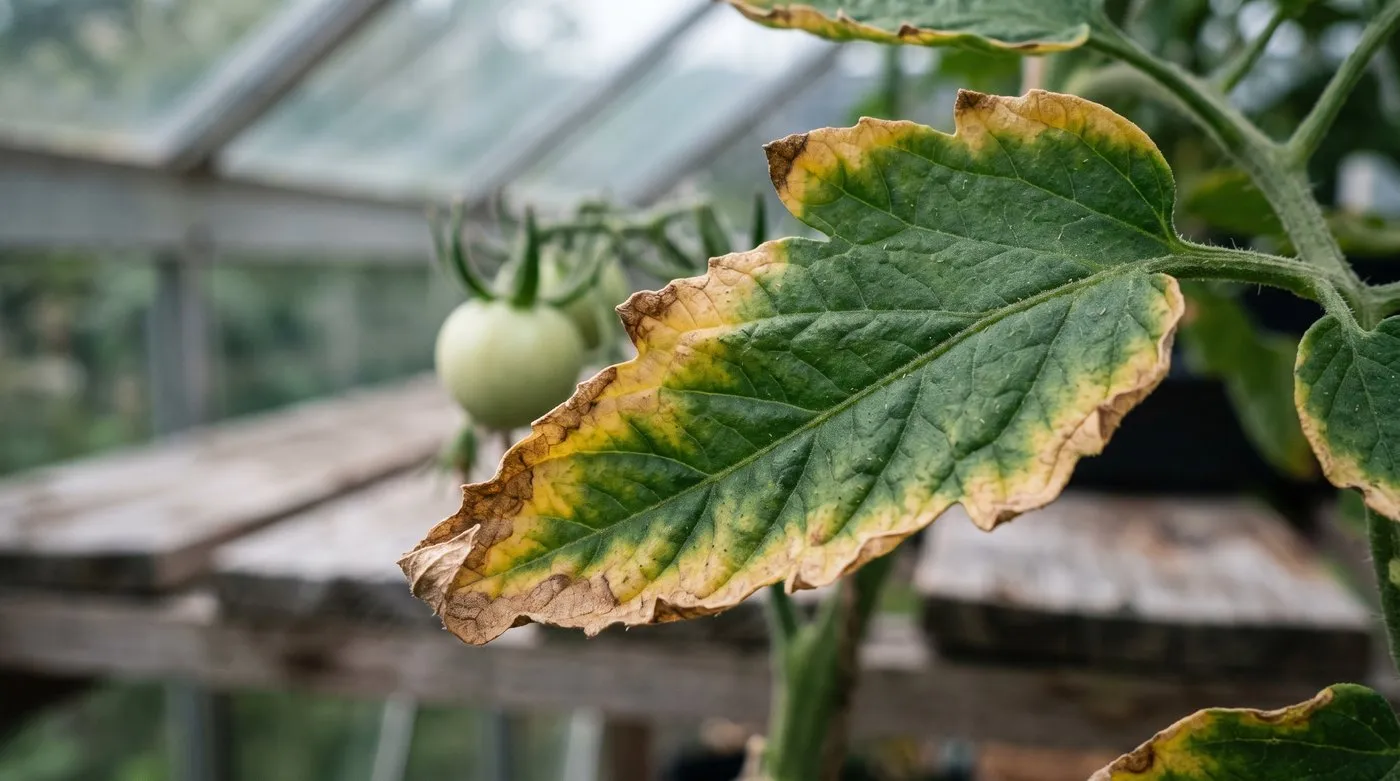
Crispy brown edges on older leaves often mean the plant is short of potassium. A high-potash feed helps fruiting crops more than extra nitrogen.
Reading a UK fertiliser bag
These are the NPK numbers you’ll see most often at the garden centre:
| NPK | What it is | Best for |
|---|---|---|
| 7-7-7 | Balanced general feed | Veg beds and mixed borders |
| 6-3-3 | Leans to nitrogen | Lawns in late spring and summer |
| 24-0-0 | Straight nitrogen | A spring lawn boost, leafy crops |
| 15-5-5 | High nitrogen | Lawns in early spring, leafy crops |
| 5-5-5 | Gentle balanced feed | Light feeding, new plants |
| 4-3-8 | High potassium (tomato feed) | Tomatoes, peppers, fruit, flowers in bud |
| 0-0-50 | Straight potash | A potassium boost mid-season |
| 4-0-14 | Autumn lawn feed | Lawns in September and October |
| Bone meal | High phosphorus, slow | Planting bulbs and fruit trees |
| Chicken manure pellets | Gentle, organic | General feeding |
Once you can read the numbers as “this one’s for leaves” or “this one’s for fruit”, you can ignore the marketing on the front of the bag.
 Measuring out liquid tomato feed. The extra potassium helps the plants keep fruiting all summer.
Inorganic vs organic NPK sources
You can choose chemical (inorganic) or natural (organic) feeds. Both give plants the same nutrients, but they work at different speeds.
Chemical feeds:
- Quick, and plants can use them straight away
- Exact numbers, so easy to dose
- Cheaper for the amount of nutrient
- Do nothing for the soil itself
- Can wash out into streams and rivers if overused
Natural feeds:
- Slow, as soil life has to break them down first
- Numbers vary from bag to bag
- Cost more for the amount of nutrient
- Improve the soil and feed the worms
- Less likely to wash away
- Slow to fix a plant that’s struggling right now
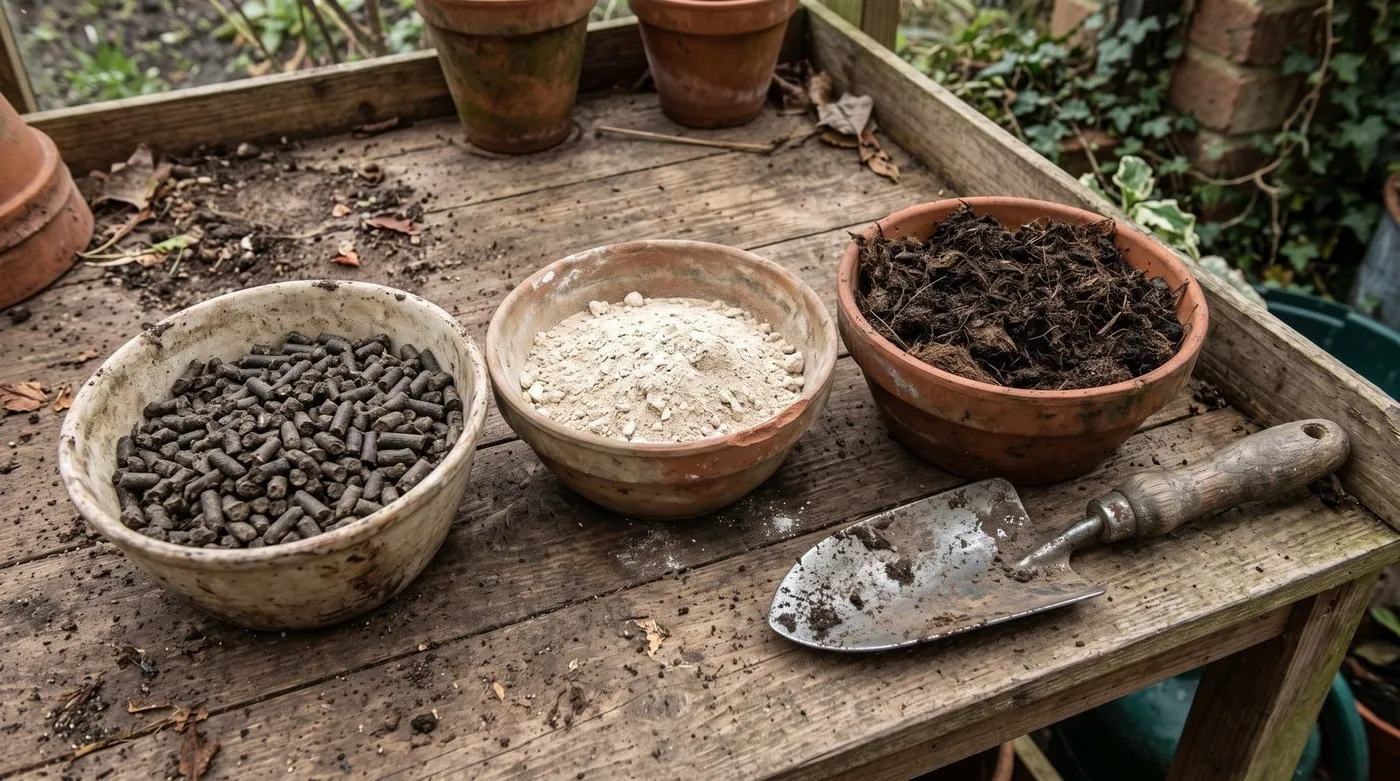 Popular natural feeds side by side. They work slowly, but your soil gets better year after year.
Most gardeners use a bit of both. Manure and compost build the soil, and a liquid feed gives hungry crops a boost when they need it most.
NPK ratios by crop
The right feed depends on the crop and how far along it is. Here’s a simple guide.
Tomatoes, peppers, aubergines, cucumbers, courgettes
- At planting: rake a balanced feed like 7-7-7 into the soil
- First few weeks: a weekly balanced liquid feed at half strength
- From the first flowers: switch to tomato feed at full strength every week
- Until the end of cropping: keep up the weekly tomato feed
Brassicas (cabbage, broccoli, kale, sprouts, cauliflower)
- At planting: a balanced or nitrogen-rich feed
- Mid-season: top-dress with a nitrogen-rich feed, at the rate on the pack
- No potassium boost needed, as these are leaf crops
Leafy salads (lettuce, spinach, chard, rocket, pak choi)
- At sowing: a light balanced feed in the seed bed
- While growing: a weekly half-strength nitrogen-rich liquid feed
- They want nitrogen all the way through
Root crops (carrots, parsnips, beetroot, swede, turnip)
- At sowing: little or no nitrogen
- Mid-season: a balanced feed only if growth is slow
- Go easy on nitrogen, as it gives you big leafy tops and smaller roots
Potatoes
- At planting: a balanced feed such as 6-6-6
- First earthing up: top-dress with chicken manure pellets or a nitrogen feed
- As tubers form: a high-potassium feed
Fruit trees and bushes
- March: a balanced feed scattered under the outer branches
- April, before flowering: a high-potassium feed
- September, after picking: a little potash to toughen the wood for winter
Lawns
- Spring (March-April): a high-nitrogen feed to green it up
- Summer (June-August): a nitrogen-leaning summer feed every 4-6 weeks
- Autumn (September-October): an autumn feed with more potassium
- Winter: no feeding
Flowering annuals and perennials
- At planting: a balanced feed
- Before flowering: a high-potassium feed such as tomato or rose feed
- While flowering: keep up the high-potassium feed every 2-3 weeks
Here’s what a well-fed bed looks like:
 A happy midsummer veg bed. The cabbages are dark green and the runner beans are covered in pods.
How much to apply
The label is your best guide. Too much feed causes far more problems than too little.
Rough guides for common products:
| Product | Typical amount | When |
|---|---|---|
| Balanced granules (7-7-7) | 70-100g per square metre | Spring, raked into the surface |
| Chicken manure pellets | 100-150g per square metre | Spring or autumn |
| Bone meal | A small handful per planting hole | At planting |
| Tomato feed (liquid) | As the pack says | Weekly when fruiting |
| Sulphate of ammonia | 20-30g per square metre | As a top-dressing in the growing season |
| Sulphate of potash | 30-50g per square metre | Once a season |
| Liquid seaweed | As the pack says | Weekly through the season |
| Wood ash | No more than 100g per square metre | Once a year, as it makes soil more alkaline |
With liquid feeds, “weak and often” beats “strong and seldom”. A half-strength feed every week works better than a strong one once a month, because the plant uses it as it grows.
Common UK mistakes
Mistake 1: Using lawn feed on veg beds. Lawn feeds are packed with nitrogen. Most veg will grow lots of leaves and not much else, and aphids will move in.
Mistake 2: Using tomato feed on lawns. It’s low in nitrogen, so it won’t green up your grass much. It’s also far more expensive than proper lawn feed.
Mistake 3: Using high-nitrogen feed in autumn. Soft growth made after September doesn’t toughen up before winter, so frost and disease hit it hard. Autumn feeds should be low in nitrogen.
Mistake 4: Scattering granules in dry weather. Granules need moisture to work. Spread them just before rain, or water them in well.
Mistake 5: Mixing feeds without checking. Don’t mix ammonia-based feeds like sulphate of ammonia with lime or wood ash, as some of the nitrogen escapes into the air. Apply different products separately.
Mistake 6: Forgetting the extras. Plants also need small amounts of magnesium, iron, calcium and more. A general feed with added trace elements covers these. Blossom end rot on tomatoes looks like a feeding problem, but it’s usually caused by uneven watering, so water regularly.
Slow-release vs liquid feeds
Granules and liquids both have their place. It depends on the plant and how fast you need results.
Slow-release granules:
- Scatter once in spring and they feed for months
- Great for shrubs, perennials and fruit trees
- Chicken pellets and bone meal also improve the soil
- Take a few weeks to show results
- Harder to overdo
Liquid feeds:
- Given weekly or every couple of weeks
- Great for pots, hanging baskets and hungry crops
- Ideal when needs change fast, like tomatoes moving from leaves to fruit
- Show results within days
- Easier to overdo
Most gardens do best with both: granules at the start of the season, then liquid feeds for crops in full swing.
On heavy ground, our how to improve clay soil guide helps plants get more from your feeding.
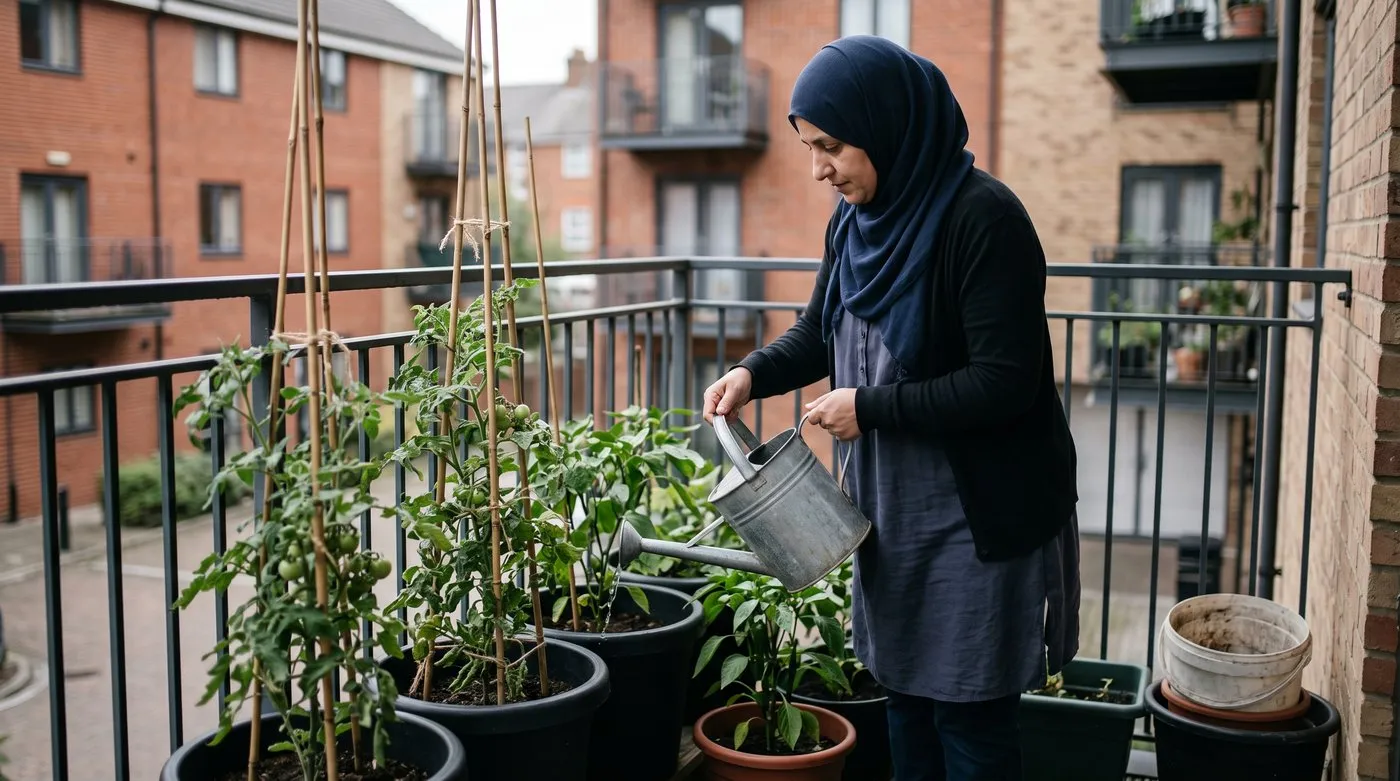
Pots run out of food fast. A weak liquid feed every week suits them better than one strong dose now and then.
When to test soil rather than guess
Feed for what the crop needs and what the soil is missing. As a rough guide:
- Well-manured soil often has plenty of phosphorus already
- Sandy soil loses potassium, as rain washes it out
- All soils lose nitrogen every year, so that’s the one you’ll top up most
A simple soil test kit from the garden centre in early spring tells you if anything is short. On a busy veg plot, it’s worth testing every few years.
Further reading: The RHS has lots of helpful pages on feeding plants in UK gardens.
Reading the label - what to check at the garden centre
When you pick up a bag of fertiliser, check four things:
- The NPK numbers. Do they suit what you’re feeding?
- The form. Granules, pellets, liquid or ready-to-use spray?
- How much and how often. The rate per square metre or per litre
- Whether it’s for edible crops. Check before using it on veg or fruit
The NPK numbers do most of the deciding for you.
Now you’ve understood NPK
Next up is soil pH, which decides whether plants can actually take up the nutrients in your soil. Our soil pH testing and adjustment guide explains how to check and fix it.
Frequently asked questions
What do the three numbers on a fertiliser bag mean?
They show how much nitrogen, phosphorus and potassium the feed contains. They’re always in that order, N then P then K. A 7-7-7 feed has equal amounts of each. The bigger the numbers, the stronger the feed, and the rest of the bag is mostly filler.
What is the difference between N, P and K in fertiliser?
Nitrogen grows leaves, phosphorus grows roots, and potassium helps fruit. Nitrogen makes plants green and leafy. Phosphorus helps roots and flowering. Potassium helps flowers, fruit and ripening, and keeps plants tough. Every plant needs all three, just in different amounts at different times.
What is the best NPK ratio for vegetables?
Start with a balanced feed like 7-7-7 at planting. Switch fruiting crops such as tomatoes, peppers, courgettes and beans to a high-potassium tomato feed once they flower. Leafy crops like lettuce, kale and chard like a little extra nitrogen all season.
Can you over-fertilise plants?
Yes, and it’s one of the most common garden mistakes. Too much nitrogen makes soft, floppy growth that aphids love, with fewer flowers. Too much feed of any kind can scorch roots. Stick to the rate on the label, and give liquid feeds little and often.
What NPK ratio do lawns need?
Lawns want different feeds in spring and autumn. Spring and summer feeds are high in nitrogen for green, leafy growth. Autumn feeds have less nitrogen and more potassium to toughen the grass for winter. Don’t use a spring feed in autumn, as soft growth gets diseased more easily.
Our team produces practical UK gardening guidance from source research, contributor records and established horticultural practice. Editorial standards are overseen by Matt W.


