Key takeaways
- Blood, fish and bone is the easiest all-round feed for most gardens
- Organic feeds work slowly and improve the soil; chemical ones work fast but don't
- Feed from March to mid-September, and stop before winter
- Tomato feed boosts flowers and fruit; nitrogen-rich feeds boost leaves
- Follow the pack rate, because more is not better
- A cheap soil test tells you if your soil is acid or chalky before you buy
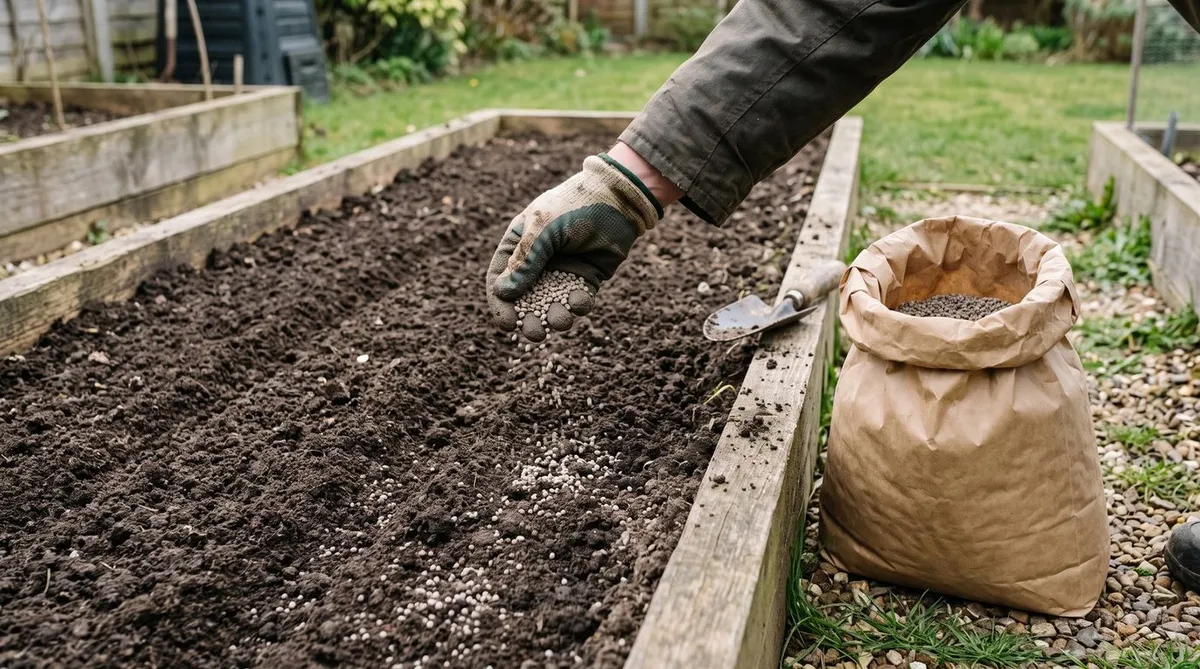
The best fertiliser for most UK gardens is blood, fish and bone, with tomato feed for flowers and fruit. Feeding at the right time makes a big difference to how well plants grow, flower and crop. Get the basics right and you’ll soon see greener leaves and bigger harvests.
How fertilisers actually work
Every fertiliser gives plants three main nutrients: nitrogen (N), phosphorus (P) and potassium (K). The pack shows them as three numbers, like 7-7-7 for Growmore. That’s all the science you really need.
What each nutrient does
Nitrogen (N) is for leaves and stems. Plants short of it look pale and grow slowly. Leafy veg like lettuce, spinach and cabbages love it.
Phosphorus (P) is for roots. Root veg, young trees and newly planted shrubs need it most. Most UK soils already have enough.
Potassium (K), often called potash, is for flowers and fruit. Tomatoes, peppers and fruit bushes are hungry for it. Plants short of it get brown, crispy edges on their older leaves.
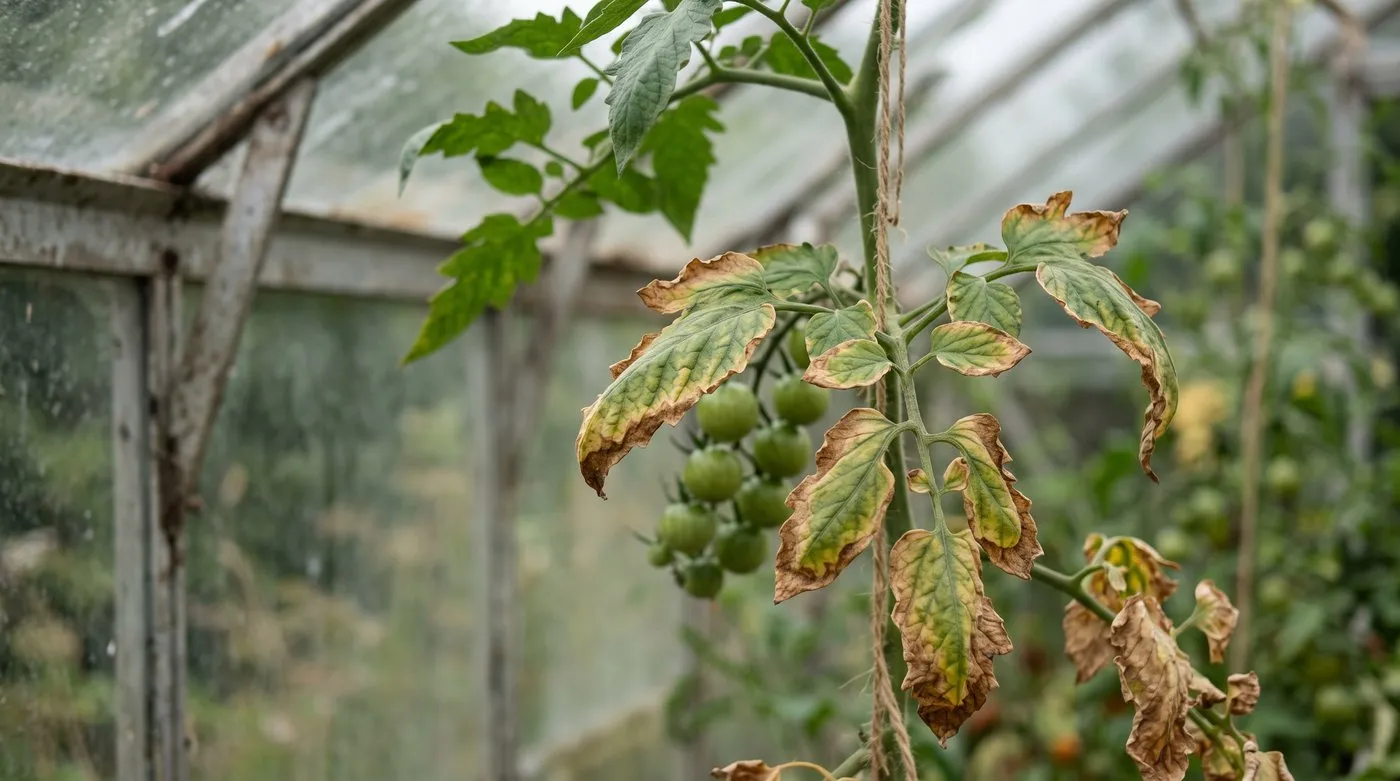
Brown, crispy edges on the older leaves usually mean a plant is short of potash. A high-potash feed like tomato feed puts it right.
Slow-release vs quick-release: the fundamental difference
Organic fertilisers are slow. Soil life has to break them down before plants can use them, and that needs warm, damp soil. In cold soil they hardly work at all.
Chemical (synthetic) fertilisers are fast. They dissolve in soil moisture and go straight to the roots, so you see results in a week or two. But they add nothing to the soil itself.
Controlled-release granules are chemical feeds with a coating that lets the food out slowly over a few months. They cost more but save you feeding again and again, which makes them handy for pots.
How fertilisers affect soil biology
Organic feeds feed the soil as well as the plant. Healthy soil is full of worms and tiny creatures that break down organic matter, keep the soil crumbly and help plants find food.
Chemical feeds don’t harm soil life at normal rates. But if you use only chemical feeds and never add compost or manure, the soil slowly gets poorer. So whatever you use, keep adding compost.
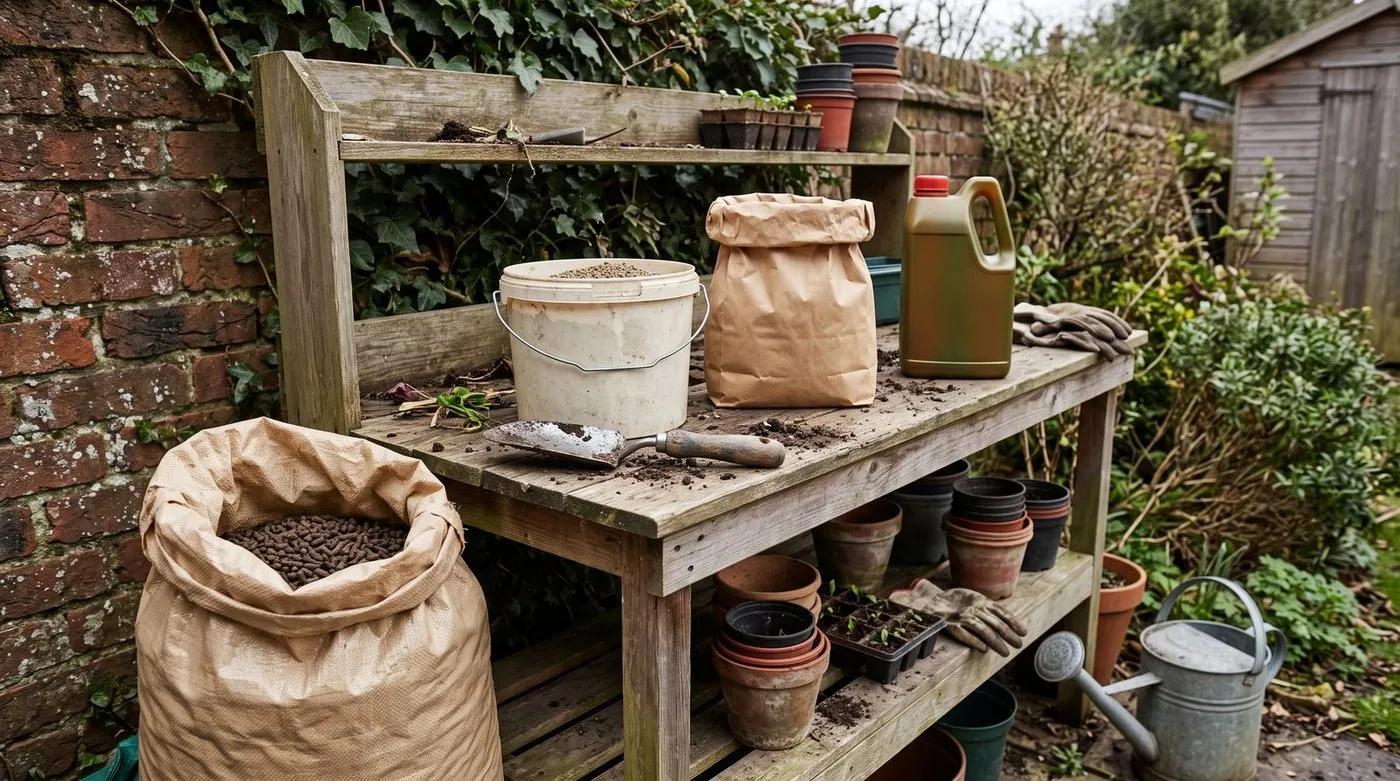 Some of the UK’s favourite garden feeds, from chicken manure pellets to liquid tomato feed.
Organic vs synthetic fertilisers: head-to-head comparison
| Organic | Chemical (synthetic) | |
|---|---|---|
| How fast | Slow, over several weeks | Fast, within a week or two |
| Good for the soil? | Yes, feeds worms and soil life | No effect |
| Risk of scorching | Very low | Higher if you use too much |
| Washes away in rain | Less likely | More likely |
| Smell | Can be whiffy, especially manure | Little or none |
| Best for | Long-term soil health, shrubs, perennials | Quick fixes, hungry annuals |
Treatment hierarchy: 12 fertilisers ranked by effectiveness
Here are the feeds you’ll see most at the garden centre, and what each one is for.
| Fertiliser | Type | Speed | Best for |
|---|---|---|---|
| Blood, fish and bone | Organic | Slow | All-round spring feed |
| Pelleted chicken manure | Organic | Slow | Preparing veg beds |
| Growmore | Chemical | Fast | General feeding, quick boost |
| Tomato feed (liquid) | Usually chemical | Fast | Flowers, fruit, pots |
| Liquid seaweed | Organic | Fast | Gentle tonic for all plants |
| Sulphate of potash | Mineral | Medium | Fruit and flowers |
| Bonemeal | Organic | Very slow | Planting trees, shrubs and bulbs |
| Rose fertiliser | Usually chemical | Medium | Roses and flowering shrubs |
| Ericaceous feed | Usually chemical | Medium | Acid-lovers like blueberries |
| Controlled-release granules | Chemical | Slow and steady | Pots and baskets |
| Lawn feed | Chemical | Fast | Lawns, matched to the season |
| Comfrey or nettle feed | Home-made | Fast | Free feed for veg and fruit |
The science of slow-release vs quick-release
In short: organic feeds take weeks, chemical feeds take days. Here’s what that means in practice.
Organic breakdown stages
Scatter blood, fish and bone or chicken pellets in spring and nothing much happens at first. Once the soil warms up, soil life gets to work. Over the next few weeks the nutrients are gradually released, and worms pull bits down into the soil, improving it as they go. Long after the feed is used up, the leftover organic matter keeps the soil in good heart.
That’s why organic feeds suit an early spring scatter: by the time plants are growing fast, the food is ready.
Synthetic nutrient pathways
Chemical granules dissolve within a few days once the soil is damp. A hungry, pale crop can green up within a week or so. The catch is that heavy rain can wash unused nitrogen down past the roots. So little and often, at the pack rate, works better than one big dose.
Why fertiliser fails: root cause analysis
If feeding isn’t working, the fertiliser is rarely the problem. It’s usually one of these four things.
Wrong soil pH locks out nutrients
Very acid or very chalky soil stops plants using some nutrients, however much you feed. On chalky soil, for example, plants can struggle to take up iron, so their leaves go yellow between the veins.
Most garden soils are fine. A cheap test kit from the garden centre will tell you which kind you have. The RHS guide to fertilisers is a handy overview of what to use when.
Wrong timing wastes money
Feeding cold soil in January is a waste. Soil life is asleep, and winter rain washes the feed away. Feeding in late September encourages soft new growth that the frost soon kills.
The feeding season runs from about mid-March to mid-September. The most important feed is in March or April, as the soil warms and plants wake up.
Salt build-up from over-feeding
Chemical feeds leave a little salt behind. Rain usually washes it away. But in pots, raised beds and sheltered spots it can build up. The signs look like drought: brown leaf edges, wilting in damp compost and a white crust on top.
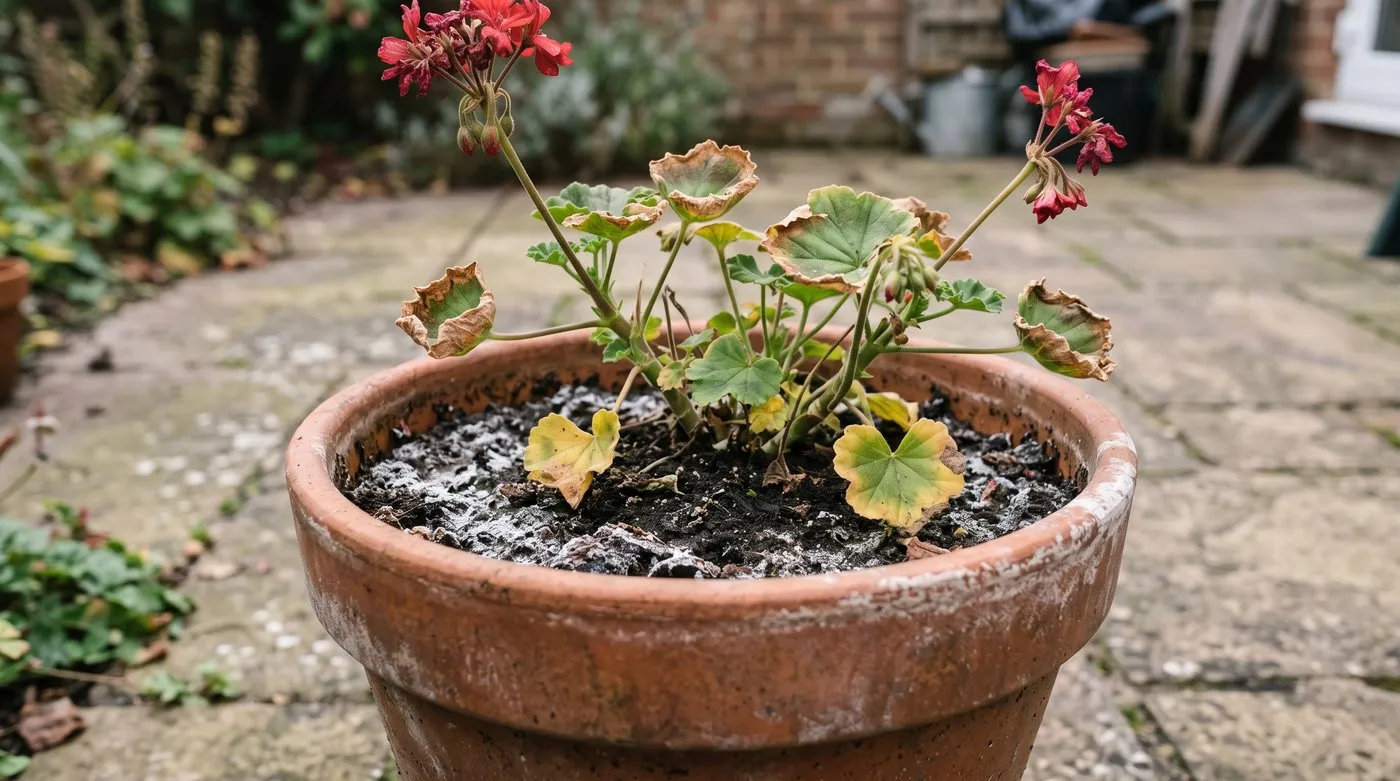
A white crust and wilting in damp compost point to too much feed, not too little. Flush the pot through with plenty of water and ease off.
Ignoring soil structure
Fertiliser can’t fix soggy, squashed soil. If roots can’t breathe, they can’t take up food. Sort the soil first. Spread 5-8cm of garden compost or well-rotted manure every year and loosen up hard, compacted patches.
Our guide to making compost tea covers another way to give your soil a boost.
Month-by-month feeding calendar
Gardens in Scotland and the north can run two or three weeks behind.
| Month | Lawns | Borders and shrubs | Vegetables | Pots | Fruit |
|---|---|---|---|---|---|
| January | Nothing | Nothing | Nothing | Nothing | Nothing |
| February | Nothing | Nothing | Spread compost | Nothing | Nothing |
| March | Spring lawn feed | Blood, fish and bone | Chicken manure pellets | Nothing | Blood, fish and bone |
| April | Nothing | Liquid seaweed | Growmore if needed | Controlled-release granules in fresh compost | Sulphate of potash |
| May | Nothing | Liquid seaweed | Liquid seaweed | Weekly liquid feed | Liquid seaweed |
| June | Summer lawn feed | Rose feed for roses | Growmore for hungry crops | Weekly liquid feed | Comfrey feed for soft fruit |
| July | Nothing | Liquid seaweed | Tomato feed for fruiting crops | Weekly tomato feed | Comfrey feed |
| August | Nothing | Ease off | Ease off late in the month | Every two weeks | Stop at the end of the month |
| September | Autumn lawn feed | Stop mid-month | Stop | Stop | Stop |
| October | Nothing | Mulch with compost | Mulch empty beds with manure | Empty and clean | Mulch with compost |
| November | Nothing | Nothing | Sow green manure | Store somewhere frost-free | Nothing |
| December | Nothing | Nothing | Nothing | Nothing | Nothing |
Tip: Don’t give lawns a nitrogen-rich feed after August. It makes soft growth that suffers in frost. Autumn lawn feeds are lower in nitrogen and higher in potash, which toughens the grass for winter. Our lawn feeding guide has the whole year’s plan.
How to choose the right fertiliser for your soil type
Your soil makes a difference to which feed works best.
Clay soil (pH 6.5-7.5 typical)
Heavy clay holds on to food well but drains badly, and waterlogged soil loses some of its nitrogen.
Best approach: chicken manure pellets in March and liquid seaweed from May. Go easy on chemical nitrogen, which makes lush growth that slugs adore. Most of all, keep adding compost to open up the clay.
Sandy soil (pH 5.5-6.5 typical)
Sandy soil drains fast, and food washes out with it, especially over winter. It’s often hungry by spring.
Best approach: a generous spring feed of blood, fish and bone, then liquid feeds every couple of weeks in summer. Add plenty of compost or manure every year. Controlled-release granules work well because they don’t wash out as easily.
Chalk and limestone (pH 7.0-8.5 typical)
Chalky soil can stop plants taking up iron, so leaves yellow between the veins. Ordinary fertiliser won’t fix this.
Best approach: grow acid-lovers like rhododendrons and blueberries in pots of ericaceous compost and feed them with ericaceous feed. Give yellowing shrubs sequestered iron in spring. Liquid seaweed adds useful trace elements too.
 A well-fed tomato plant next to a hungry one. Regular feeding makes a visible difference.
Best fertilisers for specific plants
Different plants have different appetites. Here’s what to give them.
Vegetables
Hungry crops like tomatoes, courgettes and sweetcorn need feeding from planting to harvest. Work chicken manure pellets into the bed in March. Give a little Growmore in June as fruiting starts. From July, give tomatoes, peppers and aubergines a high-potash liquid feed, like tomato feed or comfrey feed, every week or two.
Leafy greens like lettuce, spinach and chard mainly want nitrogen. A fortnightly watering with liquid seaweed keeps them growing nicely.
Roses
Roses like a feed in spring and another in early summer. Scatter blood, fish and bone in March as the buds break, then a rose fertiliser in mid-June after the first flush. The extra potash in rose feed helps them flower again. Don’t feed after August.
Lawns
Lawns need different feeds through the year. In spring, use a nitrogen-rich feed to green them up. A balanced feed in early summer keeps the colour. In autumn, use a low-nitrogen, high-potash feed to toughen the grass. Always follow the pack rate, as too much scorches grass.
Fruit trees and bushes
Scatter blood, fish and bone around fruit trees and bushes in March, out to the edge of the branches. Add sulphate of potash in April to help the fruit. Strawberries, raspberries and currants enjoy comfrey feed every couple of weeks from flowering to harvest. Don’t feed fruit trees after June, as late growth is soft and frost-prone.
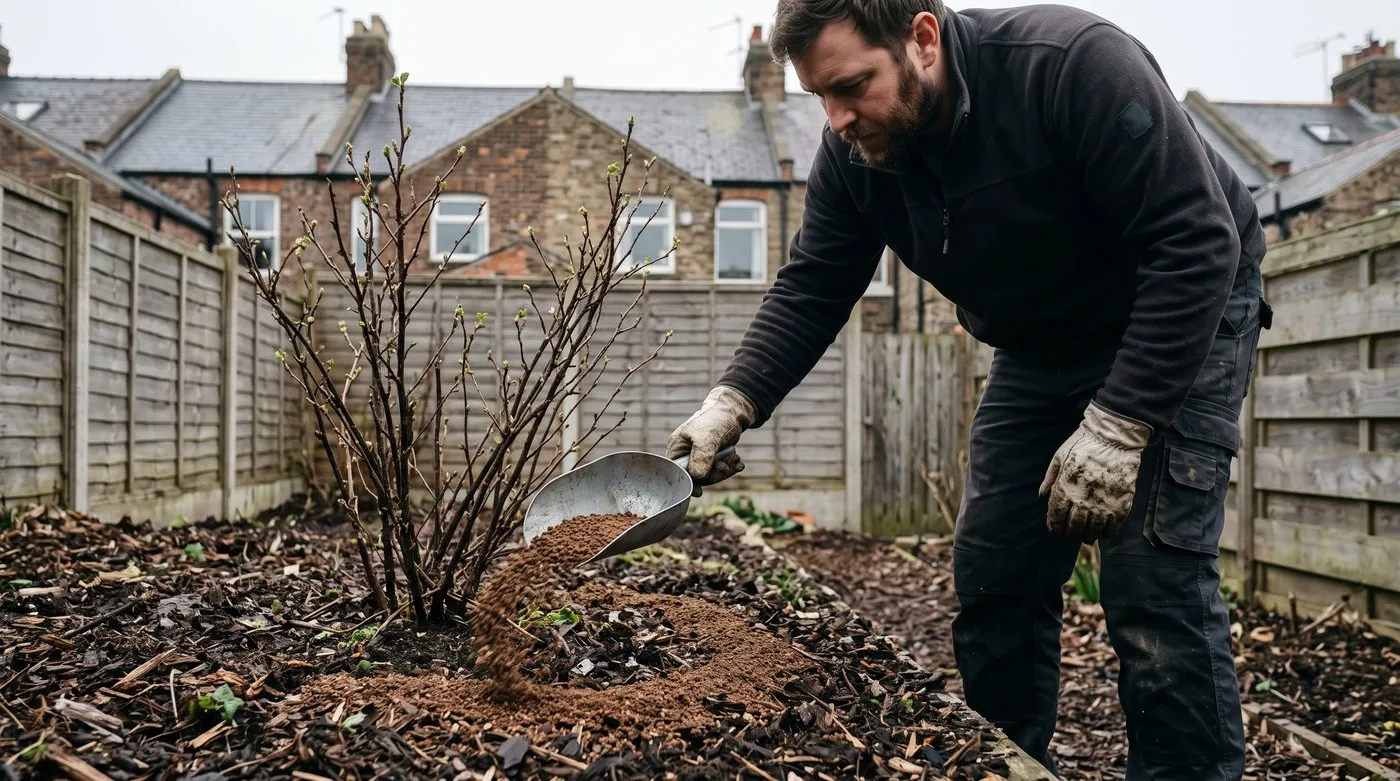
Scatter the feed right out to the tips of the branches, where the feeding roots are. March, as the buds break, is the time to do it.
Common mistakes with garden fertiliser
These slip-ups cause more trouble than choosing the “wrong” product.
Feeding by eye instead of testing
Feeding without knowing your soil is guesswork. If your soil already has plenty of something, adding more does nothing useful. A cheap soil test kit tells you whether your soil is acid or chalky and what it’s short of.
Scattering fertiliser on dry soil
Granules sitting on dry soil can’t reach the roots. Water before or straight after you scatter them. Spring rain does this for you, which is another reason March and April are such good times to feed.
Using the same fertiliser for everything
Growmore is fine for most things, but it’s not perfect for any of them. Tomatoes want extra potash from July. Lawns want nitrogen in spring and potash in autumn. Acid-lovers want ericaceous feed. Match the feed to the plant.
Feeding in winter
Cold soil means sleepy soil life and sleepy roots. Organic fertilisers put down in winter just sit there and get washed away, and chemical ones wash straight through. Save your money until March.
Ignoring companion planting
Peas and beans make their own nitrogen with the help of tiny swellings on their roots. Leave the roots in the ground after harvest and the next crop gets a free feed. Our companion planting guide shows how to make the most of it.
Making your own fertiliser for free
Comfrey and nettles make brilliant free liquid feeds.
Comfrey tea
Comfrey feed is rich in potash, so it’s great for tomatoes and fruit. Fair warning: it smells dreadful, so brew it well away from the patio. Dilute it 1 part to 10 parts water before use. One good comfrey plant gives you plenty of leaves through the season. Our guide to making comfrey and nettle liquid feed walks you through it.
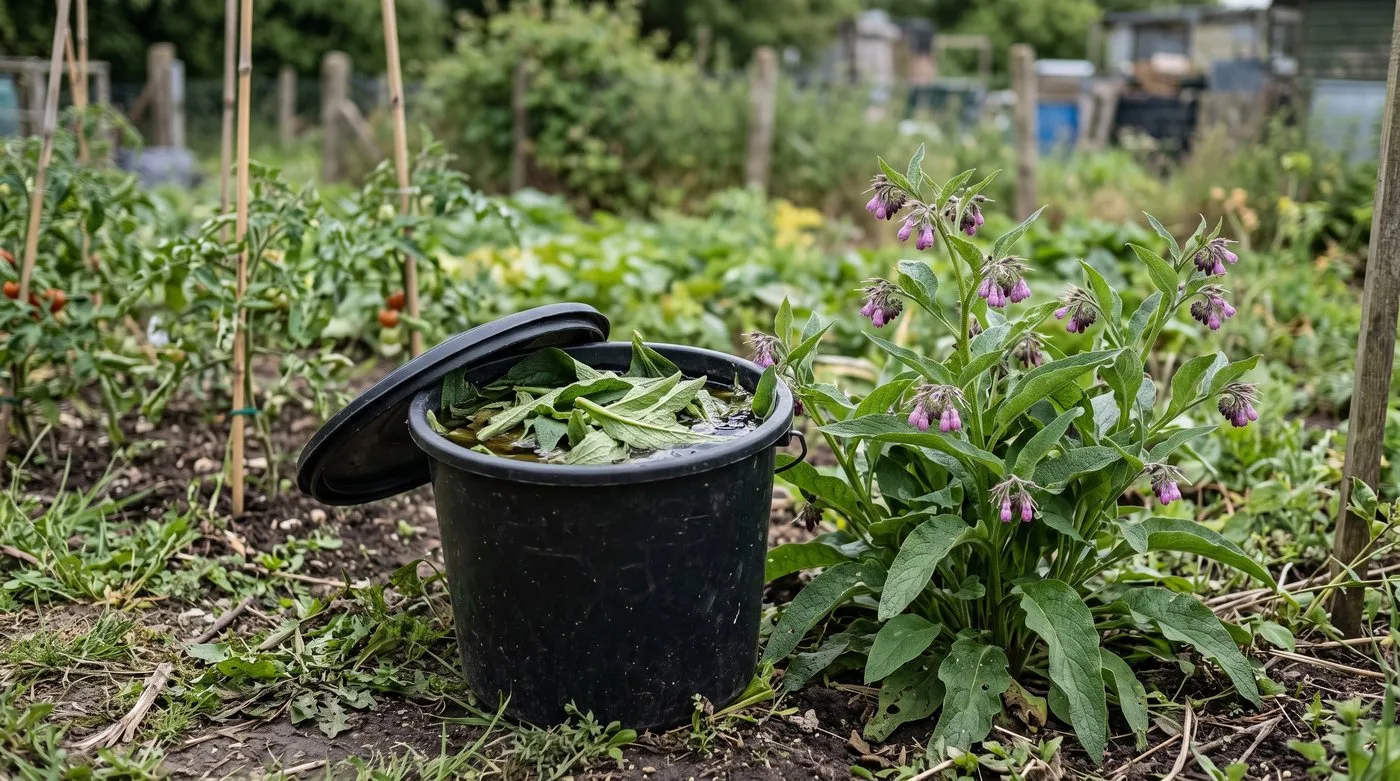
Keep the comfrey bucket well away from the patio, as it smells awful. Dilute the brew 1 to 10 before feeding tomatoes and fruit.
Nettle tea
Nettle feed is rich in nitrogen, so it’s perfect for leafy crops and as a spring pick-me-up. Pick young nettle tops before they flower, wearing thick gloves. Soak them in a bucket of water for two or three weeks, then dilute 1 part to 10 parts water before use. Mix it with comfrey feed for a free all-round feed.
Garden Organic has more on building healthy soil with compost.
Frequently asked questions
What is the best all-round fertiliser for UK gardens?
Blood, fish and bone is the best all-rounder. It has a balanced mix of nutrients that suits most plants, feeds slowly for weeks and helps the soil too. Scatter it in March and again in early summer for borders, veg and fruit.
Is organic fertiliser better than synthetic?
Organic is better for your soil in the long run. It feeds the worms and soil life that keep soil crumbly and healthy. Chemical fertilisers work faster but do nothing for the soil itself. Using a bit of both gives you quick results and healthier soil.
When should I fertilise my garden in the UK?
Start in March or April, as the soil warms up. Organic feeds need warm soil to start working. Keep feeding through the growing season, and stop by mid-September so plants can toughen up before the frosts.
Can you over-fertilise a garden?
Yes, and it can harm your plants. Too much chemical fertiliser can scorch roots. Look out for brown leaf edges, wilting in damp soil and a white crust on the surface. Always follow the pack rate. More is not better.
How do I know which fertiliser my plants need?
A simple soil test is a good start. Home kits from the garden centre tell you whether your soil is acid or chalky, and some show nutrient levels too. Sandy soils often run short of nitrogen and potash. Test every few years and feed to match.
What does NPK mean on fertiliser labels?
NPK stands for nitrogen, phosphorus and potassium. The three numbers show how much of each is in the pack. Nitrogen boosts leaves, phosphorus helps roots, and potassium (potash) helps flowers and fruit.
Is chicken manure a good fertiliser?
Pelleted chicken manure is a great feed. It’s rich and gives a good spring boost. Always use the pellets, never fresh manure, which can scorch plants and isn’t nice to handle. Wear gloves and wash your hands afterwards.
How much does garden fertiliser cost per year?
Usually £15 to £40 a year for a 50 sqm garden. An organic approach with blood, fish and bone and chicken pellets sits in the middle of that range. Growmore alone is a little cheaper. Home-made comfrey and nettle feeds cost nothing at all.
Our team produces practical UK gardening guidance from source research, contributor records and established horticultural practice. Editorial standards are overseen by Matt W.