Key takeaways
- Bubble a bag of good, finished compost in water with an aquarium pump for 24-36 hours
- Use rainwater, or tap water left standing for a day
- Keep the pump running all the time, so the brew stays fresh and earthy
- Use it within a few hours, as it doesn't keep
- It's a soil tonic, not a fertiliser, so keep feeding your plants as usual
- If it smells sour or rotten, tip it away on a non-food bed and start again
Compost tea is a simple way to share the goodness of your compost around the garden. You bubble finished compost in water, which washes out and wakes up the tiny soil life living in it. Then you pour the liquid onto the soil around your plants.
All you need is a bucket, an aquarium pump and a day or so. It’s a gentle tonic rather than a magic cure. Healthy soil and good hygiene still do most of the work against soil-borne disease, but compost tea is a fun, cheap way to spread a bit of your compost’s life further.
What’s going on in a bucket of compost tea
Compost tea isn’t a fertiliser. It’s a living brew. Knowing what happens in the bucket explains why air, warmth and timing matter so much.
Good compost is packed with tiny living things, like bacteria and fungi, that help break down organic matter in the soil. Bubbling compost in water washes them out into the liquid and gives them a boost, so you can spread them easily.
Why the bubbles matter
Air is everything. With plenty of air, the friendly soil organisms do well and the brew smells earthy. Without air, the wrong sort of bacteria take over. The brew turns sour and smelly, a bit like a blocked drain, and it can grow germs you don’t want near food crops.
That’s why a pump that bubbles away the whole time is the key piece of kit.
What grows during brewing
Several kinds of tiny life multiply in a well-bubbled brew:
- Bacteria: the most numerous. They break down organic matter in the soil.
- Fungi: sometimes you’ll see fine white threads floating in the brew.
- Protozoa: tiny creatures that eat bacteria and release plant food as they go.
- Nematodes: microscopic worms carried over from the compost.
How warmth affects the brew
| Water temperature | What happens |
|---|---|
| Cold (below about 15C) | Slow. Allow longer |
| Mild (15-20C) | Good. About 30-36 hours |
| Warm (20-25C) | Ideal. About 24 hours |
| Hot (over 30C) | Too hot. Brews can go wrong |
In spring and autumn, brew in a greenhouse, shed or sheltered sunny spot to keep it cosy.
 A simple setup: a big bucket, an aquarium pump, an airstone, and compost in a mesh bag.
How to brew actively aerated compost tea (AACT)
Actively aerated compost tea (often called AACT) just means compost tea made with a pump. It’s the best way to make it, as the constant bubbles keep it fresh.
Equipment you need
- A large plastic bucket, around 25 litres
- An aquarium air pump, the kind sold for fish tanks
- Airline tubing and an airstone
- A mesh bag or old pillowcase to hold the compost
- Rainwater, or tap water left to stand
Most of this is cheap and lasts for years.
Step-by-step brewing process
Step 1: Get the water ready. Rainwater from a water butt is ideal. If you use tap water, fill the bucket and leave it uncovered for a day so the chlorine can escape. Some water companies use chloramine, which doesn’t escape this way, so rainwater is the easier choice.
Step 2: Add the compost. Fill your mesh bag with a couple of litres of well-rotted compost, roughly a tenth of the water. It should be dark, crumbly and earthy-smelling, with nothing recognisable left in it. Hang the bag in the water so it’s fully covered.
Step 3: Start the bubbles. Drop the airstone to the bottom and switch on the pump. The water should bubble steadily. Keep the pump running the whole time. Check the airstone hasn’t clogged after about 12 hours.
Some gardeners stir in a spoonful of unsulphured molasses to feed the microbes. If you do, keep the brew off the leaves of any crops you’ll eat, as sugary brews can also feed unwanted bacteria.
Step 4: Brew for 24-36 hours. In warm weather, a day is usually enough. In cooler weather, give it a bit longer. A light foam on top is a good sign. It should smell like a woodland floor.
Step 5: Strain and use it straight away. Lift out the compost bag and put the spent compost back on your heap. Switch off the pump. Strain the liquid if you’re using a watering can with a rose. Use it within a few hours. Once the bubbles stop, it goes off quickly, so it can’t be stored.
Types of compost tea compared
There are a few different “teas”. Here’s how they differ.
Quick comparison
| Type | Brewing time | What’s in it | Best for |
|---|---|---|---|
| Aerated compost tea | About a day | Living soil life | General use around the garden |
| Worm tea | About a day | Living soil life from worm compost | Seedlings, pots and young plants |
| Unaerated tea | A week or more | Less helpful life, can go sour | Ornamental beds only |
| Plant teas (comfrey, nettle) | A few weeks | Plant food, not soil life | Feeding hungry crops |
Worm tea
Worm castings, the rich compost from a wormery, make a lovely tea. Brew it just like aerated compost tea, using a couple of litres of fresh castings instead of garden compost. It’s great for seedlings, young plants and pots. No wormery? You can buy bags of worm castings.
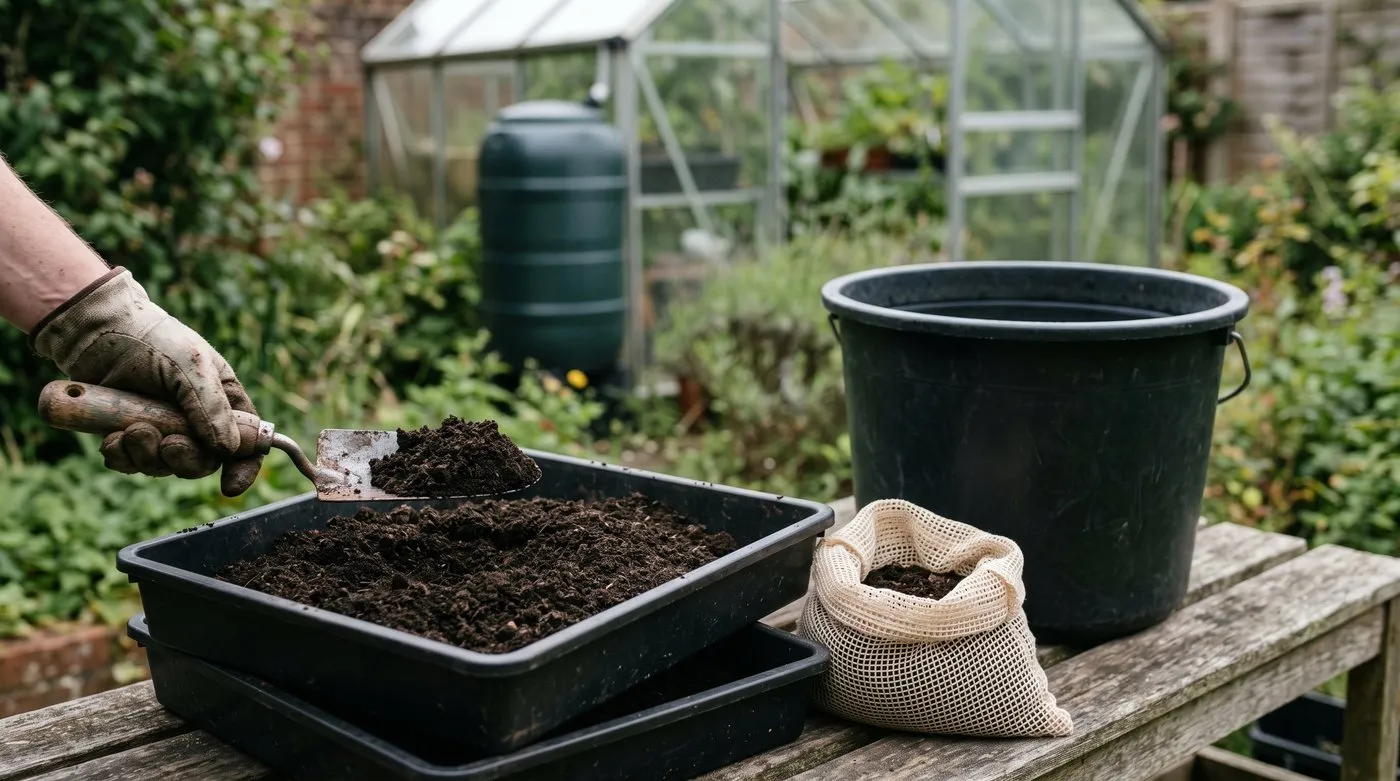
Worm castings make a lovely gentle tea for seedlings and pots. Brew them just like compost tea, with the pump running throughout.
Unaerated tea
The old-fashioned way is to soak compost in a bucket of water for a week or two without a pump. It’s simple, but without air it soon goes sour and can grow germs.
If you make it this way, only use it on flower beds, never on food crops, and dilute it well first.
Plant teas
Plant teas are feeds rather than compost teas. Soaking leaves in water draws out plant food:
- Comfrey tea: rich in potash. Great for tomatoes, beans and other fruiting crops.
- Nettle tea: rich in nitrogen. Good for leafy crops and hungry vegetables.
They give your plants food rather than soil life, so they work nicely alongside compost tea.
 Some gardeners spray compost tea onto leaves, but pouring it onto the soil is the simplest and safest way to use it.
How to use compost tea
Pour it onto the soil around your plants. That’s where the soil life belongs.
| How to use it | Strength | How often |
|---|---|---|
| Around established plants | Neat, or 1 part tea to 4 parts water for bigger areas | Every few weeks in the growing season |
| New plants | Neat, poured around the roots | Once, at planting |
| Seedlings | Half-strength | Now and then |
| On the compost heap | Neat | Whenever you have some left over |
Water the soil first if it’s dry, and use it in the morning or evening rather than in hot midday sun. Diluting it lets one bucketful go further.
Some people spray it onto leaves too. There’s little good evidence it protects plants from disease that way. Keep it off the leaves of salads and other crops you’ll eat soon.
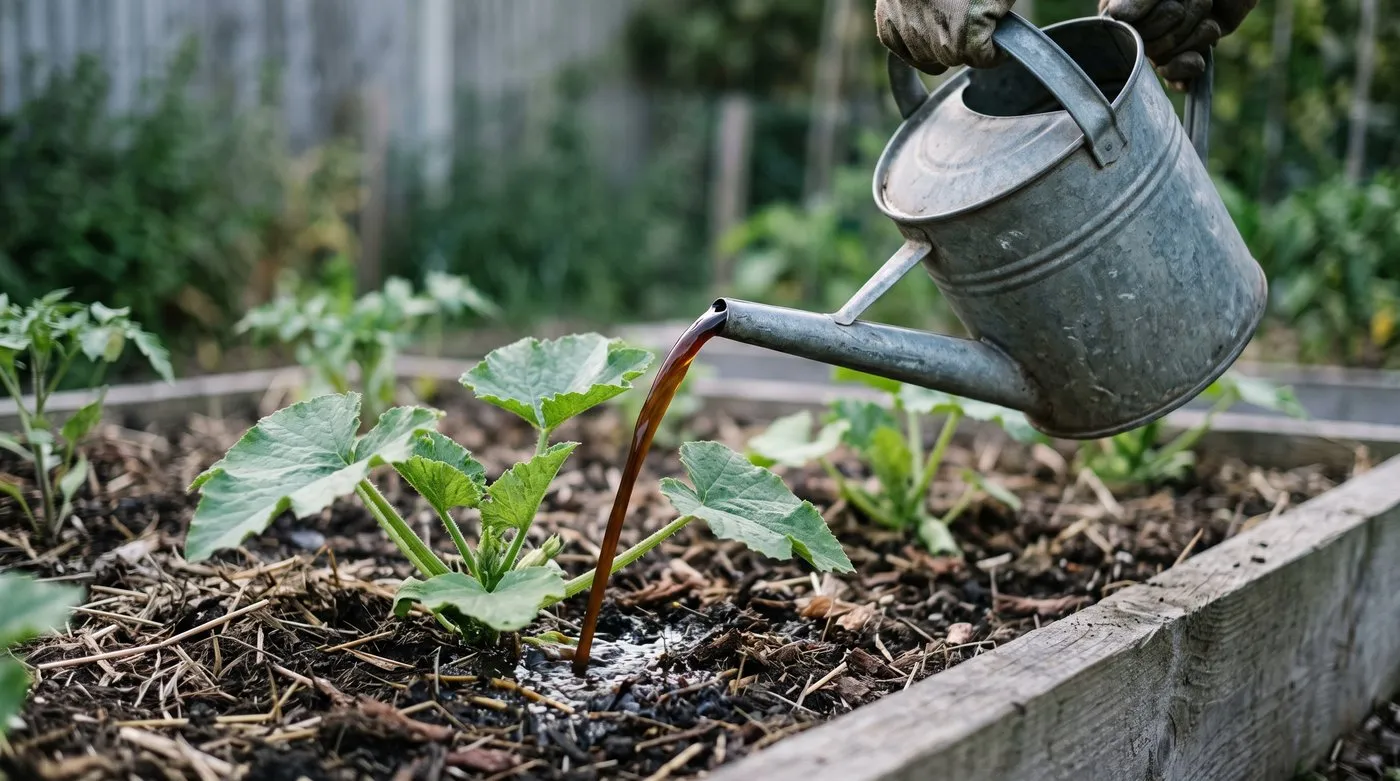
Pour it onto the soil, where the soil life belongs. Morning or evening is best, and water dry soil first.
Month-by-month compost tea calendar
| Month | What to do |
|---|---|
| January | No brewing. Soil is too cold |
| February | Clean your bucket and kit |
| March | Brew indoors for greenhouse beds if you like |
| April | Start brewing. Water it in around spring plantings |
| May | Use it on new plants and young veg |
| June | Busy season. Use it around beds every few weeks |
| July | Keep going. Great for container plants |
| August | Use it around fruiting crops and autumn brassicas |
| September | Last brews before the soil cools |
| October | One last brew if it’s mild |
| November | Stop brewing. Put spent compost back on the heap |
| December | Clean and store your kit |
Why compost tea goes wrong
Most failed brews come down to three things: not enough air, poor compost, or using it at the wrong time.
Not enough air
This is the big one. When the bubbles slow or stop, the brew turns sour. It happens when:
- The pump is too weak for the size of bucket
- The airstone clogs up partway through
- The pump gets switched off, even for a while
- Too much molasses makes things grow too fast
The fix: Use a decent pump, check the airstone halfway, and keep the bubbles going. If it ever smells sour, tip it away and start again.
Poor compost
What you put in is what you get out. Half-rotted compost can harm roots, and bagged compost is often heat-treated, so it has much less life in it.
Use your own well-rotted compost. Garden Organic has good advice on making it.
Using it at the wrong time
- In hot sun: Use it morning or evening instead.
- On dry soil: Water first, or use it after rain.
- Too long after brewing: Use it within a few hours.
- In cold soil: Wait for spring, when the soil is waking up.
 Giving the compost bag a squeeze at the end of a brew to get the last of the goodness out.
Common mistakes when making compost tea
These are the slip-ups that spoil most brews. All are easy to avoid.
Using tap water straight from the tap
The chlorine in tap water can harm the tiny life you’re trying to grow. Use rainwater, or leave tap water standing for a day first.
Adding too much molasses
More food doesn’t mean a better brew. Too much sugar makes things grow so fast that the air runs out and it turns sour. If you use molasses at all, a spoonful is plenty.
Brewing too long
After a day or so, the food runs out and the brew starts to fade. Stick to about 24-36 hours.
Using unfinished compost
Half-rotted compost can smell of ammonia and may harm roots. Wait until it’s dark, crumbly and earthy, with nothing recognisable left.
Not cleaning your kit
Slime builds up in the tubing and on the airstone, and the bubbles get weaker. Wash everything in hot soapy water after each brew and rinse well. Replace the airstone when it clogs.
Compost tea for specific UK soil types
Compost tea won’t change your soil type by itself. Adding plenty of compost and mulch every year, as in no-dig gardening, is what really makes the difference. But it can be a nice extra on any soil.
Heavy clay soils benefit most from lots of organic matter dug in or spread on top. Use compost tea alongside that, as a drench in spring and autumn. Our guide to improving clay soil has the full plan.
Sandy soils dry out fast and lose food quickly. Keep adding compost and mulch, and use compost tea as a top-up through the summer.
Chalky soils tend to be alkaline. Adding organic matter is the best way to help them. The RHS soil improvers page explains your options. To find out what you’ve got, see our soil testing and pH guide.
Now you know how to make compost tea, learn how to make the best possible compost for it with our guide on how to make compost. For another great way to recycle garden waste, read our guide to making leaf mould. And if you want a feed that’s rich in potash, our guide to making comfrey and nettle feed shows you how to brew one for free.
Frequently asked questions
Does compost tea actually work?
The evidence is mixed. It does add some of compost’s living soil life to the ground, and many gardeners like using it. But claims that it prevents plant diseases aren’t well proven. Think of it as a gentle soil tonic, alongside good compost and mulch.
How long does compost tea take to brew?
About 24-36 hours with a pump. It’s quicker in warm weather and slower in the cold. Brews without a pump take a week or more and are more likely to go sour. Stop when it smells earthy and has a light foam on top.
Can you use compost tea on all plants?
Yes, as a drench on the soil around them. Use it half-strength on seedlings. Water dry soil first, and avoid the heat of midday. Keep it off the leaves of salad and other crops you’ll eat soon.
What does compost tea smell like?
A good brew smells earthy and sweet. If it smells sour, rotten or like bad eggs, it has run out of air and grown the wrong kind of bacteria. Tip it away on a bed you don’t grow food in, clean the bucket and start again.
Is compost tea the same as liquid fertiliser?
No, it’s a soil tonic, not a feed. It carries tiny living organisms from the compost into the soil, but very little plant food. Keep feeding your plants as usual and use compost tea alongside.
Can I brew compost tea in winter?
It’s not really worth it. Brewing slows right down in the cold, and the soil is too cold for it to do much. Brew from spring to early autumn, when soil and plants are active.
Do I need a compost tea brewer?
No, a simple homemade setup works. You need a big bucket, an aquarium air pump, some airline tubing and an airstone. Shop-bought brewers make bigger batches but aren’t needed in a home garden.
Can I make compost tea from shop-bought compost?
You can, but homemade compost is better. Bagged compost is often heat-treated, so it has much less soil life in it. Use well-rotted compost from your own heap, or worm castings from a wormery.
Our team produces practical UK gardening guidance from source research, contributor records and established horticultural practice. Editorial standards are overseen by Matt W.