
Key takeaways
- Start with easy crops: courgettes, runner beans, salad leaves, radishes and potatoes
- Most vegetables want at least six hours of direct sun a day
- Sow hardy crops from March and plant tender ones out from late May, after the frosts
- Spread compost on your beds every year, as it helps every kind of soil
- Sow salad and radishes little and often, every two to three weeks
Growing your own vegetables is one of the most rewarding things you can do in a UK garden. A few easy crops in a single raised bed can keep you in fresh food from late spring to autumn. You don’t need an allotment, a big garden or any experience.
Here’s what a beginner needs to know: what to grow first, when to plant, how to get the soil ready and how to keep the harvest coming. For month-by-month help, see our vegetable planting calendar.
What to grow first
Start with crops that are hard to get wrong. These five give good harvests and forgive most beginner slips.
Courgettes. Sow indoors in April and plant out after the last frost. Pick when the fruits are 15 to 20cm long, and keep picking. A plant or two is plenty for most households.
Runner beans. Sow outdoors in late May at the foot of a wigwam of canes. They climb fast and crop from July to September. Pick every few days to keep them going.
Salad leaves. Sow a short row every two to three weeks from March to September. Cut-and-come-again types grow back after you cut them, so you get several pickings from one sowing.
Potatoes. Plant seed potatoes from late March. Pile soil up around the shoots as they grow. Early varieties like Charlotte and Rocket are ready in early summer, and freshly dug new potatoes taste amazing.
Radishes. The quickest crop of all, often ready in about four weeks. Sow outdoors from March to September. Great for filling gaps and keeping children interested. Fancy another root crop? See our carrot growing guide.

Raised beds make veg growing easy for beginners: good drainage, easy to reach, and no digging.
Where to grow vegetables
Sunlight
Most vegetables want at least six hours of direct sun a day. Tomatoes, courgettes, beans and peppers need the most. Salad leaves, spinach and radishes manage with about four hours. Watch your garden through a whole day before you choose a spot. South or west-facing is ideal.
Raised beds
Raised beds are a great choice for beginners. About 3m x 1.2m is a handy size. It’s big enough to grow a useful amount and narrow enough to reach the middle without stepping on the soil.
Fill them with a mix of topsoil, garden compost and composted bark. The soil drains well, and because you never walk on it, it stays light and crumbly.
Containers
Almost any vegetable grows in a pot if the pot is big enough. Go for at least 30cm wide and deep. Tomatoes, peppers, chillies, salad leaves and herbs all love a sunny patio. Water every day in summer, as pots dry out fast. Our container vegetable gardening guide has the full how-to.
Allotments
An allotment gives you room to grow lots. A traditional full plot is about 250 square metres, though many sites offer half plots too. Contact your local council to join the waiting list. In some areas the wait is long, but in others plots are free straight away.
Preparing the soil
Good soil makes everything easier. Most UK garden soil grows vegetables well with a bit of help.
Testing your soil
Squeeze a handful of damp soil. Clay holds its shape and feels sticky. Sandy soil falls apart straight away. Loam, the ideal, holds together loosely and crumbles when you poke it. If yours is heavy clay, see our guide to improving clay soil.
Adding organic matter
Spread compost, well-rotted manure or leaf mould over the beds. It helps every type of soil. It loosens clay, helps sandy soil hold water and slowly feeds your plants. Aim for a 5 to 8cm layer each year.
No-dig method
With no-dig, you add a layer of compost on top each year instead of digging. It keeps the soil in good shape, keeps worms happy and means fewer weeds. To start a new bed, lay cardboard over the grass or weeds, then add about 15cm of compost on top. Plant straight into it.

Topping up a raised bed with compost. A layer every year is the best thing you can do for your soil.
When to plant vegetables in the UK
Spring (March-May)
March: Sow broad beans, peas, lettuce, spinach and radishes outdoors, and plant onion sets. Start tomatoes, peppers and aubergines on a warm windowsill indoors.
April: Sow beetroot, carrots and chard outdoors. Start courgettes, squash and cucumbers indoors. Get seed potatoes in if you haven’t already. Our spring gardening jobs guide has the full list.
May: Once the frosts are over (usually late May in most of England, later in Scotland), plant out tender crops like courgettes, beans, squash, sweetcorn and tomatoes. Sow more salad.
Summer (June-August)
June: Sow French beans, beetroot and salad leaves for autumn. Plant out any tender seedlings left over. Start picking early potatoes, salad and radishes.
July-August: Pick courgettes, beans, tomatoes and potatoes. Sow spring cabbage. Keep sowing salad and radishes. See our summer gardening jobs guide.
Autumn (September-November)
September: Plant overwintering onion sets. Sow green manure on empty beds. Harvest squash and sweetcorn, and start clearing finished crops.
October-November: Plant garlic and sow broad beans for an early crop next year. Spread compost or manure on empty beds, or cover them with cardboard or mulch. Our autumn gardening jobs guide has more.
Vegetable planting chart
| Vegetable | Sow | Plant out | Harvest | How easy |
|---|---|---|---|---|
| Potatoes | - | Mar-Apr | Jun-Sep | Easy |
| Courgettes | Apr (indoors) | Late May | Jul-Oct | Easy |
| Runner beans | Late May (outdoors) | - | Jul-Sep | Easy |
| Salad leaves | Mar-Sep | - | May-Nov | Easy |
| Radishes | Mar-Sep | - | Apr-Oct | Very easy |
| Carrots | Mar-Jul | - | Jun-Nov | Medium |
| Beetroot | Apr-Jul | - | Jun-Nov | Easy |
| Tomatoes | Feb-Mar (indoors) | Late May-Jun | Jul-Oct | Medium |
| Onions (sets) | - | Mar-Apr | Jul-Aug | Easy |
| Peas | Mar-Jun | - | Jun-Sep | Easy |
| Broad beans | Feb-Apr or Oct-Nov | - | Jun-Jul | Easy |
| Sweetcorn | Apr (indoors) | Late May | Aug-Sep | Medium |

A summer harvest from one small raised bed. Courgettes, beans, tomatoes and salad are the backbone of a beginner’s veg patch.
Common beginner mistakes
Planting too much at once
It’s tempting to grow everything in year one, then feel swamped. Pick three or four crops to start with, and add more each year as you get the hang of it.
Ignoring succession sowing
Sow a whole packet of lettuce at once and you’ll get a mountain of salad for two weeks, then nothing. Sow a short row every two to three weeks instead. The same goes for radishes, spinach and spring onions.
Forgetting to water
Seedlings and new plants need steady moisture. Water in the evening so less is lost to the sun. A soaker hose saves time on a bigger plot. Pots may need watering twice a day in hot weather.
Skipping pest protection
Carrot fly, cabbage white caterpillars and slugs are the usual troublemakers. Fine mesh netting over cabbages and carrots stops most of the damage. Companion planting with flowers like marigolds and nasturtiums can help too. For slugs, see our guide on getting rid of slugs.
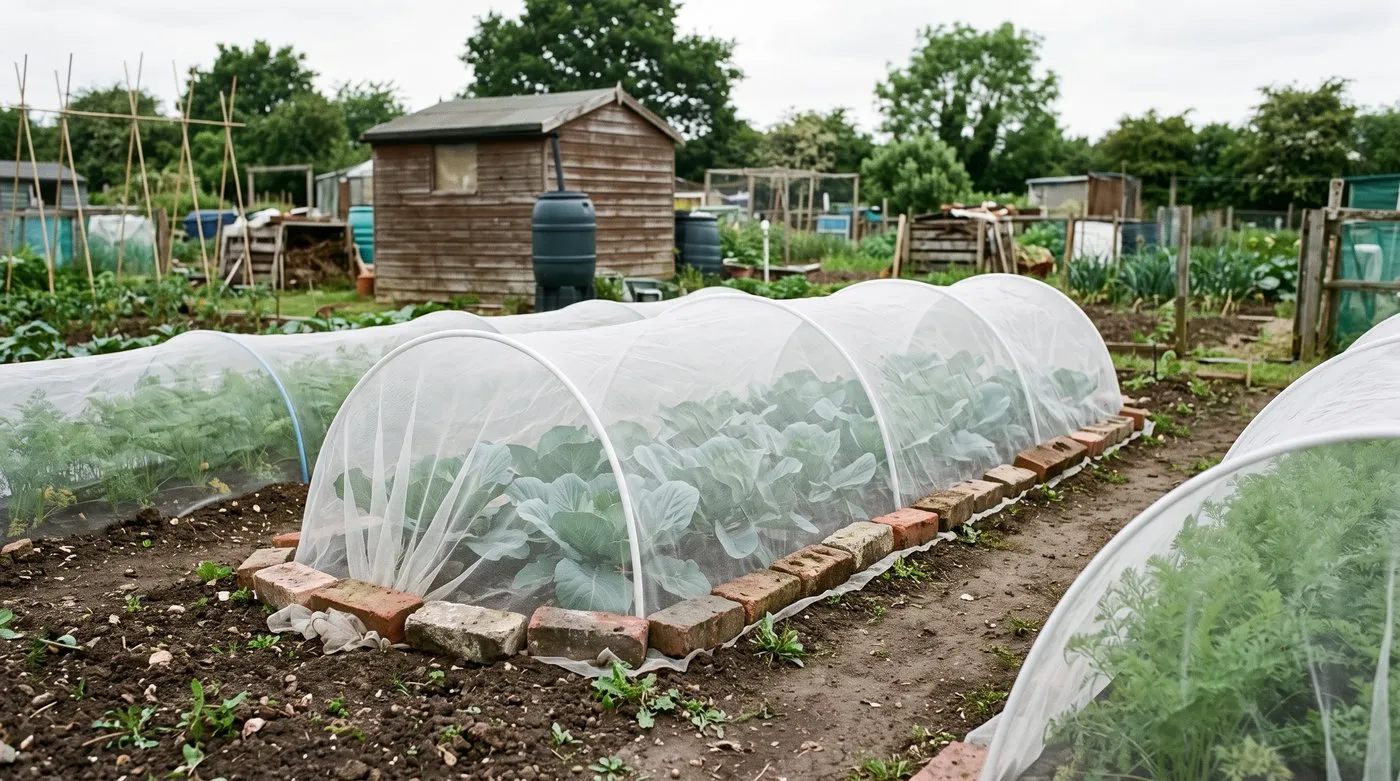
Fine mesh keeps out cabbage white butterflies and carrot fly before they can lay eggs. Weigh down the edges well, as pests will find any gap.
Planting in shade
Veg in shade grows leggy, crops poorly and gets more disease. If your garden is shady, stick to crops that cope: salad leaves, spinach, kale, and herbs like mint and parsley.
Growing vegetables in a greenhouse
A greenhouse stretches the season at both ends. You can sow earlier in spring, and grow heat-lovers like tomatoes, peppers, chillies, cucumbers and aubergines that struggle outdoors in a British summer.
Even an unheated greenhouse keeps off wind and heavy rain and stays warmer than outside. That’s a big help for crops that need warmth to ripen. Our best greenhouse plants month by month guide shows what to sow and grow under glass all year.
Ready for the next step? Read our guide to raised bed gardening for beginners.
Frequently asked questions
The RHS grow your own guide has lots more help for new veg growers. And if you fancy a challenge, see how to grow your own grain and mill it into flour.
What is the easiest vegetable to grow in the UK?
Courgettes are one of the easiest for beginners. One plant gives a steady supply all summer with little fuss. Sow indoors in April, plant out after the last frost and water well. Runner beans, radishes and salad leaves are just as easy. Pick courgettes small and often to keep them coming.
When should I start growing vegetables in the UK?
Start in March with hardy crops. Broad beans, peas and lettuce can go outdoors then, and potatoes from late March. Sow tender crops like courgettes, French beans and squash indoors in April. Plant them out once the frosts are over, usually from late May.
Can I grow vegetables in a small garden?
Yes, a small garden can grow plenty. A single raised bed, a few big pots or some grow bags on a patio is enough to start. Salad leaves, herbs, tomatoes, chillies and dwarf beans all do well in pots. Grow climbing beans and cucumbers upwards to save space.
How much sun do vegetables need?
Most need at least six hours of direct sun. That’s especially true of tomatoes, courgettes and beans. Salad leaves, spinach and radishes cope with about four hours. Carrots and beetroot manage in light shade but do better in sun. Save your sunniest spot for the fruiting crops.
Do I need an allotment to grow vegetables?
No, you don’t need an allotment. A back garden, front garden, patio or balcony can all work. Raised beds and pots let you grow food anywhere with enough light. An allotment just gives you more room for big crops like potatoes and cabbages.
What vegetables can I grow in winter?
Leeks, kale, sprouts and parsnips all stand outside through winter. You can pick them as you need them. Winter salads like lamb’s lettuce, winter purslane and mizuna grow well under a cloche or in a cold frame. Autumn is also the time to sow broad beans and plant garlic.
Our team produces practical UK gardening guidance from source research, contributor records and established horticultural practice. Editorial standards are overseen by Matt W.


