Key takeaways
- With a bit of planning, a greenhouse can crop in every month
- February to April is the busy sowing time for tomatoes, peppers and cucumbers
- Summer pickings of tomatoes, cucumbers and peppers run from about June to September
- Sow lamb's lettuce and mizuna in September for salads all winter
- Vents, shading and damping down stop it getting too hot in summer
- A heater with a thermostat keeps tender plants frost-free in winter
A greenhouse really earns its keep when it gives you something every month. Lots sit empty from October to April, but with the right crops yours can be busy all year.
Here’s what to sow, plant and pick in a UK greenhouse, month by month, from veg and salads to herbs and flowers. For outdoor sowing dates, see our seed sowing calendar.
What should you grow in a greenhouse as a beginner?
Start with tomatoes, chillies, basil and salad leaves. They’re easy from seed, crop well under glass and quickly show you what a greenhouse can do.
- Tomatoes: cordon types like ‘Sungold’ or ‘Shirley’ are the classic. Our guide to growing tomatoes takes you through it.
- Chillies and sweet peppers: they need the extra warmth of glass to ripen in most UK summers.
- Basil: sulks outside in a cool summer but loves it under glass, right next to the tomatoes.
- Salad leaves: great for filling gaps in spring and autumn.
Once you’ve got the hang of those, try cucumbers, which want more warmth and humidity, and aubergines or melons, which need a long season. Heat-loving okra is a fun one to try too.
January: forced rhubarb and early lettuce
January is quiet, but you can still get early crops going. Dig up a rhubarb crown, pot it up and bring it into the greenhouse under an upturned bin to keep it dark. The warmth and darkness give you pale, tender stems weeks before outdoor plants.
Sow hardy lettuce such as ‘Winter Density’ or ‘All the Year Round’ in trays. They come up at around 10-15°C. On the coldest nights, a small heater set to about 5°C stops the compost freezing.
It’s a good month for odd jobs too. Clean the glass, fix broken panes and oil the hinges. Clean glass lets in more of that weak winter light.
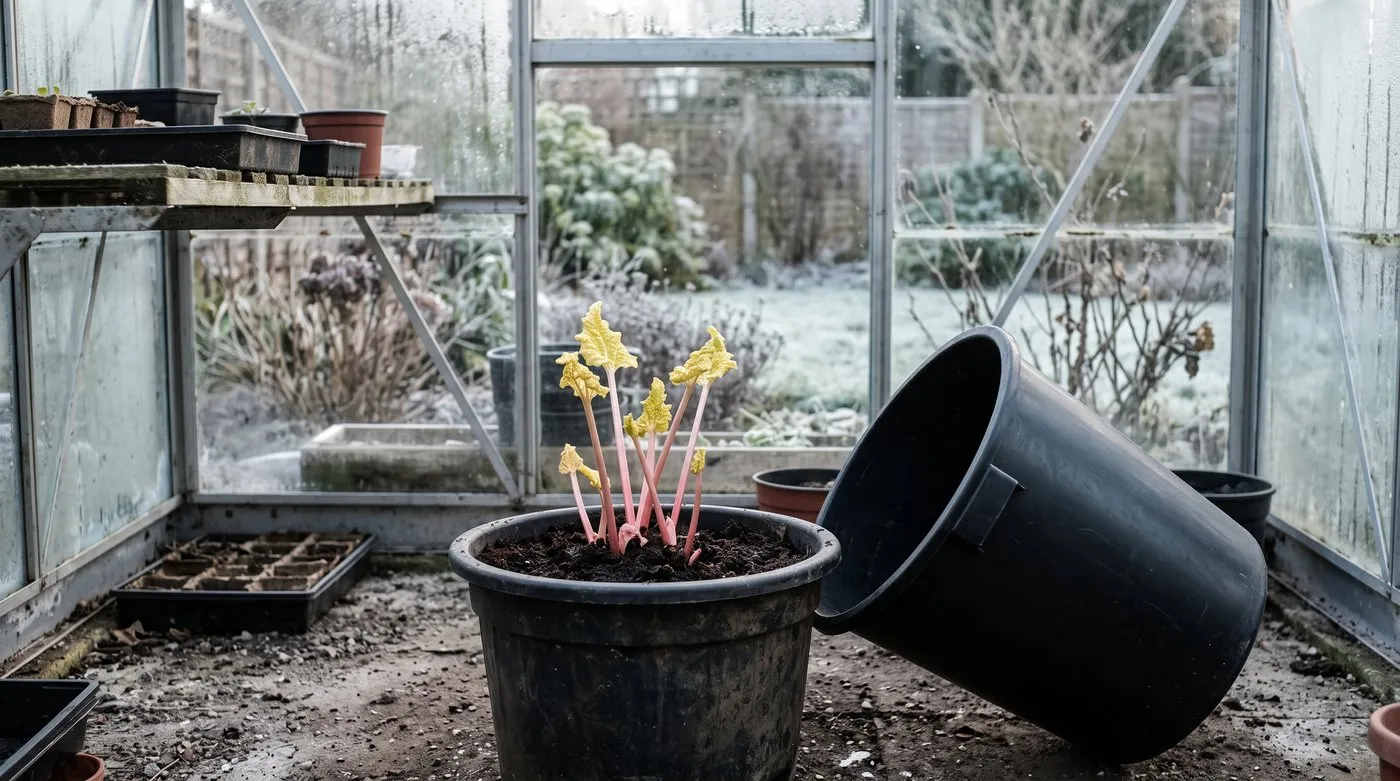
Darkness and a little greenhouse warmth give pale, tender stems weeks early. Keep the bin on until you’re ready to pick.
February: tomato and pepper seeds
February kicks off the main sowing season for crops that need a long summer. Sow tomato seeds at 18-21°C in a heated propagator. Our guide to the best greenhouse tomato varieties helps you choose. Sow chilli and sweet pepper seeds at 21-25°C. Peppers are slow to come up, so they need this early start.
Sow aubergine seeds at 21-25°C alongside your peppers. Both need a long season to fruit here.
Sow sweet peas in root trainers for early flowers. Broad beans sown last autumn should be growing steadily.
March: half-hardy annuals and cucumbers
March is when the greenhouse fills up. Sow half-hardy annuals like cosmos, zinnia and French marigolds for summer colour. From mid-March, sow cucumber seeds in a heated propagator at 20-25°C. Pop the seeds in on their edge to stop them rotting.
Once tomato and pepper seedlings have their first true leaves, move them into 9cm pots. Give them good light and steady warmth.
Sow basil, coriander and parsley in small pots. Basil needs warmth, around 15°C or more, to get going. Our flower planting calendar has more flowers to sow this month.
April: plant out in heated greenhouses
Only plant tomatoes into their final spots in April if the greenhouse stays above about 10°C at night. Use growing bags, big pots or the greenhouse border. In an unheated greenhouse, wait until May.

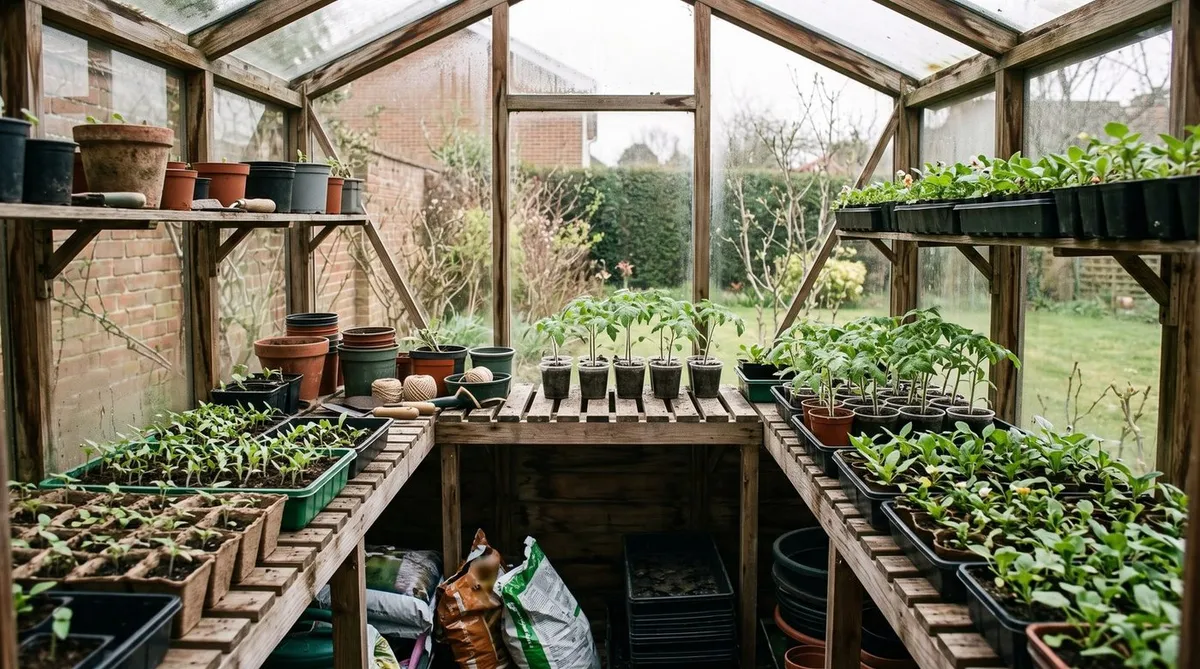
April staging packed with seedlings, all waiting for bigger pots or a spot outside.
Sow runner beans and French beans in pots, ready to go outside after the last frost. Start sweetcorn in modules. These all come up fast in greenhouse warmth.
Keep sowing cucumbers and courgettes, and pot on anything outgrowing its pot. Watch the heat now, as sunny April days warm the greenhouse up quickly. An automatic roof vent opener opens the roof vent for you while you’re out.
May: tender crops after the last frost
May is when tender crops go into their final spots in an unheated greenhouse. The frost risk usually passes during May in much of England, later in the north and in cold inland spots. For plants going outside, harden them off first. Stand them out by day and bring them in at night for a week or two.
Plant tomatoes, cucumbers, peppers and aubergines into their final places. Tie cordon tomatoes to canes or strings and start pinching out side shoots. Once the first truss has set fruit, start feeding with a high-potash liquid feed, like a tomato feed.
You can still sow melons in early May in a heated propagator at 20-25°C, though April sowings get a longer season. Train them up supports and pinch out the tip after five true leaves. Our guide to growing melons in a greenhouse explains training and pollination.
June to August: the main harvest months
Summer is picking time. Tomatoes start ripening from about July in an unheated greenhouse, sooner with heat. Pick cucumbers every few days to keep them coming. Peppers turn from green to red through July and August.

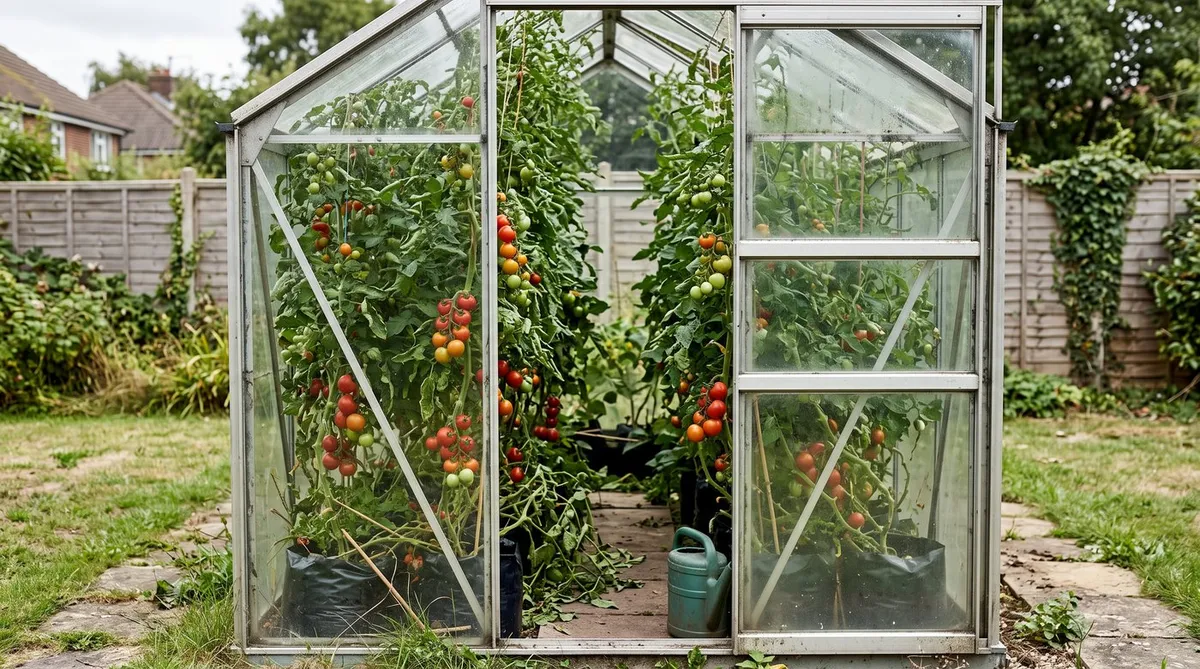
A Vitavia Venus 5000 in full summer swing, with tomatoes, cucumbers and peppers all cropping.
Like the look of it? You can shop the Vitavia Venus 5000 at Greenhouse Stores.
Keep up with watering, as pots and growing bags dry out fast. In a heatwave you may need to water twice a day. Going on holiday? Our guide to greenhouse auto-watering systems covers drip systems and capillary matting.
Feed tomatoes and peppers regularly with a high-potash feed, following the label. Take off lower tomato leaves as they yellow. When cordon tomatoes reach the roof, pinch out the top.
Melons are ready when they smell sweet at the stalk end and small cracks appear round the stalk. Greenhouse grapes swell and colour up now too. If the berries shrivel on the stalk before ripening, our grape shanking guide explains why.
Fill any gaps with quick crops like French beans, lettuce and radish. Our harvest calendar lists what’s ready when.
How hot is too hot for a greenhouse?
Once it climbs above about 27°C, most greenhouse crops start to struggle. Tomatoes may drop flowers, and fruit can ripen unevenly. The RHS advice on greenhouse ventilation and shading is a handy read.
- Open up: open the roof vents, side vents and door on hot days.
- Shade: put up shade paint or netting from mid-spring, and take it down bit by bit from September.
- Damp down: wet the floor and staging in sunny weather, up to three times a day, to cool the air.
Automatic vent openers are a bit slow to react, so don’t rely on them alone in a heatwave. A max-min thermometer tells you how hot it got while you were out.
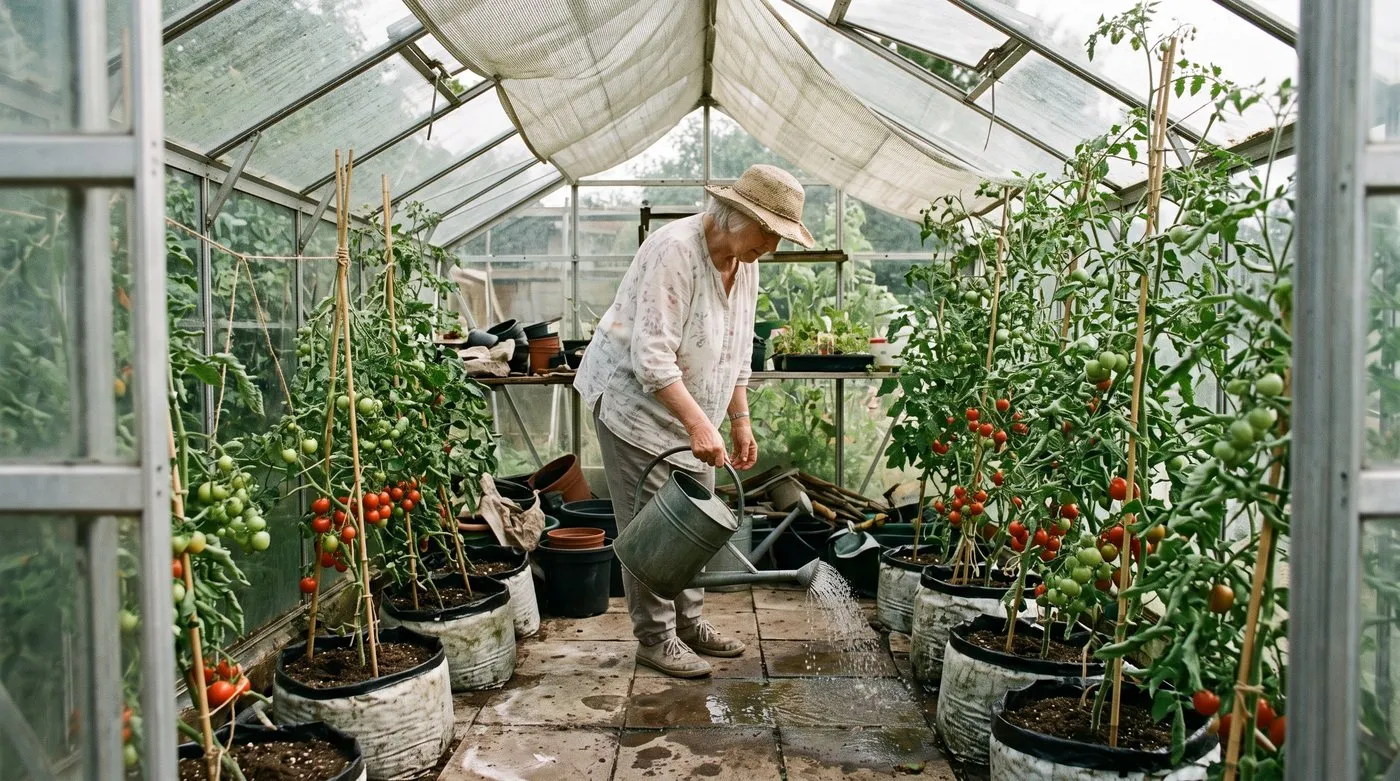
Wetting the floor cools the air fast on a hot day. Pair it with open vents and shading to keep the greenhouse below 27°C.
September: autumn salads and overwintering onions
September is when you swap summer crops for winter salads. Sow lamb’s lettuce, mizuna, rocket and winter purslane, plus winter lettuce varieties. They come up fast in the last of the warmth and crop slowly through winter.
Plant prepared hyacinth bulbs in bowls now for flowers at Christmas. Keep them cool and dark for about 8-10 weeks, then bring them into the warm.
Plant overwintering onion sets such as ‘Radar’ or ‘Senshyu Yellow’ outside or in the greenhouse border. They root before winter and crop earlier than spring-planted sets.
Pick the last tomatoes and ripen any green ones indoors. Clear out finished plants and compost the healthy bits. Give the glass a clean before the low autumn sun.
October to December: winter salads and tender plants
The greenhouse keeps working in winter, mostly with salads and plants sheltering from the cold. Pick your autumn-sown leaves often. Cut-and-come-again leaves give you several pickings from one sowing.

A small heater keeps the greenhouse frost-free, so winter salads and tender plants stay cosy.
Sow broad beans in pots in October or November for an early spring crop. ‘Aquadulce Claudia’ is the go-to variety. Plant them out in early spring.
Bring citrus, pelargoniums and fuchsias into the greenhouse before the first hard frost. A heater set to about 5°C keeps them frost-free. Take a few spare fuchsia cuttings first, as they root in plain water on a windowsill indoors. Our greenhouse heating guide compares heaters and running costs. And our guide to insulating a greenhouse for winter shows how bubble wrap keeps the heat in.
Month-by-month quick reference
| Month | Sow | Plant or do | Pick |
|---|---|---|---|
| January | Early lettuce | Force rhubarb, clean glass | Forced rhubarb, winter salads |
| February | Tomatoes, peppers, chillies, aubergines | Sweet peas in root trainers | Winter salads |
| March | Cucumbers, half-hardy annuals, herbs | Pot on seedlings | Winter salads |
| April | Runner beans, sweetcorn, courgettes, melons | Plant tomatoes (heated greenhouse) | Spring salads |
| May | Last melons, quick salads | Plant all tender crops | Lettuce, radish, herbs |
| June | More lettuce | Tie in, feed, water | First tomatoes (heated), salads |
| July | Quick salads | Shade, damp down, feed | Tomatoes, cucumbers, peppers |
| August | Winter brassicas (for outside) | Keep feeding, remove lower leaves | Tomatoes, cucumbers, peppers, melons |
| September | Winter lettuce, mizuna, rocket | Plant hyacinths and onion sets | Last tomatoes, peppers |
| October | Broad beans | Clear finished crops, clean glass | Autumn salads |
| November | Broad beans | Bring tender plants under cover | Winter salads |
| December | Nothing | Protect sheltering plants | Winter salads |
Handy greenhouse kit
Three things make growing all year much easier: a heater, an automatic vent opener and a well-made greenhouse.
A greenhouse heater keeps frost out in the coldest months. Pick one with a thermostat, like the Eden 2kW Greenhouse Heater, so it only runs when the temperature drops below your setting.
An automatic vent opener, like the Palram Canopia Automatic Roof Vent Opener, stops things cooking while you’re out. It uses a wax cylinder that swells in the heat, so it needs no electricity.
The greenhouse itself matters most. An 8ft x 5ft model, like the Vitavia Venus 5000, has room for several cordon tomatoes plus other crops.
Choosing tomatoes for next summer? Have another look at the best greenhouse tomato varieties.
Frequently asked questions
What can I grow in an unheated greenhouse in winter?
Hardy winter salads do well without any heat. Sow lamb’s lettuce, mizuna, winter purslane and rocket in September and they’ll crop slowly all winter. Throw fleece over them on the coldest nights.
When should I start tomato seeds in a greenhouse?
Sow from late February in a heated propagator at 18-21°C. Without extra heat, wait until March or April when it’s warmer and lighter. Plant into an unheated greenhouse once nights stay above about 10°C, usually in May.
Can I grow all year round in a greenhouse?
Yes, you can pick something every month. Winter gives you salad leaves and forced rhubarb. Spring and summer are all about tomatoes, peppers and cucumbers. Autumn brings late salads and sowings for winter.
Do I need a heater for a greenhouse?
Not for summer crops or hardy winter salads. A heater helps keep tender plants like pelargoniums and citrus frost-free, and gives early sowings a boost. Pick one with a thermostat so it only runs when needed.
How do I stop a greenhouse overheating in summer?
Open the roof vents, side vents and door on warm days. Put up shade paint or netting from mid-spring. On hot sunny days, wet the paths and staging to cool the air.
Can you grow tomatoes and cucumbers in the same greenhouse?
Yes, most home growers do. Cucumbers like it warm and humid, while tomatoes prefer drier, airier conditions. Give cucumbers the far end, away from the door, and damp down around them on hot days. Put tomatoes nearer the door and vents, and water them at the base. All-female cucumber varieties avoid the bitter fruit that pollination can cause.
Our team produces practical UK gardening guidance from source research, contributor records and established horticultural practice. Editorial standards are overseen by Matt W.