Key takeaways
- Soak seeds overnight and sow in April somewhere warm, around 20-25C
- Move plants into the greenhouse once nights stay above 15C
- Pick pods every two or three days at 5-8cm long, before they get tough
- Clemson Spineless is a reliable variety to start with
- Dab the flowers with a soft brush if pods aren't forming
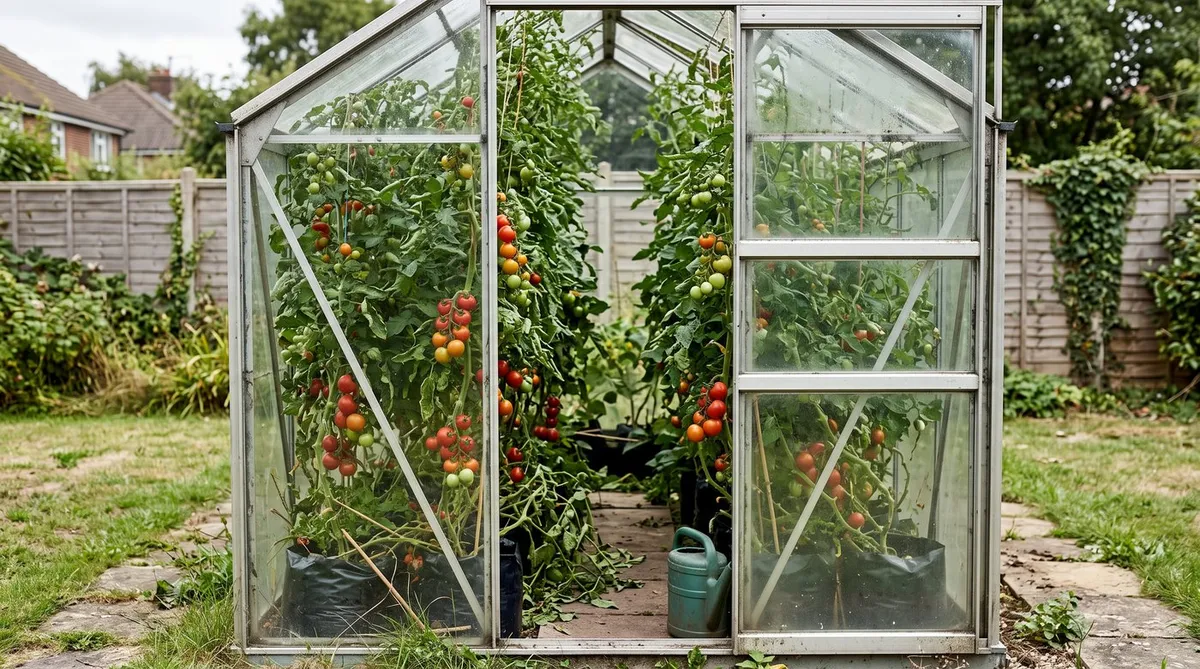
Okra is a fun, rewarding crop for a UK greenhouse. It’s in the mallow family, a cousin of hibiscus, so you get lovely yellow flowers followed by tender green pods. Home-grown okra picked young is a real treat.
Why okra needs a greenhouse in the UK
Okra comes from tropical Africa and needs more warmth than a British summer gives outdoors. It stops growing when it’s cool and won’t flower when it’s chilly. Even in July, UK nights can be too cold for it outside.
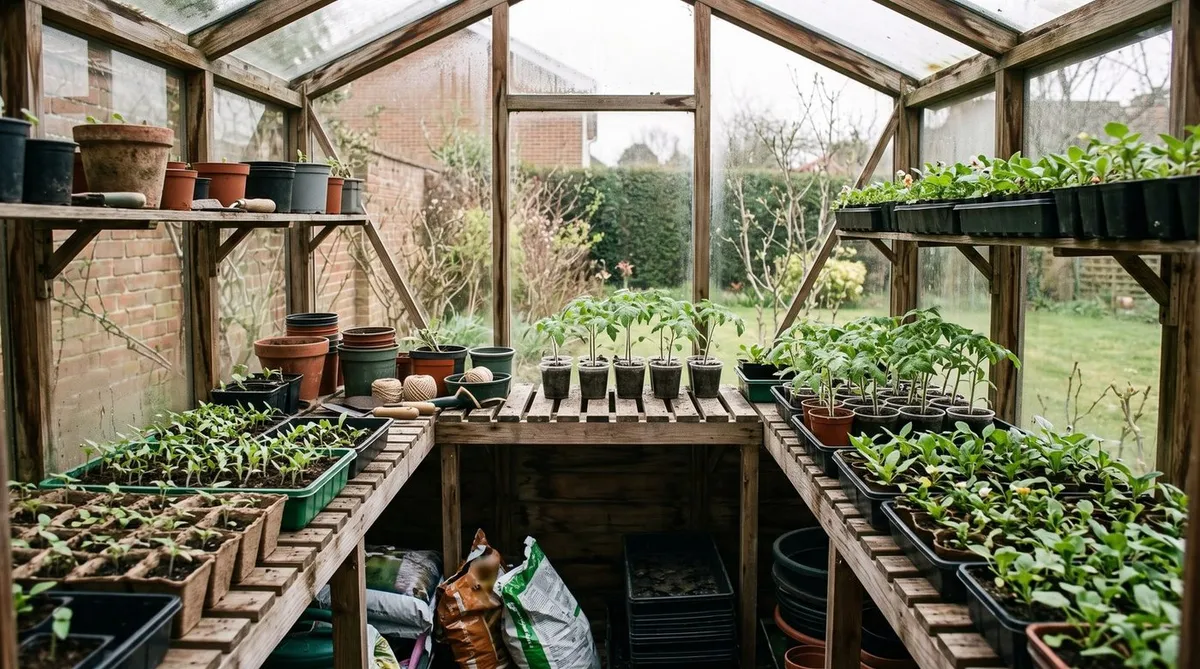
A greenhouse traps the day’s heat and keeps nights warmer. In much of England, an unheated greenhouse is warm enough from June to September, which is just what okra wants.
A heated greenhouse lets you plant earlier and keep picking into October. It’s worth it if you already heat yours for other tender crops.
Which okra varieties grow best in the UK?
Choose a variety that crops quickly. Some traditional types need a longer, hotter season than a UK greenhouse can give. Faster, more compact varieties are much more reliable here.
Recommended varieties
Clemson Spineless is a reliable choice to start with. The pods have no prickles and the plants stay a manageable size. Cajun Delight crops a little earlier, which helps in a short season. Star of David grows tall and needs a strong cane.
 Young okra seedlings on a windowsill, ready to pot on once their first true leaves appear.
Okra variety comparison table
| Variety | Size | Good for |
|---|---|---|
| Clemson Spineless | Medium | A reliable first okra, prickle-free pods |
| Cajun Delight | Compact | Shorter seasons, crops earlier |
| Star of David | Tall | Bigger greenhouses, needs a stout cane |
How to sow okra seeds
Okra seeds have a hard coat, so soak them first. Unsoaked seed comes up slowly and unevenly.
Getting the seeds ready
- Soak the seeds in warm water overnight, or up to 24 hours. Warm to the touch, not hot. Change the water halfway if soaking for the full day.
- Or nick the seed coat with a nail file, on the side away from the little eye. It’s quicker, but take care not to go too deep.
Sowing step by step
- Fill small pots with moist, peat-free seed compost and firm gently.
- Sow one seed per pot, 2cm deep. Okra doesn’t like its roots disturbed, so stick to one per pot.
- Put them in a heated propagator at 20-25C. They won’t come up if it’s cold.
- Keep the compost moist but never soggy.
- Seedlings appear in one to two weeks from soaked seed.
- Move them into good light as soon as they’re up. A warm, sunny windowsill is ideal.
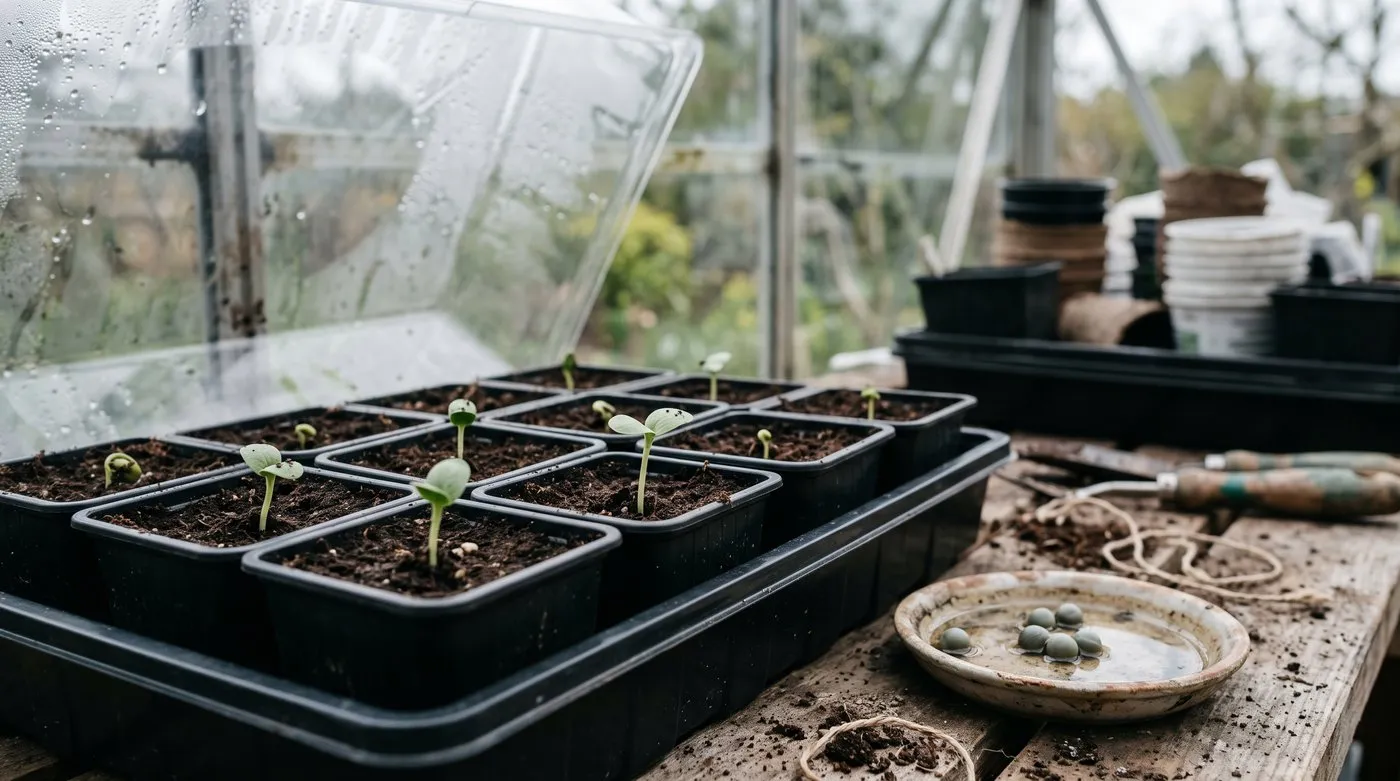
Sow one soaked seed per pot, as okra hates having its roots disturbed. Keep the propagator at 20-25C or nothing much will happen.
When to sow
Sow in early to mid-April in most of the UK. That gives seedlings four to six weeks before they move into the greenhouse in late May or June. In the north, sow in late April and plant out in June.
Watch out: Young okra hates the cold, and one chilly night can kill it. Don’t move seedlings into an unheated greenhouse until nights stay above 12C, and ideally above 15C.
How to plant and grow okra in a greenhouse
 Okra flowers are a lovely yellow with a dark centre. Each lasts just one day before a pod forms.
Move okra into the greenhouse when it has four to six true leaves and nights stay above 15C. In southern England that’s usually late May. In the Midlands and further north, wait until June.
Soil
Okra likes rich, well-drained soil. Dig in plenty of well-rotted compost or manure a few weeks before planting. On heavy clay, add grit for drainage, as okra roots rot quickly in wet ground.
In pots, use at least a 30cm pot per plant, filled with multipurpose compost mixed with some perlite. Dark pots warm up more in the sun, which okra likes.
Spacing and position
Space plants 45-60cm apart in the border. Put them in the warmest spot, often the back of the greenhouse away from the door. Okra grows tall, so keep it where it won’t shade smaller crops like cucumbers or peppers.
Keeping it warm, not baking
Aim for warm days of 20-30C and nights above 15C. Open the vents on hot days so it doesn’t overheat. Our greenhouse ventilation and humidity guide explains how.
Okra copes with dry heat better than most greenhouse crops and doesn’t need the steamy air cucumbers like. Very damp, still air can bring mould, so keep air moving.
Staking
Push in a bamboo cane at planting time, so you don’t damage the roots later. Tie the main stem loosely with soft string as it grows. Tall varieties like Star of David need a good, sturdy cane.
How to pollinate okra
Okra flowers can pollinate themselves. Each one opens for a single day, usually in the morning, and closes by the afternoon. A pod starts to form soon after.
Outdoors, wind and insects help. In a greenhouse, the still air means fewer pods. A little hand pollination makes a real difference.
Hand pollinating
- Look for open flowers in the morning. The yellow petals open wide and you can see the central column.
- Take a small, dry paintbrush or cotton bud and swirl it gently around the column to pick up pollen.
- Dab it on the tip of the column in the same flower, and on other open flowers.
- Do it daily while the plants are flowering, from July to September.
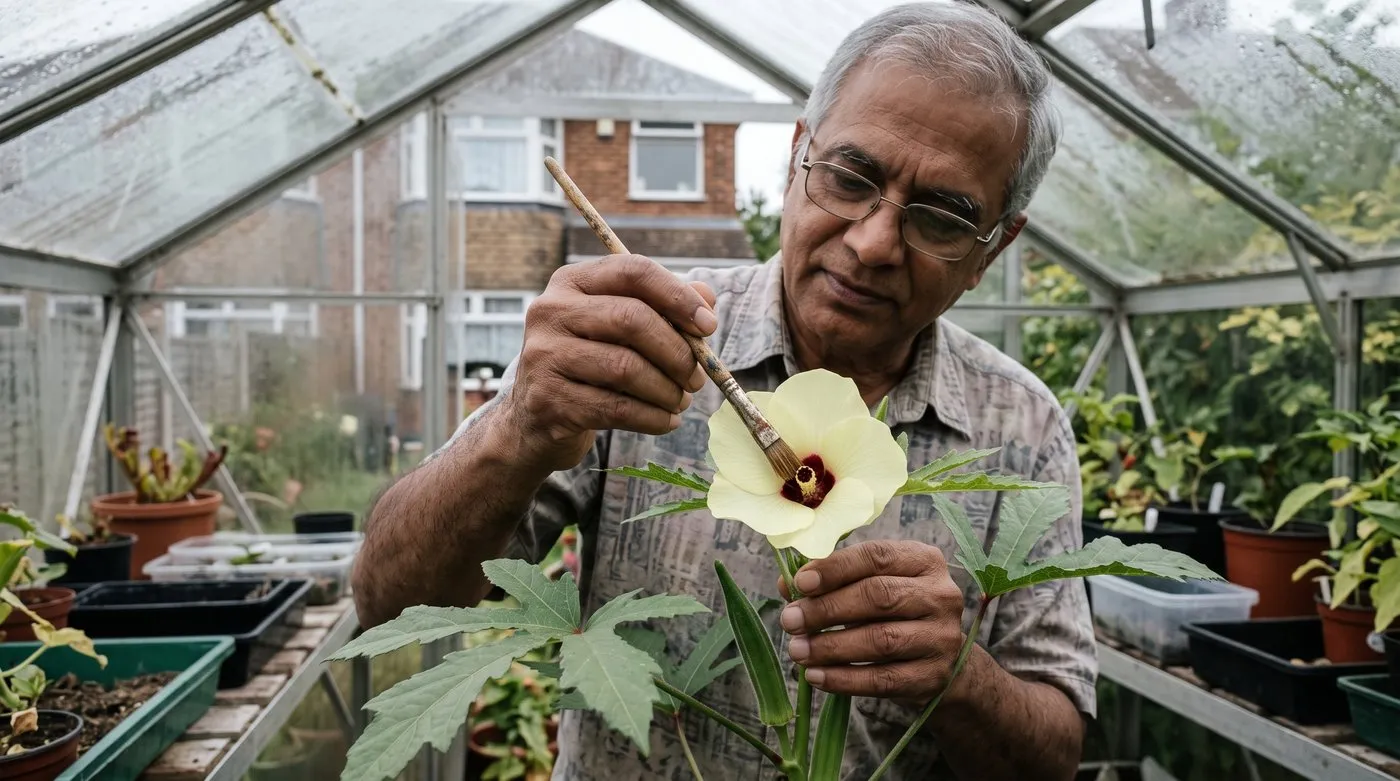
Each okra flower opens for just one morning, so a quick daily swirl with a dry brush is worth it. Still greenhouse air means fewer pods without a little help.
How to feed and water okra
Okra needs steady moisture but hates soggy roots. Too dry and the flowers drop. Too wet and the roots rot.
Watering
- Water at the base, not over the leaves.
- Water every day or two in warm weather. Check the soil a few centimetres down first.
- Water daily in hot spells, especially plants in pots.
- Mulch around the base with straw or garden compost to keep moisture in.
Feeding
- Before flowering: a general liquid feed every two weeks.
- From the first flower: switch to tomato feed once a week.
- When picking lots: feed a little more often to keep pods coming.
- Go easy on nitrogen once flowering starts. Too much gives leafy plants with few pods. It’s the most common feeding mistake.
A bottle of tomato feed goes a long way. If you’re watching costs, our greenhouse heating guide has tips on keeping running costs down.
Month-by-month okra calendar
Here’s the okra year in a UK greenhouse. In northern England and Scotland, everything runs two or three weeks later.
| Month | What to do |
|---|---|
| March | Order seeds. Clemson Spineless and Cajun Delight are easy to find |
| April | Soak seeds and sow in small pots in a heated propagator |
| May | Pot on seedlings. Plant into the greenhouse in late May in the south |
| June | Plant out in the Midlands and north. Water regularly, feed fortnightly and stake |
| July | First flowers. Start hand pollinating and switch to weekly tomato feed. First pods in late July |
| August | Busiest picking time. Pick every two or three days. Water daily in hot spells |
| September | Picking continues but slows as it cools. Last pods in late September |
| October | Clear old plants onto the compost heap and clean the greenhouse |
How to harvest okra
 Pick okra pods young, at 5-8cm long, for the best texture and flavour.
Picking at the right time is the difference between tender pods and stringy ones. Pods grow fast in warm weather. One that’s perfect today can be tough in a couple of days.
When to pick
- Pick at 5-8cm long. At this size they snap cleanly.
- Pick every two or three days. Old pods left on the plant slow it down.
- Try the snap test. Bend the tip gently. If it snaps, it’s ready. If it bends, it’s past its best.
- Pick in the morning, when the pods are crispest.
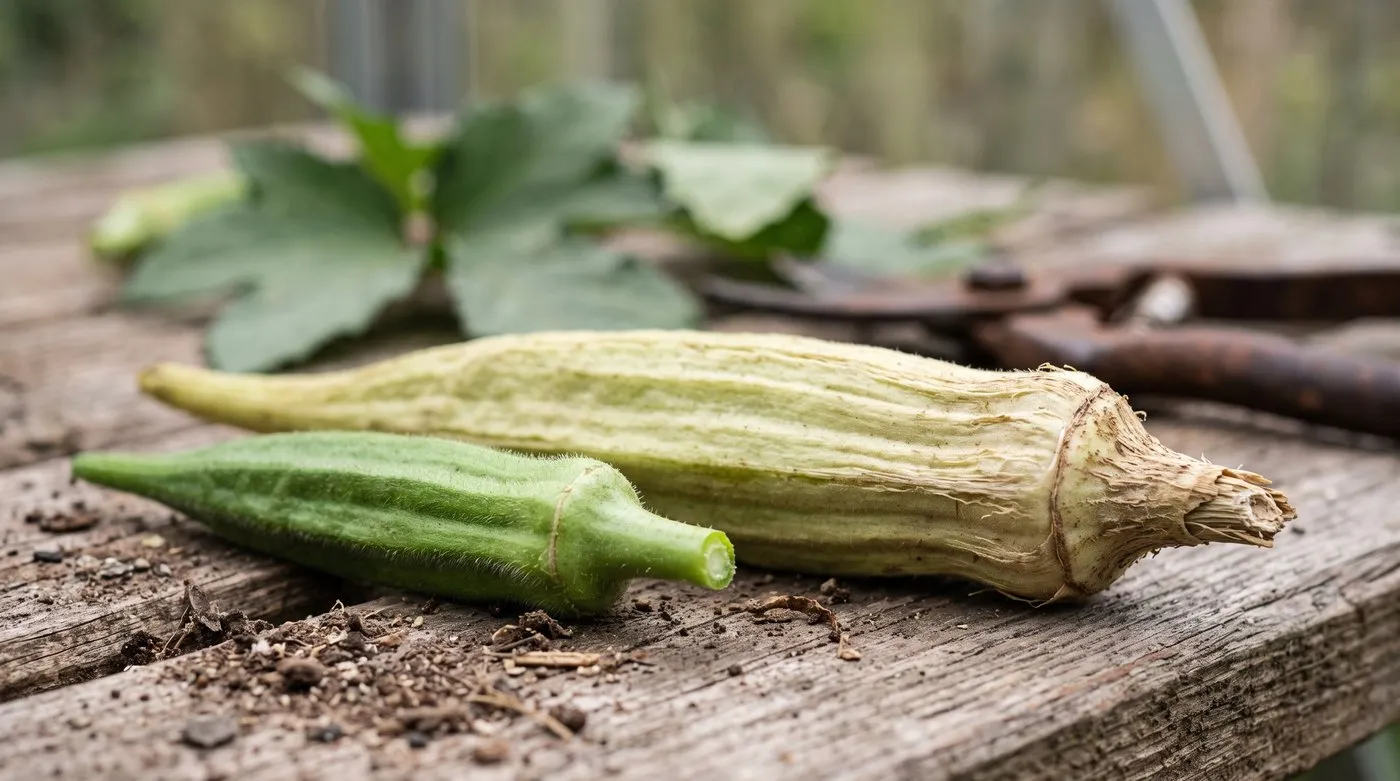
The short pod on the left is perfect for picking, the long one has gone stringy. Use the snap test: if the tip bends rather than snaps, it’s past its best.
How to pick
Cut the stalk just above the pod with secateurs or a knife. Don’t twist or pull, as the stem is tough and you’ll damage the plant. Some varieties have fine hairs that can irritate skin, so wear thin gloves if you’re sensitive.
How much you’ll get
A healthy plant keeps cropping for several weeks if you keep picking. A handful of plants gives enough for regular meals through late summer.
Common okra mistakes
Sowing too early
Seeds sown in February or March sit on the windowsill too long before the greenhouse is warm enough. They get leggy and pot-bound and rarely recover. April is early enough.
Planting into cold soil
Cold soil is a big cause of failure. Wait until the greenhouse soil has properly warmed up before planting. A cheap soil thermometer helps.
Letting pods get too big
Big pods are tough and stringy. Pick at 5-8cm even if it feels a bit early. You’ll get more pods overall, because the plant keeps flowering.
Overwatering young plants
Seedlings rot easily in cold, wet compost. Water sparingly until they’re growing strongly and it’s warm. Let the top of the compost dry a little between waterings early on.
Forgetting to pollinate
In a closed greenhouse, flowers may not set many pods on their own. A quick daily dab with a paintbrush only takes a minute or two.
Pests and diseases
Okra is a fairly easy crop, but keep an eye out for a few common greenhouse pests.
Aphids
Greenfly or blackfly sometimes gather on shoot tips and flower buds. Squash small groups by hand or knock them off with a spray of water. For bigger outbreaks, bring in ladybird or lacewing larvae. Check plants weekly from June.
Whitefly and red spider mite
These common greenhouse pests can turn up on okra too. Tiny white flies rising from the leaves, or fine webbing and speckled leaves, are the signs. Damping down the greenhouse floor in hot weather helps against red spider mite, and biological controls work well for both.
Flea beetles
Tiny black beetles that make small round holes in the leaves, mostly on young plants. Older plants shrug off the damage. Fine mesh over young plants keeps them off.
Root rot
Too much water or poor drainage makes roots rot. The leaves yellow from the bottom up and the stem goes soft and brown at soil level. Prevention is the only cure: good drainage, water at the base and never leave pots standing in water. Use fresh compost each year.
Powdery mildew
A white, dusty coating on leaves in late summer, when days are warm and nights cool. Space plants well, open the vents and pick off badly affected leaves.
How to cook and use fresh okra
Home-grown okra picked young is crisp, mild and only a little slimy. That slimy juice is a natural thickener, which is why okra is a favourite in gumbo and curries.
Keeping it less slimy
- Cook it fast and hot. Stir-fry small whole pods for a few minutes.
- Roast it at 200C for 15-20 minutes with oil and salt for crispy pods.
- Avoid long, slow cooking if you don’t like the slime. Cutting pods releases more of it.
- Add something sharp, like lemon juice or tomatoes, early in cooking.
Ways to enjoy it
- Bhindi bhaji: sliced okra fried with onion, cumin, turmeric and chilli in a hot, dry pan.
- Roasted okra: whole pods tossed in oil, salt and smoked paprika, roasted until lightly charred.
- Gumbo: the Louisiana stew where okra thickens the sauce, simmered with tomatoes, peppers and stock.
- Pickled okra: small whole pods in spiced vinegar, stored in sterilised jars.
Good for you
Okra is a good source of fibre and vitamin C, and it’s low in calories.
For what else to grow under glass through the year, see our greenhouse growing calendar.
Frequently asked questions
Can you grow okra outdoors in the UK?
Only in the warmest spots in an unusually hot summer. Okra needs steady warmth and stops growing when it’s cool. Even in southern England, outdoor crops fail most years. A greenhouse gives it the warm days it needs to flower and make pods.
When should I sow okra seeds in the UK?
Sow indoors in early to mid-April. That gives seedlings four to six weeks to grow strong roots before they go into the greenhouse in late May or June. Further north, sow in late April and plant out in June.
Why are my okra plants not producing pods?
It’s usually too cold for the flowers to set. Each flower only opens for one day, and cool weather stops it being pollinated. Cold nights can make flowers drop off. Too much nitrogen feed, which gives leaves instead of flowers, can also be to blame.
How often should I pick okra pods?
Every two or three days without fail. Pods grow fast in warm weather and turn woody soon after they’re ready. Leaving old pods on also slows the plant down. Picking at 5-8cm keeps new pods coming.
Is okra easy to grow in a greenhouse?
Yes, once you can keep it warm enough. It needs no fiddly pruning and isn’t hard work. Keeping it warm is the main challenge. An unheated greenhouse in the south usually manages this from June to September.
What is the best okra variety for UK greenhouses?
Clemson Spineless is a good all-round choice. Its pods have no prickles and the plants stay a manageable size. Cajun Delight is worth trying for shorter seasons because it crops a little earlier.
How do I store fresh okra after picking?
Eat it within about three days for the best texture. Keep the pods unwashed in a paper bag in the fridge, as damp makes them go brown and spoil. Okra freezes well too. Blanch whole pods for 3 minutes, cool them in iced water and freeze them flat on a tray.
Our team produces practical UK gardening guidance from source research, contributor records and established horticultural practice. Editorial standards are overseen by Matt W.