
Key takeaways
- Hardy hibiscus copes with UK winters once established
- It flowers from late July to October, filling the late-summer gap
- Give it full sun and soil that drains well, ideally by a sunny wall
- Prune in late February, as it flowers on new growth
- Leaves appear very late in spring, so don't assume it has died
- 'Blue Chiffon' and 'Oiseau Bleu' are reliable, popular varieties
Hardy hibiscus is one of the most rewarding late-summer shrubs you can grow in the UK. Just as most flowering shrubs are finishing, Hibiscus syriacus gets going. Its big trumpet flowers open from late July to October in blue, purple, pink and white.
Despite the tropical look, this is a tough deciduous shrub from Asia that has grown in British gardens for centuries. On the right site, it’s a reliable star.
Which hardy hibiscus varieties grow best in the UK?
There are lots to choose from. The RHS page on Hibiscus syriacus lists varieties with its Award of Garden Merit, a good sign of a reliable plant.
| Variety | Flower colour | Flower type | Best feature |
|---|---|---|---|
| ’Blue Chiffon’ | Lavender-blue | Frilly semi-double | Sets little seed, tidy |
| ’Oiseau Bleu’ | Violet-blue, dark eye | Single | Classic blue |
| ’Woodbridge’ | Rose-pink, crimson eye | Single | Strong grower |
| ’Diana’ | Pure white | Single | Big white blooms |
| ’Hamabo’ | Pale pink, red veins | Single | Pretty two-tone look |
| ’Red Heart’ | White, crimson centre | Single | Striking contrast |
| ’Duc de Brabant’ | Red-purple | Double | Rich colour |
| ’Lavender Chiffon’ | Lavender-pink | Semi-double | Compact, good for pots |
 A ‘Blue Chiffon’ flower with its frilly lavender-blue petals. It’s one of the most reliable choices for UK gardens.
Where to plant hardy hibiscus in the UK
A south or west-facing wall is perfect. The wall soaks up heat in the day and gives it back at night, so plants there tend to flower earlier and for longer.
Soil: It’s happy in most soils as long as they drain well. On heavy clay, dig a wide, deep hole and mix the soil with sharp sand or grit. Don’t add manure or rich compost, which gives leaves instead of flowers.
Shelter: The open flowers are delicate and get torn by strong wind. A spot out of the worst wind helps. Fences, hedges or other shrubs all make good windbreaks, and mixed cottage garden borders give natural shelter.
Spacing: Allow 1.5-2m between plants for a hedge, or more in a mixed border. It’s slow, and takes several years to reach its full 2-3m.
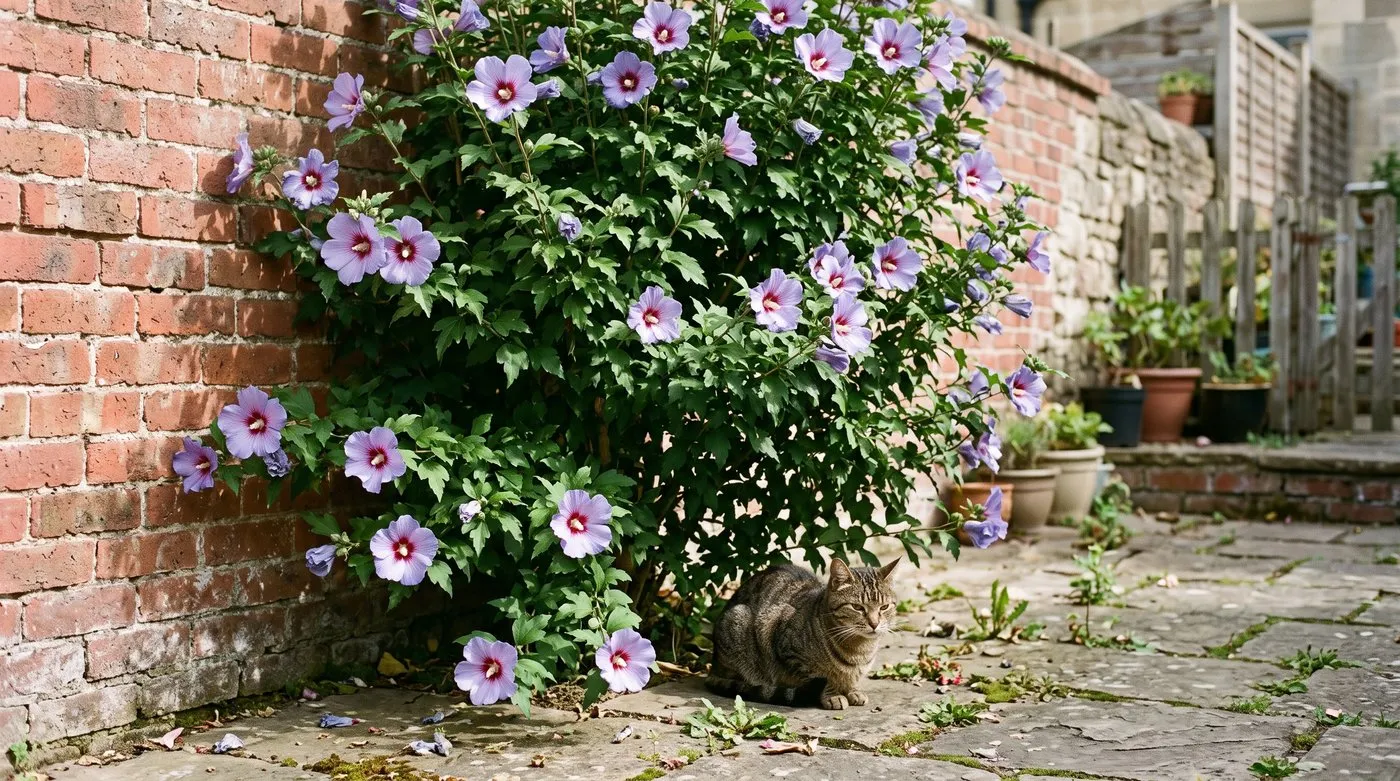
A south or west-facing wall gives hardy hibiscus the warmth it loves. Plants there flower earlier and for longer.
How to plant hardy hibiscus
Spring is the best time to plant, from April to June. The roots then get a whole season to settle before winter. Autumn planting can work in the south but is risky further north, where cold, wet soil can rot the roots.
How to plant:
- Soak the rootball in a bucket of water for half an hour
- Dig a hole twice as wide as the rootball and just as deep
- On clay, mix sharp sand into the soil. On sandy soil, mix in some garden compost
- Set the plant so the top of the rootball is level with the ground. Never plant deeper
- Fill in and firm gently with your foot
- Water well, about a bucketful
- Mulch with bark, keeping it a hand’s width away from the stem
The first winters: For the first couple of winters, spread a thick mulch of straw or leaf mould over the roots from November to March. In an exposed garden, wrap the stem in fleece during hard frosts. Once established, it doesn’t need any winter protection.
Our guide to the best plants for clay soil has more tips if your garden has heavy ground.
How to prune hardy hibiscus
Hardy hibiscus flowers on new growth. Flowers form on shoots grown this year, so pruning in late winter gives lots of strong new shoots and plenty of flowers.
When to prune: Late February to early March, just before the buds start to swell. Much earlier and the cuts can be hit by frost. Much later and you risk cutting off new growth.
How to prune:
- Take out dead, damaged and crossing branches first, cutting back to healthy wood
- Cut last year’s shoots back to 2-3 buds from the main branches
- On older plants, remove one or two of the oldest stems at the base each year
- Aim for an open vase shape, removing shoots that grow into the middle
What if you skip it? It will still flower, but on longer, leggier stems with smaller blooms. After a few years without pruning, the middle gets crowded and flowering drops off.
 Pruning a dormant hardy hibiscus in late February. Cut back to 2-3 buds from the main branches for strong flowering shoots.
Reviving an old plant: Neglected plants respond well to a hard cut. In March, cut the whole plant back to 30-40cm from the ground. It will send up vigorous new shoots. You lose a year of flowers, but the plant gets a fresh start. It’s a handy trick for many flowering shrubs.
Month-by-month hardy hibiscus care
| Month | What to do |
|---|---|
| January | Order new plants. Check the mulch over young plants. |
| February | Prune in the last week. Cut last year’s shoots to 2-3 buds. |
| March | Finish pruning before buds swell. Mulch with bark. |
| April | Plant new shrubs. Water weekly in dry spells. |
| May | New leaves finally appear. Start a fortnightly tomato feed. |
| June | Growth speeds up. Stake whippy stems on windy sites. Look for greenfly on soft tips. |
| July | First flowers open on warm walls. Keep feeding and water in dry spells. |
| August | Flowering at its best. Pick off faded blooms. |
| September | Still flowering. Water less. Stop feeding mid-month. |
| October | Last flowers. Leaves turn yellow and fall. |
| November | Mulch the roots of young plants for winter. |
| December | Check stakes and ties. Plan any new planting. |
How to grow hardy hibiscus in containers
Hardy hibiscus does well in a pot. It’s handy in colder areas, where you can move the pot somewhere sheltered in winter. The compact ‘Lavender Chiffon’ is a great patio choice.
Pot size: Start with a pot about 40cm across and move up to 50cm after a couple of years. Terracotta is better than plastic, as it breathes and helps stop waterlogging. Make sure there are plenty of drainage holes.
Compost: Use John Innes No. 3 mixed with plenty of grit. It’s heavy enough to stop the pot tipping and drains well. Multi-purpose compost on its own stays too wet.
Watering: Water when the top few centimetres feel dry, which may be every few days in midsummer. Too much water is worse than too little. Yellowing lower leaves are a sign of soggy roots.
Feeding: Give a liquid tomato feed every two weeks from May to mid-September. It encourages flowers. Avoid general feeds high in nitrogen, which give you leaves instead.
 A hardy hibiscus in a terracotta pot on a patio. Terracotta drains well and is heavy enough to stop the pot blowing over.
Repotting: Every two or three years in early March, refresh the compost or move up one pot size. Tease out any roots circling the pot.
Common mistakes when growing hardy hibiscus
Planting in shade. It needs at least six hours of sun a day, and more is better. For a shady garden, try one of the best shrubs for shade instead.
Pruning at the wrong time. Pruning in summer cuts off the flower buds. Prune in late February. If you miss it, leave it for a year rather than cutting later in spring.
Soggy roots on clay. It copes with dry spells much better than wet feet. On clay, a planting hole can fill with water like a sump. Mixing in sand or grit, and a layer of gravel at the bottom of the hole, helps a lot.
Panicking when leaves appear late. It’s one of the last shrubs to leaf up. Bare stems in May are completely normal. Wait until June before deciding it has died, and scratch the bark to check for green.
Feeding too much nitrogen. Chicken manure pellets and general-purpose feeds push leaf growth. Use a high-potash feed instead, such as tomato feed or a sprinkle of sulphate of potash in March.
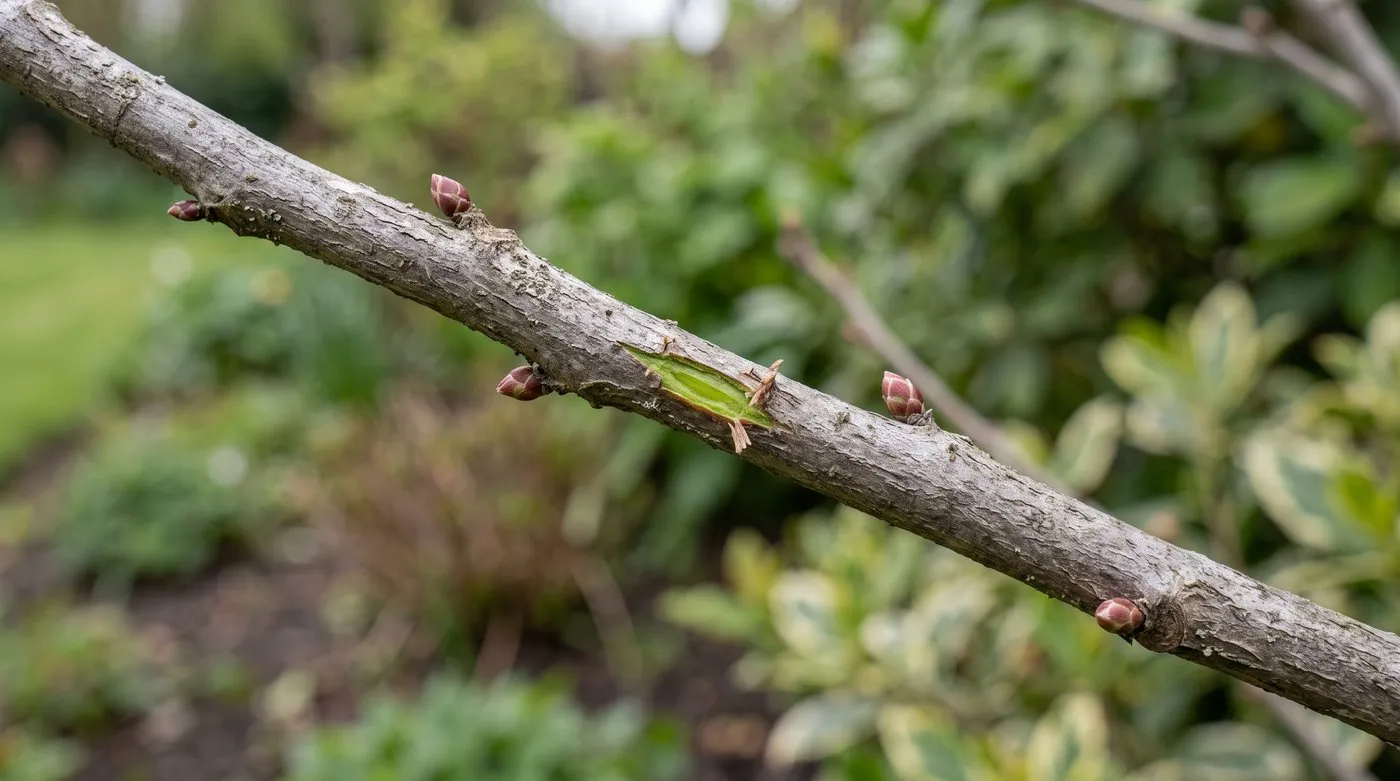
Hardy hibiscus is one of the last shrubs to leaf up. Scratch the bark, and if it’s green underneath, the plant is alive and well.
Hardy hibiscus for pollinators
Hardy hibiscus is a great late meal for bees. By late summer, many garden flowers are over and bumblebees struggle to find food. Hibiscus keeps flowering right through to October. Each flower lasts about a day, but new ones keep coming.
Single-flowered varieties such as ‘Oiseau Bleu’, ‘Woodbridge’ and ‘Hamabo’ are best for bees, as they can get straight in. Double flowers are harder for bees to reach.
In the Midlands and further north, a sunny wall gives earlier, longer flowering. In the south-east, open borders do well too. On clay, improving the drainage really matters, as young plants are often lost in wet soil.
How to propagate hardy hibiscus
Softwood cuttings in June root most easily. Take 10-15cm cuttings from shoot tips without flowers. Strip the lower leaves, dip the base in rooting powder and push into a mix of perlite and peat-free compost. Keep them warm in a propagator. They should root in a month or so.
Semi-ripe cuttings in August are simpler. Take slightly longer cuttings with a small heel of older wood. Root them in the same mix without extra heat. They take longer, and fewer will root.
Seed is hit and miss. Named varieties don’t come true from seed, and seedlings take years to flower. The drought-tolerant plants that look good next to hibiscus are often easier to grow from cuttings or division.
Pests and diseases
Hardy hibiscus is mostly trouble-free in the UK.
Aphids cluster on soft new growth in early summer. Check shoot tips weekly and rub off small groups by hand, or knock them off with a jet of water. For a heavy attack, use an authorised insecticide exactly as the label says. Ladybirds and hoverfly larvae soon arrive to help.
Bud drop is the most annoying problem. Buds form, then fall before opening. It’s usually caused by uneven watering, with the rootball drying out and then getting soaked. Keep the soil evenly moist and mulch to help.
Coral spot sometimes appears on dead wood as small orange-pink spots. Cut out affected branches back to healthy wood and clean your secateurs afterwards. Good pruning to let air through stops it coming back.
Root rot kills plants in waterlogged soil. Improve clay before planting and make sure pots drain freely.
Now you know how to grow hardy hibiscus, have a look at our guide to the best summer flowers for UK gardens for more plants that keep your borders colourful from July to October.
Frequently asked questions
Is Hibiscus syriacus hardy in the UK?
Yes, it’s hardy across most of the UK once established. Young plants appreciate a thick mulch over the roots for their first couple of winters. In colder areas, a sunny wall and soil that drains well give the best results.
When does hardy hibiscus flower in the UK?
It flowers from late July to October in most UK gardens. That’s later than most shrubs, because it flowers on this year’s new shoots. Plants by a warm wall start a little earlier, and in a mild autumn the flowers can carry on for a while longer.
How do I prune hardy hibiscus in the UK?
Prune in late February, before new growth starts. Cut last year’s shoots back to two or three buds from the main branches. This gives strong new shoots with the biggest flowers. Take out dead, crossing or inward-growing branches. Unpruned plants still flower, but the blooms are smaller and fewer.
Can I grow hardy hibiscus in a container?
Yes, it grows well in a pot. Use one at least 40cm across with drainage holes. Fill with loam-based compost (John Innes No. 3) mixed with plenty of grit. Water when the top few centimetres feel dry and give a tomato feed every fortnight from May to August. Repot every two to three years in early spring.
Why is my hardy hibiscus not flowering?
Too little sun is the most common reason. It needs at least six hours of direct sun a day. Pruning in summer also cuts off the flower buds. Too much nitrogen-rich feed gives leaves instead of flowers, so switch to a high-potash feed.
What is the best hardy hibiscus variety for UK gardens?
‘Blue Chiffon’ is a great all-round choice. It holds the RHS Award of Garden Merit, has frilly lavender-blue flowers and sets very little seed, so it stays tidy. ‘Oiseau Bleu’ is just as reliable, with single blue flowers and a dark eye.
Does hardy hibiscus lose its leaves in winter?
Yes, it drops its leaves in autumn. New leaves appear very late, often not until May. Many people think the plant has died. Scratch the bark with a thumbnail, and if it’s green underneath, the plant is alive and will leaf up when it’s warmer.
Our team produces practical UK gardening guidance from source research, contributor records and established horticultural practice. Editorial standards are overseen by Matt W.


