Key takeaways
- Spring-flowering spirea flowers on last year's stems, so prune it straight after flowering
- Summer-flowering spirea flowers on new growth, so cut it back hard in March
- 'Anthony Waterer' is a reliable summer spirea, flowering from June to September
- Spirea copes with clay, chalk, sand and loam
- Cuttings taken in July root easily
- Bees, hoverflies and butterflies love the flat flower heads
Spirea is one of the toughest, most rewarding flowering shrubs you can grow in the UK. It’s fully hardy, grows in almost any soil and is covered in flowers that bees and butterflies love, from spring right through to early autumn.
Whether you want a billowing bridal wreath hedge, a neat pink shrub for the front of a border or something that shrugs off clay and neglect, there’s a spirea for you. The one thing to get right is pruning. Some flower on last year’s stems and some on new growth, and that decides when you cut.
Which spirea should you grow?
There are lots of spireas, but a handful do really well in UK gardens. Choose by how much space you have and whether you want spring or summer flowers.
Spring-flowering spirea flowers on last year’s stems. It has clusters of white flowers along arching stems and tends to be bigger, up to about 2m. In May it’s a cascade of white.
Summer-flowering spirea flowers on this year’s new growth. It has flat heads of pink, red or crimson flowers at the tips of the shoots. These are more compact, usually 50-120cm, and flower from June to September.
| Bridal wreath (S. x vanhouttei) | ‘Snowmound’ (S. nipponica) | ‘Anthony Waterer’ (S. japonica) | ‘Goldflame’ (S. japonica) | ‘Little Princess’ (S. japonica) | |
|---|---|---|---|---|---|
| Flowers | May-June | May-June | June-Sept | June-Aug | June-Sept |
| Colour | White | White | Crimson-pink | Deep pink | Pale pink |
| Height | 1.5-2m | 1-1.5m | 80-120cm | 60-80cm | 50-60cm |
| Flowers on | Last year’s stems | Last year’s stems | New growth | New growth | New growth |
| Prune | After flowering | After flowering | March | March | March |
| Leaves | Mid-green | Dark green | Bronze tips | Copper, then gold | Mid-green |
| Soil | Any that drains | Any that drains | Any, even clay | Any, even clay | Any that drains |
For a cottage garden planting plan, put arching bridal wreath at the back and compact ‘Anthony Waterer’ or ‘Little Princess’ at the front. The whites and pinks look lovely with roses, lavender and hardy geraniums.
 Bridal wreath spirea covers its arching stems in white flowers in May and June.
How to plant spirea
Plant bare-root spirea between October and March, or potted plants any time of year. Autumn planting gives roots the winter to settle before flowering.
Where to plant: Spirea flowers best in full sun but copes with part shade. Spring types handle shade a little better than summer ones. Avoid deep shade, where you’ll get fewer flowers and weak, leggy stems.
Soil: Spirea grows in clay, chalk, sand and loam. On heavy clay soil, dig some composted bark into the top layer to help drainage. On thin chalky soil, add garden compost to hold more moisture. Good loam needs nothing.
Planting:
- Dig a hole twice as wide as the root ball and the same depth
- Fork over the bottom and sides to loosen packed soil
- Set the plant so the top of the root ball is level with the ground
- Backfill with the soil you dug out, with a handful of bonemeal mixed in
- Firm gently with your foot and water well
- Spread a 5cm mulch of composted bark, keeping it off the stems
Spacing: Plant bridal wreath 1.2-1.5m apart for a flowering hedge, or 1.8m apart as single shrubs. Space japonica types 60-80cm apart in a border, or 40cm for a low hedge.
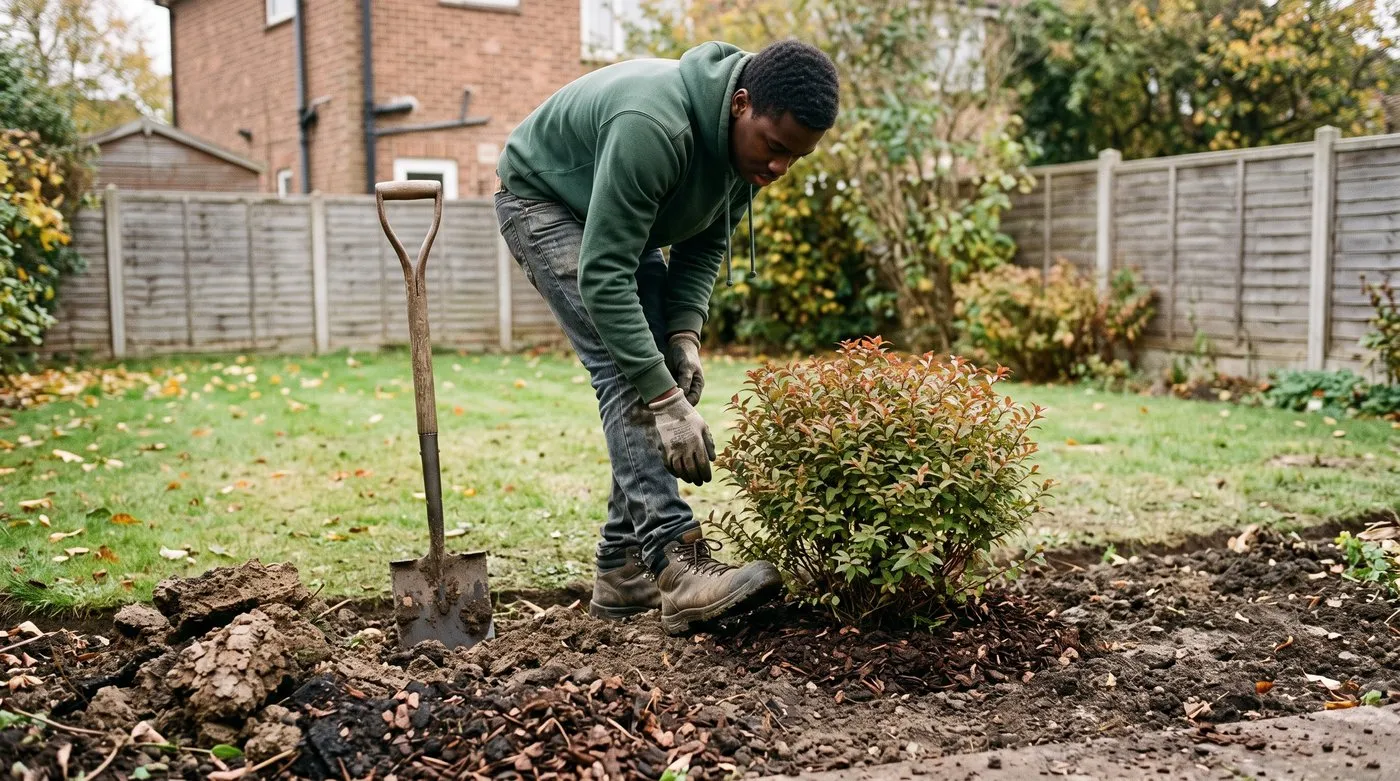
Set the top of the root ball level with the ground and firm gently. On clay, a little composted bark in the top layer helps it drain.
How to prune spirea
It all depends on whether yours flowers on old or new stems. Getting this wrong is the main reason spirea doesn’t flower.
Summer-flowering spirea (S. japonica types): In early to mid-March, before new growth starts, cut all the stems back hard to 15-20cm. Use sharp secateurs for thin stems and loppers for thicker ones. You’ll get strong new shoots that carry this year’s flowers. Skip it and plants get leggy, with flowers only at the tips.
Spring-flowering spirea (bridal wreath, ‘Snowmound’): Prune straight after flowering in May or June. Cut flowered stems back to a strong side shoot or bud facing outwards. Each year, take out up to a third of the oldest stems at the base to keep it lively. Don’t prune these in winter or early spring, or you’ll cut off the flower buds.
 Cutting summer spirea back to 15cm in March gives strong new shoots full of flowers.
Rescuing an overgrown plant: Both types cope with a big cut back. Cut the whole shrub to 15-20cm in late February. Spring types will miss a year of flowers but come back strongly. Summer types flower the same year on the new growth.
Our guide to pruning shrubs explains the basics of pruning to suit when a shrub flowers. For other shrubs to cut back in March alongside spirea, see our spring pruning guide.
Soil, feeding and watering
Spirea copes with more soils than almost any other flowering shrub. That makes it a great choice for tricky ground.
Feeding: Sprinkle a balanced granular feed like Growmore around the base in March, following the pack. Summer spireas enjoy a liquid tomato feed in June for better flowers. Don’t overdo it, as too much feed gives you leaves instead of flowers.
Watering: Water weekly through the first summer. Once settled, spirea only needs water in long dry spells. Mulch each year with composted bark to keep moisture in and weeds down.
How to take spirea cuttings
Semi-ripe cuttings in July root easily. It’s the simplest propagation method for all spireas.
Semi-ripe cuttings (July to August):
- Choose healthy shoots from this year’s growth, without flowers, 10-15cm long
- Cut just below a leaf joint with a sharp, clean blade
- Strip the lower leaves, leaving three or four pairs at the top
- Dip the base in rooting powder
- Push them halfway into a half-and-half mix of perlite and peat-free compost
- Water well and cover with a clear plastic bag, or pop them in a cold frame
- Roots form in about a month or so. Pot them up on their own in September
- Keep them in a cold frame over winter and plant out next spring
Division (November to February): You can lift established japonica clumps and split them with a sharp spade. Each piece needs a few stems with roots. Replant straight away at the same depth. This works best on plants that have been in for a few years.
Hardwood cuttings (November to December): Take pencil-thick cuttings 20-25cm long from this year’s growth. Push them two-thirds deep into a gritty, sheltered spot in the garden. Leave them for a year before moving them. Fewer take than with summer cuttings, but there’s no need for cover or heat.
Spirea care month by month
| Month | What to do |
|---|---|
| January | Check new plants haven’t been lifted by frost. Firm them back in. |
| February | Order bare-root plants. Get planting spots ready. |
| March | Cut back ALL summer-flowering spirea to 15-20cm. Feed and mulch. |
| April | New shoots appear. Watch for aphids on soft tips. |
| May | Spring spireas in full flower. Prune them once the flowers fade. |
| June | Summer spireas start flowering. Give a tomato feed. |
| July | Peak flowering for japonica types. Take cuttings. Water in long dry spells. |
| August | Snip off faded flower heads on summer types for more flowers. |
| September | Pot up rooted cuttings. ‘Goldflame’ starts to colour up. |
| October | Plant new spireas. A great month to plant a new hedge. |
| November | Take hardwood cuttings. Divide big clumps. Clear leaves from the base. |
| December | Have a rest and plan new plantings. |
Spirea is a great fit for a bee-friendly planting plan. With spring and summer types together, you’ll have flowers for pollinators from April to September.
Spirea for hedges
Bridal wreath makes a lovely informal flowering hedge. Its arching stems form a soft, billowing screen that doesn’t need formal clipping. Planted 1.2m apart, it makes a good hedge within a few years.
For a low, neat hedge, use ‘Little Princess’ or ‘Magic Carpet’ planted 40cm apart. Cut back to 15cm each March, then give a light trim with shears in late July. They take regular trimming well and often flower again afterwards.
 White ‘Snowmound’ next to the golden leaves of ‘Goldflame’ makes a striking pair.
For a mixed country-style hedge, bridal wreath sits nicely with hawthorn, field maple and dog rose. Our hedge planting guide covers spacing, soil prep and aftercare.
Common spirea problems
Spirea is one of the healthiest shrubs you can grow. Serious problems are rare.
Aphids: Greenfly sometimes gather on soft new shoots in April and May. Squash them or blast them off with the hose. The flowers bring in hoverflies and ladybirds, which usually keep numbers down.
Powdery mildew: A white powdery coating on leaves in late summer, mostly on plants in dry shade with still air. Thin out crowded stems and water the soil, not the leaves. It’s only cosmetic.
Leaf spot: Brown or purple blotches in wet summers. Pick off and bin affected leaves and keep the base of the plant open. No spray needed.
Green shoots on golden types: ‘Goldflame’ and ‘Magic Carpet’ sometimes send up plain green shoots. Cut these right back to where they start, as they grow faster and would take over.
The RHS page for Spiraea japonica is a handy reference. Spirea doesn’t get box blight or box tree moth, so it makes a good alternative to box for low hedges.
Pets and children: Spirea isn’t generally known to be poisonous, and it’s a popular choice for family gardens. For more ideas, see our guide to pet-safe garden plants, and ask your vet if you’re unsure about a particular plant.
For more shrubs to keep your borders flowering, see our guide to the best flowering shrubs for UK gardens.
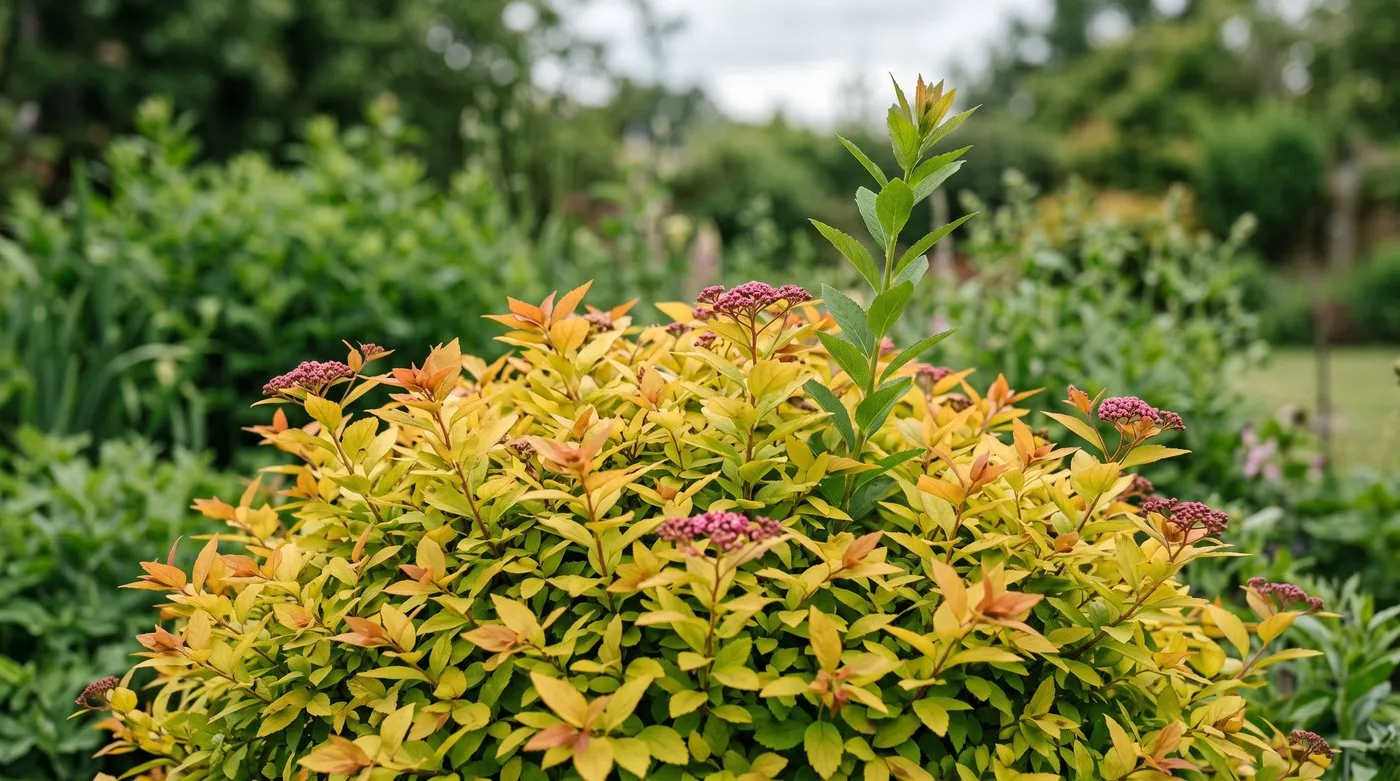
See a plain green shoot on a golden spirea? Cut it right back to where it starts, or it will slowly take over the whole shrub.
Frequently asked questions
When is the best time to plant spirea in the UK?
Plant spirea from October to March while it’s dormant. Bare-root plants are best planted from November to February. Potted spirea can go in any time, but autumn gives the roots months to settle before it flowers. Avoid planting into waterlogged or frozen ground.
How hard can I prune spirea?
Summer-flowering spirea can be cut to 15cm every March. With spring-flowering spirea, just cut flowered stems back to a strong side shoot straight after flowering. Both bounce back well from hard pruning. To rescue an overgrown plant, cut the whole shrub to 15-20cm in late winter.
Why is my spirea not flowering?
Pruning at the wrong time is the usual reason. Spring-flowering spirea pruned in winter loses its flower buds, as they form on last year’s stems. Prune it after flowering instead. Deep shade also means fewer flowers, so give it at least a few hours of direct sun.
Is spirea poisonous to dogs or cats?
Spirea isn’t generally known to be poisonous. It’s often chosen for family gardens. If your pet is a keen chewer, check with your vet to be sure.
Can I grow spirea in a container?
Yes, compact varieties are happy in pots 40cm wide or bigger. ‘Little Princess’ and ‘Magic Carpet’ stay small and suit patio pots. Use John Innes No. 3 with some perlite mixed in. Water when the top few centimetres are dry and feed monthly from April to August.
How fast does spirea grow in the UK?
Fairly quickly once settled. Spring types like bridal wreath reach full size in a few years. Compact types like ‘Anthony Waterer’ fill out in two or three years. Good soil, sun and water all speed things up.
What is the difference between spring and summer spirea?
Spring spirea flowers on last year’s stems. It has white flowers on arching stems from April to June. Summer spirea flowers on this year’s new growth. It has flat heads of pink, red or crimson flowers from June to September. Each needs pruning at a different time.
Our team produces practical UK gardening guidance from source research, contributor records and established horticultural practice. Editorial standards are overseen by Matt W.