Key takeaways
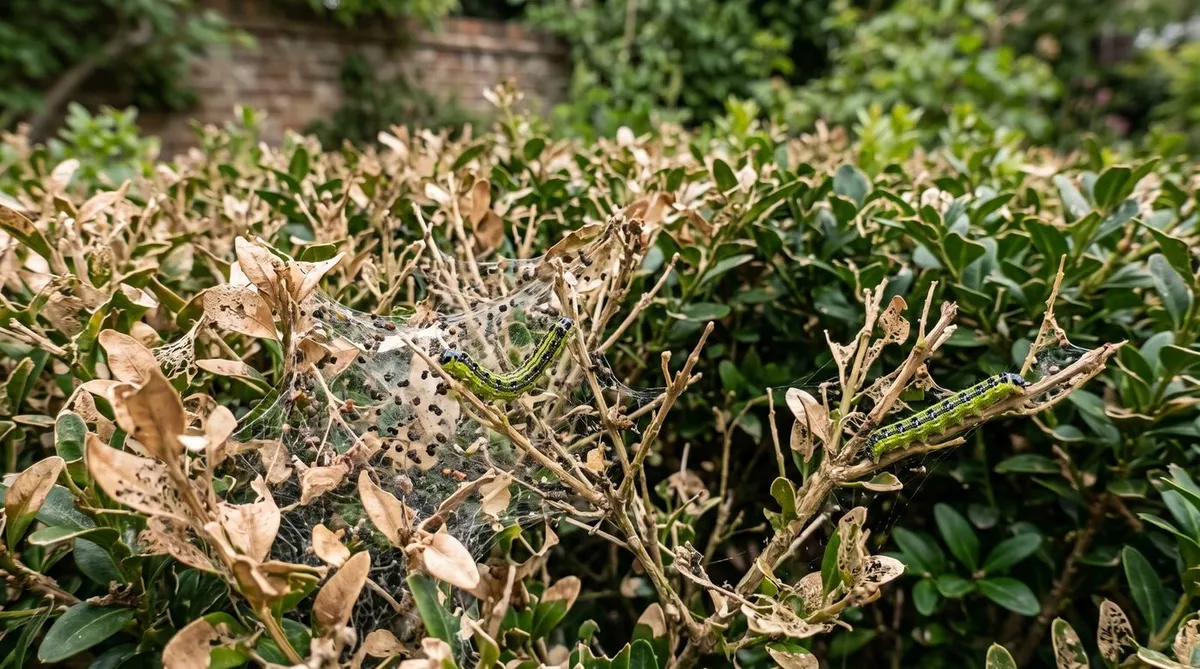
- Caterpillars are green with black heads and stripes, and hide in webbing inside the bush
- They feed from spring to autumn, with two or three broods a year
- Part the leaves and check the middle of the bush, not just the outside
- Pick off caterpillars and webbing, and use nematodes sold for box tree caterpillar
- Bt sprays aren't approved for home gardeners in the UK
- Stripped box can regrow if the stems are still green under the bark
The box tree moth arrived in Europe from East Asia and soon reached southern England. It’s now found across much of England and Wales and is still spreading. For years it’s been one of the most common pest questions the RHS gets asked. Here’s how to spot it, when to act and how to save your box.
How to identify box tree moth at every stage
Spotting it early can save your box. The caterpillars eat from the inside of the bush outwards, so by the time the outside looks brown, a lot of damage is done. Make a habit of looking inside.
Adult moth
The moth is fairly big, about 4cm across. Most are white with a brown border round the wings. Some are all brown with a small white mark on each wing. They fly at night and you’ll rarely see one by day unless you disturb it. The moths don’t eat box, they just lay eggs on it.
 An adult box tree moth. White wings with a brown border are the most common look in UK gardens.
Caterpillar
Newly hatched caterpillars are tiny and pale yellow-green. As they grow they get the classic look: green body, black head and pale stripes with black dots along the sides. Fully grown, they’re up to about 4cm long. They spin thick white webbing that ties leaves together and catches their black droppings. The webbing is often the first thing you’ll notice.
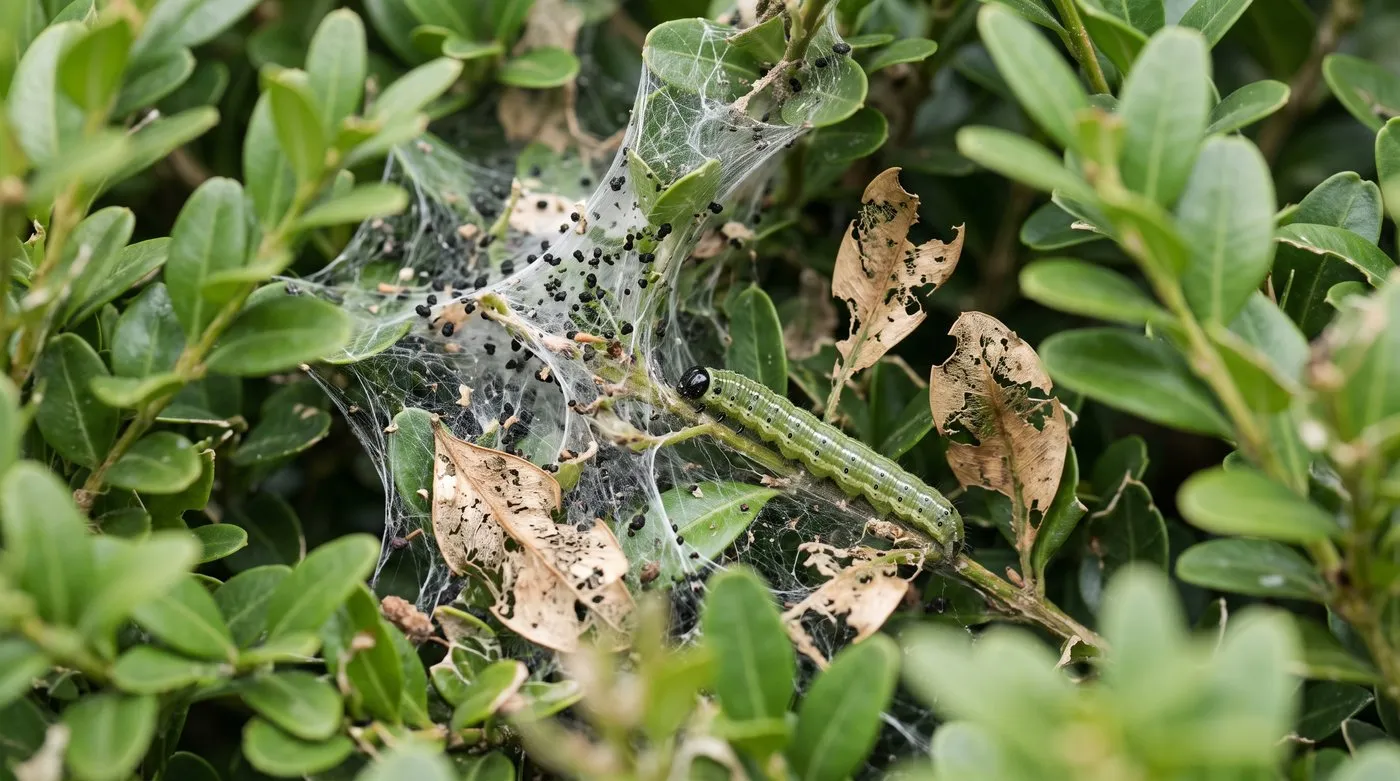
Thick white webbing full of black droppings is usually the first clue. Part the leaves and look inside, as the outside can still look green.
Eggs
Eggs are laid in small, flat clusters under box leaves. They’re pale yellow at first and darken before hatching. You’ll need to look closely to see them.
Pupae
The pupae are green at first, then brown, and hide in the webbing inside the bush. In summer the moth comes out a couple of weeks later. The winter is spent as young caterpillars, tucked up in little silk cocoons inside the bush.
Box tree moth through the year
Knowing the moth’s year helps you act at the right time.
There are two or three broods a year in the UK. Warmer southern gardens often get three, cooler northern ones usually two.
| First brood | Second brood | Third brood (warmer areas) | |
|---|---|---|---|
| Caterpillars from the winter start feeding | March to April | - | - |
| Pupae | Late April to May | July | September |
| Moths flying | May to June | August | Late September to October |
| Eggs laid | May to June | August | October |
| Caterpillars feeding | May to July | August to September | October, then they settle in for winter |
| Worst damage | June | August to September | Little before winter |
The mistake most people make is waiting for brown patches on the outside. By then, the caterpillars have eaten much of the inside, where you can’t see it from a normal distance.
Which box tree moth treatment works best?
There are only a few options for home gardeners. Here’s how they compare.
| Treatment | What it is | How fast | Bee safe? |
|---|---|---|---|
| Hand-picking | Picking off caterpillars and webbing | Instant | Yes |
| Nematodes | Tiny worms you spray on | A few days | Yes |
| Approved amateur insecticide | Contact spray, such as pyrethrins | Hours | No, keep off open flowers |
| Pheromone traps | Early warning only | Doesn’t kill caterpillars | Yes |
The best plan for most gardens is hand-picking plus nematodes, with an approved insecticide kept for really heavy attacks. Bt sprays are often suggested online, but they’re not approved for home gardeners in the UK. If you use an insecticide, pick one approved for amateur use and labelled for caterpillars on ornamental plants, and follow the label exactly.
 A hedge part-eaten by box tree moth. Green sections sit right next to stripped ones.
How to time and apply treatment
Timing is everything. Treat while the caterpillars are small and busy eating. Big ones are harder to deal with.
- Follow the label or pack for how much to mix and any temperature it needs
- Treat in the evening, as nematodes dry out quickly in the sun
- Soak the middle of the bush. Pull the branches apart and spray right into the centre
- Wet both sides of the leaves
- Repeat only as the label or pack says, using your trap catches to time each round
- Keep hand-picking caterpillars and webbing in between
For more on nematodes and other helpers, see our guide to biological pest control.
How to use pheromone traps for box tree moth
A pheromone trap isn’t a treatment. It’s an early warning system that tells you when to act.
The trap uses a scent that lures in male moths. Hang it about 1.5m off the ground, close to your box plants.
When to put traps out: early May in the south, mid-May further north. Replace the lure as often as the pack says, as the scent fades.
What the catches mean: your first moth shows they’re flying and laying eggs. Start checking for tiny caterpillars a couple of weeks after your first catch, and treat as soon as you find them.
If you grow box topiary, a trap is well worth it. A good topiary piece takes many years to grow and is worth protecting.
Can box hedges recover after moth damage?
Yes, if the stems are still alive. Box is tough. Even plants stripped bare can sprout again from green wood.
The scratch test: scratch the bark on a main stem with your thumbnail. Green underneath means it’s alive and will regrow. Brown and dry means that stem is dead.
Helping badly stripped box recover:
- Wait until April, when new growth starts
- Cut each stem back to green wood
- Sprinkle a balanced granular feed, following the pack
- Mulch with 5cm of well-rotted compost, keeping it clear of the stems
- Water weekly through the first summer
- Don’t clip again until the next spring, so it can fill out
 Treating the inside of a box hedge. Soak the middle of the bush, where the caterpillars feed, not just the outside.
Plants that were healthy before the attack and growing in decent soil usually recover within a couple of seasons. Box already weakened by box blight, drought or poor soil may not.
How to prevent box tree moth long term
No single trick stops it completely, but a few habits together keep damage down.
Netting: fine netting over box from April to October stops moths laying eggs. It works well for small topiary and box in pots, but is fiddly on long hedges. Hold it up on hoops so it doesn’t squash the plants.
Good habits:
- Check your box every couple of weeks from April to October, parting the leaves to look inside
- Pick off and bin any webbing, caterpillars and droppings
- Look inside the bush in early spring, when caterpillars that spent the winter there wake up
- Feed and water your box so it bounces back faster if attacked
Butterfly Conservation keeps track of where the moth has spread, which helps you judge the risk in your area.
Think about alternatives for new planting. If box tree moth is common near you, consider other plants for new hedges. Ilex crenata, or Japanese holly, looks the most like box, clips well and isn’t troubled by box tree moth or box blight. Lonicera nitida is another option for low formal hedges. For box you already have, treating it is often worthwhile.
Our organic pest control guide has more ideas for keeping pests in check without chemicals, including ways to bring in natural predators.

Part the leaves every couple of weeks from April to October. Netting on hoops works well for box in pots and small topiary.
Box tree moth vs box blight: telling them apart
Both cause brown, bare patches, but they need different treatment. Here’s how to tell which you’ve got.
| Sign | Box tree moth | Box blight |
|---|---|---|
| Webbing | Yes, thick white silk | No |
| Droppings | Little black pellets | None |
| Leaves | Eaten, often down to a skeleton | Brown spots, then leaves drop |
| Stems | Bark nibbled | Black streaks |
| Where it starts | Inside the bush | Lower or outer leaves |
| How fast | A few weeks | Slower decline |
| When | April to October | Mostly wet weather in spring and autumn |
| What to do | Hand-pick, nematodes, approved insecticide | Cut out affected growth, help air move |
You can have both at once, and each makes the other worse. Treat each one in its own way. Our box growing guide, linked above, covers blight and long-term care.
If you’re planting a new hedge that includes box, mixing in some other plants means the hedge keeps its shape even if some box is lost.
When to give up on box and plant alternatives
There’s no shame in switching. Some gardens, especially those surrounded by other infested box, face non-stop attacks. Treating several times a year, every year, soon adds up in time and money. At some point, replacing with a different plant becomes the easier option.
On the other hand, a mature box hedge or a treasured topiary piece took many years to grow. For those, treatment is usually worth the effort.
If you have a formal garden full of topiary, sticking with treatment is often the best plan. The years that went into those plants are hard to replace.
Reporting box tree moth sightings
If you spot box tree moth somewhere new, especially in Scotland or Northern Ireland where it’s less common, report it through the RHS or the iRecord website. It helps track where the moth is spreading.
Include the date, your postcode, how many moths or caterpillars you saw and a photo if you can.
Knowing when to cut hedges matters here too. Avoid clipping box when caterpillars are at their busiest, in May to June and August, as clippings can spread caterpillars and webbing around.
Caterpillars on your veg instead? Our guide to cabbage white butterflies takes a similar approach.
Frequently asked questions
How do I identify box tree moth caterpillars?
They’re green with black heads and pale stripes. Fully grown, they’re up to about 4cm long and spin thick white webbing inside box plants. They eat from the middle outwards, so damage is easy to miss. Part the leaves and look for webbing, little black droppings and bare stems.
When is box tree moth active in the UK?
From about April to October. Caterpillars that spent the winter in the bush start feeding in early spring. New broods follow in summer, and a third can appear in early autumn in warmer areas. The adult moths fly at night through summer.
What is the best treatment for box tree moth?
Catch them early. Pick caterpillars and webbing off small plants by hand. On hedges, use nematodes sold for box tree caterpillar, or an approved amateur insecticide exactly as the label says. Treat in the evening and get right into the middle of the bush. Bt sprays aren’t approved for home gardeners in the UK.
Do pheromone traps kill box tree moths?
Not enough to stop an attack on their own. They lure in male moths with a scent, which tells you the moths are flying. That’s your cue to start checking for young caterpillars a couple of weeks later. Hang traps near your box from early May.
Can box recover after box tree moth damage?
Yes, as long as the stems are still alive. Scratch a stem with your thumbnail. If it’s green underneath, it’s alive. Cut back to green wood in April, feed, mulch and water through the summer. Stems that are brown and dry underneath are dead.
Is box tree moth the same as box blight?
No, box tree moth is an insect and box blight is a fungus. The caterpillars eat leaves and spin webbing. Blight causes brown leaves, black streaks on stems and leaf drop, with no webbing. A plant can have both at once. For blight, cut out affected growth and help air move through the plant.
Are there box tree moth resistant alternatives to buxus?
Yes, several evergreens look like box but aren’t on the menu. Ilex crenata, or Japanese holly, is the closest look-alike and clips beautifully. Compact forms of Euonymus japonicus and pittosporum are good too, and yew suits bigger hedges. None of them get box tree moth or box blight.
Our team produces practical UK gardening guidance from source research, contributor records and established horticultural practice. Editorial standards are overseen by Matt W.