
Key takeaways
- A ball or cone is the easiest first shape, and a wire frame takes out the guesswork
- Yew is very forgiving because it regrows from old wood if you cut too far
- Lonicera nitida gives the quickest results but needs clipping several times a year
- Where box blight or box tree moth is a problem, Ilex crenata is a good lookalike
- Clip little and often in the first years to build a dense outer shell
- Yew is very poisonous to people and pets, so clear up every clipping
Topiary is just clipping a bushy evergreen into a shape, and a ball in a pot is the perfect first project. Pick a forgiving plant, get a sharp pair of shears and a simple guide, and you’ll have a neat shape within a couple of seasons.
This guide is for starting from scratch: choosing a plant, picking up the right tools and shaping your first ball, cone or spiral. Once your shape is made, the guide to how to trim topiary covers the routine trims that keep it crisp.
Which plants are best for topiary?
Choose a plant with small leaves and dense, bushy growth. Small leaves give a smooth cut surface. Bushy growth fills in without gaps.
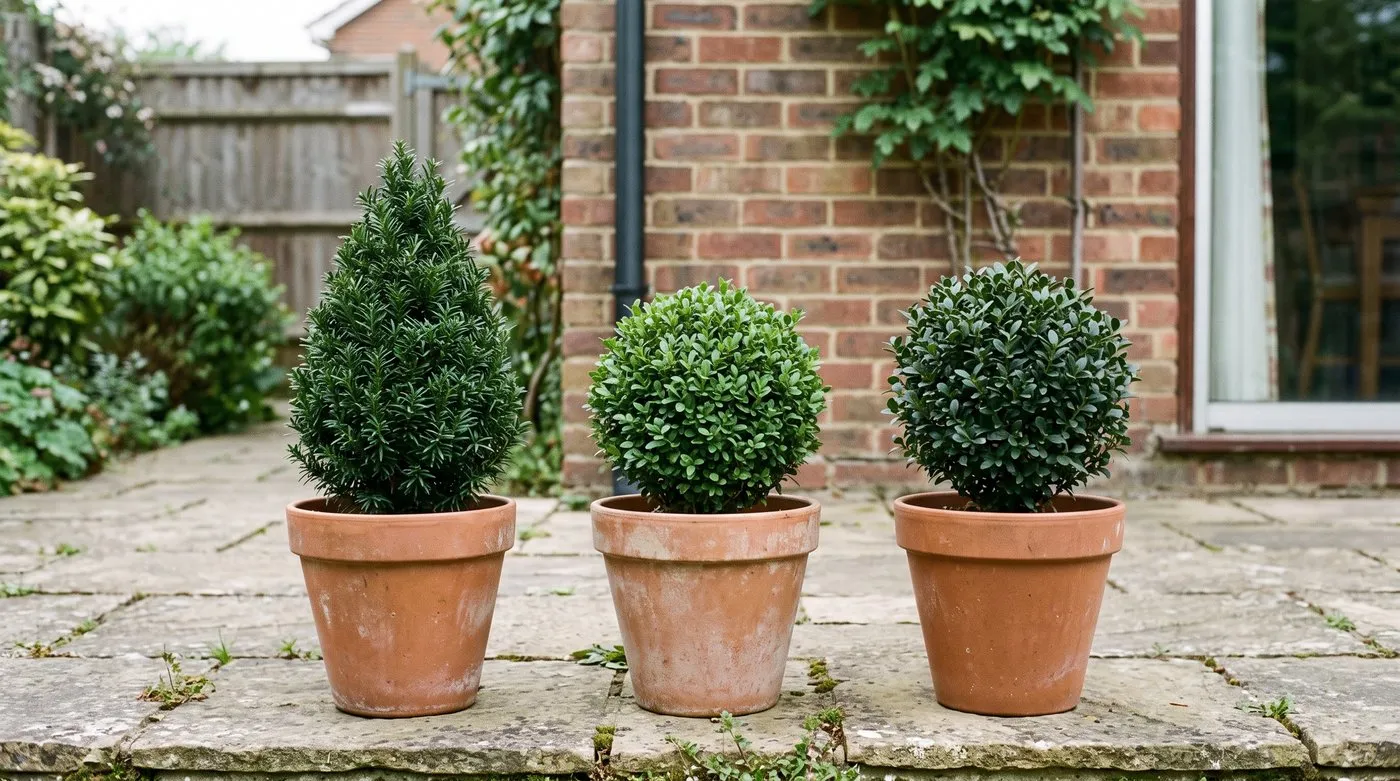
Yew, box and Ilex crenata side by side. Close up, the Ilex looks remarkably like box, which makes it a handy swap.
| Plant | Speed | Best for | Watch out for |
|---|---|---|---|
| Yew (Taxus baccata) | Moderate | Any shape, large or small | Very poisonous to people and pets |
| Box (Buxus sempervirens) | Slow | Small balls, cones, low edging | Box blight and box tree moth |
| Japanese holly (Ilex crenata) | Slow | Box-style balls and cones | Dislikes chalky or very dry soil |
| Lonicera nitida | Fast | Quick balls, clouds, playful shapes | Needs clipping several times a year |
| Privet | Fast | Bold, simple shapes | Larger leaves give a looser finish |
| Bay (Laurus nobilis) | Moderate | Lollipop standards, cones in pots | Leaves scorch in hard frosts and cold winds |
Yew
Yew is the most forgiving topiary plant. Its dark needles clip to a velvety finish, and it sprouts from old wood, so a cut that goes too deep grows back. It suits everything from a 40cm ball to a tall cone.
Yew is very poisonous to people, dogs, cats and livestock, especially the seeds and leaves. Rake up every clipping straight away and keep it away from where pets or children play.
Box and Japanese holly
Box is the classic choice for small, crisp shapes. But in many parts of the UK, box blight and box tree moth caterpillars now cause serious damage. If you see either nearby, start with Ilex crenata instead. It has small, dark, glossy leaves and looks very like box once clipped. The guide to box hedge alternatives has more options.
Lonicera nitida, privet and bay
Lonicera nitida (box-leaved honeysuckle) grows fast and fills a frame in a season or two. The trade-off is clipping every few weeks in summer. Privet is similar but with bigger leaves, so it suits bold, simple shapes. Bay is the classic lollipop standard in a pot by the front door. The guide to growing bay trees covers training a clear stem.
Box, privet, holly and bay can upset pets that chew them too, so keep an eye on puppies.
What tools do you need for topiary?
A sharp pair of hand shears is all most beginners need. Blunt blades tear leaves, and torn edges turn brown.
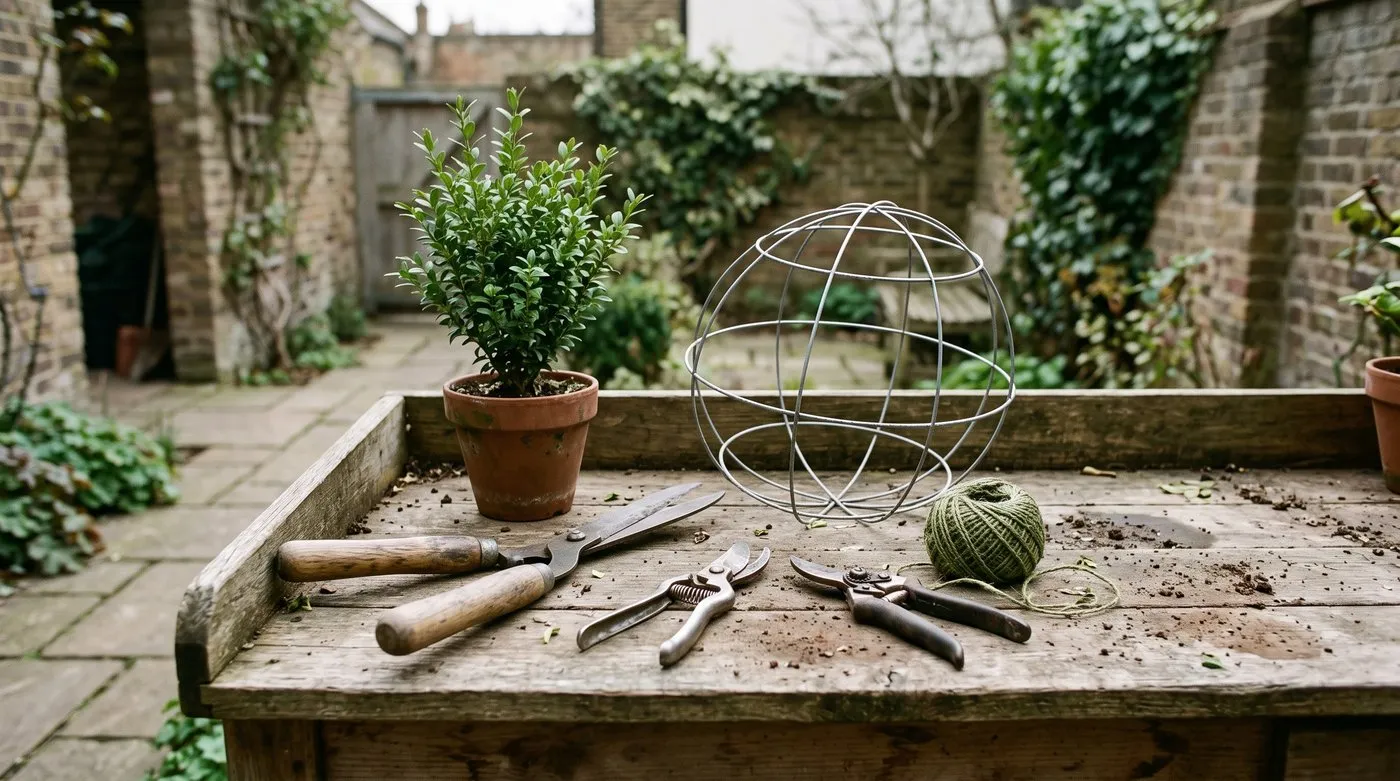
That’s the whole kit. Sharp shears matter far more than fancy ones.
- Hand shears: two-handed shears with straight blades for most of the clipping.
- Single-handed topiary shears: small, springy shears for curves, spirals and detail.
- Secateurs: for any thick, stray stem the shears can’t cut cleanly. The guide to pruning shrubs explains clean cuts.
- A wire frame or garden string: your guide to the shape. Frames come as balls, cones, spirals and even animals.
- A sheet or tarpaulin: lay it under the plant to catch clippings.
Clean the blades between plants with a garden disinfectant or a wipe of methylated spirit. It helps stop box blight travelling from plant to plant. Avoid powered hedge trimmers on small topiary. They take off too much, too fast.
How to start your first topiary shape
Start with a young, bushy plant that already roughly fits the shape. A 30-40cm plant with lots of stems from the base is ideal for a ball.
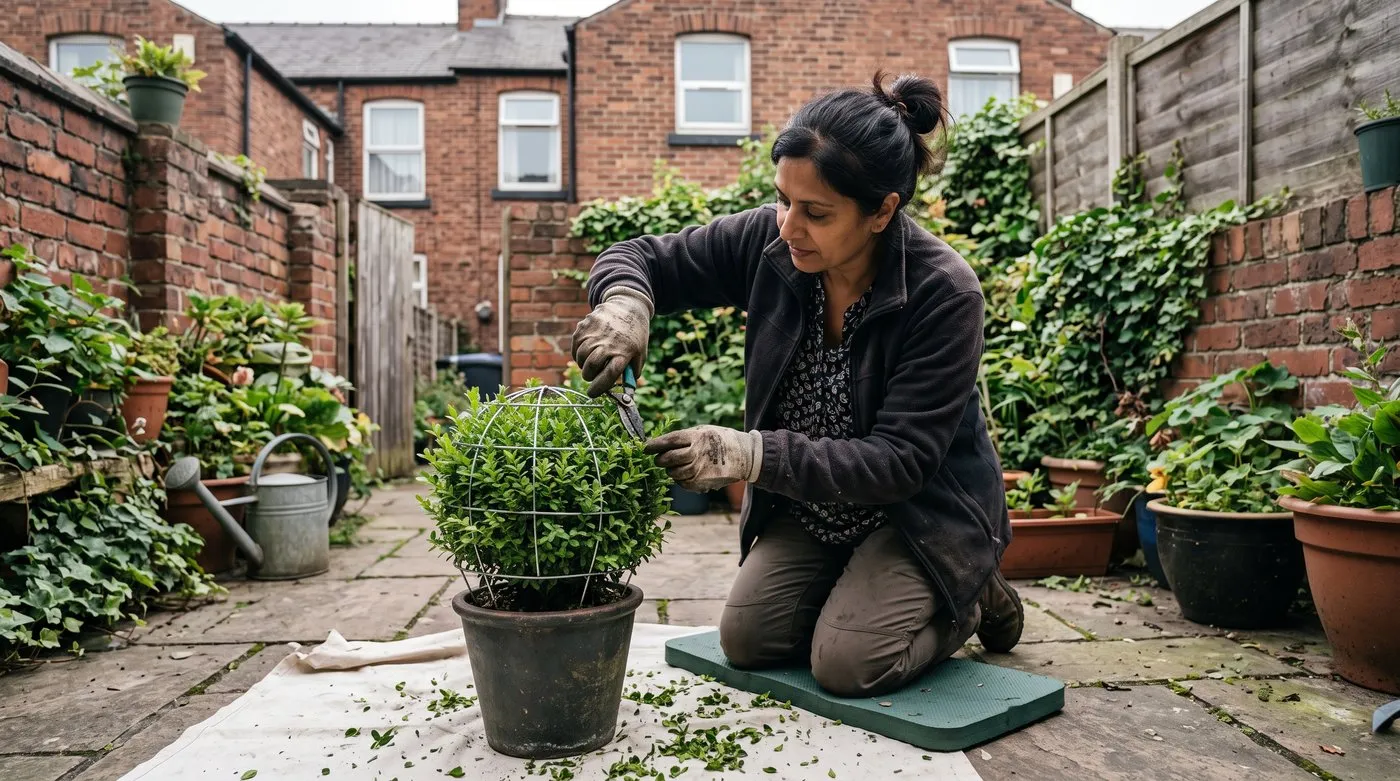
Clip only the tips poking through the frame. The sheet underneath makes clearing up quick.
- Pick the shape. A ball or cone is easiest. Choose one that matches the plant’s natural outline.
- Set up a guide. Place a wire frame over the plant, centred on the main stem. Or tie string round the widest point.
- Clip lightly. Take off only the soft tips poking past the guide. Work round the plant in sections.
- Step back often. Look from 2-3m away every few minutes. Uneven bits are easier to spot from a distance.
- Clear up. Shake out and sweep up all the clippings, especially under box.
Clip less than you think you need. You can always take more off next time, but you can’t stick it back on.
In the first two or three years, clip lightly and often to build a dense outer shell. Each cut makes the plant push out several new side shoots behind it. That’s how the surface gets thicker and smoother over time.
How to shape a topiary ball
A ball is the most forgiving shape. Small errors barely show from a metre away.
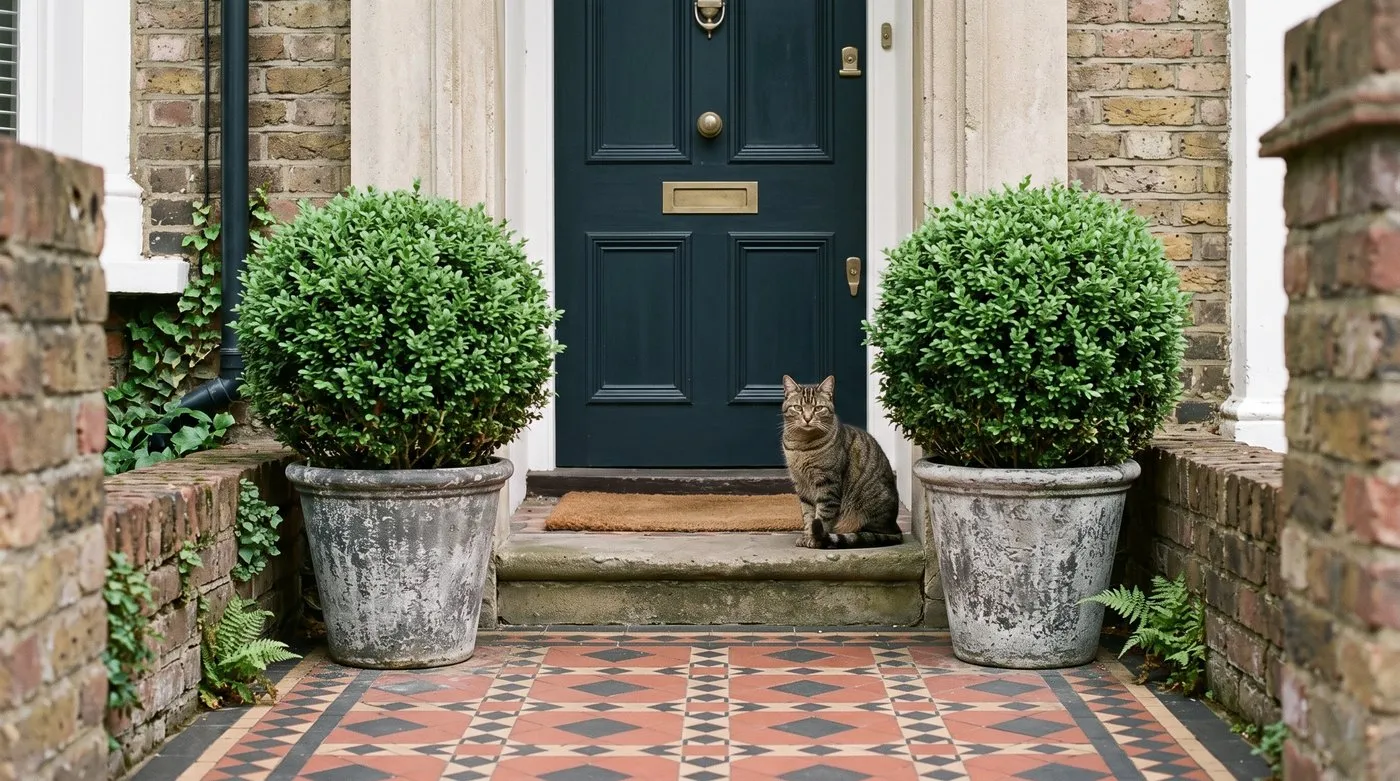
A pair of balls by the door is the classic first project. Keep the base a touch narrower so the lower leaves get light.
Put a wire ball frame over the plant, or tie string round the middle as an “equator”. Clip everything that pokes past the frame or bulges beyond the string. Work in horizontal bands from the top down, turning the pot as you go if it’s in a container.
Keep the bottom a little narrower than the middle so light reaches the lower leaves. Box, yew, Ilex crenata and Lonicera nitida all make good balls.
How to shape a cone or pyramid
A cone narrows evenly from a wide base to a point. A pyramid has four flat sides and sharp corners.
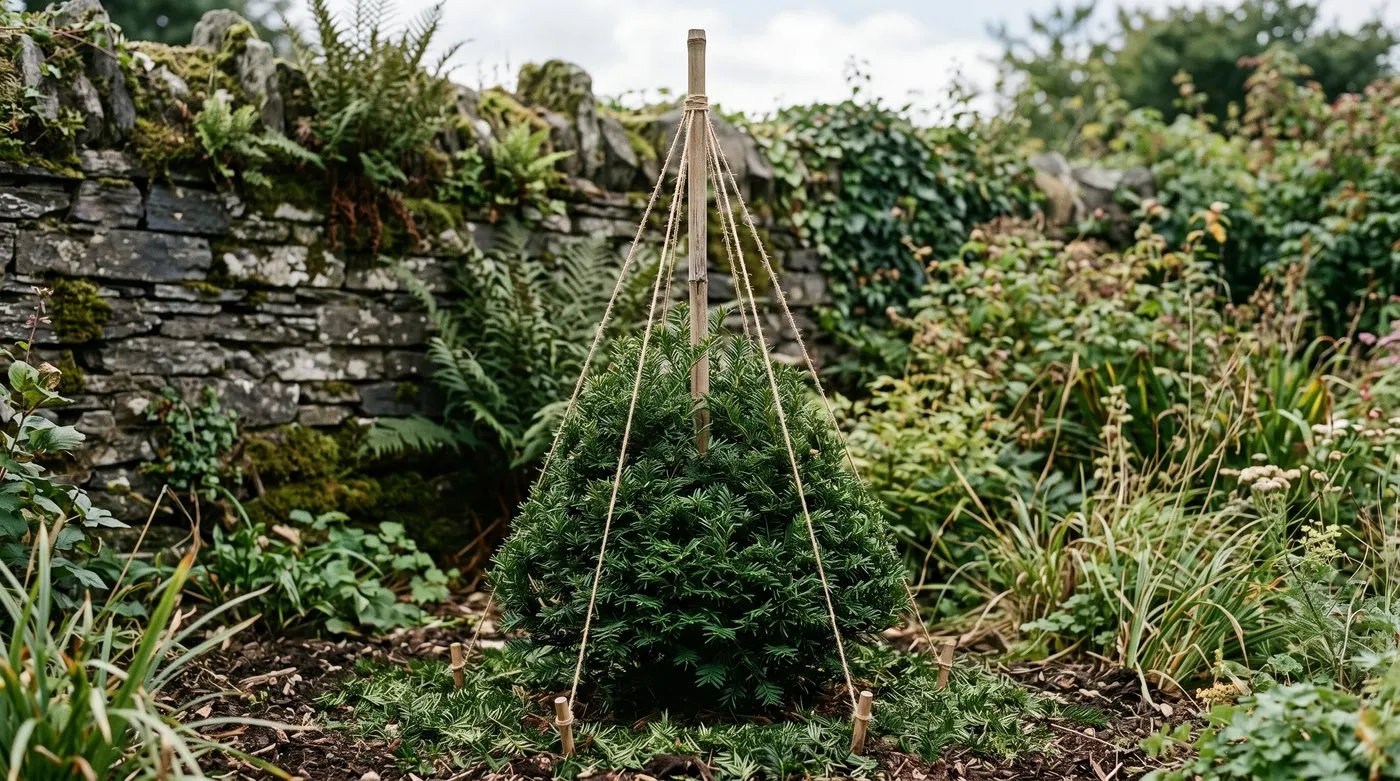
Strings from a central cane give you straight lines to follow. Clip from the top down.
Push a tall cane into the centre to mark the top. Tie strings from the cane down to the base on each side as cutting guides, or use a wire cone frame. Clip from the top down, following the strings.
The usual mistake is a dip in the sides, which makes the cone look pinched. Keep each cut sloping evenly outwards from top to base. Yew and Ilex crenata hold straight sides well.
How to make a topiary spiral
A spiral is just a cone with a groove cut round it. It looks hard but is very doable once you can clip a cone.
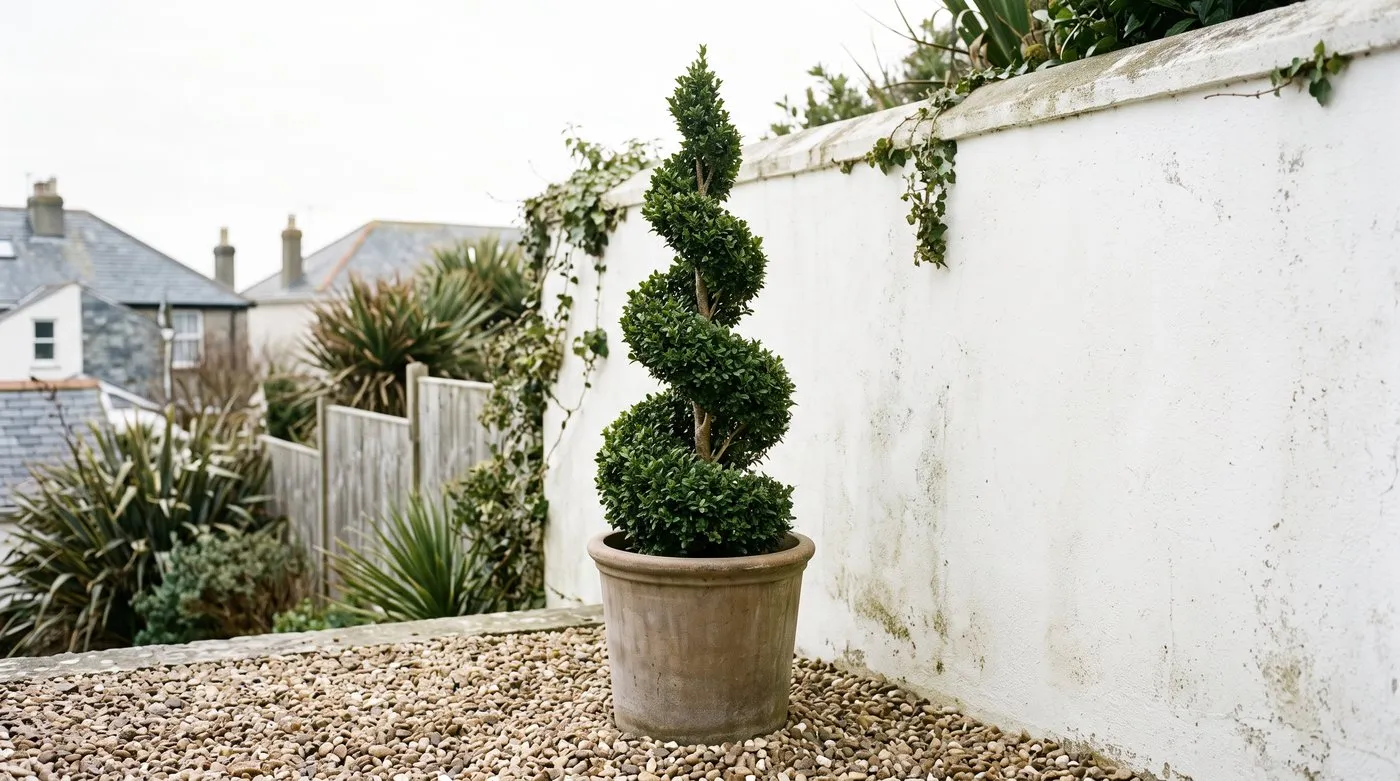
A spiral is just a cone with a groove cut round it. Deepen the groove a little each season.
- Shape the plant into a well-filled cone first. This can take a season or two.
- Wind a length of string or soft garden wire round the cone, from base to tip, to mark the groove.
- Cut along the line with secateurs and single-handed shears, working into the plant.
- Deepen the groove gradually over a couple of seasons until you see the stem.
- Round off the edges of each coil with light clips.
Box, yew and Lonicera nitida all suit spirals. Go slowly on box, which regrows from bare wood only slowly.
When to clip new topiary
Shape new topiary in late spring and again in late summer. Wait until the risk of frost has passed and the spring growth has firmed up, usually late May or June.
Avoid clipping in hot sun, which scorches freshly cut leaves, and in frost. Finish the last clip by early September so any new shoots firm up before winter. Lonicera nitida and privet grow fast, so they need extra trims through summer.
Feed in spring with a slow-release general fertiliser to keep growth dense, and water pots well in dry spells. The trimming guide linked at the top covers the routine for established shapes.
Box blight and box tree moth
These two problems are the main reason beginners now choose yew or Ilex crenata.
Box blight is a fungal disease. It causes brown patches, black streaks on stems and bare twigs, and spreads in warm, wet weather. Clip box in dry weather, clean your shears and clear fallen leaves. Remove badly infected plants, roots and all, and bag them for the bin.
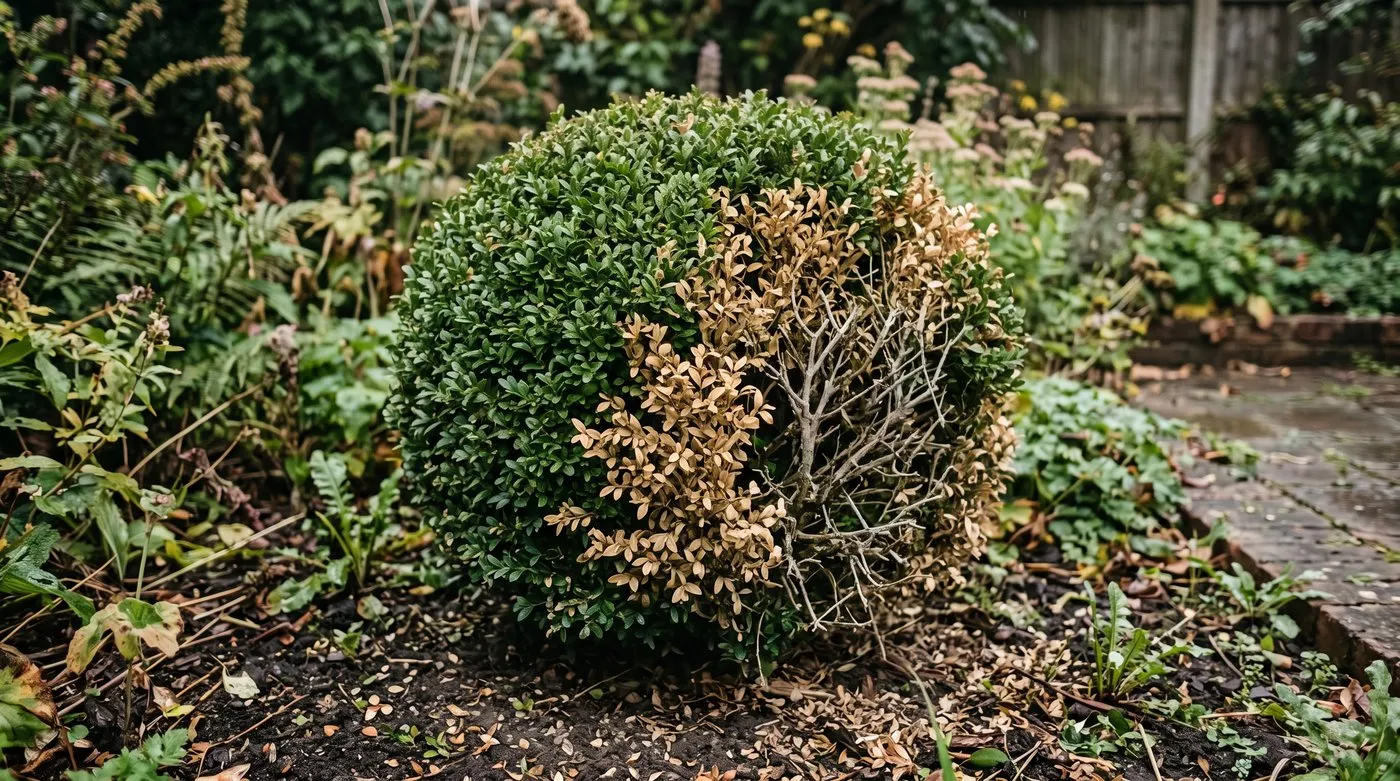
Brown patches and bare twigs like these point to box blight. Clear fallen leaves and bag any badly hit plants.
Box tree moth caterpillars are green and black and spin webbing as they strip the leaves. Check inside box plants from spring to autumn and pick off caterpillars. Pheromone traps help you spot when the moths are about.
The guide to why your box hedge is dying helps you tell the two apart and what to do next.
Common topiary mistakes
Cutting too deep too soon. Beginners often chase a crisp shape in year one. Clip only the new growth until the plant has a dense shell.
Clipping too late in the year. Soft shoots from an autumn clip get caught by frost and turn brown. Finish by early September.
Forgetting pots in summer. Topiary in pots dries out fast because the dense foliage sheds rain. Check the compost every day or two in hot weather.
Leaving clippings in the plant. Old leaves inside box help box blight spread. Shake them out and sweep up.
Picking a plant that’s too fast. Privet and Lonicera nitida look great quickly but need frequent trims. If you only want to clip twice a year, choose yew or Ilex crenata.
Month-by-month topiary calendar
| Month | Task |
|---|---|
| January | Plan new shapes. Water pots if the compost is dry. No clipping |
| February | Check frames are still secure after winter winds |
| March | Plant new topiary. Start renovating overgrown yew |
| April | Feed with a slow-release fertiliser. Start clipping Lonicera nitida |
| May | First shaping of box, yew and Ilex crenata in late May once frosts pass |
| June | Shape new topiary. Check box for caterpillars |
| July | Trim fast growers again. Water pots often |
| August | Main late-summer clip for yew. Second clip for box |
| September | Finish all clipping by early in the month |
| October | Clear fallen leaves from under box |
| November | Move bay in pots out of cold winds |
| December | Clean, sharpen and oil your shears |
If you’d rather grow a classic low hedge pattern, the guide to knot garden design shows how topiary skills scale up. For more growing guides, browse the how-to hub. Once your first shape is made, read the guide to growing box for long-term care.
Frequently asked questions
What is the best plant for topiary in the UK?
Yew is the best all-rounder for beginners. It clips to a smooth finish and regrows from old wood, so mistakes grow out. Box gives the finest small shapes but suffers from box blight and box tree moth in many areas. Ilex crenata is a good box lookalike.
What is the easiest topiary shape for a beginner?
A ball is the easiest shape to start with. Small wobbles barely show from a metre away. A cone is the next step up. Save spirals and animals until you’ve got the feel of the shears.
How do I cut a perfect ball shape?
Use a wire ball frame or a string guide. Put the frame over the plant and clip anything poking through it. Without a frame, tie string round the widest point as a guide. Work round the plant in sections and step back often to check.
Can I grow topiary in a pot?
Yes, box, bay, yew and Ilex crenata all do well in pots. Use a pot at least 30-40cm across and a loam-based compost such as John Innes No 3. Water whenever the top of the compost feels dry, which can be daily in a hot spell.
How long does it take to grow a topiary ball?
Usually two to four years from a young bushy plant. Lonicera nitida fills out fastest. Box and yew take longer but hold their shape better. Buying a ready-shaped plant skips the wait if you’re impatient.
Can I make topiary from an overgrown shrub?
Yes, with yew it’s very achievable. Cut it back towards the shape you want in spring, then refine it over the next few years. Box recovers more slowly, so spread hard cutting over two or three years.
Our team produces practical UK gardening guidance from source research, contributor records and established horticultural practice. Editorial standards are overseen by Matt W.


