Key takeaways
- Trim twice a year: late May or June, then late August or September
- Box, yew and bay all suit this routine
- Use sharp hand shears for small shapes and two-handed shears for big ones
- A simple frame or template keeps shapes even year after year
- Trim on a dry, cloudy day to avoid scorched leaves
- Feed in spring, and pots need feeding more often
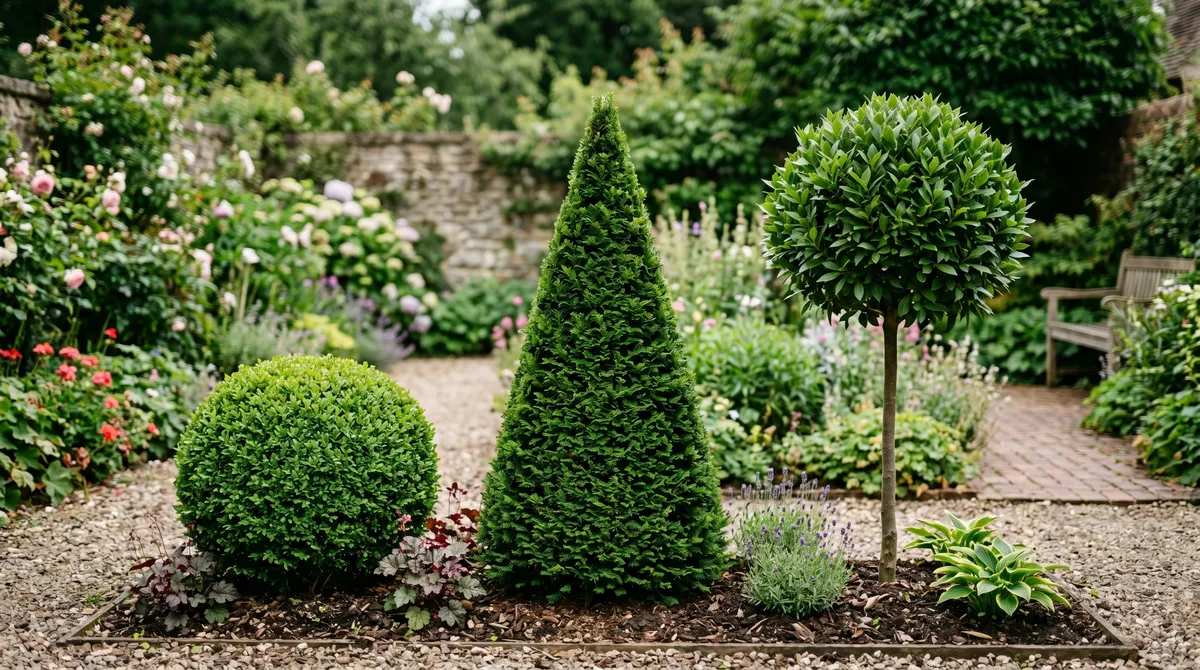
Topiary looks its best with a trim twice a year: once in early summer and once in late summer. Box balls, yew cones and bay lollipops all suit the same routine. Here’s when to do it, which shears to use, and how to keep your shapes sharp.
Three simple rules. Trim twice a year. Use sharp shears. Pick a cloudy day.
The Two-Trim Schedule
Most topiary needs two trims a year.
| Trim | When | Why |
|---|---|---|
| First trim | Late May to mid June | Tidies the spring growth for summer |
| Second trim | Late August to mid September | Tidies summer growth so it stays neat all winter |
Box, yew and bay put on most of their growth in spring and again in summer. Trimming after each burst keeps the shape tight.
New to topiary? Our beginners’ guide to topiary covers which plants to choose and easy starter shapes.
Tools: Single-Handed vs Two-Handed Shears
Pick your tool to suit the size of the shape.
Single-handed shears (like small sheep shears):
- Small balls and shapes
- Detail work on fancy shapes
- Fine finishing touches
Two-handed shears:
- Bigger balls and cones
- Long straight sides
- Hedges alongside your topiary
Powered hedge trimmers:
- Fine for long hedges
- Too rough for small, tight shapes, where they can leave ragged cuts
Whatever you use, keep the blades sharp. Sharp shears make clean cuts and are much easier on your arms. Wipe them clean after each use too.
 Single-handed shears on a box ball. Small, clean cuts keep the shape tight.
Trim in Overcast Weather
The biggest topiary mistake is trimming in hot sun.
When you trim, you uncover leaves that have been shaded inside the plant. Strong sun can scorch them, leaving brown patches that take a long time to grow out.
To avoid it:
- Trim on a dry, cloudy day
- Or early in the morning before the sun reaches the plant
- Or later in the afternoon once the sun has moved off
- Skip the middle of a hot summer’s day
- Let the leaves dry after rain before you start
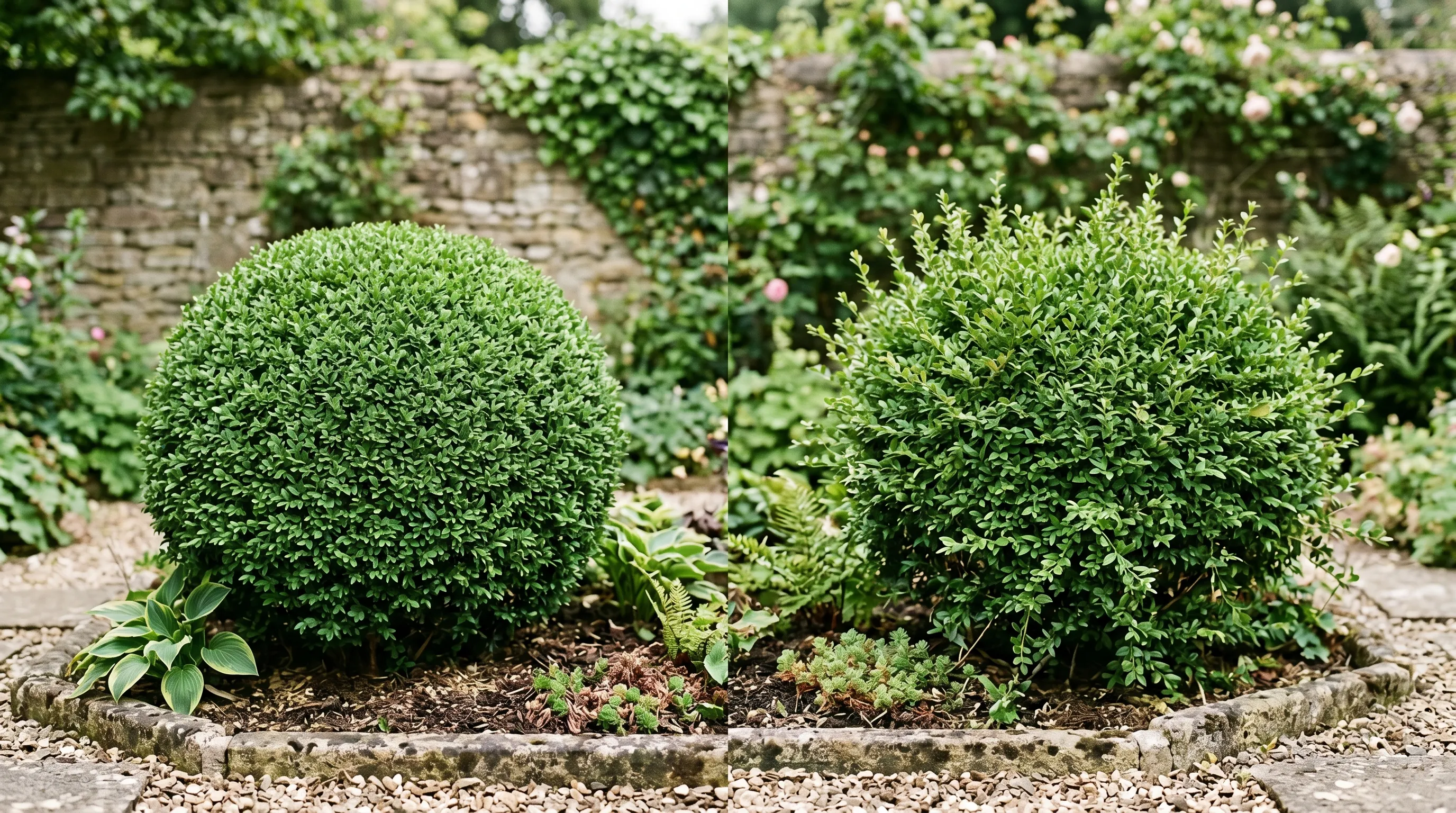
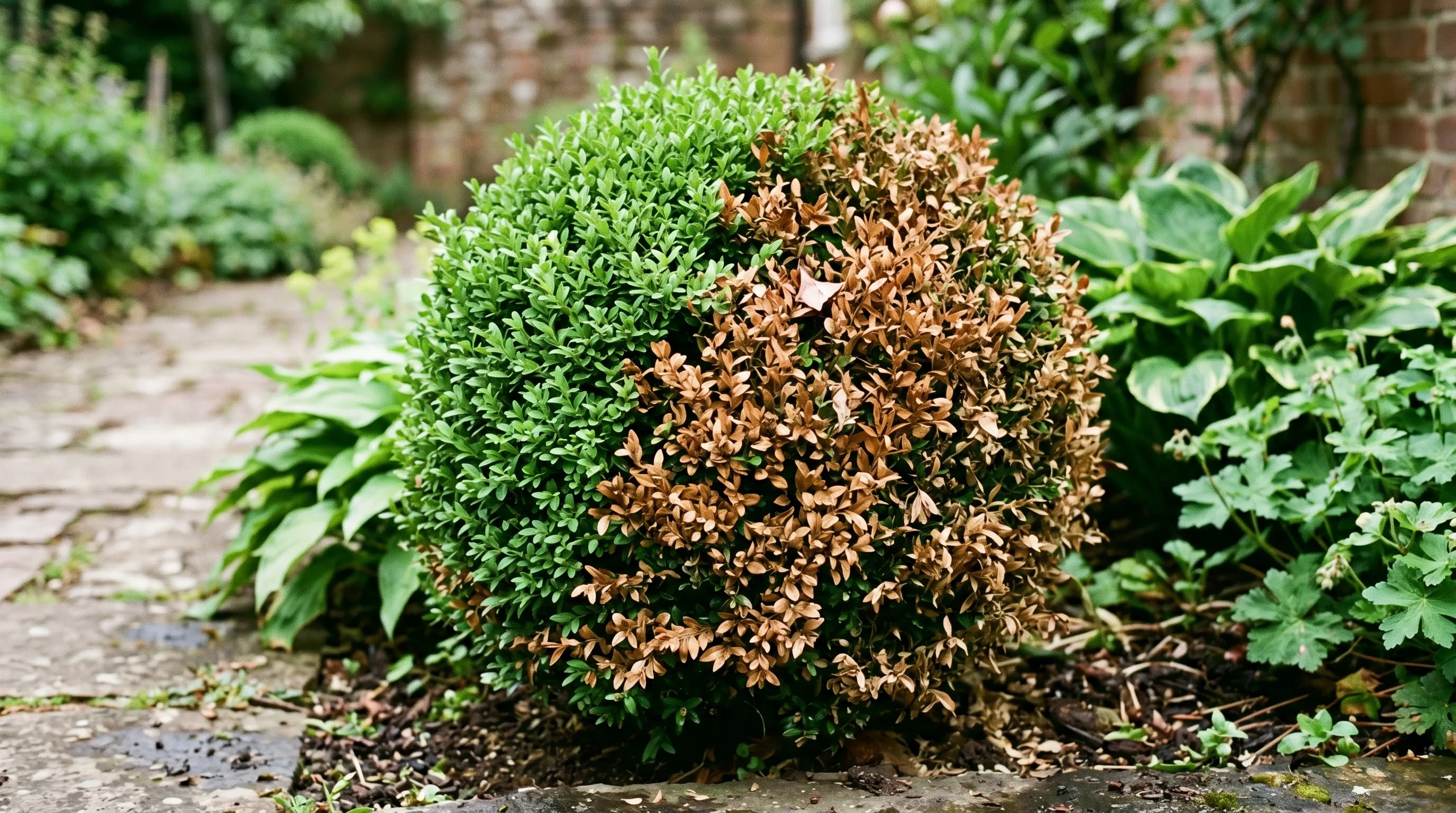 Sun scorch on a box ball. The side trimmed in hot sun has gone brown, while the shaded side is fine.
Frame Use for Consistent Shapes
Even careful trimmers find their shapes slowly drift over the years. A frame or template stops that.
| Frame | Good for |
|---|---|
| Hoop template | Balls |
| A-frame | Cones |
| Wire form | Animals and spirals |
| Made to measure | Unusual shapes |
How to use one:
- Set the frame over or beside the plant
- Trim anything sticking out past the frame
- Take the frame away and step back to look
- Pop it back on for a second pass if needed
- Finish the small details by hand
If you’re starting with young plants, use a frame from the first year. An older shape that’s gone wonky can be brought back over two or three years with a frame.
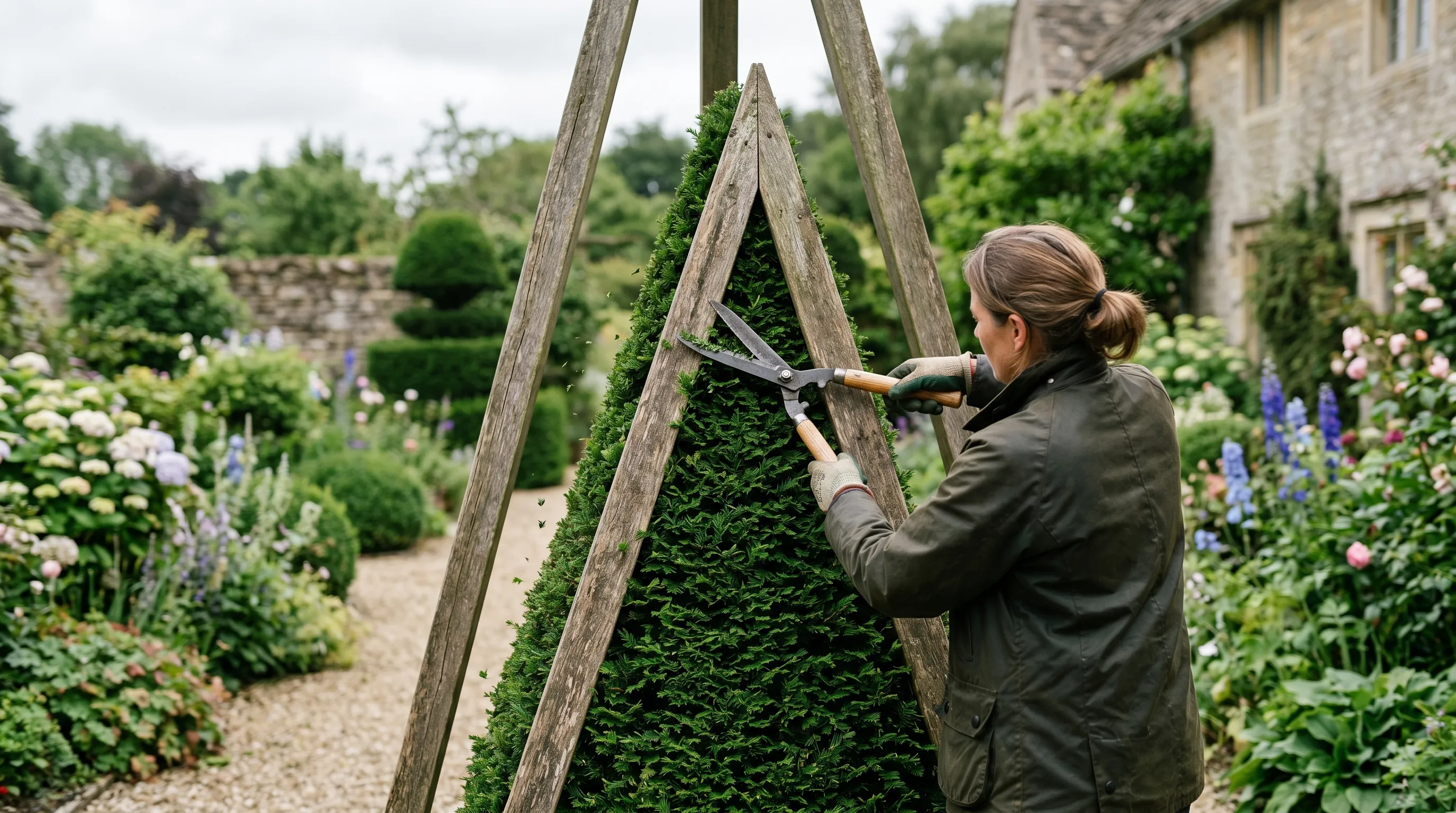 A wooden A-frame on a yew cone. Trim anything that pokes out past the edge.
Feeding Topiary
Trimmed plants need fuel to grow back thick and green.
- March or April: Scatter a general slow-release fertiliser around the plant and water it in
- After the early summer trim: A liquid feed if growth looks slow
- After the late summer trim: A weak liquid feed at most
- November to February: No feeding
Topiary in pots needs more help, as feed washes out faster:
- A liquid feed every couple of weeks from April to September
- Fresh compost on top of the pot each spring
Our fertiliser guide explains which feeds to use.
 Scattering feed around a freshly trimmed bay lollipop, ready to water in.
Common Mistakes With UK Topiary Trimming
Trimming in hot sun. Freshly cut leaves scorch brown. Wait for a cloudy day.
Only trimming once a year. Shapes go fuzzy by late summer. Two trims keep them crisp.
Trimming by eye alone. Shapes slowly drift out of line. A frame keeps them true.
Forgetting to feed. Hungry plants grow back thin. Give a spring feed.
Using a big powered trimmer on small shapes. It can leave ragged edges. Hand shears give cleaner cuts.
For a bigger picture, see our beginners’ guide to topiary. Box is the most popular topiary plant, and our guide to growing box covers it in more detail.
Topiary Calendar UK Month-by-Month
| Month | Topiary task |
|---|---|
| January | Sharpen and clean your shears |
| February | Get any frames or templates ready |
| March | Give a spring feed |
| April | Watch the new growth come through |
| May | Start the first trim in late May |
| June | Finish the first trim |
| July | Have a look, but no trimming yet |
| August | Start the second trim in late August |
| September | Finish the second trim |
| October | A last check before winter |
| November | Plants slow down for winter |
| December | Clean and oil your tools |
Frequently asked questions
When should I trim topiary in the UK?
Twice a year, in early summer and late summer. Do the first trim in late May to mid June, after the spring growth. Do the second in late August to mid September. Two trims keep box, yew and bay crisp through autumn and winter.
What is the best tool for topiary trimming?
Sharp hand shears for small shapes and fine detail. Longer two-handed shears are easier on bigger pieces. Powered hedge trimmers are fine for hedges, but they tend to leave ragged cuts on small, tight shapes.
How do I keep topiary shapes consistent over years?
Use a simple frame or template as a guide. A hoop works for balls and a wooden A-frame for cones. Wire frames suit animals and spirals. Trim off anything poking past the frame, and your shape stays the same year after year.
Can I trim topiary in hot weather?
Best not, as freshly cut leaves can scorch in strong sun. Brown patches can take a long time to grow out. Pick a dry, cloudy day, or trim early in the morning or later in the afternoon.
Should I feed topiary after trimming?
A spring feed is the main one. Scatter a general slow-release fertiliser around the plant in March or April and water it in. If growth looks slow after the summer trim, a liquid feed gives it a boost. Plants in pots need feeding more often.
Now plan the wider topiary year
Pop your two trim windows in the diary and you’re most of the way there. If you fancy starting a new shape, our beginners’ guide to topiary will get you going.
Our team produces practical UK gardening guidance from source research, contributor records and established horticultural practice. Editorial standards are overseen by Matt W.