Key takeaways
- Box is native, fully hardy and happy in sun or deep shade
- Plant bare-root hedging 15cm apart from November to March to save money
- Clip in late May or early June, then lightly in late summer, in dry weather
- Box blight is the main problem, so clip when dry, clear up clippings and clean your tools
- 'Faulkner' copes better with blight than most box varieties
- Ilex crenata looks very like box and doesn't get box blight
Box is the classic plant for neat little hedges, knot gardens and clipped topiary balls. It’s a British native, so it’s perfectly at home here, from Cornwall to the Highlands. You’ll see it everywhere, from grand formal gardens to tiny cottage front gardens.
Box blight has given it a bad name since the 1990s, and some famous hedges were lost. But gardeners now know much more about keeping it in check, and there are varieties that cope better. With the right plant, dry-weather clipping and a tidy routine, box is still well worth growing. If you’d like more evergreen ideas, see our guide to evergreen shrubs for UK gardens.
Which box varieties grow best in UK gardens?
Common box is the classic, and ‘Faulkner’ is the safer pick where blight is about. Varieties differ in leaf size, speed of growth and how well they cope with blight.
Buxus sempervirens (common box)
Common box is the traditional hedging plant. It grows wild on the chalk hills of southern England. Left unclipped it can get big, but it takes clipping really well and even regrows from old wood. It’s the go-to for hedges and topiary, though it can get blight.
Buxus sempervirens ‘Suffruticosa’ (dwarf box)
Dwarf box is the tiny edging box used in knot gardens. It grows very slowly and stays low, so it’s perfect for little edges and patterns. Sadly it’s very prone to blight, so avoid it if blight is a problem near you.
Buxus microphylla ‘Faulkner’
‘Faulkner’ is known for coping with blight better than most box. It has small, rounded, bright green leaves and a naturally compact shape. It’s a good first choice for new planting where blight has been a problem.
Buxus sempervirens ‘Elegantissima’
A pretty form with cream-edged leaves. It grows a little slower than common box and brightens up shady corners and mixed borders. It’s less prone to blight than dwarf box, but not immune.
Buxus sempervirens ‘Handsworthiensis’
A strong, upright box with bigger, darker leaves. It makes a taller hedge and copes with windy spots better than most. Handy for a taller boundary.
 Box balls and spirals give a border shape all year round.
Box variety comparison table
| Variety | Leaves | Growth | Copes with blight | Best use |
|---|---|---|---|---|
| Common box | Medium | Steady | So-so | Hedges, topiary |
| ’Suffruticosa’ | Small | Very slow | Poorly | Knot gardens (avoid if blight is about) |
| ‘Faulkner’ | Small | Steady | Well | Anywhere blight is a worry |
| ’Elegantissima’ | Medium, cream-edged | Slow | So-so | Brightening shade |
| ’Handsworthiensis’ | Large | Steady | So-so | Taller hedges, windy spots |
| Ilex crenata (alternative) | Small | Steady | Doesn’t get it | Replacing blighted box |
How do you plant a box hedge?
Plant bare-root box from November to March. It’s the cheapest way, and the plants settle in over winter before summer arrives.
Choosing the right time
Bare-root box goes in between November and March while it’s dormant. Pot-grown box can be planted any time, but avoid July and August unless you can water every day.
Preparing the ground
Box grows in clay, chalk, loam or sand. The only thing it can’t stand is waterlogged soil. On heavy clay, dig plenty of grit into the trench. Our soil drainage guide has more tips.
Mark the line with a tight string. Dig a trench about 20cm deep and 30cm wide, and mix in a little well-rotted compost.
Spacing
Plant about 15cm apart for a low edging hedge. For a hedge between 60cm and 1.2m tall, go for 20 to 25cm apart. A staggered double row makes a thicker hedge faster but needs twice the plants.
 Young bare-root box planted about 15cm apart in a prepared trench.
Planting technique
Soak bare-root plants in a bucket of water for a couple of hours first. Plant at the same depth they grew before. You’ll see the old soil mark on the stem. Firm in with your heel and water well, even in winter.
For the first two summers, give a good soak once a week in dry spells. After that, box rarely needs watering. A mulch of bark or compost helps hold in moisture and keeps weeds down.
When and how should you clip box?
Clip in late May or early June, then lightly again in late summer. The old rule is to clip around Derby Day, once the spring growth has firmed up.
The two-clip system
The first clip removes the spring growth and makes the hedge bushier. The second, in late August, tidies summer growth and sets the shape for winter. Two clips a year give a tighter, neater finish than one.
For fancier topiary shapes, a quick extra trim in mid-July keeps them sharp. Simple balls and cones only need two.
Clipping for blight prevention
Always clip on a dry day. Wet leaves help blight spread. Afterwards, clear up every last clipping from inside and under the hedge. Trapped clippings keep things damp, which blight loves.
Clean your shears between plants with a garden disinfectant, diluted as the label says. It stops you carrying blight from a sick plant to a healthy one.
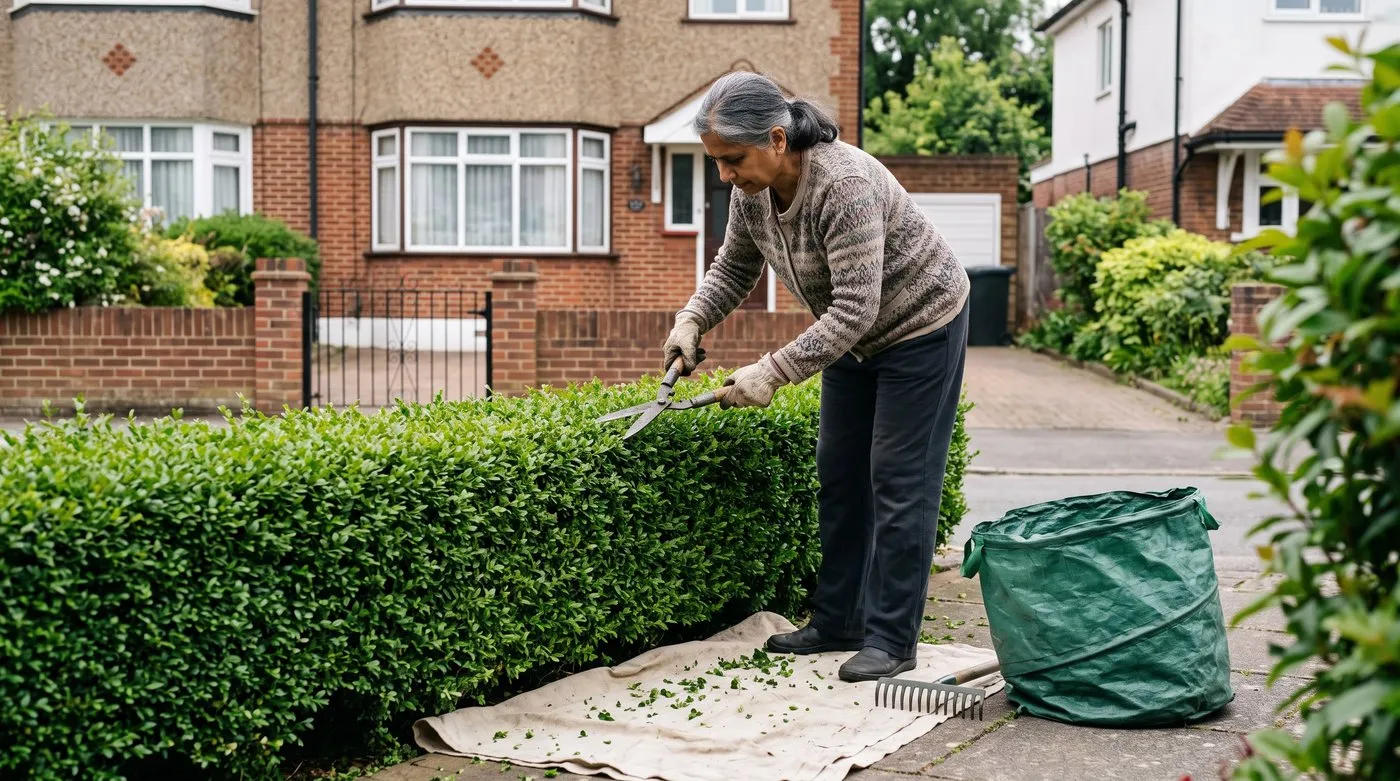
Clip on a dry day and lay a sheet underneath so every clipping can be cleared away. Damp clippings left in the hedge are just what blight likes.
Clipping tools
Hand shears give the cleanest cut on small hedges and topiary. Powered trimmers are quicker on long hedges but can bruise the leaves and leave brown edges for a few weeks. For neat formal shapes, use sharp secateurs or shears.
How do you identify and treat box blight?
Look for brown patches, falling leaves and black streaks on stems, and act quickly. Box blight is caused by fungi that love warm, damp weather. The RHS box blight page is kept up to date and well worth a look.
Identifying box blight
The main type causes brown or black spots on the leaves, which then drop fast. In damp weather you may see white fuzz under the leaves. Whole branches can go bare quickly. The roots usually survive, so plants often regrow.
A second type causes pink fuzzy patches on dead or dying leaves and stems. It usually follows on from other stress, like drought or the main blight.
Box tree caterpillar can also strip box quickly, so check for green and black caterpillars and webbing in spring and summer.
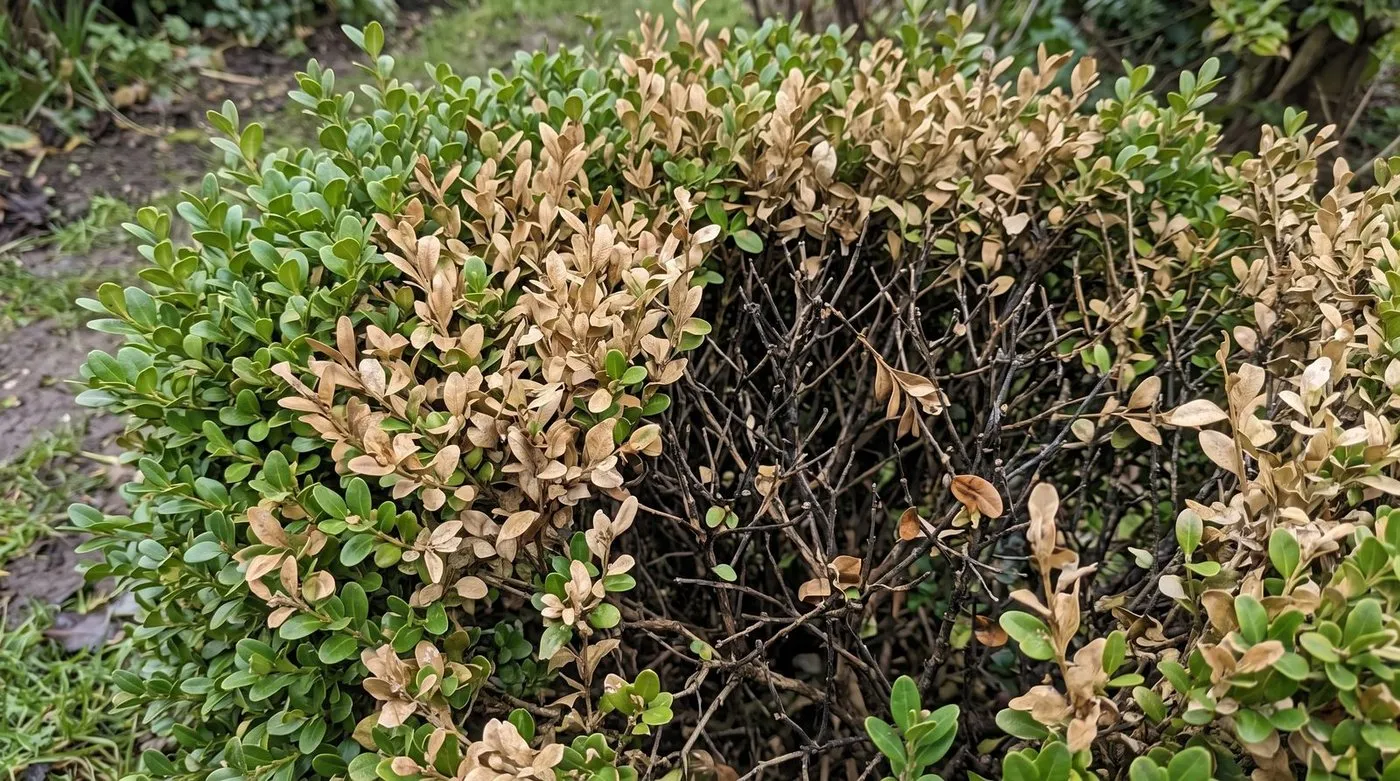 Box blight: brown patches and bare twigs are the classic signs. Look for white fuzzy spores under the leaves in damp weather.
Treatment steps
- Cut out affected growth straight away. Cut back to healthy green wood and bag or bin the clippings. Never compost it.
- Clear up fallen leaves from inside and around the hedge. The fungus can survive in them for years.
- Use an authorised fungicide to help protect healthy growth, exactly as the label says. It won’t cure the plant.
- Let the air in. Thin out crowded planting nearby and water at the base, not over the top.
- Feed in spring. A balanced fertiliser, used at the label rate, helps box grow back after an attack.
When to give up and replace
If a hedge keeps losing most of its leaves year after year, it’s time for a change. Ilex crenata (Japanese holly) looks the most like box. It has small, glossy dark leaves, clips into the same shapes and doesn’t get box blight. Our hedge planting guide will help you start again.
Can you grow box in containers?
Yes, box looks great in pots. Clipped balls, pyramids and standards by the front door are a classic look.
Container requirements
Use a pot at least 30cm across for a small ball. Standards and large pyramids need 40 to 50cm pots. Terracotta is ideal, as it’s heavy and won’t blow over. Make sure there are drainage holes.
Use a soil-based compost such as John Innes No. 3 with some perlite or grit mixed in. Multipurpose compost on its own dries out too fast. For more pot ideas, see our article on best plants for pots year-round.
Feeding and watering potted box
Water when the top 3cm of compost is dry. That might be every few days in summer and much less in winter. Soggy compost rots roots, so don’t overdo it.
Feed monthly from April to August with a liquid feed at half strength, or add slow-release granules in spring. Box in pots gets hungrier than box in the ground, as food washes out each time you water.
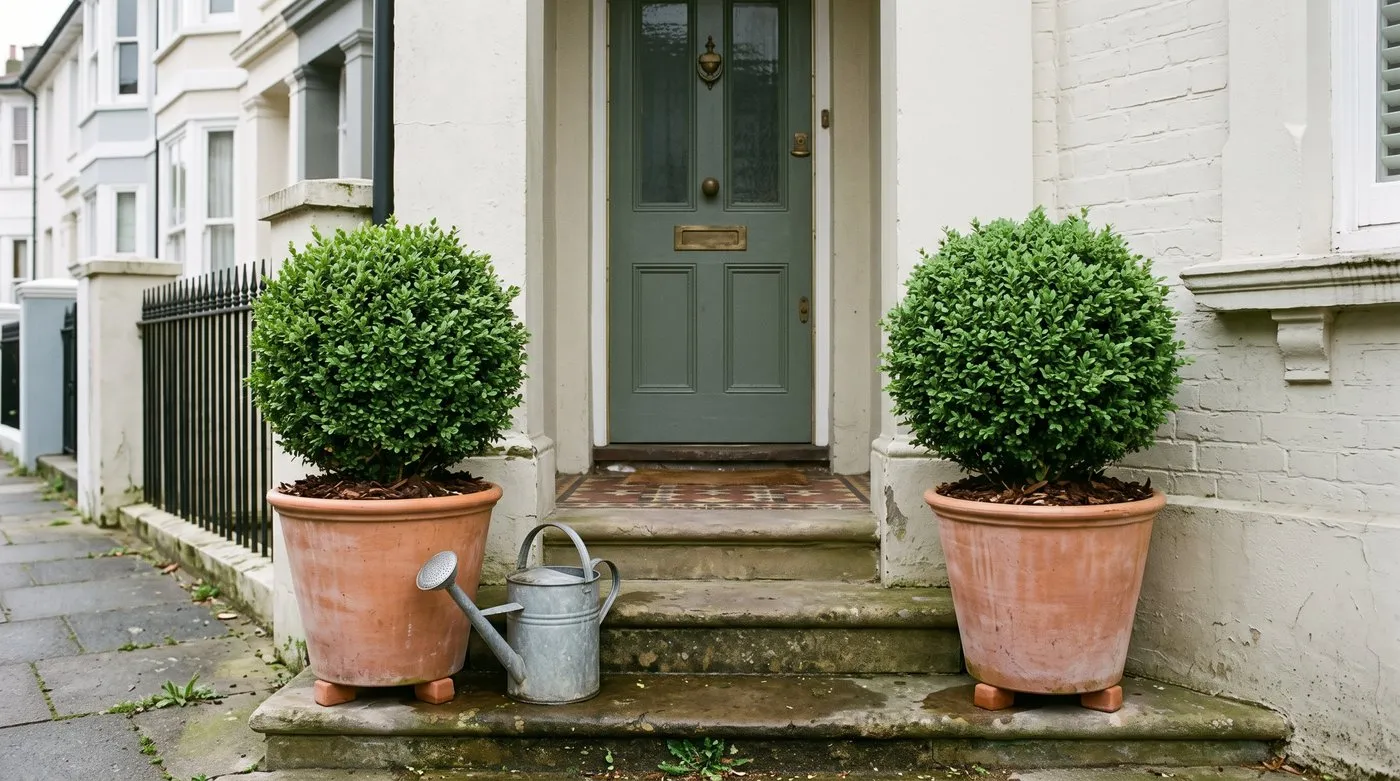
Box in pots gets hungrier than box in the ground, so a monthly half-strength feed through summer keeps it green. Pot feet help stop the compost staying soggy.
What are the best alternatives to box?
If blight has beaten your hedge, these give a similar look. Each has its pros and cons.
Ilex crenata (Japanese holly)
The closest match to box in leaf size, colour and clipping. It doesn’t get box blight. It likes neutral to acid soil, while box is happy on chalk. ‘Dark Green’ is a good variety.
Euonymus japonicus ‘Green Spire’
An upright, narrow shrub with small, glossy, dark green leaves. It grows a bit faster than box. Keep an eye out for euonymus scale, a sap-sucking pest.
Lonicera nitida
Very quick and cheap to grow. The catch is clipping, which it needs at least three times a year to stay tidy. It doesn’t give as crisp a finish as box.
Taxus baccata (yew)
The finest formal hedge plant for privacy there is. Darker than box, with flat needles. It doesn’t get box blight and is the better choice for hedges over 1m tall. All parts are toxic, so keep pets and children from chewing it.
What conditions does box need to thrive?
Box is happy almost anywhere that isn’t waterlogged.
Light
Sun, part shade or deep shade are all fine. It’s one of very few hedging plants that stays dense in full north-facing shade. It just grows slower in the shade.
Soil
Clay, chalk, loam or sand all work. It likes neutral to chalky soil best but copes with slightly acid ground. If drainage is poor, plant on a low mound. Our UK soil types guide helps you work out what you’ve got.
Aspect and exposure
Box copes with any aspect. In east-facing spots, morning winter sun on frozen leaves can scorch them. A wall or fence for shelter solves that.
Hardiness
Box is fully hardy across the UK. In pots, though, the roots can freeze. Wrap pots in hessian or bubble wrap during long, hard frosts.
Frequently asked questions
Is box blight treatable or is my hedge doomed?
Mild box blight can often be managed, but it’s hard to get rid of. Cut out affected bits back to healthy wood, clear up fallen leaves and bin the lot. Let more air in and don’t clip when it’s wet. An authorised fungicide, used as the label says, can help protect plants. If a hedge is badly hit, replacing it with Ilex crenata may be easier.
When is the best time to clip box hedging in the UK?
Clip once or twice a year for a neat finish. The traditional first cut is late May or early June, once the spring growth has firmed up. A second, lighter trim can follow in late summer. Always clip on a dry, cloudy day. Wet weather helps blight spread, and hot sun can scorch fresh cuts.
Can box grow in full shade?
Yes, box is one of the best evergreen hedges for shade. It grows slower in deep shade and may look a bit looser. It still clips well in north-facing spots. Avoid very dry shade under trees, where it struggles.
How far apart should I plant a box hedge?
About 15cm apart for a low edging hedge. For a taller hedge, space plants about 20 to 30cm apart. Closer planting fills in faster but costs more. Bare-root plants, sold from late autumn to early spring, are the cheapest choice for long hedges.
Is box poisonous to pets?
Yes, box is poisonous to pets if eaten. It can cause sickness and diarrhoea, and larger amounts can be more serious. Its bitter taste puts most animals off. If your pet likes chewing plants, keep an eye on it and call your vet if you think it’s eaten some.
What is the best alternative to box for hedging?
Ilex crenata (Japanese holly) is the closest match for low hedges. It has small, glossy dark leaves, clips into neat shapes and doesn’t get box blight. Lonicera nitida, Euonymus japonicus ‘Green Spire’ and yew are good too. Yew is best for taller hedges.
How long does a box hedge take to reach full height?
Box is slow, usually growing just a few centimetres a year. A low edging hedge of about 30cm takes a few years from small plants. A formal hedge around 1m tall can take many years. Bigger pot-grown plants give a quicker result but cost more.
Our team produces practical UK gardening guidance from source research, contributor records and established horticultural practice. Editorial standards are overseen by Matt W.