Key takeaways
- Bay copes with light frost but needs fleece or shelter in a hard freeze
- A 40-45cm pot of John Innes No. 3 with added grit suits a standard bay
- Trim with secateurs in June and lightly again in September
- Bay sucker and scale insects are the usual pests and can be picked or wiped off
- Repot every two or three years in spring, and pick fresh leaves any time
Bay trees are wonderfully useful evergreens for UK gardens. They look smart in pots by the front door, grow into handsome trees in a sheltered border, and give you fresh leaves for cooking all year round. True culinary bay is Laurus nobilis, and it has been grown in Britain for a very long time. It takes well to clipping into shapes and keeps its glossy dark leaves through winter. For more cooking herbs, see our guide to growing herbs in the UK.
Is bay tree hardy enough for UK gardens?
Bay copes with a few degrees of frost, and with fleece it rides out short, harder cold spells. The RHS bay growing guide has more detail. In Britain, the real danger is less the cold air and more cold, wet roots and biting winds.
Bay grows outdoors all year across most of England, Wales and southern Scotland. In exposed northern gardens and frost pockets, grow it in a pot so you can move it under cover in a long freeze. Shelter from cold east and north winds is key, as they scorch and dry out the leaves.
Young, small bays are more delicate than older ones. A bay that has been in the ground a few years, with a good root system, handles cold far better than a new one.
How to grow bay trees in containers
Pots are the most popular way to grow bay in the UK. They suit small gardens, patios and doorsteps, and you can move them under cover in a cold snap.
 Fresh bay leaves picked straight from the tree have a lovely, strong flavour.
Choosing the right pot
Use a pot at least 40-45cm across for a standard bay. Terracotta and glazed pots are heavier than plastic, which helps stop a top-heavy tree blowing over. Make sure there’s a good drainage hole, as bay roots rot in standing water, especially in winter.
The best compost for bay in pots
John Innes No. 3 is the best choice. This loam-based compost holds food and water steadily without going soggy, and it lasts longer in a pot than multipurpose compost. Mix in some perlite or grit for extra drainage. The same mix suits rosemary and sage if you want to grow them alongside.
Watering and feeding
Water when the top few centimetres of compost feel dry. In a hot summer spell that could be every two or three days. In winter, water much less, maybe once a week or less. The compost should never be sodden. Feed once in April with a slow-release balanced fertiliser, which lasts the whole season. Don’t feed after August, as soft new growth is easily hurt by frost.
Repotting
Repot every two or three years in March or April, moving up one pot size. Once the tree is in the biggest pot you want, top-dress instead: scrape off the top 5cm of compost and replace it with fresh John Innes No. 3 mixed with a little slow-release feed.
How to plant bay trees in the ground
In a sheltered spot, bay can grow into a big, handsome evergreen tree over many years. Planting in the ground suits mild, town and coastal gardens where hard frosts are rare.
 A mature bay in a sheltered courtyard, where the brick walls keep off the wind and hold the warmth.
Choosing the right spot
Bay needs shelter from cold north and east winds. A south or west-facing wall is ideal. The soil must drain freely. Chalk, sand and loam are all fine, but heavy clay needs plenty of grit dug in, and it helps to plant slightly above the surrounding soil.
Planting method
Dig a hole twice as wide as the rootball and the same depth. Set the tree so the top of the rootball is level with the soil. Backfill with the dug soil mixed with a handful of grit, and water well. Mulch with gravel or bark, keeping it a hand’s width away from the trunk. Water weekly through the first summer, then let the rain take over.
Once settled, bay in the ground needs very little care. It rarely needs feeding. The main jobs are trimming for shape and keeping an eye out for pests. It’s one of the best evergreen trees for UK gardens for year-round structure.
Bay tree forms: standard, ball, and pyramid
Bay is great for topiary, and three clipped shapes are the most popular in British gardens.
| Shape | Typical height | Pot size | Trims a year | Best for |
|---|---|---|---|---|
| Standard (lollipop) | 1.2-1.8m | 40-45cm | 2 | Pairs by a front door |
| Ball | 0.6-1.0m | 35-40cm | 2-3 | Low planters, courtyards |
| Pyramid (cone) | 1.0-1.5m | 40-45cm | 2 | Borders, centrepieces |
| Unclipped | Large tree | Ground only | Optional | Big gardens, screening |
How to train a standard
A standard has one clear stem with a ball of leaves on top. Choose the strongest upright stem on a young plant and remove all the side shoots below the height you want the head, usually 60-90cm. Let the top bush out, then clip it into a ball twice a year. It takes a few years to get a good shape.
Shaping tips
Use sharp secateurs, not hedge shears. Shears slice through leaves, which then go brown at the edges and look scruffy for weeks. Secateurs let you cut each shoot just above a leaf. It’s slower but looks much nicer. Do the main shaping in June and a tidy-up in September. Our pruning guide covers the basics.

Secateurs take longer than shears, but cutting each shoot just above a leaf avoids sliced leaves turning brown at the edges.
Common bay tree problems in the UK
Bay is usually trouble-free, but a couple of pests and the weather cause most problems.
Bay sucker
Bay sucker is the most common bay pest in the UK. These tiny sap-sucking insects make leaf edges curl, thicken and turn yellow. Look inside curled leaves for small, flat young insects covered in white fluff. Damage shows from late spring through summer. Our guide to bay sucker has pictures to help you spot it.
Pick off and bin affected leaves by hand. It’s the best way to deal with it. Bay sucker rarely harms the tree much, it just looks untidy, and regular picking keeps it under control.
Scale insects
Scale insects look like small brown bumps under the leaves and along stems. They suck sap and drip sticky honeydew, which grows black sooty mould. Together they make the tree look grubby and can weaken it over time.
Wipe off scale insects with a damp cloth or your thumbnail. Check the tree every few weeks and repeat as needed. Ladybirds and tiny parasitic wasps help too.
Wind scorch and yellow leaves
Yellow or brown leaf edges usually mean wind scorch or wet roots, not disease. Cold winds in late winter and early spring dry the leaves out faster than the roots can keep up. Move pots somewhere sheltered from November, and plant in-ground bays behind a wall, fence or hedge.
If whole leaves turn yellow rather than just the edges, suspect wet roots or hunger. Sort the drainage first. If that’s fine, give a balanced feed in April.
Pruning and maintaining bay trees
 Pull off sucker shoots from the base and trunk of a standard bay as soon as they appear.
When to prune
Prune twice a year. Do the main shaping in June, once the spring growth has firmed up. A light tidy in September removes straggly bits before winter. Don’t prune after October, as new soft growth gets frosted.
Removing suckers
Bay sends up suckers from the base, the trunk and the roots. On a standard they spoil the clean stem. Pull them off at the base as they appear rather than cutting them. Pulling takes the little buds at the base too, so they’re slower to come back.
Renovation pruning
An overgrown bay can be cut back hard in late spring, around May, to within 15cm of the main branches. Bay regrows well from old wood, unlike many evergreens. New shoots usually appear within a couple of months, but it takes a few years to look full again. Give it a balanced feed afterwards.
Using bay leaves in cooking
Fresh bay from your own tree has a far better flavour than dried leaves from the shop. And because it’s evergreen, you can pick it any day of the year.
Harvesting tips
Pick single leaves rather than stripping branches. Choose mature, dark green leaves. Young, pale leaves at the tips have less flavour. As a rough guide, one fresh leaf does the job of two dried ones.
Drying and storing
To dry your own, lay leaves in a single layer on a wire rack in a warm, dry room for two or three weeks. They’re ready when they snap rather than bend. Keep them in an airtight glass jar out of the light.
Safety note
Only true bay, Laurus nobilis, is used in cooking. Don’t mix it up with cherry laurel (Prunus laurocerasus), whose leaves are poisonous. Cherry laurel has bigger, shinier leaves. If you’re not sure, crush a leaf: true bay smells warm and herby, while cherry laurel smells faintly of almonds. If in doubt, don’t use it.
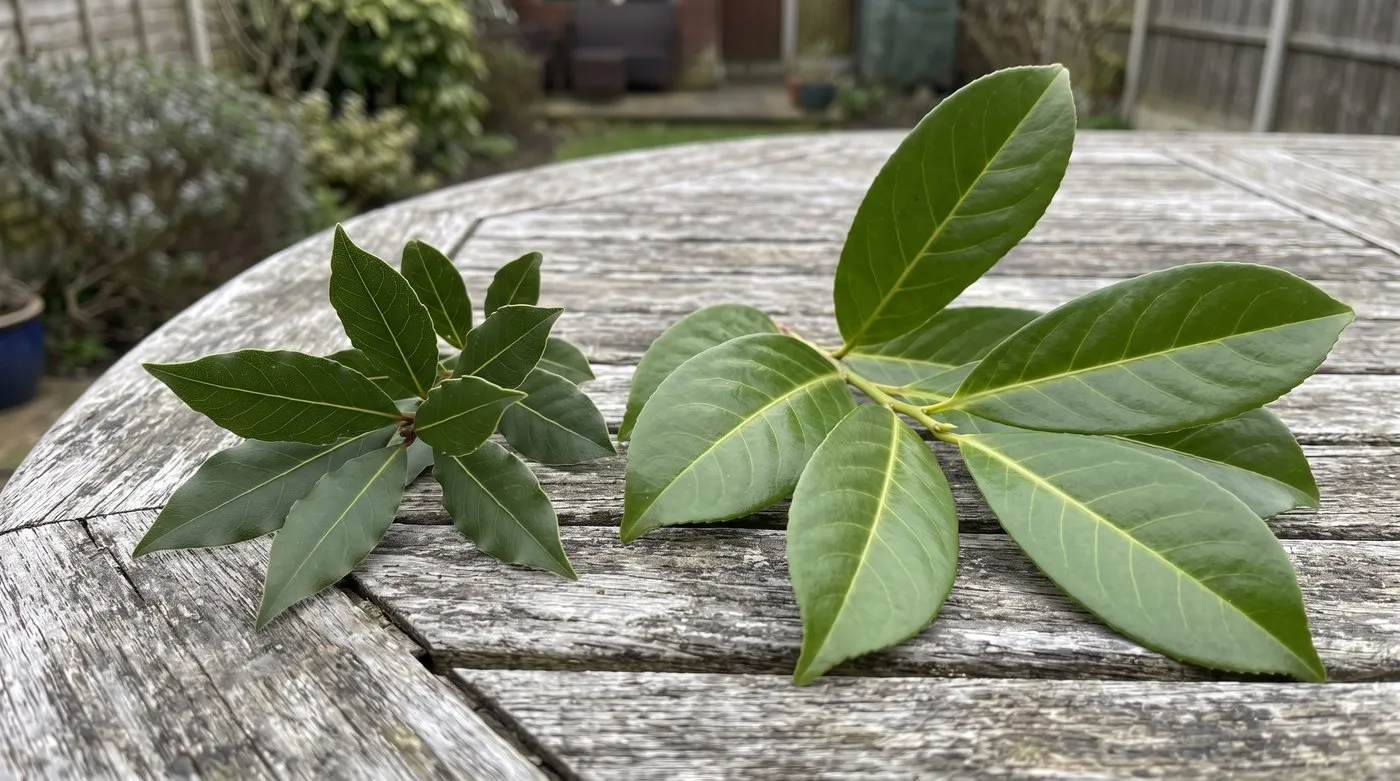
True bay has smaller, narrower leaves than cherry laurel, which is bigger and much shinier. Crush a leaf if you’re unsure: bay smells warm and herby.
How to propagate bay trees from cuttings
Bay grows from semi-ripe cuttings taken from July to September. It’s slower than most herbs, often taking several months to root, so patience is needed.
Method
- Cut 10-15cm shoots from this year’s growth
- Strip the leaves from the lower two-thirds, leaving a few at the tip
- Scrape a thin sliver of bark from one side at the base
- Dip the base in rooting powder
- Push into pots of half perlite, half multipurpose compost
- Water lightly and cover with a clear plastic bag or propagator lid
- Stand on a heated propagator mat at about 18-20C if you have one
- After a few months, give a gentle tug to check for roots
- Pot rooted cuttings on individually and keep them under cover for their first winter
Bottom heat really helps. Without it, cuttings taken in September may not root until the next spring.
Bay brings year-round structure, fresh leaves for the kitchen and a classic look to any garden. For more fragrant herbs to grow with it, try our guides to rosemary and sage.
Frequently asked questions
Are bay trees hardy in the UK?
Bay copes with light frost but not a long, hard freeze. Across most of England, Wales and sheltered parts of Scotland it grows outdoors all year. In cold, exposed gardens, grow it in a pot you can move under cover. Shelter from cold wind matters as much as the temperature.
Can I grow a bay tree in a pot?
Yes, and it’s the most popular way to grow bay in the UK. Use a 40-45cm pot with drainage holes, filled with John Innes No. 3 mixed with some grit or perlite. Repot every two or three years in spring, feed each April, and water when the top few centimetres of compost feel dry.
How fast do bay trees grow?
Bay grows slowly, especially in a pot. A small plant takes several years to become a full-sized standard. Feeding each spring and repotting every couple of years keeps it growing steadily. Left unpruned in the ground in a sheltered spot, it can eventually become a large tree.
Why are the leaves on my bay tree turning yellow?
Usually wet roots or hunger. Check the drainage first. If the compost is soggy, water less and add grit when you repot. If drainage is fine, give a balanced slow-release feed in April. Brown, dry leaf edges in winter are more likely cold wind scorch.
When should I prune a bay tree?
Prune in June for shape and lightly in September. Use sharp secateurs, not shears, which cut leaves in half and leave brown edges. Pull off suckers from the base and trunk as they appear. Avoid pruning after October, as new soft growth can be hit by frost.
How do I protect a bay tree in winter?
Wrap it in horticultural fleece when a hard frost is forecast. Move pots against a sunny house wall and raise them on pot feet so they don’t sit in water. An unheated porch, cold greenhouse or garage with a window makes good shelter. Avoid heated conservatories, which are too warm and dry.
Can I grow bay from cuttings?
Yes, take semi-ripe cuttings from July to September. Cut 10-15cm shoots, strip the lower leaves, dip in rooting powder and push into a mix of perlite and compost. Gentle bottom heat helps. Bay roots slowly, often taking several months, so be patient. Keep young plants under cover for their first winter.
Our team produces practical UK gardening guidance from source research, contributor records and established horticultural practice. Editorial standards are overseen by Matt W.