Key takeaways
- Common sage has an RHS H5 hardiness rating when grown in suitable conditions
- Needs full sun and well-drained, poor soil, wet roots in winter are the main killer
- Prune in April once new growth appears but never cut into bare old wood
- Take softwood cuttings from May to July for free replacement plants
- Propagate replacements when older plants become woody and straggly
- Purple sage and tricolour sage are less hardy and benefit from winter protection
Grow sage in full sun and free-draining soil for dense, aromatic leaves. Common sage, or Salvia officinalis, suits borders, raised beds and containers across much of the UK.
The RHS guide to growing sage classifies it as an evergreen sub-shrub. Mature plants reach 30-90cm, depending on variety and conditions. The same guidance recommends spring planting, 30cm spacing and protection from excess winter wet.
This guide covers choosing a culinary sage, planting, pruning, propagation and harvest. It also links sage care to our wider guide to growing herbs in the UK.
Which sage variety is best for a UK garden?
Choosing the right variety depends on whether you want a kitchen workhorse, a decorative plant, or both. All sage varieties prefer the same growing conditions, but hardiness varies.
Culinary sage
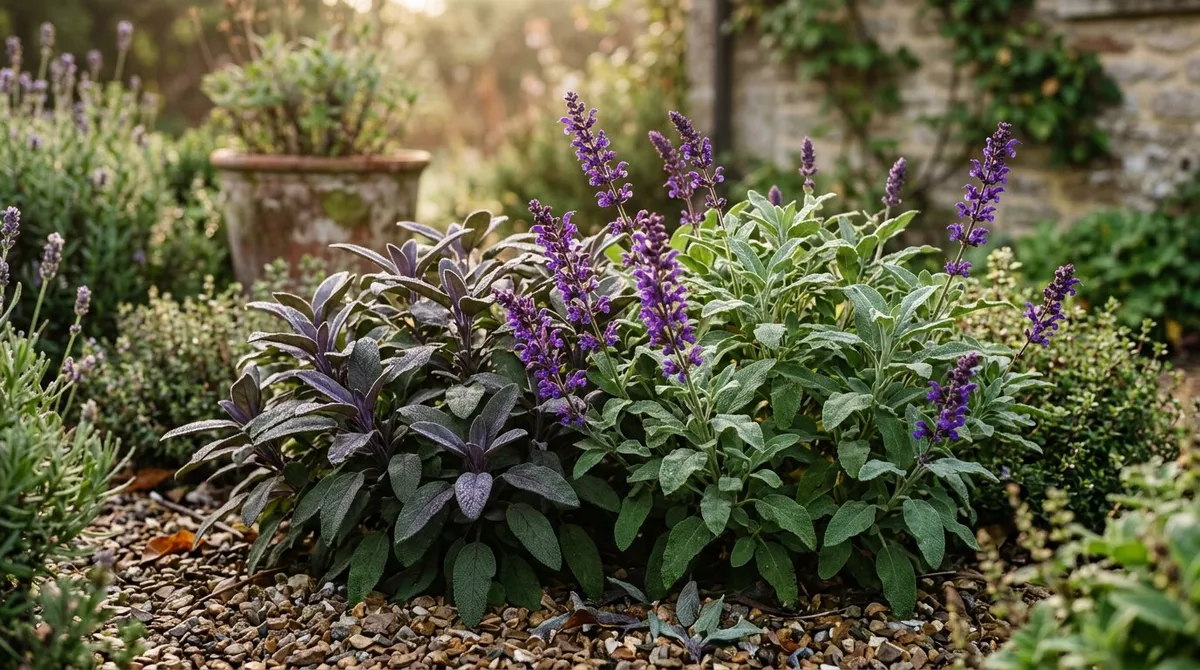
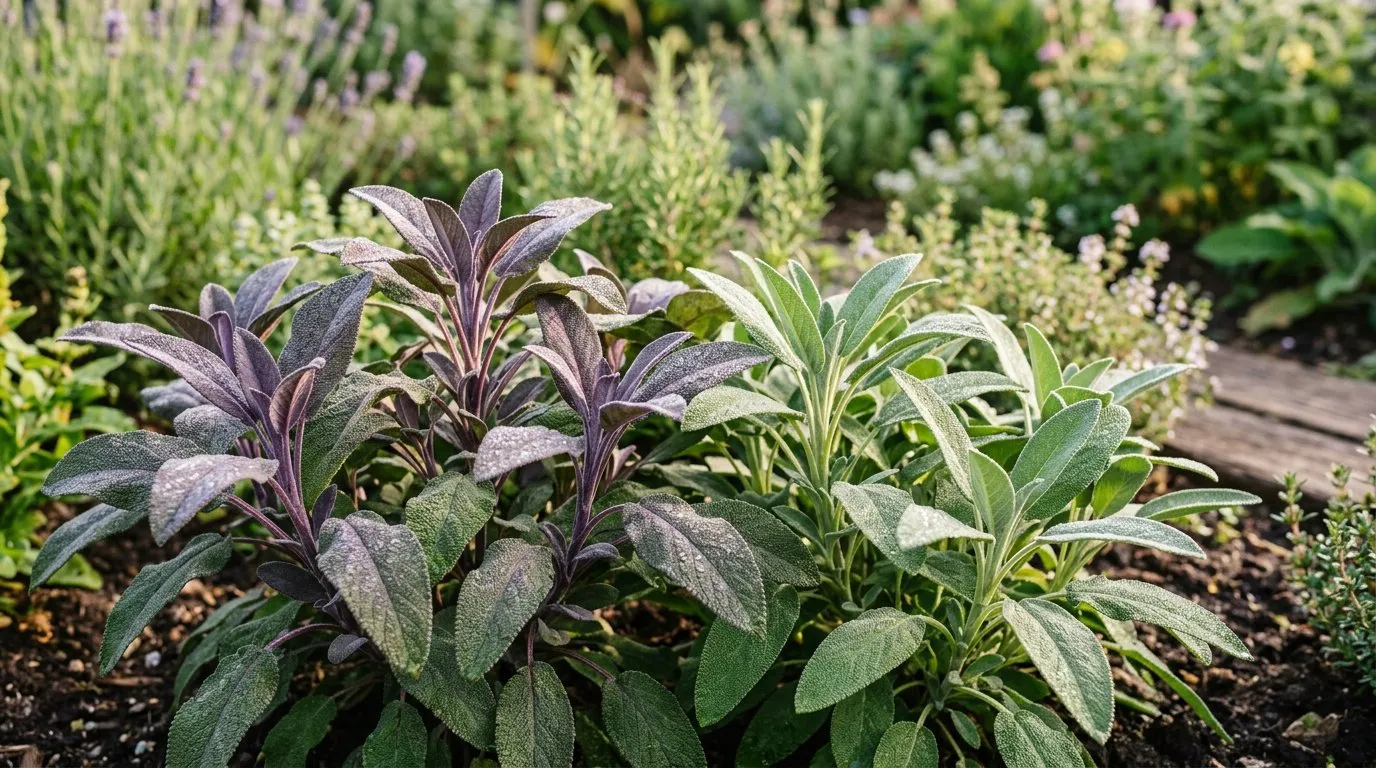 Green and purple culinary sages share the same sunny, free-draining conditions.
Common sage (Salvia officinalis) is the one you want for cooking. It grows 40-60cm tall with soft grey-green leaves covered in fine hairs. Purple-blue flowers appear from June to August and are popular with bees. This is the toughest variety and the best all-round choice for UK gardens. Broad-leaved sage is a selected form of common sage with larger, flatter leaves. It gives cooks a generous picking surface but needs the same sunny, free-draining conditions as common sage.
Ornamental sage
Purple sage (Salvia officinalis ‘Purpurascens’) has striking deep purple-grey leaves. It reaches 45cm tall and makes a fine edging plant. The flavour is good for cooking, though slightly milder than common sage. It is less hardy than the green form and benefits from winter fleece in cold areas. Tricolour sage (Salvia officinalis ‘Tricolor’) has variegated leaves in green, cream, and pink-purple. It grows to 40cm but is the least hardy of the group. Treat it as a sheltered-border plant south of the Midlands or grow it in a pot you can move under cover. The flavour is acceptable for cooking but weaker than common sage. Pineapple sage (Salvia elegans) is a tender perennial with bright red flowers in late autumn. The leaves have a genuine pineapple scent. It will not survive UK winters outdoors. Grow it in a pot and bring it indoors before the first frost. It reaches 90cm in a single season.
| Variety | Main use | Leaf colour | Winter approach |
|---|---|---|---|
| Common sage | Culinary | Grey-green | Usually grown outside in free-draining soil |
| Broad-leaved sage | Culinary | Grey-green, larger leaves | Give the same drainage as common sage |
| Purple sage | Culinary and ornamental | Deep purple-grey | Choose a sheltered position |
| Tricolour sage | Ornamental and culinary | Green, cream and pink | Shelter or move a pot under cover |
| Pineapple sage | Ornamental and drinks | Bright green | Treat as tender and overwinter under cover |
| If you are growing several Mediterranean herbs together, our guide to how to grow herbs in the UK covers the full range of kitchen staples. |
Where to plant sage
Common sage needs a warm, sunny position and soil that drains freely. Wet winter soil creates a greater risk than ordinary summer drought.
Sunlight and position
Choose the sunniest spot available. Sage needs at least six hours of direct sun daily. South-facing borders, raised beds, and gravel gardens are all ideal. Shade produces looser growth and fewer flowers. Choose a south-facing or west-facing bed where possible. A position against a warm wall suits sage well. The reflected heat and shelter from cold winds replicates its natural habitat. If you grow sage alongside lavender and rosemary, group them together in the same sunny, dry area.
Soil and drainage
Well-drained, moderately fertile soil suits sage. Heavy clay or moisture-retentive ground can damage the roots, especially over winter. On persistently wet soil, use a raised bed or a container filled with free-draining compost. Do not add fertiliser or rich garden compost to the planting hole. Lean soil produces compact growth with stronger flavour and aroma. Rich conditions encourage soft, floppy stems that are vulnerable to frost damage and disease. RHS advice recommends moderately fertile, free-draining soil. On clay, use a raised bed or a container instead of relying on grit alone.
Leave the crown visible rather than burying the base beneath mulch. Clear fallen leaves from around the stems in autumn so air can move through the plant and rain can drain away.
Pruning sage correctly
Pruning is the single most important maintenance task for sage. Get it right and your plant stays compact and productive for years. Get it wrong and it turns into a leggy, bare-stemmed wreck.
When to prune
Prune in mid-April once you can see fresh new growth emerging from the stems. This timing lets you see exactly where the live wood is. Never prune in autumn or winter. Fresh cuts expose the plant to frost damage and fungal infection during the cold months.
How to prune
Shorten leafy growth to just above a visible pair of shoots or leaves. Avoid cutting into old, bare wood because regrowth from leafless stems is unreliable. Older sage develops a woody base and carries leaves mainly at the shoot tips. The RHS advises propagating replacements when plants become straggly, often after six or seven years. Root a cutting before removing the old plant.
Growing sage in pots
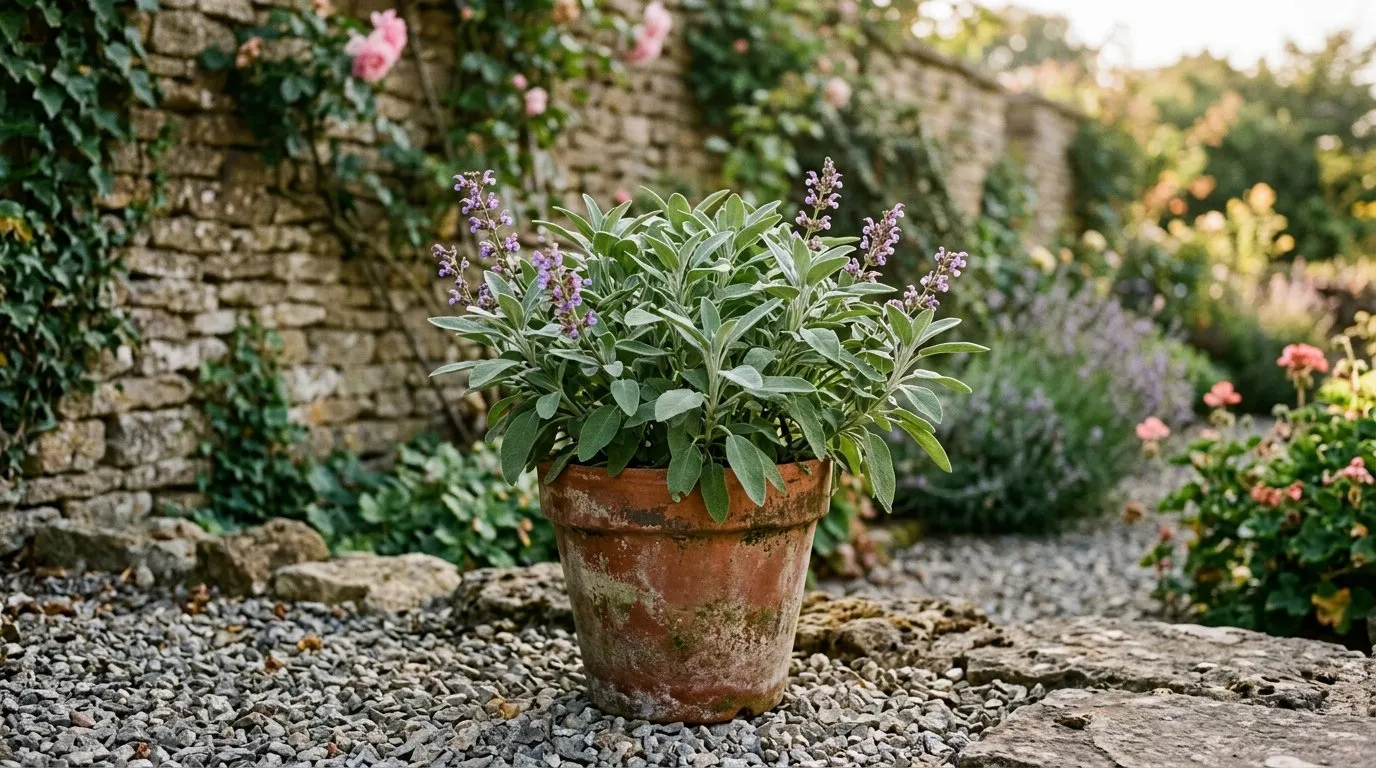 A 30cm terracotta pot gives sage roots room while excess water drains away.
Sage is an excellent container plant. Pots give you complete control over drainage, which is the key to keeping sage healthy through a wet British winter.
Choosing the right pot
Choose a stable pot with drainage holes and enough room for the root ball to expand. Terracotta dries faster than plastic, so either material can work when watering is adjusted. Stand the container on feet if water tends to collect beneath it.
Compost and watering
Use peat-free multipurpose compost opened up with horticultural grit or perlite. Water when the surface has dried, then let excess water escape before returning a saucer. Container sage grown alongside thyme and rosemary makes a practical trio for a sunny patio. For more ideas on growing edibles in containers, see our container vegetable gardening guide.
Propagating sage from cuttings
Taking cuttings is the best way to produce replacement plants. Sage cuttings root readily and give you identical copies of the parent plant. Seed-grown sage is slow and variable.
Softwood cuttings (May to July)
Take short cuttings from the tips of healthy, non-flowering shoots. Remove the lower leaves and insert the stems into free-draining cuttings compost. Keep the compost lightly moist in bright light away from harsh midday sun. Pot each cutting separately once it has formed a useful root system, then grow it on before planting outside.
Layering (spring or autumn)
Layering is even simpler than cuttings. Peg a low-growing stem onto the soil, cover part of it with gritty compost and leave the leafy tip exposed. Check for roots before severing it from the parent plant. This method works well for replacing an ageing plant in situ. Our seed sowing calendar covers timing for other common herbs and vegetables.
Sage problems and solutions
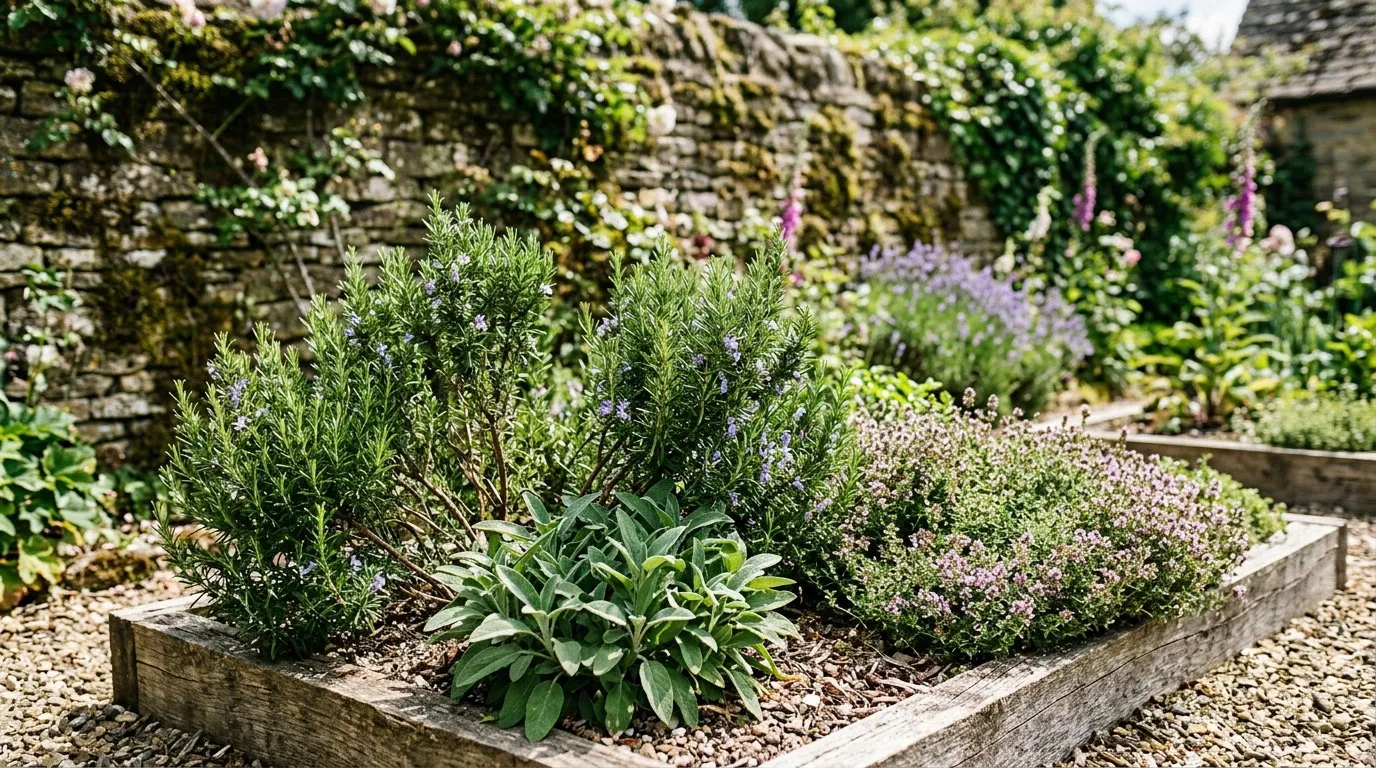 Sage shares a dry, sunny border with other herbs that dislike winter waterlogging.
Sage is one of the healthiest herbs you can grow. Most problems trace back to wet soil, poor drainage, or lack of pruning rather than pests or disease.
Sage shares a dry, sunny border with other herbs that dislike winter waterlogging.
Sage is one of the healthiest herbs you can grow. Most problems trace back to wet soil, poor drainage, or lack of pruning rather than pests or disease.
Root rot
This is the number one killer. Waterlogged soil in winter causes the roots to decay. Symptoms include wilting despite wet soil, blackened stems at ground level, and sudden collapse. Prevention is the only cure: ensure sharp drainage and avoid overwatering. Affected plants cannot be saved.
Powdery mildew
A white powdery coating on the leaves, most common in late summer. It appears when air circulation is poor and conditions are humid. Space plants at least 45cm apart. Prune to keep an open, airy shape. Remove affected leaves promptly. It rarely kills the plant but reduces vigour and spoils the harvest.
Sage leafhopper
Small green insects that cause white mottled patches on the upper leaf surface. The damage is mostly cosmetic. Encourage natural predators such as ladybirds and lacewings. In severe cases, pick off affected leaves. Chemical sprays are not necessary for this minor pest. Growing bee-friendly plants nearby encourages the beneficial insects that keep leafhoppers in check.
Woody decline
This is a natural ageing process rather than a disease. When a plant carries leaves only at the ends of thick woody stems, take cuttings before removing it. The RHS suggests replacing straggly plants after six or seven years, although individual plants vary.
Sage in the kitchen
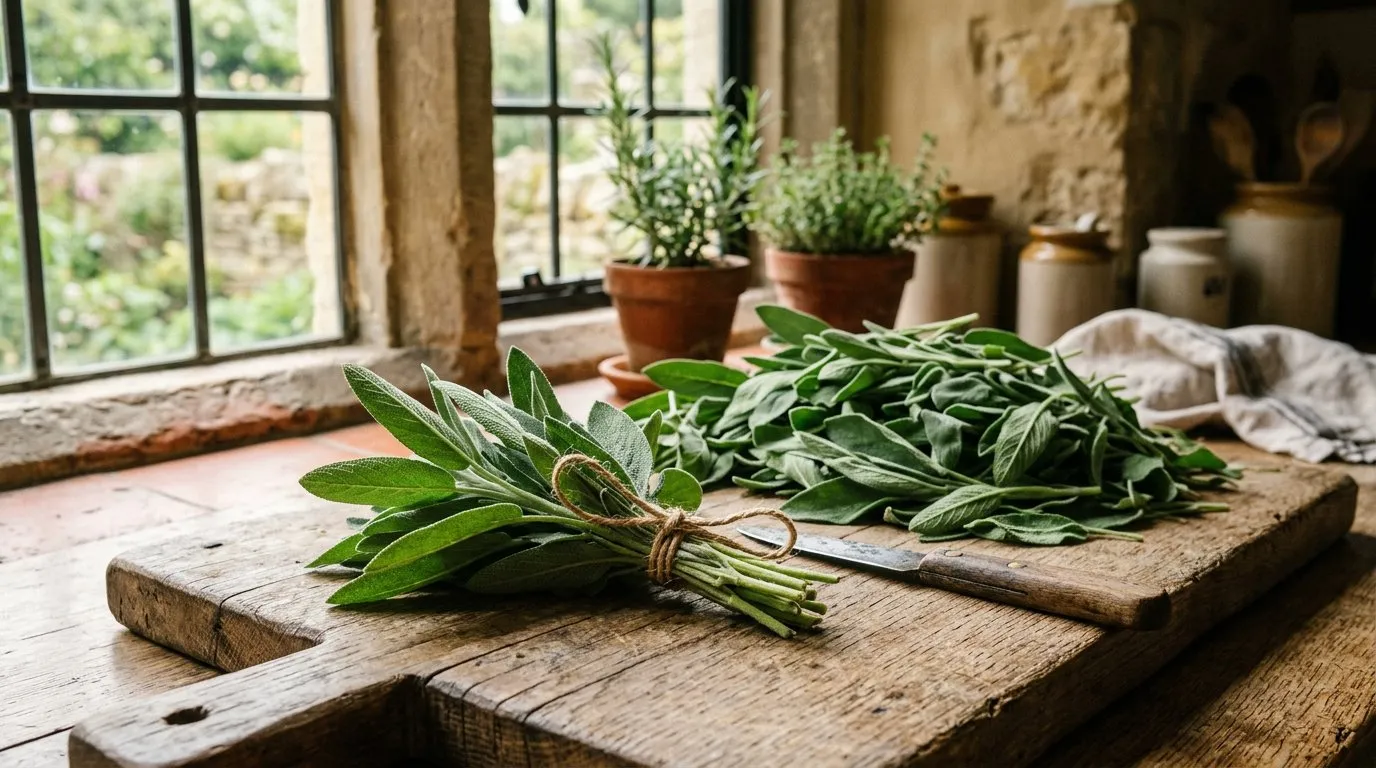 Cut leafy shoot tips before flowering for tender leaves and bushier regrowth.
Sage has been central to British cooking for generations. It pairs classically with pork, poultry, and rich, fatty meats. Sage and onion stuffing is a staple of the Sunday roast.
Fresh and dried sage have different strengths, so add a little at a time and taste the dish. Pick clean, healthy leaves in dry weather and wash them before use when needed.
Sage butter works with pasta, gnocchi and roasted squash. Melt butter until it foams, add whole sage leaves and cook until the leaves crisp and the butter turns golden. Dry spare shoots in a warm, airy place, then store fully dried leaves in an airtight labelled jar away from light.
If you enjoy growing kitchen herbs, our companion planting guide explains which herbs and vegetables grow best side by side. Sage itself is a useful companion for brassicas, because the plants share a sunny, well-drained position.
Cut leafy shoot tips before flowering for tender leaves and bushier regrowth.
Sage has been central to British cooking for generations. It pairs classically with pork, poultry, and rich, fatty meats. Sage and onion stuffing is a staple of the Sunday roast.
Fresh and dried sage have different strengths, so add a little at a time and taste the dish. Pick clean, healthy leaves in dry weather and wash them before use when needed.
Sage butter works with pasta, gnocchi and roasted squash. Melt butter until it foams, add whole sage leaves and cook until the leaves crisp and the butter turns golden. Dry spare shoots in a warm, airy place, then store fully dried leaves in an airtight labelled jar away from light.
If you enjoy growing kitchen herbs, our companion planting guide explains which herbs and vegetables grow best side by side. Sage itself is a useful companion for brassicas, because the plants share a sunny, well-drained position.
Month-by-month sage care calendar
Understanding when to do what makes sage growing straightforward. Follow this timeline for healthy, productive plants. March: Check overwintered plants for frost damage. Remove any dead stems. Do not prune yet. April: Prune once new growth is clearly visible. Shorten leafy shoots and assess whether old plants need replacing. Start preparing compost for any new plantings. May-July: Take softwood cuttings for propagation. Water container plants during dry spells only. Harvest leaves regularly to encourage bushy growth. August: Flowers finish. Stop taking cuttings. Reduce watering of container plants. September-October: Plant out rooted cuttings from summer. Layer low-growing stems for winter rooting. Stop feeding. November-February: No action needed for common sage. Cover purple and tricolour varieties with fleece during prolonged freezing spells. Do not prune or water. This is a herb that earns its place in any UK garden. If you are planning spring gardening jobs, adding sage to the herb patch is one of the most rewarding things you can do in April.
Frequently asked questions
Is sage a perennial in the UK?
Yes. Common sage is an evergreen sub-shrub with an RHS H5 hardiness rating. Give it full sun, free drainage and shelter from excess winter wet.
Why has my sage plant gone woody?
Woody stems are normal as sage ages. Regular harvesting slows the decline, but RHS advice suggests replacing straggly plants after six or seven years.
When should I prune sage?
Prune sage in spring when fresh growth is visible. Shorten leafy shoots and remove spent flower spikes without cutting into leafless old wood.
Can I grow sage in a pot?
Sage grows well in a sunny, free-draining container. Use a pot at least 30cm wide, add grit and keep the drainage holes clear.
How do I take sage cuttings?
Take softwood sage cuttings in late spring or early summer. Use non-flowering shoots, remove lower leaves and root them in free-draining compost.
For more edible-growing advice, browse the Garden UK growing guides. Next, use the harvest well with our guide to drying herbs at home.
Our team produces practical UK gardening guidance from source research, contributor records and established horticultural practice. Editorial standards are overseen by Matt W.