Key takeaways
- Oregano is hardy and comes back every spring
- Give it full sun and poor, well-drained soil. Rich soil means bland leaves
- Greek oregano has the strongest flavour for cooking
- Split old clumps every few years in spring to keep them lively
- Cut stems as the flowers open in July and hang them to dry
- The summer flowers are a magnet for bees and butterflies
Oregano is one of the most rewarding herbs you can grow. It’s tough, it shrugs off British winters, it loves poor soil and it actually tastes better when you leave it alone. The less you fuss, the stronger the flavour.
Origanum vulgare grows wild on chalk downland and limestone grassland in southern England. It’s in the same family as thyme, rosemary and mint. For more kitchen herbs, see our guide to growing herbs in the UK.
Which oregano varieties grow best in the UK?
With oregano, the variety really matters. Common oregano tastes mild and earthy. Greek oregano has a real peppery punch. Pick based on whether you want it for cooking, for wildlife or for a splash of colour.
For cooking
Greek oregano (Origanum vulgare subsp. hirtum) is the one for the kitchen. It has that strong, peppery warmth you want in Mediterranean dishes, with white flowers. It’s a touch less tough than common oregano but copes with winter in most UK gardens.
Hot and Spicy oregano is a selected variety with even more heat. Great on pizza, in pasta sauces and anywhere you want a bold oregano hit.
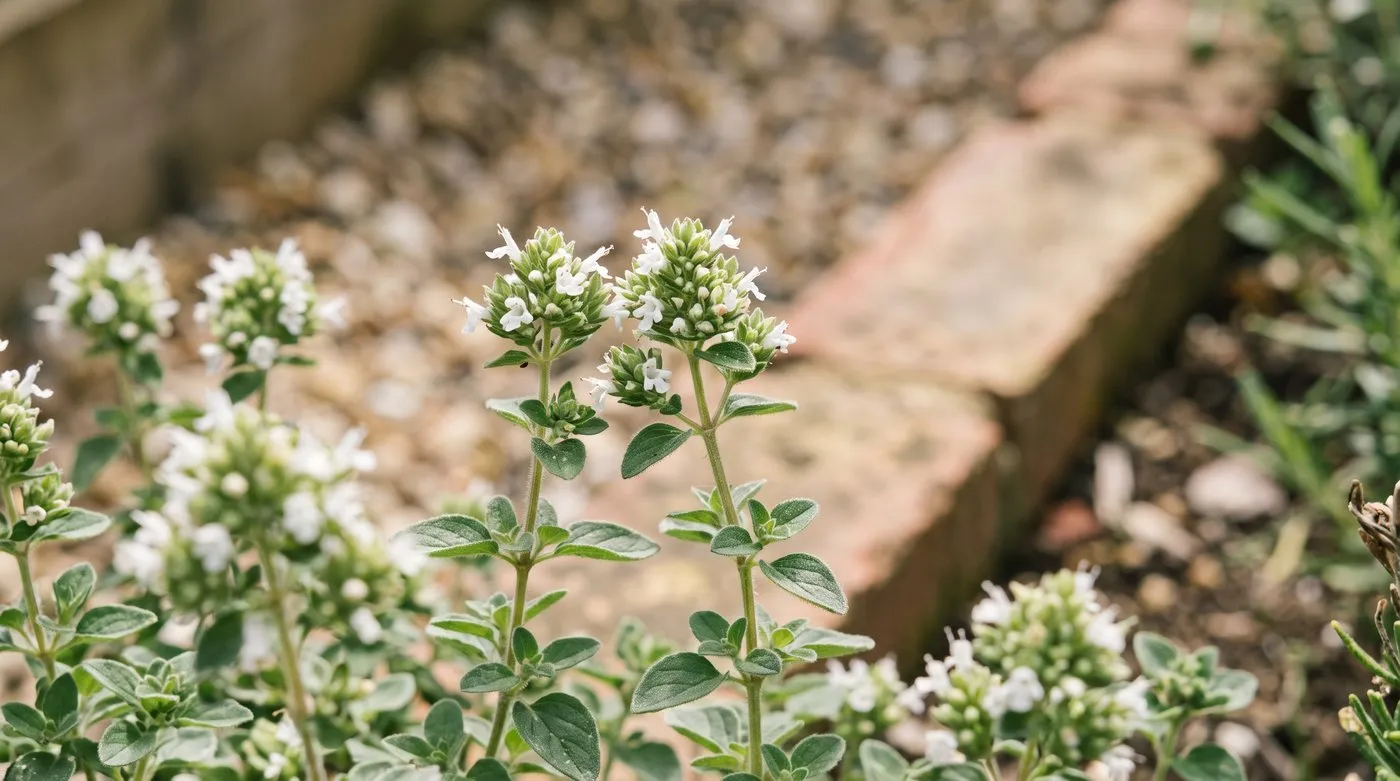
Greek oregano has white flowers and grey-green leaves, and it’s the one with the proper peppery punch. Check the label for subsp. hirtum when you buy.
For wildlife and looks
Common oregano (Origanum vulgare) is the toughest, the one you see growing wild on chalk downs. It has pink-purple flowers from July to September. It’s mild in the kitchen but brilliant for pollinators. The RHS includes it in its plants for pollinators.
Golden oregano (‘Aureum’) has bright yellow-green leaves that light up the front of a border and makes a pretty edging. It can scorch in hot midday sun, so give it a little afternoon shade.
Syrian oregano (Origanum syriacum) is the one used in za’atar. It has grey-green leaves and white flowers. It’s the least hardy here, so grow it in a pot you can move under cover for winter.
| Variety | Height | Flavour | Best for | Hardiness |
|---|---|---|---|---|
| Greek oregano | Short to medium | Very strong | Cooking and drying | Hardy in most gardens |
| Common oregano | Medium | Mild | Wildlife | Very hardy |
| Golden oregano | Short | Mild | Edging, colour | Hardy |
| Hot and Spicy | Short to medium | Very strong | Cooking | Hardy in most gardens |
| Syrian oregano | Medium | Strong, unusual | Za’atar, pots | Tender, bring under cover |
What is the difference between oregano and marjoram?
This one confuses lots of people. Oregano and marjoram are close cousins, but they’re different plants. They look and smell alike, but their flavour and toughness differ enough to matter.
Oregano (Origanum vulgare) is hardy in the UK. It has a bold, peppery, slightly bitter taste, the classic “pizza” smell. The leaves are darker and a bit rougher.
Sweet marjoram (Origanum majorana) is tender and dies in frost. Most British gardeners grow it as an annual or bring it in for winter. It’s sweeter, more floral and more delicate, so add it at the end of cooking. Use it in egg dishes, light sauces and salads.
Pot marjoram (Origanum onites) sits between the two. It’s tougher than sweet marjoram, with a flavour closer to oregano but gentler. A good choice if you want a marjoram taste without resowing every year.
Top tip: Check the label at the garden centre. Many plants sold as “oregano” are common oregano, which is mild. For proper cooking oregano, look for Origanum vulgare subsp. hirtum (Greek oregano), or try a specialist herb nursery.
Where should I plant oregano?
Oregano wants the same things as thyme and rosemary: full sun, sharp drainage and soil other plants would grumble about. The more it feels like a sunny Mediterranean hillside, the better it tastes.
Light
For good flavour, it needs full sun. Aim for at least six hours of direct sun a day, ideally a south or west-facing spot. In shade it grows lush and green but tastes of very little. The only exception is golden oregano, which likes a bit of afternoon shade.
Soil
Oregano loves poor, well-drained soil and is happy on chalk, limestone and sand. On heavy clay, dig plenty of grit or sharp sand into the top layer before planting, or grow it in a raised bed with a gritty mix.
Never feed it with high-nitrogen fertiliser. Rich soil and feeding give soft, leafy growth with hardly any flavour. Oregano tastes strongest when life is a little tough.
Spacing and planting
Plant 30-45cm apart. Common oregano spreads, so give it 45cm. Greek oregano stays neater at about 30cm. Plant at the same depth as it sat in the pot, firm gently, water once to settle it, then leave it be.
Plant in April or May after the last frost, or in September while the soil is still warm. Spring planting gives it a whole season to settle in before winter.
 Greek oregano in a terracotta pot on a sunny patio. Pots suit it nicely.
How do I grow oregano in containers?
Choosing a pot
Use a terracotta pot at least 20cm wide and deep with drainage holes. Terracotta breathes, so the compost dries out between waterings. Stand it on pot feet so water never pools underneath, as soggy roots soon rot.
Compost
Fill it with half multipurpose compost and half grit. That gives the quick-draining, low-food mix oregano likes. Skip the slow-release fertiliser. One light liquid seaweed feed in May is plenty for the year.
Watering
Water only when the top few centimetres of compost feel completely dry. In summer that might be every few days. In winter, established plants rarely need any. Overwatering is the biggest killer of potted oregano.
Winter
Move pots against a south-facing wall in November. Terracotta can crack in a hard frost, so wrap it in bubble wrap or hessian in a long cold spell. The plant itself will be fine. Hardly water at all from November to February.
How do I propagate oregano?
Oregano is one of the easiest herbs to make more of, and it costs nothing. Here are three ways.
Division (the easiest)
Split clumps in March or April as new growth appears. Dig up the whole plant, then pull or cut it into pieces, each with a few shoots and some roots. Replant straight away at the same depth and water once. It almost always works.
Splitting also freshens up tired plants. After a few years, oregano clumps get woody and less productive. Replanting the young outer pieces every few springs keeps them lively and tasty.
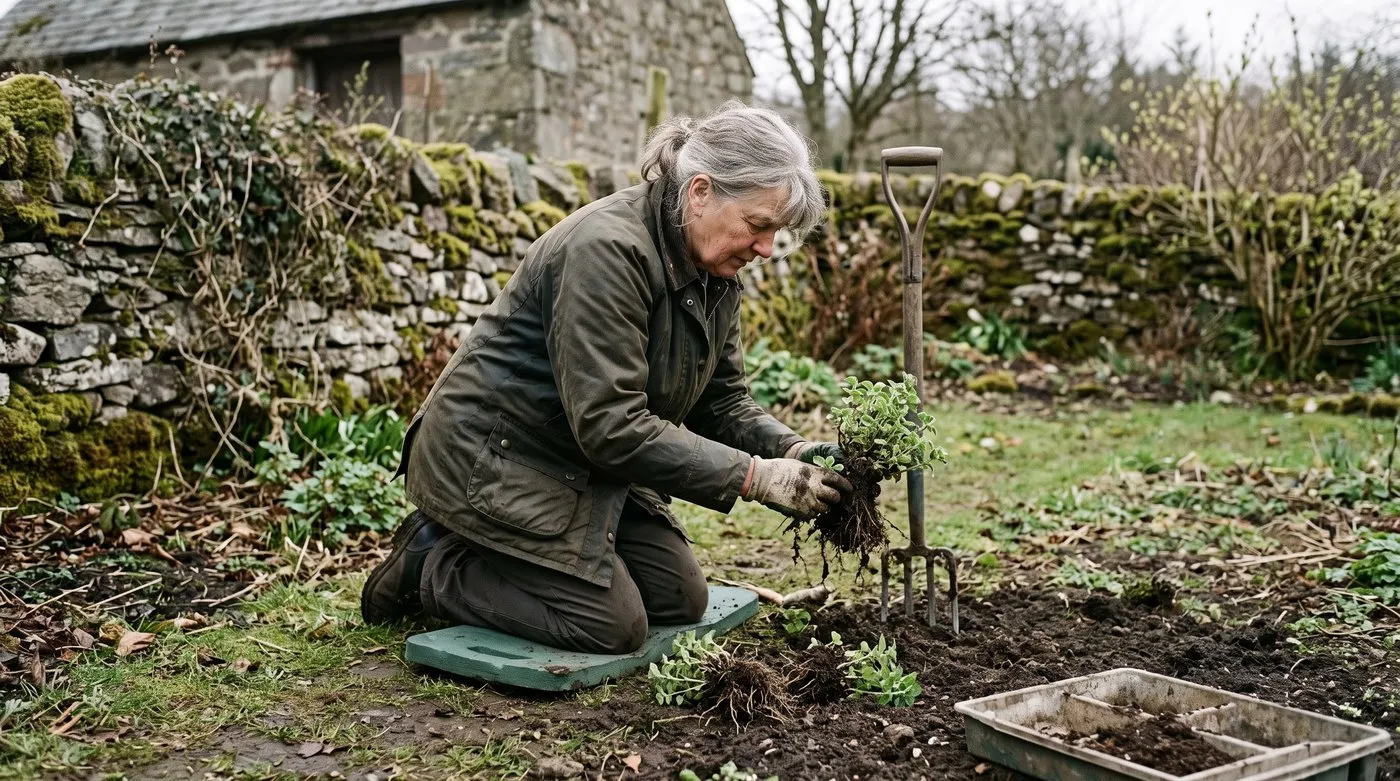
Each piece needs a few shoots and some roots, then it goes straight back in the ground. Replanting the lively outer bits keeps the flavour coming.
Cuttings
Take cuttings in May or June from shoots without flowers. Cut 8-10cm pieces just below a leaf joint and strip off the lower leaves. Push them into a mix of half perlite, half compost and keep it just moist. They root in a few weeks. Pot them up once they have good roots.
Seed
Sow indoors in March somewhere warm. The seeds need light to come up, so press them onto the surface of moist compost without covering them. Thin the seedlings and pot them on when they’re big enough. Harden them off and plant out after the last frost.
Seed-grown plants vary a lot in flavour and habit. If you want a copy of a plant you love, use division or cuttings instead.
Month-by-month oregano calendar
| Month | What to do |
|---|---|
| January | Leave sleeping plants alone. Check pots aren’t waterlogged |
| February | Order plants or seed from a herb nursery |
| March | Sow seed indoors. Split old clumps |
| April | Plant out after the last frost. Start watering lightly |
| May | Take cuttings. Pinch out tips to make plants bushier |
| June | Plants growing fast. Water pots every few days in dry spells |
| July | Main harvest as flowers open. Cut stems 5cm above the ground |
| August | Lighter second cut. Hang bunches to dry |
| September | Plant new divisions. Water less as growth slows |
| October | Clear dead flower stems. Move pots somewhere sheltered |
| November | Plants die back to the ground. No watering needed |
| December | Wrap pots if a hard frost is forecast |
Why is oregano better dried than fresh?
This is the one herb where drying really boosts the flavour. Dried oregano tastes stronger than fresh, because drying takes out the water but keeps the tasty oils. That’s why dried oregano is a favourite in Italian, Greek and Turkish cooking, while fresh can taste surprisingly mild.
How to dry oregano
Cut whole stems just as the flowers begin to open in July, when the flavour is at its best. Cut them about 5cm above the ground in the morning, once the dew has dried.
Tie them in small bunches with string or rubber bands. Hang them upside down somewhere warm, dry and airy, out of direct sun. They take a week or two, depending on the weather.
They’re ready when the leaves crumble easily between your fingers. Strip the leaves off and keep them in airtight glass jars in a dark cupboard. Make a fresh batch each year.
 Small bunches of oregano hung up to dry. The flavour gets stronger as they dry.
For other ways to dry and freeze herbs, see our guide to drying and storing herbs.
How good is oregano for pollinators?
Oregano is one of the best plants you can grow for pollinators. Bees, butterflies and hoverflies can’t get enough of it.
It flowers from July to September, when many spring flowers have finished and insects need food. A plant in full bloom can be busy with bumblebees, honeybees, butterflies and hoverflies all at once.
 Oregano in full flower is a real buzz of bees, butterflies and hoverflies.
Common oregano flowers the most and is the best for wildlife. Greek oregano flowers less but still brings in plenty of insects. If you want both, grow Greek oregano near the kitchen for picking and a big patch of common oregano in a sunny border for the bees.
Common oregano mistakes
Planting in rich soil
The most common mistake. It’s tempting to give herbs your best compost and regular feeds, but oregano just gets soft and tasteless. Lean soil and a bit of dryness give the best flavour.
Overwatering
Once settled, oregano copes well with dry spells. Watering too often, especially on heavy soil, rots the roots. Yellowing lower leaves are the first warning sign.
Not cutting hard enough
A few nervous snips lead to straggly, woody plants. Be bold and cut whole stems about 5cm above the ground. It regrows quickly.
Ignoring the woody middle
After a few years, the middle of a clump goes woody and new growth only comes at the edges. Split the plant in spring, throw away the woody centre and replant the lively outer bits. Thyme does exactly the same.
Growing the wrong variety for cooking
Generic “oregano” from the garden centre often tastes mild. For proper flavour, choose Greek oregano (Origanum vulgare subsp. hirtum). Check the label before you buy.
How to use oregano in cooking
Oregano is a star in Mediterranean, Mexican and Middle Eastern cooking. It loves tomatoes, olive oil, garlic, lemon, lamb and grilled vegetables.
Dried oregano goes in early. Add it to pasta sauces, pizza, marinades and stews while they cook, so the flavour has time to come out.
Fresh oregano is best added at the very end or used raw. Strip the leaves and chop roughly. Scatter it over grilled halloumi, toss it into a Greek salad or mix it into herb butter.
Now you’re growing oregano, our guide to drying and storing herbs will help you make the most of every harvest.
Frequently asked questions
Is oregano a perennial in the UK?
Yes, it’s hardy and comes back every year. Common oregano dies back to the ground in winter and shoots up again from March. After a few years the clump gets woody in the middle, so lift and split it to keep it going.
What is the difference between oregano and marjoram?
They’re close cousins with different flavours and toughness. Oregano is hardy with a bold, peppery taste. Sweet marjoram is tender, milder and sweeter, and is usually grown as an annual in the UK. Pot marjoram sits somewhere between the two.
Can I grow oregano in pots?
Yes, it does really well in pots with good drainage. Use a terracotta pot at least 20cm wide with drainage holes. Fill it with half multipurpose compost and half grit. Water only when the top few centimetres feel dry.
When should I harvest oregano?
Cut it just as the flowers start to open in July. That’s when the flavour is strongest. Cut whole stems about 5cm above the ground rather than picking single leaves. It soon regrows, and you can take a lighter second cut in September.
Does oregano spread and become invasive?
It spreads, but it isn’t a thug. Common oregano creeps by roots and self-seeds, so a clump gets wider over a couple of years. Grow it in a pot or an edged bed to keep it in check. Split clumps every few years and pull out unwanted seedlings in spring.
How do I dry oregano at home?
Hang small bunches upside down somewhere warm and airy. Keep them out of direct sun. After a week or two, the leaves should crumble easily. Strip them off the stems and keep them in airtight glass jars in a dark cupboard. Make a fresh batch each year.
Why does my oregano have no flavour?
It’s usually too rich or too shady. Oregano tastes strongest in full sun, poor soil and fairly dry conditions. Water less and never feed it with high-nitrogen fertiliser. For cooking, switch to Greek oregano, which has much more flavour than common oregano.
Our team produces practical UK gardening guidance from source research, contributor records and established horticultural practice. Editorial standards are overseen by Matt W.