
Key takeaways
- Sweet marjoram is tender, so most people sow it fresh each spring
- Pot marjoram and wild marjoram (oregano) are tougher and come back each year
- Sow indoors in March on the surface, as the seed needs light
- Give it full sun and soil that drains well
- Pick before the flowers open for the best flavour
- Marjoram dries really well, so hang bunches to keep for winter
Marjoram is a warm, fragrant herb that earns a place in any UK kitchen garden. It’s a close cousin of oregano but softer and sweeter. Sweet marjoram, Origanum majorana, has small, soft leaves with a gentle warmth you won’t find in any other herb.
What is marjoram and why grow it?
Marjoram is in the mint family. The name covers a few plants, but the three to know are sweet marjoram, pot marjoram and wild marjoram. All have tasty leaves, but they differ in hardiness, height and strength of flavour.
It comes from the warm, rocky hillsides of the Mediterranean. In a British winter, sweet marjoram usually doesn’t survive, so most people grow it fresh each year. The good news is that it grows quickly from seed and you’ll be picking leaves within a couple of months.
Why grow it? Fresh leaves taste far better than dried jars from the shop. The plant is small and happy in pots, small gardens and windowsills. And bees, hoverflies and butterflies love the flowers. If you’re planning a herb garden, marjoram sits nicely between mild parsley and punchy oregano.

Sweet marjoram in flower. Those little knotted buds are how you spot it.
Marjoram vs oregano: what is the difference?
This one confuses lots of people. The short answer: oregano is wild marjoram, but not all marjoram is oregano.
Sweet marjoram (Origanum majorana) tastes mild, sweet and a little floral. Its leaves are small, soft and grey-green. It grows 20-30cm tall, with knotted flower clusters like tiny green beads that open into small white or pale pink flowers. It’s tender and rarely survives winter outdoors.
Wild marjoram (Origanum vulgare) is the plant sold as oregano. It tastes stronger and more peppery, with slightly bigger, darker leaves. It grows 30-60cm, has sprays of pink-purple flowers and is fully hardy. It’s even a British wildflower, found on chalk downland.
The real difference is in the kitchen. Sweet marjoram suits gentle dishes: eggs, creamy sauces, stuffing and mild cheese. Oregano is for bolder cooking: pizza, tomato sauces, grilled meat and Mexican food. Grow both and you’ll soon taste the difference.
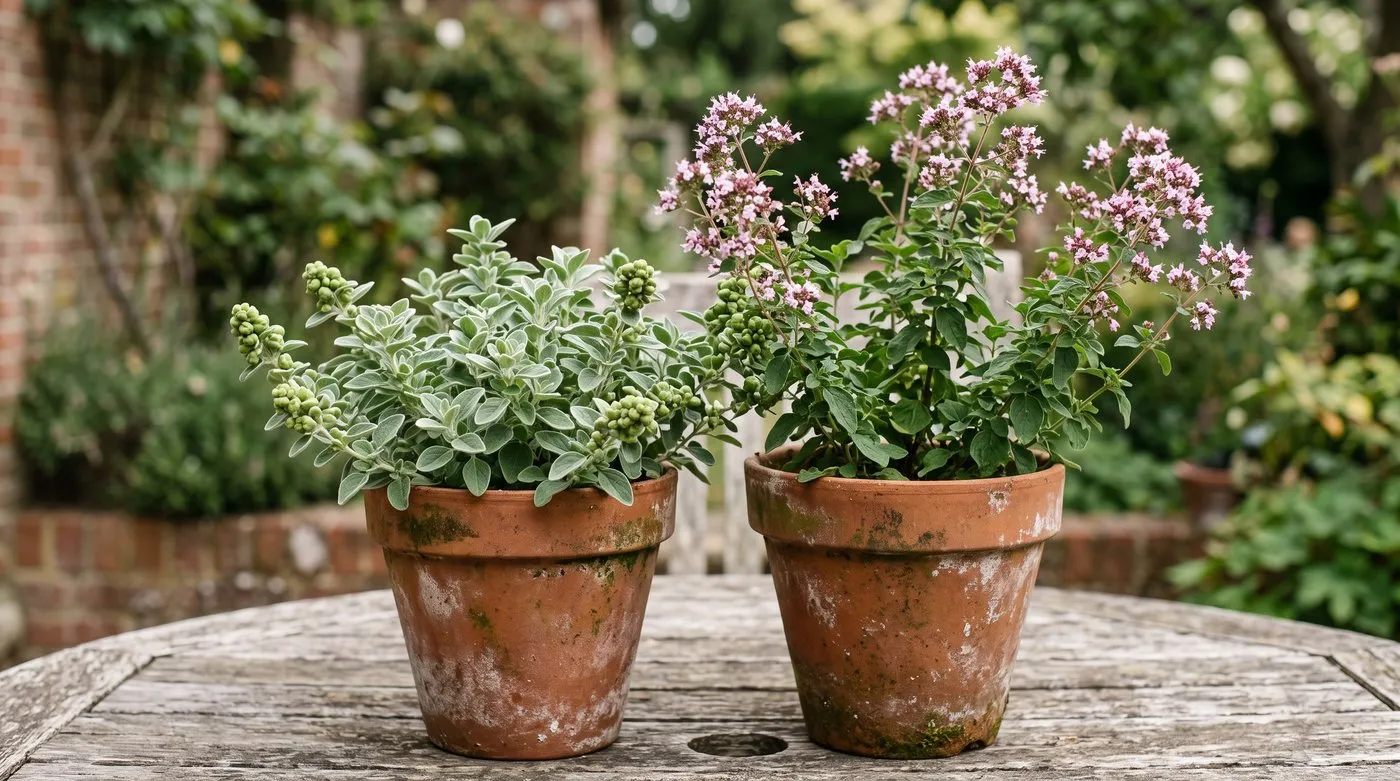
Sweet marjoram has soft grey-green leaves and knotted buds, while oregano is bigger with pink-purple sprays. Use marjoram for gentle dishes and oregano for bold ones.
Types of marjoram for UK gardens
You’ll find four kinds at most nurseries and seed suppliers.
| Sweet marjoram | Pot marjoram | Golden marjoram | Wild marjoram (oregano) | |
|---|---|---|---|---|
| Botanical name | Origanum majorana | Origanum onites | Origanum vulgare ‘Aureum’ | Origanum vulgare |
| Height | 20-30cm | 30-60cm | 20-30cm | 30-60cm |
| Survives winter | Rarely | Usually, if sheltered | Yes | Yes |
| Flavour | Sweet and mild | Medium | Mild | Strong and peppery |
| Flowers | White to pale pink | White to pale pink | Pink-purple | Pink-purple |
| Best for | Gentle dishes | All-round cooking | Looks and cooking | Pizza, bold cooking |
| Ease | Medium | Easy | Easy | Very easy |
Sweet marjoram has the finest flavour but needs the most care. Grow it fresh each year in most places. In a sheltered, well-drained spot in the south, it may sometimes survive.
Pot marjoram is the practical choice. It’s tougher, a bit stronger in flavour and usually gets through winter in much of England. The name comes from cooking pots, not flower pots. It’s a great all-rounder.
Golden marjoram is a bright yellow-green form of wild marjoram. It’s milder and looks lovely as low ground cover. It can scorch in strong midday sun, so give it morning sun and afternoon shade.
Wild marjoram (oregano) is the toughest. It seeds itself around and spreads, so it’s great in herb gardens and wildflower patches. It tastes strongest when grown hot, dry and hungry.
How to sow marjoram from seed
Marjoram seed is tiny, almost like dust. It needs light and warmth to sprout, so sowing indoors works best.
Indoor sowing (recommended)
Sow in March. Fill modules or a shallow tray with fine seed compost and water well. Scatter the seeds thinly over the top and press them in gently with the back of a spoon. Don’t cover them, as they need light.
Put the tray on a warm windowsill or in a propagator at 15-20C, with a clear lid to keep it moist. Seedlings should appear in one to two weeks. Take the lid off once they’re up, and thin to one seedling per module when they have two proper leaves.
Grow them on in good light until mid-April. Then harden them off by putting them outside in the day for a week and bringing them in at night. Plant out after the last frost, usually mid to late May.

Marjoram seedlings need a few weeks of warmth indoors before planting out.
Direct sowing outdoors
Sowing sweet marjoram straight outside is hit and miss, as the soil usually isn’t warm enough until early summer. Pot and wild marjoram are easier. Sow them in May once the soil has warmed, raking the seed into fine soil in a sunny spot.
Buying plants
Garden centres sell potted marjoram from April. It’s the quickest way to a harvest and handy if fine seed feels fiddly. Plant at the same depth as the pot, water in and start picking within weeks.
Where to plant marjoram
Getting the spot right matters most. Marjoram grew up on sun-baked hillsides, so give it as close to that as you can.
Sun: Full sun, at least six hours a day. That’s when the flavour is strongest. In shade it gets leggy and the leaves taste of very little. Thyme likes exactly the same, so they make great neighbours.
Soil: Light and well drained. Marjoram hates sitting wet. On heavy clay, dig in coarse grit and garden compost. Chalky, sandy and loamy soils are fine as they are. A raised bed filled with half compost, half grit is the most reliable option.
Shelter: A warm spot by a sunny wall, in a raised bed or on a patio helps all types. Cold winds and late frosts can hurt young plants, so pop a cloche over new plants in exposed gardens.
Spacing: Plant sweet marjoram 20cm apart, and pot or wild marjoram 30cm apart. Group it with other Mediterranean herbs like sage and thyme, which want the same sun and drainage.

Marjoram, thyme and sage all love sun and good drainage, so they’re happy together.
Growing marjoram in containers
Pots are the best way to grow sweet marjoram. You get perfect drainage, warm roots and the chance to move it under cover for winter.
Use a pot at least 20cm wide with drainage holes. Terracotta is ideal because it doesn’t stay soggy. Fill with roughly two-thirds multipurpose compost and one-third perlite or grit, and put it somewhere sunny.
Water when the top couple of centimetres feel dry. Marjoram would rather be a bit dry than always damp, and overwatering is the quickest way to lose it. In summer, that might mean every two or three days. In spring and autumn, about once a week.
Give a weak seaweed feed once a month from May to August. Avoid rich feeds, which give soft, bland leaves. A slightly hungry plant tastes best.
Repot each spring with fresh compost, dividing crowded plants or moving up a size if the roots have filled the pot. After two or three years plants get woody, so start fresh ones from seed or cuttings.
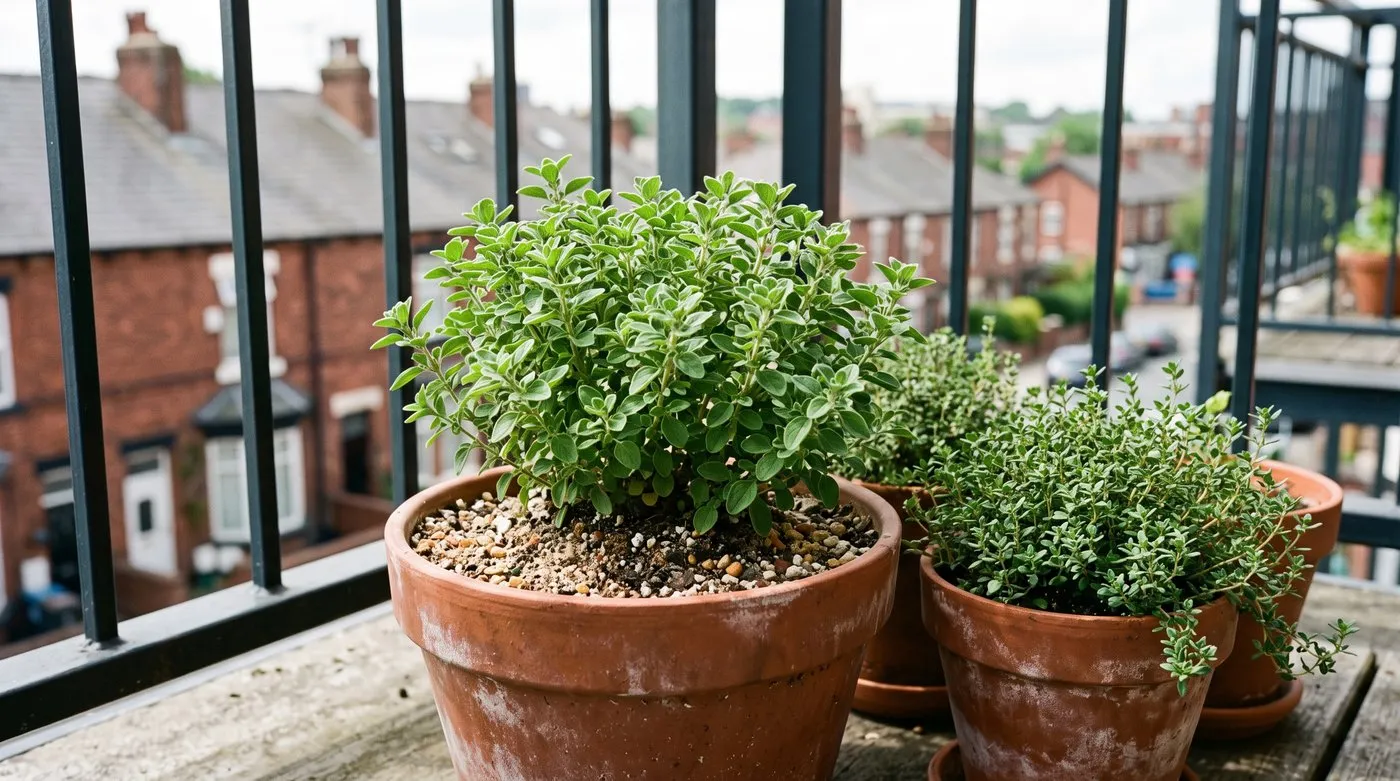
Terracotta and gritty compost keep marjoram’s roots on the dry side. It would rather be a bit thirsty than always damp.
Overwintering marjoram in the UK
Sweet marjoram is the tricky one. It doesn’t cope with hard frost, so in most UK gardens it dies outdoors over winter.
Ways to keep sweet marjoram going:
- Grow it fresh each year. Sow every March. It’s the simplest way and gives you strong plants every summer.
- Bring pots under cover. Move them into an unheated greenhouse, cold frame or cool porch before the first frost. Water very little over winter, and they should regrow in spring.
- Take cuttings in August. Snip 8cm non-flowering tips, strip the lower leaves and root them in small pots of gritty compost. Keep them on a windowsill over winter and plant out in May.
- Mulch in mild areas. In mild coastal or city gardens, a thick mulch of straw or bark may get it through a gentle winter. Don’t count on it, though.
Pot marjoram and wild marjoram are much tougher. They usually survive winter in well-drained soil with no help. Cut them back to about 5cm in late autumn, add a light mulch and they’ll regrow in spring. In a very hard winter, pot marjoram may struggle in exposed spots. Wild marjoram is pretty much indestructible.
Harvesting marjoram
When you pick makes a big difference to the flavour. The leaves taste strongest just before the flowers open.
When: From June, once plants are at least 15cm tall. The best moment is when flower buds have formed but haven’t opened. Keep picking through to September.
How: Cut whole stems about 5cm above the soil with sharp scissors. Cutting stems, rather than stripping leaves, makes the plant bushier. Take no more than a third of the plant at a time, and it’ll regrow for more pickings through the summer.
Make it last: Regular cutting delays flowering. Pinch out flower stems if they appear before you want them. Once marjoram flowers, the leaves turn a little bitter.
Fresh marjoram is best used the day you pick it, as it wilts quickly in the fridge. For keeping, drying is the way to go.
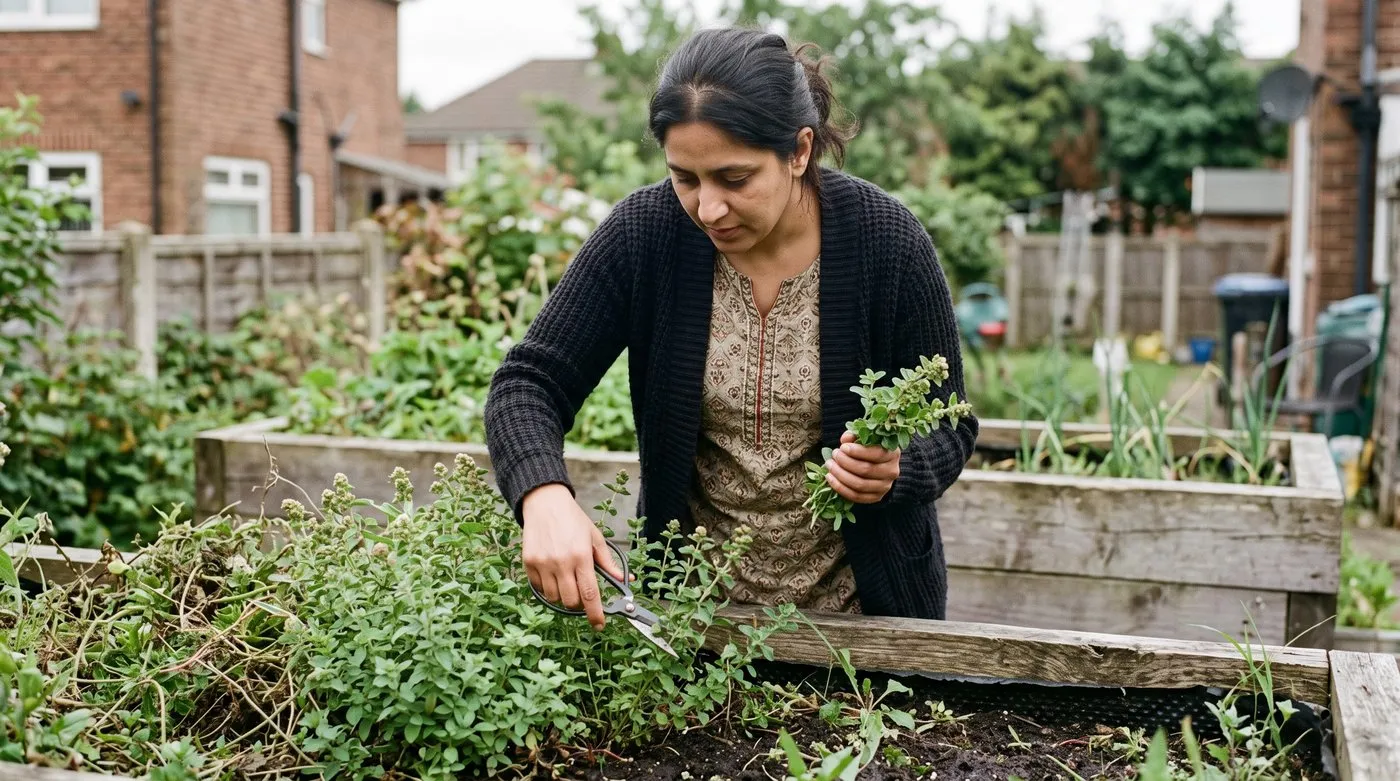
Pick just before the flowers open, when the flavour is strongest. Cutting whole stems makes the plant bushier.
How to dry and store marjoram
Marjoram is one of the few herbs that dries really well. Unlike basil, which loses most of its flavour, dried marjoram is nearly as good as fresh, and in slow-cooked dishes it can be even better.

Pick marjoram for drying just before the flowers open, then hang small bunches somewhere warm and dry.
Air drying (traditional method)
- Pick stems in the morning, once the dew has dried.
- Tie a few stems together with string.
- Hang them upside down somewhere warm, dry and airy, out of direct sun. An airing cupboard or spare room works well.
- They should be dry in a week or so.
- Run your thumb and finger down each stem to strip off the leaves.
- Store in airtight glass jars away from light and heat.
Oven drying (quick method)
Spread the leaves on a baking tray lined with baking paper. Put it in the oven on the lowest setting with the door slightly open. Check every half hour. They’re ready when they crumble between your fingers, usually after an hour or two. It’s quicker, but keep an eye on them so they don’t scorch.
Freezing
Chop fresh leaves, pack them into ice cube trays and top up with a little water. Once frozen, pop the cubes into a freezer bag. Drop them straight into soups, stews and sauces.
Dried marjoram keeps its flavour for about a year in an airtight jar. Our guide to drying and storing herbs covers other garden herbs too.
Cooking with marjoram
Marjoram has been a kitchen favourite since Greek and Roman times. Its warm, sweet, slightly floral taste goes with lots of things.
Great with: Eggs, chicken, pork, lamb, tomatoes, courgettes, aubergines, beans, potatoes and mild cheeses. It’s part of herbes de Provence and a classic in British stuffing.
Adding to dishes: Fresh marjoram is delicate, so add it at the end of cooking or use it raw in salads and dressings. Dried marjoram can go in at the start of soups and stews. Use about half as much dried as fresh.
Marjoram tea: Steep a teaspoon of fresh leaves (or half a teaspoon of dried) in a cup of boiling water for five minutes, then strain. It’s gentle and soothing.
Marjoram butter: Mix chopped fresh marjoram into soft butter with a pinch of salt and a squeeze of lemon. Roll it up in cling film and chill. Slice it onto lamb chops, baked potatoes or warm bread.
Medicinal history and traditional uses
Marjoram has a long, colourful history. The ancient Greeks linked it with Aphrodite, goddess of love, and newlyweds wore garlands of it.
In medieval Europe, people scattered it on floors to freshen rooms and tucked it into linen chests. Old herbalists, including Nicholas Culpeper in the 1600s, recommended it for all sorts of ailments.
Today it’s best enjoyed as a kitchen herb and a gentle tea rather than as a remedy. The RHS marjoram guide is a good place for more growing background.
Common problems
Marjoram rarely gives trouble. Most problems come from the wrong spot rather than pests.
Root rot is the most common reason plants die. It happens in wet, heavy soil. Add grit to clay, or use raised beds or pots. Once roots rot, the plant can’t be saved, so improve the drainage and start again.
Aphids sometimes gather on young shoots in early summer. A jet of water from the hose knocks them off. The flowers bring in hoverflies and ladybirds, which help keep them down.
Powdery mildew can appear in late summer on crowded plants. Space plants properly, water the soil rather than the leaves, and remove affected leaves.
Red spider mite can turn up in a hot, dry greenhouse. Mist the plants and keep the greenhouse well ventilated. For bad attacks, try the predatory mite Phytoseiulus persimilis.
Legginess means not enough light. The only fix is a sunnier spot, which is easy if it’s in a pot.
Sweet marjoram dying in winter isn’t really a problem, just what it does. Sow fresh each spring and enjoy it all over again.
Frequently asked questions
Is marjoram the same as oregano?
No, but they’re close cousins. Sweet marjoram (Origanum majorana) is milder and sweeter, and tender in the UK. Wild marjoram (Origanum vulgare) is the plant sold as oregano, and it’s hardy with a stronger, peppery taste. Sweet marjoram suits gentle dishes like eggs and creamy sauces. Oregano stands up to pizza, tomato sauces and grilled meat.
Can marjoram survive winter in the UK?
Sweet marjoram rarely makes it through outdoors. It doesn’t cope with hard frost, so most gardeners treat it as an annual. Pot marjoram and wild marjoram are much tougher and usually come back in well-drained soil. To keep sweet marjoram, grow it in a pot and move it to an unheated greenhouse or porch before the frosts, or take cuttings in August.
When should you sow marjoram seed in the UK?
Sow indoors in March, at 15-20C. Scatter the tiny seed thinly on moist seed compost and press it in without covering, as it needs light to sprout. Seedlings appear in one to two weeks. Move them into modules when they have two proper leaves, harden off in late April and plant out after the last frost in May.
Does marjoram grow well in pots?
Yes, it’s one of the best herbs for pots. Use a 20-30cm pot with drainage holes, filled with multipurpose compost mixed with perlite or grit. Put it somewhere sunny. Water when the top couple of centimetres feel dry. A pot is ideal for sweet marjoram, as you can move it under cover for winter.
How do you harvest and dry marjoram?
Pick just before the flowers open for the best flavour. Cut stems about 5cm above the soil. Tie a few stems together and hang them upside down somewhere warm, dry and airy, out of direct sun. After a week or so, strip the dry leaves and store them in an airtight jar. You can also freeze chopped leaves in ice cube trays with a little water.
What is the difference between sweet marjoram and pot marjoram?
Sweet marjoram tastes finer, while pot marjoram is tougher. Sweet marjoram (Origanum majorana) grows 20-30cm and is usually grown fresh each year. Pot marjoram (Origanum onites) grows a bit taller and survives most winters in a sheltered spot. Its flavour sits between sweet marjoram and oregano, so it’s a handy all-rounder.
What soil does marjoram need?
Light soil that drains well, in full sun. Marjoram comes from dry Mediterranean hillsides and hates wet clay. On clay, dig in plenty of grit, or grow it in a raised bed or pot. Sandy and chalky soils suit it as they are. Skip rich, heavily fed soil, which gives lots of leaves but less flavour.
Our team produces practical UK gardening guidance from source research, contributor records and established horticultural practice. Editorial standards are overseen by Matt W.


