Key takeaways
- Dry tough-leaved herbs like rosemary, thyme, sage, oregano and bay
- Freeze soft herbs like basil, parsley, chives, coriander and mint
- Store dried leaves whole in airtight jars in a dark cupboard, away from the cooker
- Use dried herbs within about a year, and sooner for the best flavour
- Herb salt and herb vinegar are simple ways to keep surplus herbs
- Pick on a dry morning, before the plants flower, for the best flavour
The best way to store herbs depends on the leaf. Dry the tough, woody ones such as rosemary, thyme and sage. Freeze the soft ones such as basil, parsley and coriander. Then keep everything somewhere cool and dark so it tastes of summer in January.
This guide helps you decide what to do with each herb, how to keep dried herbs full of flavour and how to make herb salt and vinegar. For step-by-step drying methods, see the guide to drying herbs by hanging, rack, oven or dehydrator.
Which herbs to dry and which to freeze
Tough-leaved herbs dry well. They hold little water, so they dry before mould can start. Soft-leaved herbs turn brown and lose their taste when dried, so freeze those instead.
| Herb | Best way to keep it | Why |
|---|---|---|
| Rosemary | Dry | Tough needles dry easily and keep their flavour |
| Thyme | Dry | Small leaves dry fast on the stem |
| Oregano and marjoram | Dry | Flavour often gets stronger when dried |
| Sage | Dry | Thick leaves dry well, flat or hung |
| Bay | Dry | Leaves keep well for months |
| Basil | Freeze | Turns black and tastes of little when dried |
| Parsley | Freeze | Keeps its fresh taste frozen |
| Chives | Freeze | Snip straight from the freezer |
| Coriander | Freeze | Loses almost all flavour when dried |
| Mint | Freeze or dry | Both work; frozen tastes fresher |
| Dill | Freeze | Dried dill fades quickly |
If a herb wilts within minutes of picking, it’s a freezer herb.
When to pick herbs for storing
Pick on a dry morning, once the dew has gone but before the hot afternoon. Wet leaves go mouldy, and herbs picked in full sun can be limp.
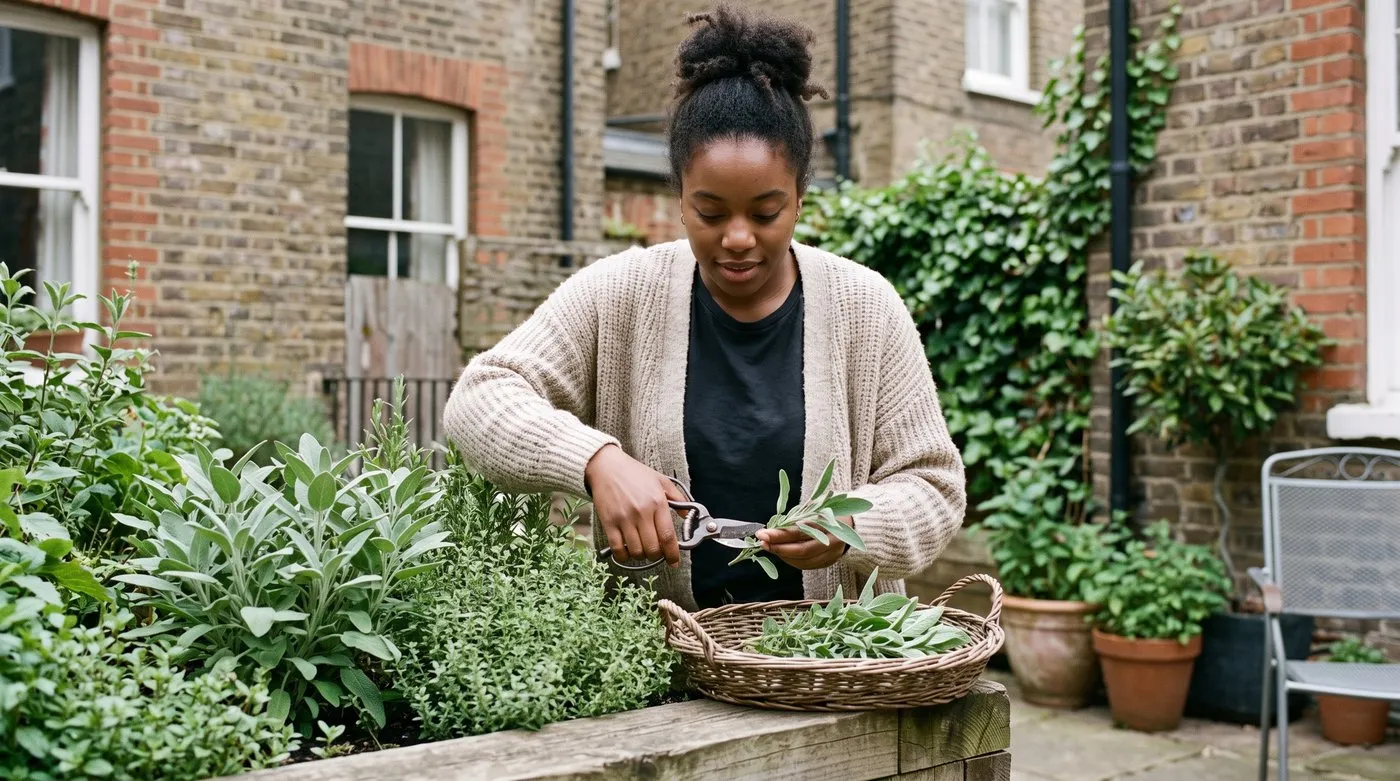
Whole stems cut on a dry morning, before the plants flower, give the tastiest herbs for storing.
Pick before the plant flowers. Leaves are at their tastiest just before the flower buds open. If basil starts to flower, pinch the buds out to keep it leafy.
Cut whole stems rather than single leaves. They’re easier to bunch and dry more evenly. Take no more than about a third of a plant at once, so it can regrow.
Don’t wash herbs unless they’re dirty. If you must, pat them completely dry before drying or freezing.
How to dry herbs for storing
Hang small bunches of five or six stems upside down somewhere warm, dry and airy, out of strong sun. A spare room or airing cupboard with the door open works well. Most woody herbs are crisp in one to two weeks.
To keep dust off and catch falling leaves, slip each bunch into a paper bag with a few holes punched in it.
Short of time? A low oven with the door ajar, or a dehydrator on its lowest setting, dries herbs in a few hours. Herbs are ready when the leaves crumble but are still green, not brown.

Small bunches dry fastest. A beam works well as long as the room doesn’t fill with steam.
How to freeze soft herbs
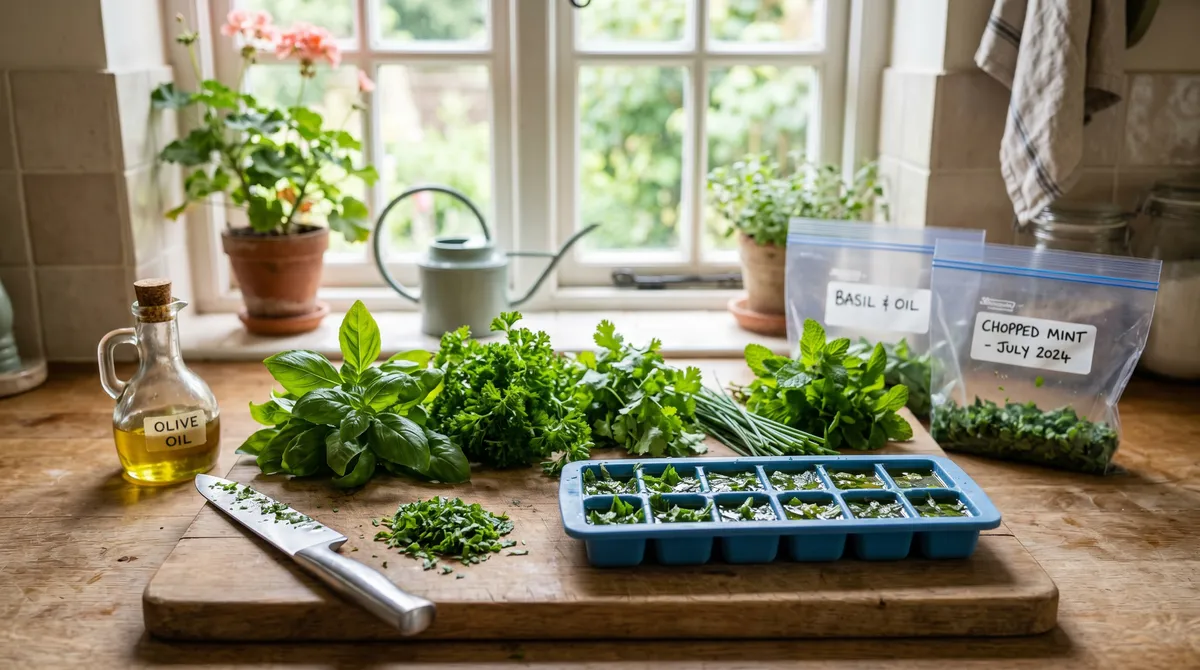
Ice cube trays are the easiest way. Chop the herbs, pack them into the tray about two-thirds full, top up with water or olive oil and freeze. Tip the cubes into a labelled freezer bag. Drop them straight into soups, sauces and stews.
Freezing loose keeps herbs free-flowing. Spread chopped parsley or chives on a lined tray, freeze for a couple of hours, then bag them. You can take a pinch at a time.
Frozen herbs go limp when thawed, so use them in cooking rather than as a garnish. They taste best within about six months. The guide to freezing fresh herbs has more detail.

Mint dries well on a dehydrator tray. Basil and parsley keep more flavour frozen, so save the trays for tougher herbs.
How to store dried herbs so they keep their flavour
Strip the leaves off the stems once they’re crisp, but keep them whole. Crushed leaves lose their flavour much faster. Crumble them into the pan when you cook.
- Use airtight glass jars. Clip-top or screw-top jars keep out damp.
- Keep them dark. Light fades colour and flavour, so a cupboard beats an open shelf.
- Keep them away from the cooker. Heat and steam shorten their life.
- Label every jar with the herb and the month you dried it.
Dried herbs don’t really go off, but they fade. Use them within about a year. Rub a pinch between your fingers before you cook: a strong smell means plenty of flavour.

Whole leaves in airtight, labelled jars keep their flavour far longer than crumbled herbs.
Herb salt and herb vinegar
These are easy ways to use a glut, and they make good presents.
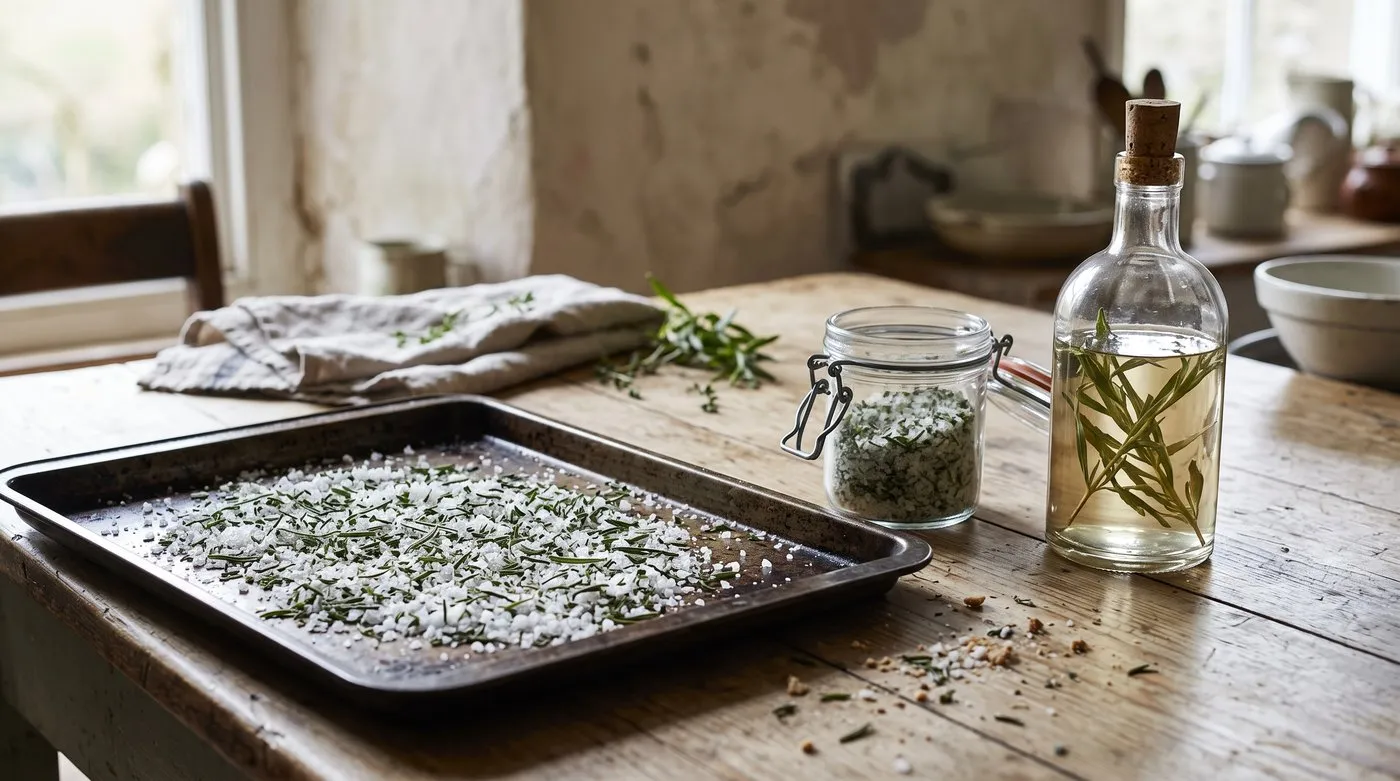
Herb salt and herb vinegar take minutes to make and keep summer flavour for months.
Herb salt: mix roughly four parts coarse sea salt with one part finely chopped fresh rosemary, thyme or sage. Spread it on a tray and leave it somewhere warm for a couple of days, stirring now and then, until completely dry. Store it in an airtight jar and sprinkle on roast potatoes, eggs and bread.
Herb vinegar: loosely fill a clean jar with fresh tarragon, thyme or mint and bruise the leaves lightly. Cover with white wine or cider vinegar, seal and leave in a dark cupboard for two to four weeks. Strain into a clean bottle. Tarragon vinegar is the classic for dressings.
Herb oil is best made fresh in small amounts and used straight away. For keeping, freeze chopped herbs in oil in ice cube trays instead. Fresh herbs stored in oil at room temperature can be a food poisoning risk.
Common mistakes when storing herbs
Drying soft herbs. Dried basil and coriander taste of very little. Freeze them.
Picking after flowering. The leaves are past their best. Pick before the buds open.
Drying somewhere steamy. Bathrooms and busy kitchens bring mould. Choose a dry, airy room.
Crumbling before storing. Whole leaves keep their flavour much longer.
Keeping jars by the cooker. Heat and steam fade them fast. Move them to a cool, dark cupboard.
Herb storing calendar
| Month | What to pick and store |
|---|---|
| May | Chives, mint, parsley: freeze in cubes |
| June | Sage, thyme, oregano just before flowering: dry |
| July | Basil, coriander, dill: freeze. Rosemary, lavender: dry |
| August | Second cuts of mint, parsley and basil. Make herb salt |
| September | Last basil before cold nights. Bay leaves to dry |
| October | Tidy jars and throw out last year’s faded herbs |
| November to April | Pick rosemary, thyme, sage and bay fresh as needed |
Frequently asked questions
How long do dried herbs last?
About a year in an airtight jar in a dark cupboard. They don’t go off, but they slowly lose flavour. Rub a pinch between your fingers. If there’s little scent, it’s time for a fresh batch.
Is it better to dry or freeze herbs?
It depends on the herb. Tough-leaved herbs such as rosemary, thyme and oregano dry well. Soft herbs such as basil, parsley, chives and coriander keep far more flavour frozen.
What is the best way to store dried herbs?
Keep them whole in airtight glass jars in a dark cupboard. Light, heat and steam all fade flavour, so keep them away from the cooker. Crumble the leaves just before you use them.
When should I harvest herbs for drying?
On a dry morning, once the dew has gone. Pick before the plants flower for the most flavour. Take no more than about a third of a plant at once.
Can you dry herbs in a microwave?
Yes, for a small handful. Lay the leaves between sheets of kitchen paper and heat in short bursts, checking each time. Stop as soon as they crumble, before they brown.
Can I store fresh herbs in oil?
Freeze them in oil instead. Fresh herbs or garlic kept in oil at room temperature can carry a food poisoning risk. Herb and oil cubes from the freezer are safe and handy for cooking.
Evergreen herbs such as rosemary and thyme can be picked fresh all winter, so you only need to dry a little of them. For other crops, the guide to drying garden produce shows which method suits each one. Now your store cupboard is sorted, read how to create a herb garden to grow a surplus worth keeping, or browse more growing guides.
Our team produces practical UK gardening guidance from source research, contributor records and established horticultural practice. Editorial standards are overseen by Matt W.