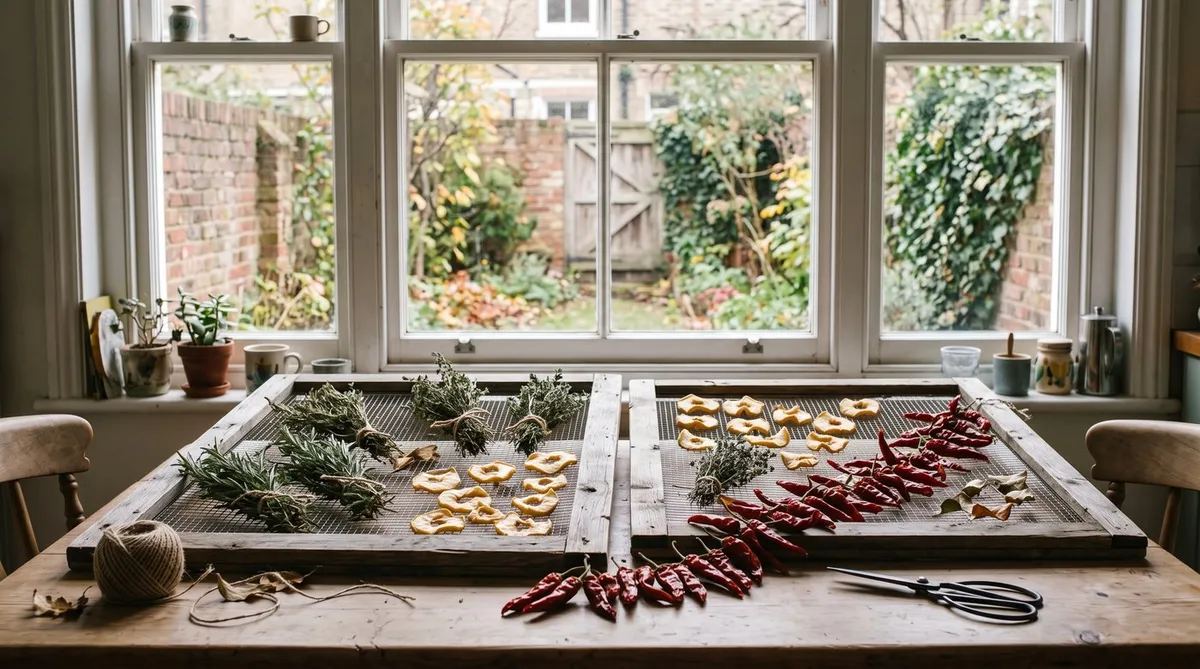
Key takeaways
- Air dry woody herbs and thin chillies; use heat for fruit and most veg
- An oven on its lowest setting with the door ajar works if you don't own a dehydrator
- Dehydrators run at about 35-40°C for herbs and 55-60°C for fruit and veg
- Blanch most vegetables first, but not peppers, onions, mushrooms or tomatoes
- Condition dried fruit in a sealed jar for a week before long-term storage
- Store in airtight jars somewhere cool and dark, and use within about a year
Drying is the simplest way to keep a glut. A heavy rosemary bush, a September chilli crop or a tree full of apples all shrink into a few jars you can keep in the cupboard. The trick is matching the method to the crop: air for herbs, heat for almost everything else.
This guide helps you choose between air drying, the oven and a dehydrator, then points you to the detailed guides for each crop. Damp British air is the main thing working against you, so a little heat goes a long way.
Which drying method suits which crop?
Use air drying for woody herbs and thin-walled chillies. Use an oven or dehydrator for fruit, vegetables, tomatoes and soft herbs. Here’s a quick guide:
| Crop | Best method | Rough dehydrator setting | Ready when |
|---|---|---|---|
| Rosemary, thyme, sage, oregano | Air dry in bunches | 35-40°C | Leaves crumble |
| Mint, basil, parsley | Dehydrator or flat rack | 35°C | Leaves crumble |
| Thin chillies such as cayenne | Air dry on a string | 55°C | Brittle, rattle when shaken |
| Apple and pear rings | Dehydrator or oven | 55-60°C | Leathery and bendy |
| Plums and other stone fruit | Dehydrator or oven | 55-60°C | Leathery, no wet centre |
| Tomatoes | Dehydrator or oven | 55-60°C | Leathery, no moist spots |
| Courgettes, carrots, beans | Blanch, then dehydrator | 55°C | Hard and snappy |
| Mushrooms, peppers, onions | Dehydrator, no blanching | 55°C | Dry and crisp |
Times vary a lot with slice thickness and how full the trays are. Check after a few hours and keep going until the “ready” test is met.
How to air dry herbs and chillies
Air drying costs nothing. It works best for herbs with tough, aromatic leaves and for chillies with thin walls.
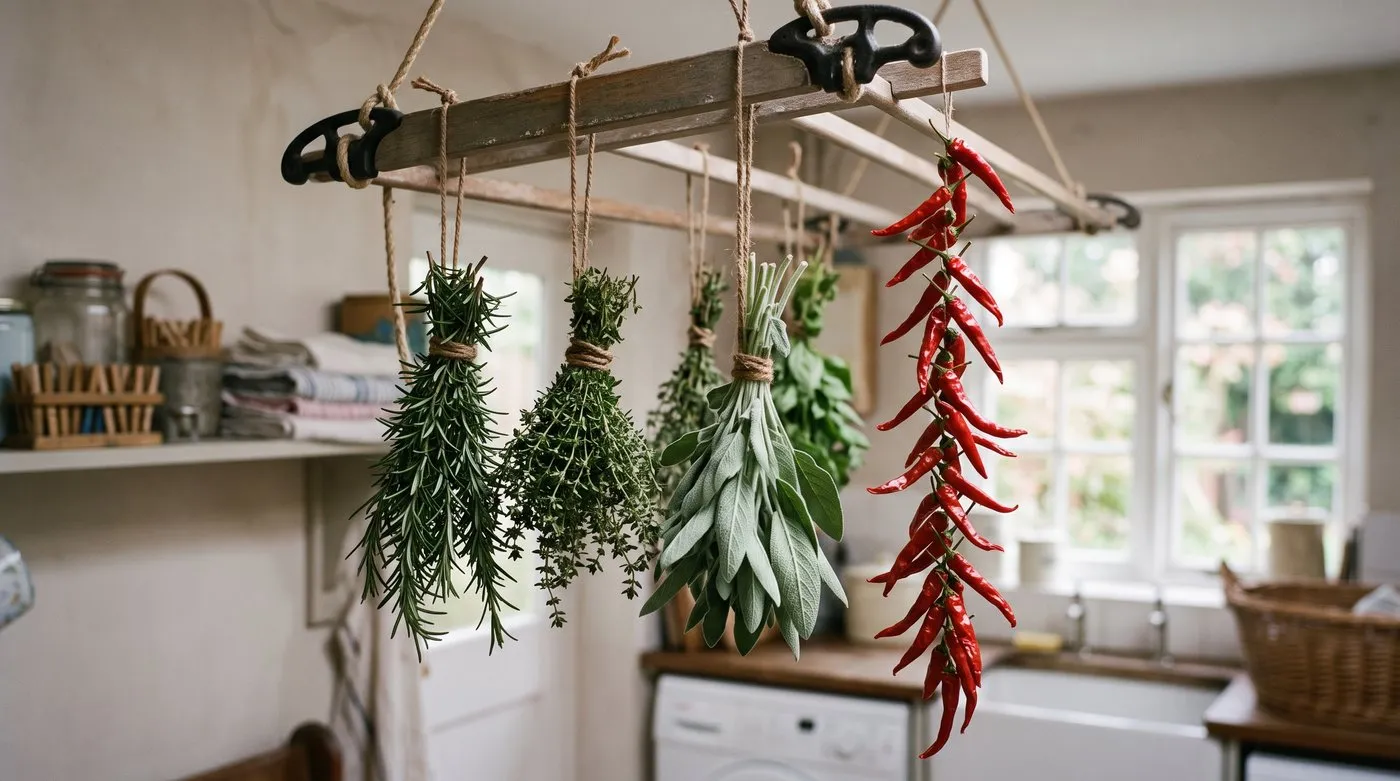
Woody herbs and thin chillies dry happily in a warm, airy room with no heat at all.
Herbs: cut stems mid-morning once the dew has gone. Tie small bunches of five or six stems and hang them upside down somewhere warm, dry and airy, out of strong sun. Most woody herbs are ready in one to two weeks. The drying herbs guide covers every herb, plus flat racks and microwave drying.
Chillies: thread a needle through each stalk and hang the string in a warm room. Thin types such as cayenne and bird’s eye dry in a few weeks. Thick, fleshy chillies such as jalapeños tend to rot from the inside, so halve those and use heat. The chilli growing guide helps you pick varieties that dry well.
Avoid bathrooms, kitchens full of steam and damp sheds. Mould spoils herbs faster than anything.
How to oven dry fruit and vegetables
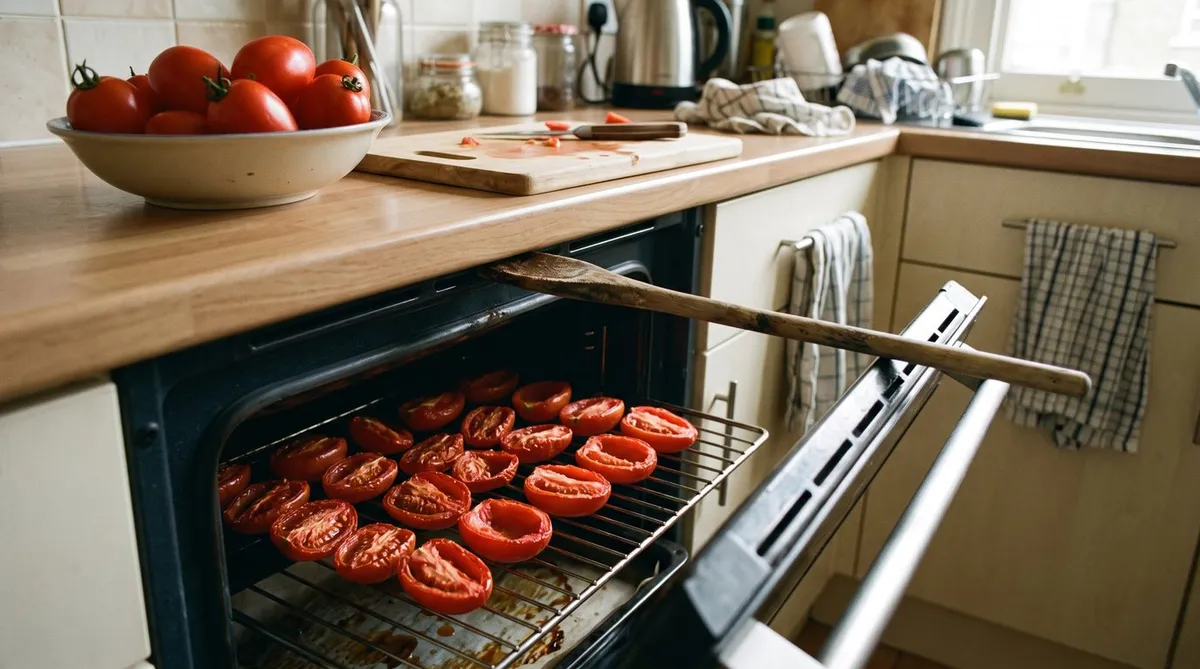
An oven works well for the odd batch if you don’t own a dehydrator.
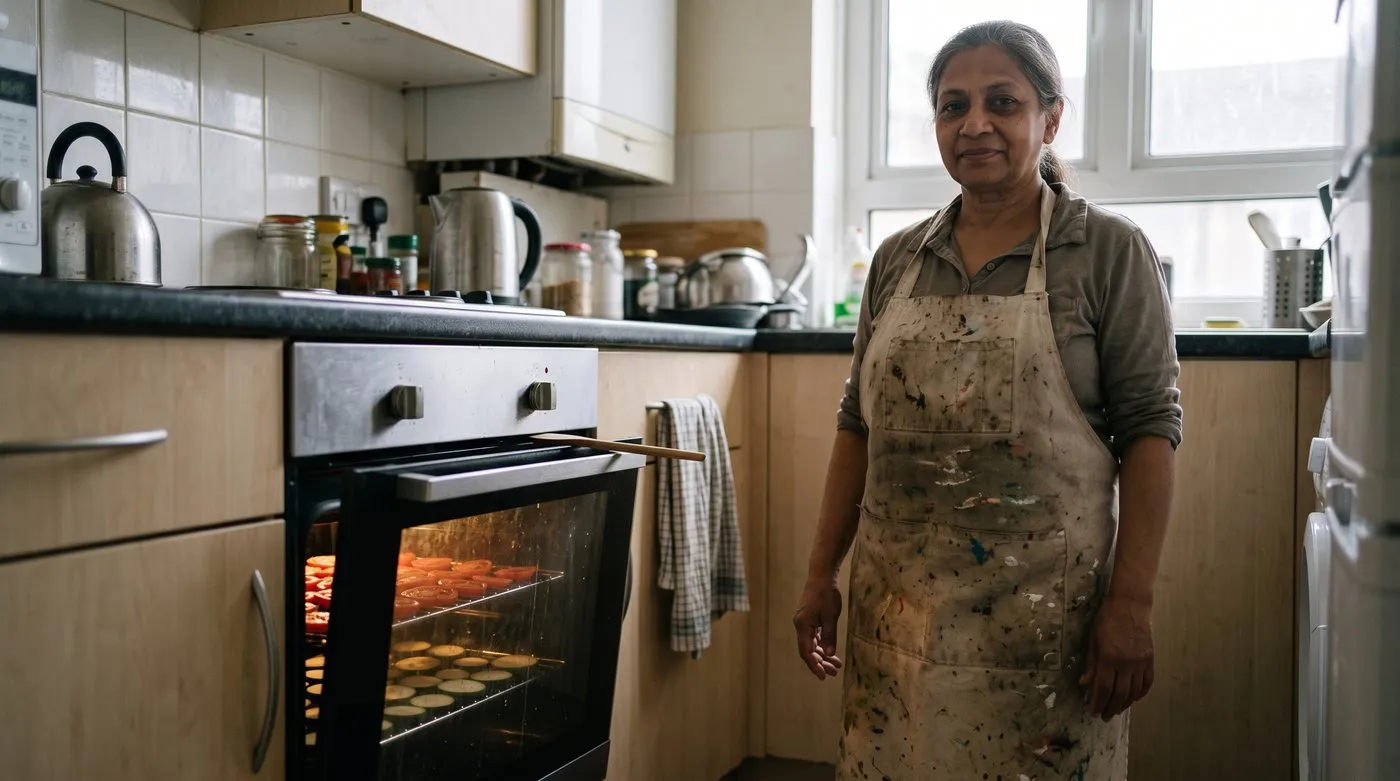
A wooden spoon in the door lets the moisture out, which is the whole secret of oven drying.
- Slice fruit and veg evenly, about 5mm thick.
- Blanch vegetables that need it, then pat them dry.
- Lay pieces in one layer on wire racks over baking trays, with small gaps between them.
- Set the oven to its lowest setting, ideally 50-60°C. A fan oven gives more even results.
- Prop the door open a few centimetres with a wooden spoon so moisture can escape.
- Swap and turn the trays every couple of hours.
Drying usually takes several hours, sometimes most of a day. Many ovens won’t go below 70°C or so, which can cook the outside before the middle dries. If yours runs hot, check more often.
Is a dehydrator worth it?
If you dry more than a few batches a year, yes. A dehydrator is a box of stacked mesh trays with a gentle heater and a fan. It holds a steady low heat, can run overnight and uses far less power than an oven.
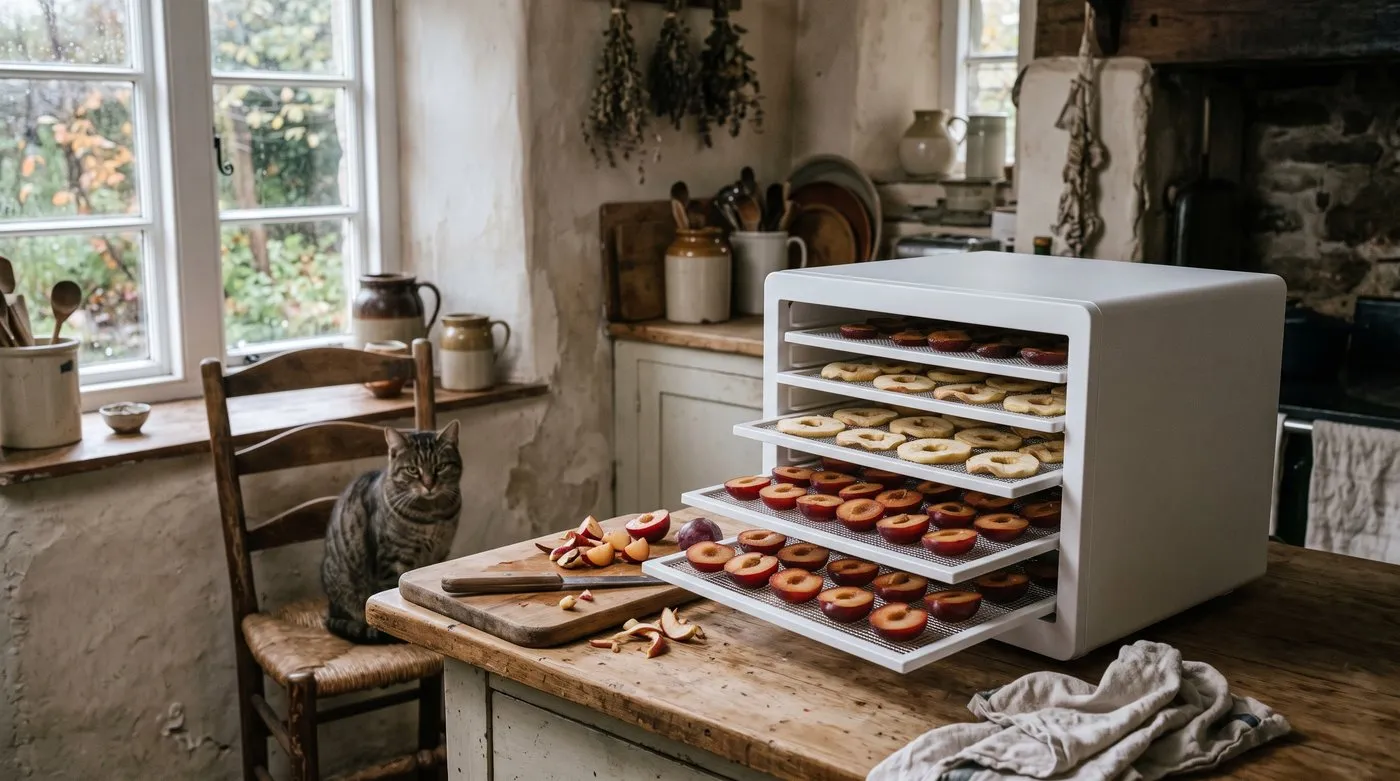
Square trays hold plenty, and a dehydrator can run overnight while you sleep.
Look for:
- Adjustable temperature, so you can go low for herbs and higher for fruit
- A fan, ideally at the back, for even drying across every tray
- Removable trays that are easy to wash
- A timer, so it switches off while you sleep
Square trays fit more slices than round ones. A basic model is plenty for most gardens. Read the guide to drying apples and pears for a full worked example.
Do you need to blanch vegetables before drying?
Yes, for most vegetables. Blanching means a short dip in boiling water or steam, then a quick cool in cold water. It stops the natural changes that dull colour and flavour in storage.
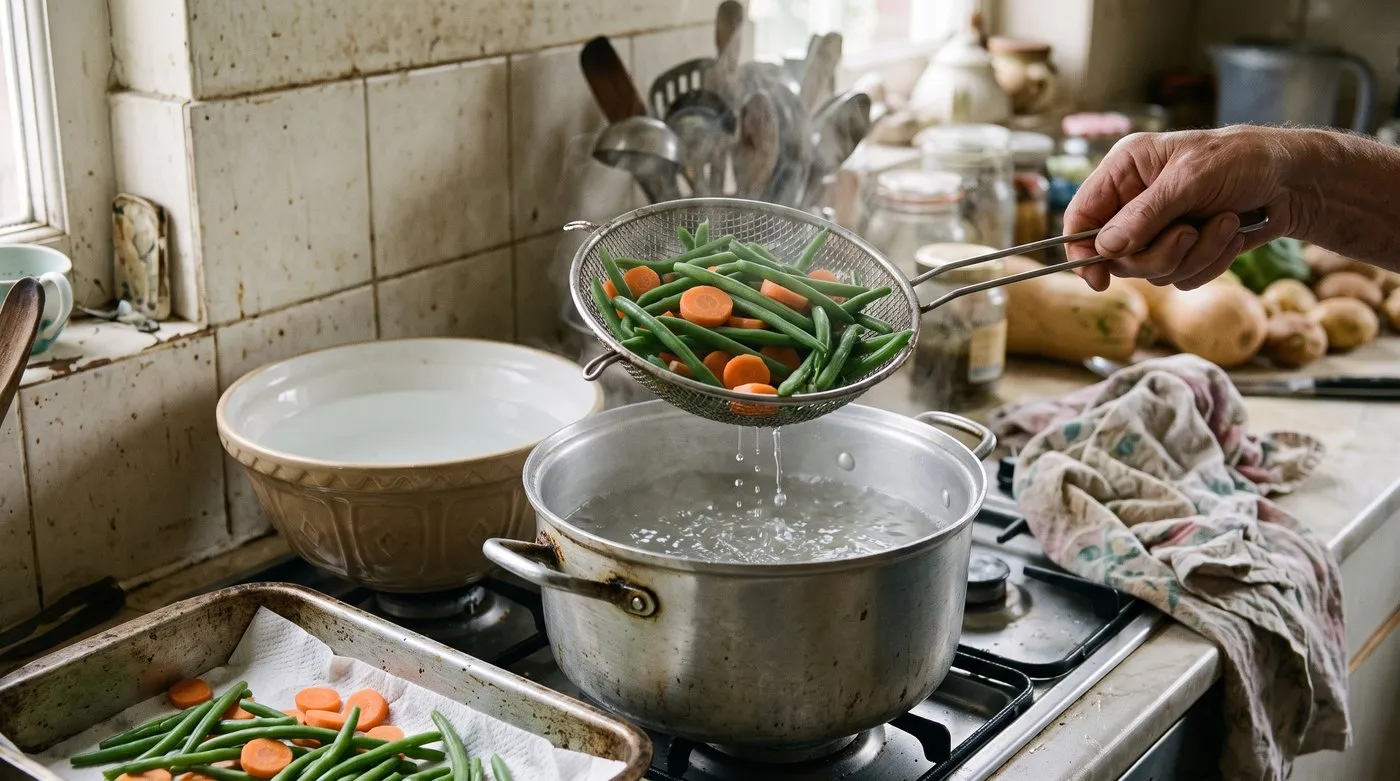
A quick blanch then a cold dip keeps beans and carrots bright once they’re dried.
Blanch carrots, courgettes, green beans, peas and sweetcorn. Skip it for peppers, onions, mushrooms and tomatoes. Pat everything dry before it goes on the trays.
The drying vegetables guide has times for each crop, plus soup mixes and veg crisps. For tomatoes on their own, see the no-sun sun-dried tomatoes method.
How to store dried produce
Let everything cool fully first. Then pack it loosely into clean, dry glass jars with good lids.
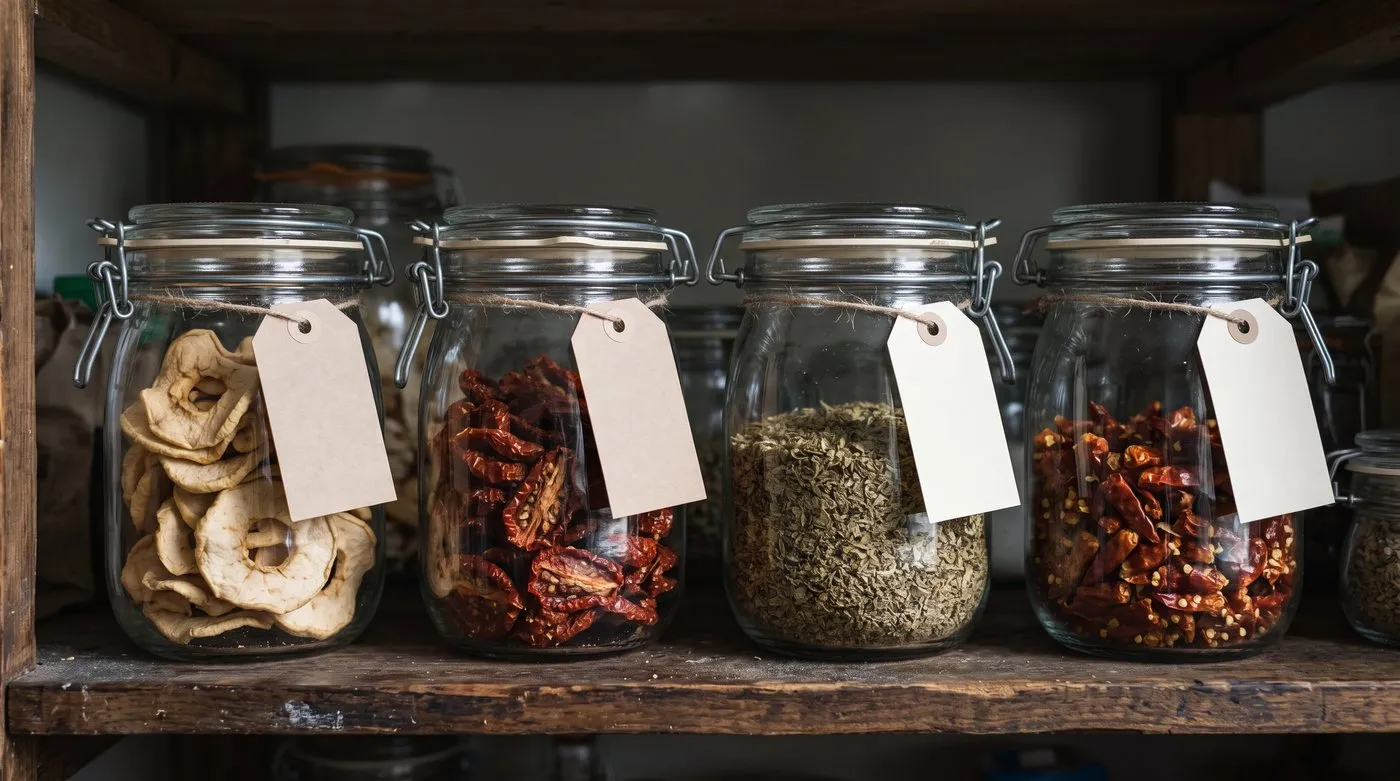
Airtight jars in a cool, dark cupboard keep dried produce tasting good for months.
Condition fruit before you put it away. Fill jars about two-thirds full, seal and leave them on the worktop for a week. Give them a shake each day. If you see any condensation, the fruit needs more drying.
Once it’s dry, keep jars in a cool, dark cupboard and label them with the contents and date. Use within about a year for the best flavour. Herbs fade fastest.
Keep home-dried tomatoes and vegetables dry in jars rather than packed in oil. Oil only goes on when you cook with them.
Common drying mistakes
Drying too hot. High heat browns fruit and cooks the outside before the middle dries. It also drives the flavour out of herbs.
Slicing unevenly. Thick and thin pieces dry at different speeds. Use a mandoline or a steady knife.
Packing trays too tightly. Air needs to move around each piece. One layer, small gaps.
Storing too soon. Warm or slightly damp produce sweats in the jar and goes mouldy. Cool it and condition it first.
Air drying soft fruit. British air is usually too damp. Use heat.
What to dry through the year
| Month | What to dry |
|---|---|
| May to June | Mint, sage and thyme before they flower |
| July | Oregano, lavender, early plums |
| August | Tomatoes, courgettes, beans, plums |
| September | Chillies, apples, pears, peppers, late tomatoes |
| October | Apples, pears, mushrooms, last chillies |
| November to April | Stored apples and onions if they start to soften |
Drying is only one way to keep a harvest. For freezing, bottling and clamps, see the plan for storing garden produce.
Frequently asked questions
What is the easiest way to dry garden produce?
Hang bunches of woody herbs in a warm, airy room. Rosemary, thyme, sage and oregano dry this way in a week or two. For fruit and vegetables, an oven or dehydrator is far more reliable.
Is a dehydrator better than oven drying?
For regular drying, yes. A dehydrator holds a steady low heat and moves air evenly over every tray. An oven works fine for the odd batch, but needs the door propped open and the trays turning.
Can I air dry fruit in the UK?
Rarely with success. Damp British air means sliced fruit tends to go mouldy before it dries. Apple rings threaded on a string over a warm stove can work, but an oven or dehydrator is safer.
Do I need to blanch vegetables before drying?
Yes, for most vegetables. A few minutes in boiling water or steam helps keep colour and flavour. Peppers, onions, mushrooms and tomatoes don’t need it.
How do I know when dried produce is ready?
Let a piece cool, then test it. Herbs should crumble, vegetables should snap or feel leathery-hard, and fruit should be leathery and bendy with no moist spots inside.
How long does dried garden produce last?
Use it within about a year for the best flavour. Kept in airtight jars somewhere cool and dark, most dried produce stays good for months. Throw out anything that smells off or shows mould.
Can I store dried tomatoes in oil?
Keep them in a dry jar instead. Home-dried tomatoes packed in oil can carry a food poisoning risk if stored at room temperature. Add oil only when you use them.
Now you know which method to use, read the guide to using up a garden glut for more ways to keep nothing going to waste, or browse the growing veg guides.
Our team produces practical UK gardening guidance from source research, contributor records and established horticultural practice. Editorial standards are overseen by Matt W.