Key takeaways
- Onion, carrot, celery and tomato make the base of a good dried soup mix
- Slice veg thinly, about 3-5mm, so it dries evenly
- Blanch carrots, peas and green beans first; onions, tomatoes and peppers go in raw
- Dry at about 50-55°C in a dehydrator, or in a low oven with the door propped open
- Thin courgette, beetroot and kale dry into crunchy veg crisps
- Store in airtight jars somewhere cool and dark, and use within a year
A jar of dried vegetable soup mix turns a summer glut into quick winter soups. Dry thin slices of onion, carrot, celery and tomato, mix them in a jar, and simmer a handful in stock whenever you want a bowl. The same kit makes crunchy courgette, beetroot and kale crisps too.
This page is about those two products. For the basics of air drying, oven drying and dehydrators across all crops, see drying garden produce.
Which vegetables to dry for soup mix
The base of a good soup mix is onion, carrot and celery, with tomato for depth. Everything else is a bonus.
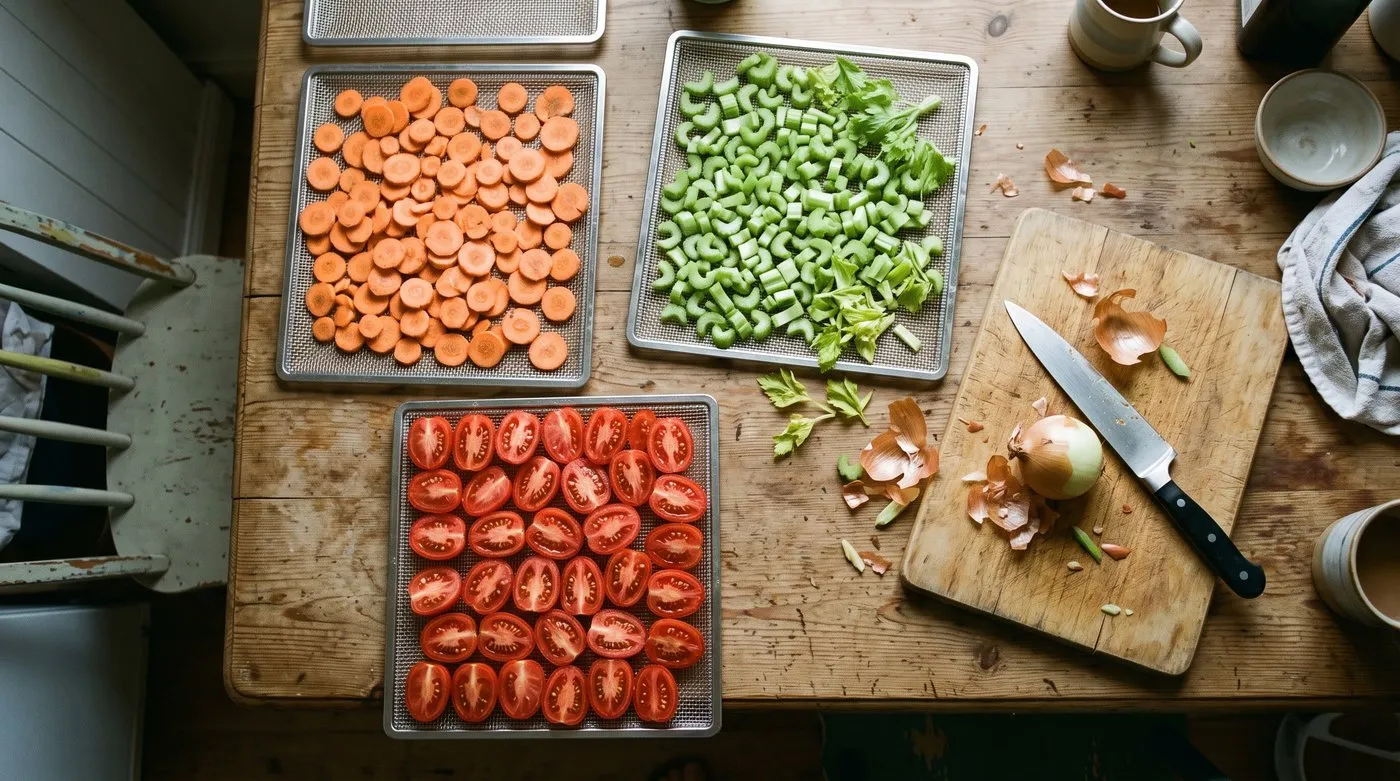
Carrot, celery and tomato, sliced thin and ready to dry. Add onion and you have the base of the soup mix.
| Vegetable | How to prep | Blanch? | Done when |
|---|---|---|---|
| Onion | Slice or dice small | No | Crisp and papery |
| Carrot | Peel, slice thinly or grate | Yes, 2-3 minutes | Hard and brittle |
| Celery | Slice thinly, keep the leaves | No | Crisp |
| Tomato | Slice plum or cherry tomatoes | No | Leathery, not sticky |
| Peppers | Deseed, cut into strips | No | Leathery |
| Mushrooms | Wipe clean and slice | No | Dry and brittle |
| Leeks | Wash well, slice thinly | No | Crisp |
| Peas | Shell | Yes, 2 minutes | Hard and wrinkled |
| Green beans | Trim, cut into short lengths | Yes, 2-3 minutes | Brittle |
Plum and cherry tomatoes dry far better than big, juicy slicing tomatoes. The guide to sun-dried tomatoes has more on drying them for eating on their own. Onions dry best from firm, well-cured bulbs, so see drying onions after harvest if you’re storing your own crop.
Use mushrooms you’ve grown or bought. Only use wild mushrooms if an expert has identified them.
How to blanch vegetables before drying
Blanching means a quick dip in boiling water, then straight into cold water. It keeps carrots, peas and beans a good colour and helps them soften again in the soup.
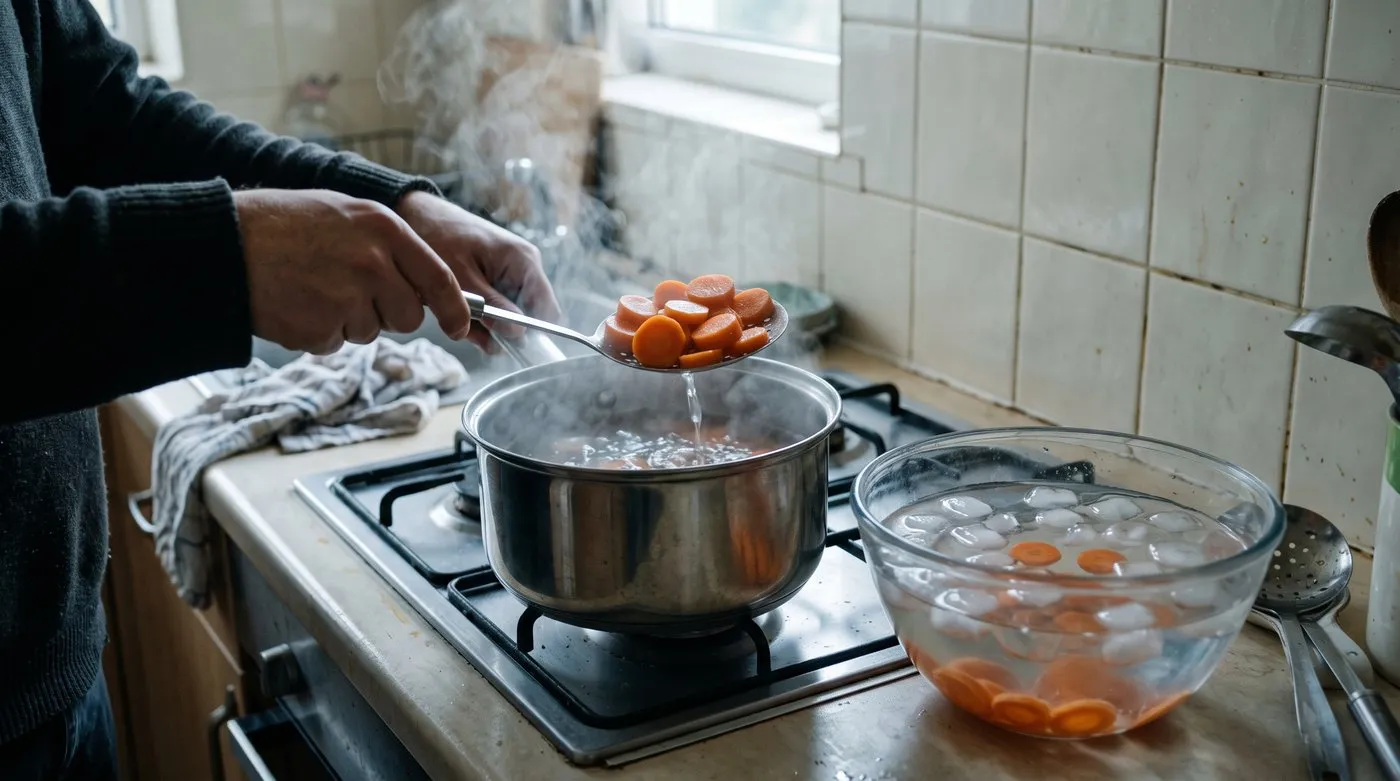
A couple of minutes in boiling water, then straight into cold. Blanched carrot keeps its colour and softens nicely in soup.
- Bring a big pan of water to the boil.
- Add the prepared veg and blanch for 2-3 minutes.
- Lift it out into a bowl of cold water to stop it cooking.
- Drain well and pat dry on a clean tea towel.
Blanch: carrots, peas, green beans, sweetcorn and beetroot for cooking.
Don’t blanch: onions, leeks, tomatoes, peppers, celery and mushrooms.
How to dry vegetables in a dehydrator or oven
Slice everything to a similar thickness, about 3-5mm, so it all finishes together.
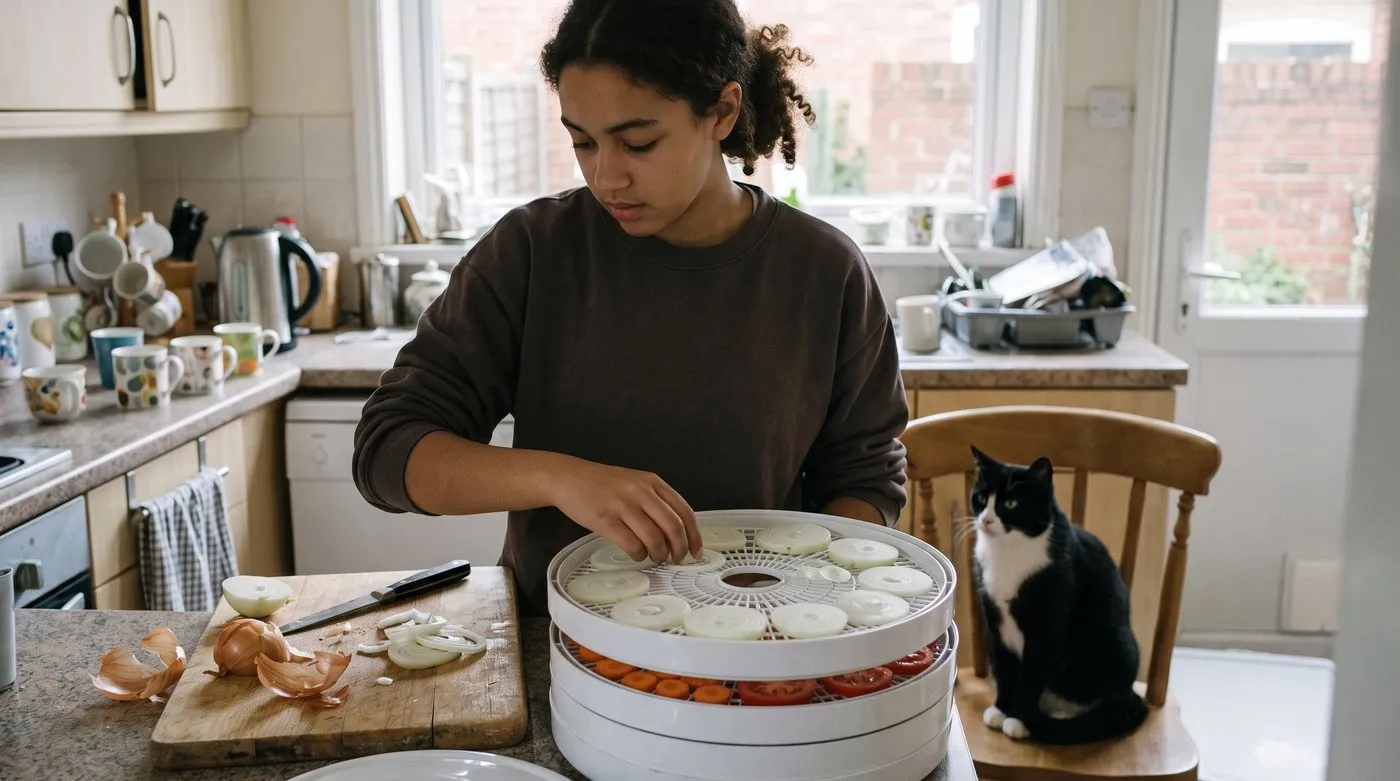
Keep each tray to a single layer with gaps. Onion smells strong, so give it its own trays if you can.
In a dehydrator:
- Set it to about 50-55°C.
- Spread each veg in a single layer. Keep strong-smelling onion on its own trays if you can.
- Dry until each piece passes the “done when” test in the table above. This usually takes several hours, and longer for tomatoes.
- Swap trays round now and then so everything dries evenly.
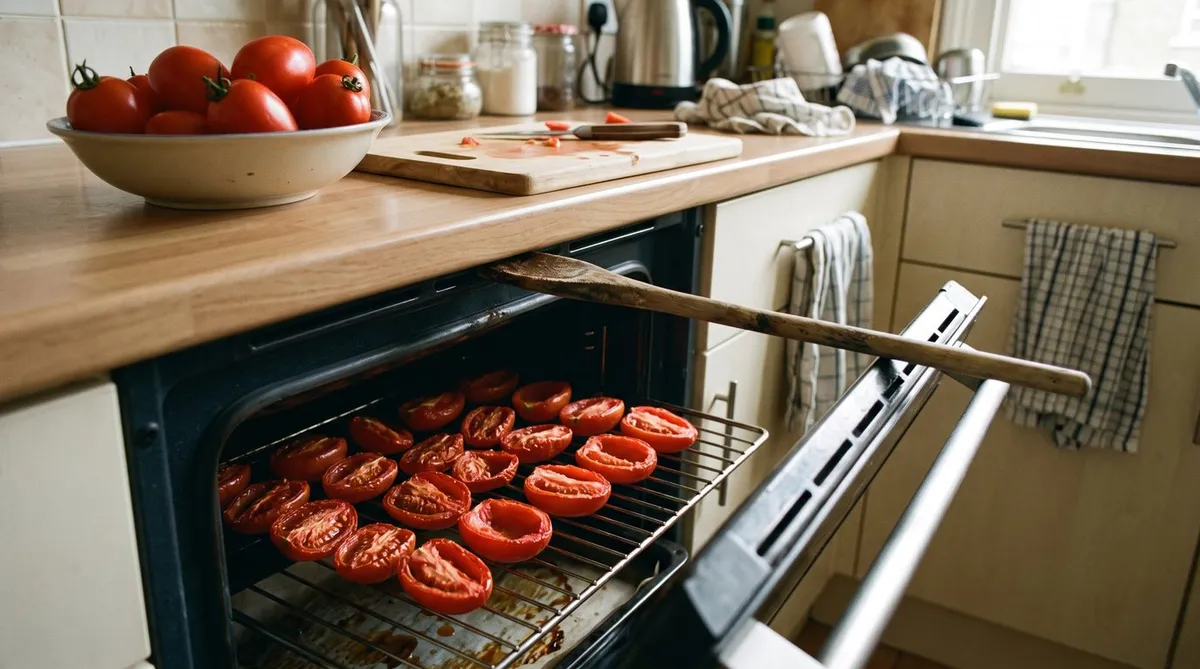
In the oven: set it to its lowest setting and prop the door open with a wooden spoon. Spread the veg on lined trays and turn it every hour or two. It works fine but ties up the oven for most of a day.
Drying outside isn’t reliable in a British summer, as the air is usually too damp.
The dried vegetable soup mix recipe
Mix your dried veg in roughly equal amounts of onion, carrot, celery and tomato. Add smaller amounts of anything else you’ve dried, plus a few dried herbs.
Good additions:
- Dried peppers, leeks, peas or mushrooms
- A small amount of dried parsley, thyme or a bay leaf
- Red lentils or pearl barley for a thicker soup
Store the mix in a labelled jar. The guide to drying herbs covers adding your own herbs.
To make the soup:
- Put a good handful of mix, about 40g, into a pan with about 750ml of stock.
- Bring it to a gentle simmer.
- Simmer for about 30 minutes, until the veg is soft. Lentils or barley may need a little longer.
- Add a tin of beans, fresh garlic or fresh herbs if you like.
- Season to taste and serve.
Dried soup mix also goes straight into stews and slow-cooker dishes, with no soaking needed.

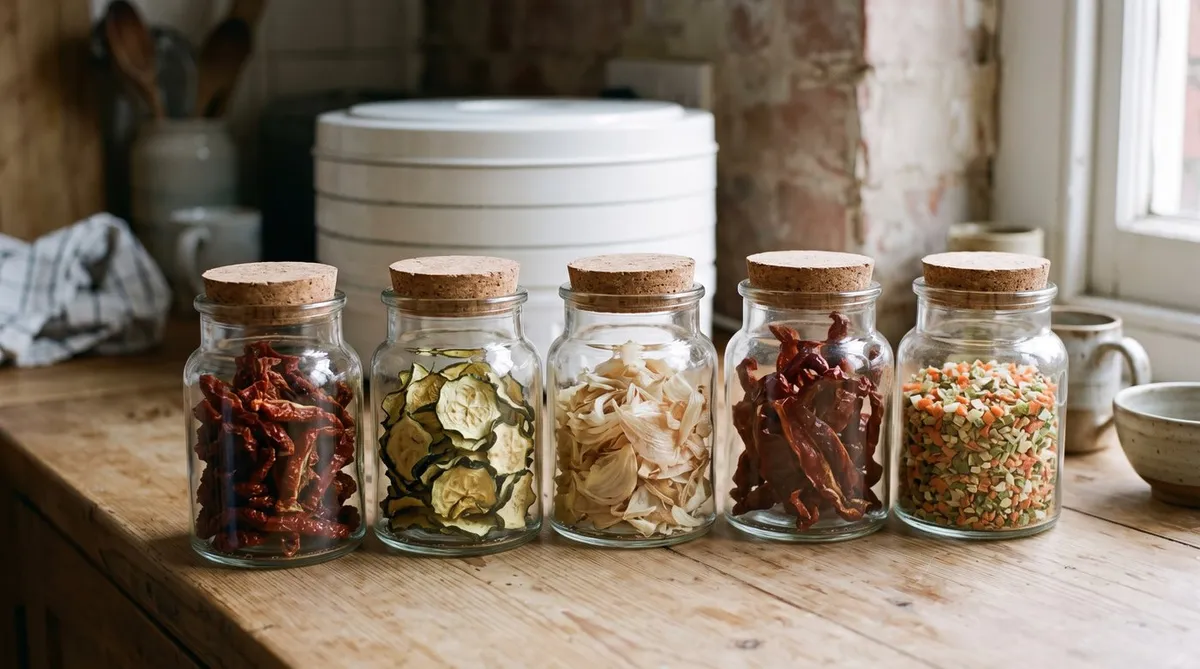
A jar of dried mix and a pan of stock make a warming soup in half an hour. Label the jar so you know what’s in it.
How to make vegetable crisps
Courgette, beetroot and kale all make good crisps in a dehydrator or low oven.
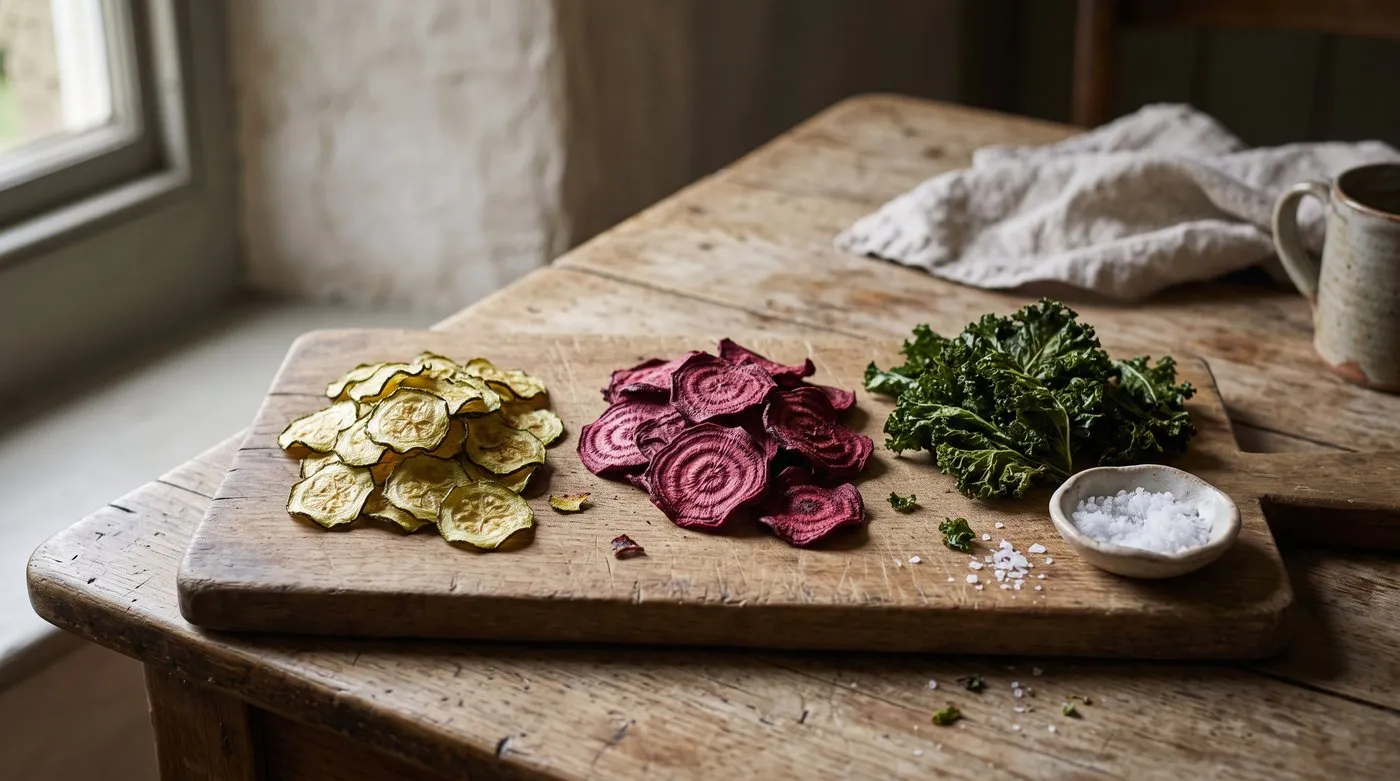
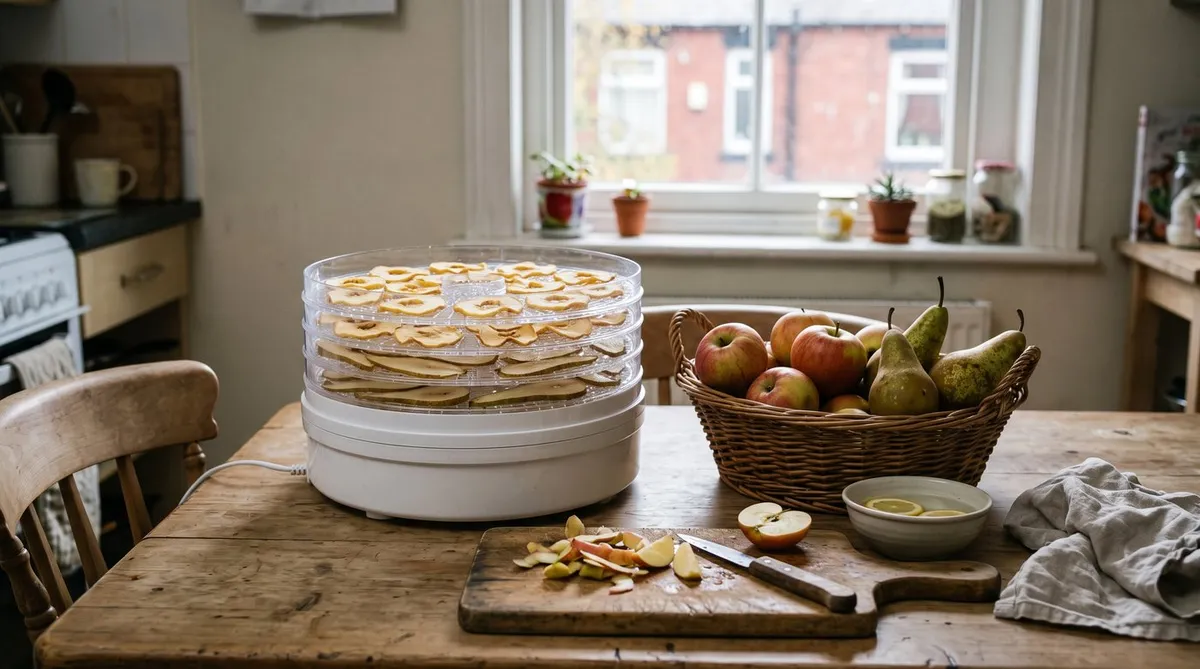
Courgette, beetroot and kale crisps from the dehydrator. Slice them thin and dry until they snap.
- Courgette crisps: slice very thinly, about 2mm. Sprinkle with a little salt and leave for 15 minutes, then pat dry. Dry until crisp right through.
- Beetroot crisps: peel and slice very thinly. Toss with a little oil and salt, then dry until crisp.
- Kale crisps: strip the leaves off the stalks and tear into pieces. Toss with a drop of oil and some salt. Dry until brittle.
Crisps soften quickly once the jar’s opened, so eat them within a week or two. The guides to growing courgettes and growing kale will keep you in supply.
Other things to make with dried vegetables
Vegetable powders. Grind dried onion, tomato or mushroom in a spice grinder. Sprinkle onion powder on roast potatoes, add tomato powder to sauces, and stir mushroom powder into gravy.
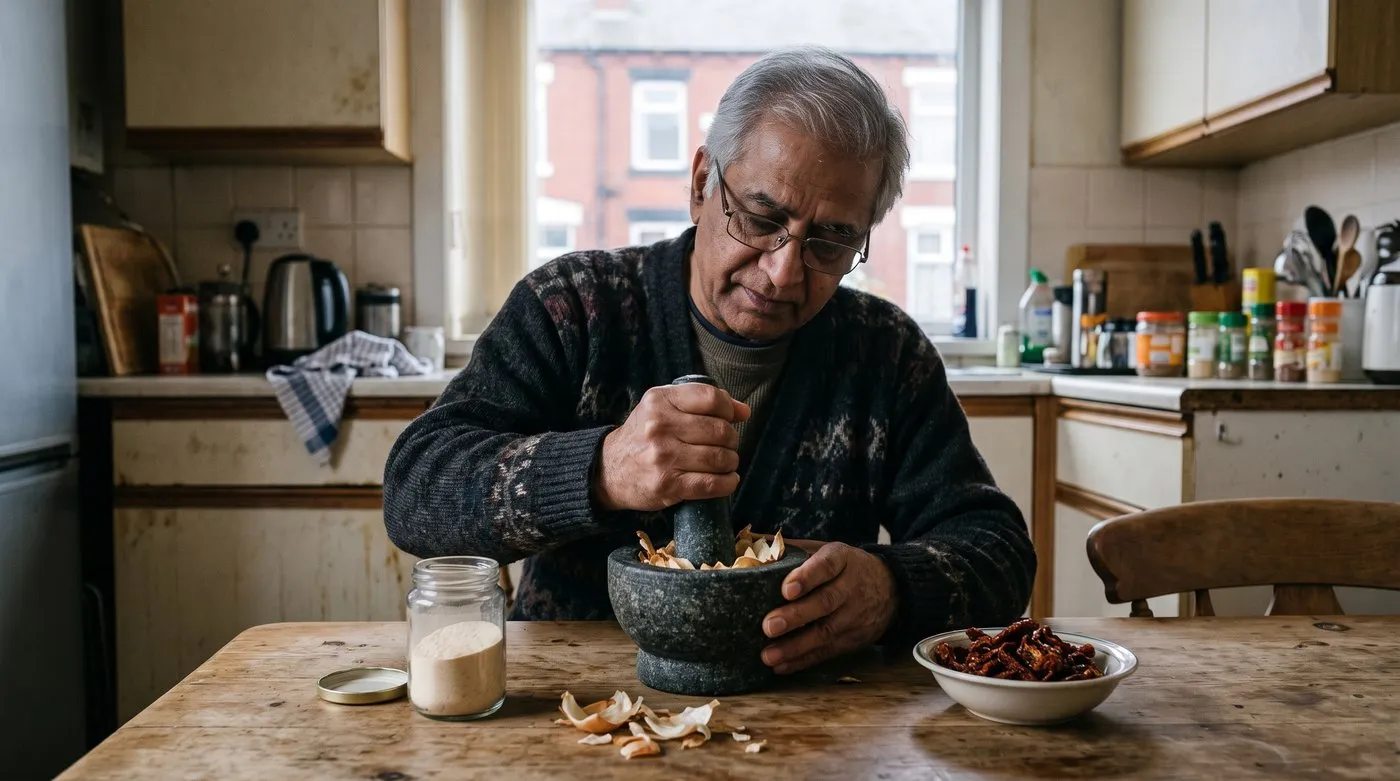
Bone-dry onion grinds into a handy powder. Sprinkle it on roast potatoes or stir it into sauces.
Celery salt. Grind dried celery leaves with an equal amount of fine sea salt.
Garlic powder. Slice peeled garlic cloves thinly, dry until crisp, then grind.
How to store dried vegetables
Let everything cool completely before you store it. Then pack it into airtight glass jars or vacuum-sealed bags. Paper and thin plastic bags let moisture in.
Keep the jars somewhere cool, dark and dry. Light fades the colour, and a steamy spot by the kettle softens the veg. Label each jar with what’s inside and the date.
Dried veg keeps for up to about a year. Use older jars first and check them now and then.
Common problems with dried vegetables
Pieces stick together in the jar. They weren’t dry enough. Re-dry them in a low oven, cool them and store them again.
Veg goes soft after a few weeks. Moisture has got back in. Re-dry it and use a better-sealing jar.
Colour fades to brown. The jar is in the light. Move it to a dark cupboard.
Mould in the jar. Throw the whole jar away. Don’t try to rescue it.
Pantry moths or grubs. Keep jars tightly sealed and clean the cupboard well.
Dried veg tastes scorched. The heat was too high. Keep it to about 50-55°C.
What to dry through the year
| Month | Crops to dry |
|---|---|
| July | Courgettes, peas, green beans, early herbs |
| August | Tomatoes, courgettes, beans, peppers |
| September | Tomatoes, peppers, onions, celery, leeks |
| October | Onions, carrots, beetroot, kale |
| November to February | Carrots, leeks, kale and stored onions |
Frequently asked questions
Can you dry vegetables in a UK oven?
Yes, on the lowest setting with the door propped open. A wooden spoon in the door lets moisture escape. Spread the veg thinly on lined trays and turn it now and then. It takes several hours and ties up the oven, so it suits small batches.
Do you need to blanch vegetables before drying?
Some, yes. Carrots, beetroot for cooking, peas and green beans dry better after a couple of minutes in boiling water, then a dunk in cold water. It keeps their colour and helps them soften in soup. Onions, tomatoes, peppers, celery and mushrooms can go in raw.
How long do dried vegetables last in storage?
Up to about a year in airtight jars somewhere cool and dark. The colour and flavour fade slowly, so use older batches first. Check jars now and then, and throw out any that show mould or smell musty.
What can you make with dried vegetables?
A ready-made soup mix is the most useful thing. Dried onion, carrot, celery and tomato also go straight into stews and slow-cooker dishes. You can grind dried onion or tomato into a powder for seasoning. Thin slices of courgette, beetroot or kale make crunchy crisps.
How do you make vegetable crisps in a dehydrator?
Slice courgette or beetroot very thinly, or tear kale into pieces. Toss lightly with a little oil and salt if you like. Dry in a single layer until crisp right through. Eat them within a week or two, as they soften once the jar is opened.
Why do my dried vegetables go soft after a few weeks?
They weren’t fully dry, or moisture has got in. Re-dry them in a low oven for a while, let them cool completely, then store them in a properly airtight jar. Keep the jar somewhere dry, away from the steamy kettle and hob.
Now your soup mix is sorted, the guide to freezing vegetables covers the crops that freeze better than they dry. For dried pulses to add to your soups, see drying beans and peas, or browse more how-to guides.
Our team produces practical UK gardening guidance from source research, contributor records and established horticultural practice. Editorial standards are overseen by Matt W.