Key takeaways
- UK summers are usually too damp for true sun drying, so use the oven or a dehydrator
- Plum tomatoes such as Roma and San Marzano dry best, and cherry tomatoes work too
- Halve, scoop out the seeds and sprinkle lightly with salt before drying
- Oven at about 70°C with the door propped open, or a dehydrator at about 60°C
- They're done when leathery and bendy, with no wet patches
- Store them dry in airtight jars or the freezer, not in oil at room temperature
You don’t need Mediterranean sunshine to make sun-dried tomatoes. A low oven or a dehydrator turns a glut of home-grown tomatoes into chewy, intensely flavoured pieces, whatever the British summer is doing.
This guide covers which tomatoes to choose, how to prepare them, both drying methods and how to store the results safely. For drying other crops, the guide to drying garden produce covers fruit, veg and herbs.
Can you sun dry tomatoes in the UK?
Not reliably. True sun drying needs a week or more of hot, dry days with dry nights. In most UK summers, dew or a shower soon rewets the tomatoes, and mould sets in.
A greenhouse in a long heatwave can work, if you bring the trays in every evening and cover them with muslin against flies. For most years, the oven or a dehydrator is much easier and more reliable. The result tastes just the same.
Which tomatoes are best for drying?
Plum tomatoes are the best for drying. They have meaty flesh, thick walls and less juice, so they dry faster and hold their shape.
- Roma: the classic plum. Dries to chewy red pieces.
- San Marzano: long Italian plum with a rich flavour.
- Principe Borghese: small, egg-shaped fruits, a traditional drying tomato in Italy.
Cherry tomatoes dry well too, into sweet, chewy bites. Sungold, Black Cherry and Gardener’s Delight are all good. They take a bit longer, as you’re drying lots of small pieces.
Large beefsteak and salad types such as Marmande and Moneymaker are juicy, so they take much longer and give a weaker result. Eat those fresh. The guide to the best tomato varieties has more on what to grow.

Plum tomatoes dry best, and cherry types make sweet little bites. Use only firm, ripe, unblemished fruit.
How to prepare tomatoes for drying
Good preparation makes drying quicker and the results better.
- Pick firm, ripe fruit. Use only sound tomatoes. Anything with blight, mould or soft spots goes on the compost.
- Wash and dry them with a tea towel.
- Halve them. Cut plum tomatoes lengthways. Halve cherry tomatoes across the middle.
- Scoop out the seeds with a teaspoon. The seeds and jelly hold lots of water, so removing them speeds things up. Keep them for a sauce if you like.
- Sprinkle lightly with salt and leave them cut side up for about 30 minutes. Tip away any juice that collects.
Add herbs at this stage if you like, such as dried oregano or thyme.

Halve, scoop out the seeds and add a light sprinkle of salt. It all helps them dry faster.
How to dry tomatoes in the oven
The oven is the easiest method, and it’s done in a day.
- Set the oven to its lowest setting, ideally around 70°C. A fan oven gives more even results.
- Lay the tomatoes cut side up, in a single layer, on a wire rack over a tray, or on trays lined with baking paper.
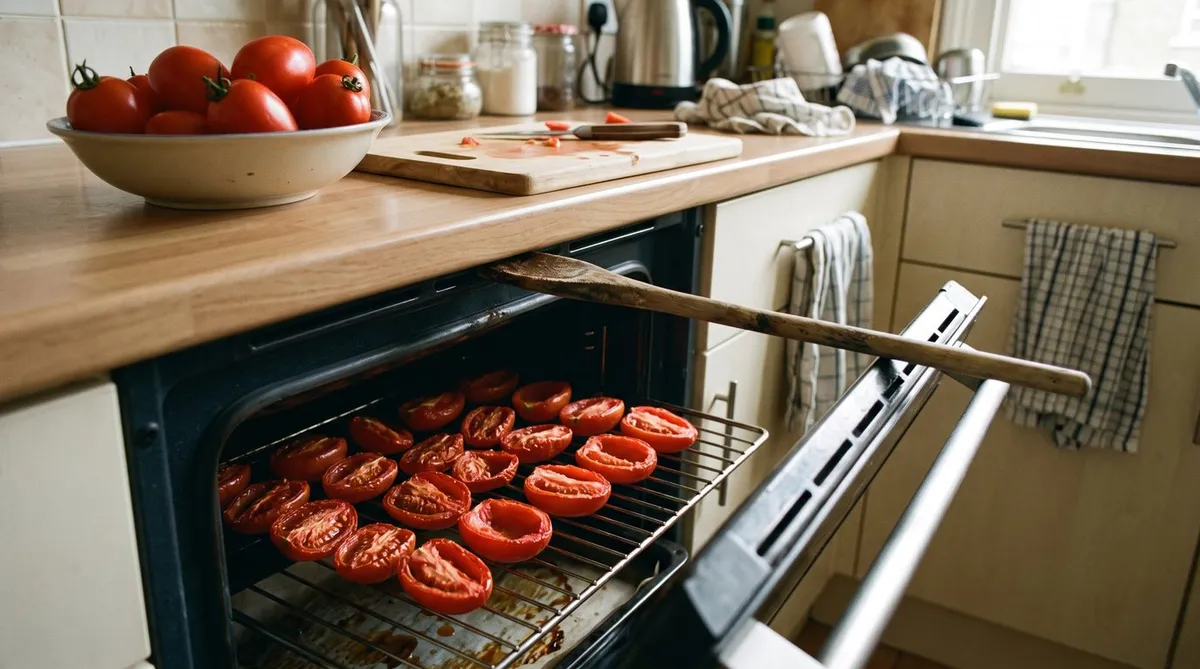
- Prop the door open a little with a wooden spoon so damp air can escape. Without this, the tomatoes stew instead of drying.
- Swap the trays round every hour or so.
- Allow several hours. Cherry tomatoes may take 4-6 hours, and larger plum halves can take 6-10 hours.
If your oven’s lowest setting is 80°C or more, check more often so the tomatoes don’t scorch.
How to dry tomatoes in a dehydrator
A dehydrator is more energy-efficient and gives very even results. It’s worth it if you have a big glut every year.
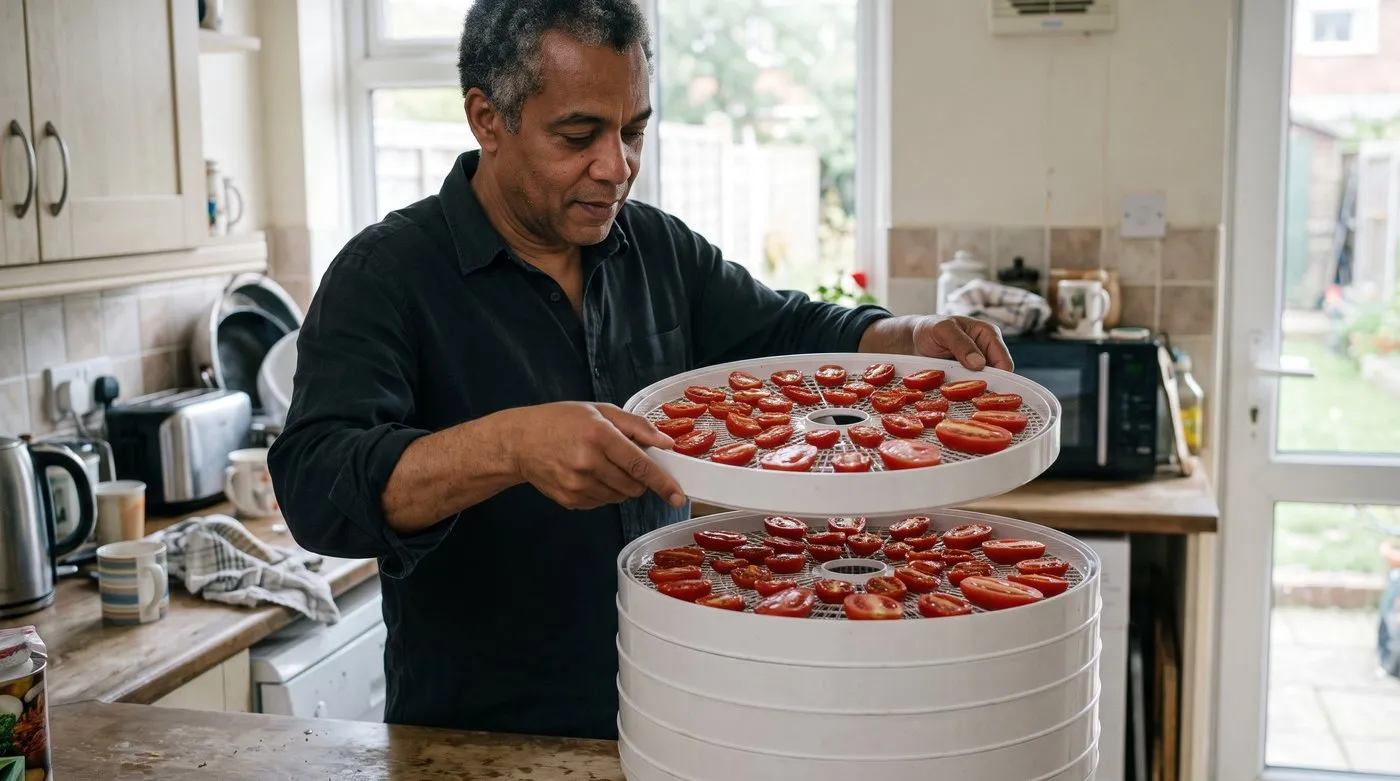
Swap the dehydrator trays round halfway through, as the ones nearest the heat dry fastest.
- Set it to about 60°C.
- Spread the tomatoes cut side up, in a single layer, without overlapping.
- Allow 8-12 hours, or longer for big pieces.
- Swap the trays round halfway through, as the trays nearest the heat dry fastest.
How to tell when dried tomatoes are ready
They’re done when they feel leathery and bendy, like a raisin. Squeeze one: there should be no wet patches or juice. They shouldn’t be crisp or brittle, unless you want tomato crisps.
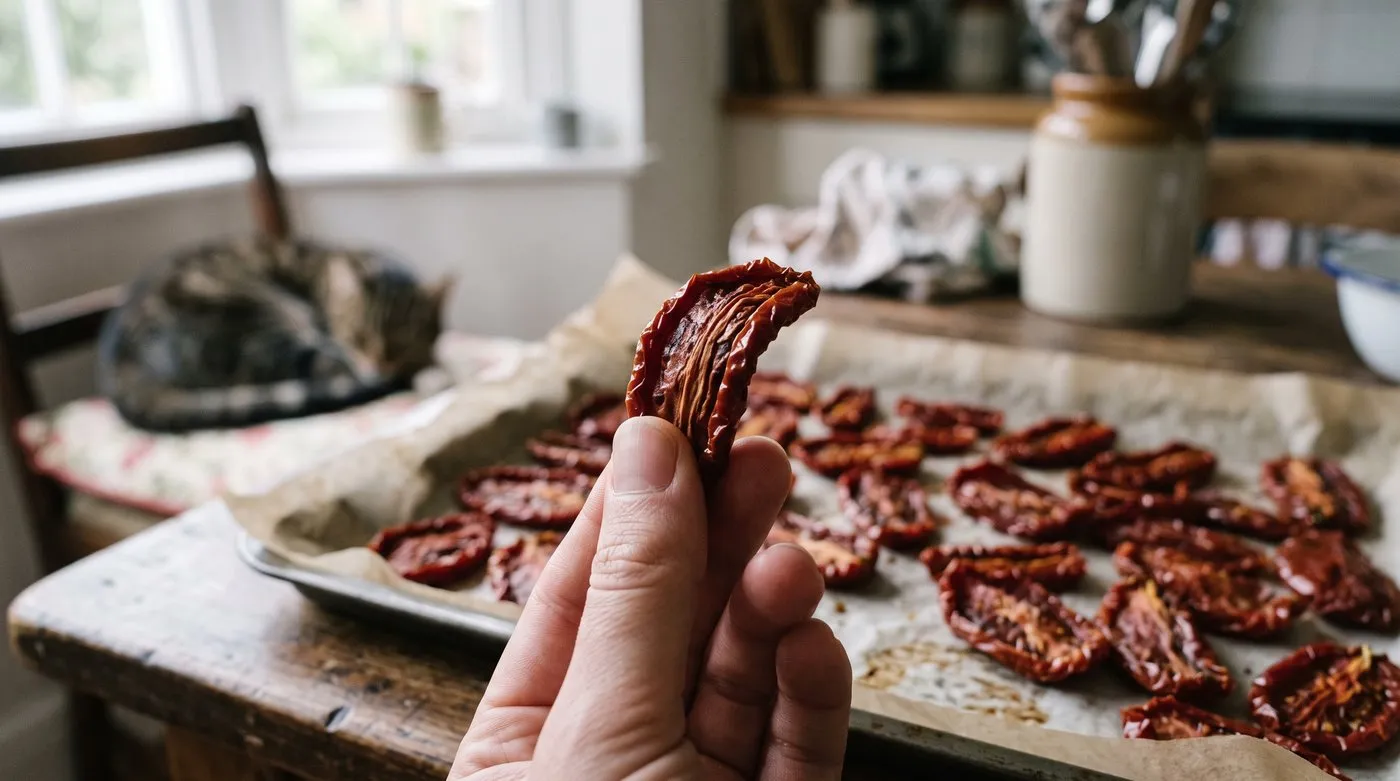
Ready tomatoes feel leathery and bendy, like a raisin, with no wet patches when you squeeze them.
Pieces dry at different speeds, so take out the ones that are ready and give the rest a bit longer. Let them cool completely before storing.
Condition them before long storage. Pack the cooled pieces loosely into a clean jar, about two-thirds full, and seal. Shake the jar once a day for a week. If any moisture appears on the glass, dry them for a little longer. This evens out any damp spots and stops mould later.
How to store home-dried tomatoes
Store them dry, in clean, airtight glass jars somewhere cool and dark. Fully dried tomatoes keep for several months this way. Check them now and then, and throw out the lot if you see mould or they smell off.
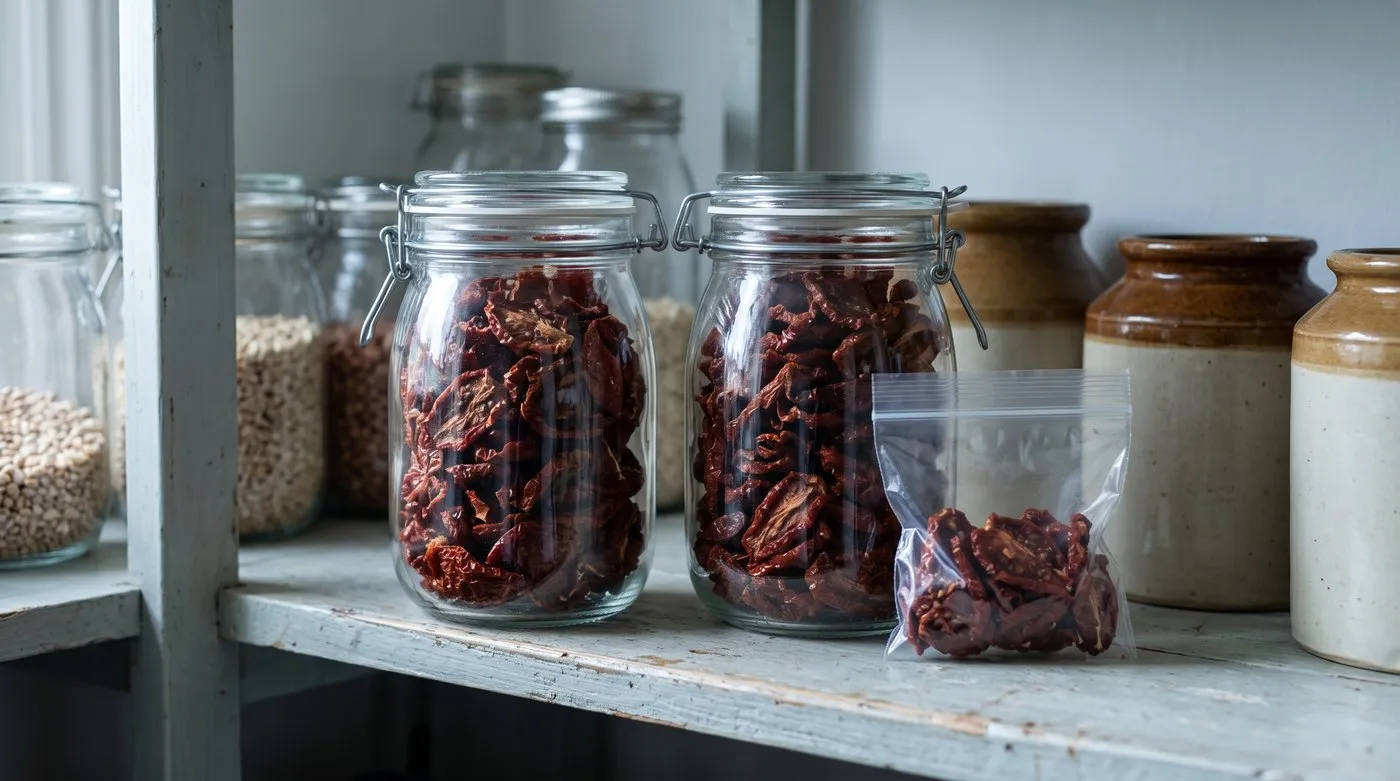
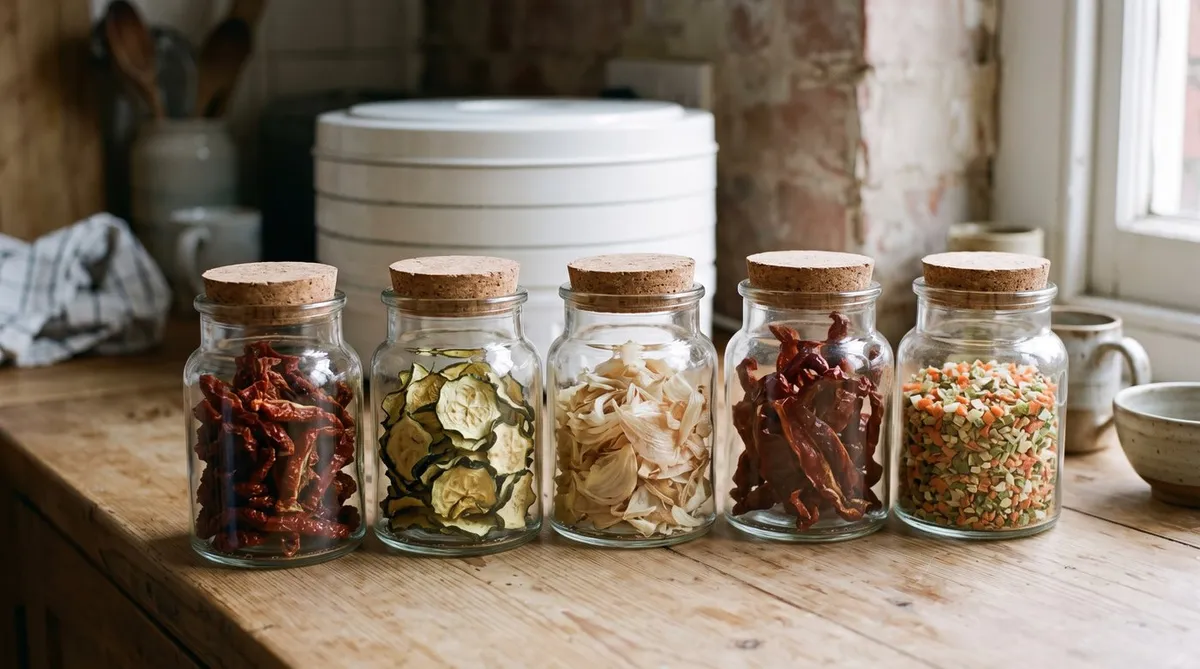
Store them dry in airtight jars and add oil only when you’re ready to eat them.
For the longest keeping, freeze them in bags or tubs. They don’t stick together, so you can take out a handful at a time. The same jar-and-freezer approach works for dried apple and pear rings.
Food safety: Don’t store home-dried tomatoes in oil at room temperature. Oil keeps air out, and that’s what botulism bacteria need to grow. Keep them dry and add oil when you’re ready to cook or serve them.
How to rehydrate and use dried tomatoes
Soak them in just-boiled water for 20-30 minutes, until plump and soft. Warm stock or a splash of wine adds extra flavour. Keep the soaking liquid, which is packed with tomato flavour, for sauces, soups and risottos.
A few ways to use them:
- Pasta sauces: chop and stir into tomato sauces for a deeper flavour.
- Bread: scatter on focaccia with rosemary before baking.
- Salads: chop rehydrated pieces into salads with mozzarella and basil.
- Pesto rosso: blend rehydrated tomatoes with garlic, pine nuts, parmesan and olive oil, then keep it in the fridge and eat within a few days.
Common mistakes when drying tomatoes
- Leaving the seeds in. The jelly holds water and slows drying. Scoop it out.
- Drying cut side down. The cut face needs to be up so moisture can escape.
- Closing the oven door. The tomatoes stew in the steam. Prop it open.
- Storing them before they’re fully dry. Damp pieces go mouldy in the jar. Check them carefully and condition them first.
- Keeping them in oil. Store them dry and add oil when you use them.
- Drying watery tomatoes. Beefsteaks take ages. Choose plum or cherry types.
Tomato drying calendar
| Month | Job |
|---|---|
| July | First cherry tomatoes ripen. Start small drying batches |
| August | Main harvest of plum tomatoes. Peak drying month |
| September | Dry the last of the glut. Use any blemished fruit fresh |
| October | Turn green tomatoes into chutney. Check stored jars for damp |
If blight strikes, don’t dry affected fruit. The guide to tomato blight shows what to look for, and the best blight-resistant tomato varieties can help next year.
Frequently asked questions
Can you sun dry tomatoes in the UK?
Not reliably, as UK summers are usually too damp. Dew and showers rewet them and mould sets in. A low oven or a dehydrator gives the same chewy result, whatever the weather.
Which tomato varieties dry best?
Plum tomatoes with firm, meaty flesh dry best. Roma, San Marzano and Principe Borghese hold their shape well. Cherry tomatoes such as Sungold dry into sweet little bites. Large beefsteak types are too watery.
How long do home-dried tomatoes keep?
Several months in an airtight jar somewhere cool and dark. Make sure they’re fully dry first. For the longest keeping, freeze them.
Can I dry tomatoes in the oven without a dehydrator?
Yes, the oven works well. Set it to its lowest setting, ideally around 70°C, and prop the door open slightly. Dry halved tomatoes cut side up for several hours, turning the trays now and then.
Can I store home-dried tomatoes in oil?
Not at room temperature, as oil-packed vegetables can grow botulism bacteria. Store them dry instead. Add oil when you’re ready to use them.
How do you rehydrate sun-dried tomatoes?
Soak them in just-boiled water for 20-30 minutes, then drain. Warm stock gives extra flavour. Keep the soaking liquid for sauces and soups.
Still got tomatoes left? Our guide on how to use up a garden glut has more ideas, and the growing hub can help you plan next year’s crop.
Our team produces practical UK gardening guidance from source research, contributor records and established horticultural practice. Editorial standards are overseen by Matt W.