Key takeaways
- Leave pods on the plant until they are brown, papery and rattle when shaken
- In a wet autumn, pull whole plants and hang them upside down in a dry shed
- Seeds are dry when you can't dent them with a fingernail
- Freeze dried beans for 48 hours before storing to kill any bean beetle grubs
- Store in airtight jars somewhere cool and dark, and use within a year or two
- Soak overnight, then boil hard for 10 minutes before simmering until soft
Drying beans and peas gives you a jar of home-grown pulses for winter soups and stews. Leave the pods on the plant until they rattle, finish them indoors, then store the seeds in airtight jars. Borlotti, haricot and runner beans are the easiest to start with, and dried peas make proper mushy peas.
To grow the crop in the first place, see the guide to growing borlotti beans. This page picks up as the pods start to turn.
Best beans and peas for drying in the UK
Varieties sold as drying beans give the best results. They are bred to ripen their seeds quickly in a British summer.
- Borlotti Lingua di Fuoco: cream beans speckled with red, in red-streaked pods. Reliable and easy to shell. Great in minestrone.
- Czar runner bean: big white seeds a bit like butter beans. Good for stews.
- Cannellini: white Italian beans for soups and bean stews. Best after a warm summer.
- Black Turtle: small glossy black beans for soups and refried beans. Needs a long, warm season, so it suits the south best.
- Marrowfat peas: large starchy peas, the classic for mushy peas.
- Carlin peas: a brown heritage pea from northern England, traditionally eaten on Carlin Sunday in Lent.
You can also dry the seeds of ordinary runner beans, climbing French beans, broad beans and garden peas by leaving the last pods to ripen. They aren’t bred for it, so the beans can be smaller, but it’s a good way to use the end of a row.

Borlotti pods go from red-streaked to brown and papery as they dry. Wait until they rattle before you pick.
When to pick beans and peas for drying
The plant tells you when it’s ready. Look for these signs:
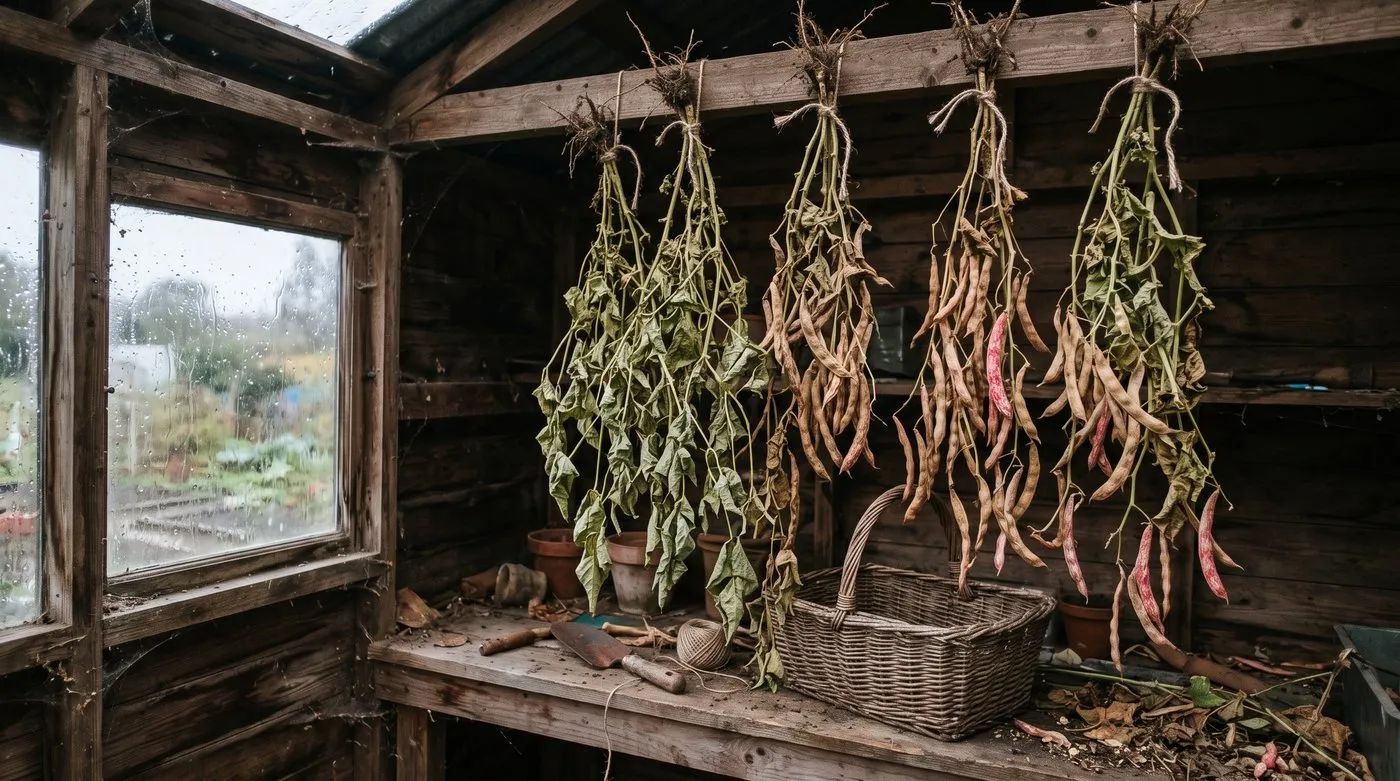
When autumn turns wet, pull the plants and hang them indoors. The pods carry on drying under cover.
- The pods turn yellow, then tan, then brown
- The pods feel dry and papery and the seeds rattle when shaken
- The leaves yellow and drop
Typical timing in the UK:
- Peas for drying: late August to September
- French and borlotti beans: September to mid-October
- Runner beans: early to mid-October
If the weather turns wet before the pods are fully brown, don’t leave them to rot. Pull up the whole plants and hang them upside down in a dry, airy shed, greenhouse or porch. The pods carry on drying off the ground. Pick off any pods that go mouldy.
How to finish drying beans indoors
Even rattling pods need a little longer indoors before the seeds are hard enough to store.
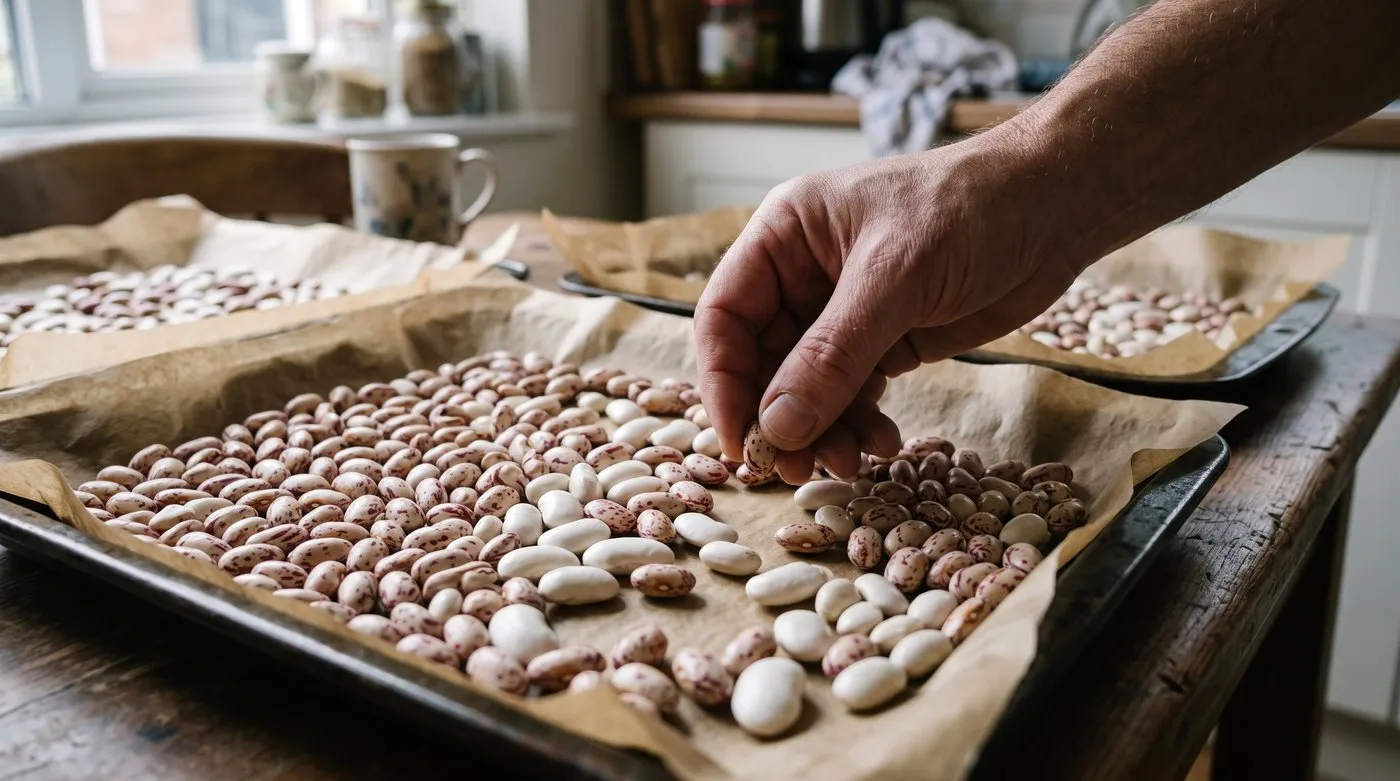
Spread the beans out and stir them every day or two. When a thumbnail can’t dent them, they’re ready.
Shell and spread. Pod the beans and spread them in a single layer on trays or newspaper. Keep them somewhere warm and airy, such as a kitchen shelf or spare room. Stir them every day or two. They usually need a week or two.
Hang whole plants. For runner beans and tall climbers, it’s easier to hang the plants until the pods are crisp, then shell.
Use a dehydrator. In a damp autumn, a dehydrator on a low setting, about 35-40°C, speeds things up. Don’t go hotter or the beans may crack.
Test them. Press a fingernail into a bean. If it dents, it needs longer. A fully dry bean is too hard to mark and cracks rather than squashes if you tap it with a hammer.
How to shell and clean dried beans
By hand: open each pod and tip out the beans. It’s slow but pleasant, and keeps the beans whole. It suits small harvests.
In a sack: for a big harvest, put the crisp pods in a strong cloth sack and tread on it or beat it gently with a stick. The pods shatter and the beans fall to the bottom.
Winnowing: pour the beans and broken pods slowly from one bowl to another in a breeze or in front of a fan. The light bits of pod blow away and the heavy beans drop into the bowl.
Pick out any shrivelled, mouldy or holed beans as you go.

A fan does the job of a breeze. The light chaff blows away and the heavy beans drop straight into the bowl.
The freezer step that saves your stored beans
Freeze your dried beans for at least 48 hours before you put them in jars. Small bean beetles (often called bean weevils) can lay eggs in the developing pods. The grubs grow inside the beans and adults can emerge in storage, leaving neat round holes.
A spell in the freezer kills them. Make sure the beans are fully dry first. Afterwards, let them come back to room temperature inside a sealed bag so no condensation forms on them. Then tip them into jars.
How to store dried beans and peas
Use airtight glass jars or other sealed containers. Paper bags let in moisture and pests. Keep the jars somewhere cool, dark and dry, such as a cupboard or pantry.
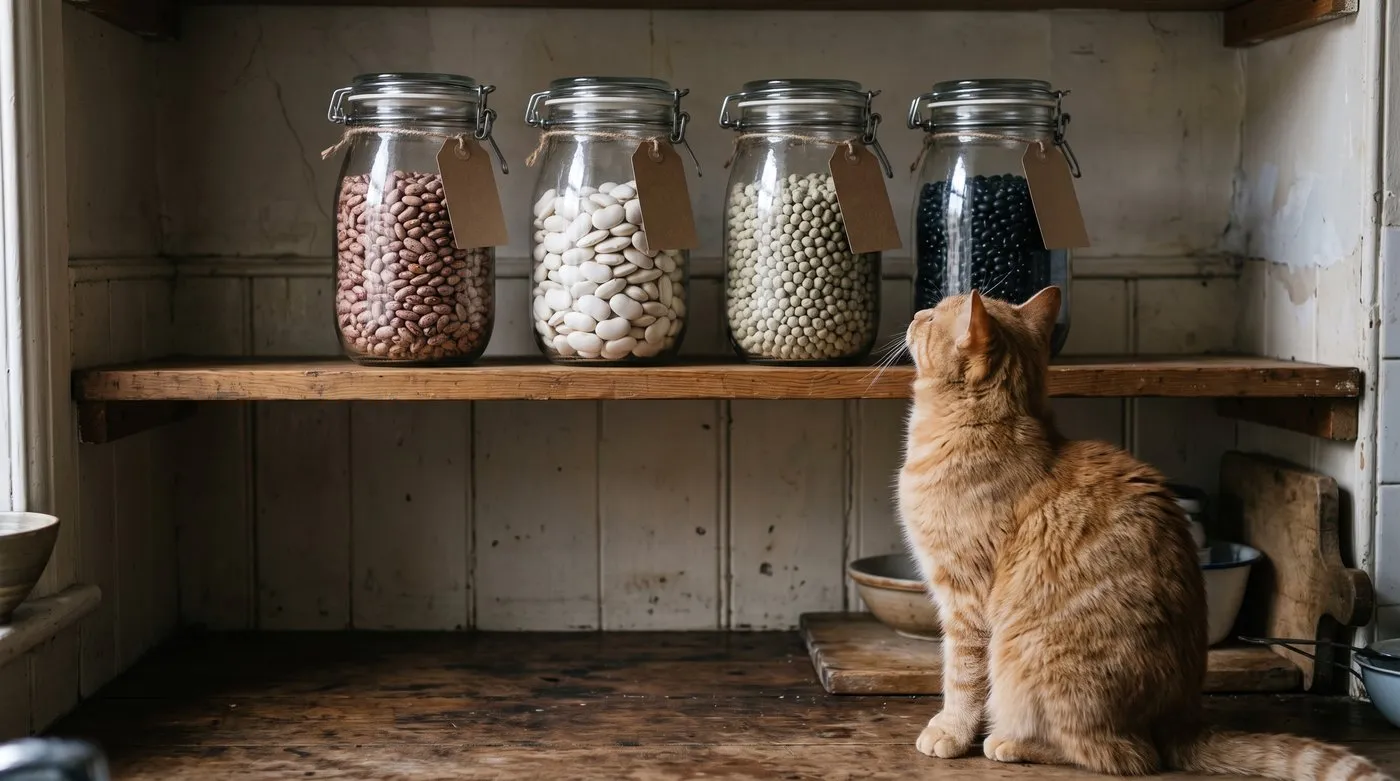
Airtight jars in a cool, dark cupboard keep beans in good shape for a year or two. Use the oldest first.
Label each jar with the variety and the year. Dried beans keep well for a year or two. Older beans are still safe but take longer to cook and may never go fully soft. Check the jars now and then for mould, holes or dust, and use the oldest beans first.
For more on keeping the rest of the harvest, see the guide to storing garden produce.
How to cook home-dried beans safely
Home-dried beans cook just like shop-bought ones. The one rule that matters is the hard boil.
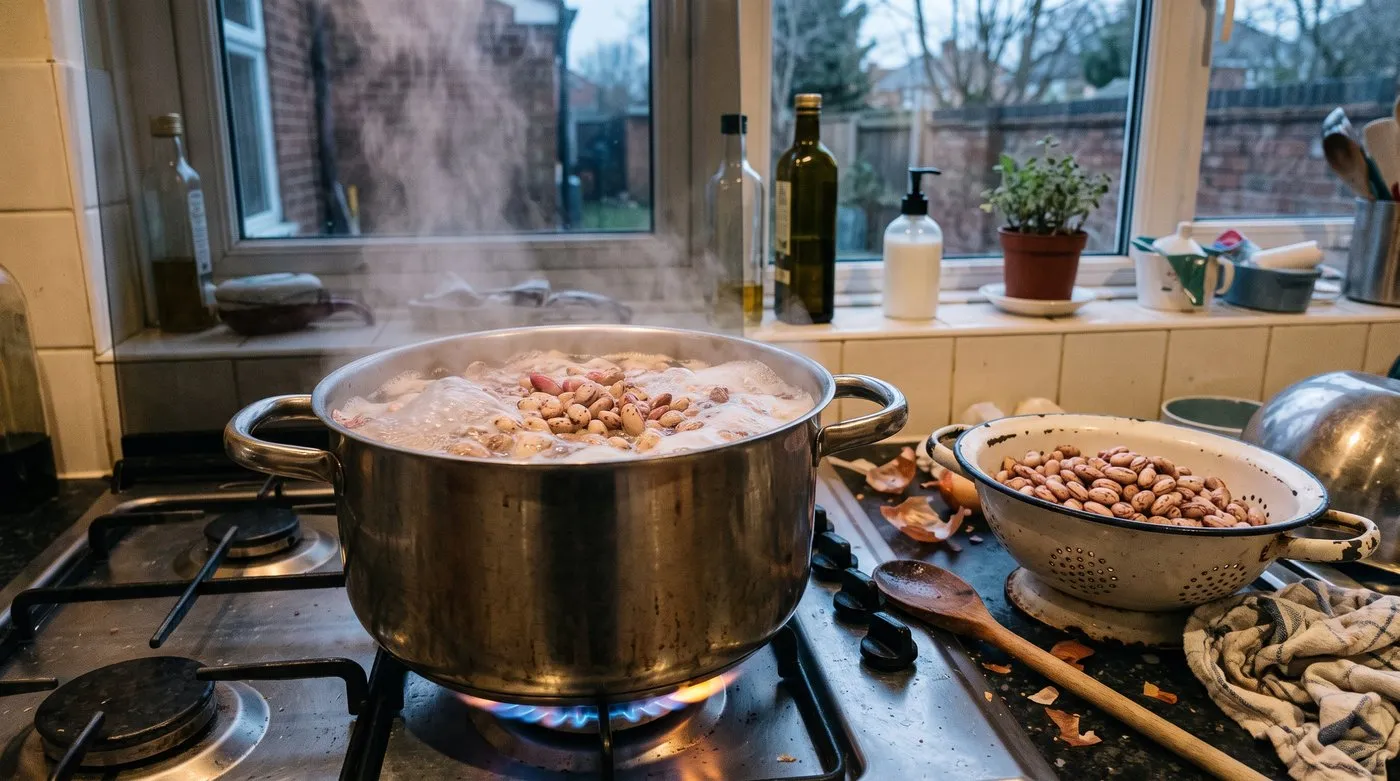
A hard, rolling boil for at least 10 minutes makes dried beans safe. Then turn the heat down and simmer.
- Pick over the beans and rinse them.
- Soak them overnight in plenty of cold water.
- Drain, rinse and cover with fresh water.
- Bring to the boil and boil hard for at least 10 minutes. Kidney beans and many other dried beans contain a natural toxin that this destroys.
- Turn down and simmer until tender. Beans usually take one to two hours. Peas are often quicker.
Warning: Don’t cook dried beans from raw in a slow cooker. It doesn’t get hot enough to destroy the toxin. Boil them hard first.
Quick soak: forgot to soak overnight? Cover the beans with water, boil for a couple of minutes, then turn off the heat and leave them covered for an hour. Drain and carry on as above.
Ideas for using them:
- Borlotti: minestrone and bean stews
- Cannellini: white bean soup and casseroles
- Czar: butter-bean style stews
- Marrowfat peas: mushy peas and pea soup
- Carlin peas: slow-cooked with bacon, or in soups
Cooked beans freeze well, so cook a big batch and freeze in portions.
Drying beans and peas through the year
| Month | Task |
|---|---|
| April to May | Sow drying beans in pots under cover, or outdoors once the soil warms |
| Late May to early June | Plant out after the last frost |
| June to August | Water in dry spells. Peas for drying start to turn in late summer |
| Late August | Stop picking pods to eat from plants you want to dry |
| September | Pods yellow and brown. Pick dry pea pods |
| October | Pick rattling bean pods. Lift and hang plants if it turns wet |
| November | Finish drying, shell, freeze for 48 hours and jar |
Common problems with drying beans
Mould in the jar. The beans weren’t dry enough. Test them with a fingernail before storing, and give borderline batches another week.
Holes in stored beans. Bean beetles have hatched. The 48-hour freezer step prevents this. Throw away an affected batch.
Pods rotting on the plant. A wet autumn has set in. Pull up the plants and hang them indoors rather than waiting.
Beans won’t soften when cooked. They’re probably old or were stored somewhere damp. Use beans within a year or two.
Spotty or diseased pods. Problems such as bean rust mark the pods. Only keep beans that look clean, plump and firm.
Frequently asked questions
Can you dry beans on the plant in the UK?
Yes, in most years. Leave the pods until they turn brown and papery and the seeds rattle. This works well for borlotti, haricot and runner beans grown for drying. If a wet autumn sets in first, pull up the whole plants and hang them upside down somewhere dry and airy to finish.
What is the best bean variety for drying in the UK?
Borlotti Lingua di Fuoco is a reliable favourite for UK gardens. It crops well and the speckled beans dry easily. The runner bean Czar gives big white beans a bit like butter beans. Cannellini and Black Turtle do well after a warm summer.
How do you know when dried beans are ready to store?
They are ready when they are hard right through. Try pressing a fingernail into one. If it leaves a dent, keep drying. A fully dry bean also cracks rather than squashes when tapped with a hammer. Damp beans go mouldy in the jar.
How long do dried beans last?
They keep well for a year or two in airtight jars. Store them somewhere cool and dark. Older beans are still fine to eat but take longer to soften, and very old ones may never soften fully. Label jars with the year and use the oldest first.
How do you stop weevils in stored beans?
Freeze your dried beans for at least 48 hours before you jar them. This kills any bean beetle grubs already inside the seeds. Make sure the beans are fully dry first. Let them warm up in a sealed bag so no condensation forms, then jar them.
Do home-dried beans need boiling hard?
Yes, boil them hard for at least 10 minutes after soaking. Red kidney beans and many other dried beans contain a natural toxin that a hard boil destroys. A slow cooker alone isn’t hot enough. After the hard boil, simmer until tender.
Now your pulses are sorted, read how to grow runner beans to plan next year’s crop, pick from the best pea varieties, or see how drying vegetables makes a ready soup mix. There are more preserving ideas in the how-to guides.
Our team produces practical UK gardening guidance from source research, contributor records and established horticultural practice. Editorial standards are overseen by Matt W.