
Key takeaways
- Eat them fresh in summer, or let the pods dry on the plant for winter
- Sow indoors in May, or outdoors in early June after the last frost
- Climbing types reach about 2 metres and need canes or trellis
- Lingua di Fuoco is a reliable, beautiful variety to start with
- Water well while they flower, or the pods may be half empty
- Dry beans until rock hard, then store them in airtight jars
Borlotti beans are just about the prettiest thing you can grow up a cane wigwam. The pods are streaked crimson and cream, and the beans inside are speckled like little eggs. Best of all, you get a choice. Eat them fresh in summer, or leave them on the plant and fill jars with dried beans for winter soups and stews.
One sowing in May gives you fresh meals in July and August, then a cupboard of dried beans from September. If you already grow runner beans and French beans, borlotti beans are a fun next step.
Which borlotti bean varieties grow best in the UK?
Start with Lingua di Fuoco, the classic climber. Three varieties are easy to find, and each has its own strengths.
Lingua di Fuoco (Tongue of Fire) is a strong climber that reaches about 2 metres. The pods are cream streaked with bright red flames. Dried, the beans are rich and nutty, and they hold their shape in slow-cooked dishes.
Borlotto di Vigevano is an Italian heirloom with rounder beans that cook up creamier. The pods are less showy, but it’s lovely to eat. It grows to the same height. It’s harder to find, so try a specialist Italian seed supplier.
Taylor’s Horticultural is a dwarf bush type that grows to about 50cm with no supports. The pods are pink-speckled and smaller, and the crop is lighter. It’s simple, though: no canes and no training. Ideal for container growing and small gardens.
| Variety | Type | Height | Pod colour | Best for |
|---|---|---|---|---|
| Lingua di Fuoco | Climbing | About 2m | Red and cream flames | Main crop, drying |
| Borlotto di Vigevano | Climbing | About 2m | Pink speckled | Creamy Italian dishes |
| Taylor’s Horticultural | Dwarf bush | About 50cm | Pink speckled | Small gardens, pots |
When and how to sow borlotti beans
Sow indoors in May or outdoors in early June, and keep them safe from frost. Borlotti beans are tender, so getting the timing right matters most.
Indoor sowing in May
Sow one bean per 8cm pot of multipurpose compost, about 4 to 5cm deep. Water well and pop it on a bright windowsill or in a greenhouse. Seedlings usually appear in about a week. When they have two pairs of proper leaves, harden them off for a week by putting them outside in the day. Plant out after the last frost, late May at the earliest in the Midlands and early June further north.
Direct outdoor sowing in June
Once the soil has warmed and frosts are over, sow beans 5cm deep and 15cm apart at the foot of your supports. Thin to about 20cm apart once they’re growing. Sowing outside avoids disturbing the roots, but you lose a few weeks. In colder areas, sowing indoors is the safer bet.
Soil and position
Give them full sun and decent, well-drained soil. Dig in garden compost or well-rotted manure the autumn before. Fresh manure gives lots of leaves and fewer pods. A sheltered spot stops tall plants and their canes blowing over. Use crop rotation and don’t grow beans where peas or beans grew last year.
Supporting climbing borlotti beans
Put up strong supports before you plant. The plants twine around anything they can reach and get heavy when full of pods.
Bamboo cane wigwams are the easiest. Push 7 or 8 canes into a circle about 60cm across, lean them in and tie them firmly at the top. Plant one bean at the foot of each cane. Our runner bean guide shows how to build one.
Double rows of canes crossed at the top, with a pole along the ridge, suit bigger plantings. Space rows 60cm apart with canes every 20cm, and tie every joint.
Trellis or netting on a sunny wall or fence works in small gardens. The wall gives warmth and shelter. Make sure it’s at least 2 metres tall.
Young plants sometimes need a hand. When the shoot is about 15cm long, wind it gently round the cane. After that they climb on their own.
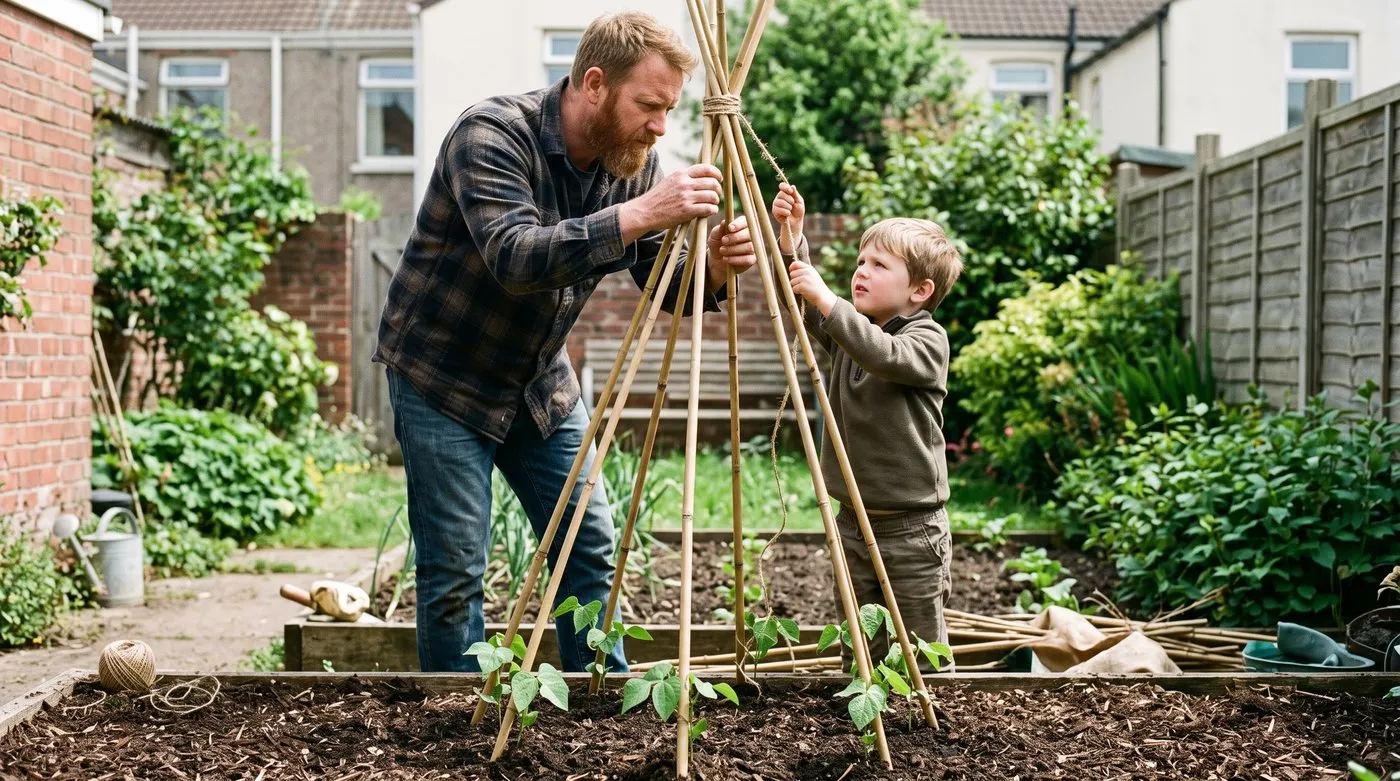
Get the supports up and tied firmly before the beans go in. Laden plants get heavy, and a wobbly wigwam soon tips over in summer wind.
Growing borlotti beans through the season
Once they’re climbing, borlotti beans mostly look after themselves.
Watering
Water well while they flower and fill their pods, usually July and August. Dry soil at flowering time means fewer pods and empty shells. A good soak twice a week in dry spells beats a daily sprinkle. Mulch around the base with compost to hold in moisture and keep weeds down.
Feeding
Beans don’t need much feeding. Compost dug in before planting is usually enough in the ground. Plants in pots will appreciate a liquid feed now and then once flowering starts.
Pinching out
When the plants reach the top of their canes, pinch out the tips. This pushes the energy into pods, not more leaves, and stops the plants getting top-heavy.
Harvesting borlotti beans fresh and dried
You get two harvests from one sowing. That’s what makes borlotti beans so special.
Fresh shell beans (July to August)
Pick pods when they’re plump and streaked with red but still a little bendy. Split the pod along the seam and push the beans out with your thumb. Fresh beans are cream with pink speckles and cook in about 20 to 30 minutes with no soaking. They’re creamy and mild, almost like chestnuts. Try them in pasta, risotto, salads or a Tuscan ribollita.
Fresh beans don’t keep long, so use them within two or three days. They freeze well. Blanch for 2 minutes, cool in iced water, then freeze flat on a tray before bagging.
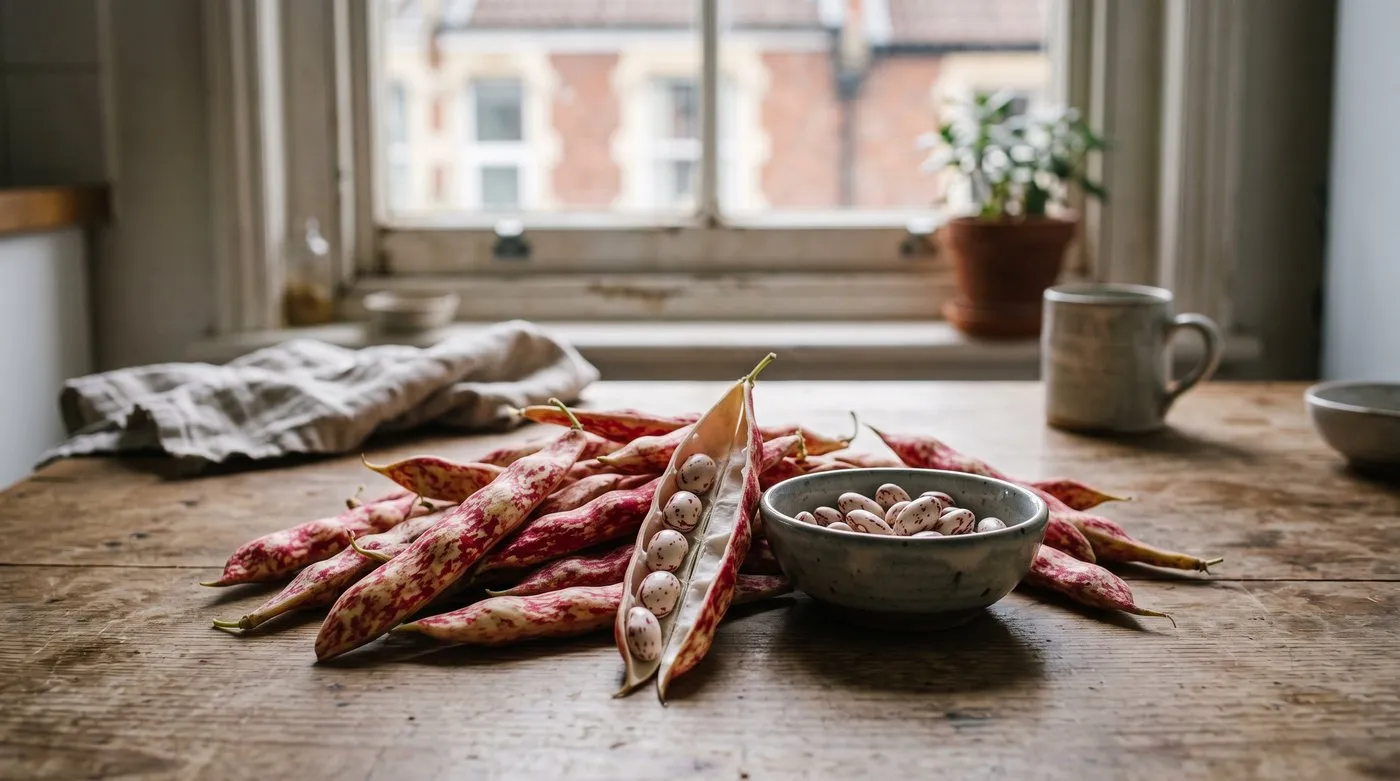
Pick for fresh beans while the pods are plump and still a little bendy. Fresh borlotti cook in under half an hour with no soaking.
Dried beans (September to October)
Leave the rest of the pods on the plant and stop watering. The pods go brown and papery and the beans harden. Pick when the pods rattle. If a wet autumn arrives first, cut the whole plants and hang them upside down in a dry, airy shed or garage.
Shell the pods by hand and spread the beans on a tray indoors for a week or so. Bite one to check: it should be rock hard and crack, not dent. Then store them in airtight glass jars, labelled with the variety and year. Garden Organic’s bean guide has more tips.
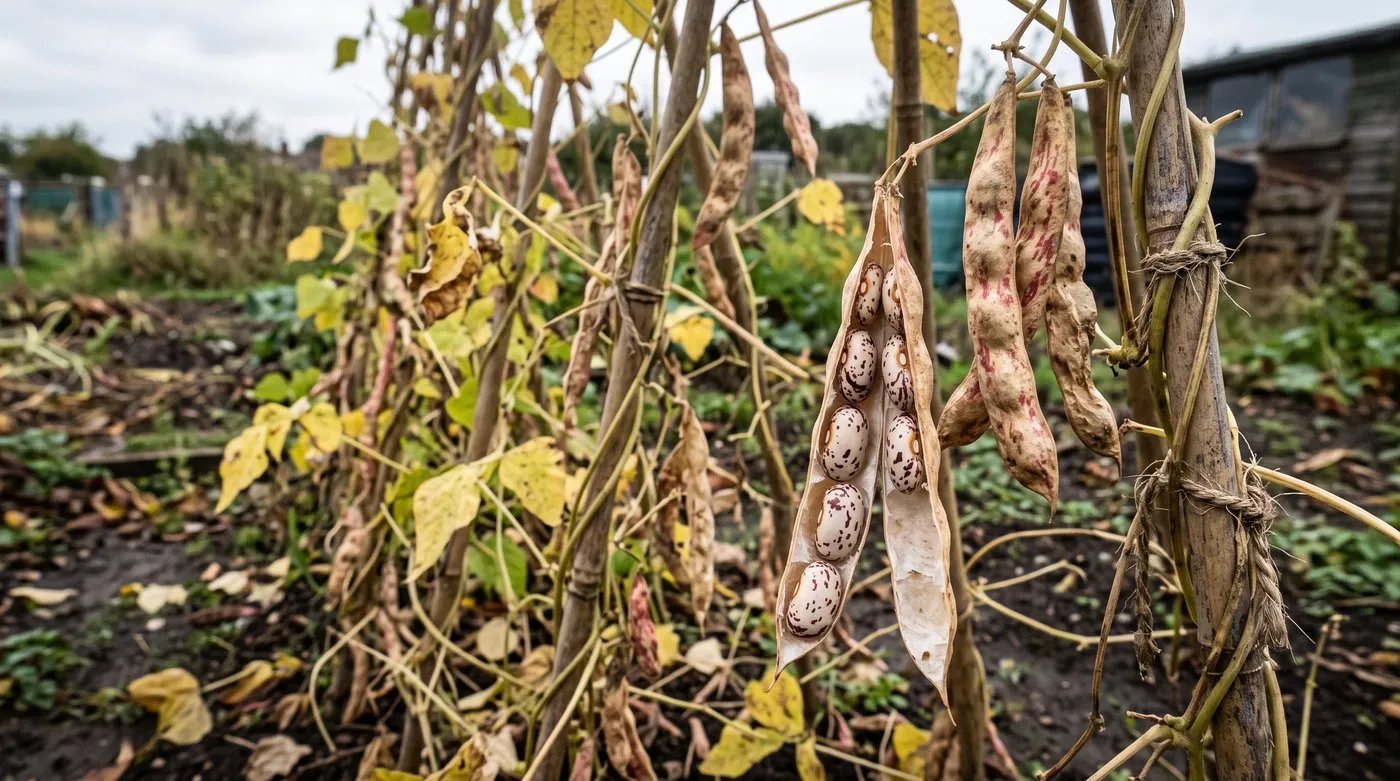
For dried beans, leave the pods on until they go brown and rattle. If wet weather arrives first, hang whole plants in a dry shed to finish.
Cooking with borlotti beans
Soak dried beans overnight, then boil and simmer until tender. Like kidney beans, dried borlotti beans must be cooked properly. After soaking, boil them hard for at least 10 minutes, then simmer for an hour or so until soft.
They’re a star of Italian cooking. Try pasta e fagioli (pasta and bean soup), ribollita (Tuscan bread and veg soup), or a simple bean salad with olive oil, lemon and herbs. They hold their shape well in stews and casseroles.
For a quick supper, simmer your cooked beans with tinned tomatoes, garlic, rosemary and a splash of olive oil. Season with salt, pepper and a pinch of chilli, and pile onto toasted sourdough.
Fill a few jars and you’ve got a lovely store for winter. Add some stored root vegetables and you’re set for plenty of hearty meals.
Common problems growing borlotti beans
Borlotti beans get the same few problems as French beans.
Slugs and snails go for young plants, especially in wet springs. Use slug control for the first few weeks until the stems toughen up.
Blackfly cluster on shoot tips and young pods. Pinch off badly hit tips and blast the rest off with water. Ladybirds and hoverflies will happily eat them too.
Bean rust shows as small orange-brown spots on the leaves. Pick off affected leaves, water at the base and give plants room for air. It can shorten the season but rarely kills plants.
Late frost kills young plants. Wait until frosts are over before planting out, and keep some fleece handy for a surprise cold night in early June.
Few pods usually come from dry soil at flowering or a cold, exposed spot. Water well through July and pick a sheltered position.
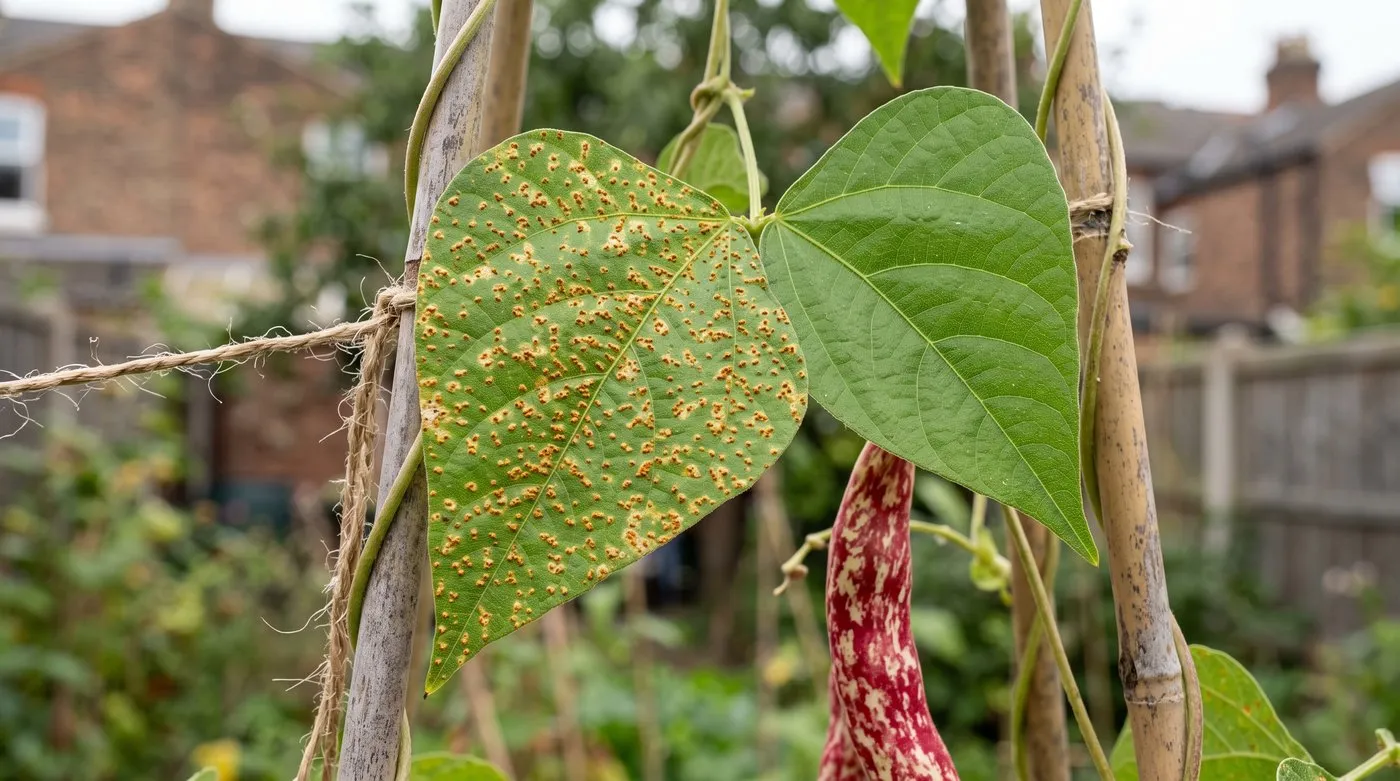
Small orange-brown spots are bean rust. Pick off affected leaves and water at the base, and the plants usually carry on cropping.
Frequently asked questions
When should I sow borlotti beans in the UK?
Sow indoors in May, or straight outside in early June. They’re tender, so frost kills them. Sowing in pots on a warm windowsill gives you a few weeks’ head start. Plant out after your last frost, usually late May in the south and early June further north.
Can I grow borlotti beans in the UK climate?
Yes, they grow well across most of the UK. They like the same conditions as runner and French beans: a warm, sheltered, sunny spot. Southern and Midlands gardens get the most reliable dried crops. Further north, you may need to finish drying the pods indoors.
What is the difference between fresh and dried borlotti beans?
Fresh beans are creamy and tender, and they cook quickly. Pick them when the pods are plump and streaked but still a bit bendy. Dried beans are firmer and nuttier, and need soaking overnight and a long simmer. Both are lovely in Italian cooking.
How do I dry borlotti beans for storage?
Leave the pods on the plant until they’re brown, papery and rattly. That’s usually September or October. If wet weather is coming, cut the whole plants and hang them upside down in a dry, airy shed. Shell the beans and spread them on a tray indoors for a week before jarring.
How long do dried borlotti beans store?
Well-dried beans keep for a long time in airtight jars. Store them in a cool, dark cupboard. Beans that aren’t fully dry will go mouldy. Bite one to check: it should be rock hard and crack, not dent.
What is the best borlotti bean variety for the UK?
Lingua di Fuoco is the favourite and a great one to start with. It gives lots of red-flamed pods on strong climbing plants. Borlotto di Vigevano is a little milder and creamier. Taylor’s Horticultural is a dwarf bush type that stays around 50cm tall.
Do borlotti beans need supports?
Climbing types need supports about 2 metres tall. Use bamboo canes, a wigwam or trellis, pushed in firmly and tied at the top. Young plants may need guiding onto the canes at first. Dwarf varieties like Taylor’s Horticultural need no support but give smaller crops.
Our team produces practical UK gardening guidance from source research, contributor records and established horticultural practice. Editorial standards are overseen by Matt W.


