Key takeaways
- Stenner, Enorma and Liberty are long-podded varieties grown for the show bench
- Sow in pots in May and plant out after the last frost, one plant per cane
- Moist roots at flowering matter more than anything for a good set of pods
- Pick before the seeds swell, while pods snap cleanly
- Grow plenty of plants so you can choose a straight, matched set
- Read the schedule for the number of pods and how they should be staged
Exhibition runner beans are long, straight, fresh and perfectly matched. Grow the right variety, keep the roots moist and pick with care, and you have a dish that can hold its own on any village show bench. The plants are just ordinary runner beans grown a little more carefully.
This guide covers show varieties, timing, growing straight pods, picking and staging. For the basics of growing runner beans for the kitchen, see the guide to how to grow runner beans.
What judges want from show runner beans
Long, straight, fresh, matched pods. That sums it up. Judges look for:
- Length that suits the variety, with an even taper
- Straightness, with no kinks or curls
- Freshness: pods that snap cleanly and aren’t stringy
- No bulging seeds. You want slender pods where the beans barely show
- Even green colour, free from marks and scars
- Matching: every pod the same length, shape and colour
A judge will often snap a pod to check it’s fresh. The guide to how UK show veg is judged explains how marks are given across all crops.
Best runner bean varieties for showing
Stenner, Enorma and Liberty are the usual show varieties. All three give long, slender, straight pods.
| Variety | Why grow it for show | Where to find it |
|---|---|---|
| Stenner | Long, straight pods bred for exhibition | Specialist show seed suppliers |
| Enorma | Very long pods, widely available | Most seed catalogues and garden centres |
| Liberty | Long, smooth, straight pods | Many seed catalogues |
Enorma holds the RHS Award of Garden Merit and is the easiest to buy, so it’s a good first show bean.
Shorter kitchen favourites such as Painted Lady are lovely to eat but struggle on length. The guide to runner bean varieties compares the kitchen types.
When to sow runner beans for a show
Sow in pots in May, or outdoors in late May to June. Runner beans are tender, so they can’t go out until the risk of frost has passed.
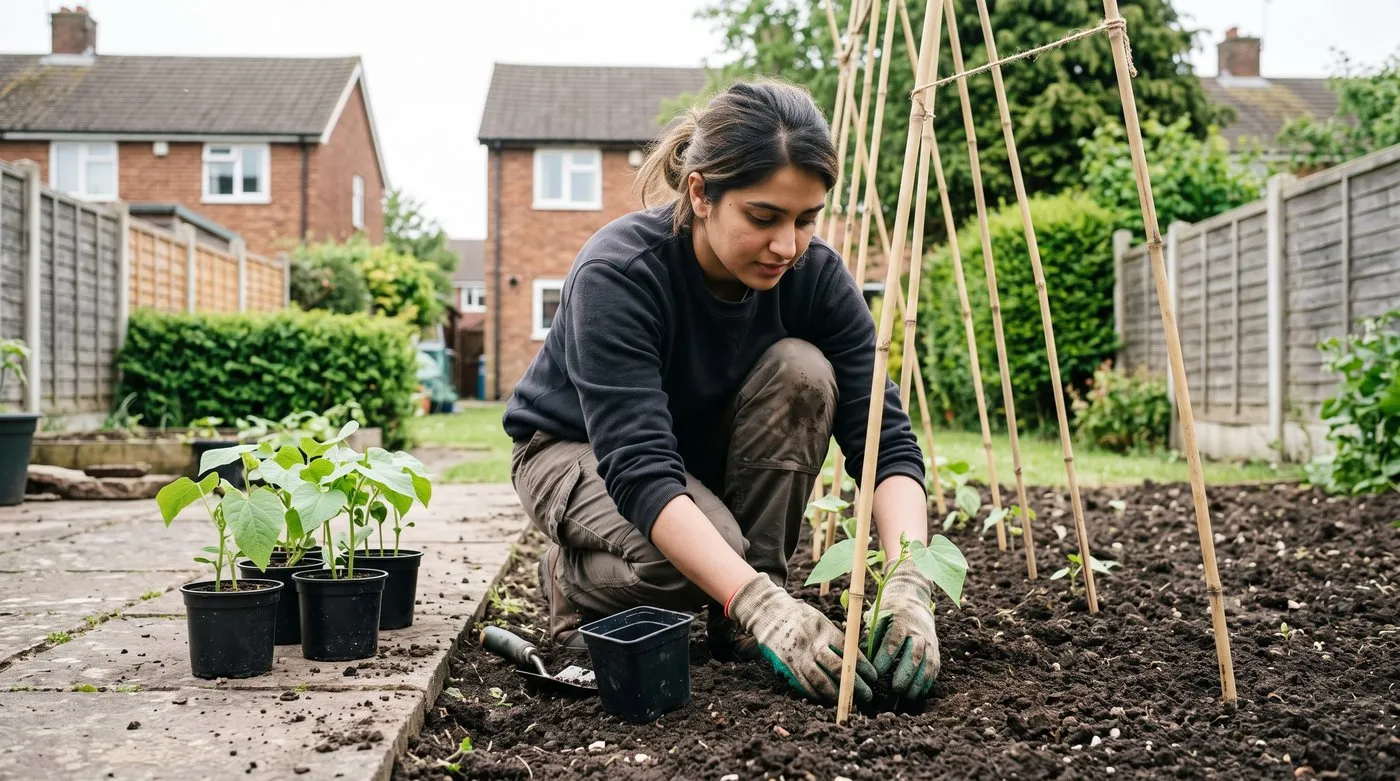
Plant one bean at the foot of each cane once the frosts are over. A few weeks under cover gives you sturdy plants.
Sow one seed per 9cm pot, about 5cm deep, in peat-free compost. Keep them somewhere warm and bright, such as a greenhouse or windowsill. Harden the young plants off for a week or two before planting out in early June.
May sowings usually crop from late July into autumn, which covers most August and September shows. Sow a second batch a couple of weeks later. If the first plants peak too early, the second will be ready for the day.
Growing straight, long show pods
Grow one plant per cane. Use canes about 2.4m tall, set 20-30cm apart in a double row or a straight row tied to a top wire. Pinch out the tip when the plant reaches the top of its cane.
Many exhibitors take off side shoots and grow a single main stem up each cane. That gives the plant fewer pods to feed, so each one can grow long. Tie the stem in loosely with soft twine where it needs help.
Straight pods need room to hang. Pods that touch a cane, a leaf or the ground often curl. As small pods form, gently move any that are trapped so they hang free. Pick off misshapen pods early so the plant puts its energy into the good ones.

One plant per cane, side shoots off, pods hanging free. That’s the set-up for long, straight show pods.
Watering and feeding for a good pod set
Keep the roots moist when the plants flower. Dry roots are the usual reason flowers drop without setting pods. You don’t need to hand-pollinate: bees do it, and the plant sets pods well as long as it isn’t short of water.
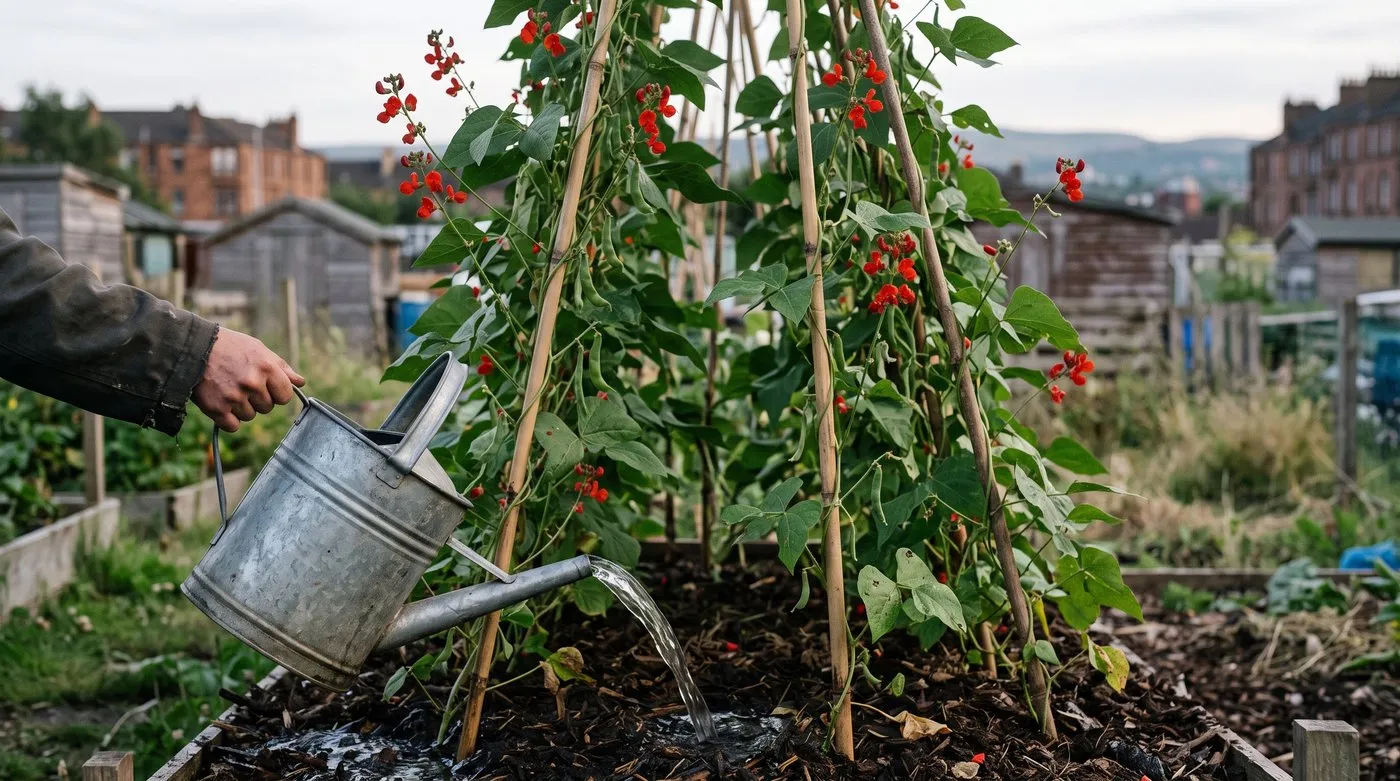
Deep watering at the roots while the plants flower is what gets the pods to set. A good mulch holds it in.
Before planting, dig plenty of well-rotted manure or compost into a deep trench or bed. Runner beans root deeply and love moisture-holding soil. Water thoroughly at the base in dry spells, rather than a light sprinkle every day. A thick mulch of compost or grass clippings helps hold the water in.
Once pods are forming, a high-potash liquid feed such as tomato feed every week or two keeps them coming. Avoid rich nitrogen feeds, which give lots of leaf and few pods. For more on a poor set, see the guide to runner beans not setting pods.
Picking and choosing a matched set
Pick as close to the show as you can. Many growers pick the evening before or early on the morning.
- Choose pods that are long and straight, with seeds barely showing
- Cut them with scissors, leaving a short stalk
- Lay them flat in a tray on a damp cloth, out of the sun
- Cover with another damp cloth to keep them fresh and straight
- Sort them on a table, matching length, shape and colour
Grow plenty of plants, as only a few pods will match perfectly. Take a couple of spares to the show in case one gets damaged.

Cut the pods with scissors, leaving a short stalk, and lay them flat straight away. A damp cloth keeps them fresh and straight.
Staging show runner beans
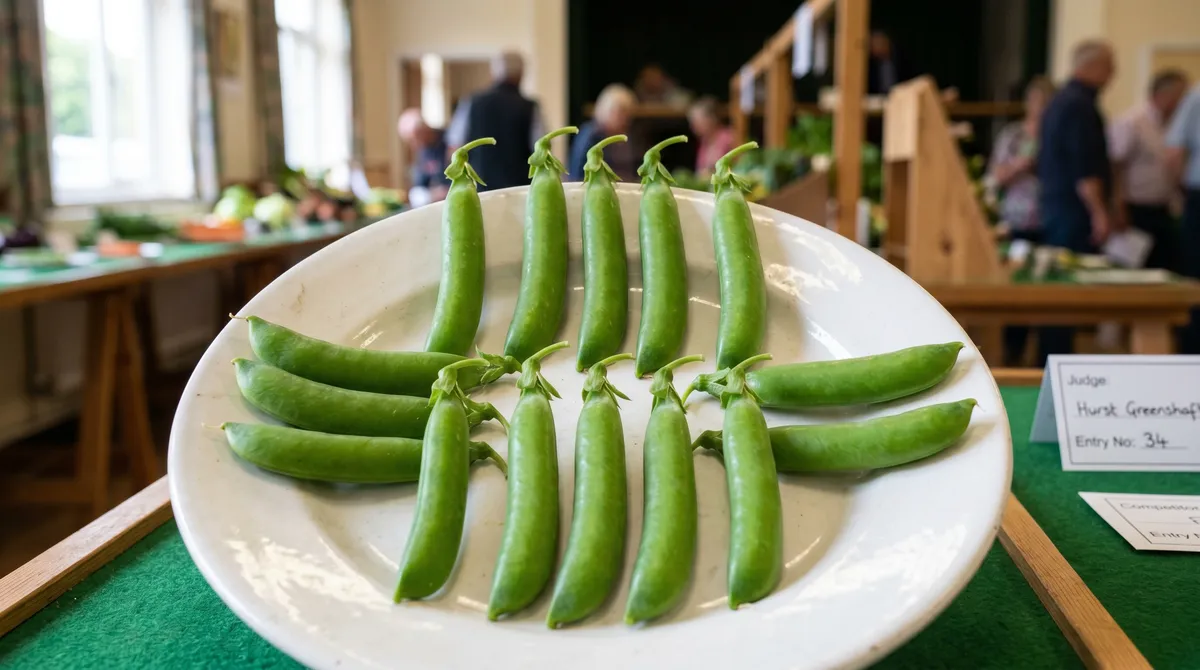
Lay the pods side by side, all facing the same way. Use the number of pods the schedule asks for. Keep the stalks on, and don’t wash or polish the pods. Put the best-matched pods together rather than the longest odd ones.

Matched pods laid neatly side by side. Equal length and shape will beat one or two whoppers every time.
Common mistakes with show runner beans
- Growing a short kitchen variety. Choose a long-podded show bean such as Enorma
- Letting the roots dry out. Flowers drop and pods stay short. Water deeply and mulch
- Picking too late. Bulging seeds and stringy pods lose marks. Pick while pods are slender
- Leaving pods tangled. Pods caught in leaves or canes curl. Free them while they’re small
- Planting out too early. A cold night can check or kill young beans. Wait until frosts have passed
Show runner bean calendar
| Month | What to do |
|---|---|
| Autumn to winter | Dig a trench and fill with rotted manure or compost |
| April | Order seed. Put up canes and a top wire |
| May | Sow in pots under cover. Sow a second batch two weeks later |
| June | Harden off and plant out once frosts have passed |
| July | Pinch out tips, water well at flowering, free trapped pods |
| August to September | Feed with potash. Pick close to show day. Select and stage |
| October | Clear plants, leaving the roots in the soil |
Runner beans sit well alongside other show crops. The guide to growing peas for show covers the pea class, and the growing veg hub has more crop guides.
To plan your other entries, read the guide to winning at your village veg show.
Frequently asked questions
What is the best variety for exhibition runner beans in the UK?
Stenner, Enorma and Liberty are the usual show choices. All three give long, straight, slender pods. Enorma is the easiest to find in garden centres, while Stenner may need a specialist seed supplier. Shorter kitchen varieties rarely compete on length.
What do judges look for in show runner beans?
Long, straight, fresh, matched pods with no bulging seeds. Pods should be a good even green, free from marks, and snap cleanly. Judges often snap one to check it is fresh and not stringy. Matching counts for a lot, so a set of equal pods beats one giant.
Do I need to hand-pollinate runner beans for showing?
No, bees do the job. Poor pod set is usually caused by dry roots or very hot weather, not a lack of pollinators. Water the roots well when the plants are flowering and mulch to hold the moisture in.
When do you pick exhibition runner beans for a show?
As close to the show as you can. Many growers pick the evening before or early on show morning. Wrap the pods in a damp cloth and lay them flat in a cool place so they stay fresh and straight.
How are exhibition runner beans staged at UK shows?
Laid side by side on the plate, all facing the same way. Use the number of pods the schedule asks for. Keep a short stalk on each pod and don’t wash or polish them. Check the schedule for any other rules.
Our team produces practical UK gardening guidance from source research, contributor records and established horticultural practice. Editorial standards are overseen by Matt W.