Key takeaways
- Judges care most about clean, fresh, undamaged veg
- A well-matched set beats one giant and two tiddlers
- Potatoes, beetroot and runner beans are easy crops to start with
- Show onions are sown in late December or January under heat
- Always read the show schedule and count your specimens
- Grow spares and pick as close to show day as you can
Anyone can have a go at a village veg show, and it’s great fun. Every summer, village halls and allotment sites across the UK fill up with proud growers and their best produce.
You don’t need a giant pumpkin to enter. Most shows have classes for everyday crops like runner beans, tomatoes, potatoes and onions. They’re judged on quality, matching and presentation rather than size alone. Entry is cheap and the prize is usually a card and bragging rights.
What do judges look for at a veg show?
Judges want clean, fresh, undamaged veg in well-matched sets. A smaller vegetable in perfect condition will beat a bigger one with a blemish.
Condition comes first. No pest damage, no disease marks, no splits, no wilting. It should look like you picked it a minute ago.
Shape matters too. Onions should be round with tight skins. Carrots should taper smoothly with no forks. Potatoes should match the usual shape for their variety.
Matching is where beginners lose marks. Three onions the same size, shape and colour will beat three odd ones. The trick is to grow more than you need and pick the best-matched set.
The National Vegetable Society publishes the judging standards most shows follow. Its handbook is handy if you get the bug.
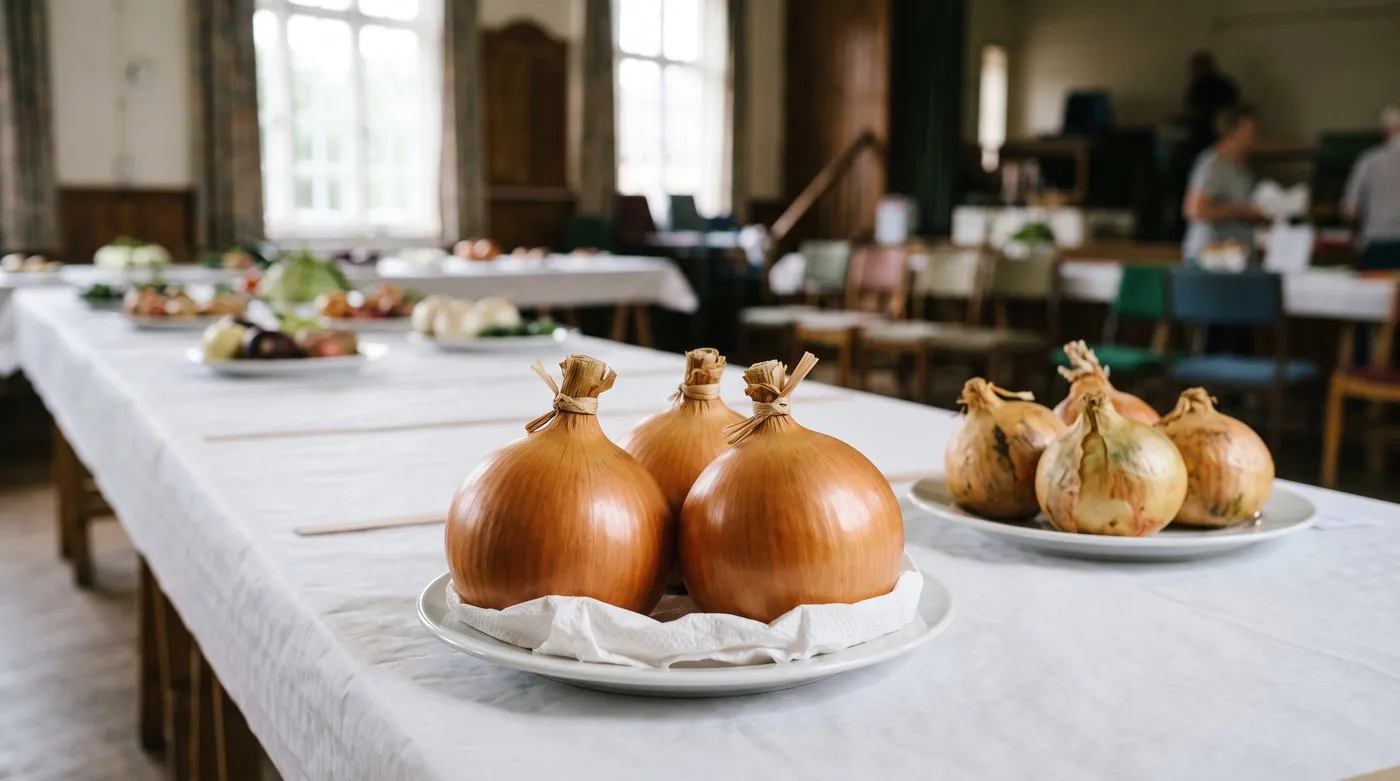
Three onions the same size, shape and colour will beat three odd ones. Grow more than you need so you can pick the best-matched set.
Which are the best vegetables for showing?
Eight crops turn up on most show benches: onions, carrots, potatoes, runner beans, tomatoes, beetroot, parsnips and leeks. Each needs a slightly different approach.
| Crop | What judges like | When to start | Tricky bit |
|---|---|---|---|
| Onions | Round, firm, tight skin | December (seed, under heat) | Long growing season |
| Carrots | Long, straight, no forks | Early spring (in drums) | Stone-free growing mix |
| Potatoes | Matching, clean skin, shallow eyes | March (chit from February) | Scab and skin marks |
| Runner beans | Long, straight, fresh, no string | May | Picking at the right time |
| Tomatoes | Even colour, firm, green calyx | March (seed) | Ripening a set together |
| Beetroot | Matched round roots, smooth skin | April | Getting even sizes |
| Parsnips | Long, straight, smooth | Late winter (in drums) | Canker and forking |
| Leeks | Long white stem, even thickness | Winter (seed) | Even blanching |
Our guide to growing onions covers the basics, but show onions need a longer season and more careful picking than kitchen ones. Show carrots are grown in deep sand drums rather than open ground.
How do I grow exhibition onions?
Sow show onion seed in late December or early January, under heat. A heated propagator is ideal. The long season gives the bulbs time to grow big.
Pick varieties bred for showing, such as Kelsae or Ailsa Craig. Sow one seed per module so the roots aren’t disturbed when you pot on.
Move them into small pots in late winter, then into bigger pots or the ground in May once frosts are over. Feed regularly while they grow. Switch to a high-potash feed, like a tomato feed, once the bulbs start to swell.
Ease off watering towards the end so the skins firm up. Lift them carefully by hand, because a fork mark spoils the whole bulb.
How do I grow long carrots for showing?
Long show carrots grow in deep drums filled with stone-free sandy mix. In open ground, stones and lumps push the root sideways and make it fork.
Make a drum from an old barrel, stacked tyres or a wide pipe. Fill it with sharp sand and sieved compost, with no stones, lumps or fresh manure. Make a deep hole with a crowbar or dibber, fill it with sieved mix, and sow a few seeds on top.
Thin to the strongest seedling. Water evenly, because a dry spell followed by a soaking makes roots split.
On show day, soak the drum the night before so the mix loosens. Ease the carrot out by hand, working down from the top. Never yank it. Wash it straight away with a soft sponge and cold water.
Parsnips work the same way. Our seed sowing calendar helps with timings.
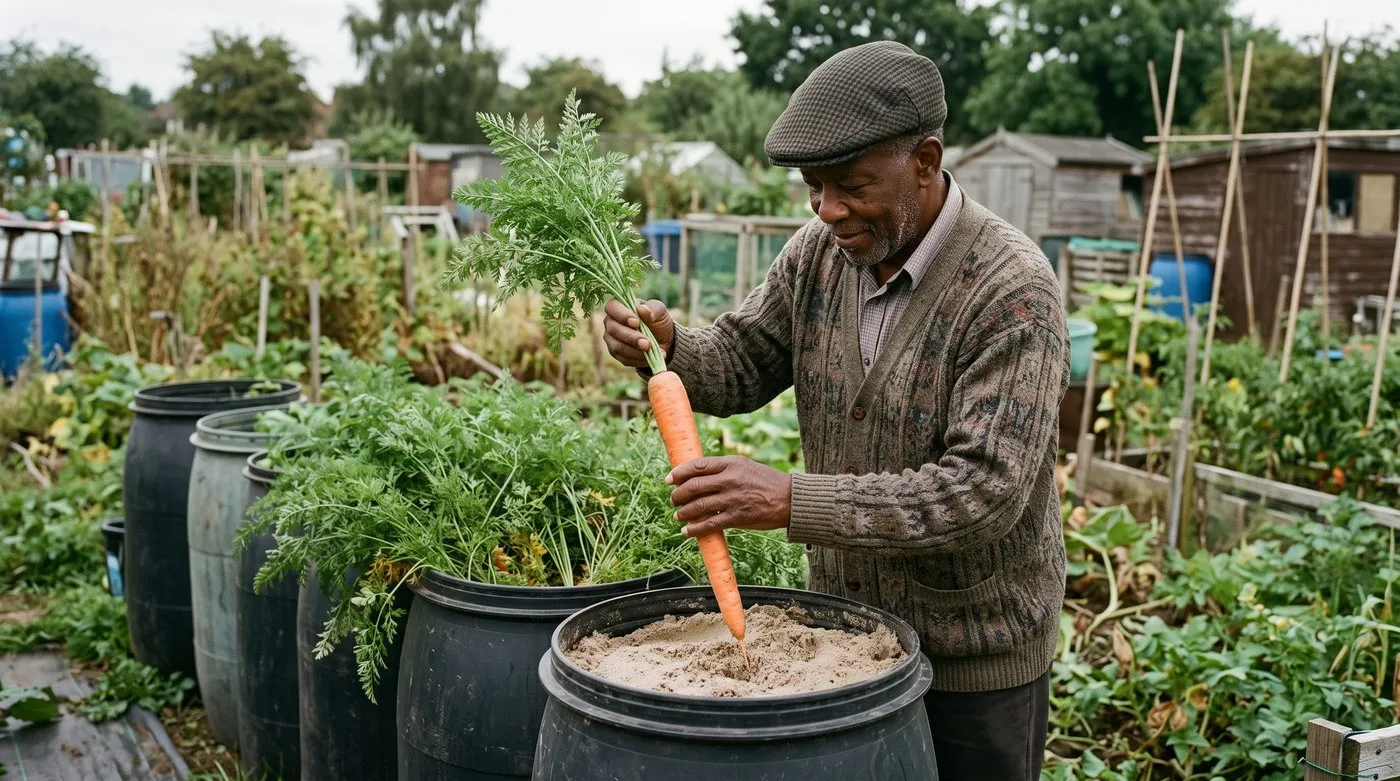
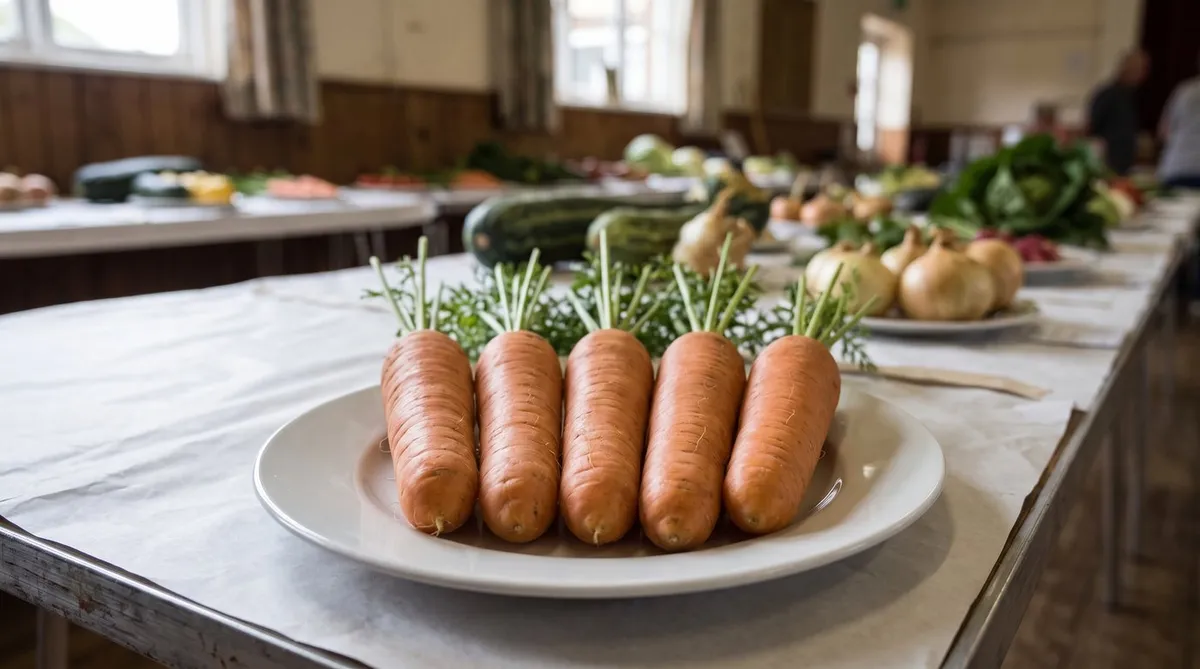
Soak the drum the night before so the mix loosens, then ease the carrot out by hand. Never yank it.
How do I grow runner beans for the show bench?
Show runner beans should be long, straight, fresh and snap cleanly, with no lumpy seeds showing. Picking at the right moment is the whole game.
Give each plant its own tall cane so you can see every pod. Pinch out some side shoots and let fewer pods develop, so the plant puts more into each one.
Water steadily once the flowers appear. Dry spells give pods bumps and kinks. A thick mulch of compost round the base helps keep the soil evenly moist. Our guide to growing runner beans covers the basics.
Pick your show beans as early as possible on the morning of the show. Stand them upright in a jug of cold water. Choose sets that match in length, colour and thickness.
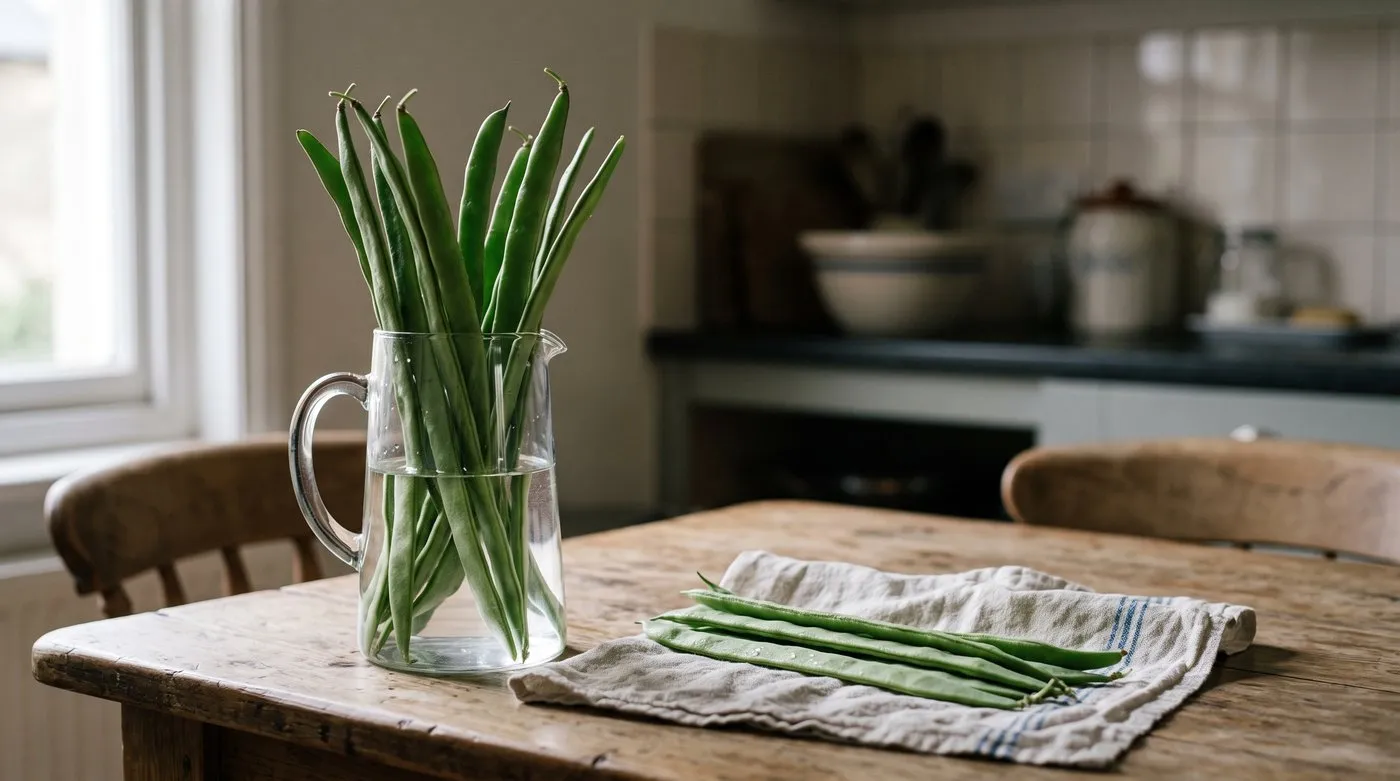
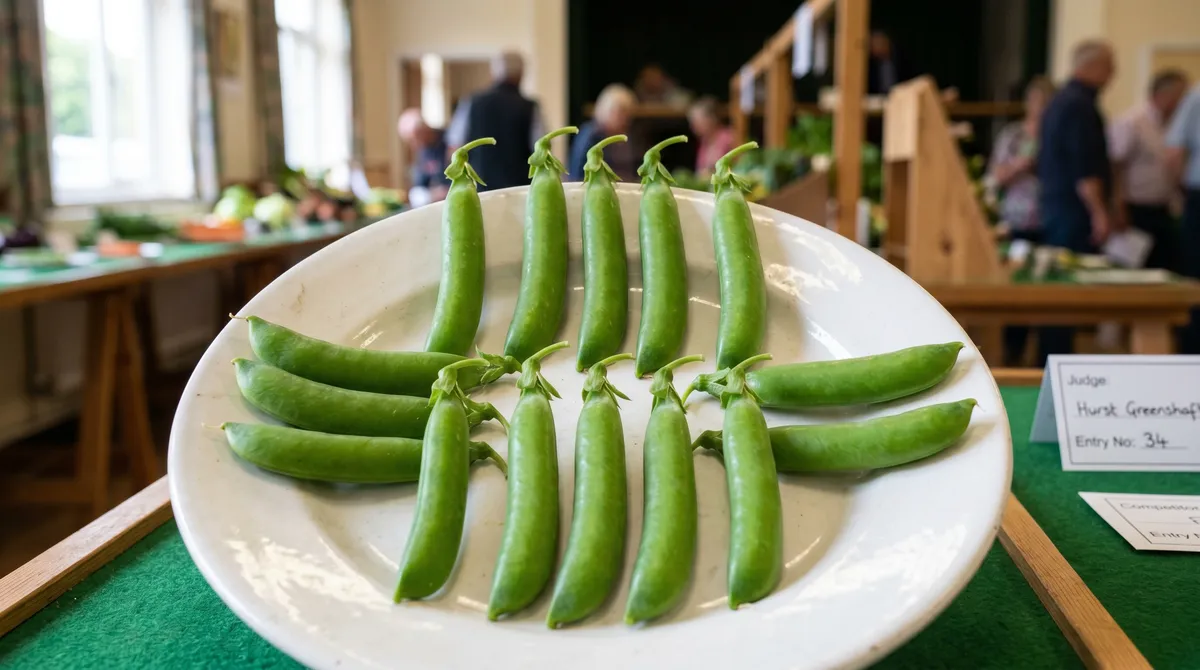
Pick show beans as early as you can on the morning and stand them in cold water. Then choose a set that matches in length, colour and thickness.
How do I grow show potatoes?
Show potatoes need matching tubers with smooth, clean skin and shallow eyes. Grow them in bags or deep containers of sieved compost to keep the skins smooth.
Chit seed potatoes from February in a cool, light room, then plant in March. Popular show varieties include Kestrel, Maris Peer and Cara. Our potato growing guide covers the basics, and our best potato varieties guide helps you choose.
Water evenly and feed every couple of weeks once the plants are growing well. Avoid too much nitrogen. Common scab loves dry, chalky soil, so keep the compost moist.
Lift them the day before or the morning of the show. Wash gently with a soft cloth under running water. Never scrub, because damaged skin darkens before judging. Present them on a white paper napkin on a plate.
How do I set out vegetables on the show bench?
Good staging won’t rescue poor veg, but it shows off good veg at its best. A neat plate tells the judge you know what you’re doing.
A few simple rules work for every crop:
- Clean without damage. Wash roots gently and wipe fruit with a soft cloth. Never scrub or polish.
- Set them out evenly. Space them neatly, with the best face towards the judge.
- Trim tops properly. Twist beetroot tops off rather than cutting. Trim carrot tops neatly. Tie onion necks tidily with raffia. Leave the green calyx on tomatoes.
- Use white plates. Bring your own white napkins for potatoes and onions.
Collection classes ask for several different crops on one board. Each one should be up to single-class standard. Mix the colours so it looks good: red tomatoes by white potatoes, green beans by orange carrots.
Read the show schedule weeks ahead. Some classes want three, some five. Some want tops on, others trimmed. Get the numbers wrong and even perfect veg won’t win.
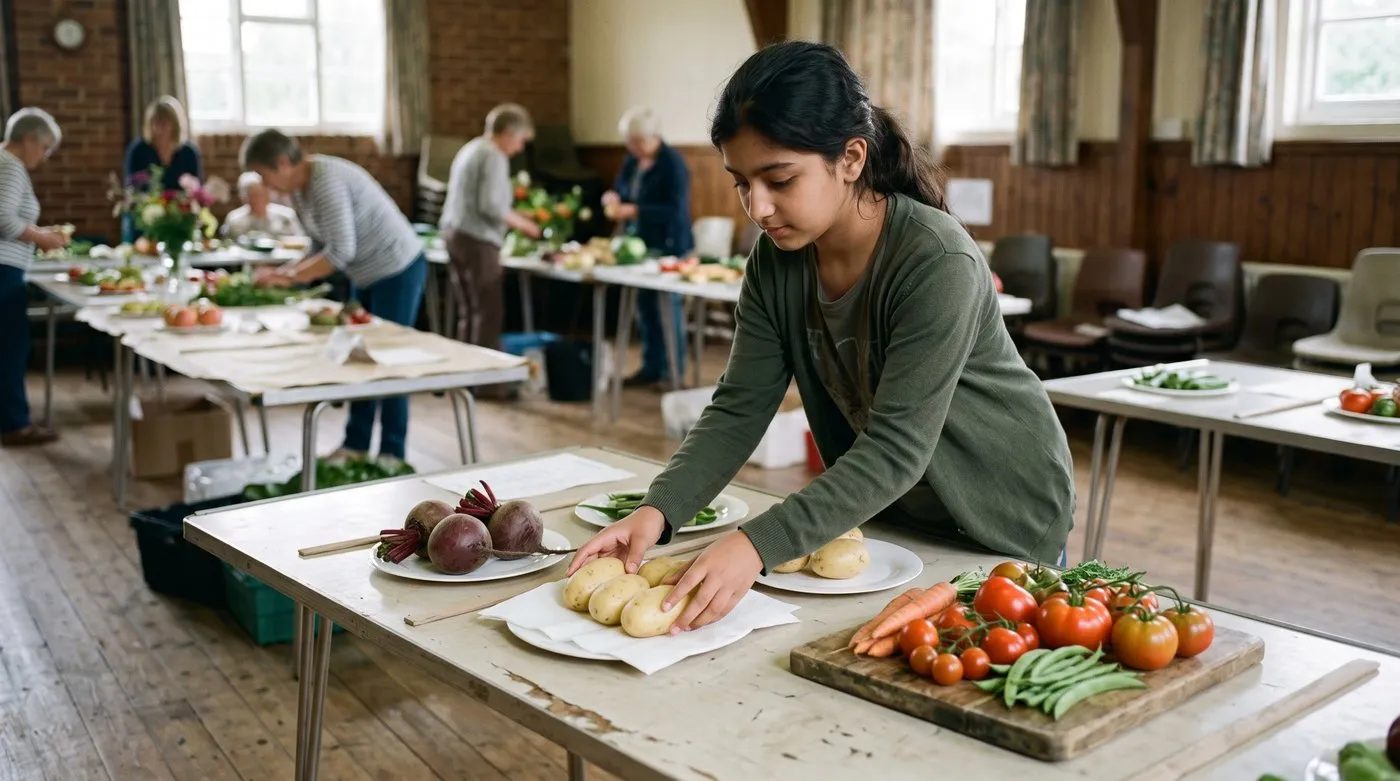
Set each piece out evenly with its best face to the judge. Twist beetroot tops off rather than cutting, and use white napkins for potatoes.
How do I time the harvest for show day?
Most show veg looks its best for only a day or two, so work back from the show date. Timing is what turns good growers into winners.
Runner beans are the trickiest. Too early and they’re short. Too late and the seeds bulge. Check them daily as show week nears, and tie a bit of coloured string by your best pods so you can find them at dawn.
Pick tomatoes a few days early if they aren’t fully ripe. Ripen them in a single layer at room temperature. Keep them out of the fridge, as cold dulls the shine.
Lift onions a few weeks before the show and dry them under cover with plenty of air. Peel off the loose outer skin to show a clean layer. Keep a few spares on the go so you can pick the best set on the morning.
Lift potatoes and beetroot the day before or that morning. Pull carrots and parsnips on show day if you can. The fresher the roots, the better they look.
How do I transport vegetables to a show without damage?
Wrap each one in tissue and lay them in shallow boxes, without stacking. One bruise or scrape can knock you down the placings.
Line seed trays with bubble wrap for tomatoes. Stand runner beans in a tall jug with a little water in the bottom. Wrap onions one by one and nestle them in egg-box style dividers.
Keep the boxes flat in the car boot and take the speed bumps slowly. Arrive in good time before judging. That gives you time to unwrap, check for damage and swap in spares.
Pack a little kit: soft cloth, scissors, white napkins, spare plates, raffia for onions, a water spray for leaves and some paper towels. Kitchen scales help you check your set is well matched.
Frequently asked questions
What are the easiest vegetables to show for beginners?
Potatoes, beetroot and runner beans are the easiest to start with. Potatoes need matching size and clean skin. Beetroot need matched roots with smooth skin. Runner beans need to be long, straight and fresh. All three are forgiving to grow and simple to get ready for the bench.
How many vegetables do I need for a show class?
Usually three or five matching specimens per class. The number changes from show to show and class to class, so read your show schedule carefully. Get the count wrong and the entry can be marked “not as schedule”, however good it looks.
When should I start growing exhibition onions?
Sow them in late December or early January, under heat. A heated propagator gets them going. Pot them on through spring and plant out once the frosts are over in May. The long season gives them time to grow big.
How do I transport vegetables to a show without damage?
Wrap each one in tissue and lay them in shallow boxes. Don’t stack them. Stand runner beans upright in a jug with a little water. Keep everything flat in the car boot, drive gently, and arrive early so you can swap in a spare if anything gets bruised.
What do judges look for in show potatoes?
Matching size, clean smooth skin, shallow eyes and the right shape. Wash them gently with a soft cloth and never scrub. All the tubers in a set should be the same variety and roughly the same size. Present them on a white paper napkin on a plate.
Can I enter a village show if I have never shown before?
Yes, and you’ll be very welcome. Most schedules have a novice class for people who haven’t won a first prize before. Have a chat with the show secretary about staging times and rules. Arrive early on the day and watch how the old hands set out their plates.
Our team produces practical UK gardening guidance from source research, contributor records and established horticultural practice. Editorial standards are overseen by Matt W.