Key takeaways
- Dry soil at the roots is the most common reason runner bean flowers drop without setting
- Hot spells and warm nights can stop pods setting even on well-watered plants
- Misting the flowers doesn't help; water the soil deeply at the base instead
- Torn petals under the frame mean sparrows, while whole fallen flowers mean water stress
- Pick pods at 15-20cm every few days, or the plant slows down and stops flowering
- Halo blight and anthracnose come in on seed, so never save seed from a diseased row
Runner beans that flower and flower but never make pods are frustrating, and the answer is usually in the soil, not the flowers. Dry roots are the most common reason flowers drop. Hot weather and warm nights come next. Birds, blackfly and a few diseases make up the rest.
This guide helps you work out which problem you have and what to do about it. For sowing and growing, see the guide on how to grow runner beans.
Why are my runner bean flowers dropping without making beans?
Some flower drop is normal, as runner beans make more flowers than they can fill. It becomes a problem when the frame is covered in red flowers and bare string.
| What you notice | Likely cause | What to do |
|---|---|---|
| Soil dry a finger’s depth down, flowers fall whole | Dry roots | Water deeply at the base and mulch |
| Soil moist, drop follows a hot or muggy spell | Heat and warm nights | Keep watering and wait for cooler weather |
| Cold, wet, windy weather, few bees about | Poor pollination | Grow bee-friendly flowers nearby |
| Torn, shredded petals under the frame | Sparrows | Net the flowering zone |
The plant decides to drop a flower some days before it falls. So the flowers you see on the ground today usually reflect how dry the soil was last week.
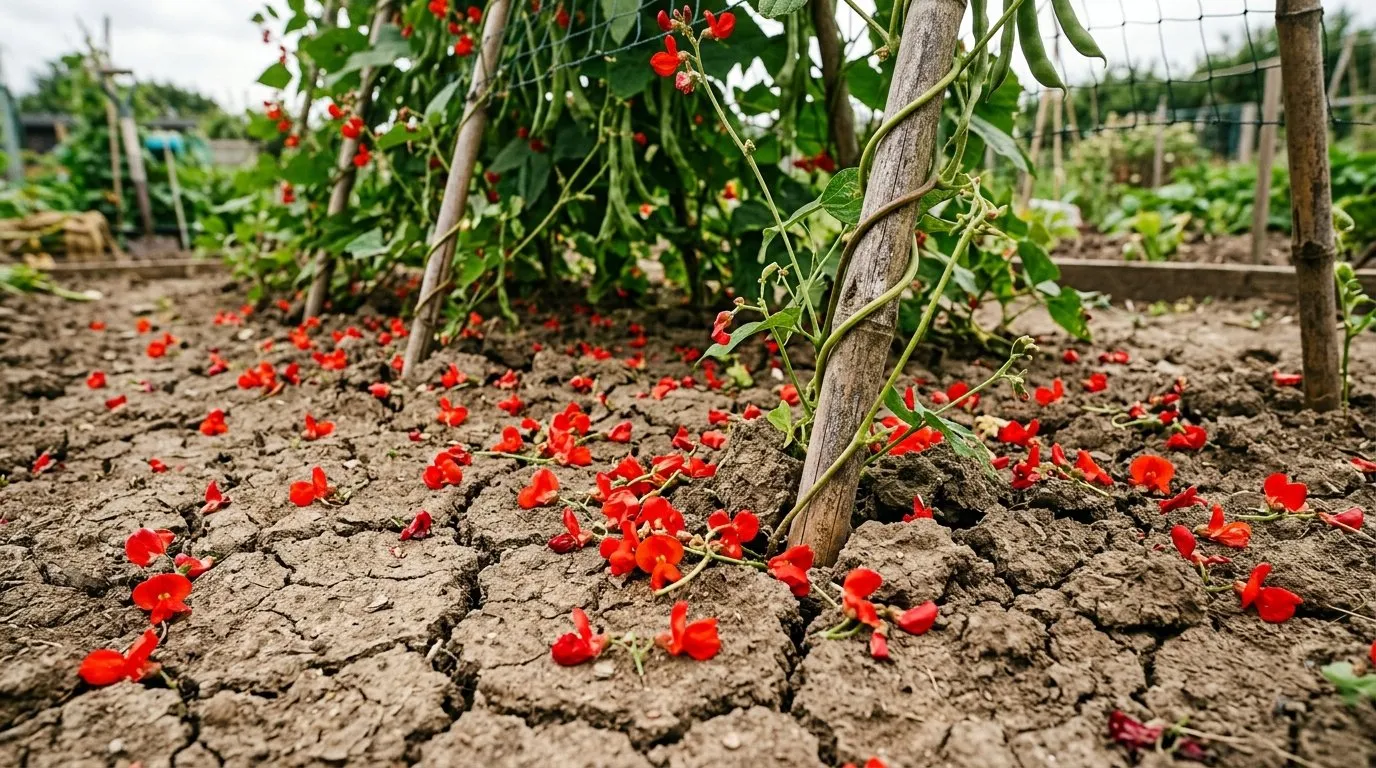
Whole flowers on the ground and cracked soil tell you the plant is short of water. Torn petals would point to birds instead.
Dry soil at the roots
This is the most common cause, and it is easy to miss because the plant doesn’t look thirsty. Runner beans in dry soil stay green and keep flowering. They simply drop the flowers instead of making pods.
Push a finger well into the soil at the base of the canes. If it feels dry, you’ve found the problem, however healthy the leaves look.
- Water at the base, not over the leaves and flowers. A good soak reaches the deeper roots.
- Water two or three times a week in dry weather once flowering starts, and more often in a heatwave.
- Mulch with compost, grass clippings or straw to hold moisture in.
- Prepare the soil well before planting. A trench filled with compost or kitchen peelings over winter helps the soil hold water.
- Use a leaky hose on a timer if you often miss an evening.
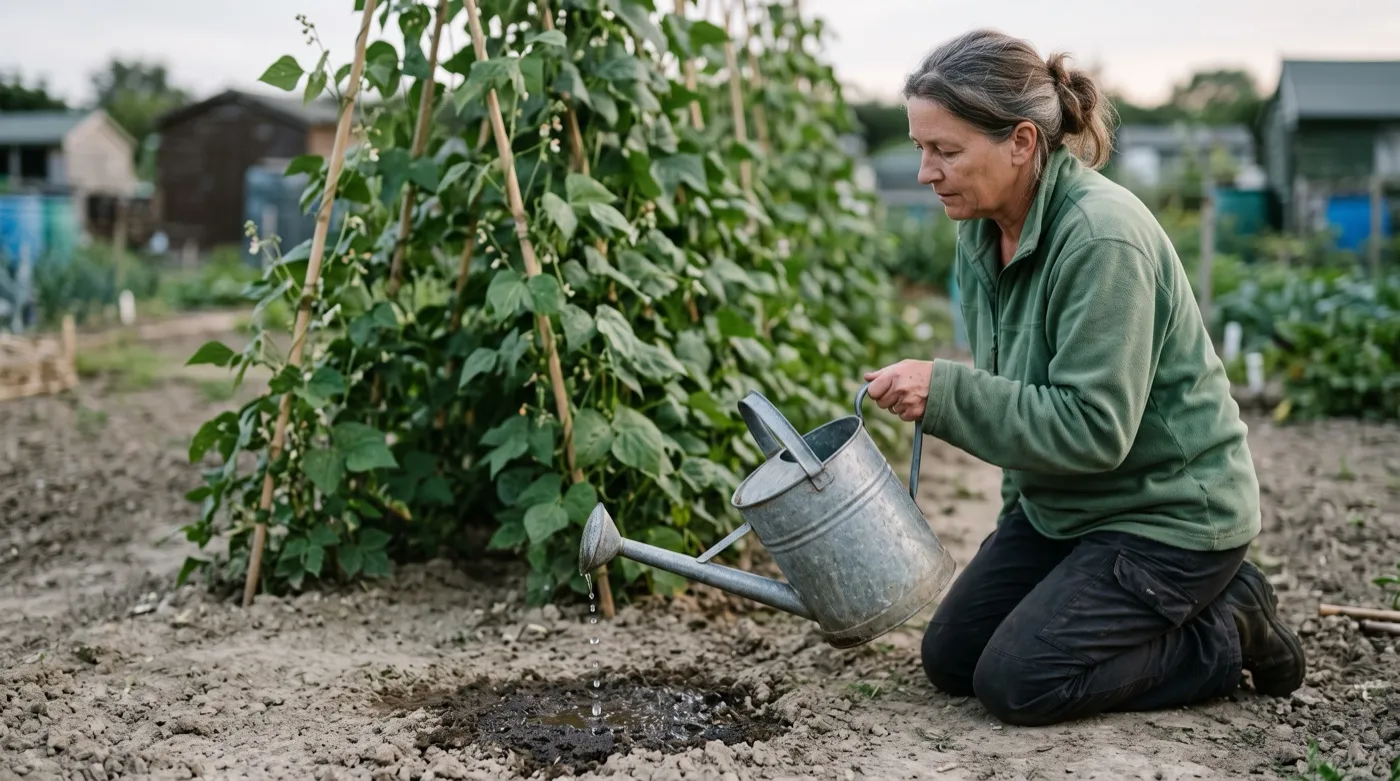
Pour the water at the base so it soaks down to the roots. A sprinkle over the top barely wets the surface.
Hot weather and warm nights
Runner beans come from cool mountain areas and prefer mild days and cool nights. In hot spells, and especially after warm, muggy nights, flowers can fail to set even when the soil is moist.
You can’t change the weather, but you can help:
- Keep watering well, so heat isn’t made worse by dry roots.
- Grow a self-setting variety such as Firestorm, which sets pods more reliably in warm weather. The guide to the best runner bean varieties has more options.
- Don’t pull the plants out in a bad August. They often start setting again when nights cool down in September.
Does misting the flowers help?
Not really. It is a much-repeated tip, but a fine spray on the flowers dries within minutes and never reaches the roots. Put that water into the soil instead. Beans often start setting again when the weather turns cooler, which is probably why misting gets the credit.
Bees, sparrows and flowers that vanish
Poor pollination matters most in cold, wet or windy spells, when bumblebees stay at home. Bumblebees are the main pollinators of runner beans. Plant bee-friendly flowers near the frame, such as sweet peas, borage or calendula. The guide to bee-friendly plants has plenty more.
House sparrows cause a different problem. They tear runner bean flowers apart, often in dry weather, and leave shredded petals under the frame. It looks like heavy flower drop until you look closely.
Whole fallen flowers mean the plant dropped them. Torn petals mean birds. Fine netting over the flowering zone stops sparrows. A few strands of black cotton above the frame also works.
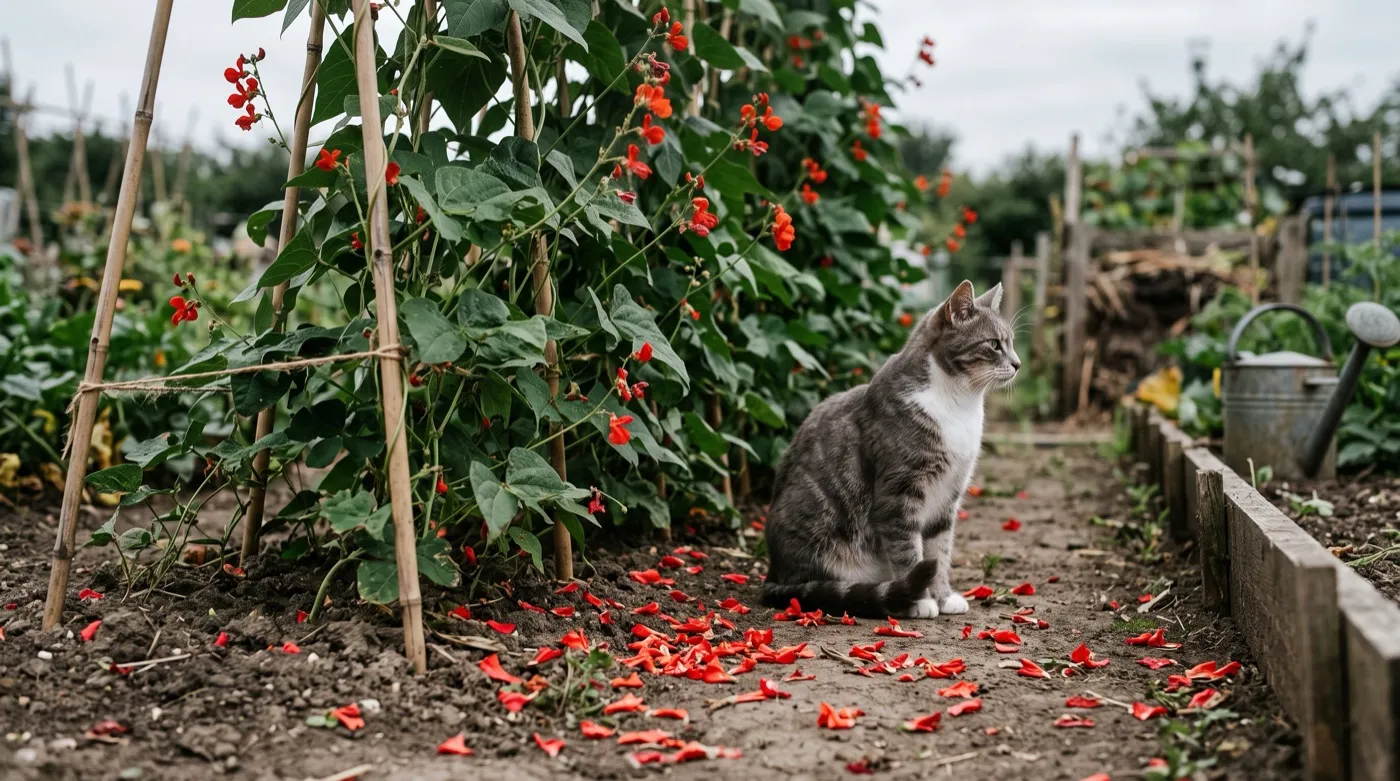
Shredded petals like these are the work of sparrows. Netting does more good than the cat, though she’s keeping watch.
Blackfly on runner bean tips
Blackfly (black bean aphid) is the pest almost every runner bean grower meets. Colonies build up on the soft shoot tips from early summer.
They look worse than they are. Heavy colonies make the tips sticky and twisted, but rarely stop a healthy plant cropping.
- Pinch out infested tips and bin them. You’d pinch out the tops at the top of the frame anyway.
- Knock colonies off with a jet of water. Most won’t climb back.
- Let the predators in. Ladybirds and hoverfly larvae eat huge numbers of aphids. Spraying kills them too.
- If colonies keep coming back, use an approved insecticide labelled for beans, following the label.
The guide to black bean aphid covers where blackfly spend the winter.
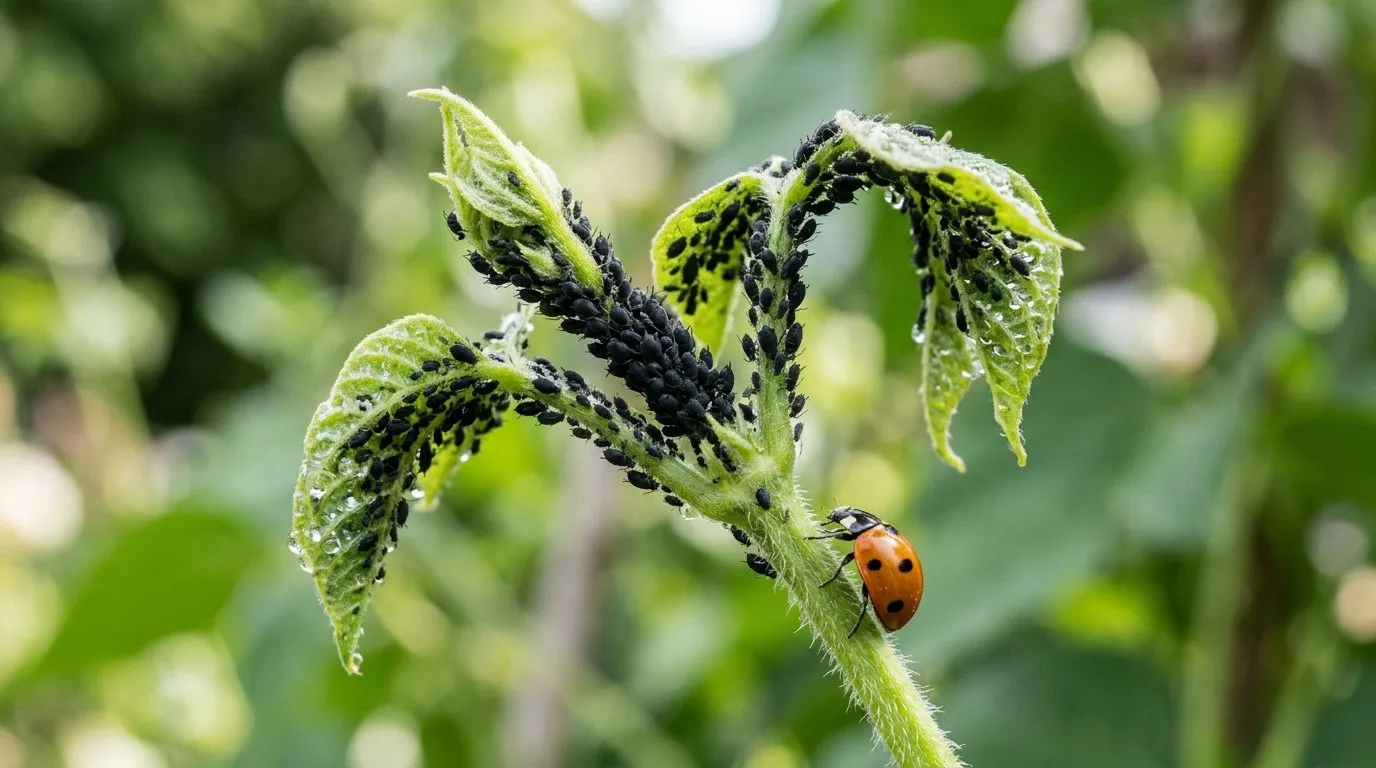
Blackfly crowd onto the soft shoot tips. Pinch the tip out, and let ladybirds like this one mop up the rest.
Red spider mite in hot, dry summers
Red spider mite turns up on outdoor runner beans in hot, dry summers. The first sign is fine pale speckling on the leaves. As numbers grow, the leaves turn bronze and dry, and fine webbing appears between leaves and stems.
On a well-watered row it rarely does much harm. Bad attacks usually mean the plants are dry and stressed. Water well, wet the soil around the plants in hot spells, and the mites often fade. The red spider mite guide covers biological controls, which work best under glass.
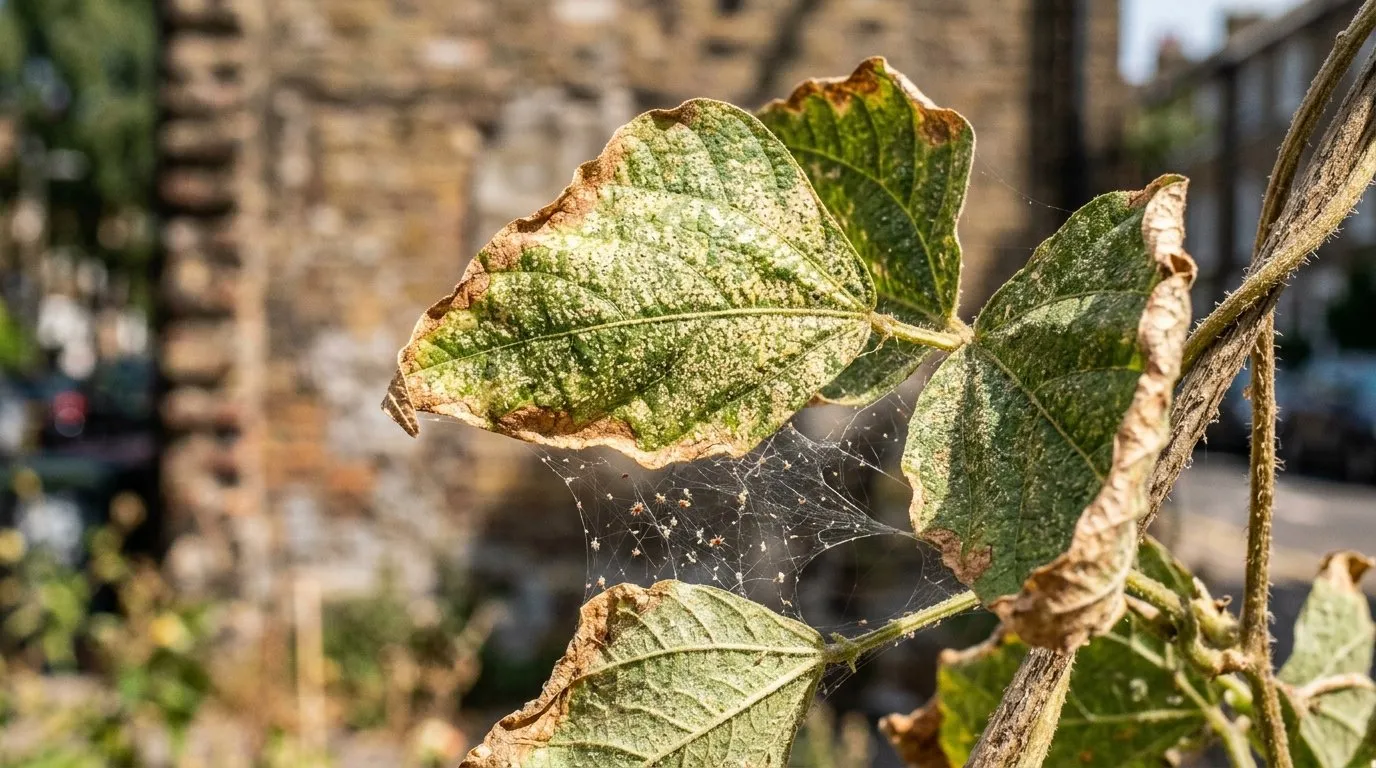
Speckled, bronzing leaves with fine webbing point to red spider mite, usually on dry, stressed plants.
Halo blight, anthracnose and other bean diseases
Two leaf diseases come up most on runner beans, and both arrive on seed.
Halo blight is a bacterial disease. It makes small brown spots, each ringed by a pale yellow-green halo. Bad attacks make the whole plant yellow and stunted. It spreads by rain splash in wet weather.
Anthracnose makes dark, sunken spots with reddish-brown edges on leaves and pods. Dark sunken patches on pods are the giveaway. It is worst in cool, wet summers.
There is no spray for home gardeners for either. Instead:
- Pick off and bin spotted leaves as they appear.
- Water at the base, not over the leaves.
- Space plants so air can move.
- Never save seed from an affected row. Buy fresh seed next year.
- Grow beans in a different spot each year.
The guide to common bean diseases sets these out side by side, with photos.
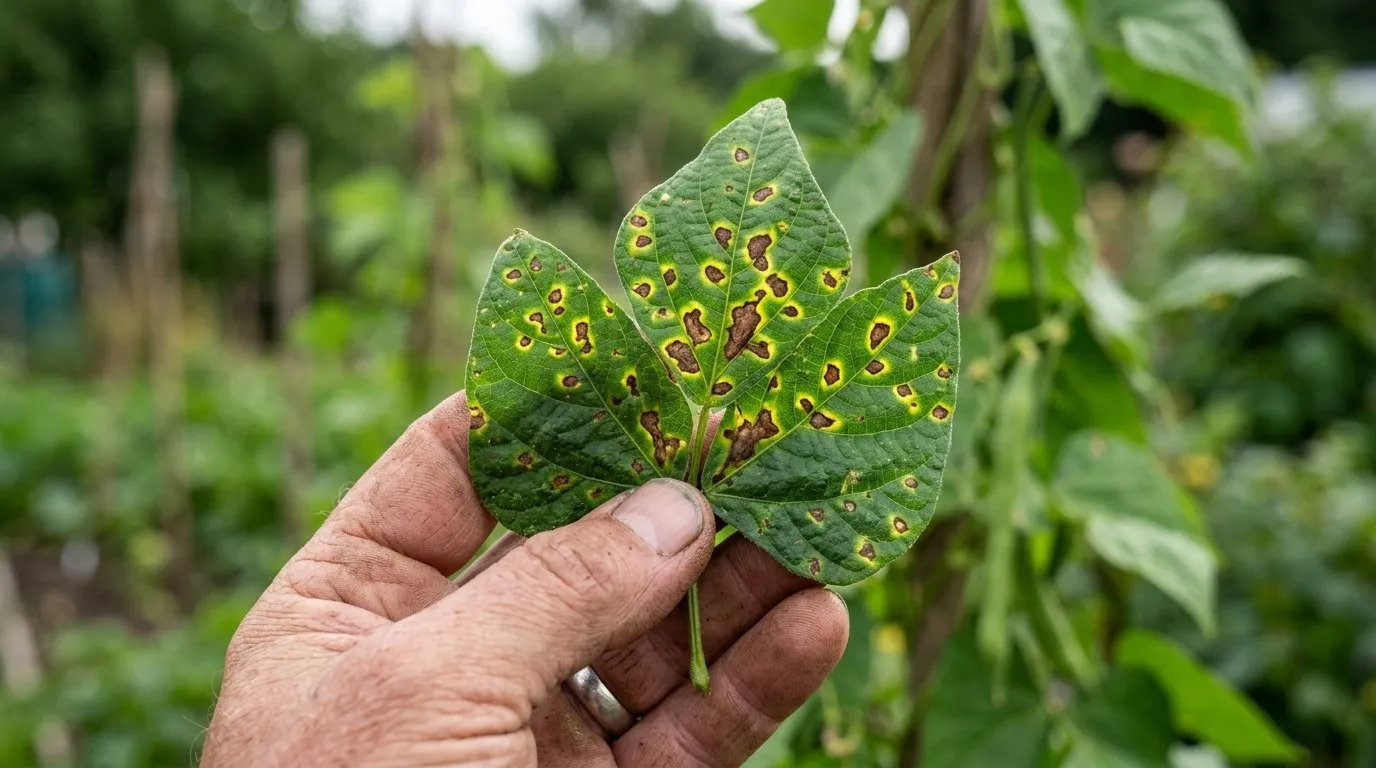
Halo blight makes brown spots with a yellow ring. It comes in on seed, so don’t save beans from a row that shows it.
Seedlings that fail: bean seed fly, root rot and slugs
Bean seed fly maggots eat germinating seeds, so nothing comes up, or shoots appear with their tips chewed off. It is worst in cold, wet soil and freshly dug ground full of rotting material. Sow in pots indoors in late April or May and plant out sturdy young plants after the last frost. Sowing outdoors into warm soil in late May or June also helps.
Root rots make plants start well, then yellow from the bottom and stall. Pull one up and the roots look brown and sparse. They build up where beans grow in the same place each year, so move the bean patch each season and improve drainage.
Slugs can cut through young stems at ground level soon after planting out. Check at dusk for the first couple of weeks, until stems toughen up. The guide to getting rid of slugs has more ideas.
Tough, curly and rusty pods
Tough, stringy pods
These were left on too long. Pick pods at 15-20cm, while they are smooth and before the beans inside bulge. Pick every two or three days in summer. Old pods left on the plant also slow down new flowering, so pick off any you’ve missed even if you won’t eat them.
Warning: Don’t eat mature runner bean seeds raw or undercooked. If you shell out beans from big old pods, boil them hard for at least 10 minutes before eating. A slow cooker alone may not get hot enough. Young pods cooked the normal way are fine.
Curled pods
Uneven watering is the usual cause. A pod that swells, dries out, then swells again grows crooked. Patchy pollination can also leave gaps where no bean formed. Curly pods are fine to eat, and steady watering helps the next ones grow straight.
Rust on older leaves
Bean rust shows as small rusty-orange spots on older leaves, usually late in summer. By then the plant has done most of its cropping, so it does little harm. Clear all the leaves and stems at the end of the season.
Month-by-month runner bean problem calendar
| Month | What to watch for |
|---|---|
| April | Sow in pots indoors rather than into cold, wet soil, to dodge bean seed fly |
| May | Plant out after the last frost. Check for slugs at dusk |
| June | Blackfly on the shoot tips. Pinch out tips at the top of the frame |
| July | Flowering starts. Water deeply at the base and mulch |
| August | Watch for flower drop, sparrows and red spider mite in dry spells. Pick pods often |
| September | Halo blight and anthracnose after wet weather. Pods often set again as nights cool |
| October | Final pick before the first frost. Clear all plant debris |
| November | Dig a bean trench for next year and start filling it with compost and peelings |
| December to March | Plan a new spot for next year’s beans |
Common mistakes with runner beans
- Treating the flowers, not the roots. Misting flowers doesn’t help. Water the soil.
- Watering little and often. A quick sprinkle only wets the surface. Give a deep soak at the base.
- Judging water by the leaves. Thirsty runner beans can look green and healthy while dropping every flower.
- Pulling plants out in a hot August. Pods often set again once the nights cool.
- Saving seed from a diseased row. Halo blight and anthracnose travel in the seed.
Frequently asked questions
Why are my runner beans flowering but not setting beans?
Usually dry soil at the roots, or a spell of hot weather and warm nights. Push a finger well into the soil by the canes. If it is dry, water deeply at the base and mulch. If the soil is moist, wait for cooler weather, as pods often set again.
Does spraying runner bean flowers with water help them set?
No, misting the flowers makes little difference. The water dries in minutes and never reaches the roots, where the plant decides whether to keep its flowers. Put the water into the soil at the base instead.
How much water do runner beans need when flowering?
Plenty: give them a thorough soak at the base, not a sprinkle. In dry weather that means a full watering can for every couple of plants, two or three times a week, and more in a heatwave. A thick mulch keeps the soil moist for longer.
Why are birds eating my runner bean flowers?
House sparrows often tear runner bean flowers apart, especially in dry spells. They leave shredded petals scattered under the frame. Fine netting or a few strands of black cotton over the flowering part of the frame stops them.
What is the black stuff on my runner bean growing tips?
It is almost always blackfly, a type of aphid. Colonies build up on the soft shoot tips from early summer. Pinch out the infested tips, knock colonies off with a jet of water, and let ladybirds and hoverfly larvae do the rest.
Why are my runner bean pods tough and stringy?
They were left on the plant too long. Pick pods when they are 15-20cm long and still smooth, before the beans inside bulge. Picking every two or three days also keeps the plant flowering.
Why are my runner bean pods curled and misshapen?
Usually uneven watering or patchy pollination. A pod that swells, dries out and swells again grows unevenly and curls. Curly pods are perfectly fine to eat, and steady watering helps the next ones grow straight.
Now you can fix your runner bean problems, read the guide to bean rust if orange spots appear, or browse more fixes in the garden problems section.
Our team produces practical UK gardening guidance from source research, contributor records and established horticultural practice. Editorial standards are overseen by Matt W.


