Key takeaways
- Chocolate spot is the usual cause of brown spots on broad beans, especially autumn-sown ones in a wet spring
- Halo blight comes in on seed, so buy fresh seed and never save it from sick plants
- Bean rust shows as orange spots under leaves from July, and plants usually keep cropping
- White mould lingers in soil for years, so move beans to a new bed each year
- Aphids spread mosaic virus, so pinch out broad bean tips and keep aphids down
- Wait for warmer soil before sowing to avoid foot rot
Beans are easy to grow, but a few diseases can spoil the fun. Chocolate spot loves autumn-sown broad beans in a wet spring, and halo blight can wipe out a row of runner beans. The good news is that a few simple habits keep most of them at bay.
Below are nine diseases you might meet on broad beans, runner beans and French beans, with what to look for and what to do. New to beans? Start with our guides to broad beans, runner beans and French beans. Choosing seed? Have a look at the best runner bean varieties for UK gardens, including some with good disease resistance.
Bean disease identification at a glance
Use this table to narrow down what’s wrong from what you can see. Check leaves, stems and pods, as some diseases start off looking alike.
| Disease | What you’ll see | Beans affected | When | How bad |
|---|---|---|---|---|
| Chocolate spot | Brown round spots on leaves | Broad beans | March-June | Mild to bad |
| Halo blight | Wet-looking spots with a yellow ring | Runner, French | June-August | Bad, no cure |
| Bean rust | Orange spots under leaves | Runner, French | July-September | Mild |
| White mould | White fluffy growth on stems | All beans | July-September | Bad |
| Anthracnose | Dark sunken patches on pods | Runner, French, broad | June-September | Mild to bad |
| Mosaic virus | Mottled yellow-green leaves | All beans | May-August | Bad, no cure |
| Foot rot | Dark stem base, plant flops | All beans | April-June | Bad in cold soil |
| Downy mildew | Grey-purple fuzz under leaves | Broad beans | April-June | Mild |
| Bacterial brown spot | Brown, angular leaf spots | Runner, French | June-August | Mild |
Chocolate spot on broad beans
Chocolate spot is the most common broad bean disease in the UK, especially on autumn-sown plants after a wet spring. Mild attacks just give small brown spots and don’t affect the crop much. Bad attacks cause big black patches that can kill plants.
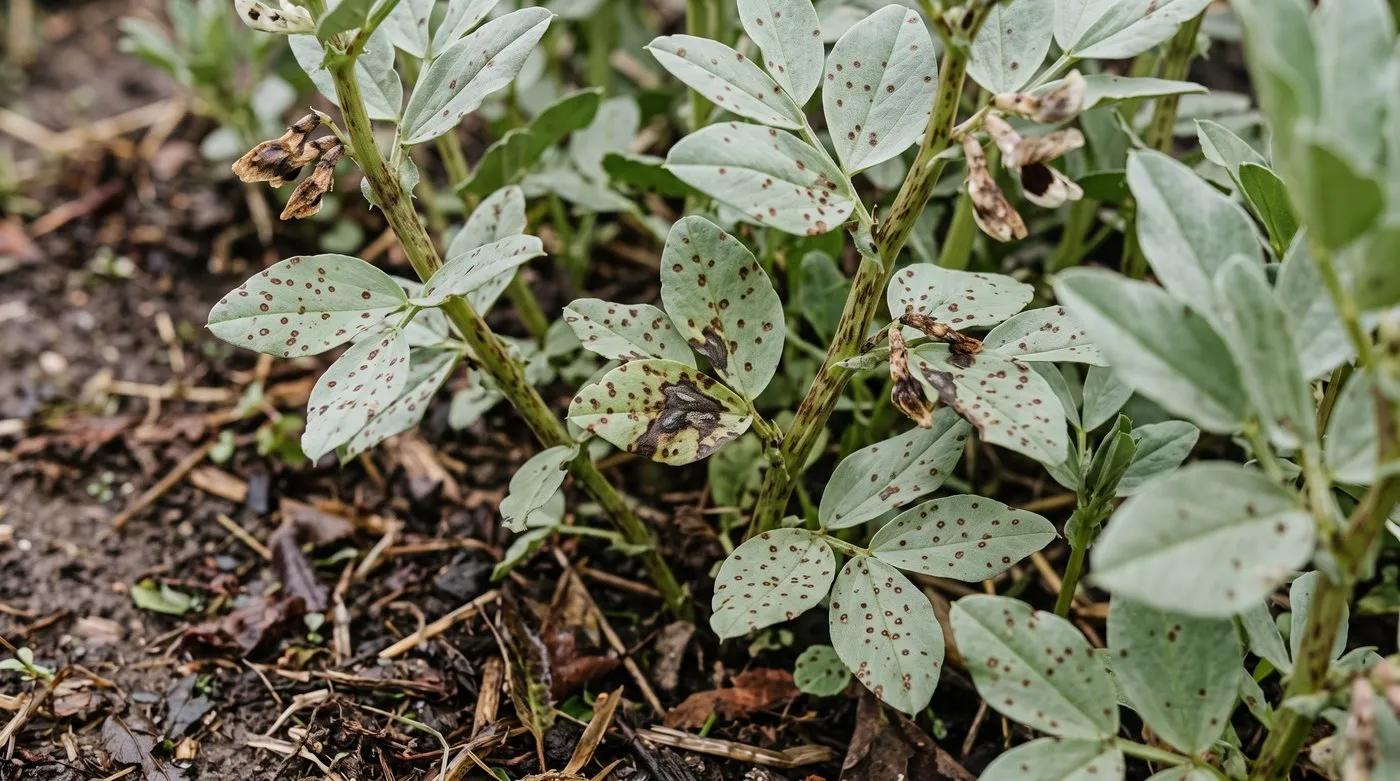
Small round brown spots on broad bean leaves after a wet spring are chocolate spot. Good spacing and picking off spotty lower leaves help.
Identification
- Small round brown spots on leaves and stems
- Spots join up into large dark patches across whole leaves
- Brown streaks on stems
- Flowers and tiny pods go brown and drop
Causes and timing
The fungus spreads on the air in cool, damp weather and lives on old plant bits. Autumn-sown beans catch it more because they sit through months of wet weather. It peaks from March to May. Spring-sown beans usually get it less.
Prevention
- Space plants 20-23cm apart so air can move between them.
- Skip autumn sowing in wet, sheltered gardens. Sow in February under cloches or in March outside instead.
- Pick off lower leaves that touch the soil or show spots.
Halo blight on runner and French beans
Halo blight is the most serious bacterial disease of beans in the UK. It comes in on infected seed, and there’s no cure once plants have it. Clean seed is everything.
Identification
- Small, wet-looking spots on leaves with a bright yellow ring round them (the giveaway)
- Spots spread and join up in wet weather, leaving large brown dead patches
- Greasy-looking streaks on stems and pods
- Stunted plants and a poor crop
Causes and timing
The bacteria live inside infected seed. Rain splash then spreads them from leaf to leaf. Warm, wet weather from June to August speeds things up, and one sick plant can soon infect the row.
Prevention
- Buy fresh, disease-free seed. This matters most. Never save seed from plants that showed signs.
- Keep away from wet plants. You can carry the bacteria on clothes and tools.
- Pull up sick plants straight away. Bag them for the bin rather than composting.
- Move beans to a new bed each year.
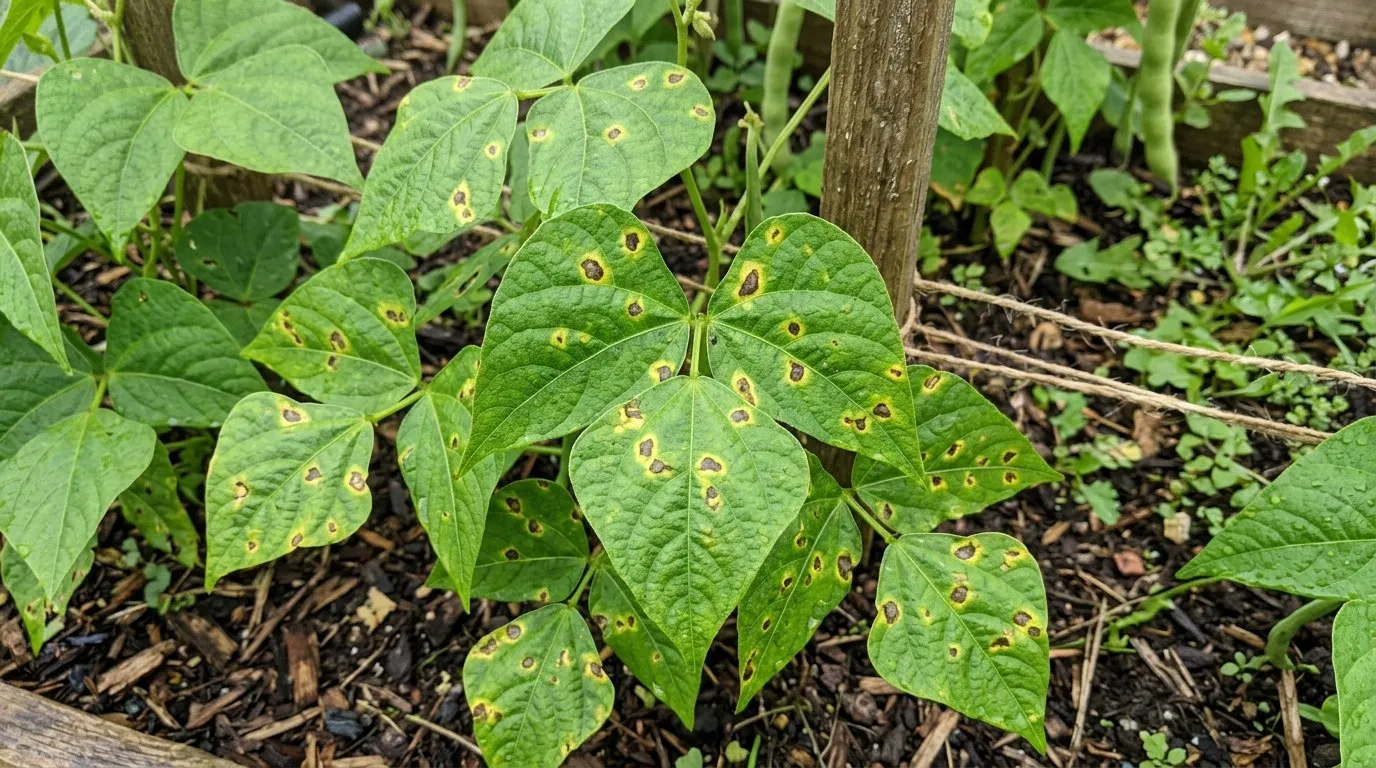
Halo blight on bean leaves. Look for small dark spots, each with a pale yellow ring around it.
Bean rust
Bean rust gives orange-brown spots on the underside of runner and French bean leaves from July. Broad beans get their own kind of rust, but it’s less common in gardens.
Identification
- Small, raised orange-brown spots under the leaves
- Yellow spots on the top of the leaf above them
- Badly hit leaves go yellow, dry up and drop
- Late in the season the spots turn dark brown or black
Causes and timing
Rust loves warm, humid weather and rarely shows up before July. It spreads on the air and in water splash, and often gets worse in August and September, just as beans are cropping well. Watering over the leaves and crowded plants make it worse. Our guide to bean rust has more detail.
Prevention and treatment
- Pick off the worst lower leaves. Don’t compost them.
- Water at the base, never over the leaves. A soaker hose is ideal.
- Give plants room. For a double row of runner beans, aim for 30cm between plants and 60cm between rows.
- Clear all old bean plants in autumn, as rust spores sit on them over winter.
- Plants usually keep cropping with a bit of rust. It rarely wipes out a crop on its own.
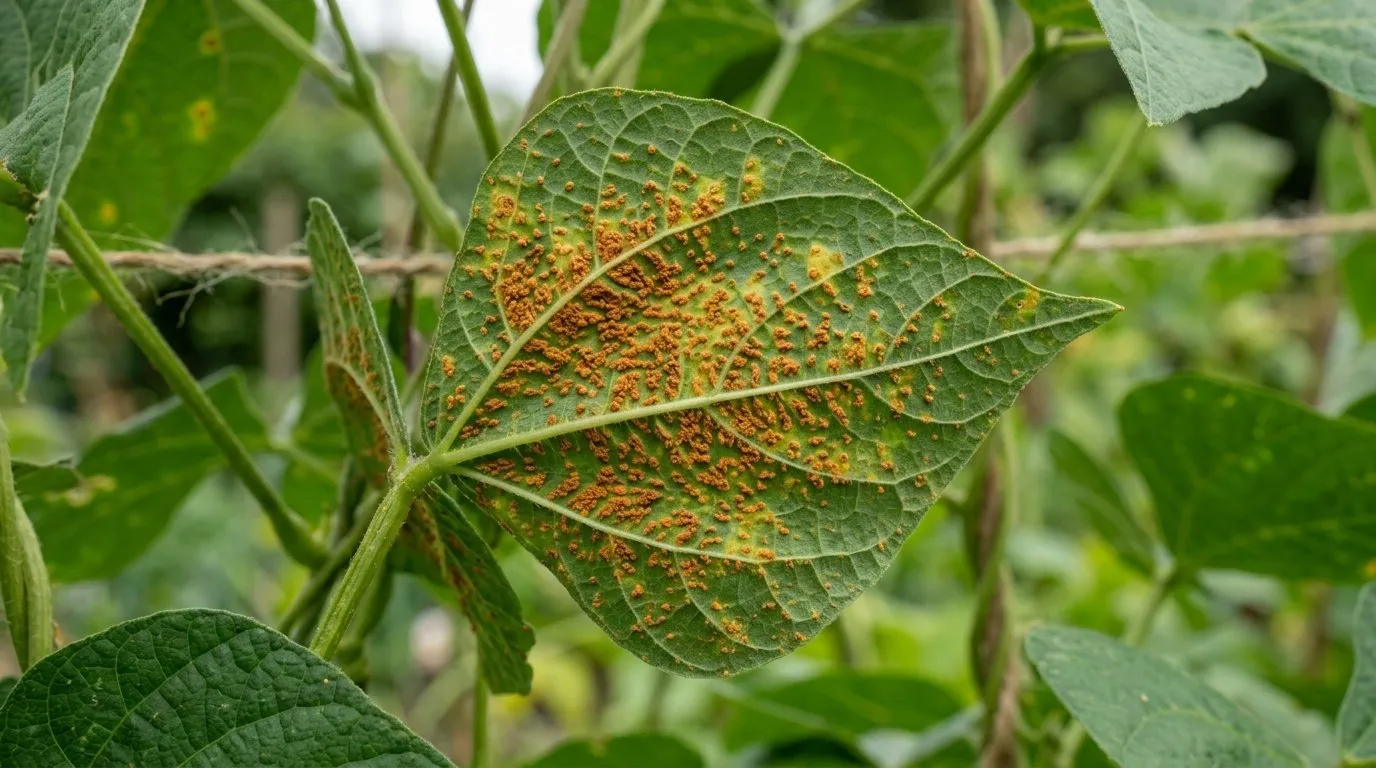
Rust spots on a bean leaf. Each one releases spores that blow and splash onto other plants.
White mould (sclerotinia)
White mould covers bean stems in white fluff, then the plant collapses. It can hit any bean but does most damage to runner and French beans. It leaves hard black lumps behind that can stay in the soil for many years.
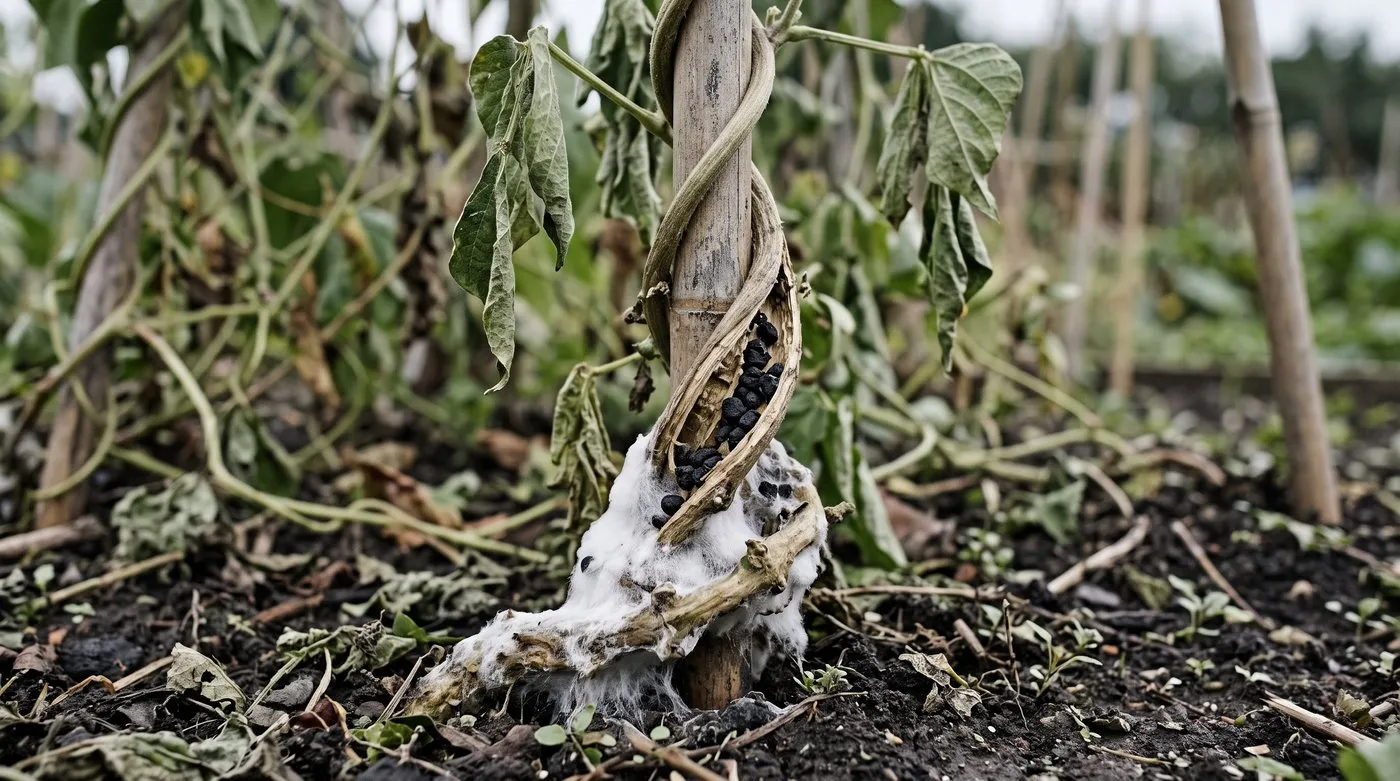
The black lumps left behind can survive in soil for years. Pull and bin affected plants and grow beans elsewhere next year.
Identification
- White, cotton-wool growth on stems, often at the base or where a leaf joins
- Stems go soft and soggy under the fluff
- Hard black lumps form inside the stems
- Stems snap easily and plants wilt and flop
- Pods touching the stems get the same mould
Causes and timing
The black lumps sprout in warm, damp soil and release spores that land on stems and flowers. It’s worst in warm, humid weather from July to September. Crowded plants, still air and mulch piled against stems all raise the risk.
Prevention
- Move beans to a new bed each year, and leave several years before they go back.
- Pull up and bin sick plants straight away. Don’t compost them.
- Don’t follow other crops that get it, such as lettuce, carrots, potatoes and sunflowers.
- Space plants well and keep mulch away from stems.
- Plan a simple crop rotation for the whole plot.
Anthracnose
Anthracnose gives dark, sunken patches on bean pods, stems and leaves. It comes in on seed and spreads with rain splash. Cool, wet summers suit it.
Identification
- Dark, sunken round patches on pods, sometimes with a pinkish centre
- Dark streaks along the veins under the leaves
- Long dark marks on stems
- Stained seeds inside affected pods
Causes and timing
It lives on infected seed and old plants. Rain splash carries it from plant to plant. It shows up from June and gets worse through a wet season.
Prevention
- Buy clean seed and don’t save seed from sick plants.
- Keep away from wet plants, as hands and tools spread it.
- Remove affected plants at the first sign.
- Move beans to a new bed each year.
Bean mosaic virus
Mosaic virus makes leaves mottled and twisted and cuts the crop, and there’s no treatment. Aphids spread it, and it can come in on seed too.
Identification
- Patchy yellow-green mottling on leaves
- Leaf edges curl downwards
- Stunted, bunched-up plants
- Bumpy, bent or discoloured pods
- Flowers that drop or make odd-shaped pods
Causes and timing
Aphids, especially blackfly, pick up the virus from one plant and pass it to the next as they feed. Symptoms show from May onwards, a couple of weeks after infection.
Prevention
- Keep aphids down early. Pinch out broad bean tips once the first pods set, as blackfly love the soft tips. Our organic pest control guide has more ideas.
- Buy virus-tested seed if you can.
- Pull up sick plants straight away so aphids don’t spread it.
- Don’t save seed from plants that showed signs.
- Try resistant varieties. Some modern French beans have resistance.
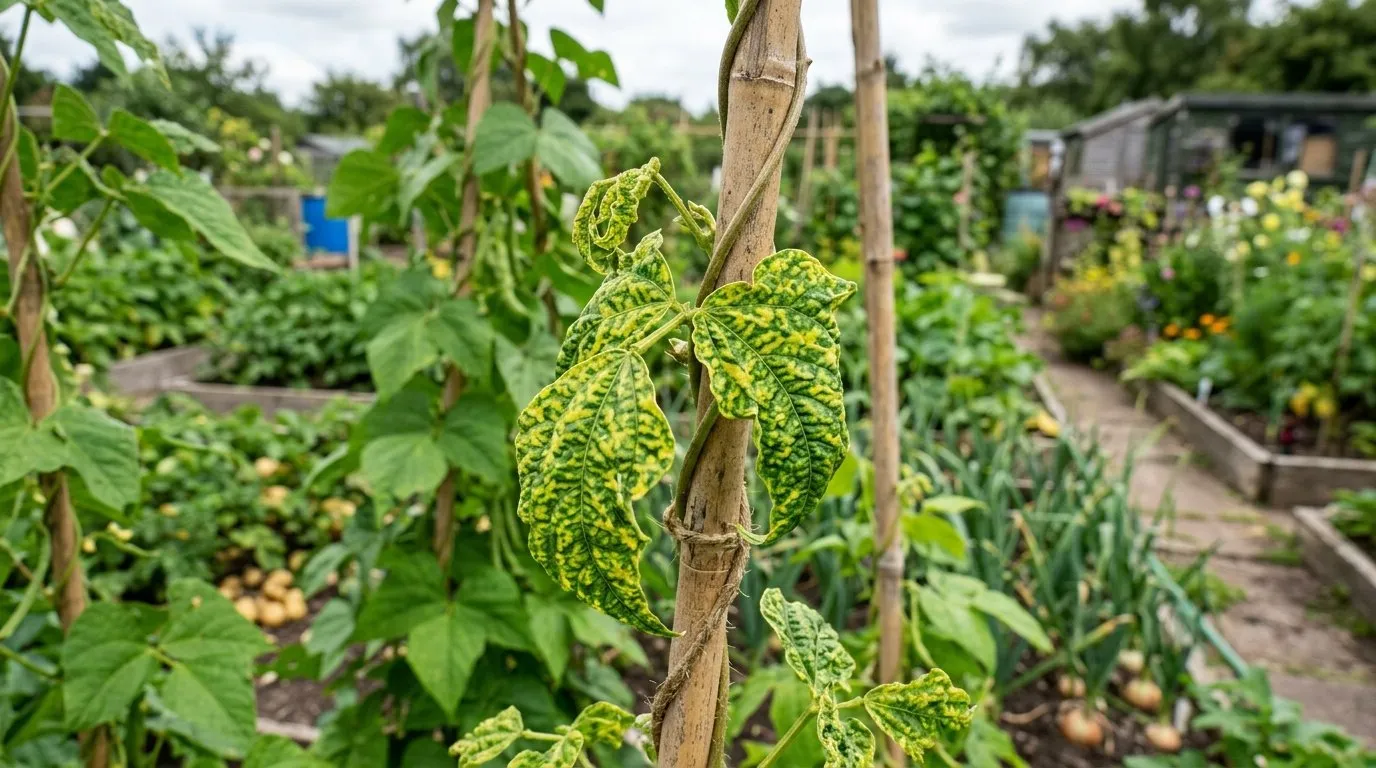
Bean mosaic virus makes leaves mottled and puckered. Pull out affected plants.
Foot rot and root rot
Foot rot rots bean seedlings right at soil level. It’s worst when beans go into cold, wet soil too early. All beans can get it.
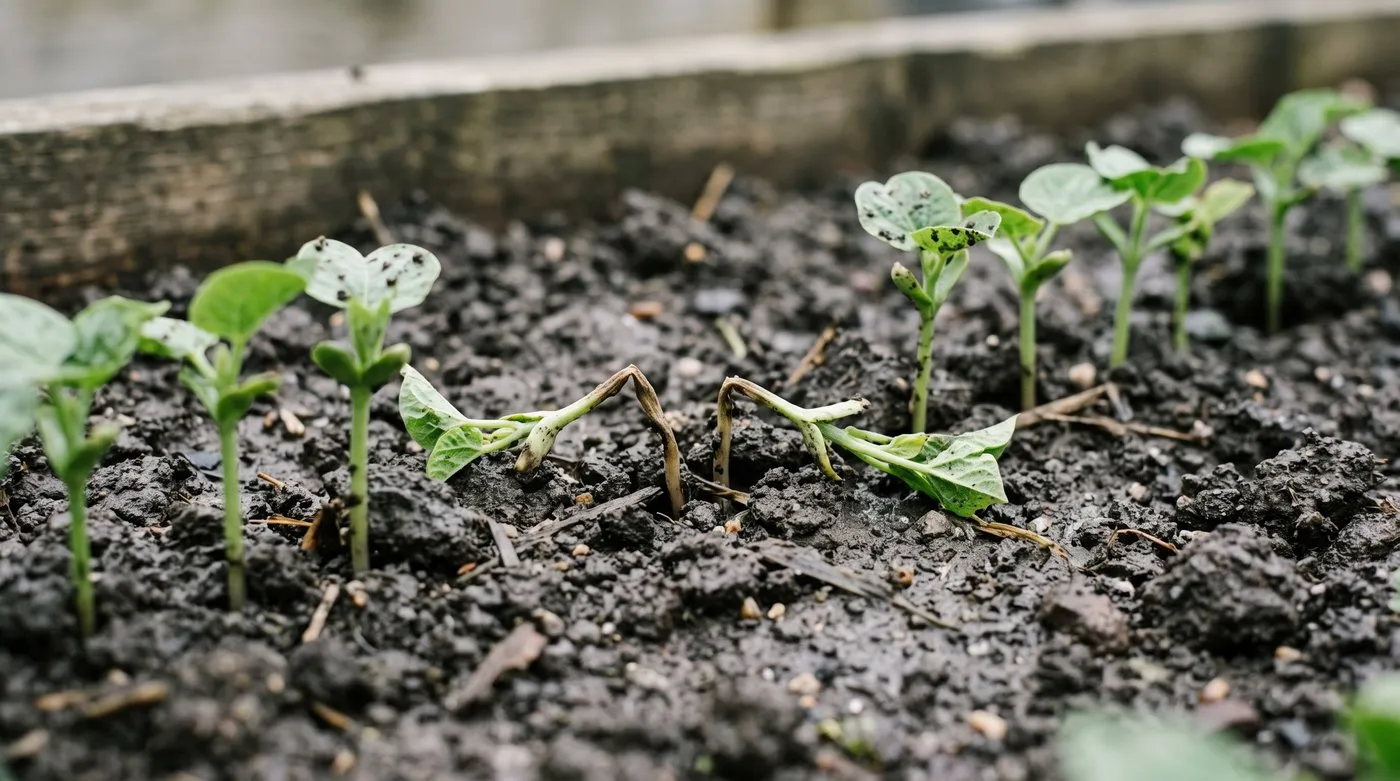
Foot rot strikes when beans go into cold, wet soil too early. Wait for warmer soil, or raise sturdy plants in pots first.
Identification
- Dark brown or black at the base of the stem, right at soil level
- The stem goes soft and pinched there
- Seedlings topple over and die
- Older plants wilt suddenly even though the soil is damp
- Roots look brown and rotten when pulled up
Causes and timing
Several soil fungi cause it, and they love cold, soggy ground. Sowing into cold, heavy clay is asking for trouble. It’s most common from April to June.
Prevention
- Wait for the soil to warm up. Aim for about 8C for broad beans and 12C for runner and French beans.
- Sow in pots or modules under cover and plant out sturdy young plants.
- Help heavy clay drain with grit and compost, or grow in raised beds.
- Move beans to a new bed each year.
- Don’t overwater seedlings. Keep the compost moist, not soggy.
Downy mildew on broad beans
Downy mildew gives grey-purple fuzz under broad bean leaves. It’s most common on early broad beans in cool, wet weather from April to June. Runner and French beans rarely get it.
Identification
- Pale yellow patches on the top of leaves
- Grey-purple fuzz on the underside below them
- Leaves brown and die from the edges in
- Growing tips can twist and stall
Causes and timing
It spreads on the wind in cool, damp weather. Morning dew and fog give it the wet leaves it needs. It usually fades once the weather warms up in late May or June.
Prevention
- Space plants widely for good airflow.
- Water at the base in the morning so leaves dry quickly.
- Remove affected leaves as soon as you see them.
- Sow in spring so plants grow quickly through the risky stage.
Bacterial brown spot
Bacterial brown spot gives angular brown spots on runner and French bean leaves. It’s milder than halo blight and is often mistaken for it.
Identification
- Angular brown spots, boxed in by the leaf veins
- No bright yellow ring, which is how you tell it from halo blight
- Wet-looking in damp weather, papery in dry weather
- Mild attacks are just cosmetic
Causes and timing
It lives on old plant bits and spreads with rain splash. Warm, wet weather from June to August suits it, and crowded plants make it worse.
Prevention
- Clear away old bean plants at the end of the season.
- Water at the base, not over the leaves.
- Space plants well and keep out from among them when they’re wet.
- Move beans to a new bed each year.
- Mild attacks don’t need anything. Plants usually grow out of it.
A seasonal disease calendar for UK bean growers
Getting your broad bean sowing timing right, and keeping an eye out at the right moments, saves a lot of trouble.
| Month | Watch for | What to do |
|---|---|---|
| November-February | Chocolate spot on autumn-sown beans | Check broad beans monthly. Remove spotty leaves |
| March | Chocolate spot at its worst. Foot rot on early sowings | Space spring sowings well. Only sow into warm, well-drained soil |
| April-May | Downy mildew on broad beans. Foot rot | Remove lower leaves. Pinch out tips when the first pods set |
| June | Halo blight and anthracnose on runner and French beans | Look for wet-looking leaf spots. Keep away from wet plants |
| July | Rust, white mould and mosaic virus | Remove lower leaves. Keep aphids down. Water at the base |
| August-September | Most diseases at their peak | Pick beans often. Remove sick plants. Clear up after harvest |
| October | End of the season | Clear away all old bean plants. Don’t compost sick ones |
Frequently asked questions
What are the brown spots on my broad bean leaves?
It’s almost always chocolate spot. Look for small round brown spots on leaves and stems. In mild cases plants shrug it off and crop normally. A bad attack makes the spots join up and kill leaves. Pick off the worst leaves and thin plants to let air through.
Can I eat beans from a diseased plant?
Yes, in most cases they’re fine to eat. Throw away any pods that look damaged. Beans from plants with chocolate spot, rust or downy mildew are fine inside clean pods. Mosaic virus can make seeds look odd but they’re still edible. Never save seed from a sick plant.
How do I prevent halo blight on beans?
Buy fresh seed from a good supplier. Halo blight comes in on infected seed, and there’s no cure once plants have it. Never save seed from plants that showed signs of it. Stay away from wet bean plants, as you can carry it from plant to plant on hands and clothes.
Does crop rotation prevent bean diseases?
It helps with diseases that live in the soil. Moving beans to a new bed each year cuts down foot rot, white mould and anthracnose. It won’t stop chocolate spot, halo blight or mosaic virus, which arrive on the wind, on seed or via aphids. Combine rotation with good spacing and tidying up.
What causes white fluffy mould on my beans?
That’s white mould, also called sclerotinia. It looks like cotton wool on the stems, with hard black lumps inside. It hits runner and French beans most, in warm, damp weather from July to September. Pull up and bin affected plants straight away. Don’t compost them, as the black lumps survive for years.
Should I spray my beans for disease?
No, there aren’t any fungicides for home gardeners to use on beans. Prevention is the way to go. Buy clean seed, rotate crops, space plants well, water at the base and remove sick leaves and plants promptly.
Why are my bean leaves turning yellow with orange spots?
That’s bean rust. Look for raised orange-brown spots on the underside of leaves, usually from July in warm, humid weather. Pick off the worst lower leaves. Plants usually keep cropping. Clear away all old plants at the end of the season so it doesn’t come back next year.
Our team produces practical UK gardening guidance from source research, contributor records and established horticultural practice. Editorial standards are overseen by Matt W.