Key takeaways
- Look for raised orange-brown spots under the leaves that leave orange dust on your finger
- Runner beans suffer most, then climbing French beans, then dwarf beans
- Water at the base, not over the leaves, because the fungus needs wet leaves to spread
- Pick off spotty lower leaves as soon as you see them and bag them up
- No spray is approved for bean rust on edible beans in home gardens
- Clear away every old bean plant in autumn so the rust has nowhere to spend the winter
Bean rust shows up as small orange-brown spots under the leaves of runner and French beans. It’s a fungus, and it loves a warm, muggy British summer. It won’t usually kill your plants, but it can make a real dent in your harvest.
The good news is you can keep it in check without any sprays. Spot it early, keep the leaves dry, give plants room to breathe, and pick a variety that shrugs it off. For other bean troubles, see our common bean diseases guide.
What does bean rust look like?
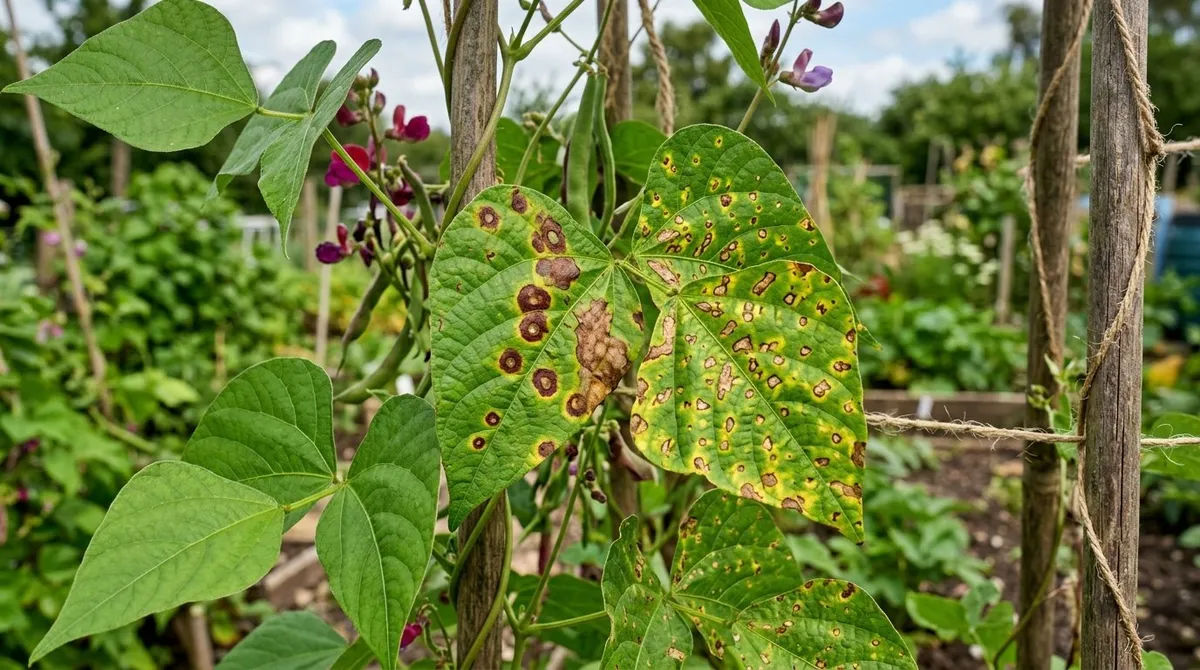
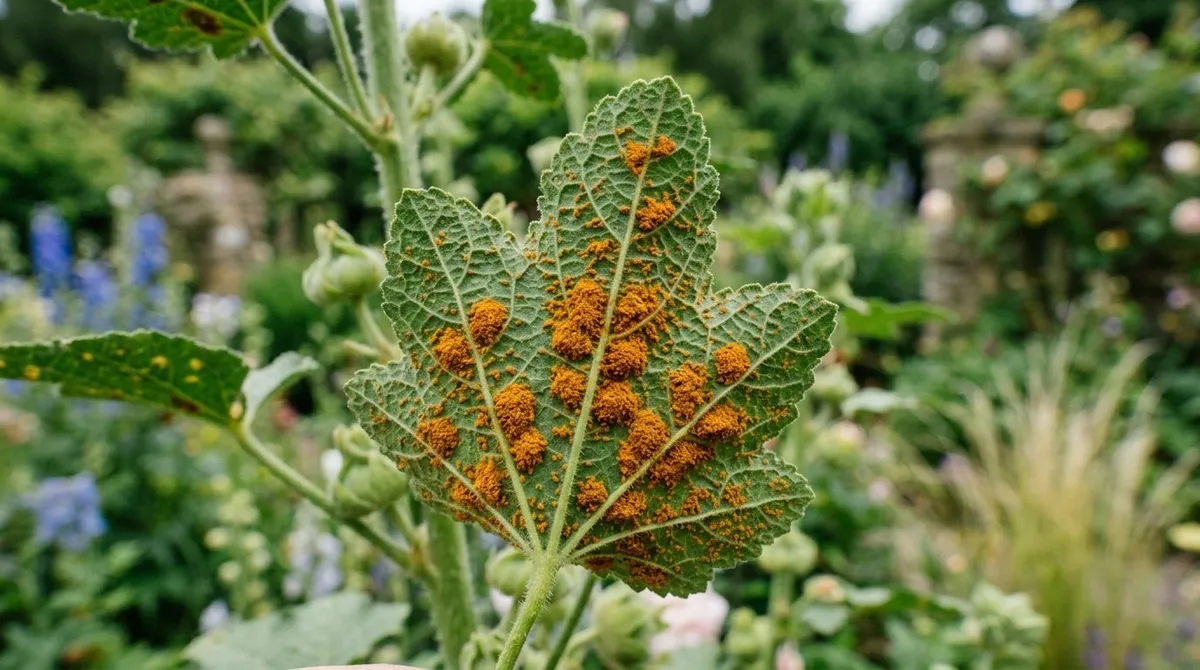
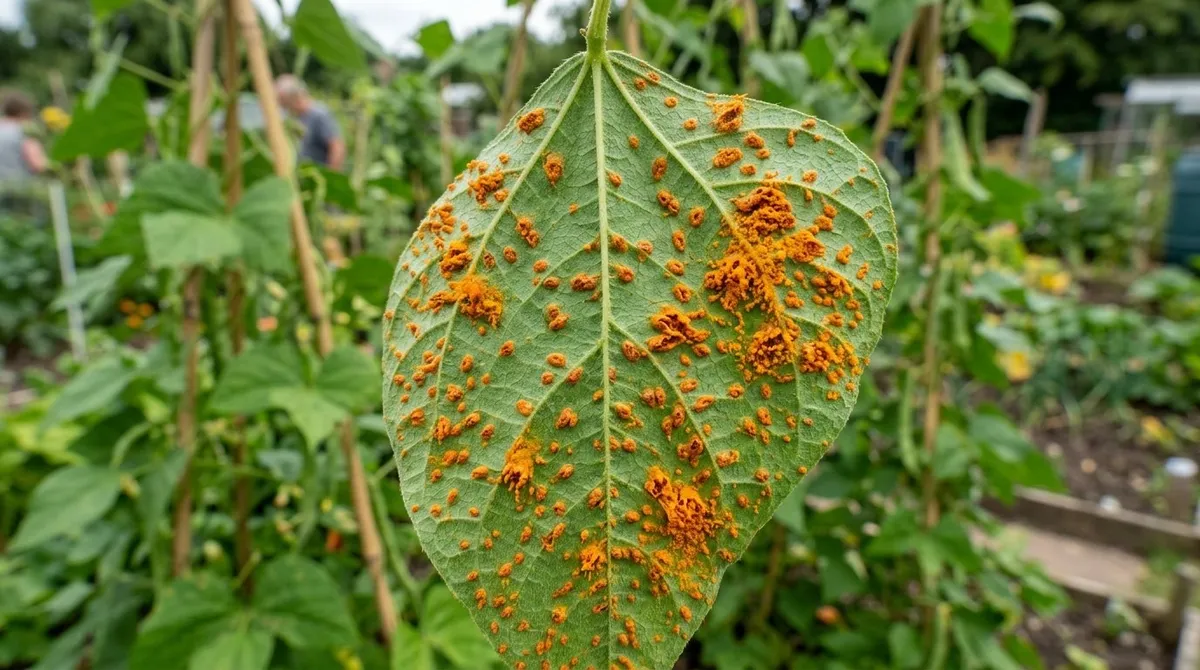
Bean rust makes small, raised orange-brown spots on the undersides of the leaves. They feel a bit rough. Rub one with your finger and you’ll get orange dust on your skin. That dust is the spores, ready to blow onto the next leaf.
On top of the leaf you’ll often see a pale yellow spot right above each one. That’s usually what people notice first, because we tend to look at the tops of leaves, not underneath.
As it gets worse, the spots join up. Leaves turn yellow, curl, dry out and drop. It starts at the bottom of the plant and works its way up.
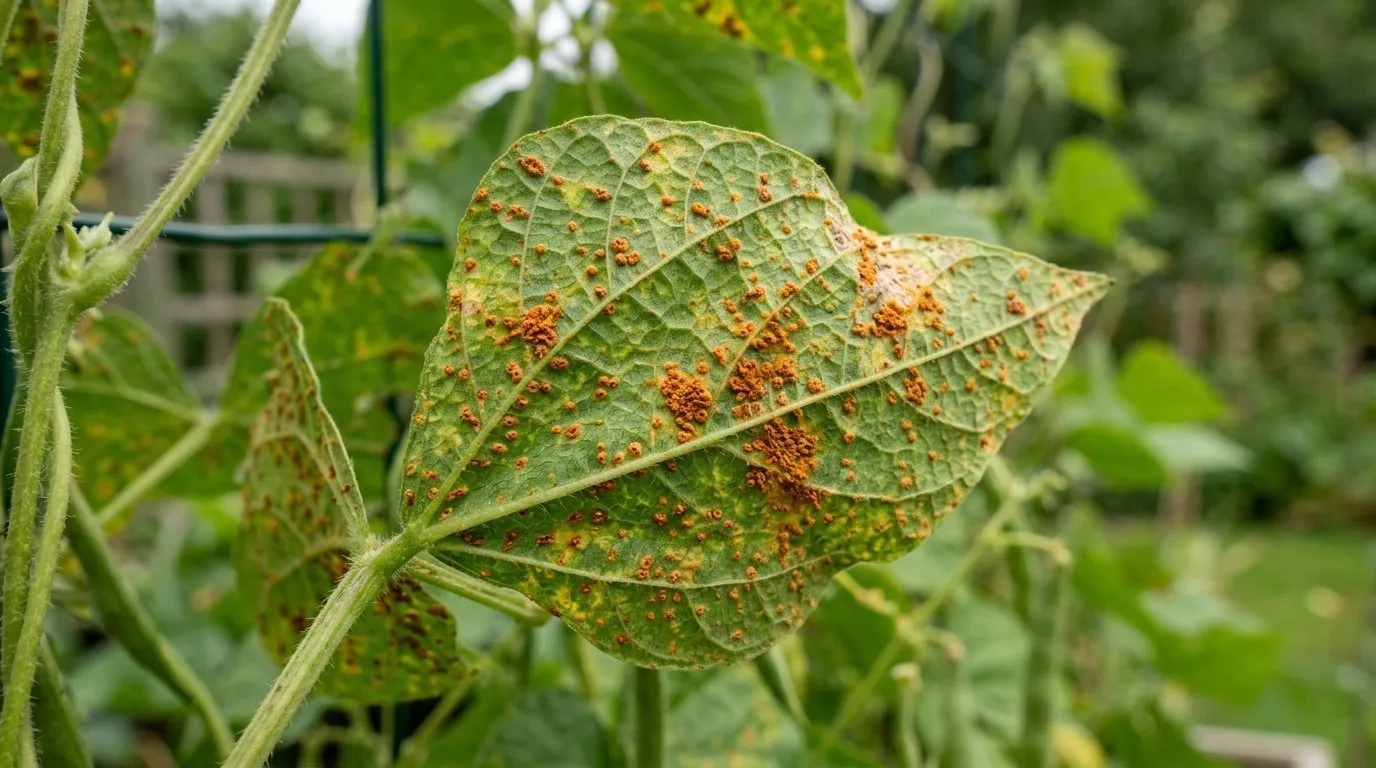
Orange-brown rust spots on the underside of a runner bean leaf. The dust they release spreads the disease.
Later in the year, the spots turn dark brown or black. That’s the rust getting ready to spend the winter on old stems and leaves, so it can start again next spring.
How to tell it’s rust and not something else:
- The spots are raised, not flat
- Orange dust comes off on your finger
- Each yellow spot on top matches a spot underneath
- The pods are rarely affected unless it’s really bad
For rust on other plants in the garden, see our rust disease treatment guide.
Which beans are affected by rust?
Runner beans get it worst, then climbing French beans, then dwarf beans. Broad beans can get a rust too, but it’s a different one and turns up less often.
| Bean type | How likely to get rust | Worst months | Notes |
|---|---|---|---|
| Runner beans | High | July to September | Thick leafy growth holds damp air |
| Climbing French beans | Medium to high | July to August | Less leafy, and often crop before rust peaks |
| Dwarf French beans | Medium | August to September | A short season often dodges the worst |
| Broad beans | Low to medium | June to August | Different rust; autumn-sown crops often escape |
Runner beans suffer most because of the way they grow. A full wigwam gets thick and leafy in the middle. Air can’t move through it, and the lower leaves stay damp after rain or dew. That’s exactly what rust likes.
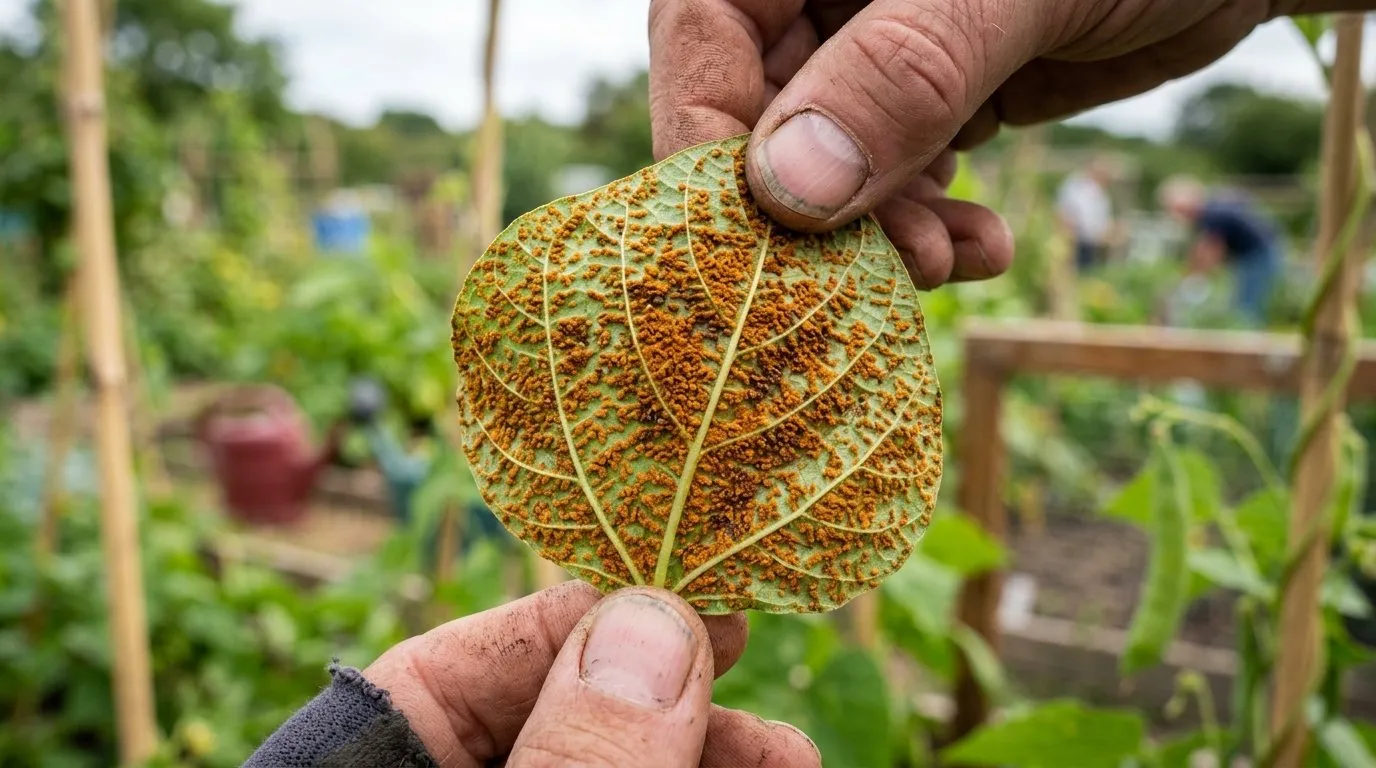
A runner bean leaf with fresh orange spots and older, darker ones. The yellow patches on top show through the leaf.
French beans often finish their main crop before rust gets going in late August. Dwarf beans sit low and stay damp, but they’re quick to crop, so sowing a few batches from May to July spreads your chances.
Growing borlotti too? Our borlotti beans guide covers them. The RHS rust diseases page has more photos to help you check.
What causes bean rust to spread?
Rust spreads when the leaves stay wet in warm weather. The spores can’t get going on a dry leaf. That’s why it takes off after warm, muggy spells and barely shows in a dry summer.
How bean rust gets through the year
You don’t need the science, just the pattern:
- Winter: the rust hides on old bean stems and fallen leaves.
- Late spring: it spreads from old debris to your new plants, slowly at first.
- July to September: each spot makes more spores, which land on nearby leaves and make new spots every couple of weeks. This is when it really takes off.
- Autumn: the spots turn dark, ready to spend the winter on the old plants.
So clearing away old plants in autumn breaks the cycle, and catching the first spots in summer slows it right down.
What makes it worse
- Watering over the leaves. A sprinkler or hose spray keeps leaves wet for hours. Water at the base instead.
- Crowded plants. Beans packed too close hold damp air between them.
- Sheltered spots. Beans against a wall or fence dry slowly after rain.
- Warm, muggy weather. British summers often turn this way from mid-July.
- Old plants left in place. Last year’s stems carry rust into the new season.
For keeping the whole veg patch healthy, see our vegetable pests and diseases guide.
How to treat bean rust organically
You can’t get rid of bean rust once it’s in, but you can slow it down. The aim is to keep enough healthy leaves for a decent harvest.
Pick off spotty leaves straight away
Remove any leaf with spots as soon as you see it. Pop it straight into a bag, not on the compost heap. Every leaf you take off early means fewer spores flying about.
Don’t strip more than a third of the leaves at once, though. The plant needs them to keep growing beans. Focus on the worst ones at the bottom, where it always starts.
Skip the sprays
Good airflow, base watering and resistant varieties do far more than any spray. You may hear about milk, bicarbonate of soda or soapy water on the allotment. In Great Britain, only an authorised product can be used to treat plant disease, and home-made mixes aren’t authorised.
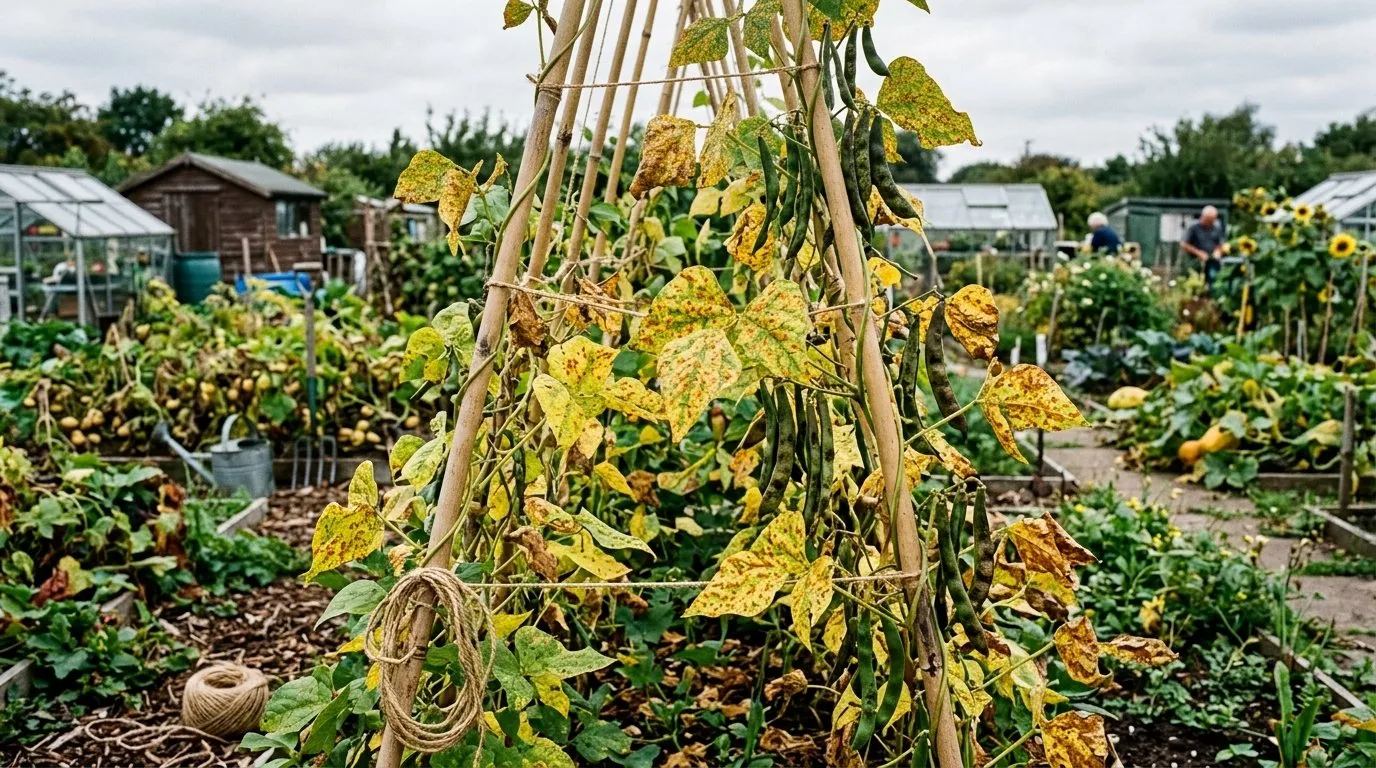
A badly hit runner bean plant has lost its lower leaves to rust. The top keeps cropping, but the harvest is much smaller.
Simple habits that help
- Water at the base only. A soaker hose along the row is ideal.
- Mulch around the plants. A 5-8cm layer of straw or bark stops rain splashing up onto the lower leaves.
- Let the air in. Thin out crowded growth at the base of wigwams. Take off lower leaves that touch the ground or each other.
Want to know more about natural helpers in the garden? See our biological pest control guide.
Chemical treatments for bean rust
There’s no fungicide approved for rust on edible beans in UK home gardens. Always check a product label to see which crops it can be used on.
Sprays for ornamental plants only
Some garden fungicides are labelled for rust on flowers and shrubs only. Using them on beans or any food crop is outside the label and not legal, so keep them away from your bean rows.
Why there’s nothing for beans
Pesticides have to be approved for each food crop they’re used on. Nobody has put a rust spray through approval for home-grown beans. So for home growers, good habits and resistant varieties are the answer.
Rust-resistant bean varieties for the UK
A variety that resists rust is the easiest fix of all. Look for “rust resistant” or “disease resistant” on the seed packet or in the catalogue.
Runner beans
- Moonlight: white flowers, stringless pods, and often picked for its rust resistance.
- White Emergo: white flowers, long flat pods, a vigorous old favourite.
- Tenderstar: red flowers and stringless pods, a good pick if you want the classic look.
Climbing French beans
- Cobra F1: round pods over a long picking season, known for good disease resistance.
- Blauhilde: pretty purple pods that turn green when you cook them.
- Helda: flat, Italian-style pods.
Dwarf beans
- Safari: fine round pods, early, and great for sowing in batches.
- Speedy: very quick to crop, so it often finishes before rust peaks.
- Compass: compact plants that suit pots.
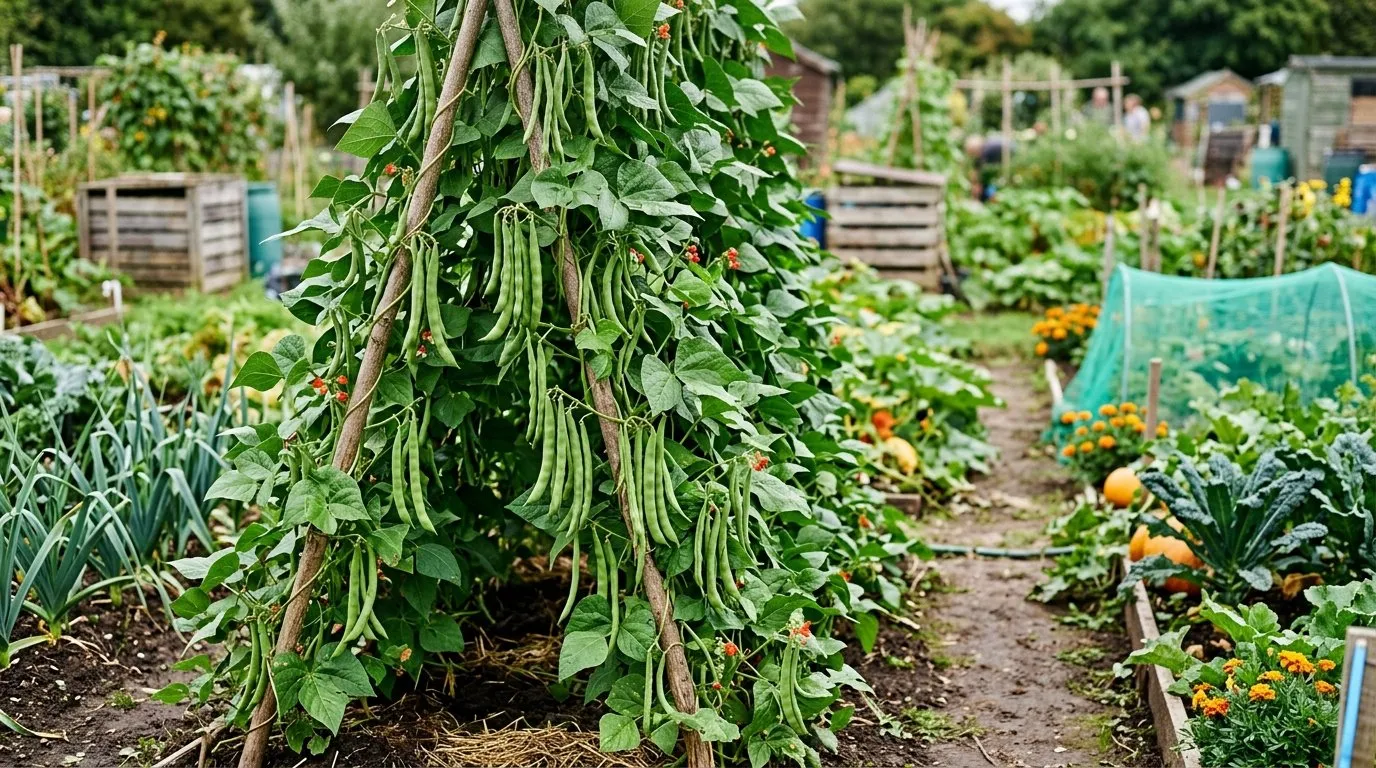
Clean, healthy runner bean leaves next to a rusty row in August. Variety choice makes a big difference.
Varieties to think twice about
Old favourites like Scarlet Emperor, Enorma and Painted Lady are loved for their red flowers. On a plot where rust is a regular visitor, though, they tend to struggle from July. Tenderstar gives you red flowers with better disease tolerance.
For plants that grow happily alongside beans, see our companion planting guide.
How to prevent bean rust next season
Prevention starts in autumn, not spring. The biggest job is clearing away every old bean plant once you’ve finished picking. Anything left on the ground can carry rust into next year.
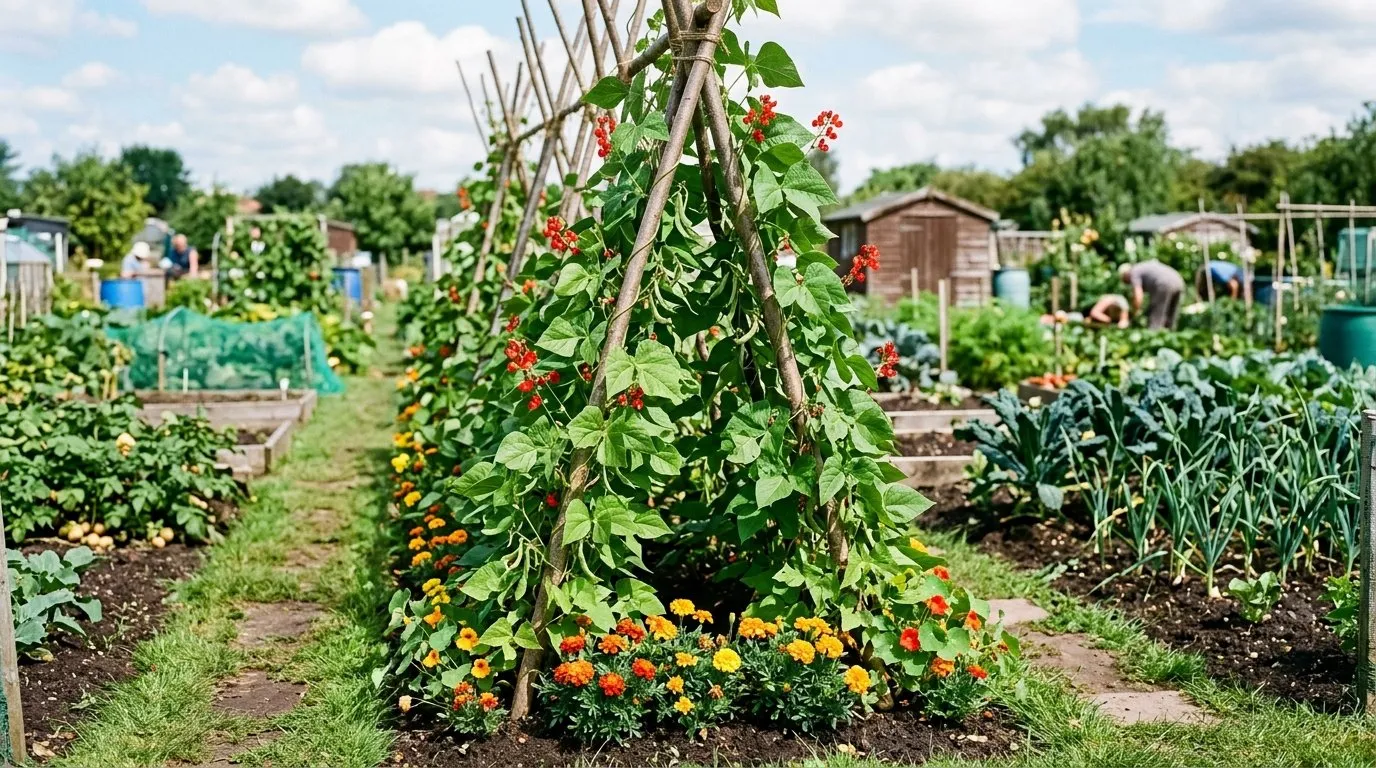
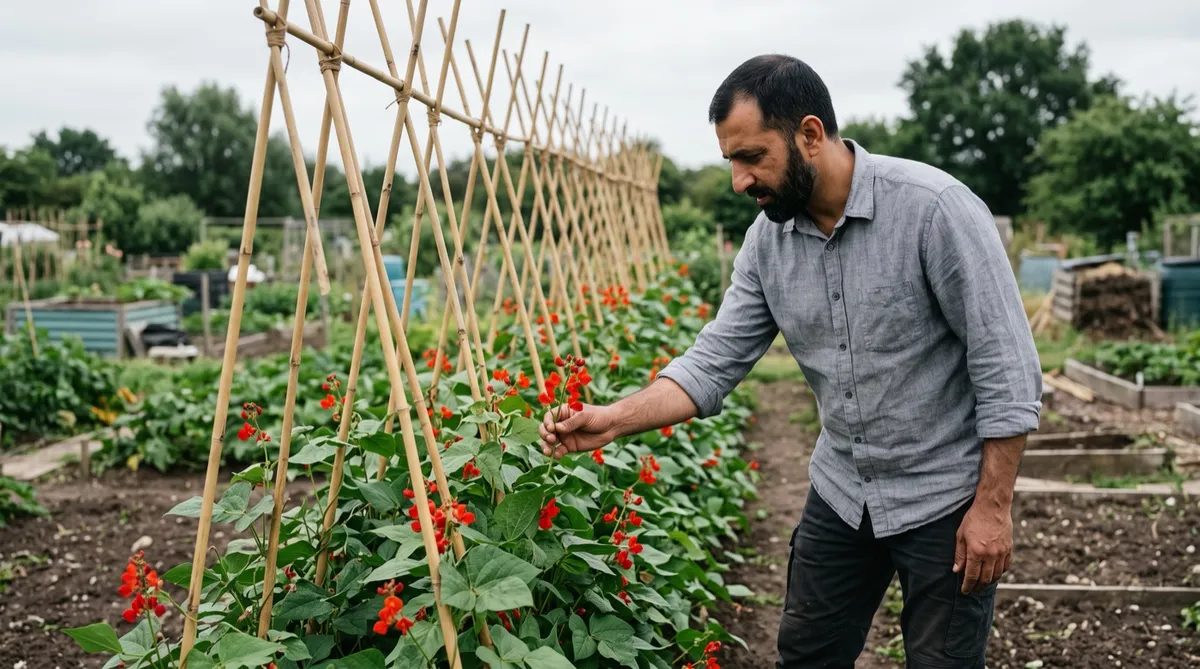
Runner beans spaced about 45cm apart in a double row. Room between plants lets the leaves dry quickly after rain.
Autumn and winter jobs
- Clear every bit of old bean plant. Cut at ground level and bag stems, leaves and pods for the council green waste bin.
- Clean your canes. Give canes and frames a scrub so no rust hangs on over winter.
- Move your beans. Grow them somewhere different next year, and leave at least three years before using the same spot again.
Spring and summer jobs
- Choose a resistant variety. See the list above.
- Space plants about 45cm apart. It’s free and it really helps the air move.
- Water at the base. A soaker hose or watering can at soil level keeps leaves dry.
- Mulch around the plants. A 5-8cm layer of straw or bark stops splashes.
- Pick off the first spotty leaves. Bag them rather than composting them.
- Check under the leaves weekly from mid-June. Early action stops it building up.
Bean rust calendar
| Month | What to do |
|---|---|
| October to November | Clear all old bean plants, clean canes, plan where beans go next year |
| February to March | Order resistant seed and choose a fresh spot |
| May | Sow or plant out about 45cm apart and lay a soaker hose |
| Late June | Start checking under the leaves every week |
| July | Pick off spotty leaves straight away |
| August to September | Keep checking, and keep picking beans so new ones form |
| October | Clear the plants as soon as you’ve had your last pick |
Do these things together and bean rust becomes a minor nuisance rather than a harvest-wrecker. For planning where everything goes each year, see our crop rotation planner.
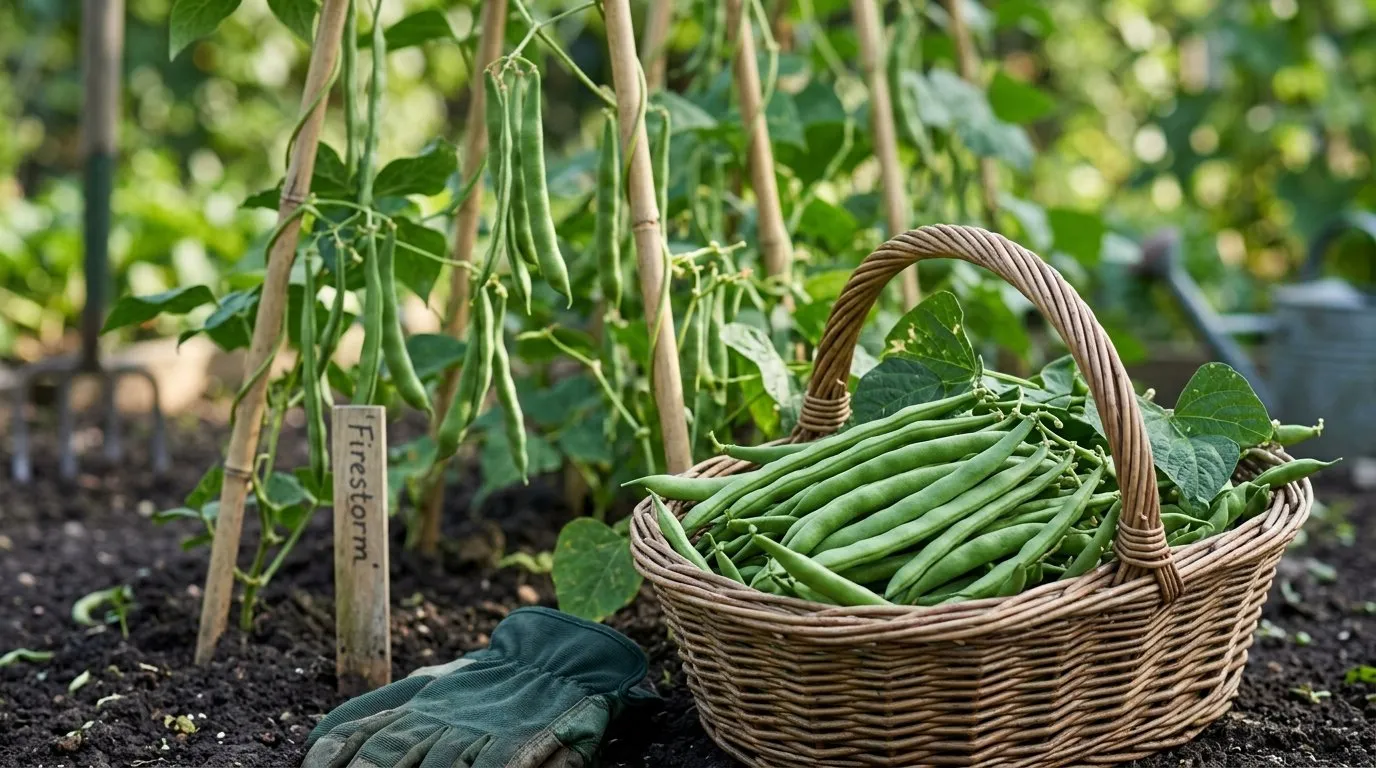 A healthy pick from a rust-free row. A resistant variety and good spacing stop the disease taking hold.
Frequently asked questions
Can I eat beans from a plant with rust?
Yes, the beans are fine to eat. The rust lives on the leaves and stems, not inside the pods. Pick as normal, throw out any pods with spots on them, and give everything a wash. You may just get a smaller crop, because the plant has fewer healthy leaves to feed it.
Will bean rust kill my plants?
It rarely kills plants outright. It weakens them by spoiling the leaves, so you get fewer beans and the plants finish early. Most plants keep cropping through a mild attack. A really bad case can wipe out the crop, but that’s unusual if you keep on top of the basics.
Does bean rust spread to other vegetables?
No, it only attacks beans. Your tomatoes, courgettes and cabbages are safe. Broad beans can get a rust of their own, but it’s a different fungus from the one on runner and French beans.
Should I pull up plants with bean rust?
Only if they’re almost bare and have no pods left to pick. For a milder attack, take off the worst lower leaves and let the plant carry on. Runner beans often keep making clean new growth at the top. At the end of the season, clear away every old plant.
When should I start checking for bean rust?
Start checking once a week from mid-June. Look under the lower leaves first, because rust nearly always starts at the bottom. Catching the first few spotty leaves and picking them off slows it right down.
Can I compost bean plants with rust?
It’s safest not to. A normal garden heap doesn’t get hot enough to kill the rust, and it can come back when you spread the compost. Put rusty plants in the council green waste bin instead, and don’t leave old stems lying on the ground over winter.
Is there a chemical spray for bean rust in the UK?
No, nothing is approved for bean rust on edible beans at home. Sprays labelled for rust on ornamental plants must not be used on beans. Home-made bicarbonate, soap or milk sprays aren’t allowed either. Picking off leaves, base watering, spacing and resistant varieties are the way to go.
Our team produces practical UK gardening guidance from source research, contributor records and established horticultural practice. Editorial standards are overseen by Matt W.