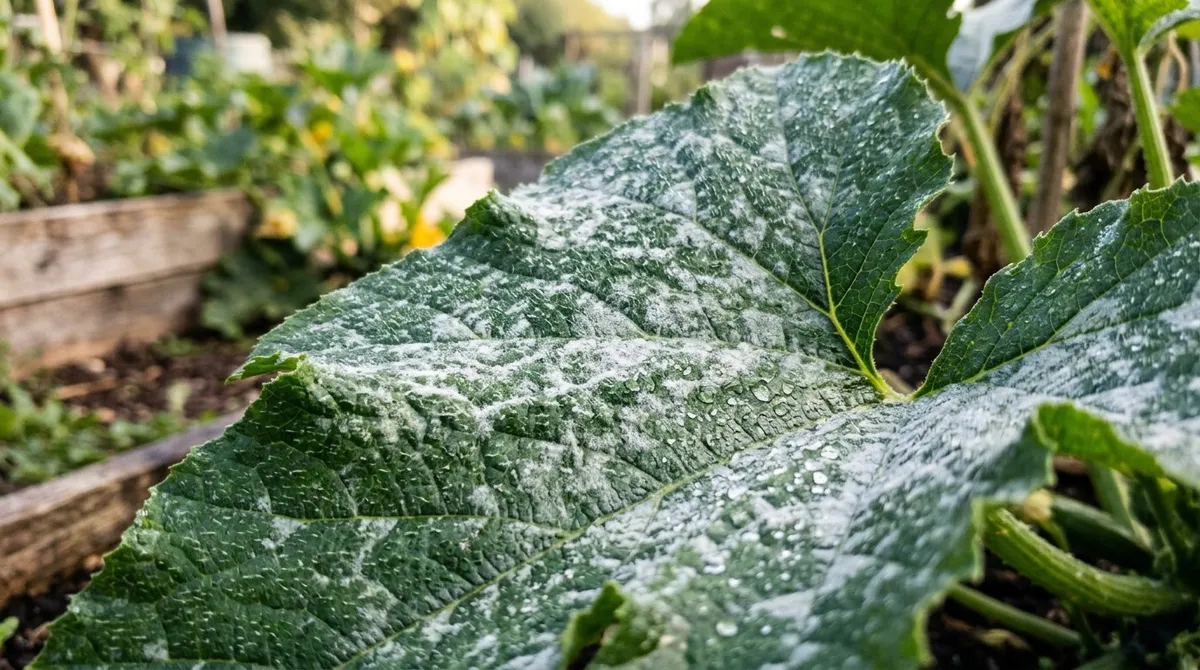
Key takeaways
- Rust makes raised, powdery orange, yellow or brown spots, mostly under the leaves
- Each rust only attacks its own host plant or close relatives
- Damp leaves and still, humid air help rust spread
- Pick off affected leaves early and clear debris in autumn
- Space plants for airflow and water at the base, not over the leaves
- Leeks and beans with rust are still safe to eat once the bad leaves are removed
Rust is one of the easiest plant diseases to recognise. Look for raised, powdery spots in orange, yellow or brown, usually on the undersides of leaves. Hollyhocks, roses, leeks and broad beans are the classic victims in UK gardens. Each rust attacks only its own kind of plant, and most can be kept down with simple garden habits.
This guide covers how to spot rust, which plants get it, and what to do. For the rust on roses in detail, see the guide to rose rust.
How do I know if my plant has rust?
Rust shows up as small, raised bumps called pustules, mostly on the undersides of leaves. They are usually orange or yellow at first, sometimes brown. Above each one, the top of the leaf often shows a pale yellow spot.
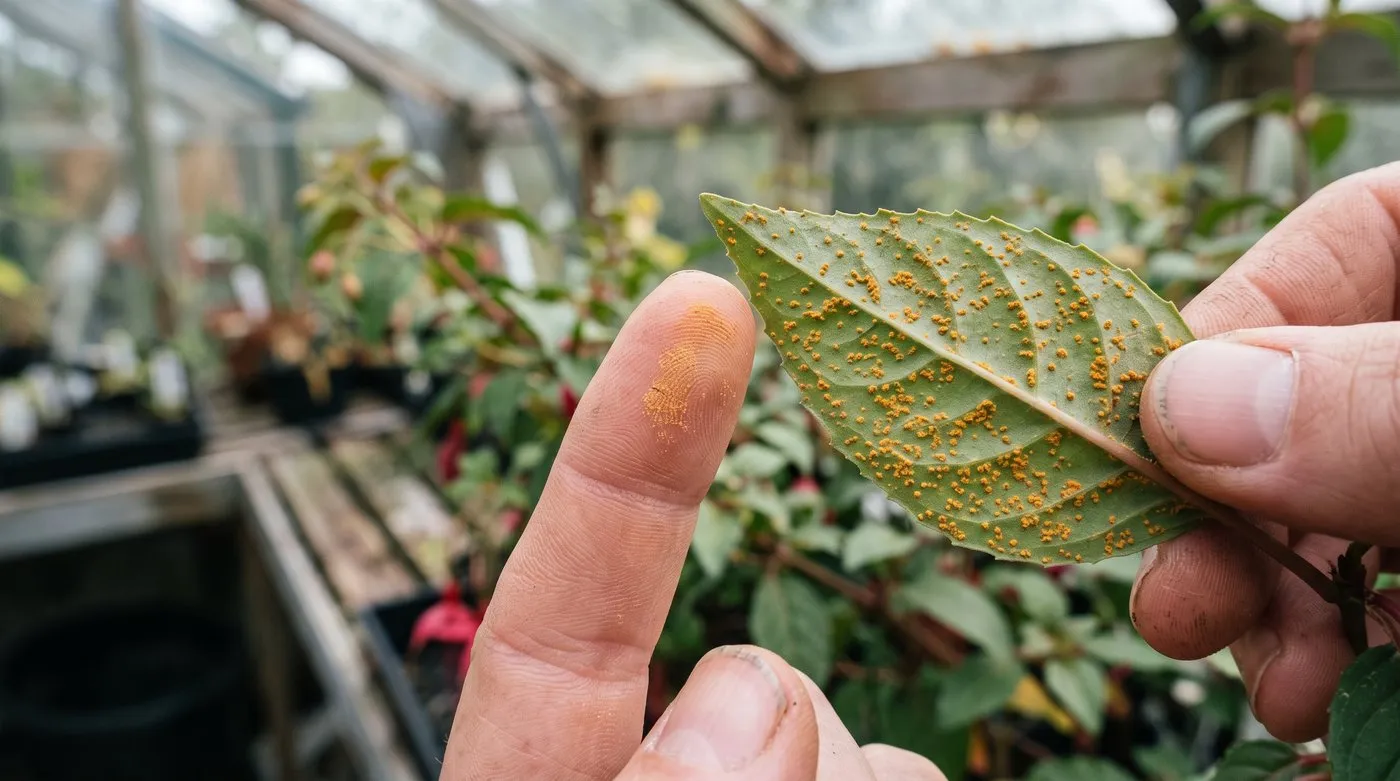
Rub a spot gently. A coloured, dusty smear on your finger means rust.
Rub a pustule gently with a fingertip. If it leaves a coloured, dusty smear, it is almost certainly rust. Those are the spores.
Later in the season, many rusts darken to brown or black spots. These are the tough spores that survive winter. Badly affected leaves curl, wither and fall early. Some rusts also mark the stems.
Which plants get rust in the UK?
Rust fungi are host-specific. Each kind attacks one plant or a small group of relatives. So rust on roses can’t spread to your leeks.
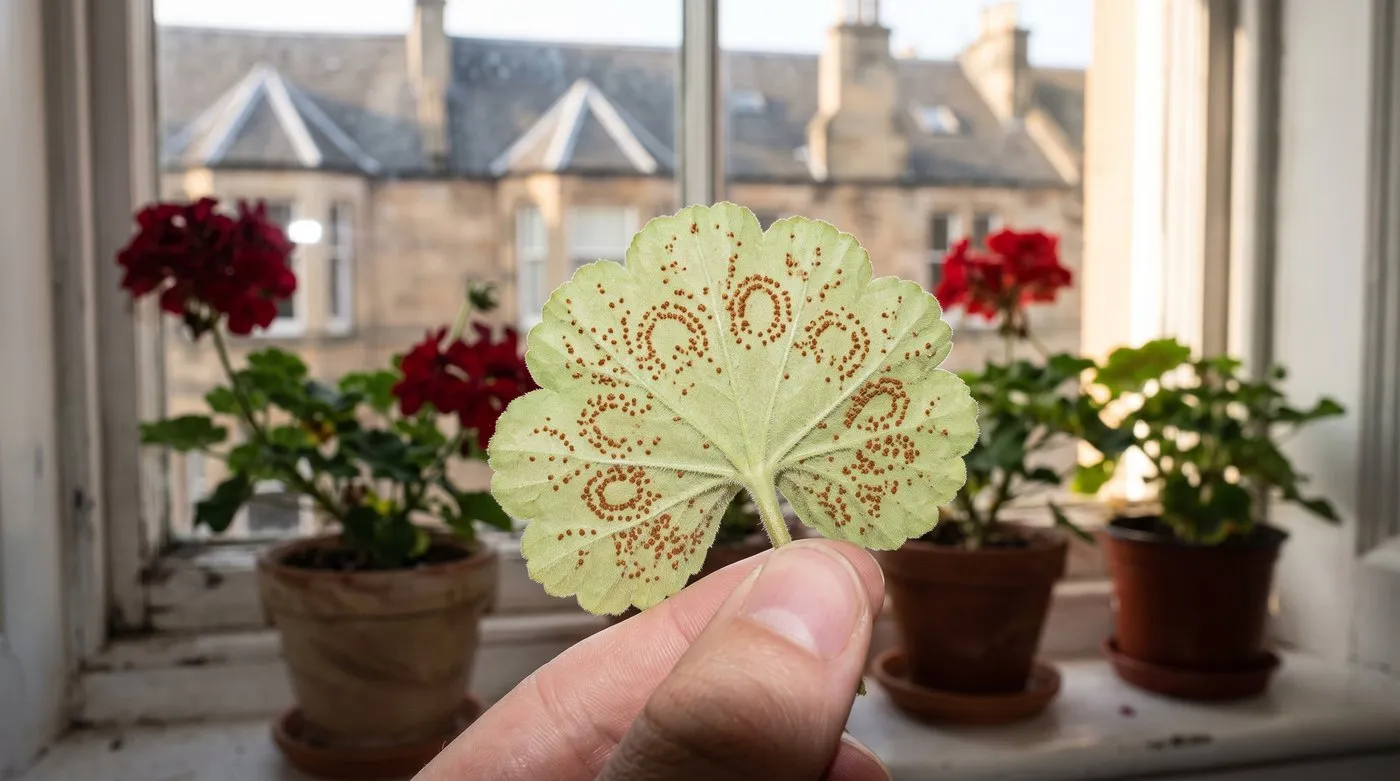
Pelargonium rust makes brown pustules in neat rings under the leaves, often on plants kept under glass.
| Plant | What rust looks like | When it’s worst |
|---|---|---|
| Hollyhocks | Orange-brown pustules under leaves, pale spots on top | Late spring to autumn |
| Roses | Bright orange pustules under leaves | Summer |
| Leeks, garlic, chives | Bright orange spots on the leaves | Late summer to autumn |
| Broad beans | Small brown pustules on leaves and stems | Summer |
| Pelargoniums | Brown pustules in rings under leaves | Spring to autumn, often under glass |
| Fuchsias | Orange-yellow pustules under leaves | Summer |
| Snapdragons | Dark brown pustules under leaves and on stems | Summer |
| Hypericum | Bright orange pustules under leaves | Summer |
Hollyhock rust
Hollyhocks are famous for rust. Orange-brown pustules appear on the lower leaves in spring and work their way up. By late summer, badly affected plants can be bare stems topped with flowers.
Hollyhock rust survives on old stems and debris at the base of the plant, so autumn clearance really helps. Some gardeners grow Alcea rugosa, a yellow-flowered hollyhock that is less troubled by rust. The guide on how to grow hollyhocks covers siting and care.
Leek rust
Leek rust makes bright orange spots on leeks, garlic and chives, mostly from late summer. It rarely kills the plant, and the leeks are still good to eat once you peel off the spotty outer leaves. There is no fungicide for leek rust for home gardeners, so wide spacing, good drainage and crop rotation do the work. The guide to leek rust has more detail.
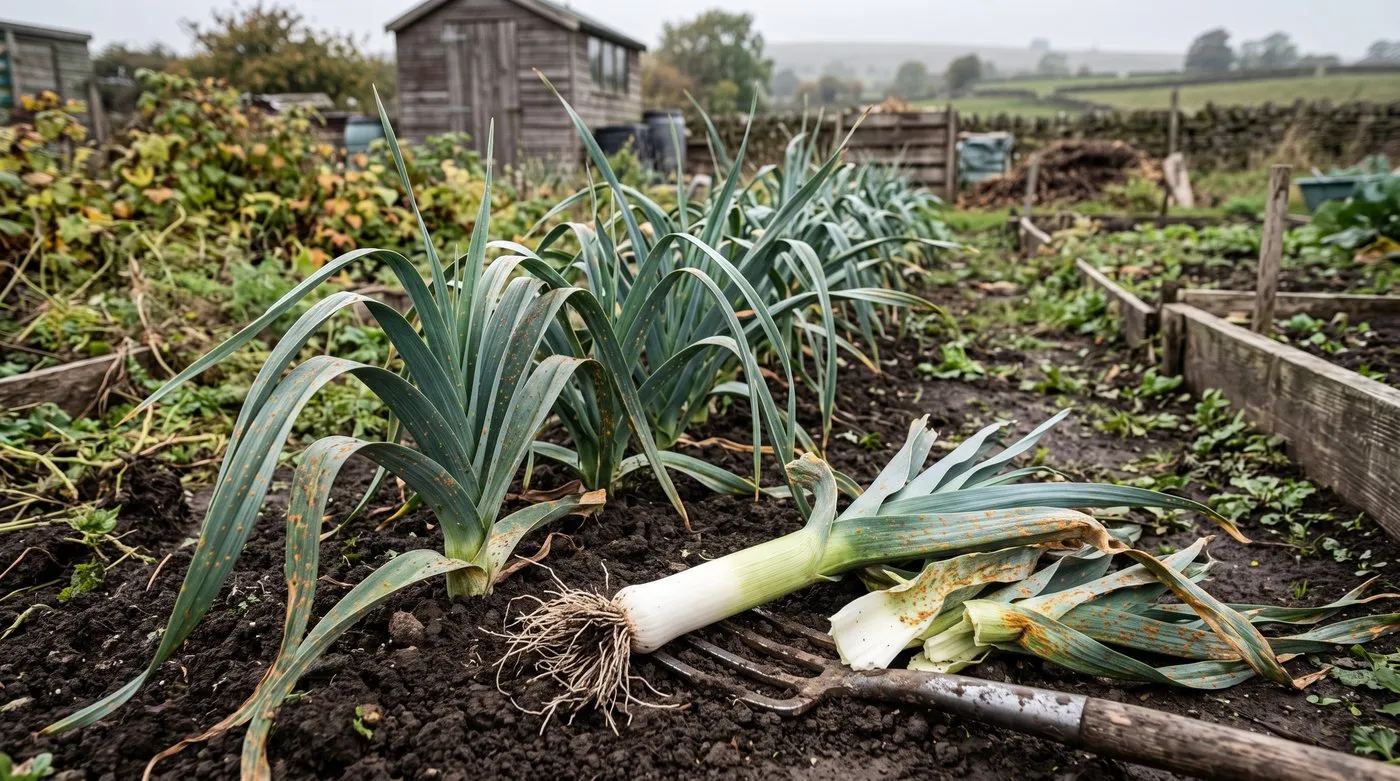
Leek rust looks alarming, but peel off the spotty outer leaves and the leek underneath is fine to eat.
Bean rust
Broad beans get small brown rust pustules, usually from early summer. Autumn-sown beans often crop before it gets going. Spring-sown beans that crop later are more at risk. French and runner beans have their own rust, covered in the guide to bean rust.
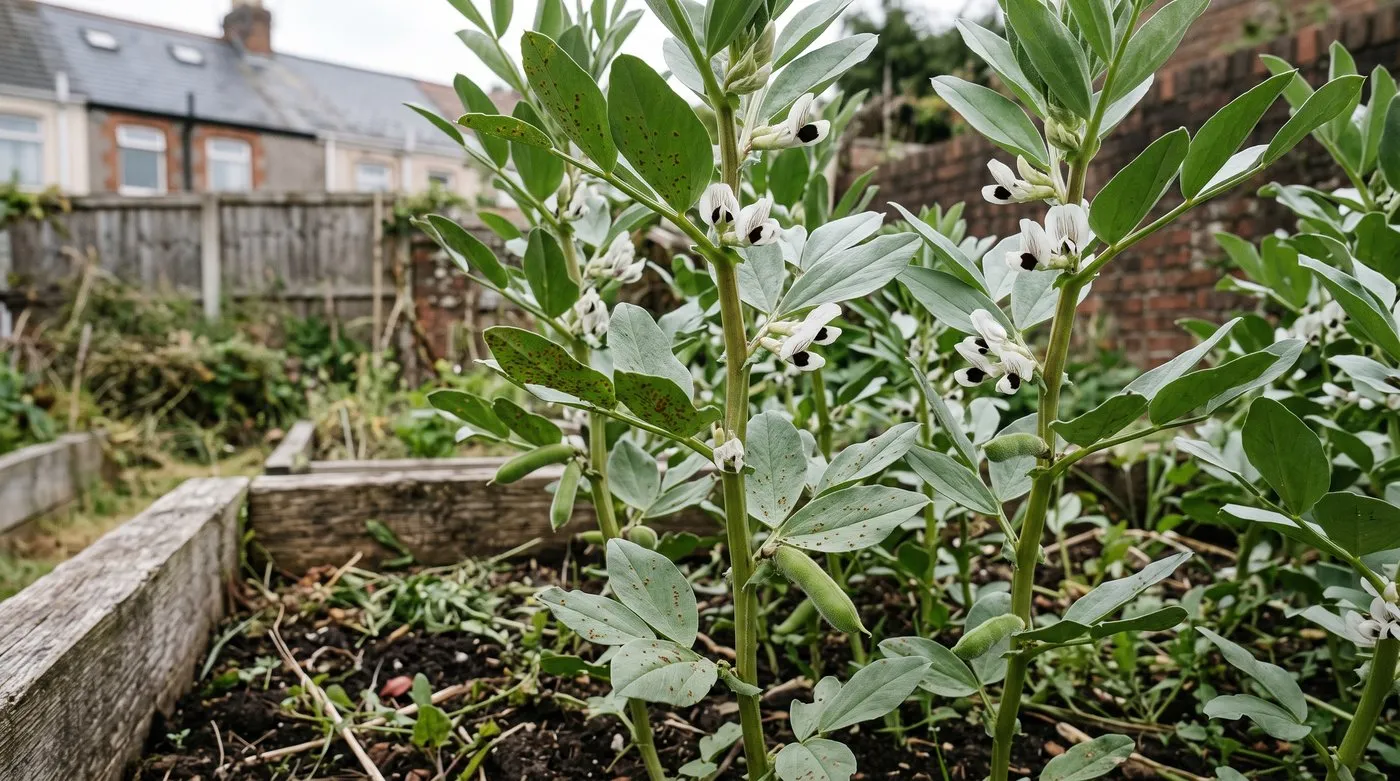
Broad bean rust makes small brown pustules. Autumn-sown beans often crop before it takes hold.
Rusts with two hosts
A few rusts need two different plants to complete their life. Pear rust, for example, spends part of its life on junipers. The guide to pear rust explains how that works.
How rust spreads through the year
Most garden rusts follow a similar pattern.
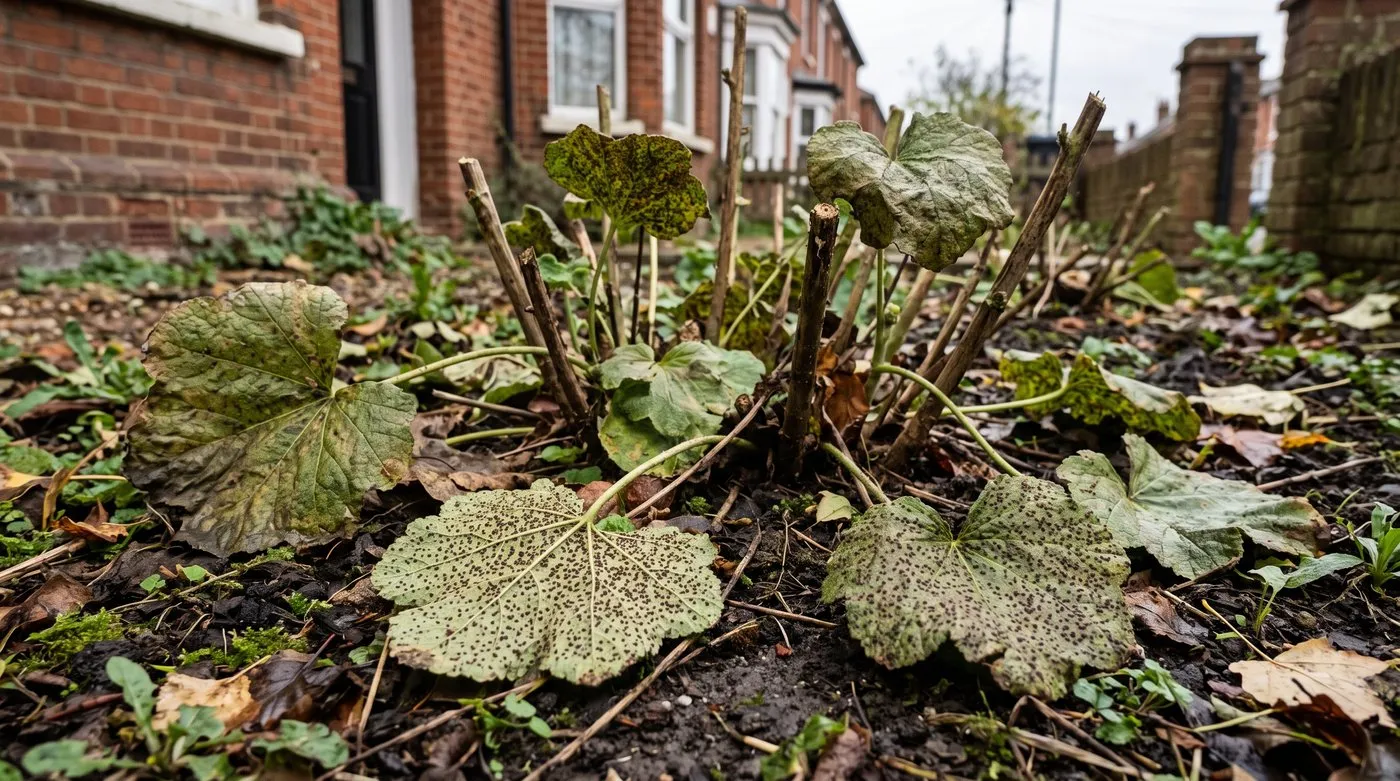
Old leaves covered in dark winter spores like these are where next year’s rust comes from.
- Spring: spores that survived winter on old leaves and stems land on new growth. The first few spots appear, often on the lowest leaves.
- Summer: each spot releases more spores, which blow and splash onto other leaves. In warm, damp weather it can spread fast.
- Late summer to autumn: the spots often darken as the fungus makes its winter spores.
- Winter: those spores wait on fallen leaves, old stems and debris until spring.
Rust needs wet leaves to infect, so damp, still, humid weather suits it. Crowded plants, sheltered spots and overhead watering all keep leaves wet for longer. Lots of high-nitrogen feed also makes soft, leafy growth that rust attacks easily.
How to treat rust without sprays
Good habits do more than any spray, because they tackle the cause.
Pick off affected leaves
Remove spotty leaves as soon as you see them, especially early in the season. Bag them or put them in the green waste bin. Don’t compost them at home, as the spores can survive.
Give plants space and air
Crowded plants stay damp. Give them room, thin out congested growth and avoid squeezing rust-prone plants such as hollyhocks and roses tight against walls or fences.
Water at the base
Water the soil, not the leaves, ideally in the morning so any splashes dry quickly. Avoid sprinklers on rust-prone plants.
Clear up in autumn
Rake up fallen leaves and cut back old stems of affected plants in autumn. This removes the spores that would start next year’s attack. On the veg patch, clear away old leek and bean debris and grow those crops in a new spot next year.
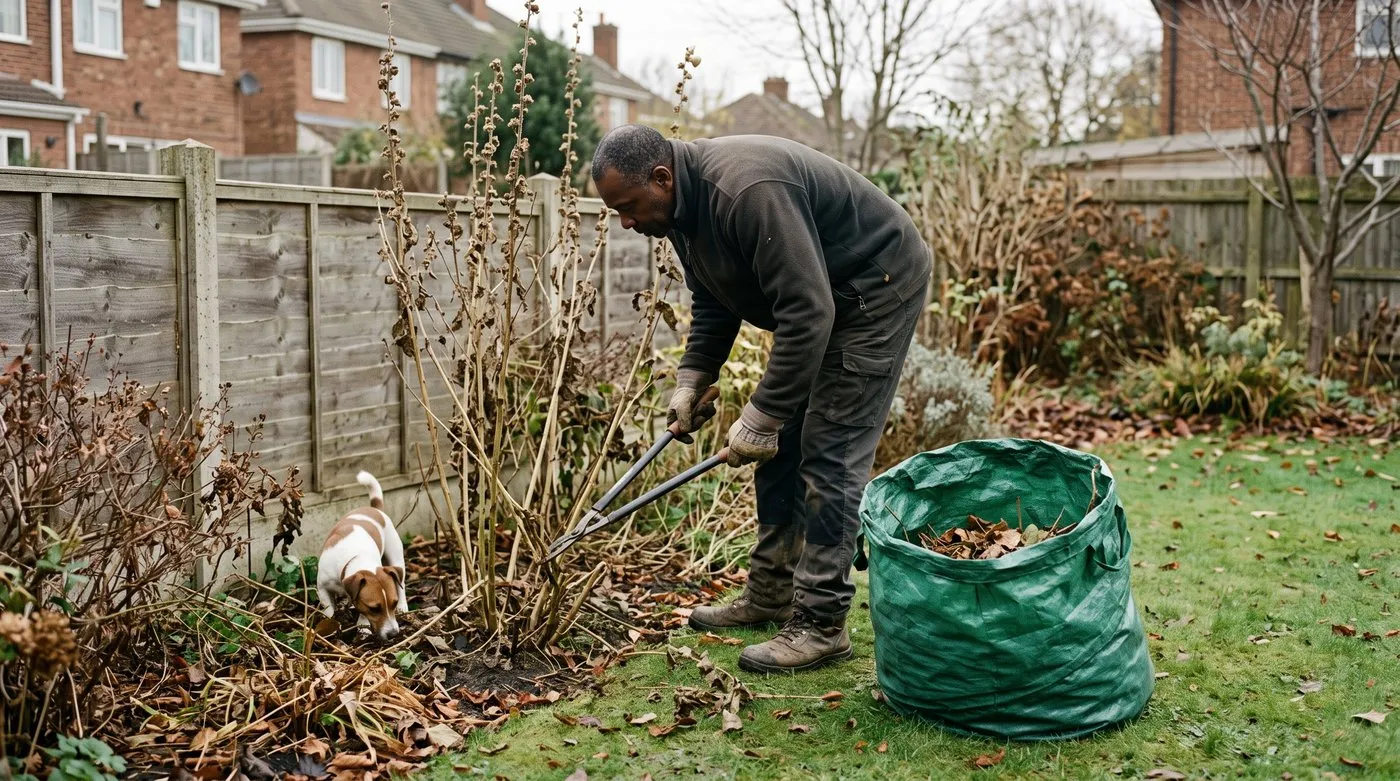
Cutting old stems to the ground and clearing fallen leaves in autumn removes the rust that would start next year.
Choose resistant varieties
Some varieties resist rust much better than others. Look for “disease resistant” when buying roses, and check seed catalogues for leeks and beans with rust tolerance. If a plant gets rust badly year after year, replace it with something tougher.
Do fungicides work on rust?
They can help on some ornamental plants, but they are not a cure. A fungicide protects healthy leaves; it won’t fix leaves that are already spotted.
- Use only a product whose label lists rust on that plant, and follow the label exactly.
- Most edible crops, including leeks and beans, have no fungicide for home gardeners.
- Home-made sprays, such as bicarbonate, milk or neem oil mixes, are not legal to use as fungicides in the UK.
Keep up the leaf clearing and spacing too, or rust will be back next year.
Rust or another leaf disease?
Several diseases make spots on leaves. The rub test helps: rust leaves a coloured, dusty smear on your finger.
| Feature | Rust | Black spot | Powdery mildew |
|---|---|---|---|
| Colour | Orange, yellow or brown | Black or dark brown | White |
| Where | Mostly under leaves | On top of leaves | On top of leaves and stems |
| Feel | Raised and powdery | Flat | Dusty coating |
| Rub test | Coloured smear | No smear | White wipes off |
If you see a white coating, see the powdery mildew guide. Flat black blotches on roses mean black spot.
Month-by-month rust calendar
| Month | What to do |
|---|---|
| January to February | Order resistant varieties. Plan wider spacing in new beds |
| March | Cut back any old hollyhock stems left over winter. Clear debris before mulching |
| April | Check new leaves on hollyhocks and roses for the first spots |
| May | Pick off spotted leaves as soon as you see them |
| June | Rust spreads in damp spells. Water at the base only |
| July | Check broad beans and roses. Remove the worst leaves |
| August | Watch leeks for orange spots. Peel off affected outer leaves |
| September | Spots darken as winter spores form. Keep removing affected material |
| October | Start clearing fallen leaves from under roses and hollyhocks |
| November | Cut hollyhock stems to the ground. Clear all debris |
| December | Note which plants suffered and plan replacements |
Common mistakes with rust
- Composting rusty leaves. Spores can survive and come back with the compost. Use the green waste bin.
- Leaving old leaves and stems over winter. That is where rust waits for spring.
- Overhead watering. Wet leaves let spores infect. Water the soil instead.
- Crowding plants. Still, humid air keeps leaves wet for longer.
- Relying only on sprays. Fungicides can’t fix spotted leaves or clear debris. Good habits matter more.
Frequently asked questions
Can rust disease kill plants?
Rust rarely kills established plants, but it can weaken them badly. Heavy attacks strip leaves early, so plants grow and flower less and crops are smaller. Snapdragons and young plants are most at risk of being killed.
Is rust disease contagious between different plants?
Mostly no: each rust attacks its own host plant or close relatives. The rust on your roses won’t spread to your leeks or hollyhocks. Leek rust can, though, spread between leeks, garlic and chives.
Does rust disease live in the soil?
No, rust survives the winter on old leaves, stems and plant debris. A few rusts also spend part of their life on a second host plant. Clearing debris in autumn removes most of the spores that start next year’s attack.
Is there a spray for rust disease?
On some ornamental plants, yes, but not on most edible crops. Use only a fungicide whose label lists rust on that plant, and follow it exactly. Sprays work best alongside clearing leaves and improving airflow.
Can I compost leaves with rust disease?
It is safer not to. Rust spores can survive in a garden compost heap and spread back when you use the compost. Put rusty leaves and stems in the green waste bin instead.
Why do my hollyhocks get rust every year?
Hollyhock rust survives on old stems and leaves at the base of the plant. Cut stems to the ground in autumn, clear fallen leaves and pick off spotted leaves from spring. Grow hollyhocks in an open, airy spot rather than squeezed against a wall.
Is it safe to eat leeks or beans with rust?
Yes, rust doesn’t make vegetables unsafe to eat. Peel off or trim the spotty outer leaves of leeks, and pick beans as normal. The crop may simply be smaller.
Now you can spot and treat rust, read the guide to common garden plant diseases to identify other spots and blotches, or browse more fixes in the garden problems section.
Our team produces practical UK gardening guidance from source research, contributor records and established horticultural practice. Editorial standards are overseen by Matt W.