Key takeaways
- Black spot comes back each spring from infected leaves left on the ground
- Clear fallen rose leaves in autumn and bin them, never compost them
- Spread 7-8cm of bark mulch in March to stop rain splashing spores back up
- Water at the base, in the morning, so leaves stay dry
- If you spray, start in April before spots appear, using an authorised rose fungicide
- Resistant roses such as 'Bonica' and 'Flower Carpet' rarely need any spraying
Black spot is the most common rose problem in UK gardens. It’s a fungus that leaves round black marks on the leaves, which then turn yellow and fall. In a wet summer, a badly hit bush can be almost bare by August.
The good news is it’s easy to keep in check once you know how it works. Clear up fallen leaves, mulch in spring, water carefully and choose tough varieties. Here’s how to spot it, treat it and stop it coming back.
What black spot on roses looks like
Catching it early makes a big difference. Here’s what to look for.
Early signs
The first signs are small, faint purple-brown smudges on the lower leaves. They’re only a few millimetres across and easy to miss.
Black spots appear
About two weeks later, the classic spots appear. They’re round and black, with fringed or feathery edges that set them apart from other leaf spots.
 Black spot on a rose leaf. Look for the feathery edges and the yellowing around each spot.
Leaves turn yellow and drop
As the spots grow and join up, the leaf around them turns yellow, then falls. It usually starts at the bottom of the bush and works up, because low leaves stay wet longest and catch the most rain splash.
Spots on the stems
In bad cases, young green stems get dark purple-red blotches. These are worth pruning out, as the fungus can hide there over winter.
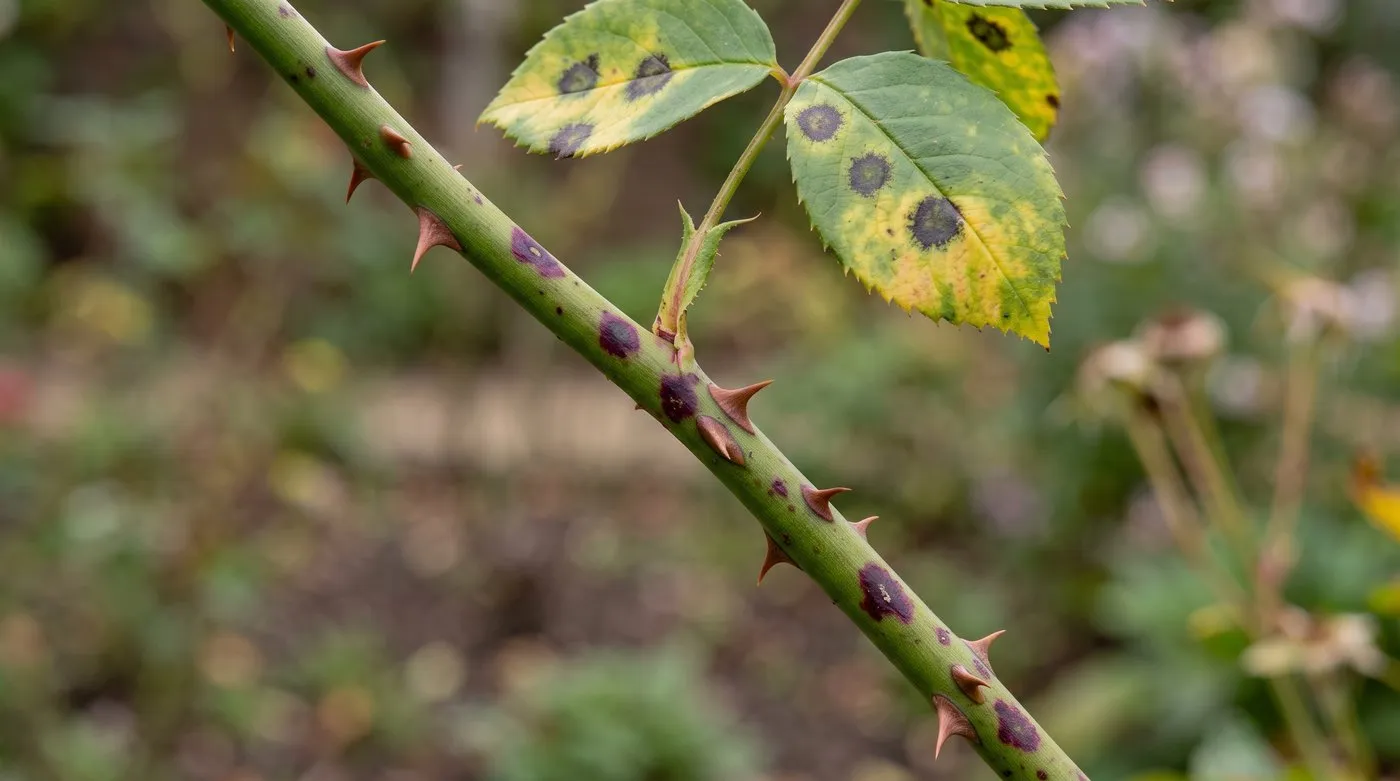
Purple-red blotches on young stems are where the fungus hides over winter. Prune these stems out in February and bin them.
What black spot is not
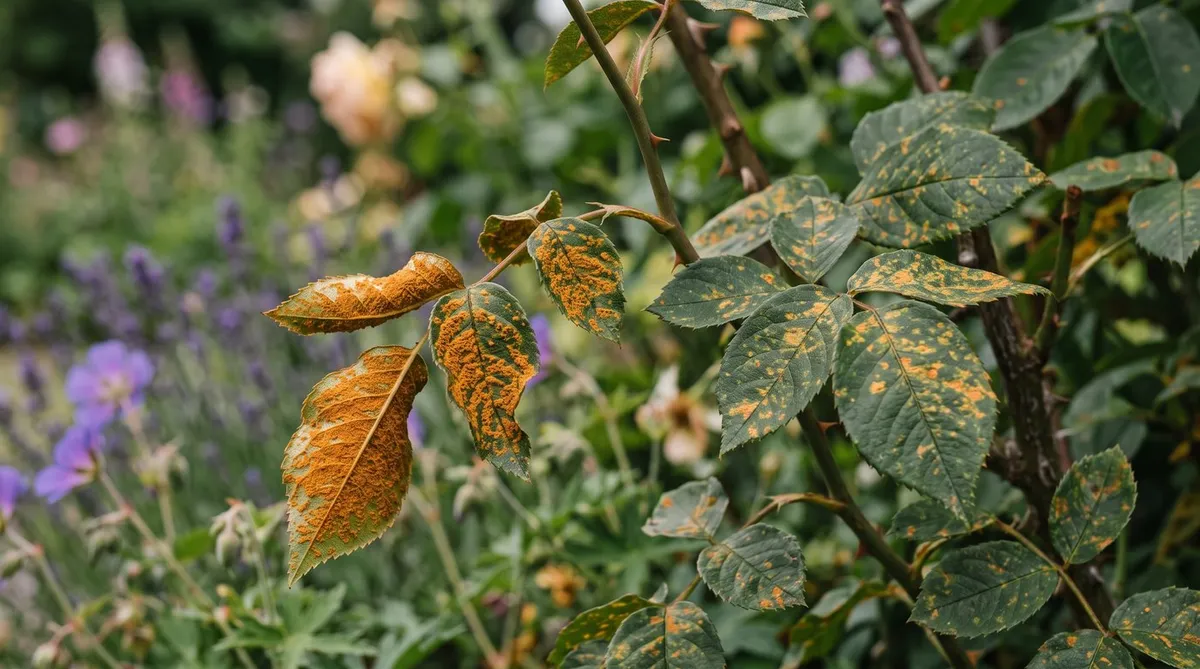
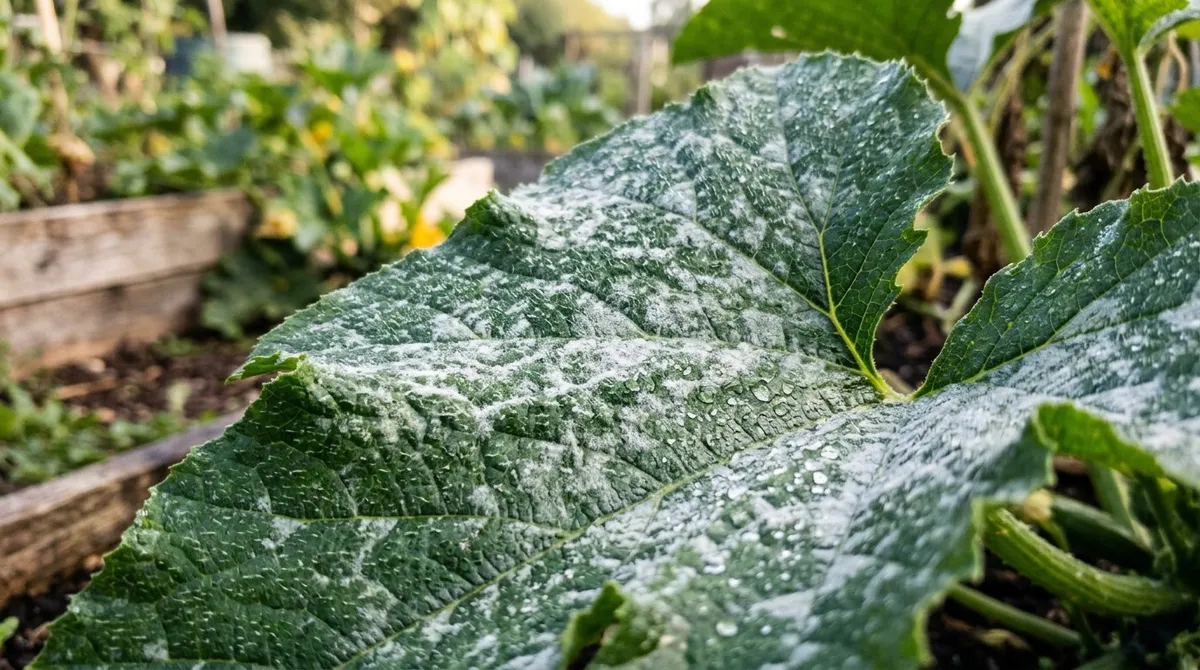
Not every dark mark is black spot. Rose rust shows bright orange spots under the leaves. Downy mildew makes purple-grey patches with angular edges. The table near the end of this guide helps you tell them apart.
How black spot spreads
You don’t need the science, just the timing. Each job below stops the fungus at a different point in the year.
Over winter
The fungus survives winter on fallen leaves under the bush and on infected stems.
Spring
When the weather warms up in April and it rains, spores splash up from the ground onto the lowest leaves.
Getting into the leaf
Spores need leaves that stay wet for several hours to get in. That’s why dry leaves are your best defence.
Hidden growth
Once inside, the fungus grows for about two weeks before you see anything. The leaf looks perfectly healthy.
Spreading through summer
The new spots make more spores, which rain splashes onto other leaves. In a wet summer this repeats every few weeks.
Temperature and infection risk
Warm, wet weather is black spot’s favourite, and a typical British summer suits it nicely. Long spells of damp, mild weather are when you need to be most watchful.
The mistake most people make
Most people reach for a spray when they see spots. By then the fungus has been inside the leaf for a fortnight, and that leaf will yellow and fall whatever you do. Spraying then only protects new leaves. Prevention, starting in April, is what keeps a rose clean.
Treatment options compared
There are a few ways to tackle black spot. Doing the free jobs well matters more than any spray.
Treatment comparison table
| Treatment | What it does | When |
|---|---|---|
| Clearing fallen leaves | Removes the source of next year’s spores | October to December |
| Bark mulch | Stops rain splashing spores up from the soil | March |
| Picking off spotted leaves | Slows the spread through summer | Whenever you see them |
| Authorised rose fungicide | Protects new leaves | From April, as the label says |
Using a fungicide
If you decide to spray, choose a fungicide that’s authorised for home gardens and says on the label that it’s for black spot on roses. Follow the label exactly, including how often to spray and the most it can be used in a season. Start as the new leaves open in April, before any spots appear. Cover both sides of the leaves.
 Left: a hybrid tea losing its leaves to black spot by August. Right: a disease-resistant ‘Flower Carpet’ rose with no spraying at all.
Switching products
If you spray year after year, it helps to swap to a product with a different active ingredient now and then. That makes it less likely the fungus gets used to it. The label lists the active ingredient.
Home-made sprays
Home-made mixes, such as baking soda sprays, aren’t legal to use as pesticides in the UK. Stick to the free jobs below and an authorised product if you really need one.
Bark mulch barrier
A 7-8cm layer of bark mulch spread around each bush in March is one of the best things you can do. It buries any old leaf bits and stops rain splashing spores back up onto the new leaves. It also keeps weeds down and the soil moist.
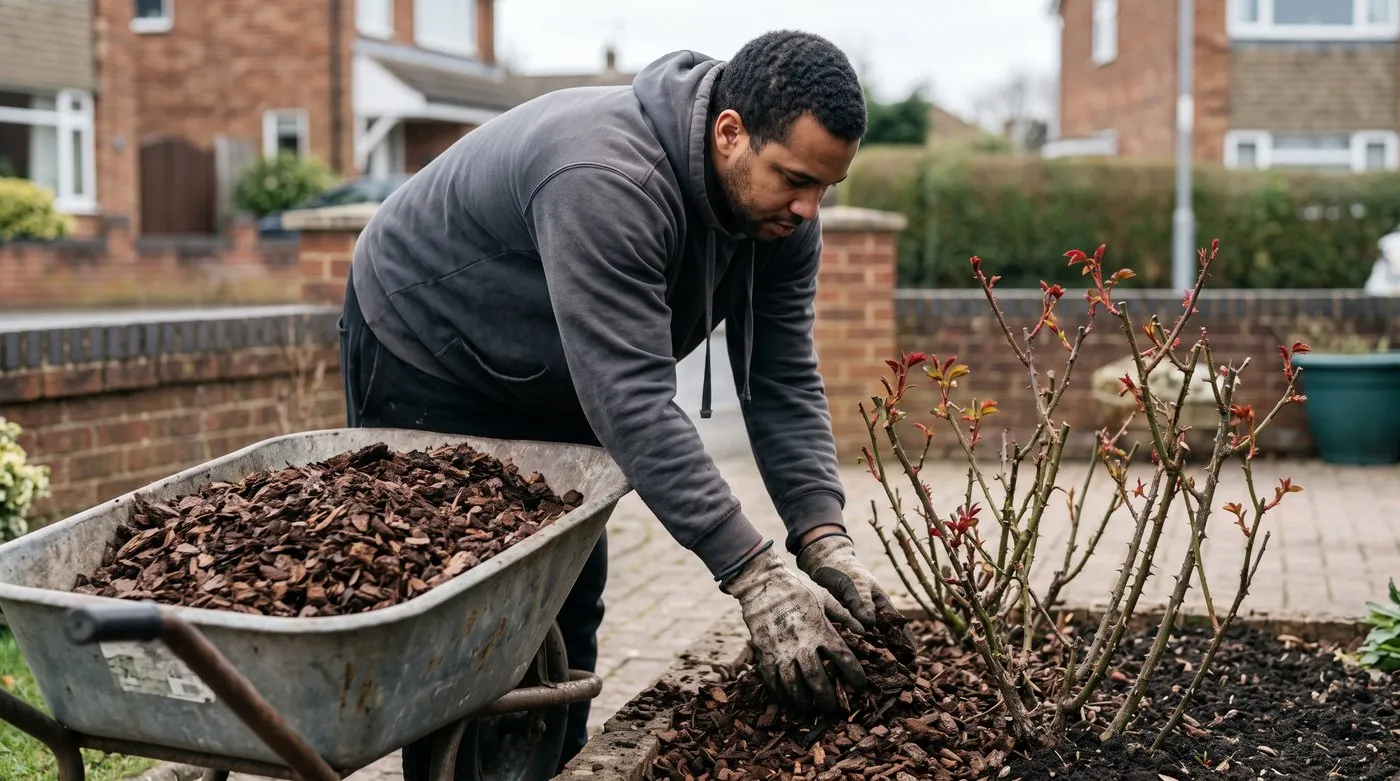
A thick bark mulch in March buries old leaf bits and stops April showers splashing spores onto the new leaves.
Why black spot keeps coming back
Most people treat black spot as a yearly nuisance. It keeps returning for three simple reasons.
Reason 1: leaving infected leaves on the ground
Every spotted leaf left under a rose over winter is a spore factory for next spring. Clearing them in November is the single most useful free job you can do.
Reason 2: no spring mulch
Even after clearing up, tiny bits of leaf sit on the soil. A fresh layer of bark mulch in March covers them. Without it, the first April shower splashes spores straight back onto new growth.
Reason 3: spraying too late
Spraying once spots appear is a fortnight too late. If you spray, think of it as prevention, not a cure.
Breaking the cycle for good
Do all three together: clear leaves in autumn, mulch in March and, if you choose to spray, start in April. After a couple of years, there’ll be far less fungus about. Or swap fussy roses for disease-resistant varieties and skip most of the work.
Disease-resistant rose varieties
Choosing a tough variety is the easiest long-term fix. Many modern roses are bred to shrug off black spot, and the RHS black spot page has more on resistant roses and care.
Resistant varieties comparison table
| Variety | Type | Colour | Height | Scent | Good for |
|---|---|---|---|---|---|
| ’Flower Carpet’ series | Ground cover | Pink, red, white, coral | 60-80cm | Light | Banks, low borders |
| ’Bonica’ | Shrub | Soft pink | 90-120cm | Light | Mixed borders, hedging |
| ’Absolutely Fabulous’ | Floribunda | Yellow | 80-100cm | Strong | Beds, containers |
| ’Roald Dahl’ | English shrub | Apricot-orange | 100-120cm | Strong | Borders, cutting |
| ’Desdemona’ | English shrub | White, blushed pink | 100-120cm | Strong | White gardens, borders |
| ’Queen of Sweden’ | English shrub | Soft pink | 100-120cm | Light | Formal borders, hedging |
| Rugosa roses | Shrub | Pink, white, magenta | 120-180cm | Strong | Hedges, coastal gardens, wildlife |
| ’The Lark Ascending’ | English shrub | Apricot-yellow | 120-150cm | Medium | Relaxed borders |
| ’Olivia Rose Austin’ | English shrub | Soft pink | 90-100cm | Strong | Small gardens, pots |
If black spot has been a problem in your garden before, choose new roses that are sold as disease resistant. Paying a little more for a tough variety saves a lot of spraying and leaf clearing later.
Month-by-month black spot prevention calendar
Stick with this for a couple of years and you’ll see a big difference.
| Month | What to do |
|---|---|
| January | Order resistant bare-root roses for planting in February. |
| February | Prune established roses. Cut out any stems with dark purple-red blotches. Bin the prunings. |
| March | Spread 7-8cm of bark mulch around each bush. Clean your secateurs between plants. |
| April | If you spray, start as the new leaves open, following the label. Water at the base only. |
| May | Look for the first spots on the lower leaves and pick them off straight away. |
| June | Thin out crowded growth to let air through. Feed after the first flush of flowers. |
| July | The worst month in a wet year. Pick off and bin spotted leaves within a day or two. |
| August | Deadhead. Keep an eye on the lower leaves, where it’s dampest. |
| September | Stop feeding, as late soft growth is easily damaged by frost and disease. |
| October | Collect and bin fallen rose leaves. Don’t compost them. |
| November | Clear up the last fallen leaves. Shorten tall stems by a third to stop wind rock. |
| December | Clean and oil secateurs. Plan to replace the worst affected roses with tougher ones. |
Using companion planting around rose beds, with plants that don’t crowd them, helps air move and leaves dry faster.
Common mistakes when treating black spot on roses
Avoid these and you’ll save yourself a lot of frustration.
Waiting for spots before acting
By the time you see spots, the damage is done on that leaf. Start the prevention jobs in spring, whether or not you’ve seen the disease yet.
Composting infected leaves
Garden compost heaps don’t get hot enough to kill the fungus. Spread that compost round your roses and you hand the spores straight back. Put spotted leaves in the council green waste bin instead.
Watering over the leaves in the evening
Wet leaves are exactly what black spot needs. Evening watering is worst, as leaves stay damp all night. Always water at the base, ideally in the morning. A soaker hose is ideal.
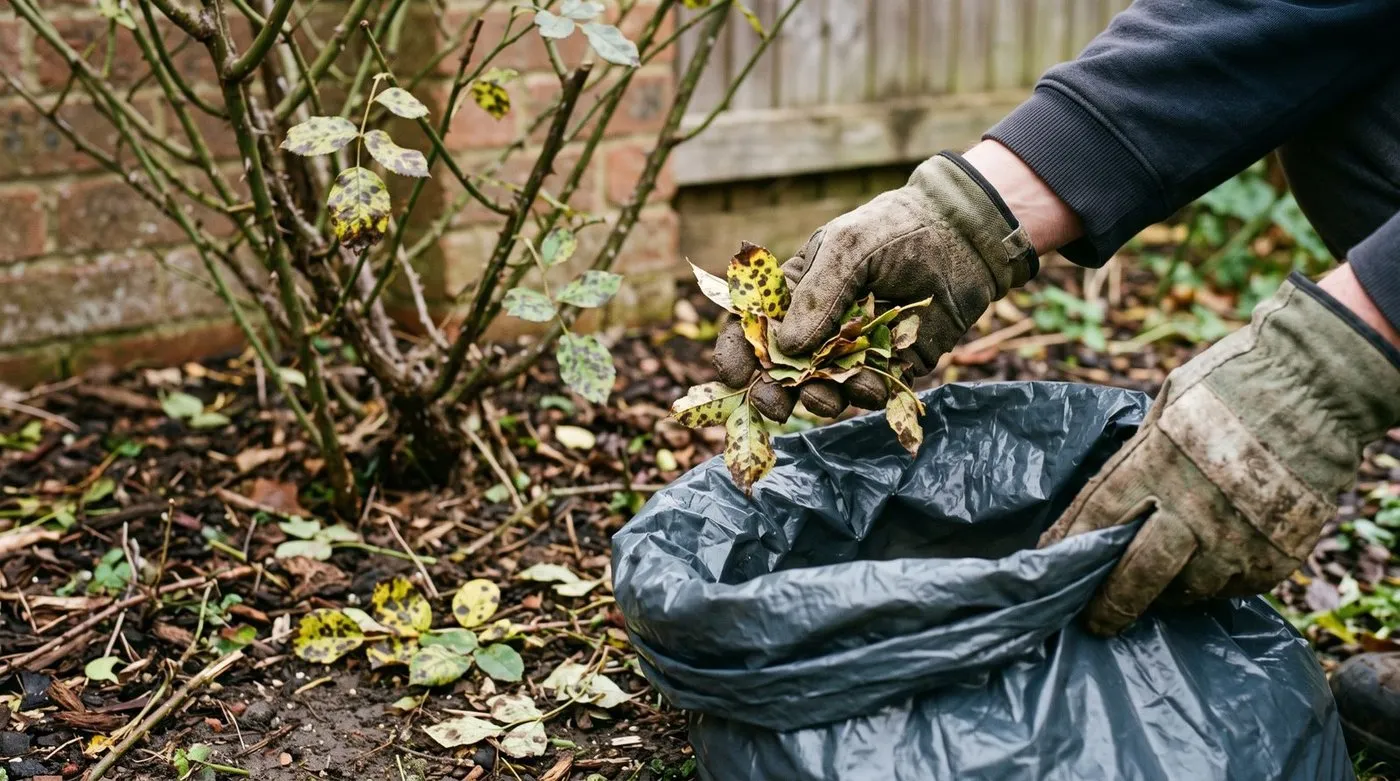 Bag up spotted rose leaves for the bin. Never put them on your compost heap.
Planting roses too close together
Crowded roses stay damp because air can’t get through. Space hybrid teas and floribundas 75-90cm apart, and shrub roses 90-120cm apart. Leave at least 15cm between a climber and its wall.
Spraying the same product every year
If you spray, switch now and then to a product with a different active ingredient. That keeps the fungus from getting used to one treatment.
Everyday care that keeps black spot down
Good growing conditions make a big difference. These simple habits keep roses healthier.
Pruning for airflow
Prune to an open, goblet shape so air moves through the middle of the bush. In February, take out crossing branches, inward-facing shoots and crowded growth. On hybrid teas, keep 5-7 strong main stems spread evenly round the centre. Leaves then dry faster after rain.
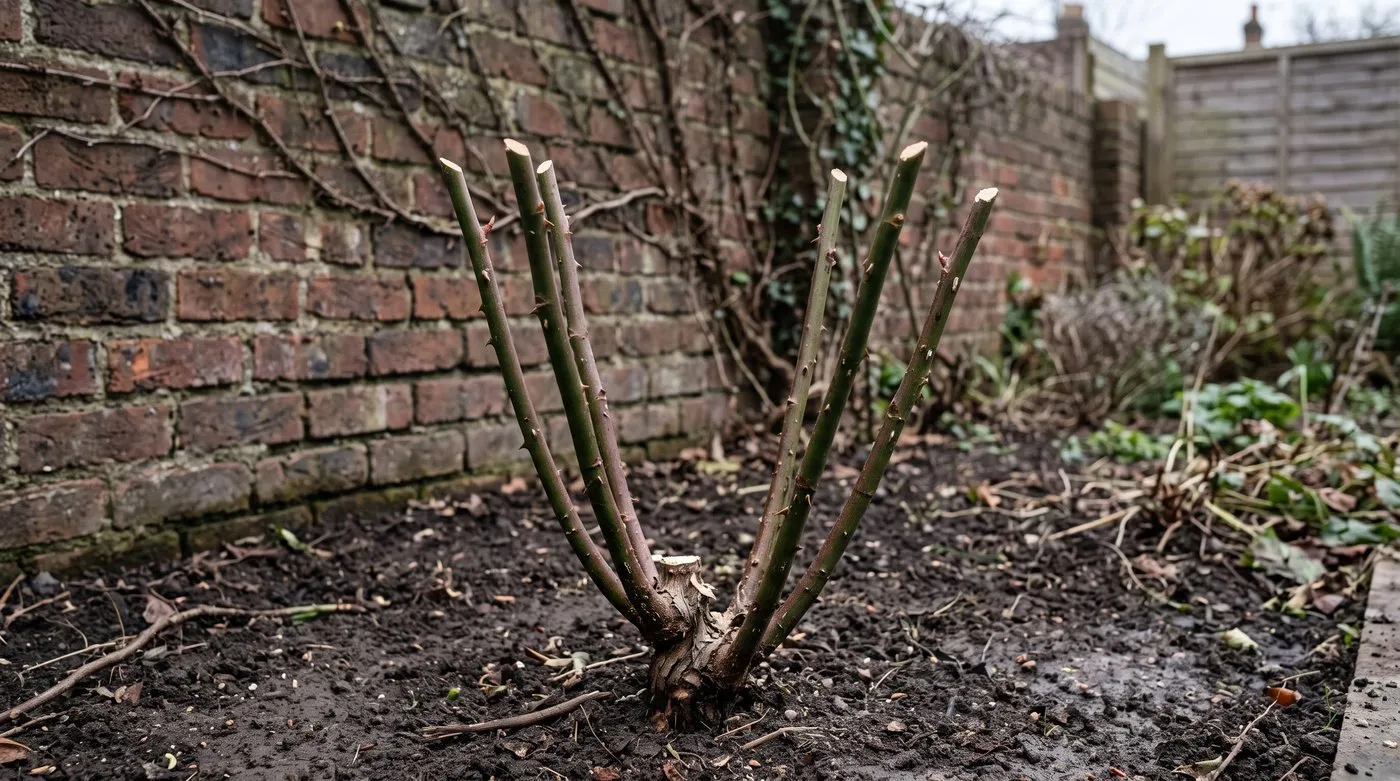
An open centre lets air move through the bush, so leaves dry faster after rain. Aim for five to seven strong, well-spaced stems.
Feeding the right amount
Too much nitrogen gives soft, leafy growth that catches black spot easily. Use a balanced rose feed in March and again after the first flowers in June. Stop feeding after mid-August, so new growth has time to toughen up before winter.
Soil and drainage
Roses in soggy soil get stressed and pick up diseases more easily. On heavy clay, dig plenty of garden compost or well-rotted manure in before planting. On existing beds, the yearly mulch slowly improves the soil.
Watering
Water the soil, not the leaves, using a can with the rose off or a soaker hose. Never use a sprinkler on roses. Water in the morning, and give a good, deep soak once a week in dry spells rather than a little every day.
When to replace a rose
Some roses just catch black spot badly no matter what. If a bush loses most of its leaves for three years running despite your best efforts, replace it with a resistant variety. A new bare-root rose costs less than years of spraying and a sad-looking bush. Our guide to growing roses in the UK covers choosing and planting.
How black spot compares to other rose diseases
Black spot is the most common rose disease, but not the only one. Here’s how to tell them apart. Our guide to powdery mildew covers the second most common.
| Disease | What you’ll see | Weather it likes | When |
|---|---|---|---|
| Black spot | Round black spots with feathery edges, yellow leaves | Warm and wet | May to September |
| Powdery mildew | White powder on leaves and buds | Dry soil, warm days, cool nights | June to October |
| Rose rust | Orange spots under the leaves | Cool, wet springs | April to June |
| Downy mildew | Purple-grey angular patches, fuzz underneath | Cool, damp and humid | Spring and autumn |
| Rose mosaic virus | Yellow zigzag patterns along the veins | Not weather related | All season |
For pruning that opens up your roses and keeps disease down, see our guide on how to prune roses.
Frequently asked questions
Can black spot on roses be cured once it appears?
No, spots that are already there won’t go away. The fungus is inside the leaf by the time you see it. Pick off spotted leaves and keep new growth protected. If you spray, use an authorised rose fungicide on the new leaves, following the label.
What is the best fungicide for black spot on roses UK?
Choose a rose fungicide authorised for home gardens. Check the label says it’s for black spot on roses and follow it exactly, including how often to spray. Start in April, before spots appear, because spraying after the damage shows only protects new leaves.
Does black spot spread to other plants in the garden?
No, black spot only affects roses. It does spread easily from rose to rose in rain splash. Give roses room so air can move between them, and keep your secateurs clean.
Should I remove leaves with black spot?
Yes, pick them off as soon as you see them. Spotted leaves release spores that infect healthy ones. Collect fallen leaves from the ground too. Put them in the council green waste bin, never your own compost heap, which doesn’t get hot enough to kill the fungus.
Why do my roses get black spot every year?
The fungus survives winter on fallen leaves and infected stems. In spring, rain splashes the spores back onto the new leaves. Clearing leaves in autumn and mulching in March breaks the cycle.
Are there roses that never get black spot?
No rose is completely immune, but some come close. ‘Flower Carpet’, ‘Bonica’, ‘Roald Dahl’ and ‘Absolutely Fabulous’ are among the most reliable. Ground cover roses and many rugosa roses are tough too.
Can you use baking soda to treat black spot on roses?
No, home-made sprays aren’t legal to use as pesticides in the UK. Pick off spotted leaves, clear fallen leaves in autumn, mulch in spring and choose resistant varieties instead. If you really need a spray, use an authorised fungicide exactly as the label says.
Our team produces practical UK gardening guidance from source research, contributor records and established horticultural practice. Editorial standards are overseen by Matt W.